
Why Finding Carpenter Ants Indoors This Summer Means It’s Time for Expert Help
If you need expert carpenter ant removal, here’s what you should know right away:
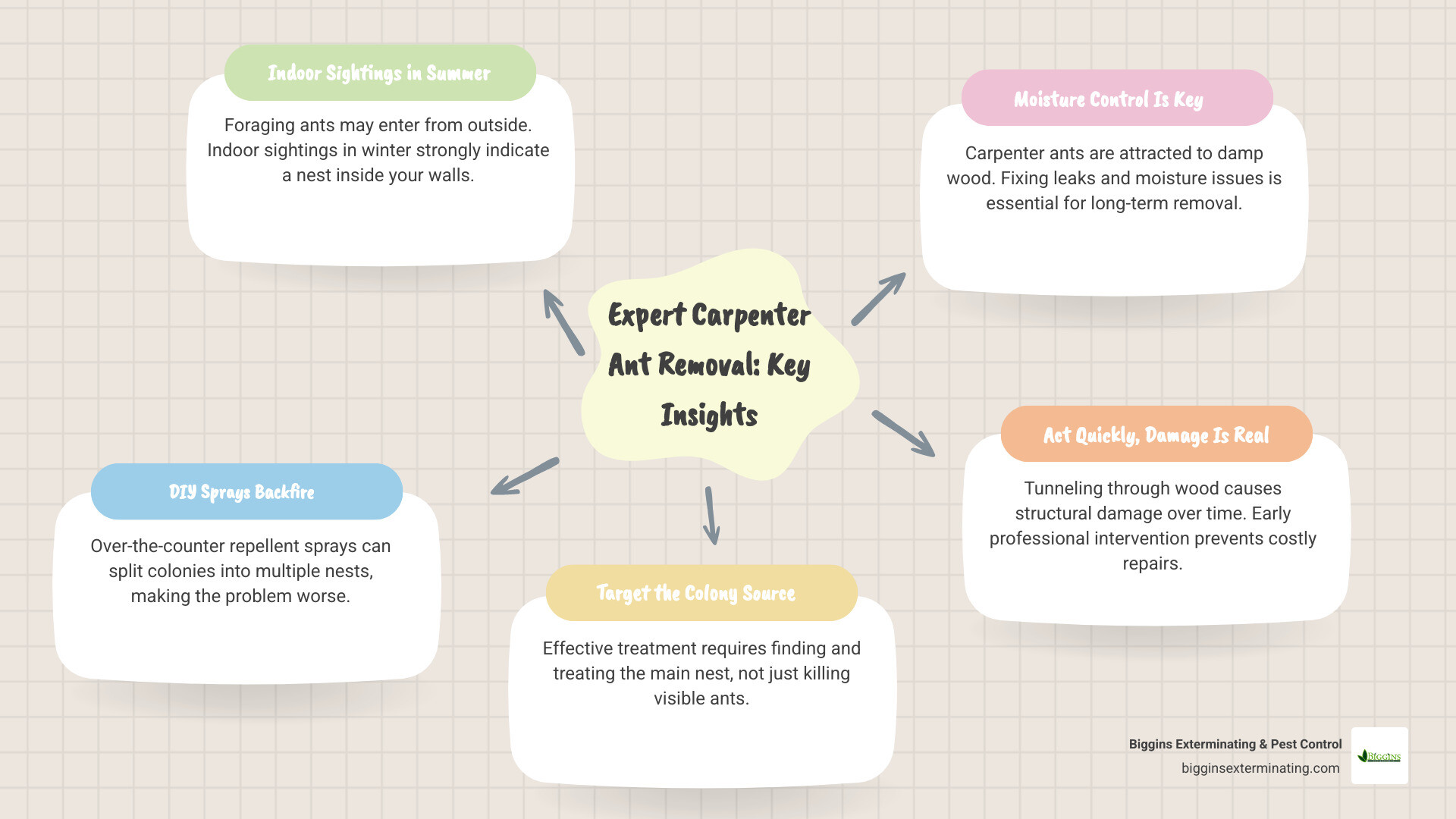
- Carpenter ants tunnel through wood to nest — they don’t eat it, but the damage they cause is real and gets worse over time.
- Finding them indoors in summer may mean they’re just foraging in from outside. Finding them indoors in winter almost certainly means they’ve nested inside your walls.
- Over-the-counter sprays often make things worse by splitting one colony into several.
- The most effective solution targets the colony at its source — not just the ants you can see.
- A licensed professional can identify nesting sites, treat wall voids directly, and address the moisture conditions that attracted them in the first place.
Imagine coming home to find 20 large black ants roaming your living room floor — then finding 50 more dead ones over the next two days. That’s not a random visit. That’s a warning sign. Carpenter ants don’t just wander in and leave. By the time you’re seeing them regularly inside your home, a colony may have been quietly excavating your walls for months.
The good news? Knowing what to look for — and acting quickly — makes a real difference.
I’m Stephen Biggins, owner of Biggins Exterminating & Pest Control, a family-owned Massachusetts pest control company serving Wilmington and surrounding towns since 1982. With over 40 years of hands-on experience providing expert carpenter ant removal to homeowners across the region, I’ve seen how fast a small problem can become a structural one when it’s misdiagnosed or treated with the wrong product. In the sections below, I’ll walk you through exactly what to look for, why common DIY approaches fall short, and how professional treatment actually works.
Expert carpenter ant removal vocabulary:
Why DIY Sprays Fail and the Need for Expert Carpenter Ant Removal
When homeowners in towns like Andover or Billerica spot a line of large black ants marching across their kitchen countertop, their first instinct is often to run to the local hardware store. They grab a can of over-the-counter bug spray, head home, and douse the visible insects. For a day or two, it looks like the problem is solved.
Unfortunately, this is one of the most common mistakes you can make, and it often guarantees that you will eventually need the ultimate guide to professional carpenter ant removal to fix the mess.
The Danger of Colony Budding
Store-bought aerosol sprays are almost always formulated with repellent chemicals. These synthetic pyrethroids act as immediate contact killers. They are highly effective at killing the ten or twenty foraging ants that happen to be walking on your floor at that exact moment.
However, the parent colony is hidden deep inside your walls, completely safe from the spray. When those foraging ants fail to return, or when the colony detects the toxic chemical barrier, it triggers a survival mechanism known as “budding.”
Instead of packing up and leaving, the colony panics. The queen (or multiple queens in mature infestations) will split the colony into several smaller satellite nests. They will move deeper into your home’s structural framing, spreading out to areas like your bathroom walls, attic spaces, or behind window casings. By trying to learn how to kill carpenter ants with a cheap can of spray, you can accidentally turn one localized nesting issue into three or four separate infestations scattered throughout your house.
Professional Non-Repellent Residuals and Baits
To truly eliminate a carpenter ant colony, you must use their own biology against them. Professional exterminators do not rely on repellents. Instead, we use advanced, non-repellent liquid residuals and specialized baits.
Because the ants cannot detect these non-repellent active ingredients, they walk right through them without panic. The workers pick up the microscopic particles on their bodies and carry them back to the heart of the nest. Through a process called the “transfer effect” (which happens during grooming and food sharing), the active ingredient is passed from ant to ant, eventually reaching the queen.
Additionally, using a carpenter ant baits complete guide allows us to select highly palatable, slow-acting baits. The foraging ants eat the bait, return to the nest, and feed it to the larvae and the queen, completely collapsing the colony from the inside out.
Key Warning Signs of a Carpenter Ant Infestation
Because carpenter ants do most of their work hidden behind plaster, drywall, and insulation, they can live inside your home for months or even years before you notice them. However, they do leave behind subtle clues. Recognizing these signs early can save you thousands of dollars in structural repairs.
Identifying Frass, Swarmers, and Rustling Sounds
If you suspect you have an active carpenter ant infestation in house, look out for the three classic warning signs:
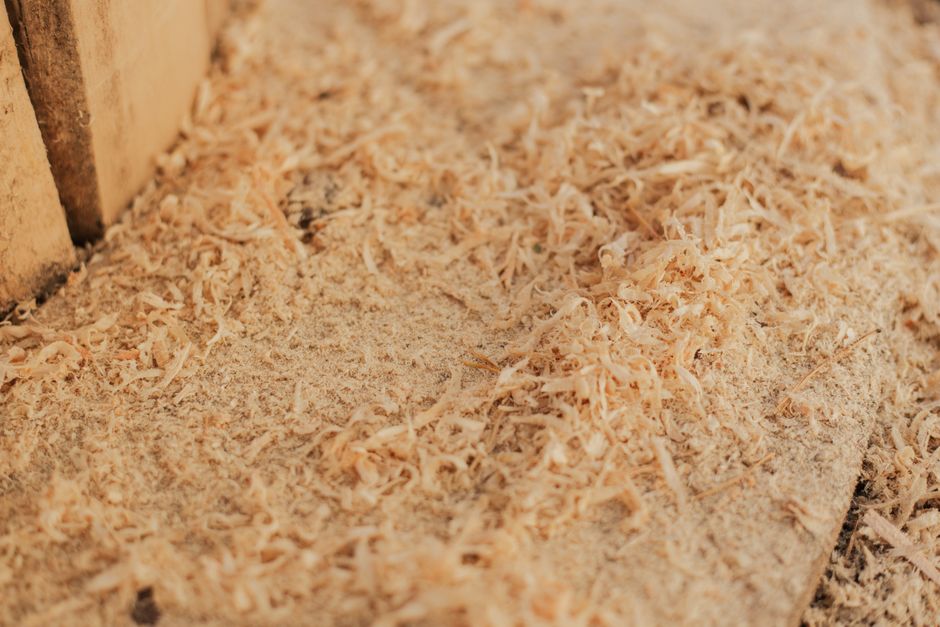
- Frass (Sawdust Piles): Unlike termites, carpenter ants do not eat wood. They simply chew through it to carve out smooth galleries for their nests. As they excavate, they push the debris out of tiny exit holes. This debris, known as frass, looks like small piles of sawdust mixed with insect parts and soil. You will typically find it gathering on the floor beneath doorframes, window sills, or along baseboards.
- Winged Swarmers: In the spring—specifically during April and May in Massachusetts—mature colonies release winged reproductive ants called swarmers. Their goal is to fly out, find a mate, and establish new colonies. If you see large, winged ants crawling on your window sills or flying near indoor light sources, it is a definitive sign that a mature, multi-year-old colony is nesting somewhere inside or very close to your structure. If you are wondering do carpenter ants have wings, the answer is yes, but only during this reproductive swarming phase.
- Rustling Sounds: When a colony grows large enough, you can actually hear them. If you press your ear against a suspect wall at night (when the ants are most active), you may hear a faint, dry rustling or crackling sound. This is the sound of thousands of tiny ant legs moving through the wall voids and chewing on wood fibers.
Summer vs. Winter: When to Seek Expert Carpenter Ant Removal
The time of year you spot carpenter ants indoors tells us a lot about where their nest is located, and it dictates how quickly you need to act.
According to our carpenter ant exterminators guide 2026, finding a few foraging carpenter ants inside your home during the summer months is common, especially if you live in heavily wooded areas like Lexington or Woburn. In the summer, ants will travel up to 300 feet from an outdoor nest in search of sweet foods or proteins. They might simply crawl through a gap in a window screen or under a door sweep. While you should still address this to prevent them from moving in permanently, it does not automatically mean you have an indoor nest.
However, finding active carpenter ants inside your home during the winter is a major red flag. Because ants are cold-blooded, outdoor colonies go dormant during the freezing Massachusetts winters. If you see ants walking across your kitchen floor in January or February, it means they are nesting inside your heated wall voids, keeping warm and active off your home’s internal temperature. This requires immediate, professional intervention.
The Role of Moisture Damage in Attracting Wood-Destroying Ants
You will rarely find carpenter ants nesting in clean, dry, structurally sound wood. Their mandibles, while strong, are designed to easily excavate soft, decaying wood. This is why moisture damage is the single biggest invitation for a carpenter ant infestation.
How Professionals Target Moisture-Prone Nesting Sites
When we perform an inspection in towns like Burlington or Tewksbury, we don’t just look for ants; we look for water. Carpenter ant parent colonies are almost always founded in areas with active or historic moisture issues. Common trouble spots include:
- Wood framing beneath leaking bathroom or kitchen faucets.
- Wall voids directly under damaged roof valleys or clogged gutters.
- Sills and joists near poorly sealed windows or sliding glass doors.
- Areas where soil or mulch makes direct contact with the wooden siding of your home.
When we find carpenter ant nest locations, we use specialized moisture meters and thermal imaging to trace the dampness hidden behind your walls. By pinpointing and repairing these leaks, you eliminate the soft wood the ants need to survive, which is a critical step in long-term prevention.
Carpenter Ants vs. Termites: Understanding the Damage
Many homeowners confuse carpenter ants with termites, but the way they damage your home is completely different.
To help you understand what you are dealing with, here is a quick comparison:
| Feature | Carpenter Ants | Termites |
|---|---|---|
| Do they eat wood? | No, they only excavate it for shelter. | Yes, they consume cellulose as food. |
| Appearance of damage | Clean, smooth, polished galleries. | Muddy, rough galleries filled with soil and feces. |
| Presence of sawdust | Yes, they leave piles of frass nearby. | No, they do not leave sawdust behind. |
| Moisture preference | Prefer damp, decaying wood. | Require constant moisture (subterranean). |
If you want to dive deeper into how these pests differ, read our guide on the 5 key differences carpenter ants vs termites.
Eco-Friendly and Low-Toxicity Pest Control Methods
Many homeowners in our local communities, such as North Reading and Wilmington, are passionate about protecting their backyard ecosystems. They have beautiful pollinator gardens, raise bees, or simply worry about the impact of harsh chemicals on their children and pets.
We share those concerns. Effective pest control does not mean you have to saturate your entire property in broad-spectrum chemicals.
Balancing Pollinator Protection with Expert Carpenter Ant Removal
A common, outdated practice in the pest control industry is “blanket spraying”—applying a heavy barrier of liquid pesticide across your entire lawn and the outer perimeter of your house. While this kills ants, it also devastates local populations of honeybees, butterflies, and other beneficial pollinators.
To avoid this, we utilize highly targeted, low-toxicity methods. By reading our resource on non toxic carpenter ant control that wont bug your kids, you can learn how we focus on localized treatments.
Instead of spraying your yard, we place discrete, borate-based baits directly in the paths the ants travel. Borates are naturally occurring minerals that are highly toxic to ants when ingested but have incredibly low toxicity to mammals and non-target insects. We also use the best carpenter ant bait for indoor and outdoor control in tamper-resistant bait stations. This ensures the active ingredients are carried straight to the ant nest, leaving your garden, your pets, and your local pollinators completely safe.
Frequently Asked Questions About Carpenter Ant Control
Does finding dead ants inside mean there is an active nest?
Not necessarily, but it is a strong warning sign. If you find one or two dead ants near an exterior door in July, they likely wandered in, found nothing to eat, and died naturally. However, if you are finding dozens of dead ants in the same indoor location over a short period, it strongly suggests a nest is nearby.
When a colony is nesting inside a wall void, worker ants that die inside the nest are often carried out and dumped nearby to keep the galleries clean. If you are seeing consistent piles of dead ants, you should ask yourself: can pest control get rid of carpenter ants? The answer is yes, but it requires finding the entry points and treating the voids directly.
When should I call a professional exterminator versus trying DIY?
If you only see a single ant outdoors on your deck, simple sanitation and moisture control might be all you need. But if you see swarmers indoors, find piles of frass, or hear rustling in your walls, DIY methods are highly unlikely to work and will likely cause colony budding.
Based on publicly available internet data, the average cost of professional carpenter ant treatments can range from $250 to $950+, with comprehensive structural treatments for severe, long-standing infestations reaching up to $3,000 or more. Investing in professional help early prevents minor nesting from turning into a major construction project. For more details, check out our guide on dont let them move in why you need a carpenter ant professional service.
What should I expect from a professional carpenter ant treatment?
A professional carpenter ant service should always begin with a thorough inspection of both the interior and exterior of your home. Your technician should identify moisture issues, locate foraging trails, and explain exactly where they plan to treat.
At Biggins Exterminating, we believe in complete transparency. We provide clear, written documentation detailing our findings, the specific low-toxicity products we used, and a clear follow-up plan to ensure the colony is entirely eliminated.
Conclusion
When it comes to protecting your home from wood-destroying insects, you cannot afford to rely on guesswork or ineffective store-bought sprays. Carpenter ants are resilient, smart, and highly destructive if left unchecked.
At Biggins Exterminating & Pest Control, we have spent over 40 years protecting families and homes in Wilmington, Andover, Bedford, Billerica, Burlington, Lexington, North Reading, Tewksbury, and Woburn. As a family-owned and operated business, we pride ourselves on providing high-quality, professional service without forcing you into long-term contracts. We back our work with reliable warranties to ensure your total peace of mind.
If you suspect you have a carpenter ant problem, don’t wait for the damage to spread. Contact us today for reliable, professional carpenter ant pest control that keeps your home safe and pest-free.
