Why Carpenter Ant Infestation Removal Can’t Wait This Spring
Carpenter ant infestation removal is urgent — especially in spring, when colonies that have been quietly expanding all winter suddenly surge into activity. Here’s what to do if you have them:
Quick Answer: How to Remove a Carpenter Ant Infestation
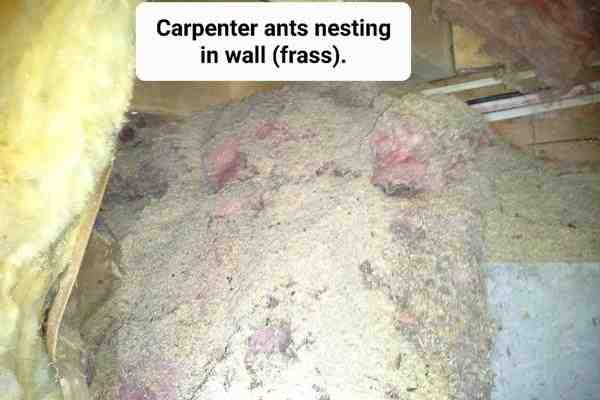
- Locate the nest — look for fibrous sawdust (frass) near baseboards, window frames, or wall voids
- Identify moisture sources — leaky pipes, rotted wood, and damp crawl spaces attract them
- Target the colony, not just the foragers — killing visible ants does not solve the problem
- Use slow-acting baits or desiccant dusts — these reach the queen deep in the nest
- Fix damaged wood and seal entry points — remove what attracted them in the first place
- Call a professional if the nest is hidden, activity is widespread, or DIY efforts have failed
Carpenter ants are wood-destroying organisms. They don’t eat wood the way termites do — instead, they tunnel through it to build nests, hollowing out structural framing, window sills, and wall voids from the inside. A mature colony can grow to 2,000–3,000 workers within three to five years, and queens can live for a decade or more. That means waiting them out is not a realistic option.
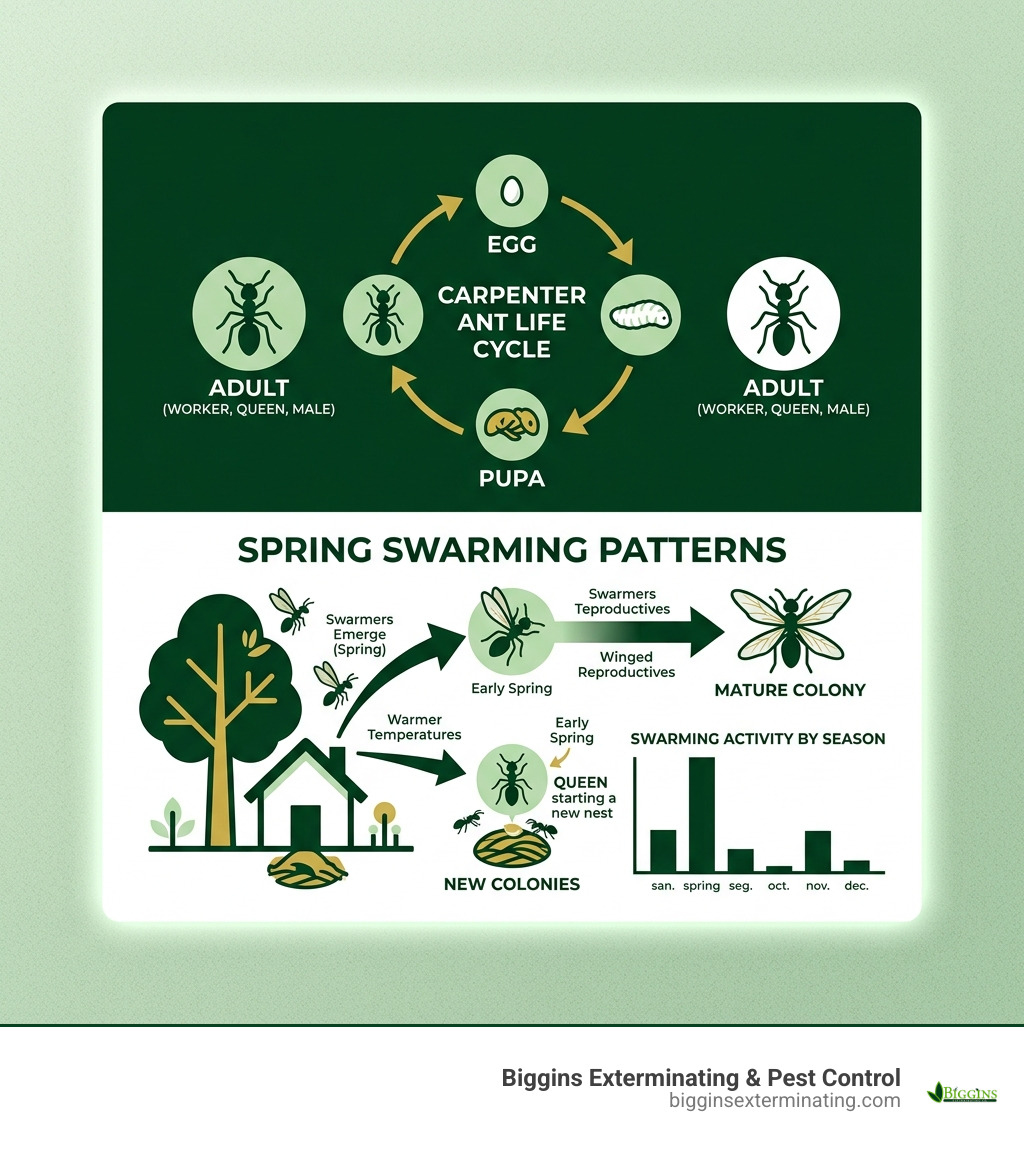
Here in Massachusetts, spring is peak season. Warmer April temperatures trigger swarming — winged reproductive ants emerging to start new colonies. If you’re seeing large black ants indoors right now, especially at night, your home may already be hosting an established nest.
I’m Stephen Biggins, owner of Biggins Exterminating Co. — a family-owned pest control company serving Wilmington, MA and surrounding communities since 1982. Over more than four decades, carpenter ant infestation removal has been one of the most common and most mishandled problems we’re called in to resolve. This guide covers everything you need to know to protect your home the right way.
Carpenter ant infestation removal terms explained:
Identifying the Signs of a Carpenter Ant Infestation
Identifying these pests early is the first step toward successful carpenter ant infestation removal. Unlike many other pests that leave obvious messes, carpenter ants are relatively “clean” excavators. They don’t want to live in their own trash, so they kick debris out of their tunnels.
Frass Indicators and Sawdust Piles
The most common sign of an active nest is the presence of “frass.” This looks like small piles of sawdust, but if you look closely, it’s actually a mixture of wood shavings, dead ant parts, and bits of other insects they’ve eaten. You’ll often find these piles directly below “kick-out holes” in baseboards, window sills, or door frames. If you clean a pile up and it reappears a few days later, you have a 100% confirmed active infestation.
Rustling Sounds and Night Activity
Did you know carpenter ants are primarily nocturnal? They are most active between 8 p.m. and 4 a.m. If the house is quiet at night, you might actually hear a faint rustling or “crinkling” sound coming from inside your walls. This is the sound of thousands of tiny mandibles scraping against wood and insulation. To get a better look, we recommend doing a “flashlight tour” of your home’s perimeter at night to see where the foraging trails lead.
For more details on tracking these pests, check out our guides on how to Find Carpenter Ant Nest locations and identifying a Carpenter Ant Infestation In House settings.
Physical Characteristics and Identification
Not every big ant is a carpenter ant, though in Massachusetts, they are the most likely suspect for large indoor sightings.
- Size: Workers range from 1/4 to 1/2 inch in length. Queens are much larger, reaching up to 1 inch.
- Shape: They have a perfectly rounded thorax (the middle section) and a single node (hump) between the thorax and the abdomen.
- Color: Most are solid black, but some species found in the North Shore area can have reddish-brown accents.
- Wings: During April 2026, you may see “swarmers” with wings. It is vital to determine Do Carpenter Ants Have Wings because these are the reproductives looking to start new colonies.
Locating the Parent and Satellite Nests
Effective carpenter ant infestation removal requires understanding their colony structure.
- The Parent Nest: This is usually located outdoors in a high-moisture area like a decaying tree stump, a woodpile, or a buried piece of construction debris. It contains the queen and the eggs.
- Satellite Nests: Once the parent colony is established (usually after 3-5 years), they send workers into your home to create satellite nests. These nests don’t need as much moisture and are often found in wall voids, hollow-core doors, foam insulation, or behind window sills.
Carpenter Ant Infestation Removal: Ants vs. Termites
One of the most frequent questions we get in Wilmington and Woburn is, “Is it an ant or a termite?” Misidentifying the pest leads to the wrong treatment and continued structural damage.
| Feature | Carpenter Ants | Termites |
|---|---|---|
| Waist | Pinched “wasp” waist | Thick, straight waist |
| Antennae | Elbowed (bent) | Straight (like a string of beads) |
| Wings | Two pairs of unequal length | Two pairs of equal length |
| Diet | Do NOT eat wood (eat protein/sugar) | Consume wood (cellulose) |
| Galleries | Smooth, sandpapered appearance | Rough, messy, filled with mud |
Physical Differences in Carpenter Ant Infestation Removal
The “wasp waist” is the easiest way to tell the difference. Termites look like a single “cigar-shaped” segment, whereas ants have distinct body segments. If you see wings, look at the size—ant wings have a large front pair and a smaller back pair, while termite wings are all the same size and usually fall off very easily, leaving piles of discarded wings on window sills.
Habitat and Diet Distinctions
Termites are “silent destroyers” because they eat the wood from the inside out, often leaving a thin veneer. Carpenter ants are “excavators.” They use their powerful mandibles to hollow out galleries for their young. Because they don’t eat the wood, they must forage for food. They love “honeydew” (a sweet substance produced by aphids), meats, and other insects. This is why you’ll often see them in your kitchen or near pet food bowls.
For a deeper dive into these differences, read our article on How To Distinguish Carpenter Ants From Termites Identifying The Menace In Your Home and review the Scientific research on wood-destroying pest management.
Professional Strategies for Carpenter Ant Infestation Removal
When we arrive at a home in Andover or Lexington, we don’t just start spraying. We use Integrated Pest Management (IPM). This means we look at the big picture—why are they here, where are they nesting, and how can we stop them for good?
Advanced Baiting and Dusting for Carpenter Ant Infestation Removal
Professional carpenter ant infestation removal relies on the ants’ social nature.
- Slow-Acting Baits: We use specialized gels and granules that the workers find delicious. They don’t die instantly; instead, they carry the bait back to the satellite and parent nests, sharing it with the larvae and, most importantly, the queen. If the queen doesn’t die, the colony will just rebound.
- Desiccant Dusts: For infestations inside wall voids, we may use desiccant dusts like silica aerogel. These dusts cling to the ants’ exoskeletons and dry them out. Because these are applied into the “voids” (the empty spaces behind your walls), they remain effective for a long time as long as they stay dry.
- Targeted Treatment: We may drill tiny 1/8-inch holes into suspected wall voids to inject foams or dusts directly into the gallery.
Learn more about these methods in our Exterminate Carpenter Ants Ultimate Guide and our Carpenter Ant Baits Complete Guide.
Average Costs for Professional Removal in Massachusetts
While we don’t provide fixed pricing without an inspection, we can share average costs based on publicly available internet data for the New England region. Homeowners can typically expect to see a wide range for professional treatment:
- Average Range: $250 to $950+
- Factors: The high end of the scale usually involves extensive structural damage, multiple satellite nests, or the need for specialized equipment to reach high rooflines or crawl spaces.
At Biggins Exterminating, we pride ourselves on being a family-owned business that offers fair, reliable Carpenter Ant Service without forcing you into a long-term contract.
Long-Term Prevention and Structural Protection
Once the carpenter ant infestation removal is complete, the goal is to make sure they never come back.
Moisture Control and Wood Replacement
Moisture is the #1 attractant for carpenter ants. They rarely attack perfectly dry, sound wood.
- Fix Leaks: Check under sinks, around tubs, and your roofline. Even a small leak can soften wood enough to invite a queen to start a nest.
- Ventilation: Ensure your attic and crawl spaces are well-ventilated to prevent condensation.
- Replace Damaged Wood: Once the ants are gone, rotted wood should be replaced with pressure-treated lumber to discourage future nesting.
Vegetation and Exterior Maintenance
- The “Bridge” Effect: Tree branches or shrubs touching your house act like a highway for ants. Keep all vegetation trimmed at least 2 feet away from the structure.
- Firewood Storage: Never store firewood against the house or inside the garage. Keep it elevated off the ground and at least 20 feet away from your foundation.
- Sealing Gaps: Use silicone caulk to seal gaps where utility lines enter the house and around window and door frames.
For a checklist of these steps, visit our Carpenter Ant Prevention Ultimate Guide or see the Carpenter ant management tips from university experts.
Seasonal Monitoring in the North Shore Region
In towns like Billerica, Burlington, and Reading, we recommend a perimeter inspection every April. This is when the “scouts” are looking for new places to call home. A professional perimeter barrier treatment applied in the spring can prevent an infestation from ever making it past your siding.
Frequently Asked Questions
Do carpenter ants bite humans or pets?
Yes, they can. Carpenter ants have very strong mandibles designed for chewing through wood. If they feel threatened, they can deliver a sharp, painful bite. To make matters worse, they can spray formic acid into the bite wound, which causes a burning sensation. However, they are not blood-feeders and do not seek out humans or pets to bite. You can read more about this in our article: Do Carpenter Ants Bite.
How long does it take to eliminate a colony?
It depends on the size and location of the nest. Using professional baits, you will often see a significant drop in activity within 7 to 14 days. However, complete elimination of a large colony with multiple satellites can take several weeks. A colony that has been growing for 3 to 5 years won’t disappear overnight.
When should I call a professional for removal?
You should call a professional if:
- You see swarmers (winged ants) indoors: This indicates a mature, well-established nest is already inside your walls.
- DIY efforts have failed: Over-the-counter sprays often just scatter the ants, making the problem harder to fix later.
- You find frass: If sawdust is appearing, the structural integrity of your home is currently being compromised.
- You hear them: If you can hear the ants, the population is likely in the thousands.
Conclusion
Carpenter ant infestation removal is not just about getting rid of an annoying bug; it’s about protecting your biggest investment—your home. From Wilmington to Andover and Tewksbury to Bedford, these pests are a constant threat in our Massachusetts climate.
At Biggins Exterminating & Pest Control, we’ve spent over 40 years perfecting the art of carpenter ant elimination. As a local, family-owned company, we treat your home like it’s our own. We don’t believe in high-pressure sales or unnecessary contracts. We believe in high-quality service, a solid warranty, and the peace of mind that comes with a pest-free home.
If you’re seeing the signs of carpenter ants this April, don’t wait for the damage to get worse. Contact us today for a reliable Carpenter Ant Pest Control plan tailored to your home. We are proud to serve our neighbors in Wilmington, North Reading, Woburn, and the surrounding North Shore communities.