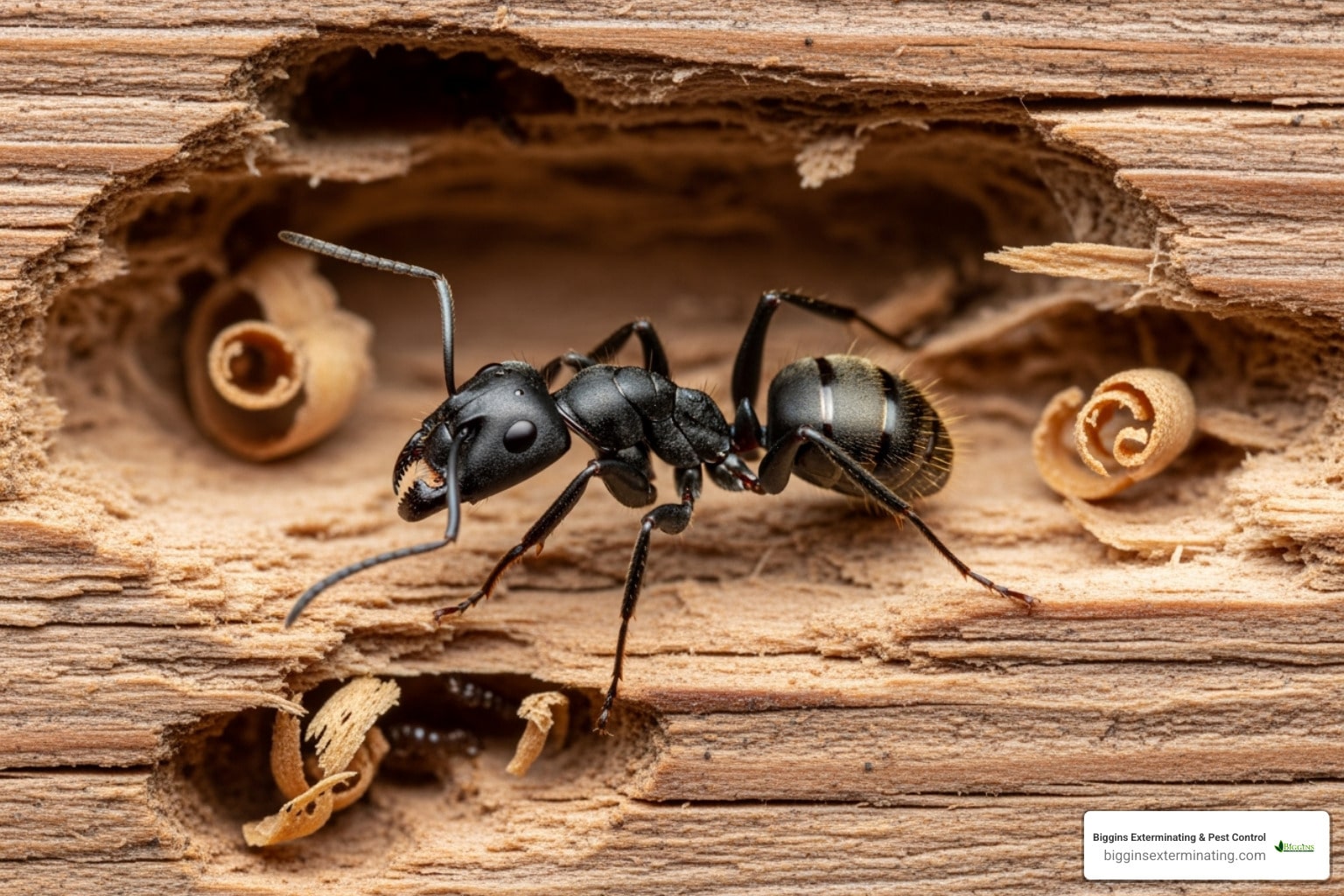
Why Quick Action Against Carpenter Ants Protects Your Home
When you need to exterminate carpenter ants, time is critical. These wood-destroying pests can cause thousands of dollars in structural damage if left untreated, making swift action essential for protecting your Massachusetts home.
Quick Answer – How to Exterminate Carpenter Ants:
- Locate the nest – Follow ant trails at night to find colonies
- Apply targeted treatment – Use boric acid dust or professional-grade insecticides directly into nest sites
- Eliminate moisture sources – Fix leaks and improve ventilation to remove attractants
- Seal entry points – Caulk cracks around windows, doors, and utility lines
- Remove outdoor attractants – Store firewood away from house, trim overhanging branches
- Monitor and maintain – Regular inspections prevent re-infestation
Unlike termites that eat wood, carpenter ants excavate galleries through wooden structures to build their nests, weakening your home’s framework. Telltale signs include piles of sawdust-like frass, faint rustling sounds in walls, and trails of large ants.
Professional extermination offers the most reliable results because carpenter ants often maintain multiple interconnected colonies. DIY methods frequently miss satellite nests, allowing the infestation to continue spreading.
I’m Stephen Biggins, and since taking over my family’s pest control business in 1982, I’ve seen how early detection and professional treatment are the keys to protecting your home’s integrity and value from carpenter ant damage.
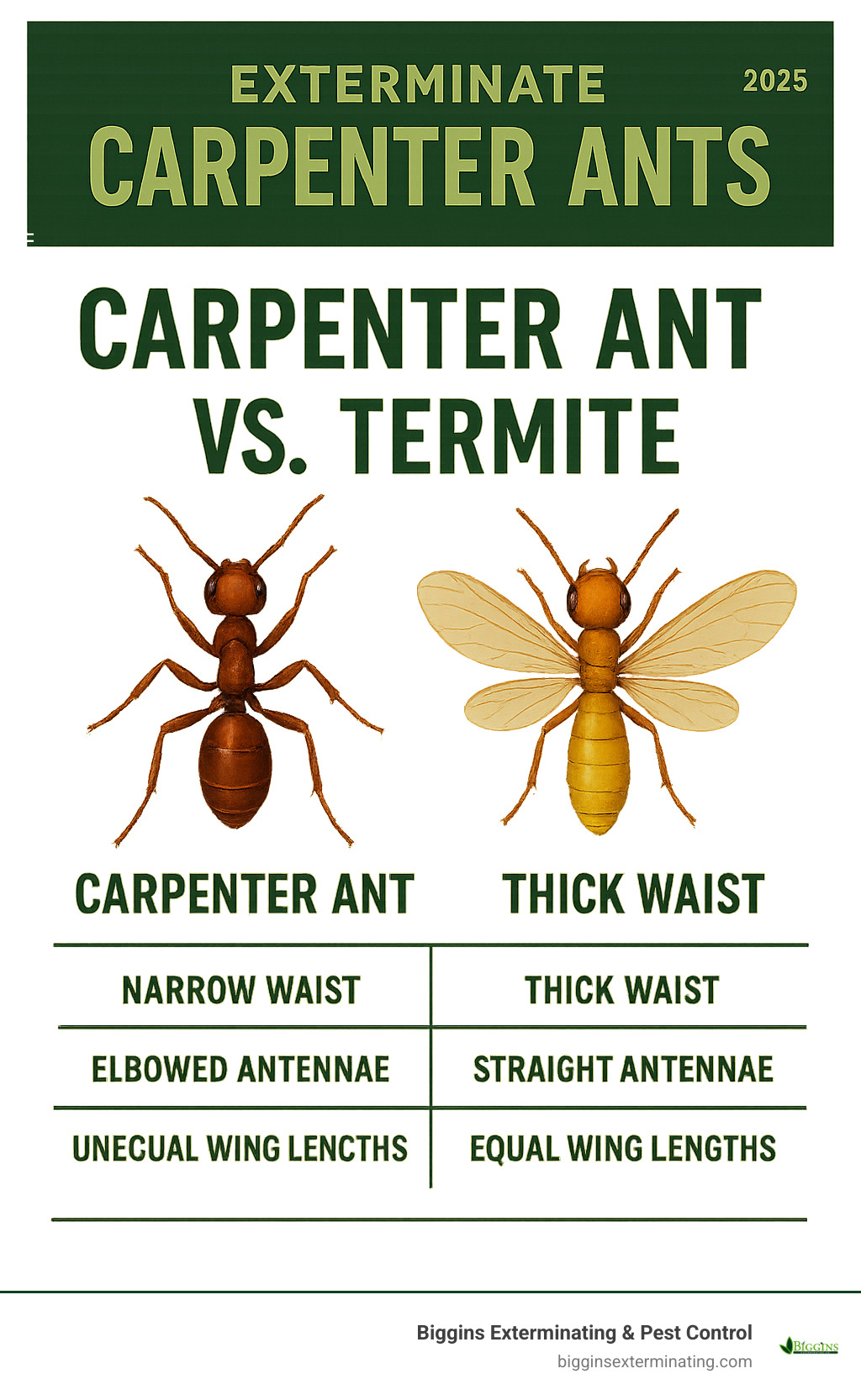
Simple guide to exterminate carpenter ants terms:
Identifying the Enemy: Signs and Dangers of Carpenter Ants
Think you might have carpenter ants? These wood-destroying pests are masters of disguise, often going unnoticed until they’ve caused serious damage. Learning to spot the warning signs early is key to protecting your home.
Unlike smaller ants, these insects are literally carving highways through your home’s wooden framework. They don’t eat wood like termites, but they excavate smooth tunnels and galleries for their nests. Every tunnel they carve weakens your home’s structural integrity, potentially leading to thousands of dollars in repairs.
Carpenter Ants vs. Termites: Know the Difference
Before you can exterminate carpenter ants, you must be sure that’s what you’re dealing with, as treatment methods differ significantly.
Here’s how to tell these wood-destroyers apart:
| Feature | Carpenter Ants | Termites |
|---|---|---|
| Waist | Distinct, narrow, pinched waist | Broad, uniform waist |
| Antennae | Elbowed or bent antennae | Straight antennae |
| Wings | Two pairs, front wings longer than hind wings | Two pairs, equal in length |
| Body Color | Usually black, red, or a combination | Pale, often translucent |
| Wood Damage | Tunnel through wood, creating smooth galleries; do not eat wood; leave behind sawdust-like frass | Eat wood, creating rough tunnels; leave behind mud tubes or fecal pellets |
| Evidence | Piles of frass (sawdust, insect parts); rustling sounds | Mud tubes on surfaces; small, hexagonal fecal pellets |
Carpenter ants are also typically larger than termites, ranging from 1/4 to 1 inch long. The key difference in damage is that carpenter ants are renovators, creating clean galleries and pushing out sawdust-like frass. Termites are demolition crews, consuming wood and leaving behind rough, muddy tunnels.
For a deeper dive, check out our guide: More info about identifying the menace in your home.
Telltale Signs of a Carpenter Ant Infestation
By the time you see carpenter ants, they’ve often been busy for a while. Here’s the evidence they leave behind:
- Foraging Worker Ants: Seeing large (3/4 to 1 inch) black or reddish-black ants, especially at night, is a primary sign. Daytime sightings often indicate a well-established colony.
- Winged Swarmers: Finding winged reproductive ants indoors in spring or early summer almost certainly means a nest is inside your home’s structure. Learn more here: Do Carpenter Ants Have Wings?.
- Faint Rustling Sounds: On quiet nights, you might hear subtle crinkling or chewing sounds from within walls. This is the sound of ants excavating wood.
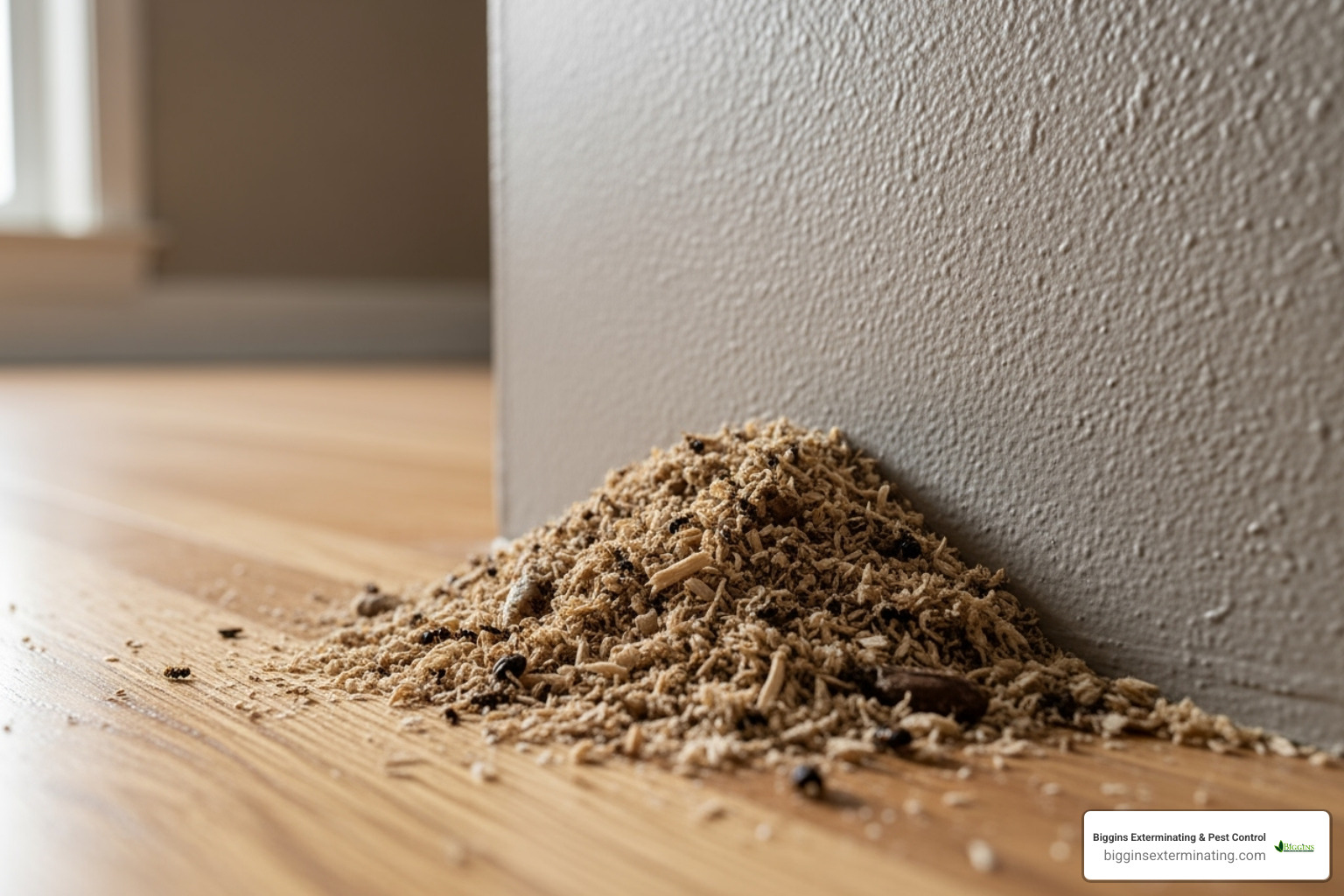
- Piles of Frass: Look for small piles of coarse, sawdust-like material near baseboards, windowsills, or door frames. This “construction waste” is a smoking gun.
- Small Holes and Hollow Wood: Ants create tiny slits to push out frass. If you tap on suspected wood and it sounds hollow, a nest may be inside.
Why Your Home is a Target
Carpenter ants are drawn to specific conditions. Understanding these attractants is crucial for prevention.
- Moisture: This is their number one attractant. Leaky pipes, roof leaks, poor ventilation in attics or crawl spaces, and condensation create ideal, damp conditions.
- Damaged or Decaying Wood: Water-softened wood is much easier for them to excavate than healthy, dry wood.
- Firewood Piles: Storing firewood against your house provides a direct highway for pests to enter your home.
- Easy Access: Tree branches touching your roof or siding act as bridges, while unsealed gaps around utility lines offer easy entry points.
- Food Sources: They forage for sweets (syrups, juice), proteins (pet food), and other insects. Unsealed food and spills provide the nutrition they need.
By addressing these attractants, you make your home less appealing. For more management strategies, see the University of California’s guide: Detailed information on carpenter ant management.
Your Battle Plan: How to Exterminate Carpenter Ants
Simply spraying the ants you see won’t solve a carpenter ant problem. You need to find the source: the hidden main colony where the queen resides. Success means eliminating the entire colony system, including any satellite nests.
Eliminating a colony is a challenge, as nests are often tucked deep inside wall voids, behind insulation, or in hollow doors. Safety should always be your first priority when handling pest control products. If you’re unsure, calling for professional backup is the smartest move.
Steps to Take if You Suspect Carpenter Ants
A methodical approach is key. Rushing can scatter the ants, making the problem worse.
- Confirm the Pest: First, ensure you’re dealing with carpenter ants (narrow waist, elbowed antennae) and not termites. If unsure, save a specimen for identification.
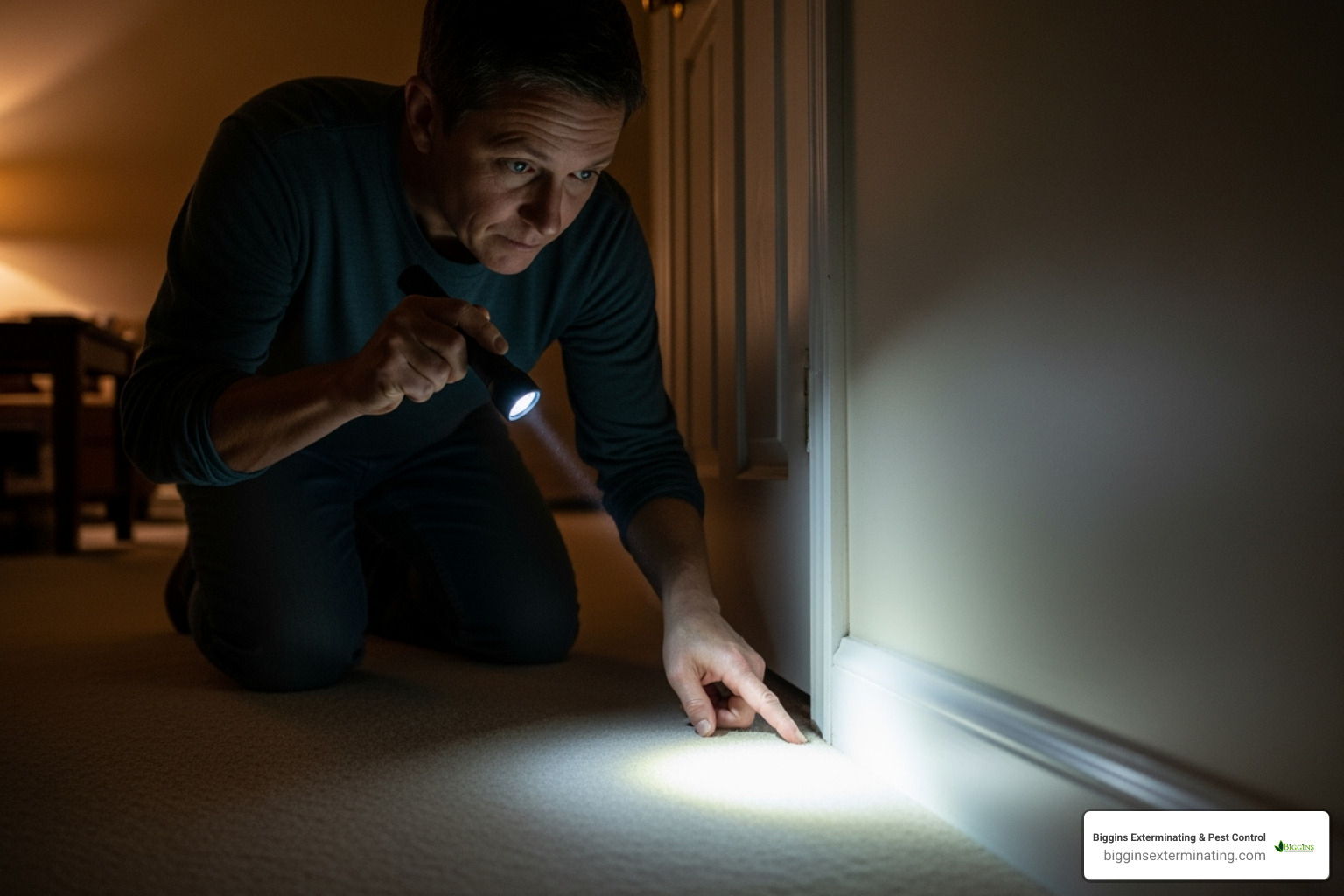
- Locate the Nest: This requires detective work. Since carpenter ants are most active at night, use a flashlight to follow their trails from food sources back to their nest. Placing a dab of honey or jam can help reveal these trails.
- Listen and Look for Clues: Listen for faint rustling sounds inside walls near suspected areas. Scan for piles of frass near baseboards, window sills, and other wooden structures.
- Check Damp Areas: Thoroughly inspect basements, crawl spaces, and areas around pipes or leaks, as these are prime nesting locations.
- Avoid Repellent Sprays: Once you find a nest, resist the urge to spray it with a repellent insecticide. This will likely cause the colony to split and spread to new locations in your home, worsening the infestation.
For more detailed strategies, see our guide: How to Kill Carpenter Ants.
Why Professional Extermination is Most Effective
While DIY methods can seem satisfying, complete victory against carpenter ants is tough for a homeowner to achieve.
- Hidden Nests: Professionals use specialized tools like listening devices and thermal cameras to locate nests hidden deep within walls, under floors, or in attics—places DIY methods can’t reach.
- Multiple Colonies: A single colony can have thousands of ants and multiple satellite nests. Professionals have the experience to identify and eliminate the entire network, preventing a rebound.
- Structural Damage: When ants are tunneling through structural wood, you’re facing a serious threat. A professional can assess the damage and apply treatment without further compromising your home’s framework.
- Professional-Grade Treatments: We use non-repellent insecticides that ants carry back to the colony, eliminating it from the inside out. We also use specialized dusts to treat inaccessible voids directly.
- Safety and Guarantees: Professionals are trained in the safe application of pesticides to protect your family and pets. Reputable services also come with warranties, ensuring the job is done right.
When you’re ready for experts who know how to exterminate carpenter ants effectively, we’re here to help: Find the Best Exterminator for Carpenter Ants.
Calling in Reinforcements: When to Hire a Professional
When your DIY battle plan isn’t working and carpenter ants persist, it’s time to bring in the cavalry. Professional exterminators have the experience, tools, and treatments to eliminate these pests completely.

At Biggins Exterminating, we’ve protected Massachusetts homes for over 40 years. We understand your home is your biggest investment, and we take protecting it seriously with proven methods that get results.
Deciding to Call a Professional Exterminator
It’s time to pick up the phone when you notice these clear signs:
- Your DIY Efforts Keep Failing: If you’ve tried baits and sprays but the ants keep returning, it means the hidden colony remains active.
- The Infestation is Widespread: Seeing ants in multiple rooms or on different floors indicates a large, established colony system that requires professional intervention.
- You Suspect Structural Damage: If you find piles of frass or hear rustling in the walls, your home’s integrity is at risk. Don’t experiment with home remedies when structural damage is a possibility.
- The Nest is Hidden: If you can’t find the nest, you can’t eliminate the problem. Professionals have specialized equipment to locate hidden colonies.
- You Want Peace of Mind: The stress of a persistent pest problem is reason enough to call for help and know the issue is being handled safely and thoroughly.
If this sounds familiar, don’t wait. Contact our ant control experts for a free estimate.
What to Expect from a Professional Treatment
When you call Biggins Exterminating to exterminate carpenter ants, you get a comprehensive, systematic approach.
- Thorough Inspection: Our technicians examine your home inside and out, looking for activity, entry points, moisture issues, and nesting sites. We also identify the specific ant species.
- Customized Treatment Plan: We create a unique plan based on the nest location, infestation severity, and your property’s characteristics.
- Professional-Grade Treatments: We use powerful products unavailable to homeowners. Non-repellent insecticides are carried back to the nest by unsuspecting ants, eliminating the entire colony. Dust applications are used to treat nests in wall voids and other inaccessible areas.
- Moisture Control Recommendations: We’ll advise on fixing leaks and improving ventilation, which is crucial for long-term prevention.
- Follow-Up and Warranty: We schedule monitoring visits to confirm treatment success and stand behind our work with a satisfaction guarantee.
Regarding costs, professional carpenter ant extermination varies. Internet data suggests homeowners typically pay anywhere from $300 to $1500, though severe infestations can cost more. Please note that these are average costs based on internet data and not actual costs for Biggins Exterminating services. For an accurate quote, we provide free, no-obligation inspections.
Fortifying Your Home: Long-Term Prevention Strategies
Once you exterminate carpenter ants, the next step is to prevent their return. Winning the battle doesn’t mean the war is over. Prevention is about making your home so unappealing that they’ll look elsewhere.
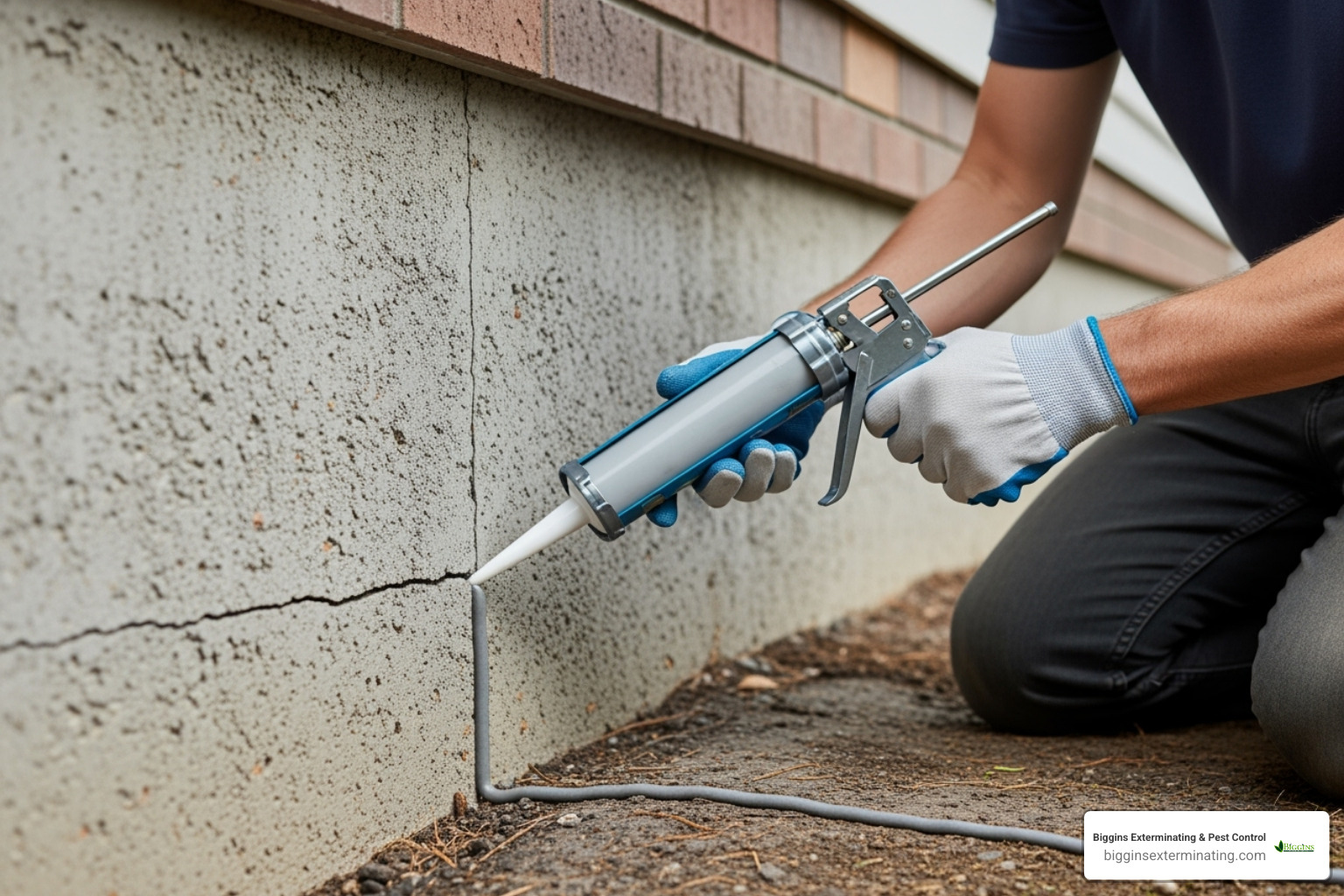
Carpenter ants are opportunists, constantly scouting for homes with moisture, easy access, and food. By eliminating these attractants and blocking their entry routes, you’re putting up a “No Vacancy” sign.
Eliminating Attractants and Sealing Entryways
The most effective prevention starts with making your home less attractive. Since moisture is their biggest draw, focus on these key areas:
- Fix Leaks: Repair dripping faucets, leaky pipes, and roof leaks promptly.
- Improve Ventilation: Use exhaust fans or dehumidifiers in basements, attics, and crawl spaces to keep humidity down.
- Seal Cracks and Crevices: Use silicone caulk to seal gaps around windows, doors, and utility lines.
- Secure Food Storage: Store food in airtight containers, clean up spills immediately, and keep pet food sealed.
- Replace Damaged Wood: Address any soft, water-damaged wood around your home to remove potential nesting sites.
For more guidance, see our resource: Comprehensive Carpenter Ant Pest Control.
Outdoor Maintenance to Keep Ants Out
Your prevention efforts must extend outdoors, where parent colonies often live.
- Trim Trees and Shrubs: Keep branches from touching your house to eliminate “ant highways” to your roof and siding.
- Proper Firewood Storage: Store firewood at least 20 feet from your home and lift it off the ground. Never stack wood against your house.
- Remove Decaying Wood: Get rid of old stumps and rotting wood in your yard, as these are prime real estate for outdoor colonies.
- Maintain Proper Drainage: Keep gutters clean and ensure water flows away from your foundation to prevent damp soil conditions.
- Avoid Wood-to-Soil Contact: Use concrete or metal barriers to separate wooden structures like decks from the ground.
Combining indoor and outdoor maintenance creates a comprehensive defense system that protects your home and saves you the headache of future infestations.
Frequently Asked Questions about Carpenter Ant Extermination
Over four decades of serving Massachusetts homeowners, I’ve heard just about every carpenter ant question. Here are answers to the most common concerns.
How long does it take to get rid of carpenter ants?
The timeline to exterminate carpenter ants depends on several factors. A small, single nest might be eliminated in a few days, while a large infestation with multiple satellite nests can take longer.
- Infestation Size: The larger and more established the colony, the longer it will take to achieve full control.
- Treatment Approach: DIY baits and dusts can take three to four weeks or more to show results and often fail to eliminate the entire colony. Professional treatments work much faster, with a significant drop in activity often seen within a week, though complete eradication may take a few weeks as the product circulates through all nests.
- Follow-up Visits: Follow-ups are often necessary to ensure every nest, including potential outdoor parent colonies, has been eliminated.
Do carpenter ants bite?
Yes, carpenter ants can bite, but it’s not a primary concern. They are not typically aggressive toward humans but will use their strong mandibles to bite defensively if they feel threatened. The bite can be painful and may be accompanied by a spray of formic acid, which causes a burning sensation.
However, carpenter ants do not transmit diseases, and their bites are not dangerous. The real threat they pose is not to you, but to your home’s structural integrity.
Can carpenter ants come back after treatment?
Unfortunately, yes, carpenter ants can return. This usually happens for a few specific reasons:
- Incomplete Elimination: If the treatment missed the queen or hidden satellite nests, the colony can recover and rebuild.
- Underlying Problems Not Fixed: If you don’t resolve the moisture issues, decaying wood, or easy entry points that attracted them in the first place, your home remains a target.
- New Colonies Move In: A nearby outdoor colony can easily establish a new satellite nest in your home if preventative measures aren’t maintained.
This is why ongoing vigilance and maintenance are crucial. A comprehensive treatment combined with preventative measures is the best way to ensure long-term, ant-free living.
Secure Your Home from Carpenter Ant Damage
When protecting your home from carpenter ants, knowledge is power. With the right approach, you can defend your property and restore your peace of mind.
Remember these key takeaways:
- Identification is crucial: Know the difference between carpenter ants and termites to ensure you’re using the right strategy.
- Act quickly: The longer you wait, the more potential damage these pests can cause to your home’s structure.
- Prevention is your strongest defense: Eliminating moisture, sealing entry points, and maintaining your yard is easier than removing an established infestation.
- For guaranteed results, trust a professional: DIY methods often fail to eliminate the complex, hidden nest systems of carpenter ants.
At Biggins Exterminating, we’ve helped families throughout Wilmington, MA, and surrounding communities like Tewksbury, Woburn, and North Reading protect their homes for over four decades. As a family-owned business, we understand your home is your most valuable investment.
We earn your trust through reliable service and solid warranties, not long-term contracts. We are invested in solving your pest problems for good.
Don’t let carpenter ants chip away at your home’s integrity. Whether you have an active infestation or want to implement preventative measures, we are here to help.
Contact our ant control experts for a free estimate today. Let us show you how decades of experience can make all the difference.