
Why Local Carpenter Ant Exterminators Matter This Spring
If you’ve spotted large black ants near your baseboards or found small piles of fine sawdust around your windows, finding local carpenter ant exterminators fast could save you thousands in repair costs.
Here’s how to find and hire the right carpenter ant exterminator near you:
- Search locally — Look for licensed pest control companies serving your specific town or county in Massachusetts.
- Check for warranties — A reputable exterminator should guarantee their work and return if the problem comes back.
- Avoid long-term contracts — Quality local companies won’t lock you in; they earn repeat business through results.
- Ask about the full colony — Good exterminators target the parent nest and satellite nests, not just the ants you can see.
- Look for moisture assessment — Carpenter ants follow damp wood. The best exterminators also address what’s attracting them.
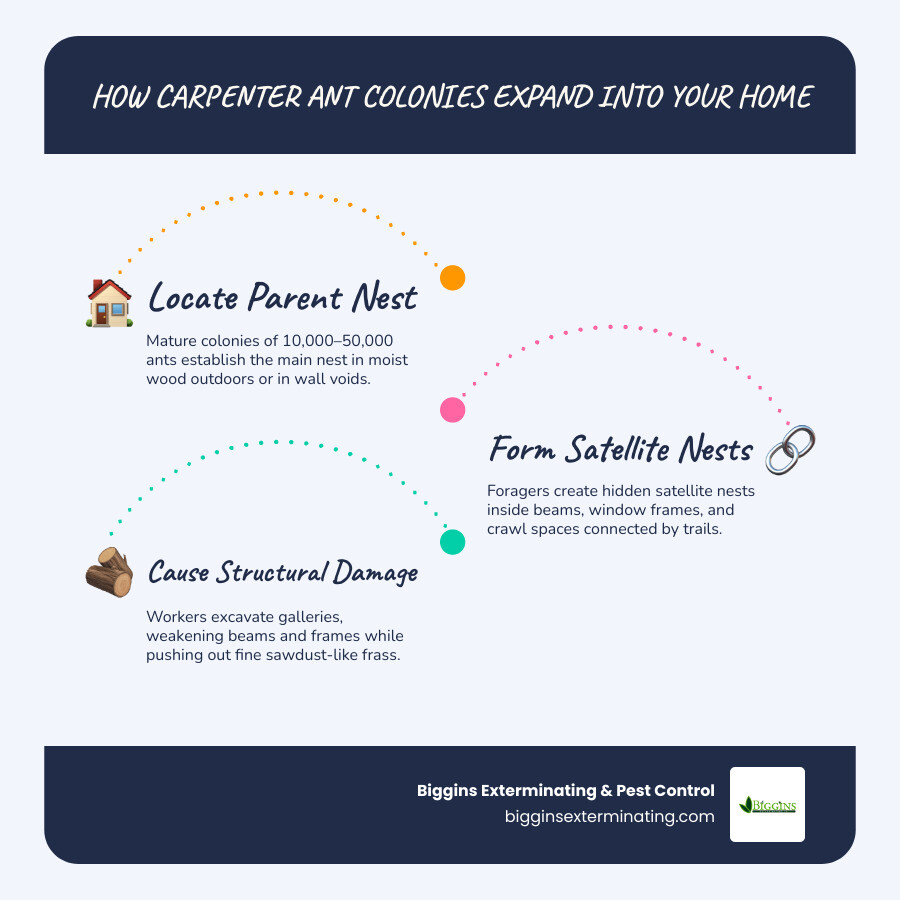
Carpenter ants are not just a nuisance. They are wood-destroying insects that silently hollow out the structural wood in your home — beams, window frames, deck posts — while you sleep. A mature colony can contain anywhere from 10,000 to 50,000 workers. Worse, a single colony spreads through multiple satellite nests hidden inside your walls and crawl spaces, making store-bought sprays largely ineffective.
In Massachusetts, carpenter ant season peaks in spring — right now is when colonies expand aggressively and winged swarmers begin appearing indoors. Waiting to act almost always means more damage and higher repair bills.
I’m Stephen Biggins, owner of Biggins Exterminating Co., a family-owned Massachusetts pest control company my father founded in 1982 — and over more than four decades of treating homes across Wilmington, Billerica, Burlington, and surrounding towns, I’ve seen how quickly an untreated carpenter ant problem escalates. In this guide, I’ll walk you through everything you need to know to find the right local carpenter ant exterminators and protect your home before the damage gets serious.
Local carpenter ant exterminators helpful reading:
Carpenter Ants vs. Termites: Identifying the Threat
When homeowners discover damaged wood or winged insects inside their homes, panic often sets in. Is it termites, or is it carpenter ants? While both can cause major structural issues, they are completely different pests with different behaviors, physical traits, and treatment protocols.
Understanding what you are dealing with is the first step toward reclaiming your home.
Physical Differences
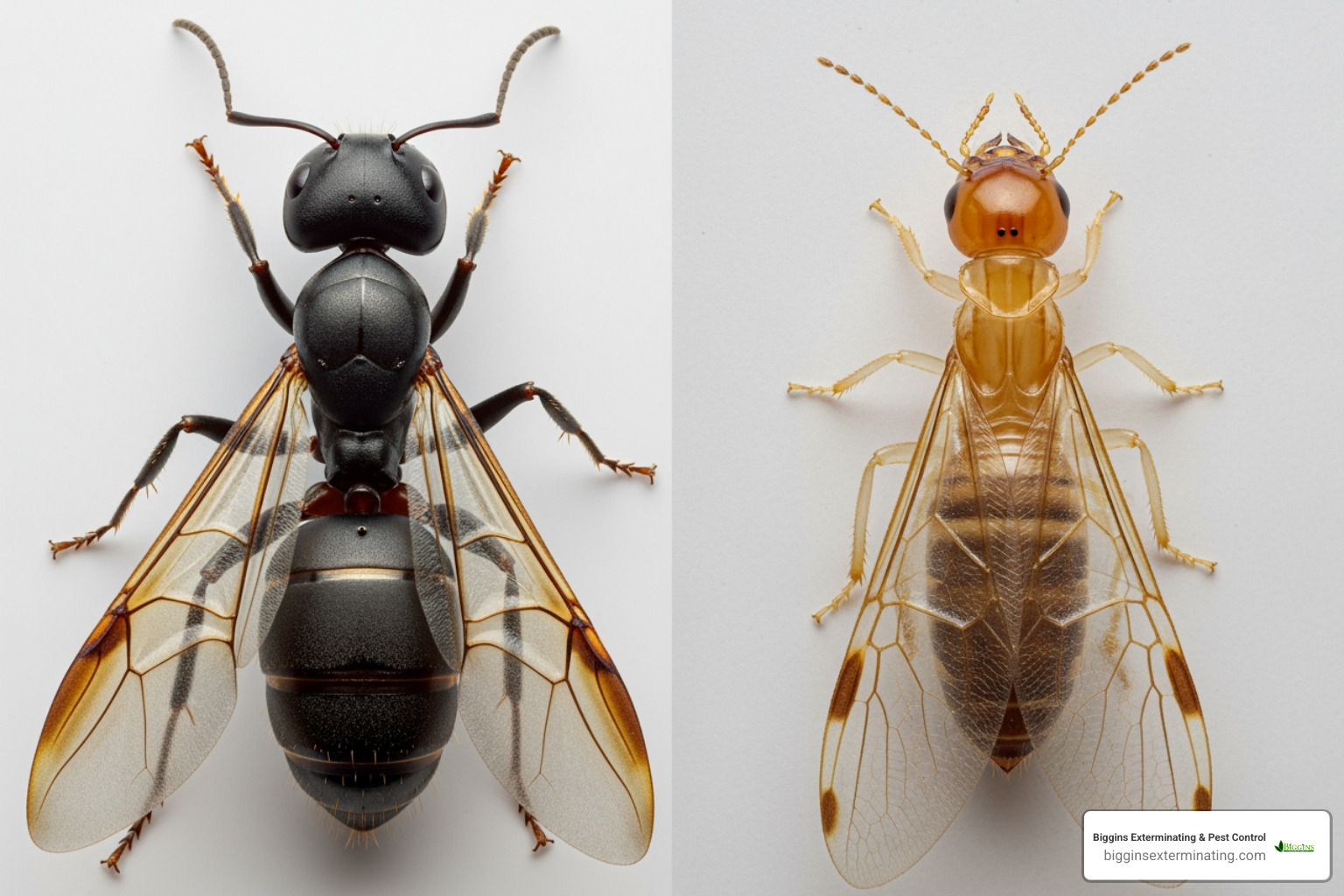
To the untrained eye, a winged ant and a winged termite look very similar. However, a closer look reveals key physical distinctions:
- Waist Shape: Carpenter ants have a highly defined, pinched waist (like an hourglass). Termites have a broad, straight waist with no distinct narrowing.
- Antennae: Carpenter ants have bent or “elbowed” antennae. Termite antennae are straight and look like tiny strings of beads.
- Wings: Both pests produce winged “swarmers” when reproducing. A carpenter ant’s front wings are noticeably longer than its hind wings. A termite’s wings are all equal in length and are much longer than its body.
- Color: Carpenter ants in Massachusetts are typically large and black (though some species can have reddish hues). Termite swarmers are dark, but the workers you find inside wood are creamy white and translucent.
Wood Damage Differences
The way these insects interact with wood is the ultimate giveaway. Termites actually eat wood for nutrition, leaving behind muddy residue, soil, and ragged, chewed-up galleries.
On the other hand, carpenter ants do not eat wood. They are simply nature’s carpenters, hollowing out wood to build clean, smooth nesting galleries. For a deeper dive into these differences, read our guide on the 5 Key Differences Carpenter Ants vs Termites.
| Feature | Carpenter Ants | Termites |
|---|---|---|
| Waist | Pinched, narrow waist | Broad, thick waist |
| Antennae | Bent (elbowed) | Straight |
| Wings | Unequal length | Equal length (very long) |
| Wood Interaction | Excavate only (do not eat) | Eat wood for nutrition |
| Damage Appearance | Smooth, polished galleries | Rough, packed with mud/dirt |
| Debris Left Behind | Piles of sawdust (frass) | Mud tubes, tiny fecal pellets |
Signs of a Carpenter Ant Infestation in Your Home
Because carpenter ants build their nests deep inside wall voids and structural beams, you won’t always see them crawling across your kitchen counter. However, they leave behind very specific clues that indicate it’s time to call in local carpenter ant exterminators.

If you notice any of the following signs, you likely have an active colony nearby:
1. Piles of Frass (Sawdust)
As carpenter ants excavate galleries inside your wooden structures, they must get rid of the waste. They kick out sawdust-like debris through tiny exit holes. This debris, known as “frass,” looks like fine wood shavings mixed with dead insect parts and dirt. If you find small piles of sawdust accumulating on floors, window sills, or along baseboards, you are looking at a clear sign of a Carpenter Ant Infestation in House.
2. Strange Rustling Sounds in Walls
In the quiet of the night, when the house is still, you might actually hear your uninvited guests. Active carpenter ant colonies make a faint, dry rustling or crackling sound inside walls or ceilings as they scrape out wood to expand their nests.
3. Winged Swarmers Indoors
Seeing large, winged ants inside your home is a major red flag. These are the reproductive members of the colony. When a colony becomes mature (usually after 3 to 6 years), it produces winged swarmers to fly out and establish new nests. If you see them inside, it means a mature parent nest is either inside your home or directly adjacent to it.
4. Active Foraging Trails and Moisture Issues
Carpenter ants are highly attracted to moist, decaying wood. Leaky roofs, damaged gutters, sweating pipes, and poorly sealed window frames are prime real estate for these pests. If you live in Billerica and notice large ants trailing near damp areas, securing professional Carpenter Ant Pest Control should be your top priority.
Why You Should Hire Local Carpenter Ant Exterminators
It is incredibly tempting to grab a can of bug spray from the local hardware store and douse any ant you see. Unfortunately, when it comes to carpenter ants, this DIY approach almost always backfires.
The Colony Trap: Parent Nests vs. Satellite Nests
A single carpenter ant infestation is rarely isolated to one spot. A mature colony consists of a parent nest (usually located outdoors in a damp tree stump, log, or firewood pile) and multiple satellite nests (located inside your home’s wall voids, insulation, or crawl spaces).
The workers constantly travel back and forth between these nests, sometimes up to 100 yards, while searching for food.
When you spray a contact killer on the ants in your kitchen, you only kill the few foragers on the surface. The remaining colony members sense the danger, which can cause the colony to “bud” or split into multiple new satellite nests inside your walls, making the infestation significantly worse.
The Professional Advantage: Chemical Transfer
Professional local carpenter ant exterminators don’t rely on simple contact sprays. Instead, we use advanced, non-repellent liquid treatments and specialized baits.
When foraging ants walk through these virtually undetectable treatments, they don’t die instantly. Instead, they carry the active ingredient back to the hidden nests on their bodies, sharing it with the rest of the colony—including the queen. This transfer effect is the only reliable way to eliminate the entire network.
If you suspect an issue, getting professional Carpenter Ant Pest Control in Burlington, MA, ensures that technicians who understand local building styles and pest patterns are handling the job safely and effectively.
What to Expect from Local Carpenter Ant Exterminators
When you hire a professional pest control company, the process should be systematic and transparent. Here is what a high-quality Carpenter Ant Service looks like:
- Thorough Inspection: We inspect both the interior and exterior of your home, looking for moisture issues, entry points, and signs of active nesting.
- Targeted Void Injection: If we locate a satellite nest inside a wall void, we may inject specialized insecticidal dusts or foams directly into the wall to knock out the nest instantly.
- Exterior Barrier Application: We apply a non-repellent liquid barrier around the foundation of your home to disrupt foraging paths and prevent outdoor ants from entering.
- Bait Deployment: Strategically placed baits target the ants’ nutritional needs, encouraging them to carry the active ingredients back to the queen.
If you are looking for reliable Carpenter Ant Extermination in Lexington, MA, our team focuses on these exact, proven steps to protect your structural wood.
How to Choose the Best Local Carpenter Ant Exterminators
Not all pest control companies are created equal. When searching for local carpenter ant exterminators, keep these criteria in mind:
- Licensing and Credentials: Ensure the company is fully licensed by the state of Massachusetts and carries proper liability insurance.
- Local Experience: Pest behavior is highly regional. A company with decades of experience in your specific town will know exactly how local weather patterns and home construction styles affect pest activity.
- Warranties and Guarantees: Look for a company that stands behind its work with a solid warranty, ensuring they will return to address any lingering issues at no extra charge.
- Contract-Free Options: Be wary of companies that force you into rigid, multi-year contracts. A great local service provider earns your trust through quality work, not legal paperwork.
For homeowners seeking dependable North Reading, MA Pest Control Services, choosing a local, family-owned business ensures you receive personalized care and honest advice.
The Professional Extermination Process and Cost Breakdown
Resolving a carpenter ant issue requires a combination of immediate elimination and long-term prevention.
The Treatment Process
During treatment, we focus heavily on moisture correction. Because carpenter ants prefer damp wood, fixing leaky gutters, trimming overhanging tree branches away from your roof, and sealing up gaps around utility lines are essential steps. Correcting these conditions is key to ensuring the ants do not return next spring. For helpful prevention tips, check out our Carpenter Ant Prevention Ultimate Guide.
For residents in the Merrimack Valley, securing professional Carpenter Ant Extermination in Tewksbury, MA is the best way to stop progressive structural damage before it requires expensive reconstruction.
Cost Breakdown
When it comes to the cost of professional carpenter ant control, pricing can vary significantly depending on the size of your home, the severity of the infestation, and how many satellite nests are established.
Please note: The pricing below represents average market costs based on publicly available internet data and does not reflect Biggins Exterminating’s actual pricing.
- Average Initial Treatment Cost: $300 to $600
- Pricing Range (Minor to Severe Infestations): $150 to $1,800+
For a minor, localized issue caught early, treatment is relatively straightforward. However, if a home has extensive, long-term structural infestations with multiple satellite nests spread throughout wall voids and crawl spaces, the high end of the pricing scale can easily exceed $1,800 to cover intensive void treatments, follow-up monitoring, and structural repairs.
Frequently Asked Questions About Carpenter Ants
Do carpenter ants eat wood like termites?
No, carpenter ants do not eat wood. They do not possess the enzymes required to digest cellulose. Instead, they use their strong mandibles to bite and tear away wood, creating smooth, polished nesting galleries.
For nutrition, they forage outside for sweet substances like honeydew (produced by aphids), plant juices, and other insects.
When are carpenter ants most active in Massachusetts?
As of May 2026, we are in the absolute peak of carpenter ant activity in Massachusetts. These pests become active in early spring as temperatures rise, and they remain highly active through the summer.
They are primarily nocturnal, meaning they do most of their foraging and nest excavation from dusk until early morning.
How much does professional carpenter ant control cost?
Based on public internet data, the average cost for professional carpenter ant treatment ranges from $300 to $600.
However, because every home is different, the actual range can span from $150 for minor exterior treatments to over $1,800 for severe, deep-seated structural infestations that require extensive wall void injections and multiple follow-up inspections.
Conclusion
Your home is likely your largest financial investment. Protecting it from wood-destroying pests like carpenter ants requires prompt, professional action.
At Biggins Exterminating Co., we are proud to be a local, family-owned and operated Massachusetts pest control company. With over 40 years of trusted, high-quality service, we have helped thousands of families protect their homes without requiring rigid, long-term contracts.
Whether you reside in Wilmington, Andover, Bedford, Billerica, Burlington, Lexington, North Reading, Tewksbury, or Woburn, our experienced team is ready to provide reliable, contract-free pest control backed by our ironclad customer satisfaction warranty.
Don’t let carpenter ants quietly compromise the structural integrity of your home. Schedule your professional inspection with Biggins Exterminating today, and let our family take care of yours.
