Why Wood-Infesting Carpenter Ant Control Matters for Massachusetts Homeowners
Wood-infesting carpenter ant control is one of the most urgent pest issues facing homeowners across Massachusetts every spring — and ignoring it can lead to costly structural repairs.
Quick answer: The most effective carpenter ant control methods, ranked:
- Locate and treat the nest directly — treating foraging workers alone does not eliminate the colony
- Apply non-repellent insecticide or dust into nest cavities and wall voids
- Correct all moisture problems — leaky pipes, poor ventilation, and water-damaged wood attract and sustain colonies
- Seal entry points — gaps around windows, doors, and utility lines
- Call a licensed pest control professional for hidden, recurring, or structural infestations
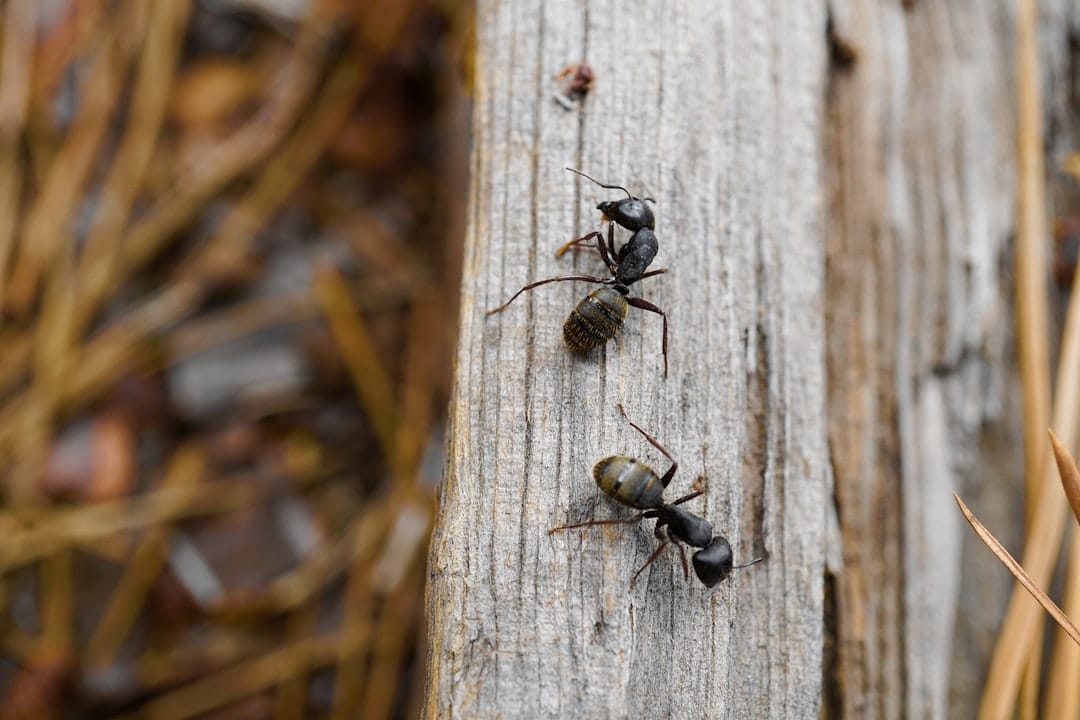
Carpenter ants are among the largest ants found in the northeastern United States, with workers reaching up to ½ inch long. Unlike termites, they don’t eat wood — they excavate it, hollowing out galleries to build their nests. That distinction matters, because the damage happens slowly and silently, often inside walls where you can’t see it until it’s already serious.
In Massachusetts, carpenter ant activity ramps up in spring as colonies emerge from their winter dormancy. Homes near wooded areas — like many neighborhoods in Wilmington, Burlington, and North Reading — are especially vulnerable. By the time most homeowners notice the signs, a colony may already be well established.
I’m Stephen Biggins, owner of Biggins Exterminating Co., a family-owned pest control company serving Massachusetts communities since 1982. With over four decades of hands-on experience in wood-infesting carpenter ant control, I’ve seen how quickly these insects can compromise a home’s structure when left untreated. In this guide, I’ll walk you through exactly how to identify, compare, and choose the right treatment approach for your situation.
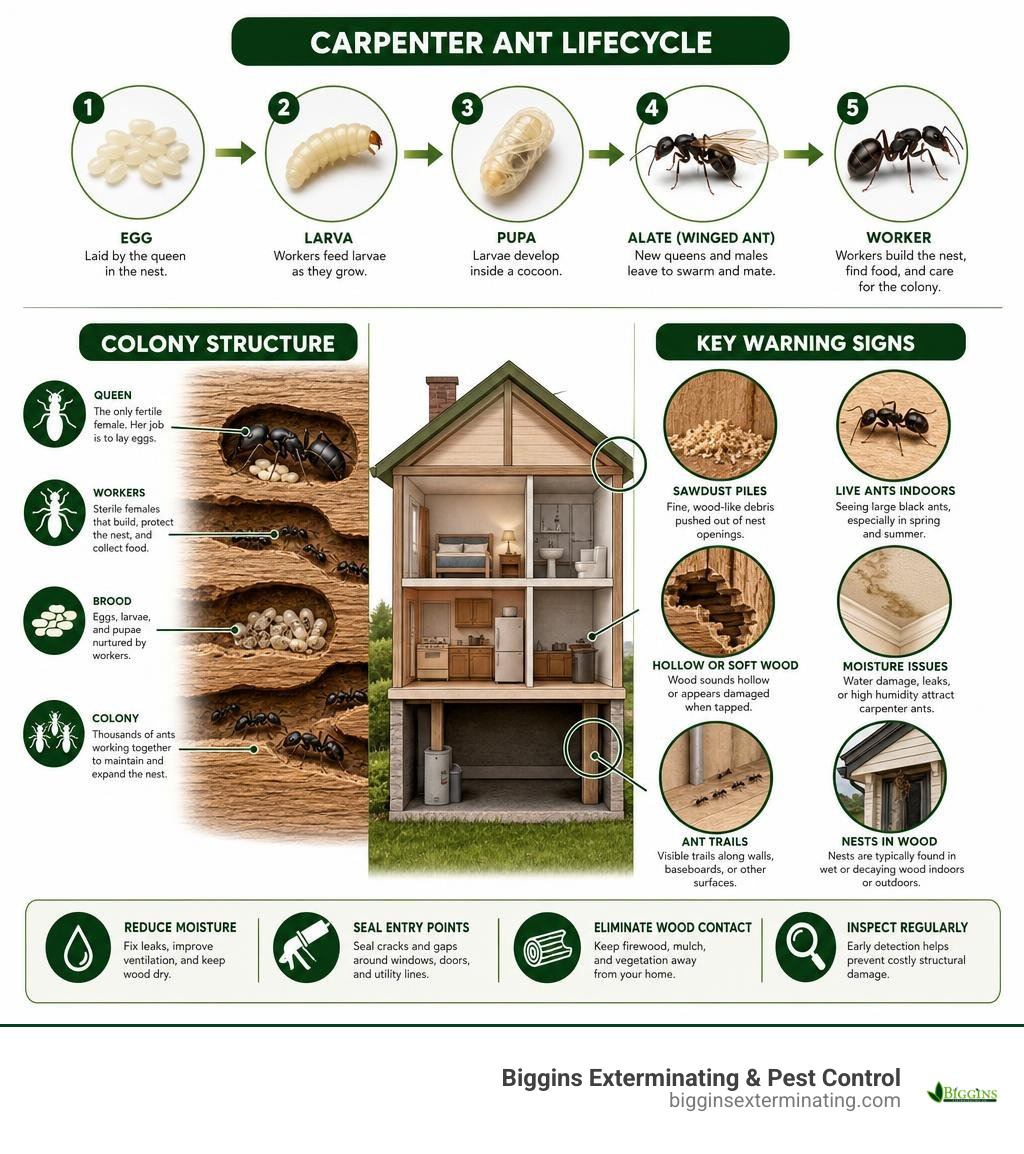
Wood-infesting carpenter ant control terms at a glance:
Understanding Wood-Destroying Pests: Carpenter Ants vs. Termites
To protect your home, you must first know what you are fighting. Homeowners in places like Lexington and Bedford often confuse carpenter ants with termites. While both are wood-destroying pests, they are entirely different biological beasts that require completely different treatment strategies.
Physically, you can tell them apart by looking closely at their body shapes. Carpenter ants have a very narrow, pinched waist (often called a “wasp waist”) and bent or elbowed antennae. Termites, on the other hand, have a thick, broad waist and straight antennae that look like tiny strings of beads. If you see winged “swarmers” in the spring, look at their wings: a carpenter ant has front wings that are notably larger than its hind wings, while a termite’s four wings are all equal in size and twice as long as its body.
Their nesting habits also tell a clear story. Termites consume wood for its cellulose, leaving behind galleries filled with mud and gritty soil. Carpenter ants do not eat wood. They use their powerful mandibles to shred it, spitting out the fragments to carve clean, smooth tunnels. If you peek inside a carpenter ant gallery, it will look clean, polished, and smooth — almost as if it was worked over with fine sandpaper. For more detailed information on their anatomy and behavior, you can refer to the Rutgers NJAES Guide on Carpenter Ants.
| Feature | Carpenter Ants | Termites |
|---|---|---|
| Waist Shape | Narrow, pinched “wasp” waist | Thick, broad waist |
| Antennae | Bent / Elbowed | Straight, beaded |
| Diet | Sweets, proteins, honeydew (does not eat wood) | Cellulose from wood (eats wood) |
| Gallery Appearance | Clean, smooth, sandpapered texture | Messy, packed with mud and soil |
| Debris | Piles of sawdust-like “frass” near exits | None (wood is digested) |
Identifying the Signs of a Wood-Infesting Carpenter Ant Control Issue
How do you know if you have an active infestation inside your walls? The most obvious clue is the presence of “frass.” Because carpenter ants are meticulous housekeepers, they push their building debris out of small, slit-like openings in the wood. This debris looks like loose piles of coarse sawdust, but if you look closely, it is actually a mixture of wood shavings, insect fragments, and soil particles.
Another unmistakable sign is sound. During their peak hours — which are strictly nocturnal, usually between 8 p.m. and 4 a.m. — a large colony inside a wall void will make a distinct, dry rustling sound. It sounds like dry leaves blowing across a driveway or crinkling cellophane. If you tap on a suspect wall or window frame in your kitchen with the handle of a screwdriver, you might hear this rustling intensify as the ants get startled. For more tips on what to look for, read our guide on spotting black carpenter ants.
Comparing Wood-Infesting Carpenter Ant Control Treatments
When it comes to wood-infesting carpenter ant control, choosing the right treatment method is crucial. Simply spraying a standard store-bought aerosol insecticide on the ants you see walking across your kitchen counter will not solve your problem. In fact, it often makes it worse by scattering the colony.
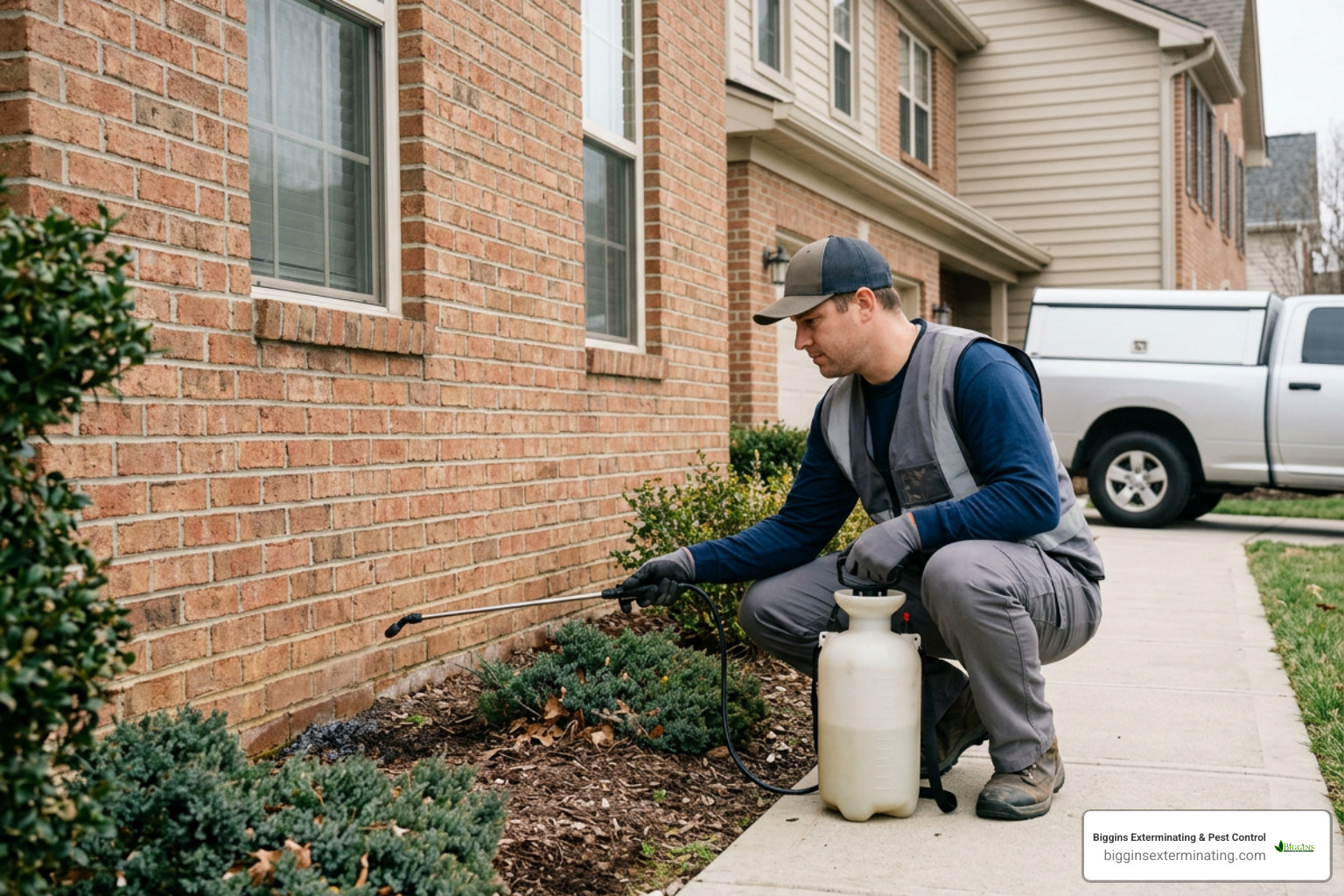
Modern pest control relies on targeted systems designed to reach the heart of the colony. To understand the full scope of treatment options, you can review the Wisconsin Extension Guide on Controlling Carpenter Ants. Let’s compare the three main professional treatment methods used today:
Non-Repellent Liquid Treatments
Unlike older chemical sprays that ants could smell and avoid, modern non-repellent liquids are completely undetectable to them. When foraging worker ants walk through a treated zone, they don’t die instantly. Instead, they get the active ingredient on their bodies and carry it back to the nest, sharing it with the rest of the colony through grooming and feeding. This “transfer effect” is highly effective because it eventually reaches the queen, shutting down the entire colony.
Insecticidal Dusts
Dusts are the gold standard for treating wall voids, hollow doors, and soffits. Products containing active ingredients like deltamethrin or silica-based dusts are injected into small, 1/8-inch drill holes directly into the areas where nests are suspected. Because dusts do not degrade quickly and disperse beautifully inside dry voids without damaging insulation or electrical wiring, they provide long-lasting control.
Boric Acid Baits
Boric acid is a naturally occurring mineral that acts as a slow-acting stomach poison for ants. When formulated into sweet or protein-rich gel baits, foraging ants readily feed on it and share it with their nestmates. However, baits must be selected carefully; carpenter ants are notoriously picky eaters, and their dietary preferences shift from proteins in the spring to sugars in the mid-summer.
Professional vs. DIY Wood-Infesting Carpenter Ant Control
It is tempting to try solving a carpenter ant issue with DIY sprays or retail bait stations, but these attempts often fall short. The main reason DIY treatments fail is the structure of the carpenter ant colony.
A mature colony often consists of a parent nest (usually located outdoors in a damp tree stump, decaying log, or firewood pile) and multiple satellite nests (located indoors in dry wall voids, insulation, or hollow doors). Satellite nests contain workers, larvae, and pupae, but they do not contain the queen or eggs. The queen remains protected in the damp outdoor parent nest.
If you apply a repellent DIY spray indoors, you only kill a few foraging workers. The remaining ants in the satellite nest will simply cut off contact with that area and continue to damage your home elsewhere.
Professional exterminators use specialized diagnostic tools like moisture meters and thermal imaging cameras to find hidden moisture pockets inside your walls. Since carpenter ants are highly attracted to moisture, finding these wet spots is often the key to finding the nest. For a deeper look at why professional methods outlast DIY attempts, read The Ultimate Guide to Professional Carpenter Ant Removal.
Eco-Friendly and Least-Toxic Treatment Options
If you have children or pets, you might be looking for the least-toxic ways to handle a pest issue. Fortunately, integrated pest management (IPM) offers several highly effective, eco-friendly options:
- Borate Wood Treatments: Products like Timbor or Bora-Care are made of borate salts. When applied to bare wood, they penetrate deep into the fibers. If a carpenter ant attempts to chew through this wood to build a gallery, the borate disrupts their digestive system, preventing them from nesting there.
- Silica Aerogel and Diatomaceous Earth: These are natural, inorganic dusts that work physically rather than chemically. They cling to the ant’s outer waxy skeleton and absorb its moisture, causing the insect to dehydrate and die naturally. Because they are inorganic, they never break down or lose their effectiveness as long as they stay dry.
- Temperature Manipulation: In specialized cases, extreme heat or localized freezing can be used to eliminate nests in small, accessible wooden items or wall sections without using chemical products.
To learn more about keeping your family safe during pest treatments, check out our resource on non-toxic carpenter ant control.
Prevention Strategies and Cost Expectations in Massachusetts
Preventing an infestation is always easier and less expensive than treating one. Because carpenter ants require moisture to successfully establish satellite nests, the absolute best prevention strategy is moisture control.

Here is your preventative maintenance checklist:
- Fix leaks immediately: Repair dripping pipes, roof leaks, and clogged gutters that spill water down your siding.
- Trim your landscaping: Keep tree branches and shrubs trimmed at least two to three feet away from your roofline and siding. Ants use these branches as natural bridges to bypass your foundation treatments.
- Store firewood properly: Keep firewood elevated off the ground and stored at least 20 feet away from your home. Never bring firewood indoors until you are ready to burn it immediately.
- Seal entry points: Use high-quality silicone caulk to seal gaps around window frames, door trim, utility lines, and cable entries.
For a complete breakdown of long-term preventative measures, consult our carpenter ant prevention ultimate guide.
What Does Professional Treatment Cost?
When considering professional pest control, it helps to understand what to expect financially. Based on publicly available internet data, the average cost for professional carpenter ant treatment in the United States ranges from $250 to $350 for a standard localized service.
However, because every home and infestation is unique, the actual cost can vary widely. For a small, localized nest in an easily accessible window frame, prices can start as low as $150. For severe, multi-year infestations that have spread throughout a large home with multiple satellite nests, requiring extensive wall void injections and exterior barriers, the high-end cost can reach $1,200 or more.
Please note: These figures are average costs based on public internet data and do not represent Biggins Exterminating’s actual pricing. We customize every quote to your specific property to ensure you only pay for what you actually need.
Frequently Asked Questions about Carpenter Ant Control
Do carpenter ants eat wood like termites do?
No, carpenter ants do not eat wood. They do not possess the enzymes required to digest cellulose. Instead, they use their strong jaws to chew through wood solely to build nesting galleries. Their actual diet consists of proteins (like other insects) and sugars. Outdoors, they primarily feed on “honeydew,” a sweet substance produced by aphids. Indoors, they are drawn to grease, syrup, honey, jelly, and meat.
How do I find a hidden carpenter ant nest in my walls?
Locating a hidden nest requires patience and a little detective work. The best time to search is at night, particularly between 10 p.m. and 2 a.m., when the ants are most active. You can follow foraging workers as they carry food back to the nest. You can also tap along baseboards and window frames with a screwdriver handle and listen for a hollow sound or a sudden, dry rustling noise inside the wall. If you want to learn more about tracking down these hidden pests, read our detailed guide on how to get rid of carpenter ant nests forever.
When should I call a professional for carpenter ant control?
You should call a professional if you see winged swarmers indoors, find large piles of sawdust-like frass, or consistently see large black ants inside your home during the winter or early spring. Seeing ants indoors during the winter is a strong indicator that they are nesting inside your heated walls rather than foraging from outdoors. To understand how a professional team tackles these tough situations, read our article on whether pest control can get rid of carpenter ants.
Conclusion
An active carpenter ant infestation isn’t just a minor nuisance — it is a direct threat to the structural integrity of your home. Because these pests build complex networks of parent and satellite nests, DIY solutions rarely provide the permanent relief your property needs.
At Biggins Exterminating & Pest Control, we have spent over 40 years protecting homes throughout Wilmington, Andover, Bedford, Billerica, Burlington, Lexington, North Reading, Tewksbury, and Woburn. As a local, family-owned and operated company, we believe in providing honest, high-quality service. We don’t require you to sign long-term service contracts, we back our work with reliable warranties, and your satisfaction is always our top priority.
Don’t let carpenter ants tunnel away at your home’s value. Schedule a Carpenter Ant Pest Control Inspection with us today, and let our family protect yours!