Why Carpenter Ant Nest Treatment Matters This Spring
Carpenter ant nest treatment is the most important step you can take to stop these wood-destroying pests from damaging your home. Here’s a quick overview of how it works:
Quick Answer: How to Treat a Carpenter Ant Nest
- Locate the nest – Follow foraging trails at night (10 p.m.–2 a.m.) and look for sawdust-like frass
- Identify nest type – Determine if it’s an outdoor parent nest or an indoor satellite nest
- Treat directly – Inject insecticidal dust or foam into wall voids or outdoor nests
- Use slow-acting bait – Place bait near trails so workers carry it back to the queen
- Remove moisture sources – Fix leaks and decay that attract nesting
- Prevent return – Seal entry points, trim branches, and store firewood away from the house
It’s April 2026, and carpenter ants across Massachusetts are waking up. Every spring, homeowners in Wilmington, Woburn, and surrounding towns start spotting large black ants crawling through kitchens, along baseboards, and around window frames. Most assume a few sprays will fix it. They won’t.
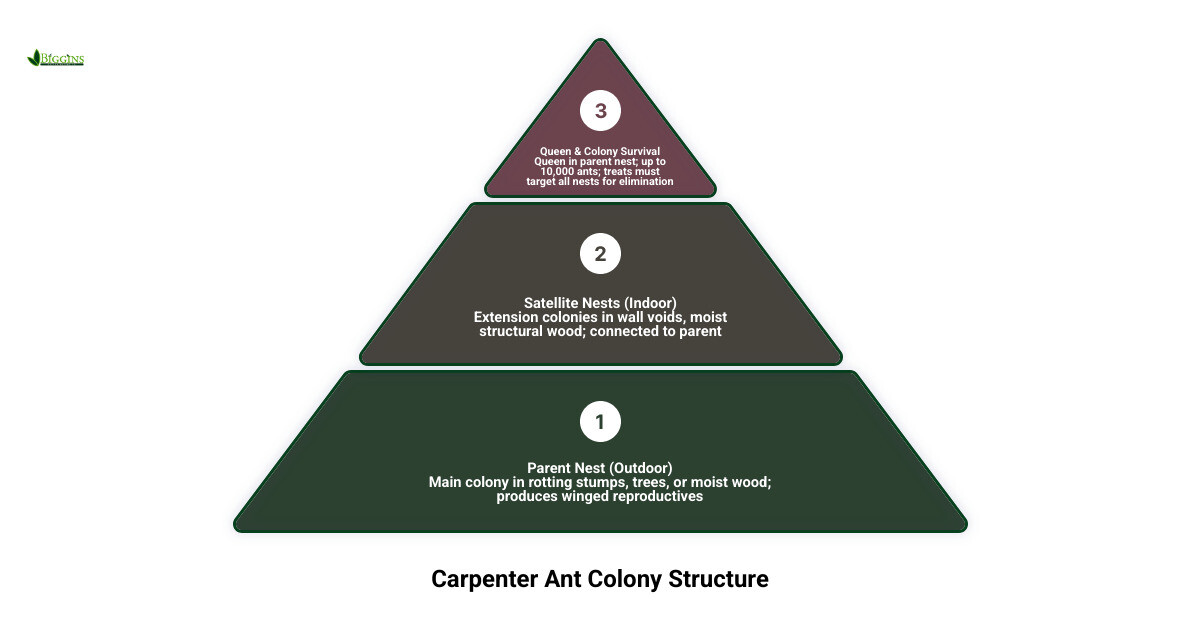
Here’s why: what you see is rarely the whole picture. A mature carpenter ant colony can hold up to 10,000 individuals — and only 10–15% of them ever leave the nest to forage. The ants you spot are just the tip of the iceberg.
Carpenter ants don’t eat wood like termites do. They excavate it — hollowing out smooth, clean galleries to build their nests. Over time, that silent damage can weaken floor joists, wall studs, and structural beams.
The real danger lies in how these colonies are structured. There’s typically an outdoor parent nest — often in a rotting stump, a dead tree, or moisture-damaged wood — and one or more indoor satellite nests connected to it. Treating only what you can see indoors almost always leads to a rebound.
I’m Stephen Biggins, owner of Biggins Exterminating Co., and with over 40 years of hands-on carpenter ant nest treatment experience serving Massachusetts homeowners, I’ve seen how quickly a small ant problem becomes a structural one. In this guide, I’ll walk you through exactly how to find, treat, and permanently eliminate carpenter ant nests — inside and out.
Easy carpenter ant nest treatment word list:
Identifying the Infestation: Ants vs. Termites
Before we dive into the specifics of carpenter ant nest treatment, we have to make sure we’re fighting the right enemy. In towns like Andover and North Reading, we often see homeowners panic thinking they have termites when they actually have ants—or vice versa.
The biggest difference is in how they treat your home’s wood. Termites consume the wood for food, often lining their tunnels with mud. Carpenter ants are much “cleaner” tenants; they simply want a place to live. They use their powerful mandibles to chew through wood, creating galleries that are smooth and look almost as if they’ve been sanded down.
| Feature | Carpenter Ants | Termites |
|---|---|---|
| Body Shape | Pinched “wasp-like” waist | Broad, thick waist |
| Antennae | Elbowed (bent) | Straight (like a string of beads) |
| Wings | Front wings longer than back | All four wings equal in length |
| Evidence | Piles of “frass” (sawdust) | Mud tubes and fecal pellets |
| Wood Appearance | Smooth, clean galleries | Rough tunnels filled with mud/soil |
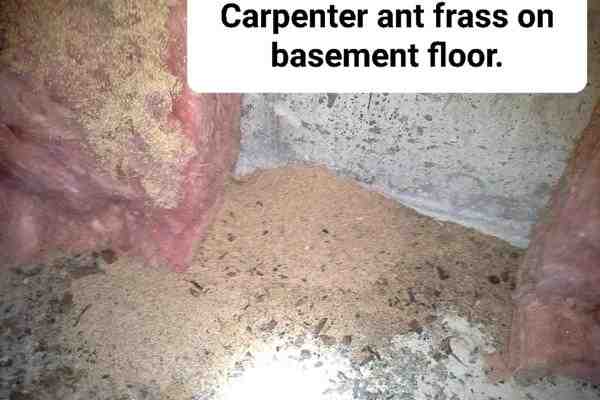
If you see sawdust-like material (called frass) falling from a ceiling or piling up under a baseboard, you’re likely looking at an ant infestation. This frass is a mix of wood shavings, dead ant parts, and bits of other insects they’ve eaten. For a deeper dive into these differences, check out our guide on how to distinguish carpenter ants from termites identifying the menace in your home.
One final identification tip: look at the ant’s profile. A carpenter ant has a perfectly rounded thorax (the middle section) and a single node (a small hump) at its waist. These physical traits, combined with their large size (typically 1/4 to 1/2 inch), are the hallmark of the species. For more on local species, the Carpenter Ants Prevention and Control resource offers excellent biological details.
How to Locate the Source for Effective carpenter ant nest treatment
Successful carpenter ant nest treatment is 90% detective work and 10% application. If you don’t find carpenter ant nest locations, you’re just playing a game of whack-a-mole with foraging workers.
The Midnight Inspection
Carpenter ants are primarily nocturnal. While you might see a few stragglers during the day, the real activity happens between 10 p.m. and 2 a.m. This is the best time to grab a flashlight and head outside. Look along the foundation, the edges of your siding, and especially near where utility lines enter the house.
Follow the Trails
These ants are creatures of habit. They establish semi-permanent trails—sometimes visible as worn paths through the grass—that they use year after year. They can travel more than 100 yards from their parent nest to find food or establish a satellite colony in your attic. If you spot a line of ants, don’t squish them! Follow them. They will eventually lead you back to their entry point or the nest itself.
Listen to Your Walls
In a quiet room, you can actually hear a large colony. Homeowners often describe it as a dry rustling sound, similar to crinkling cellophane or soft crackling. This is the sound of thousands of tiny legs moving and mandibles scraping against the wood.
Look for the “Confetti”
As ants excavate, they must push the debris out of the nest. Look for piles of frass. Because these ants are tidy, they often have “kick-out” holes where they dump this waste. Finding a pile of fibrous sawdust is a “smoking gun” that a nest is directly above or behind that spot.
Professional Strategies for Indoor and Outdoor Control
Once we’ve located the nests, it’s time for pest control for carpenter ants. At Biggins Exterminating, we use a multi-pronged approach because we know that killing a few workers won’t stop the colony.
The secret to total elimination is trophallaxis. This is a fancy word for the way ants share food. By using slow-acting toxicants, we ensure the workers don’t die immediately. Instead, they carry the treatment back to the heart of the colony, feeding it mouth-to-mouth to the larvae and, most importantly, the queen.
While DIY kits exist, they often use repellent sprays that simply scatter the ants, causing them to move the nest deeper into your walls. Professional-grade, non-repellent insecticides are essential. According to the Biology and Management of Carpenter Ants | CAES Field Report, direct nest treatment is the most effective way to ensure the queen is eliminated.
Based on internet data, the average cost for professional carpenter ant nest treatment can range from $300 to $1,500, depending on the severity of the infestation and the size of the property. For a family-owned company like ours in Wilmington, we focus on providing this high-level expertise without the burden of long-term contracts.
Precision Injection for Indoor carpenter ant nest treatment
If you have a carpenter ant infestation in house structures, we can’t just spray the baseboards and hope for the best. The ants are tucked away inside wall voids, hollow doors, or window frames.
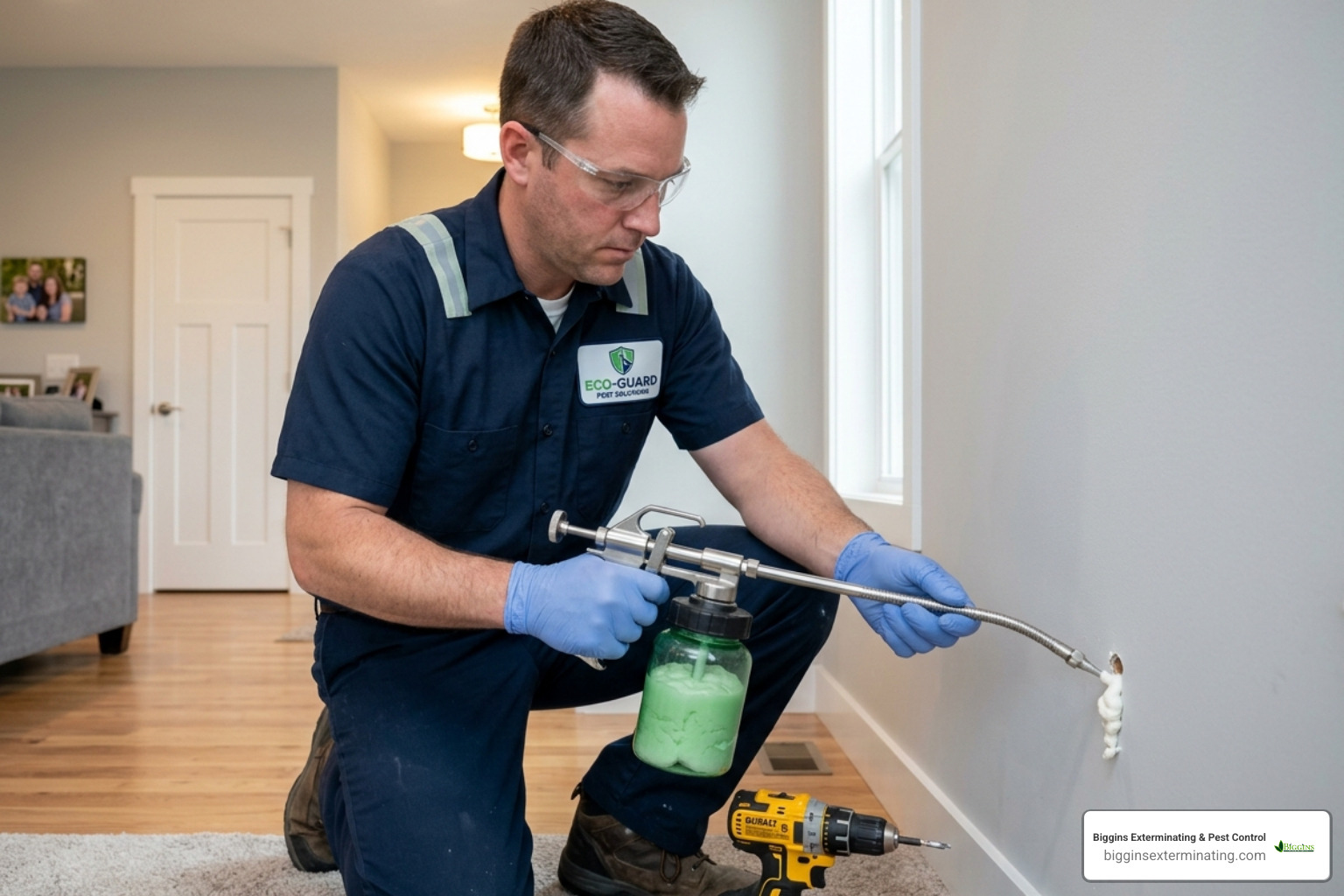
We often use a technique called precision injection. This involves:
- Drilling: We may drill tiny 1/8-inch holes into the wall voids where activity is highest.
- Dusting: We inject specialized insecticidal dusts (like deltamethrin) that float through the void, coating every surface the ants touch.
- Foaming: For areas with heavy moisture damage or complex galleries, we use pressurized foam. The foam expands to fill every nook and cranny, ensuring the carpenter ant nest treatment reaches the very center of the satellite colony.
This method is particularly effective around “hot zones” like chimneys, skylights, and bathtubs, where moisture often accumulates and attracts ants.
Targeting the Parent Colony: Outdoor carpenter ant nest treatment
To stop the ants for good, we must find the “Mother Ship.” The parent nest is almost always outdoors and requires a different how to kill carpenter ants strategy.
Common outdoor nesting sites include:
- Old tree stumps and rotting logs.
- Hollows in living trees (75% of urban shade trees in some studies have been found to host these ants).
- Stacked firewood touching the ground.
- Railroad ties used in landscaping.
For outdoor nests, we use liquid residual saturation. We drench the nesting site to ensure the insecticide reaches deep into the wood or soil. Additionally, we apply a perimeter barrier 2-3 feet up the foundation and 2-3 feet out into the soil. This creates a “dead zone” that foraging ants must cross, picking up the slow-acting toxicant on their way back to the parent nest.
Prevention: Keeping Your Home Ant-Free
After a successful carpenter ant nest treatment, the last thing you want is a new queen moving in next spring. Our Carpenter Ant Prevention Ultimate Guide outlines the structural changes needed to keep your home protected.
Moisture is the Magnet
Carpenter ants rarely nest in perfectly dry, sound wood. They look for wood that has been softened by moisture or decay.
- Fix Leaks: Repair leaky pipes under sinks and ensure your roof is in good shape.
- Clean Gutters: Clogged gutters cause water to back up under your shingles, rotting the fascia boards—a favorite nesting spot.
- Ventilation: Ensure crawl spaces and attics have proper airflow to prevent dampness.
Landscaping Adjustments
- Trim Branches: Tree limbs touching your roof act as a highway for ants. Keep all vegetation at least 2 feet away from the house.
- Firewood Storage: Never stack firewood against your house. Store it at least 20 feet away and elevated off the ground.
- Seal the Gaps: Use high-quality caulk to seal cracks in the foundation and gaps around windows or where utility lines enter.
Common Questions About Carpenter Ant Nests
Can you hear carpenter ants in the walls?
Yes! As mentioned earlier, a large colony produces a distinct rustling or crackling sound. If you hear this at night, it’s a sign of a significant infestation that likely requires professional carpenter ant nest treatment.
Does vinegar or dish soap kill the nest?
While vinegar and dish soap can kill an ant on contact by disrupting its exoskeleton or masking pheromone trails, they will not kill the nest. These remedies only affect the 10% of ants that are outside. The queen and the rest of the colony will remain safe and sound deep inside the wood.
How long does it take to eliminate a colony?
Total elimination usually takes between 3 to 6 weeks. This timeline allows for the slow-acting baits and dusts to be passed through the entire population via trophallaxis. Patience is key; if you use a “quick kill” spray, you’ll stop the bait transfer and the colony will simply rebound.
Conclusion
Getting rid of carpenter ants isn’t just about killing the bugs you see; it’s about a strategic, scientific approach to carpenter ant nest treatment. From identifying the difference between ants and termites to performing midnight inspections and precision wall injections, every step is vital to protecting your home’s structural integrity.
At Biggins Exterminating Co., we’ve spent 40 years mastering these techniques. As a family-owned business based in Wilmington, we take pride in serving our neighbors in Woburn, Andover, Bedford, Billerica, Burlington, Lexington, North Reading, and Tewksbury. We believe in high-quality service, which is why we offer warranties and never require our customers to sign long-term contracts.
If you’re hearing rustling in your walls or seeing “ant sawdust” on your floors, don’t wait for the damage to get worse. Contact us today for a professional carpenter-ant-pest-control evaluation, and let’s get those ants out for good.