Identifying Black Carpenter Ants Bedford
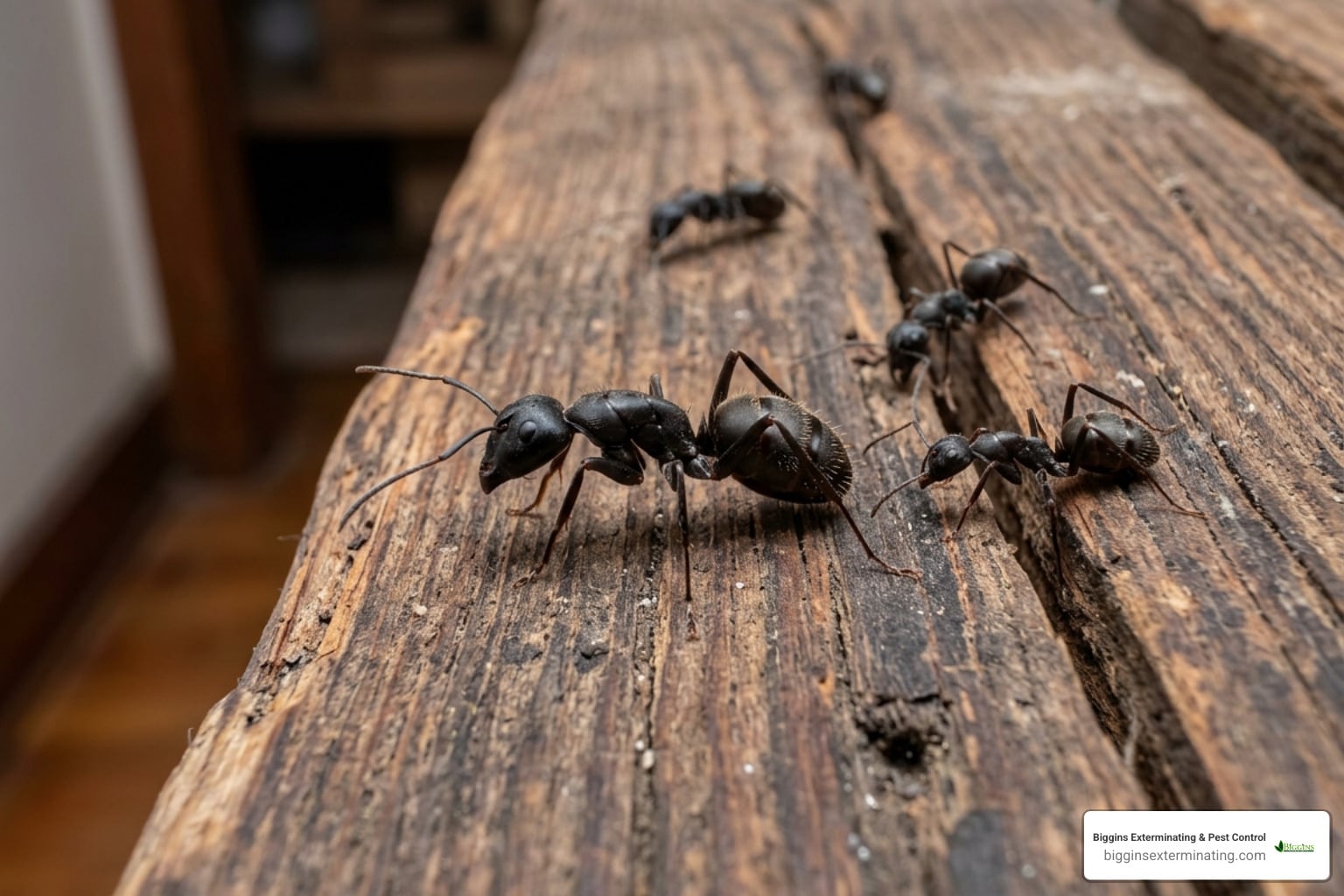
Black carpenter ants Bedford residents are seeing right now are almost certainly Camponotus pennsylvanicus — the eastern black carpenter ant, and the most common structural pest in eastern North America.
Here’s a quick way to confirm what you’re dealing with:
- Size: Large black ants, roughly 1/4 to 1/2 inch long (workers vary in size)
- Color: Dull black body with yellowish or whitish hairs on the abdomen
- Shape: Distinctly pinched waist, elbowed antennae
- Where you’ll see them: Wandering through kitchens, bathrooms, or along baseboards — often at night
- Key evidence: Small piles of sawdust-like material (called frass) near wood surfaces
If that description matches what you’re seeing in your Bedford home, you likely have a carpenter ant problem worth taking seriously.
These ants don’t eat wood — they tunnel through it to build nests. Over time, that damage quietly weakens your home’s structure. And because 75% of their nests in the Northeast start in dead trees outdoors, many Bedford homes near wooded lots are especially vulnerable in spring.
I’m Stephen Biggins, owner of Biggins Exterminating Co., and with over 40 years of hands-on pest control experience serving Bedford and surrounding communities, I’ve seen how fast a black carpenter ants Bedford problem can escalate from a few wandering ants to a full satellite colony hidden inside your walls. In this guide, I’ll walk you through exactly what to look for and what to do about it.
Correct identification is the first step toward effective ant treatment Bedford Ma. While many people assume all large ants are the same, the black carpenter ants Bedford homeowners encounter have very specific biological traits.
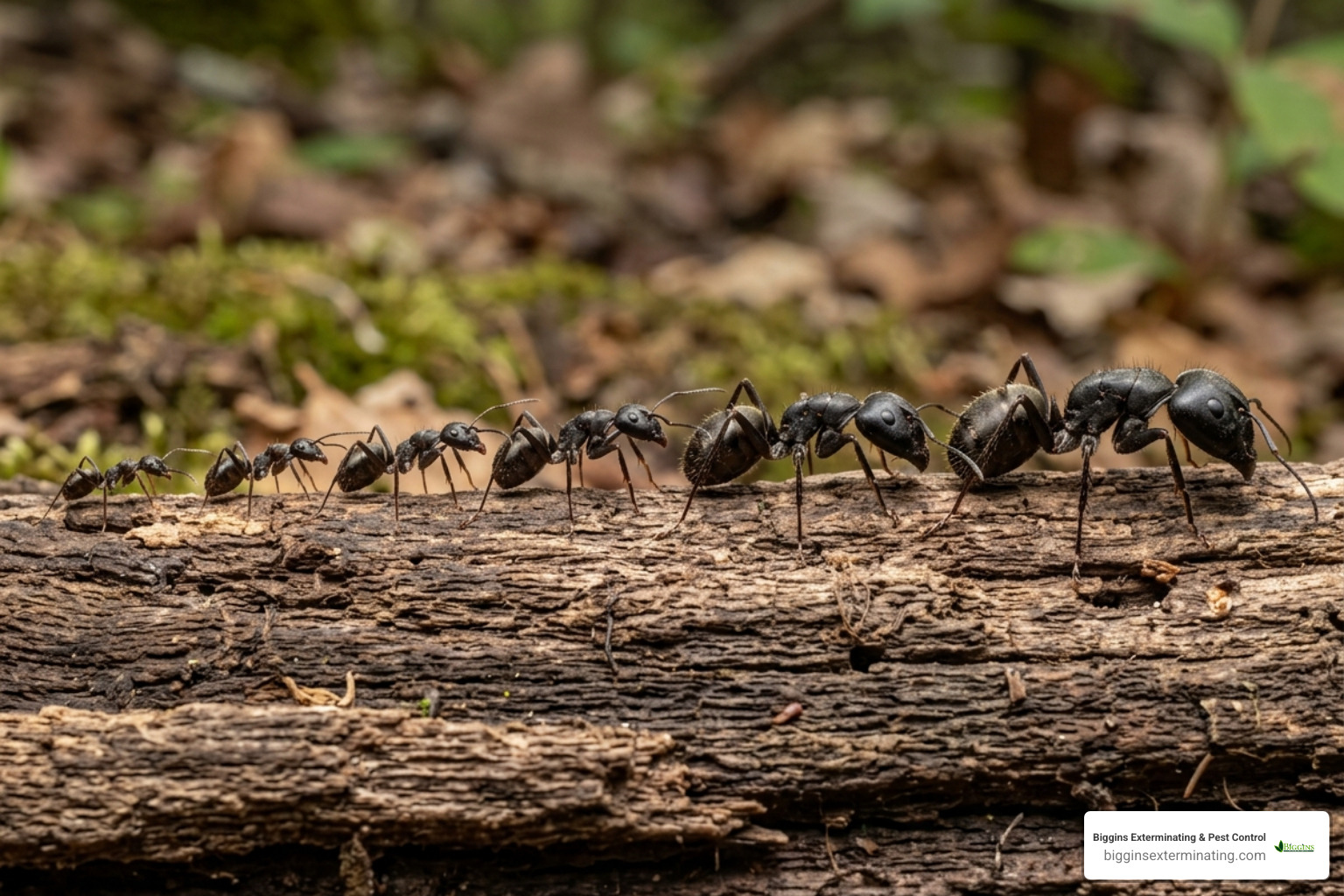
The scientific name for our local variety is Camponotus pennsylvanicus. These ants are among the largest in North America. One of the most interesting things about them is that they are polymorphic. This means that within a single colony, the worker ants come in many different sizes. You might see a tiny “minor” worker that is only 1/4 inch long, followed by a “major” worker (sometimes called a super major) that can reach over 1/2 inch in length.
Physical Characteristics of Black Carpenter Ants Bedford
When you look closely at a black carpenter ant, several features stand out:
- The Thorax: If you look at the ant from the side, the thorax (the middle section) has an evenly rounded profile. Other ants may have dips or ridges, but the carpenter ant is smooth and arched.
- Abdominal Hairs: Their abdomen is covered in fine, whitish or yellowish hairs, giving them a slightly “dull” or “matte” appearance rather than a shiny one.
- Mandibles: They possess incredibly strong mouthparts. While they don’t eat wood, they use these mandibles like tiny chisels to chip away at timber.
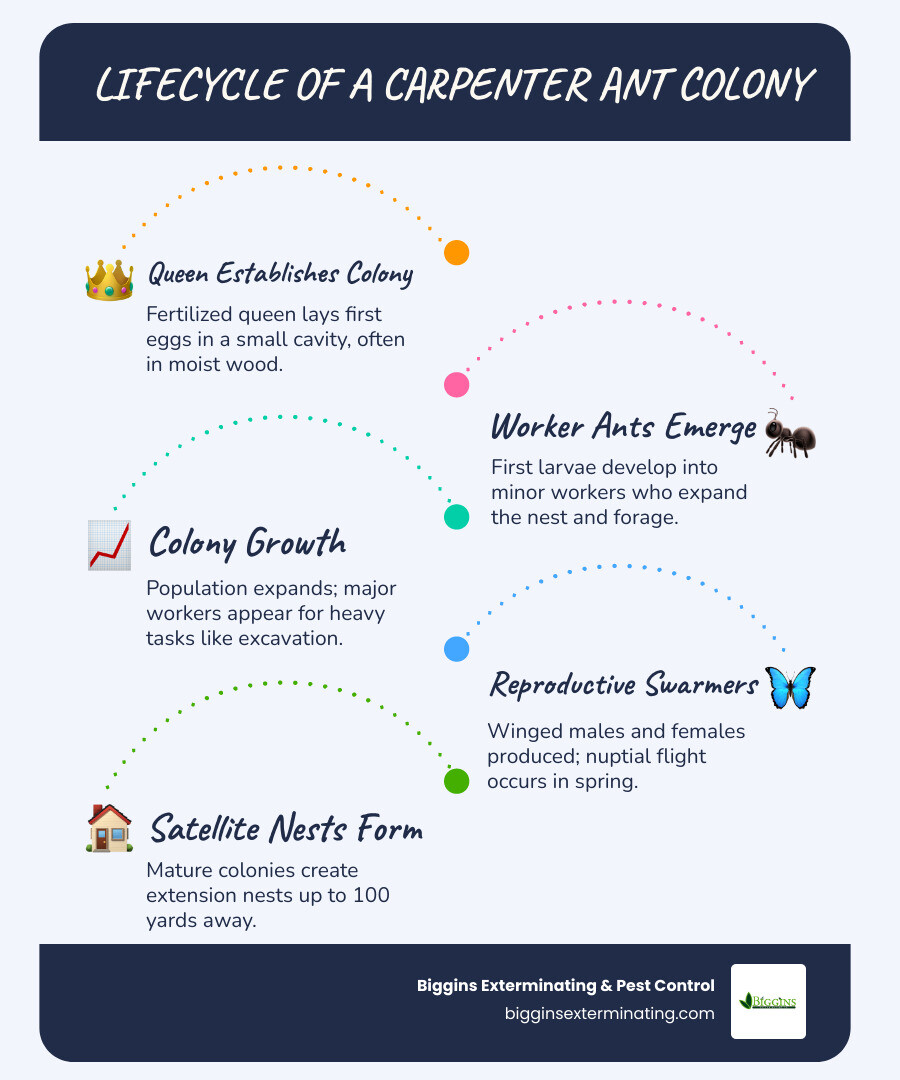
- Wings: Do do carpenter ants have wings? Yes, but only the reproductives. If you see winged ants inside your home in April or May, these are “swarmers” looking to start new colonies.
Behavior and Nesting Habits in Middlesex County
In towns like Bedford, Billerica, and Lexington, the landscape is a perfect mix of suburban homes and mature woodlands. This is paradise for black carpenter ants Bedford.
These ants typically operate using a “Parent/Satellite” system. The main parent colony, which houses the queen, the eggs, and the youngest larvae, is almost always located outside in a moisture-rich environment like a rotting stump or a dead tree. However, once that colony matures (usually after 3 to 6 years), they begin to establish satellite nests.
These satellite nests are what we find inside Bedford homes. They don’t need the same high moisture levels as the parent nest, so they can set up shop in dry wall voids, attics, or behind insulation. They are highly active at night and can forage up to 100 yards away from their nest in search of food, often following the same pheromone trails night after night.
Signs of an Infestation in Massachusetts Homes
Finding the actual nest is the hardest part of any ant control Bedford Ma plan. Because they are nocturnal and hide deep inside structures, you have to look for the clues they leave behind.
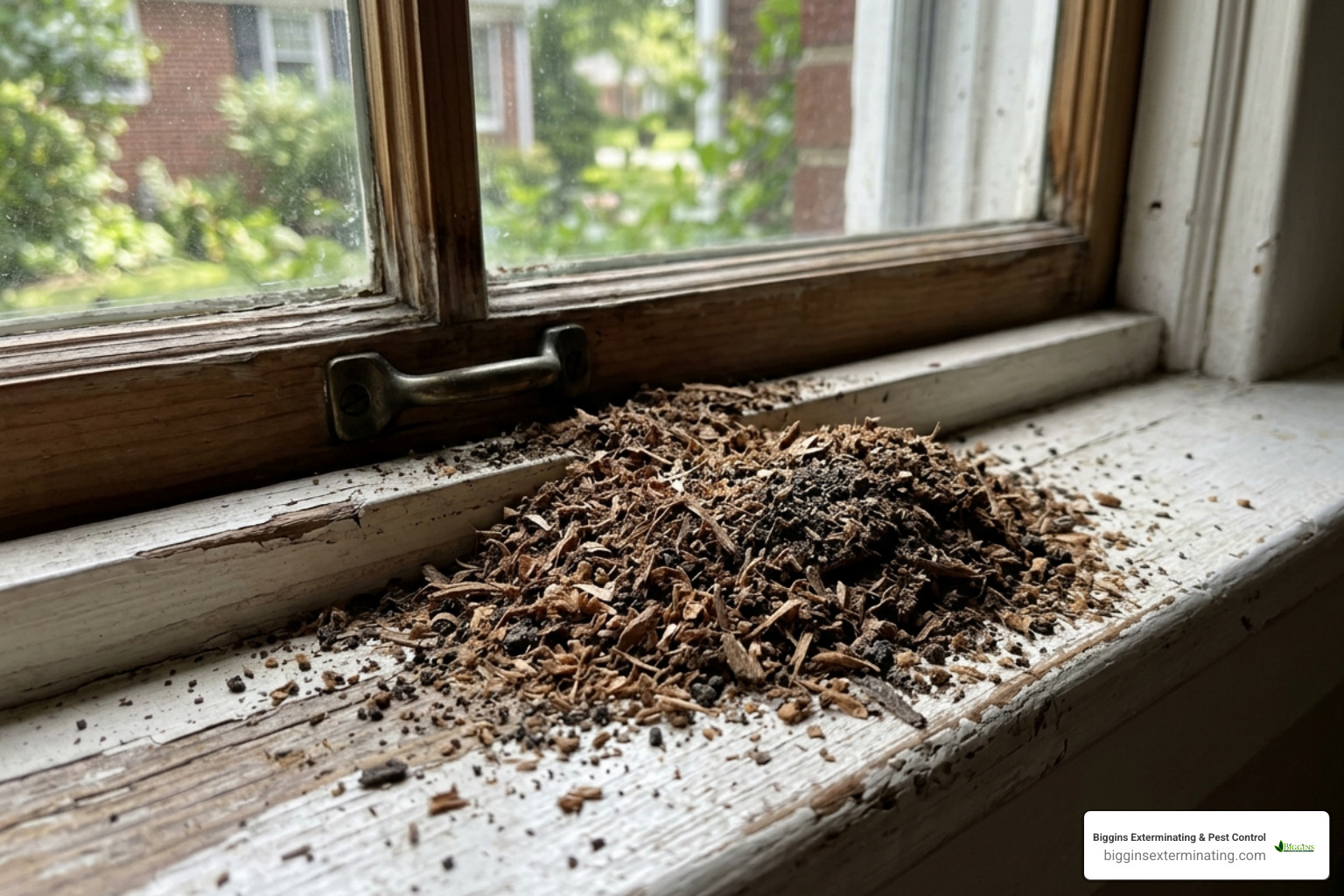
The most definitive sign of a carpenter ant infestation in house is the presence of frass. Since carpenter ants do not eat wood, they must “take out the trash” as they excavate their galleries. This frass looks like a pile of sawdust, but if you look closely, it will also contain bits of dead insects and even pieces of ant larvae. You will often find these piles under baseboards, door frames, or window sills.
Another sign is sound. In a very quiet room, if you have a large colony in the wall, you can actually hear a faint rustling or “cracking” sound. This is the sound of thousands of tiny legs moving against the wood and insulation.
Detecting Black Carpenter Ants Bedford Indoors
We often tell our neighbors in Bedford and Wilmington to watch their kitchens and bathrooms. These ants are omnivores; they love sweets, fats, and proteins. If you see a lone, large black ant wandering across your kitchen island at 10:00 PM, she is likely a scout.
Following these scouts can be helpful. They often follow “highways” such as electrical wires, plumbing pipes, or the edges of carpets. If you see a line of ants, they are following a pheromone path that leads directly back to their entry point or nest site.
Structural Damage and Wood Excavation
One of the biggest myths is that carpenter ants only live in rotted wood. While they prefer wood that has been softened by moisture or fungus, they are perfectly capable of moving into sound, dry wood once they have a foothold.
The galleries they create are very different from other wood-destroying insects. They are incredibly clean. A carpenter ant gallery looks like it has been sanded down with fine-grit sandpaper. This smooth appearance is a hallmark of carpenter ant control Bedford experts’ investigations. If the wood looks “shredded” or contains mud, you’re likely looking at a different pest.
Carpenter Ants vs. Termites: Understanding the Difference
It is vital to know which “wood-destroying insect” you are dealing with, as the treatment methods are completely different. Many homeowners in our service area—from Woburn to Andover—often confuse the two.
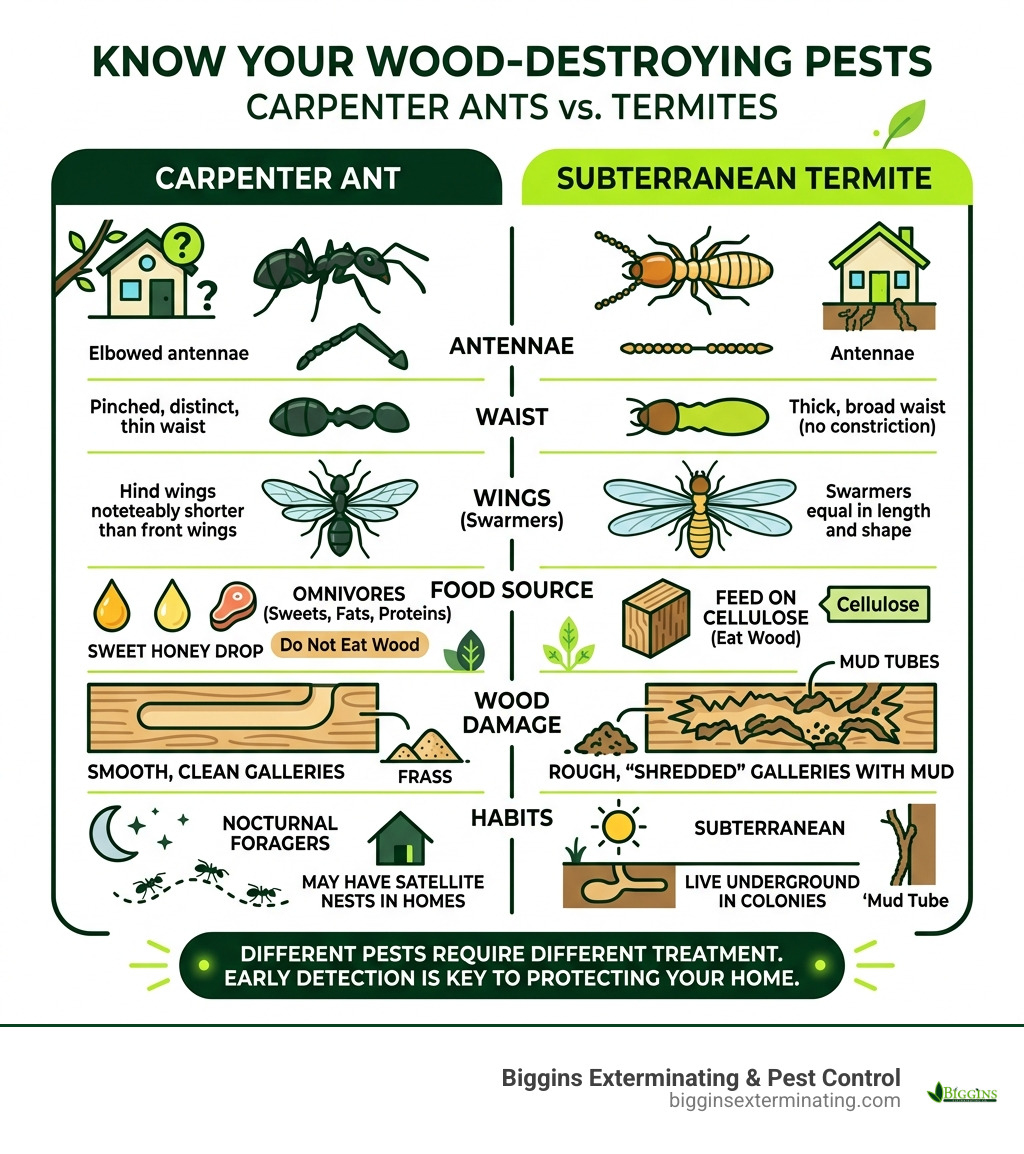
| Feature | Carpenter Ant | Subterranean Termite |
|---|---|---|
| Antennae | Elbowed (Bent) | Straight (like a string of beads) |
| Waist | Pinched and distinct | Thick and broad |
| Wings | Hind wings shorter than front wings | All four wings equal in length |
| Diet | Sweets, meats, and insects | Cellulose (Wood) |
| Evidence | Clean galleries and sawdust (frass) | Mud tubes and “eaten” wood |
As you can see, the main difference is that termites actually eat your house, while carpenter ants just move in. However, both can cause significant damage if left unchecked. For a deeper dive, check out our carpenter ants exterminator guide 2025.
Professional Treatment and Prevention Strategies
Preventing black carpenter ants Bedford starts with managing the environment around your home. At Biggins Exterminating, we believe that “an ounce of prevention is worth a pound of cure,” especially when it comes to structural integrity.
Effective DIY Prevention Tips
While a full-blown infestation usually requires professional help, you can do a lot to make your home less attractive to ants. We recommend following these steps from our carpenter ant prevention ultimate guide:
- Eliminate Moisture: This is the #1 rule. Fix leaky faucets, clogged gutters, and sweating pipes. Carpenter ants are drawn to moisture like a magnet.
- Vegetation Management: Trim your trees and shrubs so that no branches touch your house. These act as “bridges” that allow ants to bypass your foundation and enter through your roof or windows.
- Firewood Storage: Never store firewood against the side of your house. Keep it elevated and at least 20 feet away.
- Seal Entry Points: Use a high-quality caulk to seal gaps around where utility lines enter the home.
- Manage Aphids: Ants “farm” aphids for their honeydew. If your garden is full of aphids, you are essentially providing a buffet for the ant colony.
For more detailed steps, see our guide on how do you get rid of black carpenter ants.
Professional Extermination and Cost Expectations
If you are seeing consistent activity indoors, it’s time to call an ant exterminator Bedford Ma. Our carpenter ant service involves a thorough inspection to find the “trailing” ants and locate both the satellite and parent nests.
We use professional-grade, non-repellent sprays and granular baits. Non-repellent products are key because the ants don’t know they are there; they walk through the treatment and carry it back to the heart of the colony, eventually eliminating the queen.
Regarding costs, it is important to understand that every home is different. Based on publicly available internet data, the average cost for a professional carpenter ant treatment can range from $250 to $1,500. The high end of this range usually involves extensive infestations that require multiple treatments or specialized equipment to reach nests deep inside walls. Please note that these are national averages and not the specific pricing of Biggins Exterminating.
Frequently Asked Questions about Bedford Ants
Are black carpenter ants active in Bedford during winter?
Actually, yes. While outdoor colonies go dormant when the ground freezes, a satellite colony living inside your warm walls can remain active all year long. If you see black carpenter ants Bedford in January or February, it is a 100% guarantee that there is a nest inside your home’s structure. You can learn more in our exterminate carpenter ants ultimate guide.
Do black carpenter ants bite humans?
They can, but they rarely do unless you are actively disturbing their nest. They do not have stingers. However, they can pinch with their mandibles and spray a small amount of formic acid into the bite, which causes a sharp, stinging sensation. It’s a defense mechanism, not a predatory one. For more, read: do carpenter ants bite.
How long does a carpenter ant colony last?
A healthy queen can live for over 20 years! As long as the queen is alive, the colony will continue to produce workers and swarmers. This is why “DIY” sprays often fail—they kill the workers you see, but the queen stays safe in her nest, pumping out more ants to replace them. This is why we emphasize the use of baits in our carpenter ant baits complete guide.
Conclusion
Dealing with black carpenter ants Bedford can be frustrating, but you don’t have to do it alone. Biggins Exterminating & Pest Control is a local, family-owned and operated Massachusetts company. For over 40 years, we’ve provided high-quality, trusted service to our neighbors in Wilmington, Bedford, Billerica, and beyond.
We pride ourselves on being a pest control company near Bedford Ma that you can rely on. We don’t require long-term contracts; we believe our work speaks for itself. Whether you’re in a historic home in Lexington or a new build in Tewksbury, we have the expertise to protect your property from wood-destroying pests.
If you’re worried about ants in your home, give us a call. We’re here to help you keep your home solid and pest-free for years to come.