First, Identify Your Enemy: What Are Black Carpenter Ants?
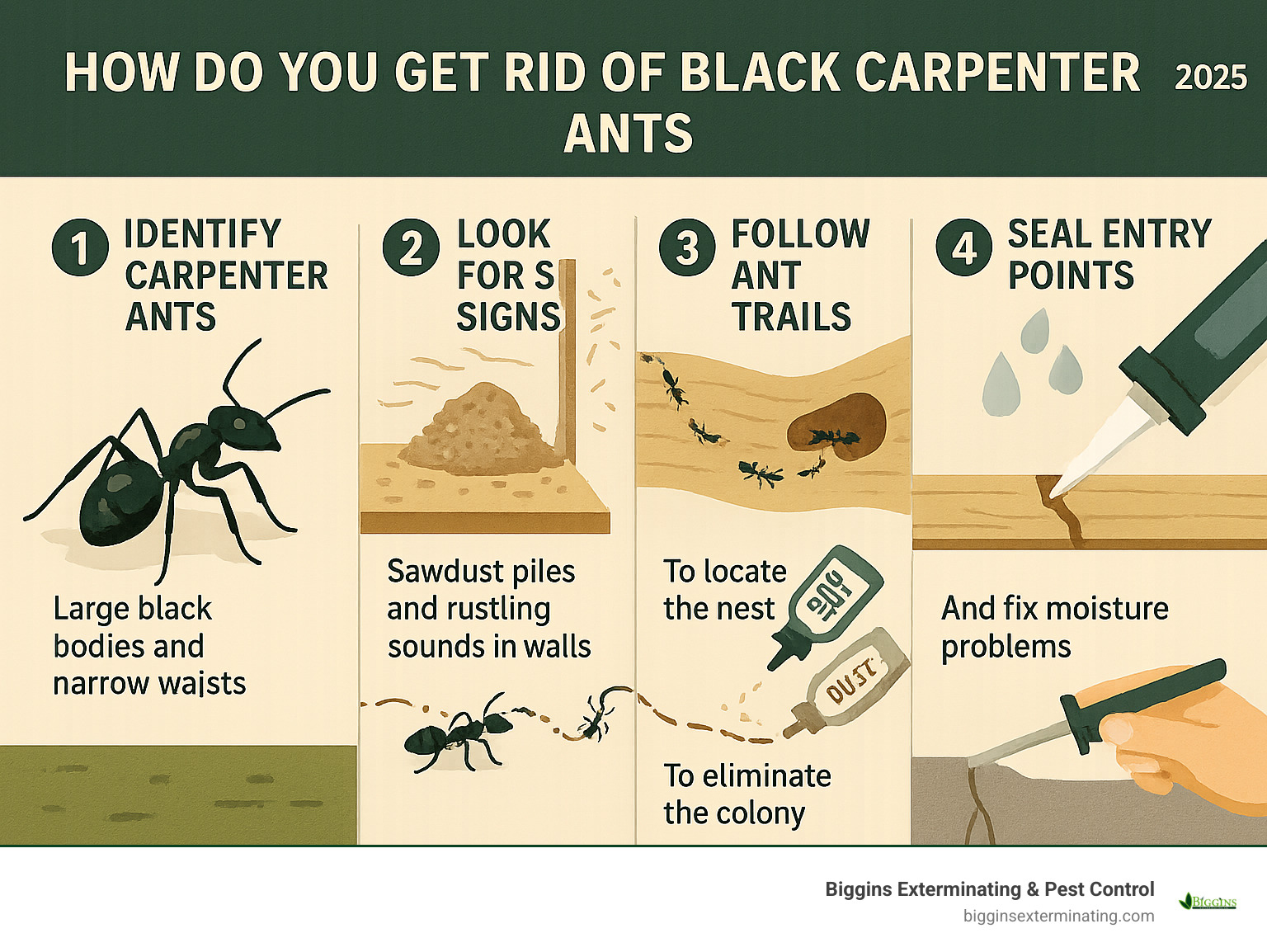
The question of how do you get rid of black carpenter ants is common for homeowners who find these wood-destroying pests. The best method depends on the infestation’s severity.
Quick Solutions for Black Carpenter Ants:
- Locate the nest – Follow ant trails at night to find their colony.
- Use ant baits – Place borax-based baits along trails to poison the colony.
- Apply insecticidal dust – Inject boric acid or diatomaceous earth into wall voids.
- Eliminate moisture – Fix leaks and remove damp wood that attracts them.
- Seal entry points – Caulk cracks and gaps around your home’s foundation.
- Call professionals – For large infestations or hidden nests in walls.
Unlike termites, carpenter ants excavate wood to build nests, not to eat it. This tunneling can cause serious structural damage. The key is targeting the entire colony, not just the workers you see. Spraying individual ants is ineffective because the queen and thousands of others remain hidden.
As owner of Biggins Exterminating Co., I’ve helped Massachusetts homeowners with carpenter ants for over 40 years. Success starts with proper identification and knowing where they hide.
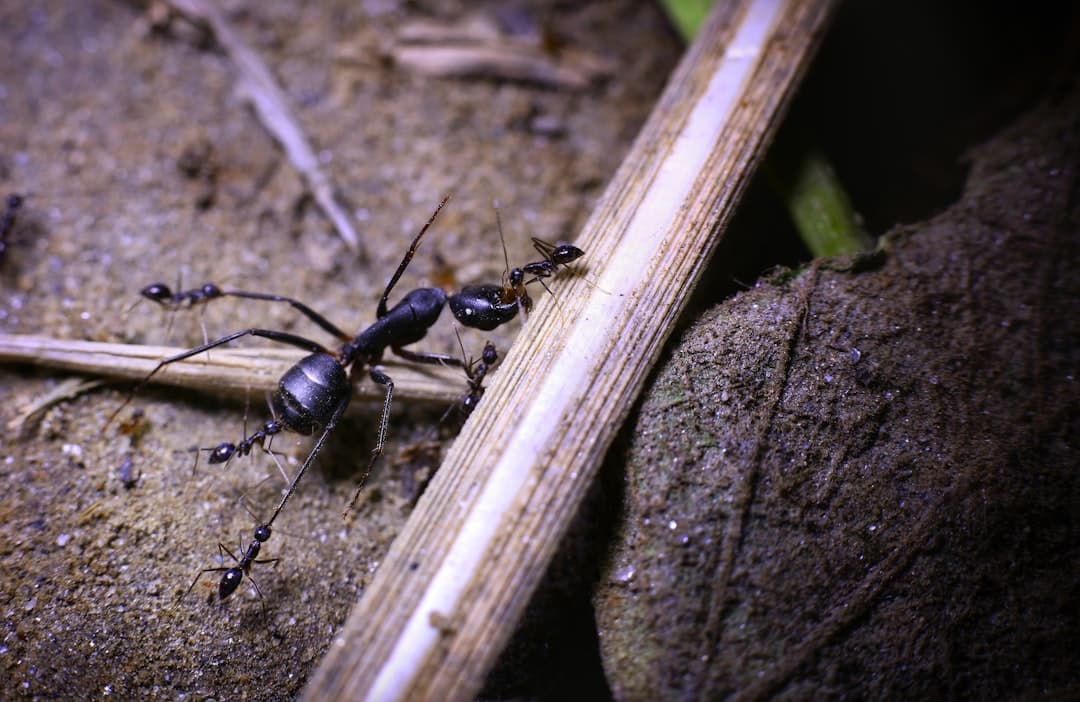
Black carpenter ants (Camponotus pennsylvanicus) are among the most common and damaging species in North America. They are large, from 1/4 to 5/8 inch long, and typically black or reddish-black with a segmented body, a slim waist, and bent antennae. Their defining trait is excavating wood to create smooth “galleries” for their nests.
It’s crucial to distinguish them from termites. Our guide can help: How to Distinguish Carpenter Ants from Termites: Identifying the Menace in Your Home.
Here’s a quick comparison:
| Feature | Carpenter Ants | Termites |
|---|---|---|
| Waist | Narrow, pinched | Broad, thick |
| Antennae | Elbowed or bent | Straight |
| Wings | Front pair longer than hind pair | Both pairs same size |
| Damage | Smooth galleries; leave “frass” (sawdust) | Mud tubes; chewed wood with soil; eat wood |
| Color | Typically black or reddish-black | Dark brown to creamy white |
Why They Invade: Moisture and Food
Carpenter ants are drawn to two things: moisture and food. They prefer moist, decaying wood for nesting, making leaky roofs, plumbing leaks, and poorly ventilated areas prime targets. Even minor issues like clogged gutters can create inviting conditions. They also forage for food, eating other insects and sugary substances like honeydew, syrup, and pet food. For more tips, see our guide on Indoor Ant Control.
The Threat to Your Home’s Structure
Carpenter ants don’t eat wood; they tunnel through it to create nests, discarding the chewed-up wood as “frass.” This hollowing out of timbers, ceilings, and walls weakens your home’s integrity. A colony matures in 3-6 years and may establish “satellite colonies” in drier areas of your home, like wall voids or behind insulation, increasing the potential for widespread damage. The University of California notes, You can easily tell these two pests apart, but the damage from either is serious.
Spotting the Invasion: Telltale Signs of a Carpenter Ant Infestation
To figure out how do you get rid of black carpenter ants, you first need to spot the signs of an invasion. Early detection is key to preventing costly structural damage.
Since carpenter ants are mostly active at night, you might not see them during the day. Here are the telltale signs to look for:
- Foraging worker ants: Seeing large, black ants wandering individually, especially in the evening, is often the first clue. If you consistently spot more than a dozen ants indoors at night, it’s time to investigate.
- Winged swarmers: The appearance of winged reproductive ants in the spring is a serious warning sign. It means a mature colony has been living in your home for at least two years and is large enough to expand. Don’t confuse them with termites; carpenter ant swarmers have pinched waists and bent antennae.
- Discarded wings: After mating, swarmers shed their wings. Finding these near windows, doors, or light fixtures confirms an indoor nest.
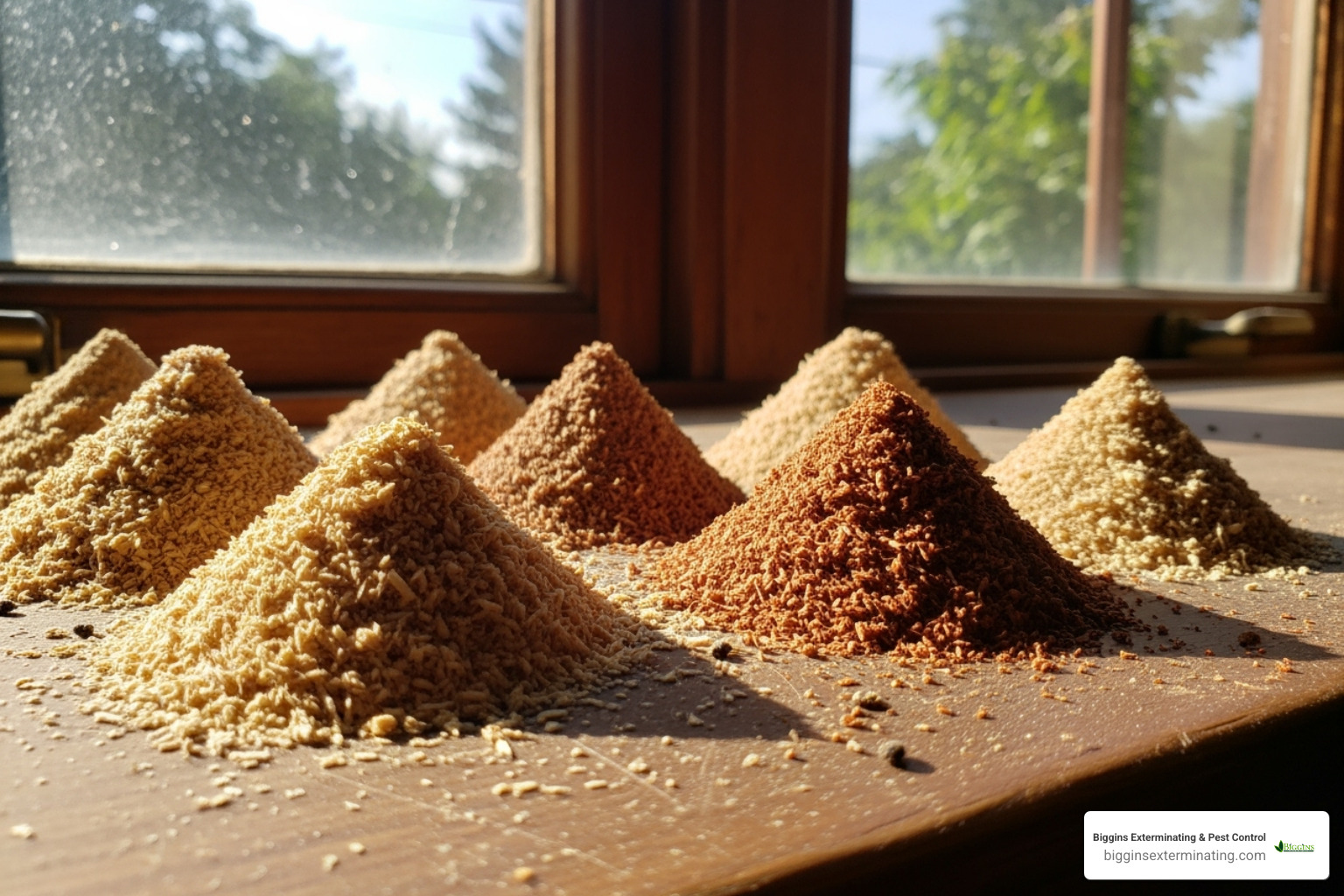
- Frass piles: The most reliable evidence is frass—coarse, sawdust-like debris pushed out of their galleries. Unlike fine powder from other insects, carpenter ant frass contains wood shavings, insect parts, and other debris. Finding frass near small, slit-like holes in woodwork, along baseboards, or under windowsills points directly to active tunneling.
- Faint rustling sounds: In quiet moments, you might hear dry, crinkling sounds from within walls or wooden structures. This is the sound of ants moving in their galleries.
Common nesting spots include wall voids, attics, crawl spaces, hollow doors, and areas near moisture like behind dishwashers. Outdoors, check tree stumps, firewood piles, and under decks.
Fortify Your Home: Proactive Prevention Strategies
The best way to deal with carpenter ants is to prevent them from entering your home. Making your property uninviting is the first step in answering how do you get rid of black carpenter ants. Focus on moisture control, sealing entry points, and smart landscaping. For more strategies, see our Pest Control for Carpenter Ants guide.
Eliminate Moisture and Rotted Wood
Carpenter ants seek damp environments to nest. Controlling moisture is your first line of defense.
- Fix leaks immediately: Address any drips under sinks, in basements, or from pipes.
- Replace water-damaged wood: Soft, spongy wood on fascia boards, window sills, or structural timbers is a major attractant.
- Improve ventilation: Use exhaust fans or dehumidifiers in damp areas like basements, attics, and bathrooms to ensure good air circulation.
- Clean gutters: Ensure gutters are clear and direct water away from your foundation to prevent overflow and seepage.
- Grade your landscape: Slope the ground away from your house to prevent water from pooling near the foundation.
Seal Entry Points and Manage Landscaping
Physically block ants from getting inside. They can exploit the tiniest openings.
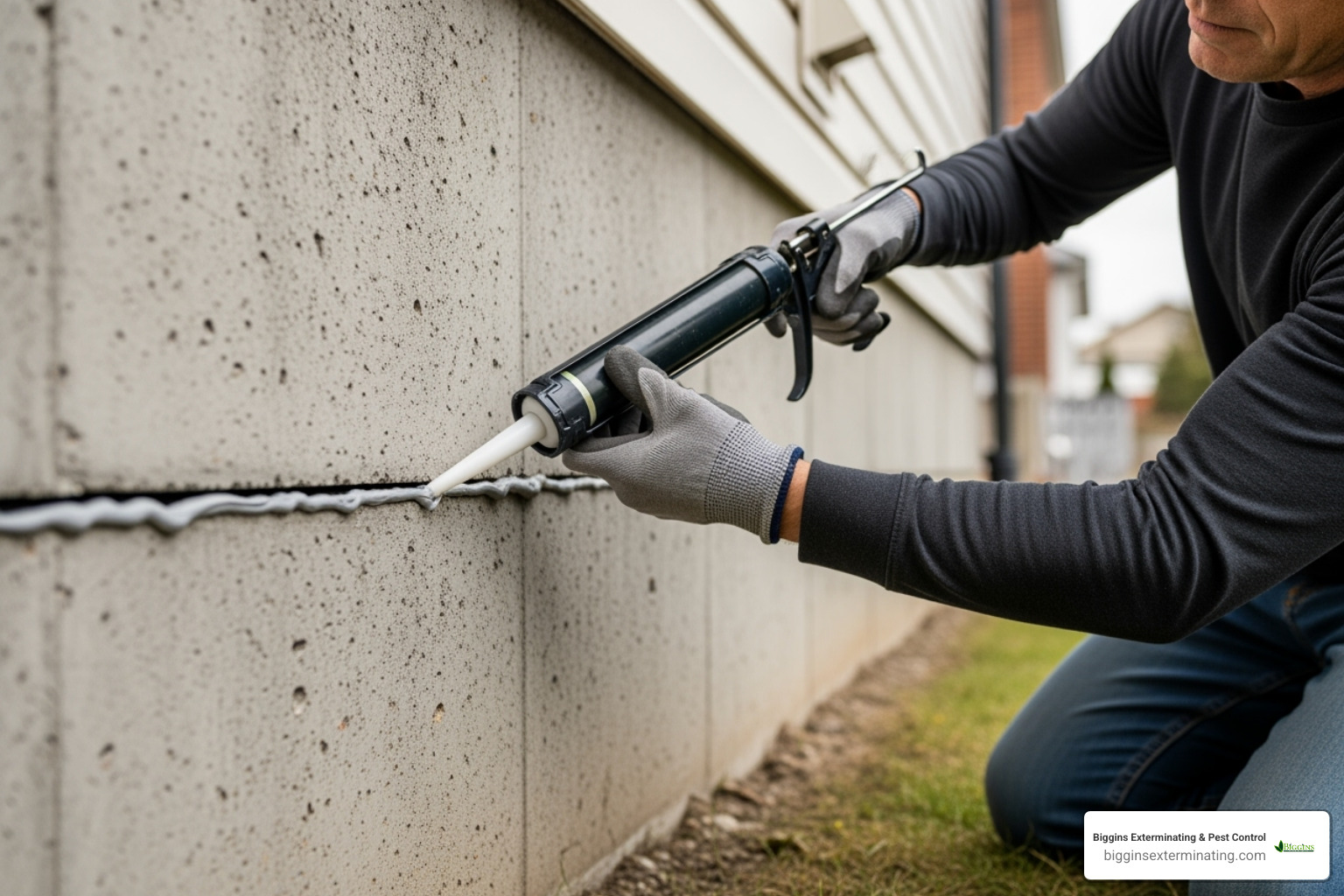
- Caulk cracks and gaps: Seal any openings in your foundation, around windows and doors, and where utility lines enter the home.
- Trim vegetation: Cut back tree branches and shrubs so they don’t touch your house, removing a common bridge for ants.
- Manage firewood: Store firewood and lumber at least 20 feet from your home and off the ground. Inspect it carefully before bringing it inside.
- Remove wood debris: Clear old tree stumps and other wood debris from your yard, as they can harbor parent colonies.
- Create a buffer zone: Ensure wood siding does not touch the soil. A strip of gravel can deter ants from climbing onto your home.
DIY Battle Plan: How Do You Get Rid of Black Carpenter Ants Yourself?
If you’re ready to tackle a carpenter ant problem yourself, success hinges on a key principle: you must eliminate the entire colony, not just the workers you see. Killing individual ants won’t solve the problem, as the queen and thousands of others remain hidden in the nest. DIY control requires patience and strategy but can be effective for smaller infestations. For more details, see our guide on How to Kill Carpenter Ants.
Locating the Nest: The Crucial First Step for How You Get Rid of Black Carpenter Ants
Many DIY efforts fail because people spray ants on sight. However, as the University of Kentucky Extension notes, you should Don’t immediately start killing the first carpenter ants you find. Those workers are your guides to the nest.
- Follow the trail: Carpenter ants are most active between sunset and midnight. Use a flashlight to follow their trails.
- Use bait to track them: Place a small amount of honey or sugar water near their trail. Don’t kill the ants that feed; follow them back to their nest.
- Listen for activity: Press your ear against walls in moisture-prone areas. You may hear faint rustling sounds. Tapping on the wall can sometimes provoke a response.
- Focus your search: Check around windows, under sinks, in crawl spaces, and inside hollow doors. Look for piles of frass (sawdust-like debris). A colony may have a main nest outside and satellite nests inside your home.
DIY Treatment Options: How Do You Get Rid of Black Carpenter Ants Using Home Remedies
Once you’ve located the nest area, choose a treatment that will be carried back to the queen and the entire colony.
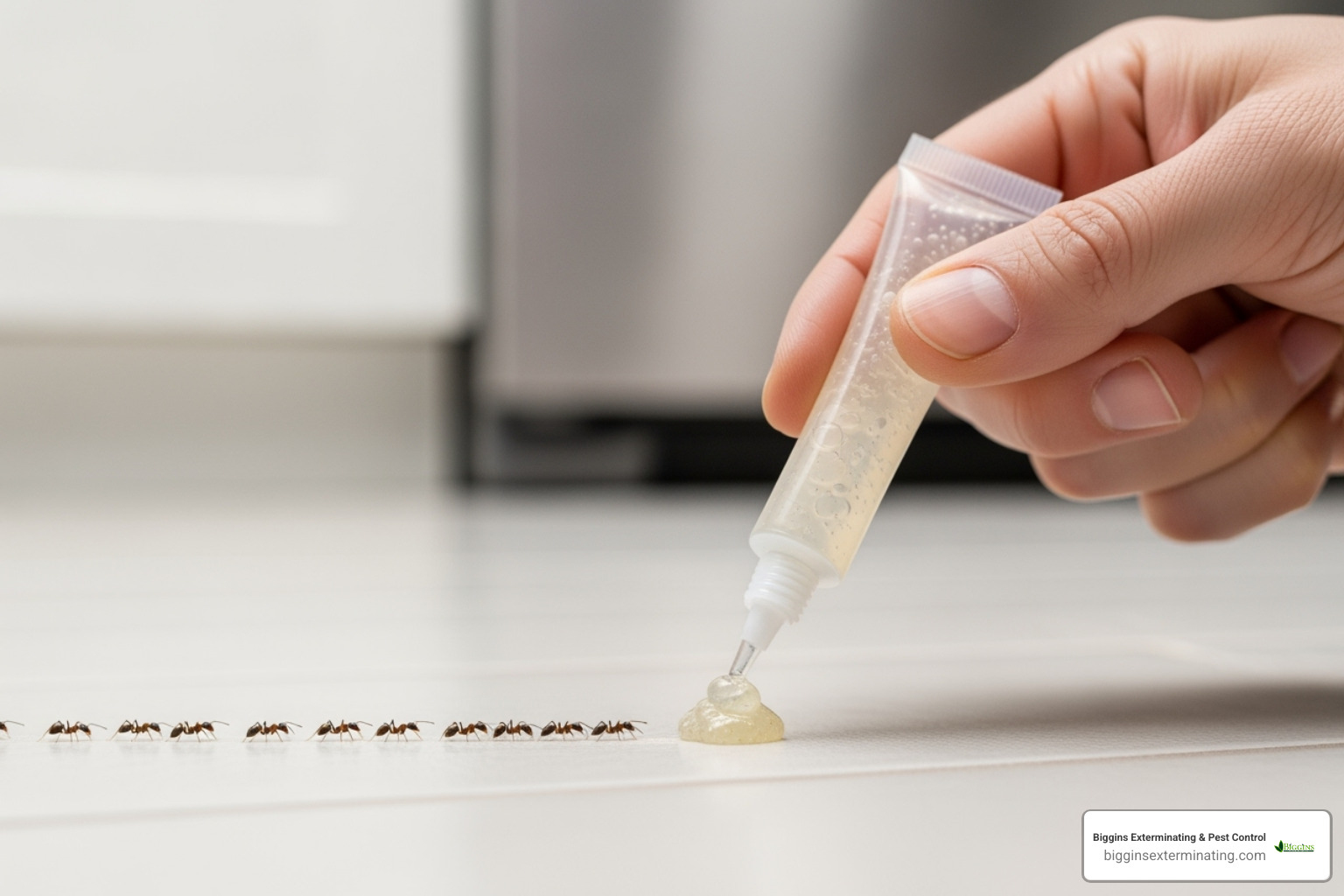
- Ant Baits: This is your best DIY weapon. Worker ants carry the slow-acting poison back to the nest to share, eliminating the colony from within.
- Borax-based baits: A common homemade recipe is mixing 1.5 tablespoons of borax with a half cup of sugar and 1.5 cups of warm water. Soak cotton balls in the solution and place them on ant trails.
- Commercial baits: These are often more effective as they are professionally formulated for maximum attractiveness.
- Diatomaceous Earth (DE): This natural powder dehydrates insects by absorbing the waxy layer on their exoskeletons. Apply a thin layer of food-grade DE into cracks, crevices, and wall voids using a bulb duster.
- Boric Acid Dust: This acts as both a contact and stomach poison. When ants groom themselves after walking through it, they ingest the poison. Use a duster to inject it into wall voids or cracks.
- Direct Nest Treatment: If you can pinpoint the nest, you can drill small holes into the wall void and inject an insecticidal dust or foam directly. This is invasive but highly effective. For more options, see our Ant Extermination guide.
Are DIY Treatments Safe for Pets and Children?
Family safety is paramount. Always read the entire product label before use and follow all safety instructions.
- Boric acid is a poison, and while less toxic than many insecticides, it can cause stomach upset if ingested.
- Food-grade diatomaceous earth is generally safe, but inhaling the dust can cause respiratory irritation. Wear a mask during application.
- Strategic placement is key. Use tamper-resistant bait stations or place treatments in areas inaccessible to children and pets, such as inside wall voids or deep within cracks.
- Ensure good ventilation when using sprays and keep family members away from treated areas until they are completely dry.
When to Call for Reinforcements: The Professional Solution
While DIY methods can be effective for small issues, knowing how do you get rid of black carpenter ants sometimes means calling for professional help. Certain situations are best left to experts to avoid infestations spiraling out of control.
Consider calling a professional if you notice:
- Large or established infestations: Seeing dozens of ants regularly suggests a mature colony with thousands of workers, likely beyond the scope of DIY treatments.
- Hidden nests: Professionals use equipment like moisture meters and borescopes to locate colonies hidden deep inside walls or inaccessible crawl spaces.
- Suspected structural damage: If you hear persistent rustling in walls or see large piles of frass, the damage may already be significant. An expert can assess the structural integrity of your home.
- DIY methods have failed: If ants keep returning despite your best efforts, the colony is likely larger or more complex than you realized.
Professionals bring specialized equipment and more effective, non-repellent insecticides that aren’t available to the public. For more on what a professional service entails, see our guide: Can Pest Control Get Rid of Carpenter Ants?.
What to Expect from Professional Treatment
When you call an exterminator, the process typically begins with a thorough inspection to identify the species, locate all nests, and find entry points. Based on this, they create a customized treatment plan. This often involves injecting professional-grade dusts directly into nests, strategic baiting, and applying a protective perimeter treatment around your home’s exterior.
Reputable companies provide a warranty and may schedule follow-up visits to ensure complete elimination. Regarding cost, homeowners can expect to pay anywhere from $300 to $900+ for professional carpenter ant treatment. Please note that these are average costs based on internet data, and not actual costs for Biggins Exterminating services. The final price depends on the infestation’s severity, home size, and nest accessibility.
Frequently Asked Questions about Eliminating Carpenter Ants
After decades of helping homeowners, I’ve answered countless questions about these pests. Here are the most common concerns people have when asking how do you get rid of black carpenter ants.
How long does it take to get rid of a carpenter ant colony?
The timeline depends on the method and the size of the colony.
- DIY baits can take several days to a few weeks to work. This slow action is necessary to allow worker ants to carry the poison back and distribute it throughout the entire colony, including to the queen.
- Direct nest treatment can yield faster results, but only if you’ve correctly identified the primary nest location.
- Professional treatment is typically the fastest and most reliable option. While complete colony elimination may still take a few weeks, professionals have the tools to locate all nests (including satellite colonies) and treat them effectively.
Do carpenter ants bite?
Yes, carpenter ants can bite, but they are not aggressive and typically only do so in self-defense when their nest is disturbed. Their strong mandibles, designed for chewing wood, can deliver a painful pinch. Some species also spray formic acid into the wound, causing a burning sensation. However, the bites are not medically significant and do not transmit disease.
Will carpenter ants come back after treatment?
They can, but recurrence is preventable. The most common reasons for a comeback are:
- Incomplete eradication: If the queen or any satellite colonies survive the initial treatment, the infestation can rebound.
- Ongoing moisture problems: Unrepaired leaks or damp wood will attract new colonies.
- Unsealed entry points: Gaps in your foundation or cracks around pipes provide easy access for new ants.
To prevent their return, you must fix all moisture issues, seal entry points, and maintain a clean, debris-free perimeter around your home. Ongoing monitoring, especially in the spring, can help you catch new problems early.
Your Partner in a Pest-Free Home
We’ve covered the essential steps for how do you get rid of black carpenter ants, from identification and prevention to treatment. Success requires eliminating moisture sources, sealing entry points, and, most importantly, targeting the entire colony, not just the visible workers. Whether you choose a DIY path or call professionals, the goal is to eliminate the queen and her nest.
Long-term vigilance is key. After treatment, keeping your home dry and sealed is the best way to prevent future infestations. Regular inspections during peak ant season in spring and summer can help you stay ahead of any new activity.
For over 40 years, our family-owned business, Biggins Exterminating & Pest Control, has served homeowners in Wilmington, MA, and surrounding communities like Andover, Bedford, and Lexington. We’ve handled everything from small satellite colonies to large, damaging infestations.
We are committed to doing the job right the first time, which is why we don’t require contracts and provide warranties on our work. Our technicians have the expertise and professional-grade tools to find hidden nests and deliver effective results.
If you’re struggling with a carpenter ant invasion, don’t let them continue to damage your property. For comprehensive and guaranteed carpenter ant pest control, contact us today. We’re here to help you protect your home.