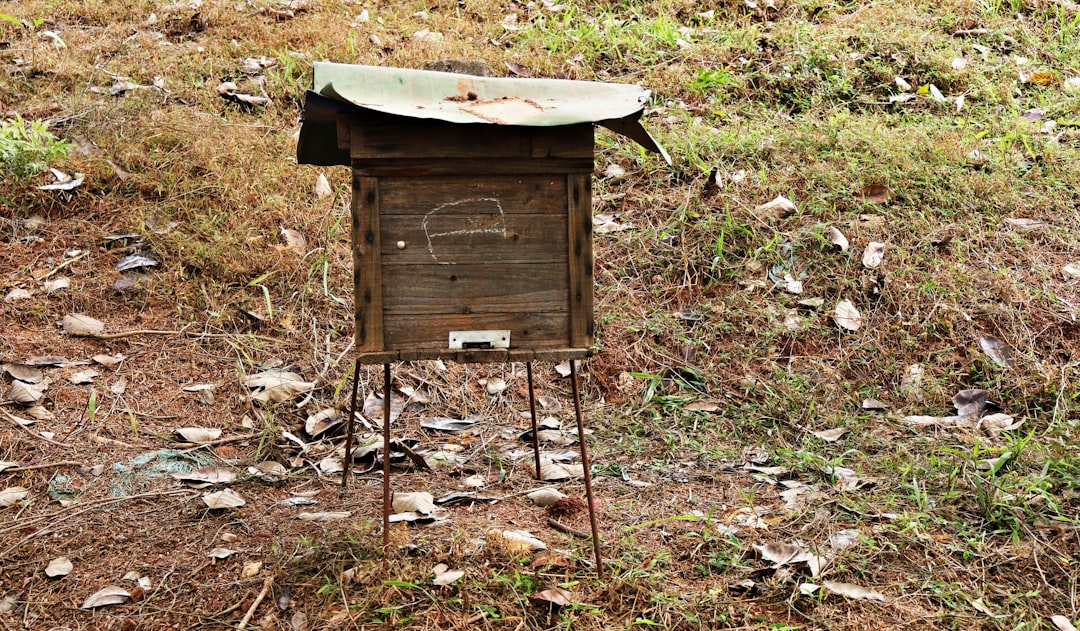
Why Carpenter Bees Are Destroying Massachusetts Decks Right Now
Bee traps for carpenter bees are one of the most effective, chemical-free ways to stop these wood-boring insects before they cause serious structural damage to your deck, eaves, or siding.
Quick answer — how to trap carpenter bees effectively:
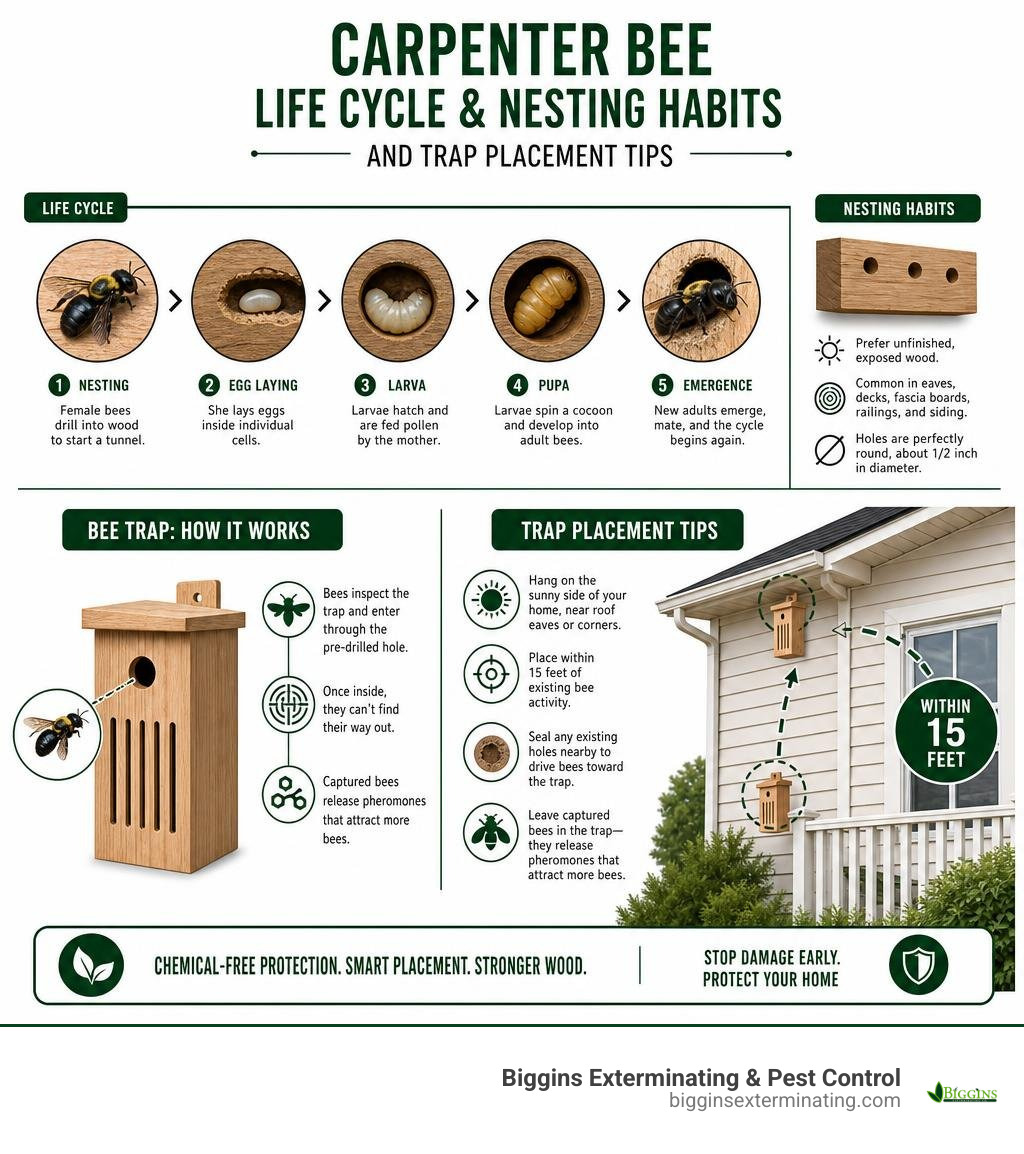
- Choose a wooden trap designed to mimic a natural nesting site
- Hang it on the sunny side of your home, near roof eaves or corners
- Place it within 15 feet of existing carpenter bee activity
- Seal any existing holes nearby to drive bees toward the trap
- Leave captured bees in the trap — they release pheromones that attract more bees
It’s June 2026, and across Massachusetts — from Wilmington to Woburn — carpenter bees are in full nesting mode. Right now, female carpenter bees are drilling perfectly round holes into the wooden structures around your home, carving out tunnels that can extend several feet deep despite looking like a small surface mark.
Left unchecked, those tunnels weaken wood over time. Staining and moisture follow. Then rot.
The good news? You don’t need toxic sprays to stop them. Wooden carpenter bee traps work by exploiting the bee’s own instincts — they inspect the trap as a potential nest, enter through pre-drilled holes, and can’t find their way back out.
I’m Stephen Biggins, owner of Biggins Exterminating Co., and with over 40 years of hands-on pest control experience in Massachusetts, I’ve seen how quickly a small carpenter bee problem can turn into costly wood damage — and how the right bee traps for carpenter bees, combined with proper sealing and treatment, can get the situation under control fast. Let’s walk through exactly how to do it.
Essential bee traps for carpenter bees terms:
Understanding the Threat of the Big Black Bee
To beat your opponent, you first have to understand them. Many homeowners we visit in North Reading or Lexington call us complaining about a “bumble bee” drilling holes in their wood. In reality, they are dealing with a completely different insect.

There are more than 20,000 documented bee species worldwide, with about 4,000 of those calling the United States home. Among these, the big black bee that you see hovering aggressively near your roofline is almost certainly the eastern carpenter bee.
To tell them apart from bumble bees, look at their abdomens. While bumble bees are fuzzy all over, the black and yellow carpenter bee has a smooth, shiny, hairless black tail end.
Another major difference lies in their social structures. Unlike highly social honey bees or bumble bees that live in cooperative colonies, carpenter bees are solitary insects. Every single female is a queen of her own castle, responsible for building her own individual nest.
And that is where the trouble begins for your property.
To build these nests, the female carpenter bee uses her powerful mandibles to chew perfectly circular, half-inch holes into exposed wood. Once she penetrates about an inch deep, she makes a sharp 90-degree turn and begins excavating gallery tunnels that run parallel to the wood grain. While the entry hole looks like a minor cosmetic issue, these tunnels can easily extend several feet inside the wood over successive generations.
The female then partitions these tunnels into individual chambers (often 5 to 6 cells), placing a mixture of pollen and regurgitated nectar (called “bee bread”) inside each chamber before laying an egg and sealing it off.
This drilling creates several critical issues for Massachusetts homeowners:
- Structural Weakening: Repeated drilling over several seasons riddles structural joists, rafters, and deck boards with internal voids, severely compromising their load-bearing capacity.
- Moisture and Rot: Open tunnels allow rainwater to seep deep inside the wood. In our damp Massachusetts spring and summer seasons, this trapped moisture quickly triggers rot, mold, and decay.
- Woodpecker Damage: This is often worse than the bee damage itself. Woodpeckers can hear the fat, juicy bee larvae squirming inside the wood. To get to them, they will hammer and shred your beautiful trim boards and siding to pieces.
How Do Bee Traps for Carpenter Bees Work?
If you want to stop this cycle without drenching your entire outdoor living space in chemicals, bee traps for carpenter bees are your best line of defense. But how does a simple block of wood with a plastic jar attached actually catch a flying insect?
It all comes down to behavioral mimicry and basic physics.
Carpenter bees do not actually eat wood; they simply discard the sawdust as they drill. Because drilling a new nest is incredibly hard work, they are always looking for existing holes or soft, pre-drilled voids to claim as their own.
A high-quality wooden trap mimics this ideal nesting site. It consists of a solid block of wood with pre-drilled entry holes on the sides. These holes are drilled at a upward 45-degree angle, which naturally creates a dark shadow inside. Because carpenter bees instinctively drill upward to prevent rainwater from flooding their nests, they see these dark, angled holes as perfect, pre-made nesting chambers.
Once the bee enters the wooden block, it crawls down the central chamber looking for a spot to nest. However, the chamber opens up into a clear plastic or glass jar attached to the bottom.
This is where light attraction comes into play. Once inside the dark wooden block, the bee sees the bright light flooding through the clear jar at the bottom. Mistaking the light for an exit, the bee flies down into the jar. Once inside the clear chamber, it cannot figure out how to crawl back up into the dark hole.
Furthermore, these traps utilize a brilliant, natural self-baiting mechanism. As captured bees buzz around and eventually die inside the jar, they release natural pheromones and mating scents. They also create low-frequency vibrations with their wings. To other carpenter bees hovering nearby, these sounds and scents signal that this specific piece of wood is a highly active, safe, and desirable nesting site.
This is why you should never empty your traps the moment you catch a few bees! Leaving a few deceased bees inside actually supercharges the trap’s effectiveness, creating an organic cycle that lures in more bees.
When shopping for traps, you will find excellent options like classic wooden traps and patented chemical-free traps that leverage these exact biological triggers to clear out local populations safely.
Selecting the Best Bee Traps for Carpenter Bees
Not all traps are created equal, and choosing the right design can mean the difference between a deck free of pests and a wasted weekend.
When evaluating traps, pay close attention to the wood type. Softwoods like pine, fir, or cedar are highly attractive to carpenter bees because they match the natural wood species they prefer to bore into. Avoid traps made of heavily chemically treated or synthetic woods, as the strong chemical odors can deter the bees.
Additionally, consider the capacity and maintenance features of the trap. If you have a severe infestation or a large property in Andover or Bedford, a standard small jar might fill up too quickly.
For heavy-duty situations, you might look into heavy-duty commercial traps which feature extra-large external receptacles, internal “bee vaults,” and convenient pull-cords that let you empty the reservoir from the ground without climbing a ladder. If aesthetics are a priority for your home, decorative chapel-style wooden traps offer an attractive A-frame roof design that blends beautifully with traditional New England architecture while maintaining high catching efficiency.
To give you an idea of how popular these solutions have become, consider these recent retail trends:
- Over 15,171 customer reviews have been posted for top-selling sticky trap sticks like the RESCUE! VisiLure TrapStik.
- More than 10,000 units of those TrapStiks are bought every single month.
- Over 2,000 units of premium turbo traps and 1,000 units of standard wooden warehouse traps are purchased monthly by homeowners taking control of their properties.
Strategic Placement of Bee Traps for Carpenter Bees
You could buy the most expensive, scientifically advanced trap on the market, but if you hang it in the wrong spot, it will remain completely empty. Successful trapping is all about location, location, location.
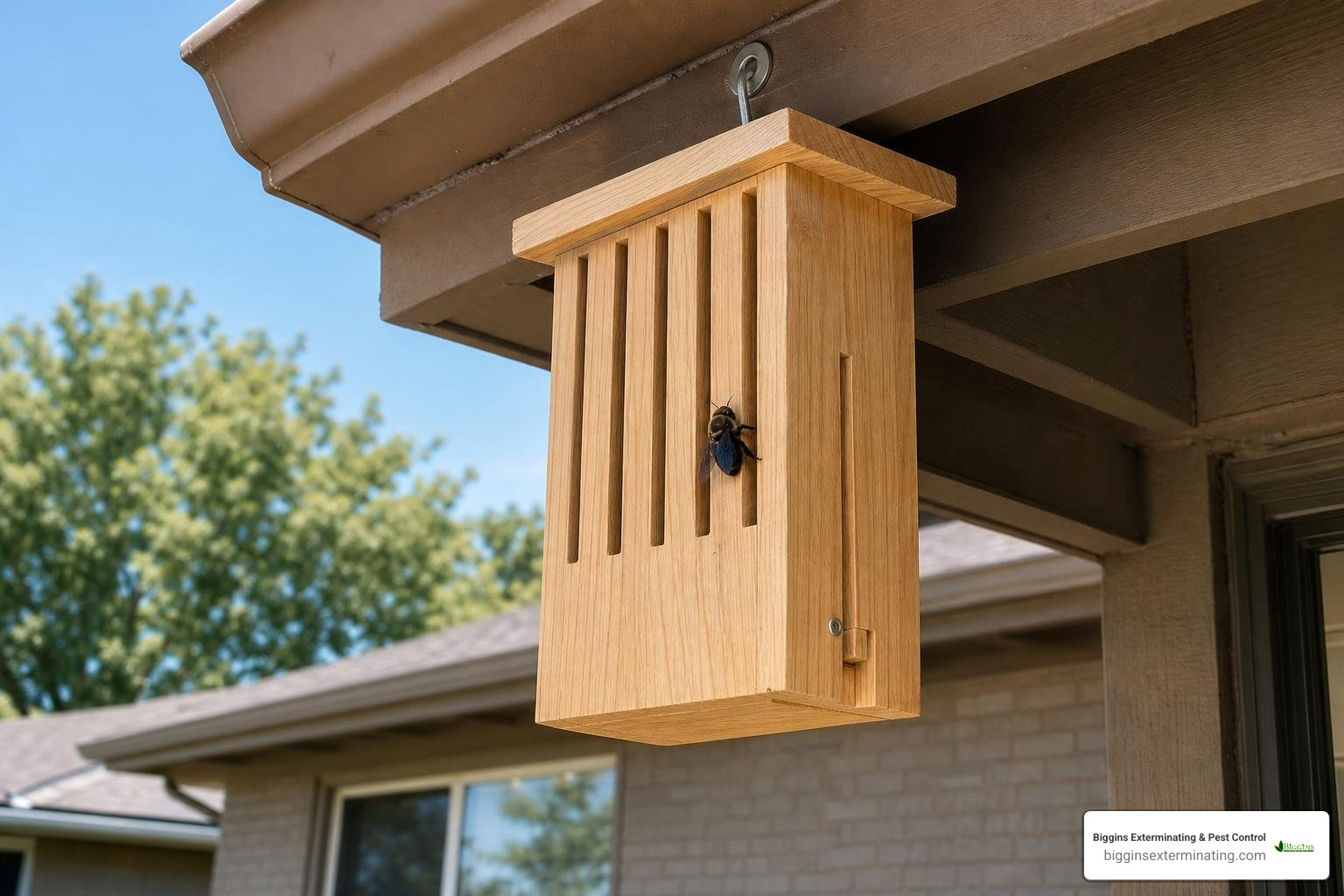
To maximize your catch rate, follow these professional placement rules:
- Follow the Sun: Carpenter bees are cold-blooded insects that rely on the sun’s warmth to get moving. They are highly active on the warm, sunny south and west-facing sides of structures. Hang your traps where they will receive maximum sunlight.
- Go High: These pests naturally look for nesting sites high up on a structure to stay safe from ground predators. Position your traps high up near roof eaves, fascia boards, peaks, and the upper corners of your deck or pergola.
- Keep it Dry: Because carpenter bees drill upward to avoid moisture, damp air inside a trap acts as a major deterrent. Ensure your traps are hung securely so water cannot easily pool inside the collection chambers.
- Target Active Zones: If you already have carpenter bees under siding or damage along your carpenter bees wood siding, place your traps within a 5 to 15-foot radius of that active damage.
Pro Tip: If you notice wasps or spiders taking up residence inside your wooden traps during the season, the bees will stay far away. To fix this, place a plastic bag over the entire trap, seal it, place it in your freezer for a few hours to make the pests dormant, and then clean out the trap with a stick before rehanging it.
Integrated Pest Management: Beyond Just Trapping
While hanging a trap is a fantastic start, relying only on traps is rarely enough to solve a deeply entrenched infestation. A truly successful pest control plan requires an Integrated Pest Management (IPM) approach. This means combining traps with physical exclusion and targeted treatments.
If you leave existing carpenter bee holes open, returning bees will simply reuse or expand those old nests instead of investigating your new traps. Therefore, you must seal every single active hole.
But don’t just shove wood putty into a hole immediately! If you trap a female or her developing larvae inside a live nest, they will simply chew their way out through a different part of the wood, causing even more damage.
Instead, follow this three-step process:
- Treat: Apply a targeted treatment deep into the hole. To learn about the best products for this, check out our residual insecticide carpenter bees guide to safely eliminate the insects and larvae inside the gallery.
- Seal: Once the treatment has taken effect, use the best way to fill carpenter bee holes by inserting a tight-fitting wooden dowel or cork plug (sometimes called a “bee dam”) into the hole, and then sealing over it with high-quality exterior wood putty or silicone caulk. This restores the wood’s structural strength and prevents future bees from reclaiming the tunnel.
- Repel: Apply the best deterrent for carpenter bees — such as a fresh coat of polyurethane paint or a natural citrus-based repellent spray — to the surrounding wood surfaces to discourage new females from drilling nearby.
To help you decide on the best approach for your home, let’s compare your options:
| Method | Upfront Cost | Setup Effort | Safety / Eco-Friendliness | Long-Term Effectiveness |
|---|---|---|---|---|
| DIY Traps | Very Low ($5 – $15) | High (Requires tools, drilling, and assembly) | High (No chemicals) | Moderate (Relies heavily on build quality and accuracy) |
| Commercial Traps | Moderate ($20 – $40) | Low (Ready to hang out of the box) | High (No chemicals, reusable designs) | High (Optimized hole angles and built-in aeration) |
| Professional Service | Higher (See pricing below) | None (Technicians handle all labor) | Professional-grade safety protocols | Extremely High (Includes deep gallery treatments and warranty) |
Frequently Asked Questions about Carpenter Bee Control
Do bee traps for carpenter bees require chemical bait?
No, high-quality traps do not require toxic chemical baits to work. They are designed to be entirely self-baiting.
The primary attractant is the physical design of the trap itself, which mimics a perfect, shadowed nesting hole. Once the first few bees are captured, their natural pheromones, mating scents, and wing vibrations do all the heavy lifting. The sound and smell of trapped bees act as a powerful, organic magnet for other bees in the area.
However, if you want to jump-start a brand-new trap at the very beginning of the season before any bees have been caught, you can apply a small amount of natural, active-ingredient bait (such as a citrus or pheromone-based paste) directly inside the entry holes.
When is the best time of year to hang bee traps for carpenter bees in Massachusetts?
Timing is everything when it comes to seasonal pest control in New England.
In Massachusetts, you should hang your traps in the early spring (late April to early May), just as the weather begins to consistently warm up. This is when adult carpenter bees emerge from their winter hibernation inside old wood tunnels. They are hungry, active, and immediately looking to mate and establish new nesting sites.
By having your traps hanging and ready before they begin drilling, you can capture the females before they have a chance to damage your home. Keep your traps hanging throughout the summer nesting season (which peaks in June) and leave them up through the early autumn when the newly hatched young adults emerge briefly before seeking overwintering shelter.
How much does professional carpenter bee extermination cost?
If you are dealing with a severe, widespread infestation across your entire home, or if the active nesting sites are located high up on hard-to-reach siding, a professional pest control service is the safest and most reliable solution.
Based on publicly available internet data, the average cost for professional carpenter bee control ranges from $150 to $900.
Please note: This range represents average market costs across the industry and does not reflect Biggins Exterminating’s actual pricing.
The wide range in cost depends heavily on the size of your home, the height of the nesting areas, and how many existing holes need to be professionally treated and sealed. For localized deck treatments, costs are typically on the lower end, whereas treating severe, multi-story infestations with extensive wood damage across siding and trim will fall on the higher end of the spectrum. To get an accurate assessment of your home’s needs, we highly recommend scheduling a professional carpenter bees control inspection.
Conclusion
While bee traps for carpenter bees are an incredible, eco-friendly tool for managing active populations around your deck and yard, solving a persistent, destructive infestation often requires a professional touch.
At Biggins Exterminating & Pest Control, we are a local, family-owned and operated Massachusetts pest control company with over 40 years of trusted, high-quality service. We understand the unique seasonal patterns of our local climate, and we are dedicated to helping our neighbors protect their homes from costly wood damage.
We proudly serve homeowners throughout our local service areas, including:
- Wilmington, MA
- Woburn, MA
- Billerica, MA
- Burlington, MA
- Lexington, MA
- Andover, MA
- Bedford, MA
- North Reading, MA
- Tewksbury, MA
Best of all, we offer reliable pest and rodent control services without requiring long-term contracts, providing strong warranties and ensuring your complete satisfaction.
If carpenter bees are turning your beautiful wooden deck or trim into Swiss cheese this summer, don’t wait for the damage to get worse. Explore our professional carpenter bees pest control services, or contact us today to request a free estimate and get your home back to being a safe, pest-free sanctuary!