Understanding the Big Black Bee Mystery in Your Garden
If you’ve spotted a big black bee in your Massachusetts garden, you’re likely looking at one of two common species that homeowners often confuse:
Most Common Big Black Bees:
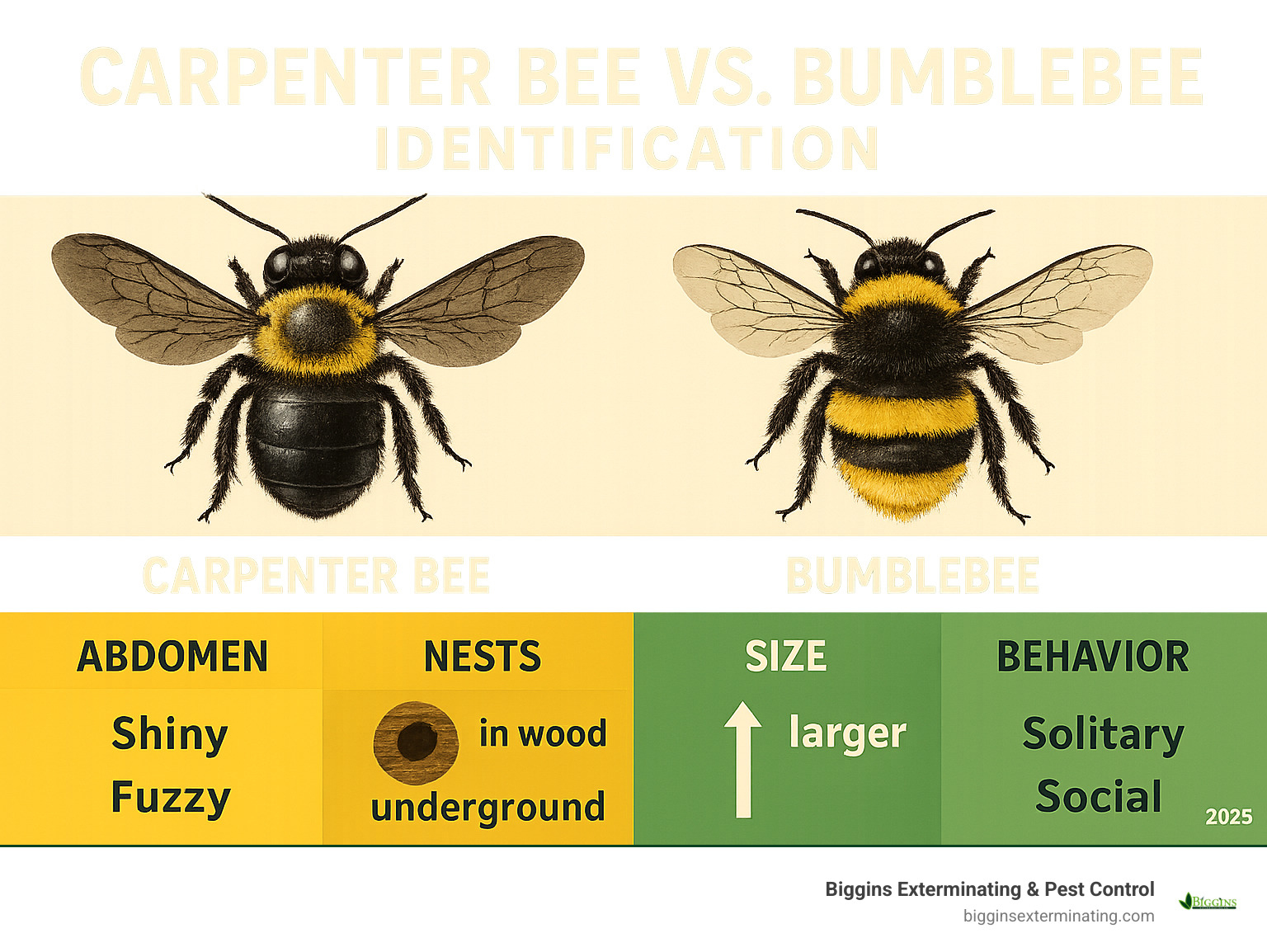
- Carpenter Bees – Shiny, hairless black abdomen with possible yellow thorax markings
- Bumblebees – Fuzzy, hairy black abdomen often with yellow stripes or bands
Quick Identification:
- Shiny abdomen = Carpenter bee (may damage wood structures)
- Fuzzy abdomen = Bumblebee (nests underground, generally harmless to structures)
Both are among the largest native bee species in the United States. While bumblebees are social insects living in colonies, carpenter bees are primarily solitary and known for boring perfectly round holes into wood for nesting.
Understanding which type of big black bee you’re dealing with matters. Carpenter bees can cause structural damage to decks and siding, while bumblebees are beneficial pollinators that pose little threat to your property.
I’m Stephen Biggins, owner of Biggins Exterminating Co. With over four decades of pest control experience, I’ve helped countless Massachusetts homeowners identify and manage big black bee concerns. Proper identification is the first step toward making informed decisions about your property.
Essential big black bee terms:
Is It a Carpenter Bee or a Bumblebee? Key Identification Tips
When you spot a big black bee hovering around your deck or garden in Wilmington, it can be tough to know what you’re looking at. Many homeowners confuse carpenter bees and bumblebees, but telling them apart is easy once you know the key differences.
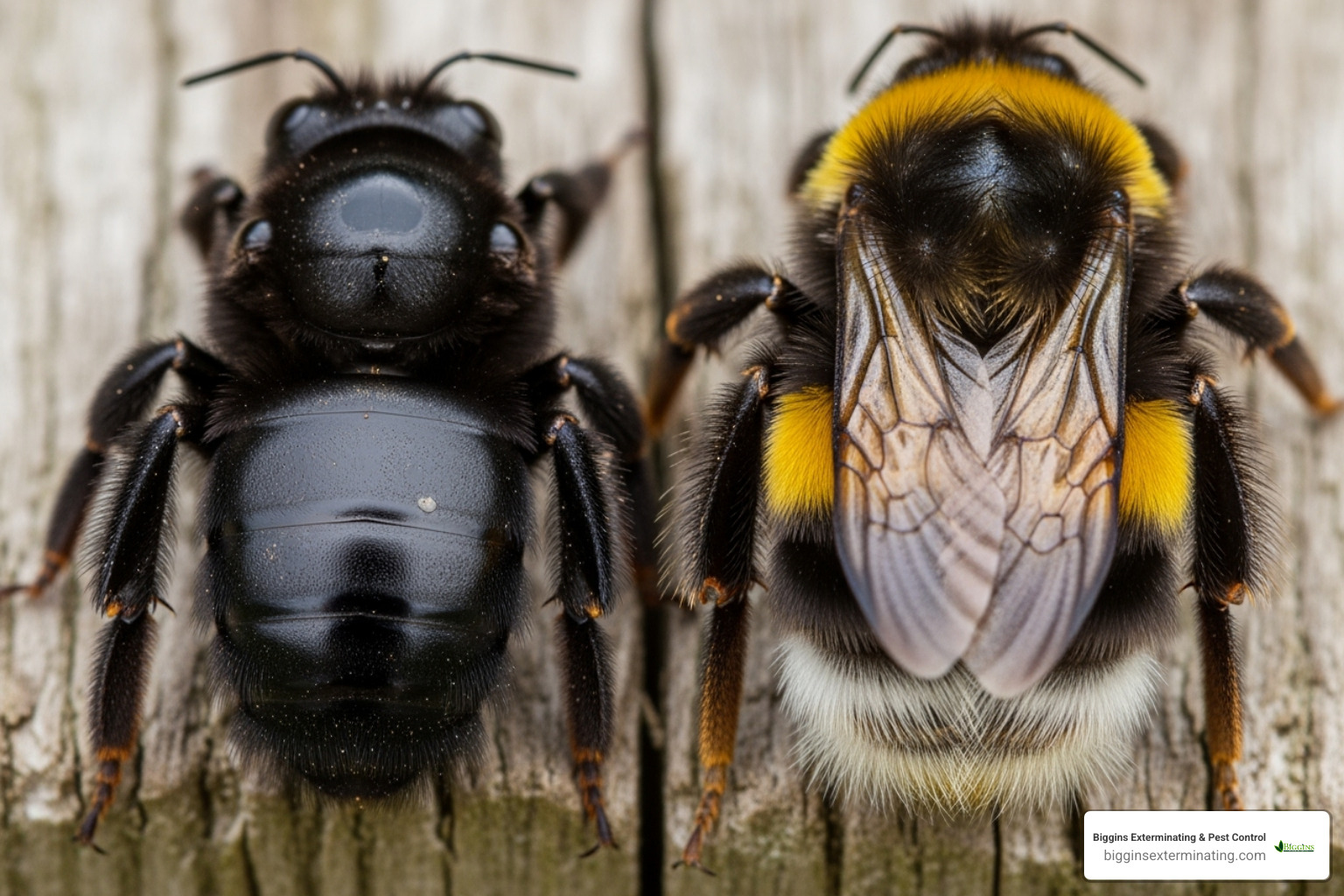
The most reliable way to distinguish between these bees is by examining their abdomens. While both species are robust and impressive in size, their bodies tell different stories about their potential impact on your property.
| Feature | Carpenter Bee (Xylocopa) | Bumblebee (Bombus) |
|---|---|---|
| Abdomen | Shiny, hairless, black surface | Fuzzy, hairy, covered in dense fur |
| Overall Appearance | Less fuzzy body, smooth rear end | Very fuzzy all over, like a flying teddy bear |
| Color Patterns | Mostly black, sometimes yellow on head/thorax | Black and yellow stripes, some species mostly black |
| Nesting Habits | Bores round holes into wood structures | Nests underground in old burrows |
| Social Behavior | Solitary females build individual nests | Lives in colonies with queens and workers |
| Stinging Risk | Males can’t sting; females rarely do | Can sting but generally docile |
The “Shiny Butt” vs. “Fuzzy Butt” Test
Here’s the easiest identification trick: look at the bee’s rear end.
Carpenter bees have a “shiny butt”—their abdomens are completely hairless and glossy black. Even if their thorax (middle section) has some fuzzy yellow hair, that back end will be smooth and bare.
Bumblebees, on the other hand, sport the “fuzzy butt” look. Their abdomens are covered in dense, soft hair. Even the all-black bumblebee species maintain this characteristic fluffiness.
This simple test works every time, whether you’re dealing with a big black bee in Bedford or Burlington.
Size, Color, and Other Visual Cues for the Big Black Bee
Both carpenter bees and bumblebees are impressive insects, typically measuring between half an inch to a full inch in length. This similar size contributes to the confusion, but other visual cues can help.
Color patterns offer additional clues. Most carpenter bees are predominantly black, though some species have pale ginger or yellow hair on their thorax. Bumblebees typically display bold yellow and black stripes, though some species can appear almost entirely black while retaining their fuzzy texture.
Male versus female differences are also helpful, especially for carpenter bees. Male carpenter bees often have yellow or white patches on their faces, while females have all-black faces. A key fact: those aggressive male carpenter bees that dive-bomb you cannot sting.
Flight patterns also differ. Male carpenter bees are territorial, hovering and darting aggressively. Bumblebees tend to fly more directly as they forage.
For those interested in diving deeper, the United States Xylocopa Identification Guide provides comprehensive information on various species.
Understanding these features helps you decide if that big black bee is a beneficial pollinator or a potential wood-boring concern.
Understanding the Behavior of a Big Black Bee
Once you’ve spotted a big black bee, watching its behavior will tell you what species you’re dealing with. Behavior is often the biggest giveaway and determines whether the bee is a welcome visitor or a potential problem for your home’s wooden structures.
The way these bees choose their homes and defend their territory reveals their identity and whether they pose a threat to your property.
Nesting Habits: The Woodworker vs. The Ground Dweller
These two big black bee species have completely different ideas about the perfect home.
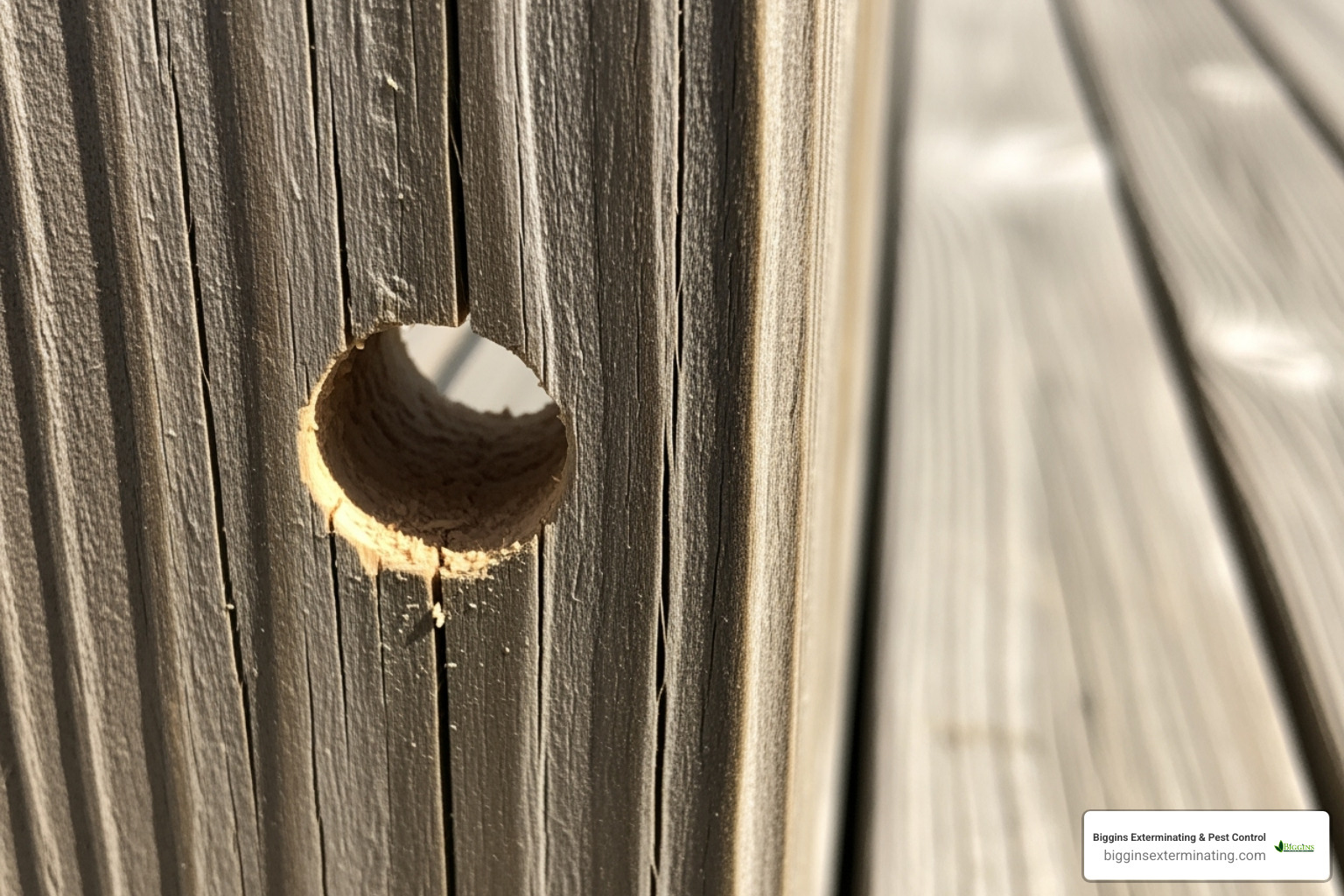
Carpenter bees are nature’s woodworkers, boring perfectly round, half-inch holes into wood to create nests. Unlike termites, they don’t eat wood; they chew through it to create tunnels for their young. The female creates an entrance hole, then turns to follow the grain, creating a gallery up to ten inches long. Inside, she builds nursery cells, each stocked with pollen and nectar.
These bees prefer soft, unpainted, or weathered wood, which unfortunately describes many surfaces around our homes like decks, fascia boards, and window sills. We see this damage regularly on homes throughout Wilmington and Lexington. You can learn more about how these insects affect siding at Carpenter Bees & Wood Siding.
Bumblebees, on the other hand, are renters. They move into existing cavities, typically underground in old mouse burrows, in dense grass, or under compost piles. Their colonies are small and shut down each fall when cold weather arrives.
Social Life and Territorial Displays
The social lives of these bees are as different as their housing preferences.
Carpenter bees live a mostly solo lifestyle. Each female builds her own nest and raises her young. There’s no queen or worker hierarchy.
The real show-stoppers are the male carpenter bees. These guys are all bluster. Male carpenter bees are completely harmless because they don’t have stingers. However, they will hover aggressively around nest sites, dive-bombing anyone who gets too close. It’s all for show.
Female carpenter bees are the opposite. They are focused on their work and generally docile unless directly handled or provoked. While they can sting, they rarely do.
Bumblebees are true team players, living in organized colonies with a queen and workers. They are generally peaceful neighbors unless their nest is directly threatened. They are too busy with pollination for the territorial theatrics of male carpenter bees.
Understanding these behaviors helps you make informed decisions about the big black bees on your property. For more details, check out this Fact Sheet on Carpenter Bee Behavior.
Friend or Foe? Ecological Role and Potential Dangers
When you spot a big black bee, it’s natural to wonder if it’s a helpful visitor or a potential threat. The truth is, it can be both. These insects are valuable pollinators, even though one species can cause property concerns.
The Pollination Power of Large Bees
Both carpenter bees and bumblebees are ecological powerhouses, essential for keeping our gardens and agricultural systems thriving.
Carpenter bees are surprisingly effective pollinators. They use a technique called “buzz pollination,” vibrating their muscles to shake pollen loose from flowers. This makes them valuable for crops like tomatoes, blueberries, and cranberries. Their large size allows them to carry substantial amounts of pollen. However, they sometimes engage in “nectar robbing” by biting holes in the base of flowers to steal nectar without pollinating. For more on their agricultural role, see this article on Carpenter Bees as Agricultural Pollinators.
Bumblebees are superstars of the pollination world. These fuzzy big black bee champions often outperform honeybees, working longer hours in cooler temperatures. They are highly effective for crops like blueberries, cranberries, and garden vegetables like pumpkins and cucumbers.
In gardens across Wilmington and Bedford, both species work to ensure your flowers and vegetables flourish.
Do Big Black Bees Sting? The Truth About the Threat
The stinging question is a common worry for homeowners. The good news is these big black bee species are less threatening than their size suggests.
Male carpenter bees are all show. They are the ones you see aggressively patrolling and dive-bombing near wooden structures. The reassuring truth is: male carpenter bees cannot sting at all. They are completely harmless.
Female carpenter bees have stingers and can sting multiple times. However, they are remarkably gentle and rarely show aggression unless directly handled or threatened.
Bumblebees can sting, but these fuzzy giants are generally peaceful unless their nest is disturbed. Their stings are purely defensive. Stings from either species typically only occur when a bee is stepped on, swatted, or a nest is disturbed. For more on stings, see this guide on Carpenter Bee Stings.
Understanding this balance of benefit and risk helps homeowners appreciate these insects while taking necessary precautions.
When Carpenter Bees Become Pests: Damage and Control
While big black bee species are valuable pollinators, carpenter bees can become serious pests. Unlike their bumblebee cousins, carpenter bees have a talent for turning your wooden structures into their personal real estate, leading to costly problems.
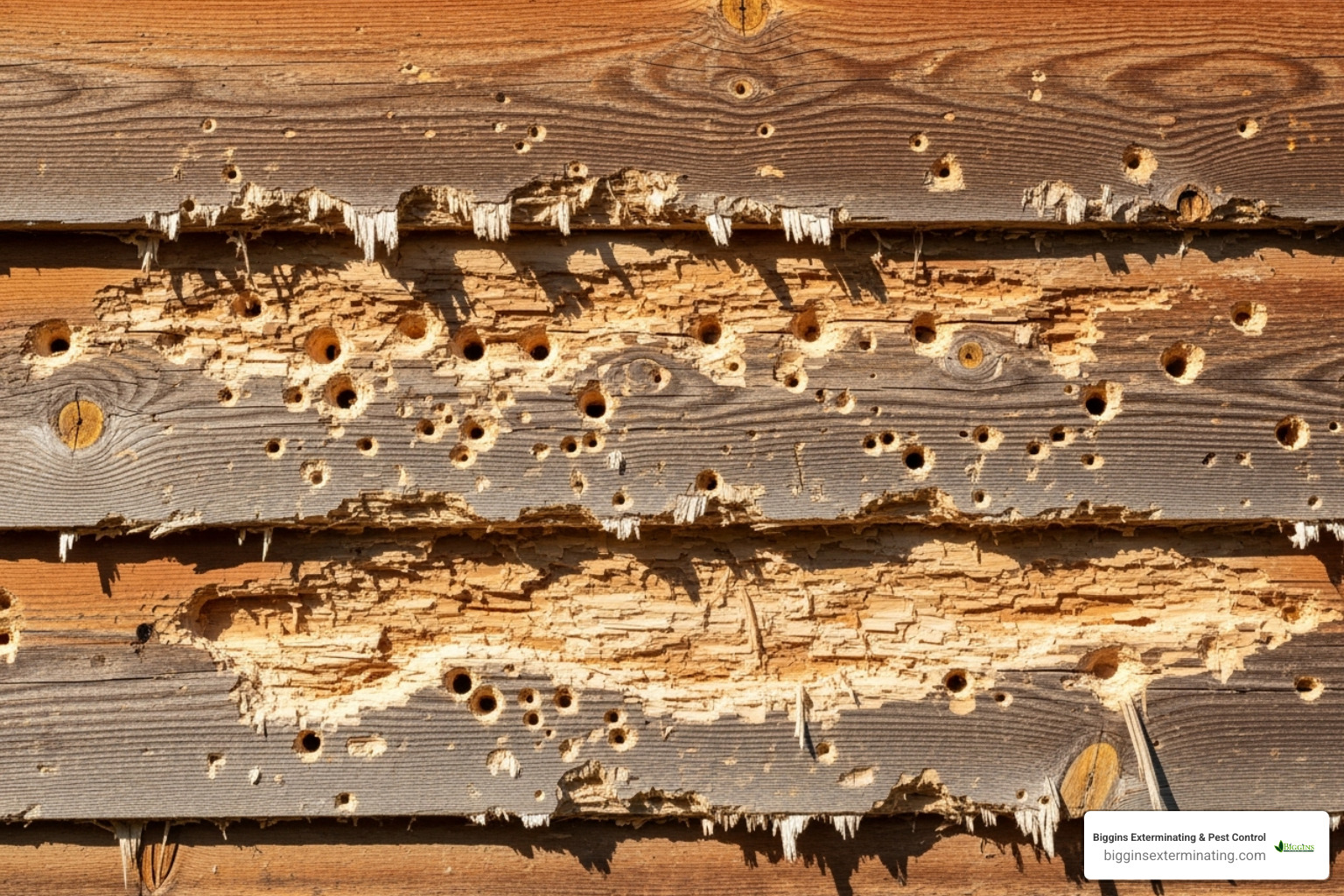
Identifying Carpenter Bee Damage
Recognizing carpenter bee damage early can save you significant repair costs. These big black bee pests leave behind unmistakable signs.
The most obvious sign is perfectly round holes, about half an inch across, that look drilled into the wood. You’ll find them on deck railings, fascia boards, eaves, and other exposed wooden surfaces.
Below these holes, you’ll often find piles of sawdust-like material called frass. This is the debris the bees push out as they excavate.
Look for yellowish-brown staining running down from the holes, which is bee excrement from active nests. You might even hear a low buzzing sound from within the wood.
The most frustrating secondary damage comes from woodpeckers. They hear larvae inside the wood and create larger, irregular holes to get to them, often causing more visible damage than the bees themselves.
A single nest tunnel isn’t a structural threat, but carpenter bees often return to expand existing tunnels. Over several seasons, this cumulative structural damage can become a serious problem. If you’re dealing with other wood-destroying pests, our guide on how to Find a Carpenter Ant Nest might be helpful.
Effective Prevention and Repellent Strategies
Fortunately, carpenter bees are predictable, making prevention effective. They strongly prefer unpainted, unstained, or weathered wood.
Painting and sealing wooden surfaces is the most effective prevention strategy. Carpenter bees rarely bother with properly painted or varnished wood. We recommend annual inspections and touch-ups.
When building, consider using hardwoods or composite decking materials, which are less appealing to them than softwoods like pine or cedar.
Sealing existing holes is crucial. Once a nest is inactive, fill old holes with wood putty or caulk to prevent re-infestation.
Some homeowners use deterrents like fake wasp nests or orange oil sprays, though results can vary.
For significant or recurring problems, professional pest control offers the most comprehensive solution. Our team can assess the damage, treat active nests, and develop a customized prevention plan. For more details, see our guide on the Best Deterrent for Carpenter Bees.
Frequently Asked Questions about Large Black Bees
Over our four decades serving homeowners in Billerica, Lexington, and Wilmington, MA, we’ve fielded countless questions about these big black bee species. Here are the most common concerns.
What time of year are carpenter bees most active?
Carpenter bees are most active in the spring, typically April and May. This is when they emerge from overwintering to mate and excavate nests. You’ll see males performing their territorial aerial displays and females starting new tunnels. A second, smaller wave of activity may occur in late summer when new adults emerge.
Can a single carpenter bee cause a lot of damage?
No, a single bee won’t cause significant structural damage. The initial tunnel is mostly a cosmetic issue. The real concern is the cumulative effect over several years. Generations of bees often reuse and expand old tunnels, which can weaken the wood over time. This activity also attracts woodpeckers, which cause much more extensive damage trying to get to the bee larvae.
Are there other types of big black bees besides carpenter and bumblebees?
Yes, while carpenter bees and bumblebees are the most common big black bee species homeowners encounter, there are others. These include different species within the carpenter bee family (Xylocopa), Carpenter-mimic Leafcutter Bees, and even dark-colored honeybees. However, for homeowners in our area, the most important distinction remains between the wood-boring carpenter bee and the beneficial bumblebee. Our “shiny butt versus fuzzy butt” test is the most reliable way to tell these two critical species apart.
Conclusion
When you spot a big black bee in your Massachusetts garden, remember the simple test: a shiny, hairless abdomen means you have a carpenter bee, which can damage wood. A fuzzy, hairy abdomen indicates a beneficial bumblebee.
While both are important pollinators, carpenter bees pose a wood damage risk to your property. The perfectly round holes they drill into decks, siding, and furniture can lead to cumulative structural damage over time, which also attracts destructive woodpeckers.
Early identification is key. If you see signs of carpenter bee activity, it’s time to take action to protect your home. As beneficial pollinators, these bees are a vital part of our ecosystem, but when they become pests, professional intervention is the safest and most effective solution.
At Biggins Exterminating, we have over four decades of experience helping families in Wilmington, MA, and the surrounding areas. For homeowners concerned about wood-boring insects, a professional assessment is key to protecting your investment.
Learn more about our professional Carpenter Bees Pest Control services and let our family help protect yours from wood-boring damage.