Why Carpenter Bees Demand Long-Lasting Protection
Residual insecticide for carpenter bees offers the most effective long-term protection against these destructive wood-boring pests. Unlike contact sprays that only kill on impact, residual insecticides continue working for weeks or months after application.
Top residual insecticides for carpenter bees include:
- Bifenthrin liquid spray – provides 30-90 days residual protection on wood surfaces
- Deltamethrin dust – remains active for months inside carpenter bee tunnels
- Permethrin concentrate – labeled specifically for carpenter bee eradication
- Cypermethrin foam – expands to fill galleries and offers extended control
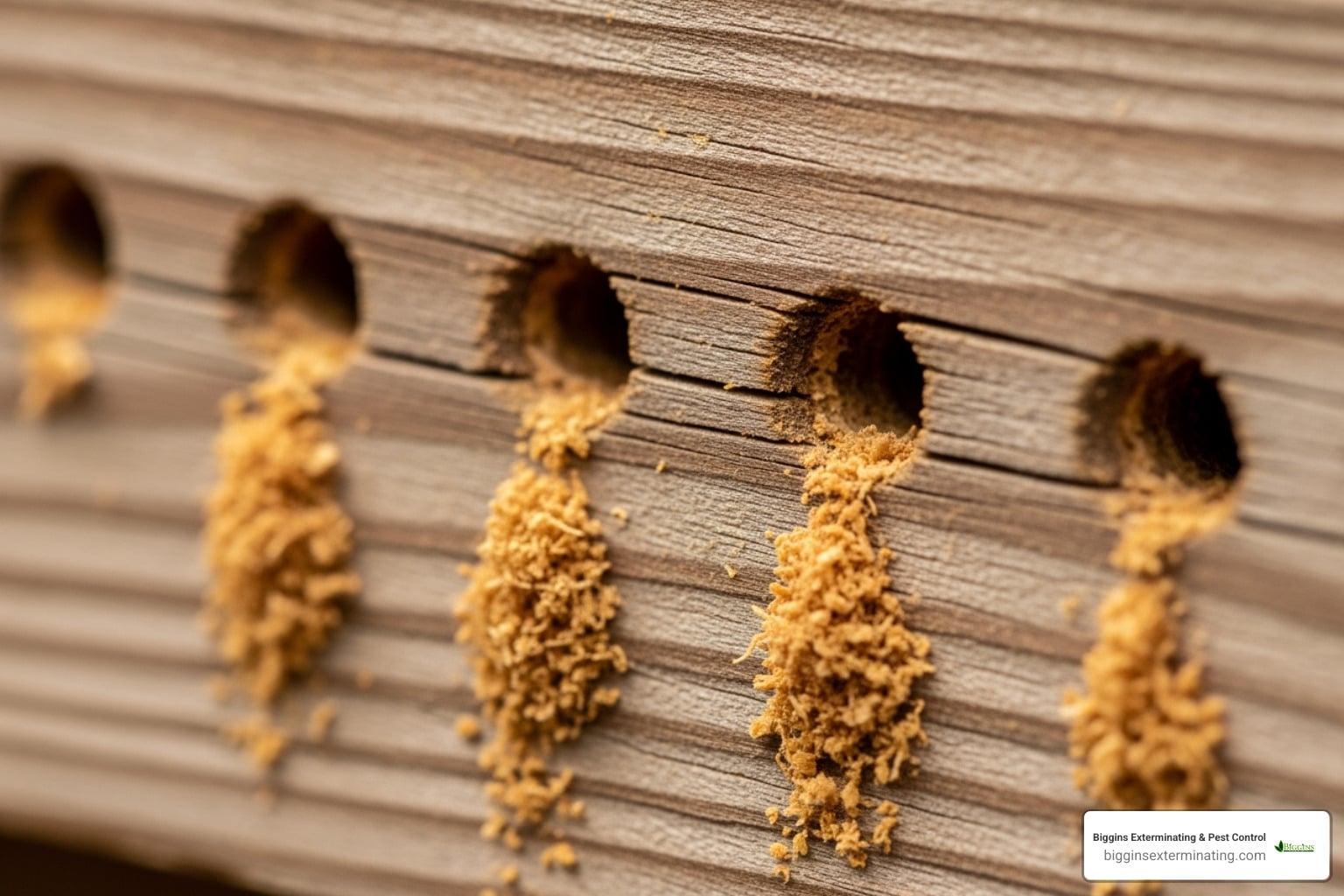
The challenge with carpenter bees isn’t just killing the adults you see buzzing around your deck or eaves. These solitary bees create perfectly round holes in unpainted wood, then tunnel several inches deep to lay their eggs. The real problem emerges months later when new generations hatch from those protected galleries.
As homeowner Helen from Massachusetts finded: “My home has exterior wood paneling & it attracts carpenter bees & woodpeckers. It seems like the bees leave their eggs in the wood & the woodpeckers come make a hole in the wood to eat the bee eggs. This is creating many panel holes throughout my home.”
Standard contact insecticides simply can’t reach developing larvae deep inside wood tunnels. That’s why residual formulations are essential – they create a lasting barrier that eliminates emerging bees and prevents new infestations.
I’m Stephen Biggins, and in over four decades of pest control experience serving Massachusetts homeowners, I’ve seen how residual insecticide for carpenter bees provides the most reliable long-term protection against these persistent wood destroyers. The key is choosing the right formulation and applying it at the optimal time to break their reproductive cycle.
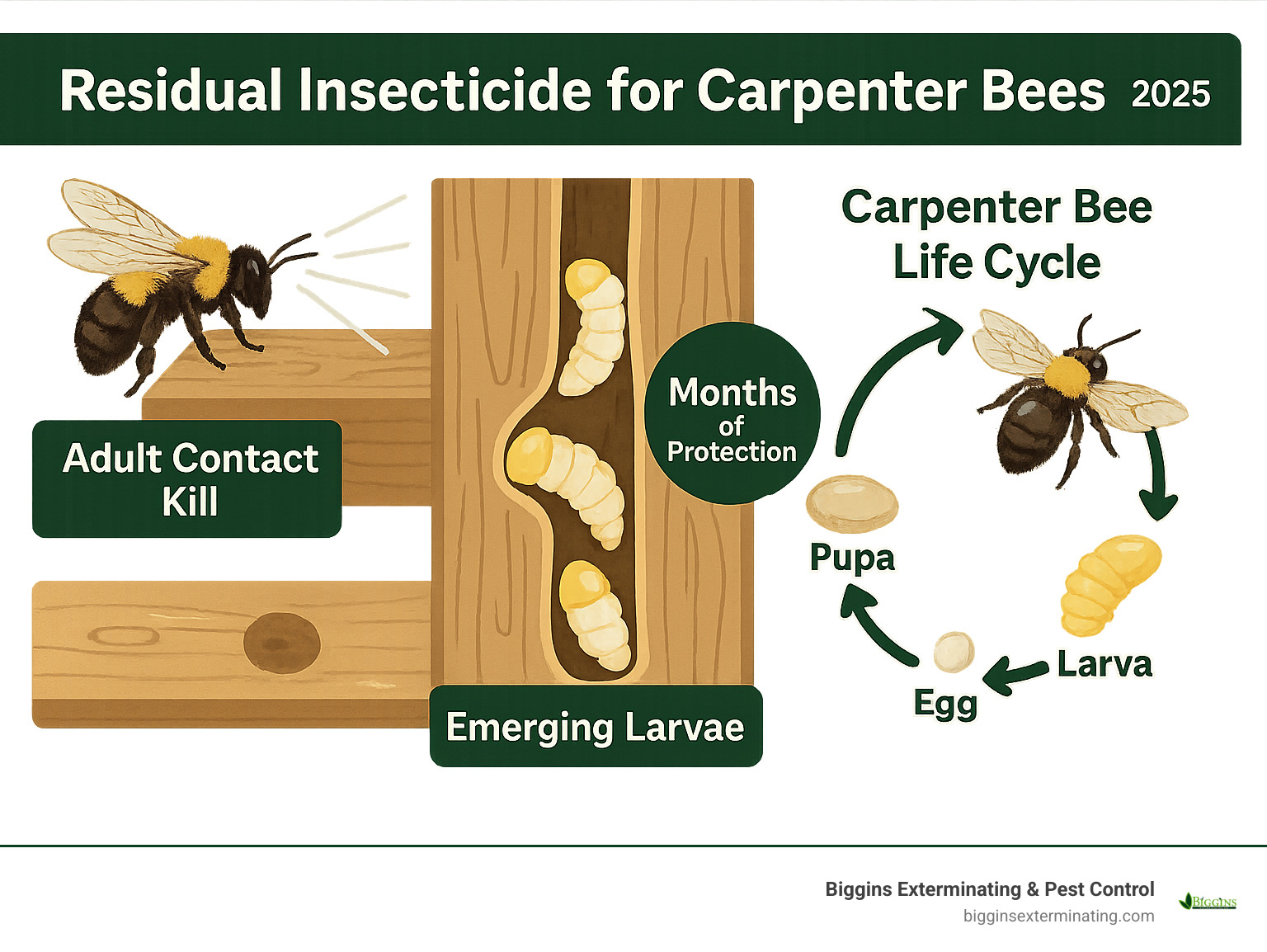
Simple residual insecticide for carpenter bees glossary:
What Are Carpenter Bees and Why Are They a Problem?
If you’ve spotted what looks like a bumblebee hovering around your deck or porch, take a closer look at its abdomen. Carpenter bees have a distinctive smooth, shiny black rear section that sets them apart from their fuzzy bumblebee cousins. These impressive insects, scientifically known as Xylocopa virginica, become incredibly active from early spring through summer, and they have one mission: finding the perfect piece of wood for their nursery.
Carpenter bees (Xylocopa virginica) are very active from early spring through summer
Unlike honeybees or bumblebees that live in colonies, female carpenter bees are solitary creatures with impressive construction skills. She uses her powerful mandibles to bore perfectly round holes – exactly half an inch wide – into unpainted or weathered wood. Inside, she creates tunnels that can extend up to ten inches, carving out individual chambers where she’ll lay her eggs with a ball of pollen for each future bee to eat.
Here’s where things get problematic for homeowners. These bees are creatures of habit, often returning to the same holes year after year. What starts as a simple half-inch hole can become an extensive network of tunnels stretching up to ten feet through your wooden structures. In my four decades serving Massachusetts communities like Andover and Bedford, I’ve seen carpenter bee damage compromise the structural integrity of decks, eaves, and siding.
The telltale signs of carpenter bee activity include fine sawdust (called frass) scattered below the holes, unsightly yellow fecal stains streaking down your wood surfaces, and that distinctive buzzing sound coming from inside the wood itself. But the damage doesn’t stop there – these infested areas attract woodpeckers who create even larger holes trying to reach the developing bee larvae inside.
While the intimidating-looking male carpenter bees are all buzz and no bite (they can’t sting), the females pack a punch if you handle them roughly. However, the real threat isn’t their sting – it’s the cumulative structural damage they cause to your home’s wooden elements. You can learn more about how they specifically target exterior surfaces on our page about Carpenter Bees Wood Siding.
This is exactly why residual insecticide for carpenter bees becomes so crucial – you need protection that lasts long enough to eliminate both the adult bees and the next generation emerging from those hidden galleries.
The Power of Residuals: How These Insecticides Work
Think of residual insecticide for carpenter bees as your home’s long-term security system. While regular contact sprays are like a one-time alarm that goes off and stops, residual treatments keep working around the clock for weeks or even months after application.
The magic happens at the molecular level. Most effective residual insecticides belong to the pyrethroid family – synthetic compounds that include bifenthrin, cypermethrin, deltamethrin, and permethrin. These act as nerve agents, disrupting the carpenter bee’s nervous system when they make contact with treated surfaces.
Here’s where residuals really shine: they break the carpenter bee life cycle at multiple points. When a female bee lands on treated wood to start boring her tunnel, she picks up the insecticide. But the real power comes later – those developing larvae and pupae hidden deep in wood galleries that contact sprays can’t reach? When they finally emerge as adults weeks or months later, they encounter that lingering residue and are eliminated before they can cause more damage.
Liquid concentrates work beautifully as surface treatments, creating protective barriers on deck railings, eaves, and fascia boards. Insecticidal dusts, on the other hand, are perfect for getting deep into existing galleries where they remain active for months in those protected tunnels.
This strategic approach means you’re not just killing the bees you see today – you’re preventing future generations from ever getting established. For more detailed strategies on eliminating these wood-boring pests, check out our guide on How to Get Rid of Wood Boring Bees.
Choosing the Best Residual Insecticide for Carpenter Bees
Selecting the right residual insecticide for carpenter bees can feel overwhelming with so many options on the shelf. The good news? Most effective products share similar active ingredients from the pyrethroid family – specifically bifenthrin, cypermethrin, deltamethrin, and permethrin. These synthetic compounds are proven carpenter bee killers that disrupt the insects’ nervous systems.
The real decision comes down to choosing the right formulation for your specific situation. Think of it like choosing the right tool for a job – you wouldn’t use a hammer when you need a screwdriver. For comprehensive guidance on effective products, check out our guide to the Best Carpenter Bee Killer.
Understanding Liquid Residual Insecticides
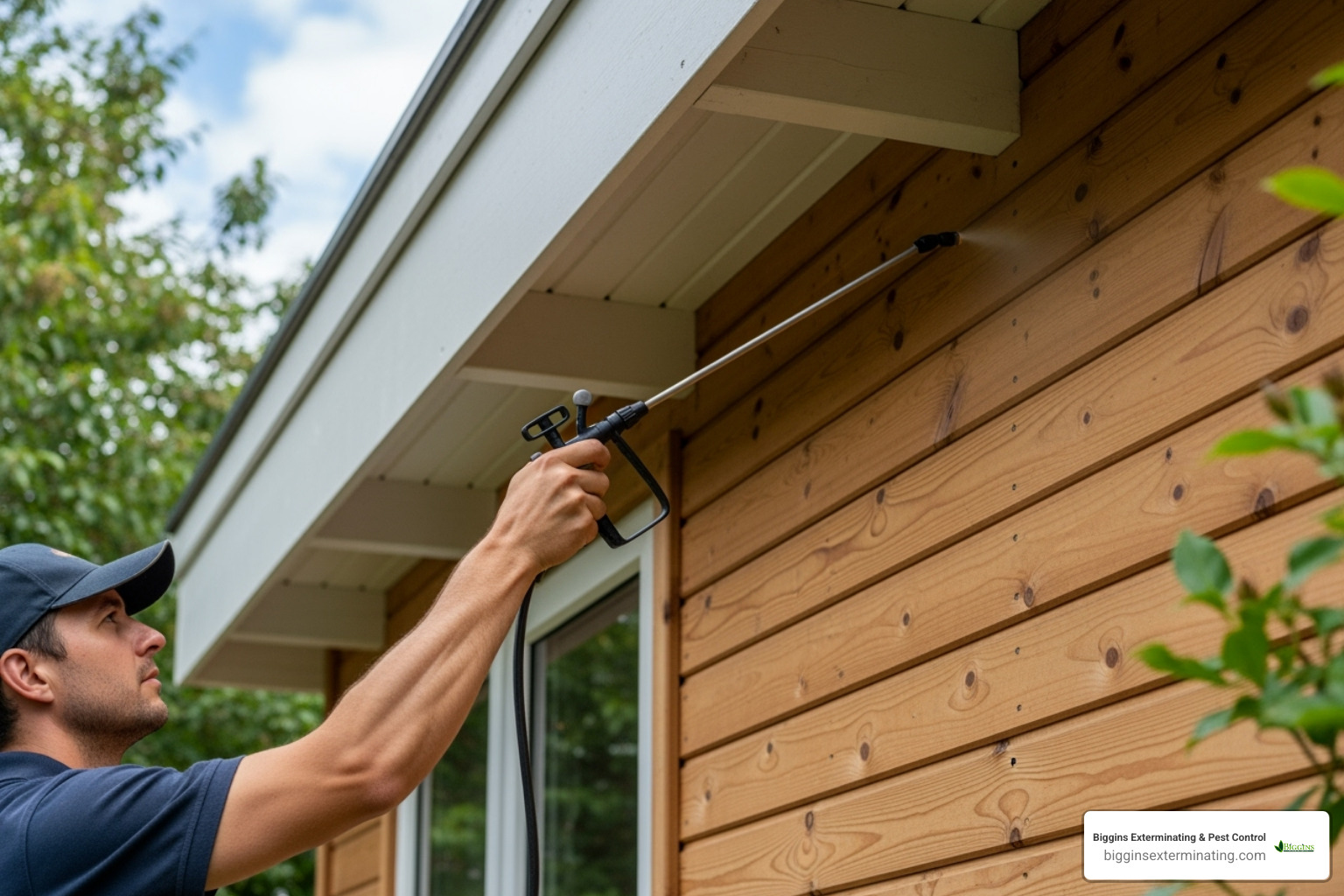
Liquid residual insecticides are your first line of defense against carpenter bees. These concentrates mix with water and apply easily with a standard pump sprayer, creating an invisible protective barrier on wood surfaces.
Picture treating your deck railings, eaves, and fascia boards in early spring before carpenter bees become active. The liquid soaks slightly into the wood and dries to form a long-lasting treatment. When bees land on treated surfaces or attempt to bore new holes, they pick up the insecticide and die within hours.
Most liquid formulations provide 30 to 90 days of protection on exterior wood, though this varies with weather exposure. They’re perfect for covering large areas quickly and work excellently as preventive treatments. For specific problem areas like siding, our page on Carpenter Bees Under Siding offers targeted advice.
The Role of Dusts as a Residual Insecticide for Carpenter Bees
While liquids protect surfaces, insecticidal dusts excel at eliminating carpenter bees already established in your wood. These fine powders get blown directly into existing carpenter bee holes using a hand duster – think of it as delivering medicine exactly where it’s needed.
The magic happens inside those tunnels. Dusts with deltamethrin or other pyrethroid active ingredients can remain effective for months or even years in protected galleries. This extended protection is crucial because carpenter bee larvae can take up to a year to develop into adults.
When new bees finally emerge from their nursery tunnels, they must crawl through the treated dust to exit. This ensures contact with the insecticide before they can escape to cause more damage or start new nests. It’s like setting a trap that works automatically, even when you’re not around.
How Long Does a Residual Insecticide for Carpenter Bees Last?
The lifespan of your residual insecticide for carpenter bees depends on several factors that work together like pieces of a puzzle. Active ingredients and formulations make the biggest difference – liquid bifenthrin sprays typically protect for 30-90 days on exposed wood, while dusts tucked safely inside tunnels can remain active for months or years.
Weather plays the villain in this story. Sunlight breaks down pyrethroid molecules through UV degradation, while rain washes treatments away. That’s why exterior applications often lose effectiveness within 2-3 weeks on unfinished wood, though some products claim protection for up to 3 months on painted surfaces.
Surface type matters too. Painted or stained wood holds treatments longer than raw lumber, which absorbs liquids quickly. Some professional-grade products like Telstar-P offer 2-3 months of residual activity, while certain indoor formulations can last up to 12 months.
The reality? Most homeowners need multiple applications throughout spring and early summer to maintain continuous protection. This repeated treatment strategy effectively breaks the carpenter bee life cycle. Stay informed about optimal timing by following our News Blog for seasonal pest control updates.
Proper Application for Maximum Effectiveness
Getting the most out of your residual insecticide for carpenter bees comes down to timing, technique, and a little patience. After four decades in pest control, I’ve learned that even the best products won’t work if they’re not applied correctly.
Spring is your window of opportunity. Start treating in early spring when carpenter bees first become active but before they’ve had a chance to drill new holes. This preventive approach saves you from dealing with established galleries later. Think of it as putting up a “No Vacancy” sign before the bees start house hunting.
For those pesky holes that are already buzzing with activity, timing becomes even more critical. Apply treatments in late evening or at night when the bees have settled in for the night. This isn’t just about safety—though it does protect beneficial pollinators—it ensures the bees inside the tunnels will contact the insecticide.
Treating existing galleries requires precision. Use a hand duster to blow insecticidal dust directly into each hole entrance, or apply foaming spray that expands to fill the tunnel. The goal is getting that residual insecticide for carpenter bees deep into the gallery where larvae and pupae are developing. Don’t be shy about it—you want complete coverage throughout the tunnel system.
Surface spraying creates your protective barrier. Apply liquid residual insecticide to all vulnerable wooden surfaces—eaves, fascia boards, deck railings, and any unpainted or unfinished wood. Spray until the surface is visibly wet but not dripping. This creates a lasting shield that kills any bee attempting to drill new holes.
Here’s where patience pays off: resist the urge to plug holes immediately after treatment. Wait a full 24 to 48 hours before sealing. This waiting period allows any bees inside to contact the insecticide and ensures complete elimination. After that, seal holes with wood putty, caulk, or wooden dowels to prevent future use.
Proper preparation makes all the difference. For detailed guidance on getting your property ready for treatment, check out our guide on how to Prepare Your Home for Pest Control Treatment.
An Integrated Approach and Safety Precautions
The most effective carpenter bee control combines residual insecticide for carpenter bees with smart prevention strategies. Think of it as building multiple layers of defense around your home’s wooden structures.
Prevention is your first line of defense. Carpenter bees have a strong preference for unpainted, weathered wood. Simply painting or staining all exposed wooden surfaces – decks, eaves, fascia boards, and railings – makes your home far less attractive to these wood-boring pests. When building new structures, consider using hardwood or pressure-treated lumber, which carpenter bees typically avoid.
Don’t overlook the small details either. Seal cracks and unsealed nail holes with wood putty or caulk. These seemingly minor gaps can become entry points for determined female carpenter bees looking for the perfect nesting spot.
Established bee galleries should be sprayed with liquid insecticides or dusts
Carpenter bee traps serve as helpful monitoring tools but shouldn’t be your primary control method. These prefabricated traps can help you track bee activity and determine if your treatment program is working, but they won’t eliminate an established infestation on their own.
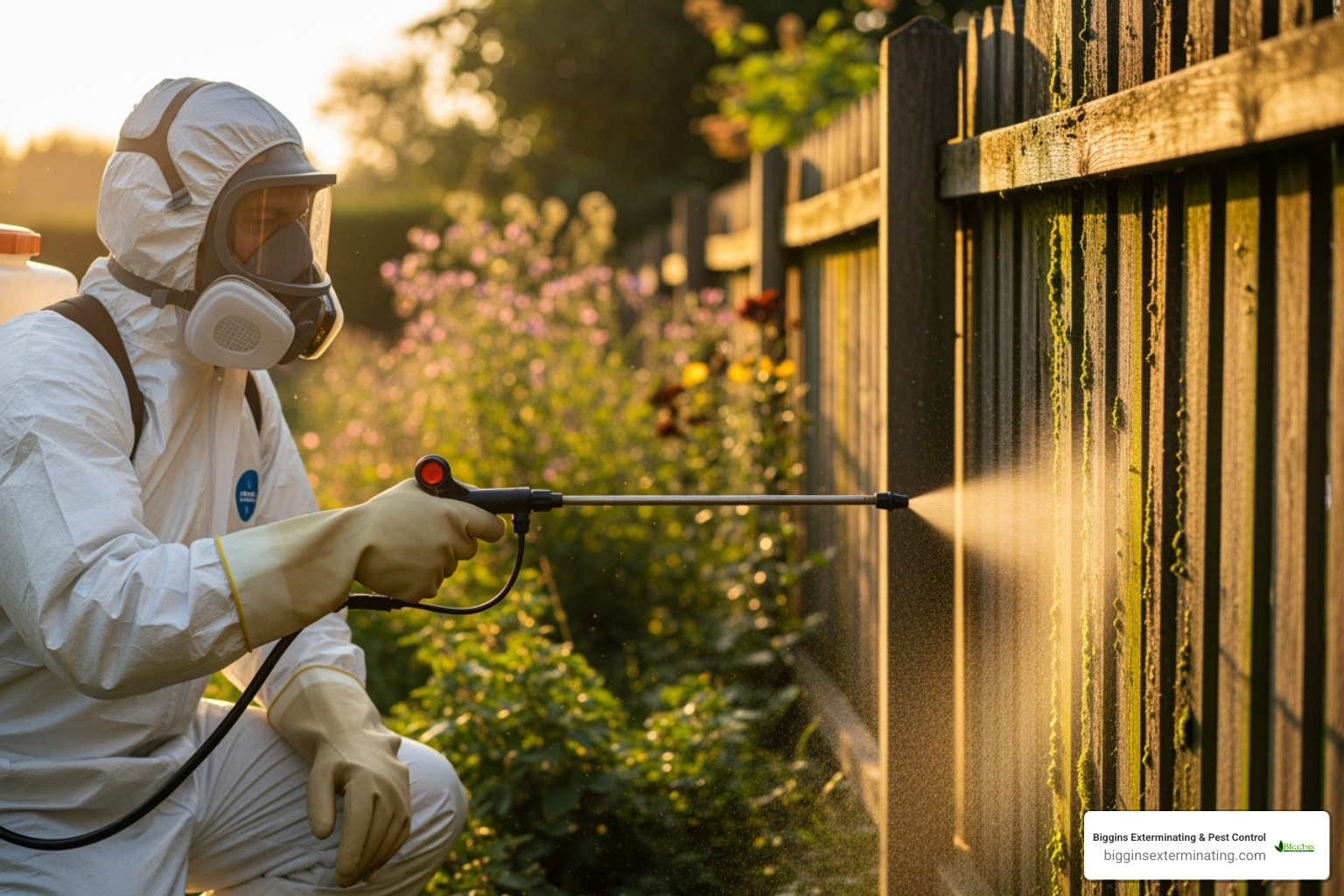
Safety must come first when applying any residual insecticide for carpenter bees. Always wear protective gear including gloves, eye protection, and long-sleeved clothing. When working with insecticidal dusts or treating enclosed areas, a respirator is essential to protect your lungs.
Timing your application protects beneficial insects. Apply treatments in the late evening or at night when carpenter bees are inside their tunnels and honeybees have returned to their hives. Avoid spraying flowering plants where beneficial pollinators might forage. For environmentally conscious options, explore our Green Pest Control approaches.
Keep family and pets safe by restricting access to treated areas until the insecticide has completely dried. This is especially important with liquid sprays on decks and walkways. Our guide on Safe Pest Control for Pets offers additional precautions for pet owners.
Always read and follow the product label completely. This isn’t just good practice – it’s the law. The label contains crucial information about application rates, safety precautions, and environmental hazards specific to that product.
While DIY treatment can be effective for small infestations, it’s not without risks. Massachusetts homeowners face unique challenges with carpenter bees, from our humid summers that affect insecticide longevity to local regulations about pesticide use. Understanding The Dangers of DIY Pest Control in Massachusetts can help you make informed decisions about when to tackle the problem yourself and when to call in professionals.
Frequently Asked Questions about Carpenter Bee Insecticides
Homeowners throughout Massachusetts often call us with questions about using residual insecticide for carpenter bees. After four decades in pest control, I’ve heard just about every concern you might have. Let me address the most common ones we encounter.
Will spraying for carpenter bees harm other beneficial bees?
This is probably the question I hear most often, and it’s a thoughtful one. Nobody wants to harm honeybees or other beneficial pollinators while trying to protect their deck or eaves.
The good news is that targeted application makes all the difference. When we apply residual insecticide for carpenter bees, we focus specifically on wooden structures – not flowering plants where beneficial bees forage. We also time our treatments for late evening or at night when most beneficial pollinators have returned to their hives for the day.
While pyrethroids can affect beneficial insects, responsible application greatly reduces this risk. It’s all about being precise with where and when we spray. This approach aligns with our commitment to Green Pest Control practices whenever possible.
Should I plug carpenter bee holes immediately after treatment?
Here’s where many homeowners make a costly mistake. Do not plug those holes right away! I know it’s tempting to seal up those unsightly holes as soon as you’ve treated them, but patience pays off here.
You need to wait 24 to 48 hours after applying your residual insecticide for carpenter bees. This waiting period serves two important purposes. First, any adult bees still inside the tunnels need time to contact the insecticide and die. Second, foraging bees that return to the nest will pick up a lethal dose before the hole is sealed.
After this waiting period, go ahead and seal those holes with wood putty, caulk, or wooden dowels. This prevents future bees from reusing the same tunnels – and trust me, they love to return to established galleries year after year.
Can I just use a general wasp and hornet spray?
I get this question a lot, especially from homeowners looking for a quick fix. Unfortunately, that wasp and hornet spray under your kitchen sink won’t give you the lasting protection you need against carpenter bees.
These general sprays are contact killers – they work great for knocking down a wasp that’s bothering your barbecue, but they offer little to no residual protection once they dry. With carpenter bees, the real problem isn’t just the adults you see buzzing around. It’s the eggs and larvae developing deep inside those tunnels that will emerge weeks or months later.
A dedicated residual insecticide for carpenter bees is formulated to provide lasting protection and penetrate deep into galleries where developing bees hide. General wasp sprays simply can’t reach these protected areas or provide the long-term barrier you need to break the carpenter bee life cycle.
For comprehensive stinging insect problems, we offer specialized Bee and Wasp Removal services that address each species’ unique behavior and nesting habits.
When to Call a Professional for Carpenter Bee Control
Sometimes the buzzing around your home becomes more than a weekend DIY project can handle. While residual insecticide for carpenter bees can be effective when applied correctly, there are situations where calling in the professionals makes the most sense.
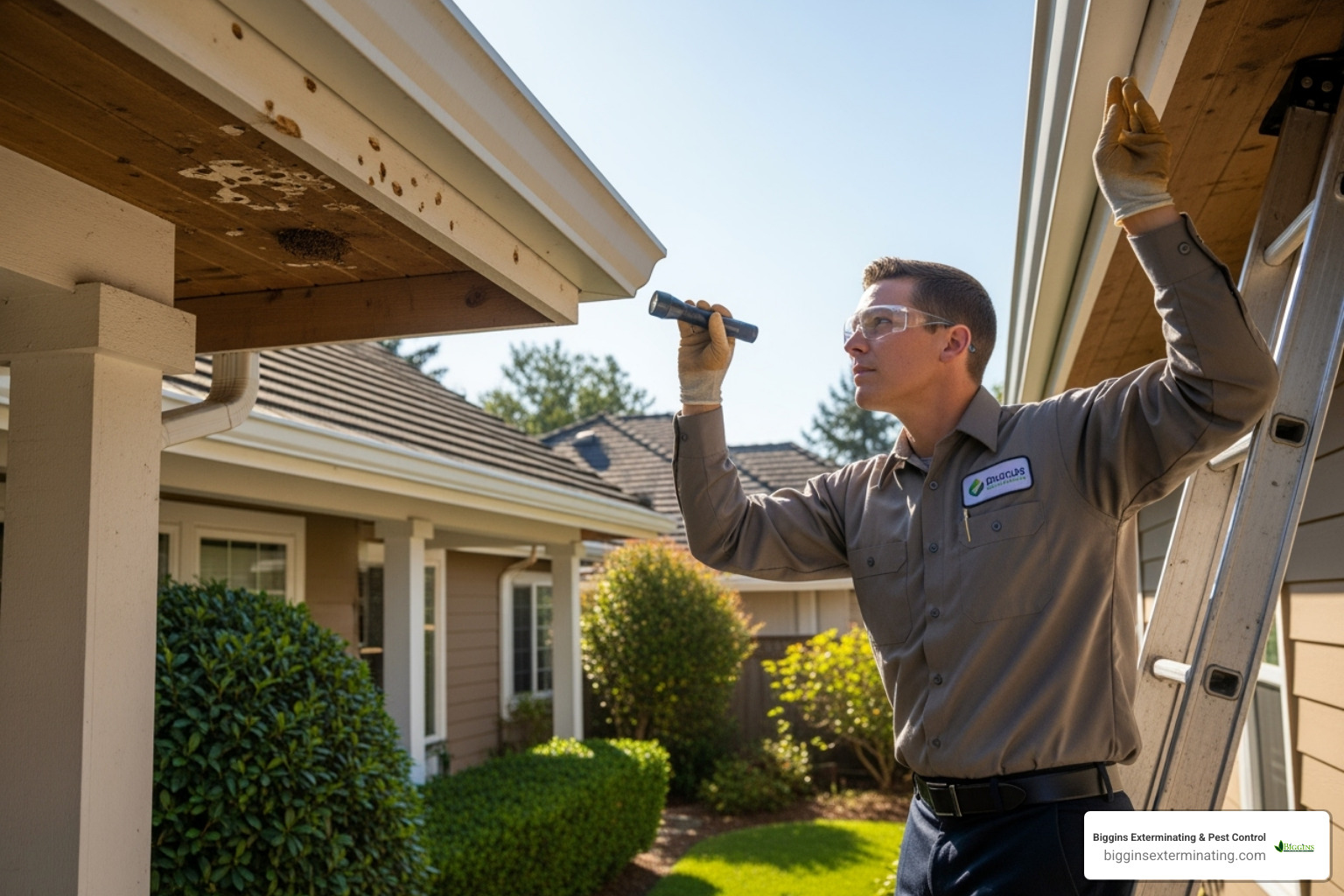
Widespread infestations are often the first sign it’s time to call for backup. When you’re counting dozens of holes across your deck, eaves, and siding, the problem has likely been building for years. Each hole represents a potential nursery for future generations, and treating them all effectively requires experience and the right equipment.
Hard-to-reach areas present another challenge that professionals handle daily. Those carpenter bee holes twenty feet up in your eaves or tucked under soffits aren’t just difficult to reach – they’re dangerous to treat without proper ladders and safety equipment. We’ve seen too many homeowners get hurt trying to spray insecticide while balancing on makeshift platforms.
Safety concerns are completely valid, especially when you have children or pets around. Professional-grade residual insecticide for carpenter bees requires careful handling and application. If you’re uncomfortable working with chemicals or unsure about proper protective equipment, that’s your instinct telling you to call for help.
The most telling sign is persistent problems year after year. If you’ve been fighting the same carpenter bees returning to the same spots despite your best efforts, there’s likely something being missed in the treatment approach. Sometimes it’s timing, sometimes it’s coverage, and sometimes it’s simply that the infestation is more extensive than it appears.
As a family-owned pest control company in Wilmington, MA, with over 40 years of experience, Biggins Exterminating & Pest Control has seen every type of carpenter bee situation imaginable. We serve homeowners throughout Andover, Bedford, Billerica, Burlington, Lexington, North Reading, Tewksbury, Wilmington, and Woburn, providing reliable services without locking you into long-term contracts.
Our approach ensures complete eradication because we understand how these bees think and behave. We know exactly when to apply treatments, which formulations work best in different situations, and how to prevent them from coming back. Most importantly, we provide warranties on our work because we stand behind our results.
For guaranteed and long-lasting results against wood-boring bees, contact a licensed exterminator. We have the experience and access to professional-grade residual insecticide for carpenter bees that provides superior protection for your home. Learn more about our approach to Carpenter Bees Pest Control and understand the Importance of Professional Pest Control Service.
We’re here to help you silence the buzz and protect your wood for years to come – so you can get back to enjoying your home instead of constantly worrying about those persistent drillers overhead.