
Why Choosing the Right Pesticide for Carpenter Bees Can Save Your Home’s Woodwork
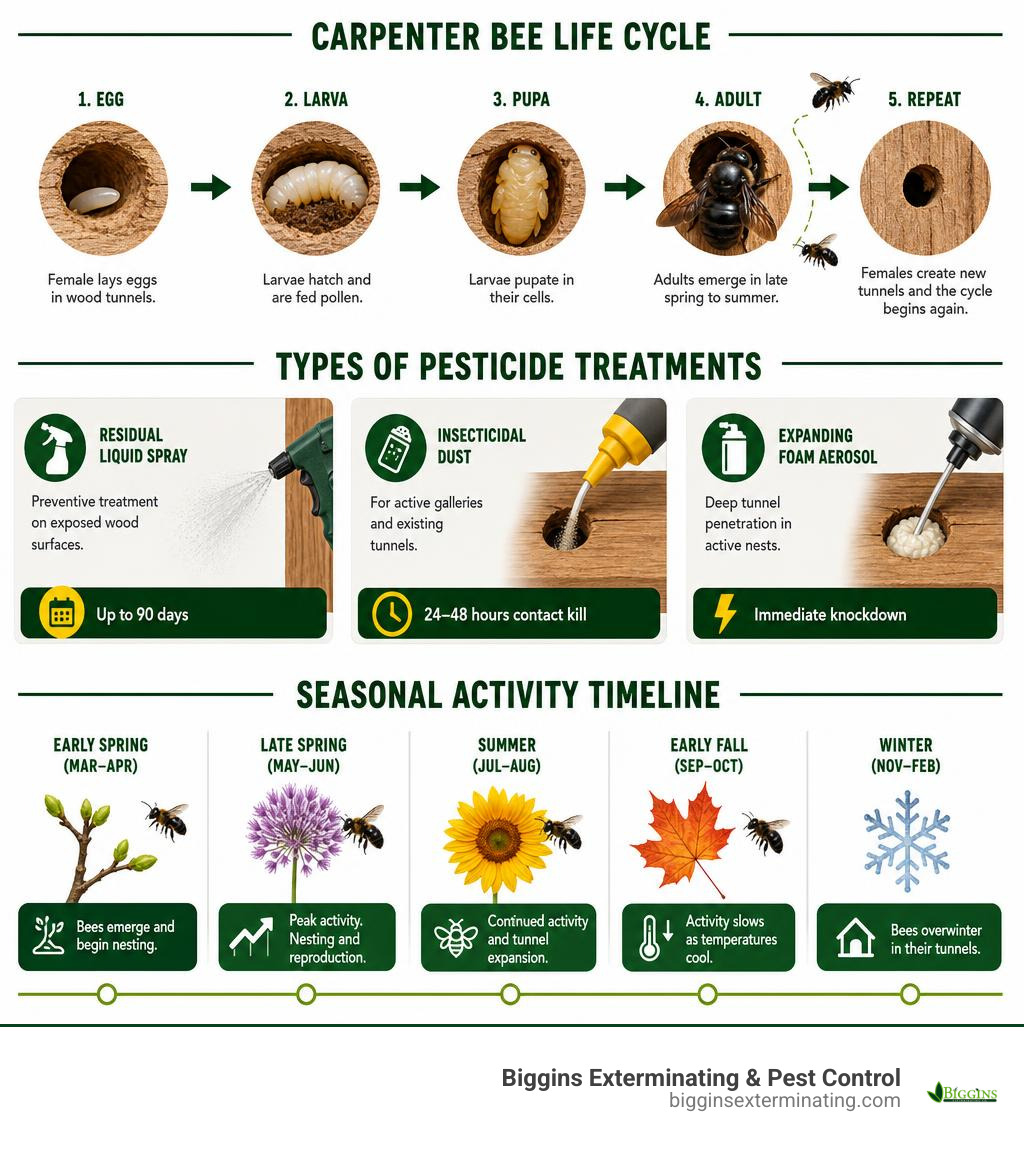
The most effective pesticides for carpenter bees fall into three main categories:
| Product Type | Best Use | Residual |
|---|---|---|
| Residual liquid spray | Preventive treatment on exposed wood surfaces | Up to 90 days |
| Insecticidal dust | Active galleries and existing tunnels | 24–48 hours contact kill |
| Expanding foam aerosol | Deep tunnel penetration in active nests | Immediate knockdown |
Those three options cover most situations — but which one you need depends on your timing, the stage of the infestation, and where the bees are nesting.
Every spring in Massachusetts, homeowners start noticing large black bees hovering around their eaves, deck railings, and fascia boards. Those are carpenter bees — and unlike bumble bees, they’re not just passing through. They’re boring perfectly round half-inch holes into your wood to build nesting galleries that can stretch feet into a timber over multiple seasons.
The structural damage starts small. But left untreated, those tunnels weaken wood, invite moisture and rot, and attract woodpeckers that make the damage even worse.
Choosing the right pesticide for carpenter bees matters — not just for killing the bees you see today, but for protecting your home from the ones that will return next spring.
I’m Stephen Biggins, owner of Biggins Exterminating Co., a family-owned pest control company serving Wilmington, MA and surrounding communities since 1982. Over more than four decades of hands-on work, I’ve helped countless Massachusetts homeowners select and apply the right pesticide for carpenter bees based on the specific stage of infestation and type of wood being damaged. In this guide, I’ll walk you through exactly what works, when to use it, and how to do it safely.
Understanding Carpenter Bees vs. Bumble Bees
Before you buy any pesticide for carpenter bees, you must make sure you are actually dealing with carpenter bees. Because bumble bees are vital, ground-nesting pollinators that do not damage wood, treating them with wood-boring pesticides is unnecessary and environmentally irresponsible.
Identifying the Big Black Bee
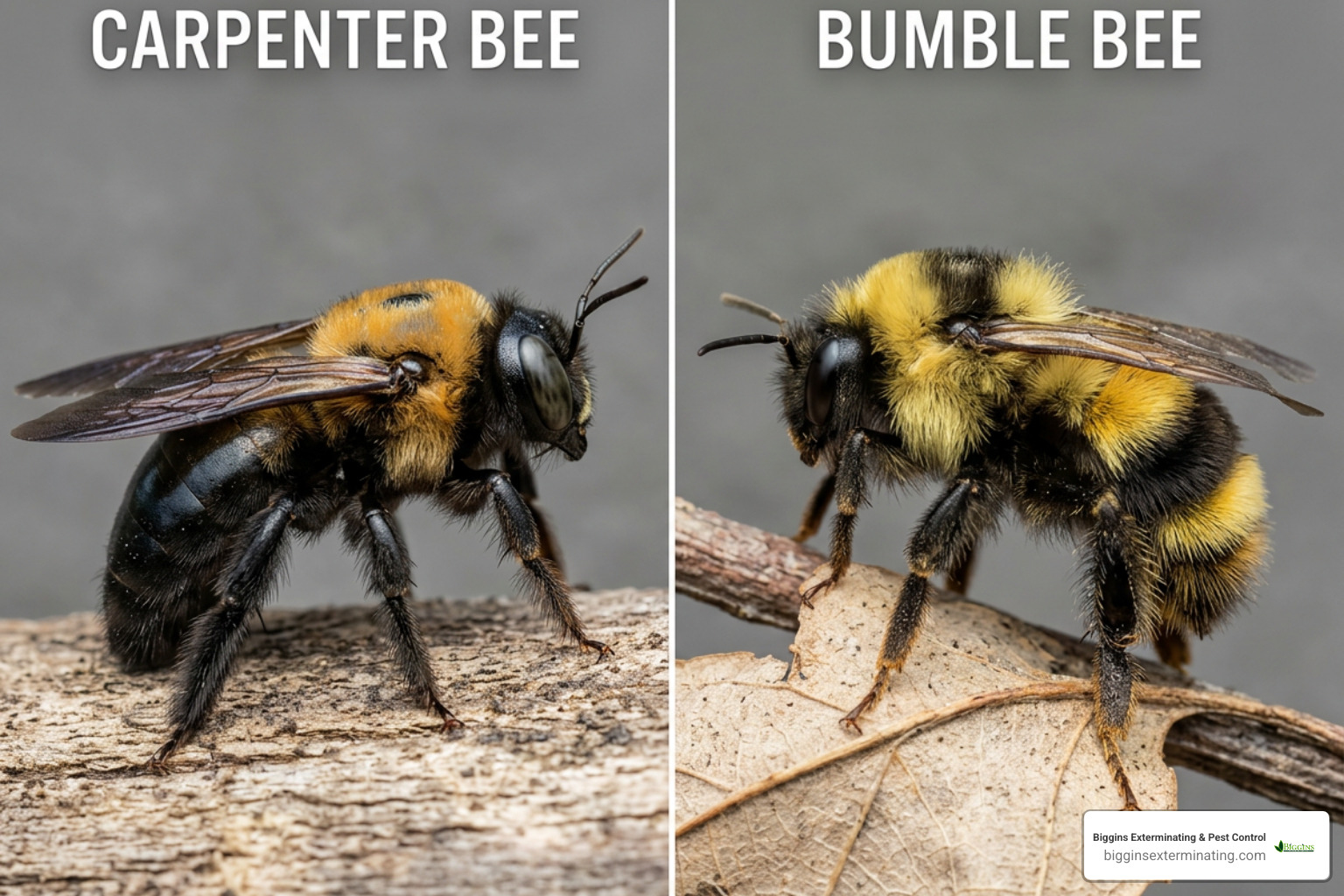
When people see a big black bee hovering near their roofline, they often mistake it for a common bumble bee. However, there are distinct physical and behavioral differences between the two.
The easiest way to identify a black and yellow carpenter bee is by looking at its abdomen (the rear section of its body). A carpenter bee has a shiny, smooth, metallic-black abdomen that is completely bald. In contrast, a bumble bee has a very fuzzy, hairy abdomen often covered in bright yellow and black stripes.
Behaviorally, male carpenter bees are highly territorial. They will hover right in front of your face, darting back and forth to guard their nesting sites. While this “dive-bombing” behavior can be intimidating, male carpenter bees do not have stingers and are completely harmless. The females do possess stingers but are incredibly docile, rarely stinging unless they are directly handled or stepped on.
Wood Boring Damage and Nesting Habits
Bumble bees live in social colonies and nest underground, often in abandoned rodent burrows or thick grass clumps. Carpenter bees, however, are solitary insects. The female’s sole mission in spring is to find softwoods—such as pine, cedar, redwood, cypress, or fir—and chew her way inside.
She uses her powerful mandibles to drill a perfectly round, half-inch entrance hole. This hole is so clean it looks like it was made with a high-speed power drill. Once she penetrates about an inch into the wood, she turns at a sharp 90-degree angle and begins tunneling along the grain of the wood.
Over a single season, a female will typically excavate a tunnel 6 to 10 inches deep. However, because carpenter bees are highly loyal to their birthplaces, subsequent generations will return to the same nesting sites year after year. Over time, these branching galleries can extend up to 10 feet deep into structural timbers.
If you are trying to figure out how to get rid of wood boring bees, you must address both the active insects inside and the physical structure of these tunnels to prevent future generations from reclaiming them.
Types of Pesticide for Carpenter Bees
To successfully eliminate an infestation, we must use different chemical formulations depending on the situation. Applying the wrong product at the wrong time will yield disappointing results and waste your hard-earned money.
Residual Liquid Pesticide for Carpenter Bees
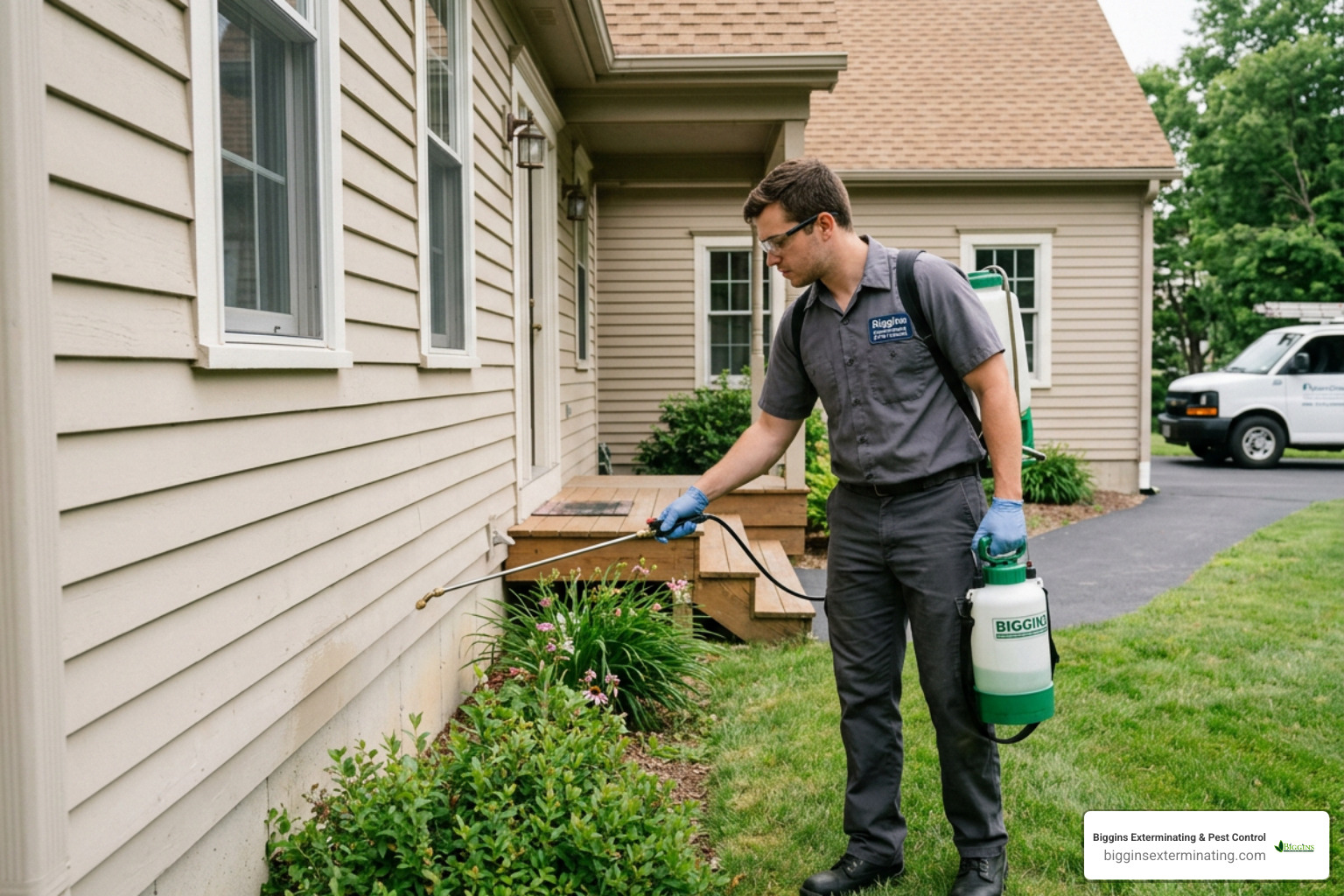
If you want to prevent carpenter bees from drilling holes in the first place, residual liquid concentrates are your best line of defense. These products are mixed with water and sprayed over large exterior wooden surfaces, such as siding, eaves, decks, and fascia boards.
Microencapsulated synthetic pyrethroids, such as lambda-cyhalothrin (found in products like Cyzmic CS), are highly effective. These formulations bond to the wood fibers and provide up to 90 days of active residual protection. When a bee lands on the treated wood to begin chewing, it absorbs the microscopic capsules of pesticide, which quickly shuts down its nervous system.
For more detailed information on how to select and apply these barrier sprays, you can check out our residual insecticide carpenter bees guide. If you are planning a do-it-yourself application, you can browse professional-grade concentrates through specialized outlets like Carpenter Bee Insecticides – DIY Pest Control .
Insecticidal Dusts and Foams for Active Galleries
Once a bee has already bored into the wood, a surface spray will not reach her. To eliminate bees inside active tunnels, you must inject the pesticide directly into the entrance holes.
- Insecticidal Dusts: Dusts (such as delta dust or pyrethrin-based dusts) are the gold standard for active galleries. Using a hand bellows duster, you puff the dry powder deep into the hole. The dust coats the tunnel walls. As the adult bees crawl through the gallery, the dust clings to their hairs. They ingest the poison during grooming, dying within 24 to 48 hours. The dust also remains active to kill any emerging larvae. For a deep dive into the top-rated dusts, read our breakdown of the best carpenter bee killer.
- Expanding Foams: Foams are highly effective because they expand to fill the entire nesting void. Products like Spectracide ® Carpenter Bee & Ground-Nesting Yellowjacket Killer Foaming Aerosol feature an injector straw that allows you to shoot expanding foam directly into the nest. The foam coats the bees on contact and breaks down into a lethal wet residue along the gallery walls.
Natural Repellents and Non-Chemical Traps
For homeowners who prefer to avoid synthetic chemicals, there are eco-friendly alternatives available.
- Citrus and Essential Oils: Carpenter bees have an intense natural aversion to the smell of citrus, lemongrass, and citronella. Natural sprays containing high concentrations of these oils (often around 25% lemongrass oil) can be sprayed onto wood to discourage bees from hovering. However, essential oils evaporate quickly and must be reapplied twice a week during the peak spring season to remain effective. Learn more about botanical barriers in our guide on the best deterrent for carpenter bees.
- Physical Traps: Carpenter bee traps consist of a wooden chamber with angled entry holes that mimic natural galleries, leading down into a clear plastic bottle or jar. When placed early in the spring, these traps catch searching females. Because they rely on physical design rather than chemical lures, they work best when hung directly over existing active holes or along sunny, wind-protected fascia boards.
Application Timing, Techniques, and Prevention
Even the highest-quality pesticide for carpenter bees will fail if it is applied incorrectly or at the wrong time of year. Following a strict protocol ensures maximum bee elimination while protecting non-target wildlife.
How to Apply Pesticide for Carpenter Bees Safely and Effectively
When treating active galleries, always follow these step-by-step professional instructions:
- Wear Protective Gear: Always wear safety goggles, long sleeves, and a respirator mask. When you inject dust or foam into a high eave, gravity will bring excess chemical drifting right back down toward your face.
- Inject the Gallery: Insert your duster nozzle or foam straw directly into the entrance hole and dispense the product.
- Leave the Hole Open: This is a crucial step that many homeowners skip. Do not plug the hole immediately. Leave it open for 24 to 48 hours. This allows returning adult bees to enter the tunnel, contact the fresh pesticide, and spread it deep into the nesting chambers.
- Seal the Tunnel: After 48 hours, plug the hole. Use a wooden dowel coated in carpenter’s glue, or fill the opening with heavy-duty wood putty or caulk. Sealing the hole prevents future bees from using the exact same tunnel next year.
For detailed chemical safety guidelines and mixing instructions for concentrates, refer to official regulatory documents like the US EPA, Pesticide Product Label, BEE GONE, 03/12/2013 .
Timing Your Treatment in Massachusetts
In Massachusetts, timing is everything. Our spring weather dictates when these pests emerge from their winter sleep.
- Early Spring (April – May): This is the most critical window. As temperatures warm, adult bees emerge to mate and excavate new tunnels. Applying preventive residual sprays to your wood siding and trim during this window will stop them before they can damage your home.
- Late Spring to Summer (June – July): During this period, female bees seal their eggs inside individual brood chambers within the galleries, separating them with plugs of chewed wood. If you apply pesticide now, the barrier plugs will protect the developing larvae from the chemical. They will hatch, grow, and chew their way out in the fall, completely bypassing your treatment.
- Late Summer to Fall (August – September): The new generation of adult bees hatches and emerges to feed on pollen before winter. This is your second major treatment window. Inject galleries at night when the bees have returned to their tunnels to sleep.
For a localized timeline tailored specifically to Middlesex County, check out our Professional Billerica MA Carpenter Bee Killer Guide.
Protecting Wood Siding and Under Siding Voids
Carpenter bees love rough-sawn, unpainted wood siding because the coarse texture makes it easy for them to grip and begin drilling. If your home features cedar shakes or natural wood siding, you are at a much higher risk.
To protect these large areas:
- Paint or Varnish: Painted wood is rarely attacked. Bees need to feel and smell the natural wood grain to recognize it as a suitable nesting site. Thick coats of polyurethane varnish or exterior acrylic paint act as a powerful deterrent.
- Protect Trim and Fascia: Fascia boards behind gutters are prime targets. Keep these areas painted and regularly inspect them.
- Address Under-Siding Voids: Bees will often crawl behind loose vinyl or wood siding to find unpainted structural sheathing underneath.
If you suspect bees are nesting out of sight, review our targeted resources on Carpenter Bees Wood Siding and Carpenter Bees Under Siding to safeguard these hidden areas.
Frequently Asked Questions About Carpenter Bee Control
Do carpenter bee traps work as well as chemical pesticides?
While traps are an excellent tool for reducing localized bee populations, they are rarely enough to stop an active infestation on their own. Traps rely on intercepting bees that are actively looking for a place to nest. If your home has highly attractive, weathered wood nearby, the bees will often choose your siding over a trap.
We recommend an Integrated Pest Management (IPM) approach: use residual pesticide sprays to protect the house, and hang traps nearby to catch any stray bees that manage to bypass the chemical barrier.
Can I buy effective carpenter bee insecticide at local home improvement stores?
Yes, many retail home improvement stores stock basic carpenter bee sprays and foams. However, there is a significant difference between consumer-grade products and professional-grade concentrates. Consumer products often contain lower concentrations of active ingredients, meaning they break down quickly in the sun and rain, requiring reapplication every week or two.
Professional formulations offer much longer residual protection. If you are looking for retail options, you can read our comparison of store-bought brands in our guide on Insecticide for Carpenter Bees Lowes.
What is the average cost of professional carpenter bee treatment?
If an infestation is high up on your eaves or spread across your entire roofline, treating it yourself can be dangerous and physically challenging.
Based on publicly available internet data, the average cost for professional carpenter bee treatment is around $300, with typical service ranges running from $150 all the way up to $950 or more for extensive, multi-point structural infestations that require high-ladder work and gallery void injections. Please note that these are average market costs based on public data and do not reflect the actual pricing of Biggins Exterminating.
If you live in our immediate service area, you can learn more about local options by visiting our page for a Bee Exterminator Wilmington MA.
Conclusion
Choosing the right pesticide for carpenter bees can mean the difference between a pristine, beautiful home and a deck full of unsightly holes, stains, and structural decay. While DIY methods can handle small, easily reachable holes, dealing with established, multi-generational infestations along rooflines and behind siding is a job best left to the pros.
At Biggins Exterminating Co., we have been protecting Massachusetts homes from wood-destroying pests for over 40 years. As a local, family-owned and operated company, we pride ourselves on delivering honest, contract-free, high-quality pest control services backed by our personal satisfaction warranty.
We proudly serve homeowners across our local service towns, including:
- Andover, MA
- Bedford, MA
- Billerica, MA
- Burlington, MA
- Lexington, MA
- North Reading, MA
- Tewksbury, MA
- Wilmington, MA
- Woburn, MA
If you are tired of fighting the “big black bees” every spring, let our family help yours. Explore our comprehensive Carpenter Bees Pest Control services today, and give us a call to schedule your professional, contract-free inspection!
