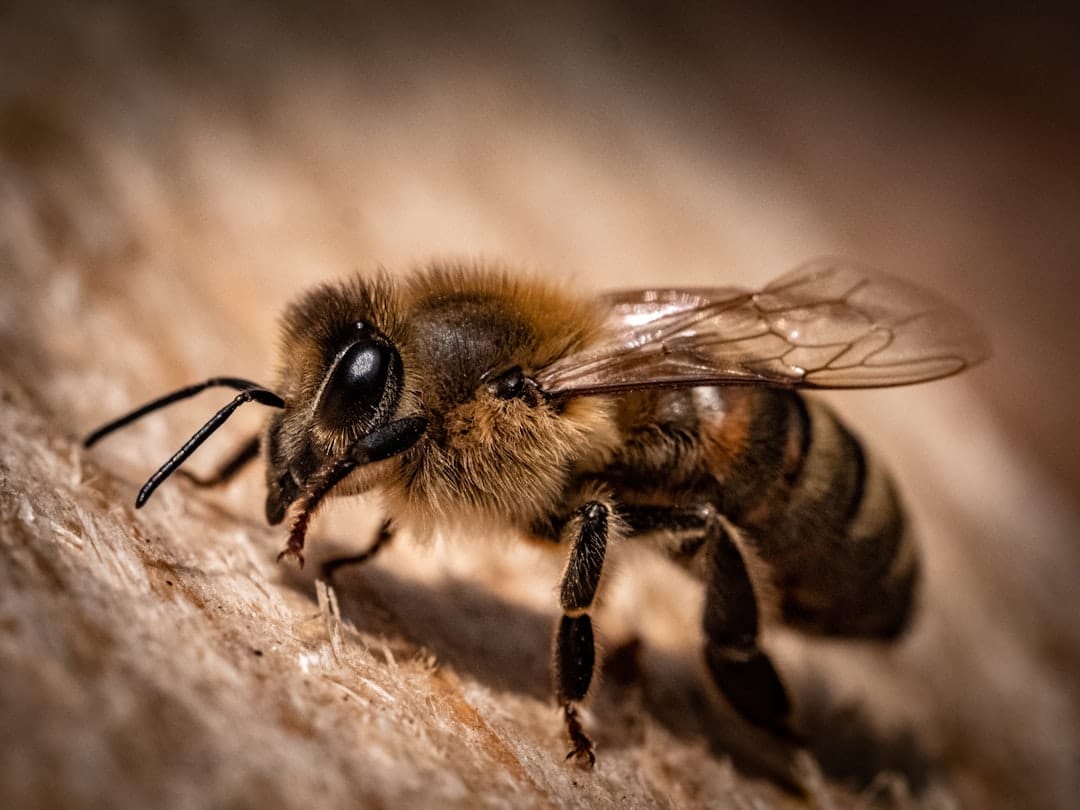
Why Finding the Best Spray for Carpenter Bees Matters Before They Damage Your Home
Finding the best spray for carpenter bees quickly is the key to stopping structural damage before it gets serious. Here’s a fast answer:
Top Carpenter Bee Sprays at a Glance:
| Product | Type | Best For |
|---|---|---|
| Amdro Quick Kill Carpenter Bee RTU | Liquid chemical spray | Contact kill + up to 3 months residual |
| Spectracide Carpenter Bee Foaming Aerosol | Foaming aerosol | Treating deep tunnels and hard-to-reach nests |
| Best Bee Brothers Citrus Repellent Spray | Natural/essential oil spray | Chemical-free prevention on wood surfaces |
| DIY peppermint oil spray | Natural/homemade | Budget-friendly repellent option |
Carpenter bees might look harmless, but they are quietly drilling through your home. They target softwoods like pine, cedar, and redwood, boring half-inch holes that lead to deep tunnels. Over time, those tunnels weaken decks, railings, siding, and other wooden structures — and woodpeckers can make the damage even worse by pecking at the wood to reach the larvae inside.
The good news? The right spray can stop them fast — and keep them away.
I’m Stephen Biggins, owner of Biggins Exterminating Co., a family-owned pest control company serving Wilmington, MA and surrounding areas since 1982. With over four decades of hands-on experience dealing with wood-destroying insects, I’ve helped countless Massachusetts homeowners find the best spray for carpenter bees before small holes turned into costly repairs. Let’s walk through exactly what works.
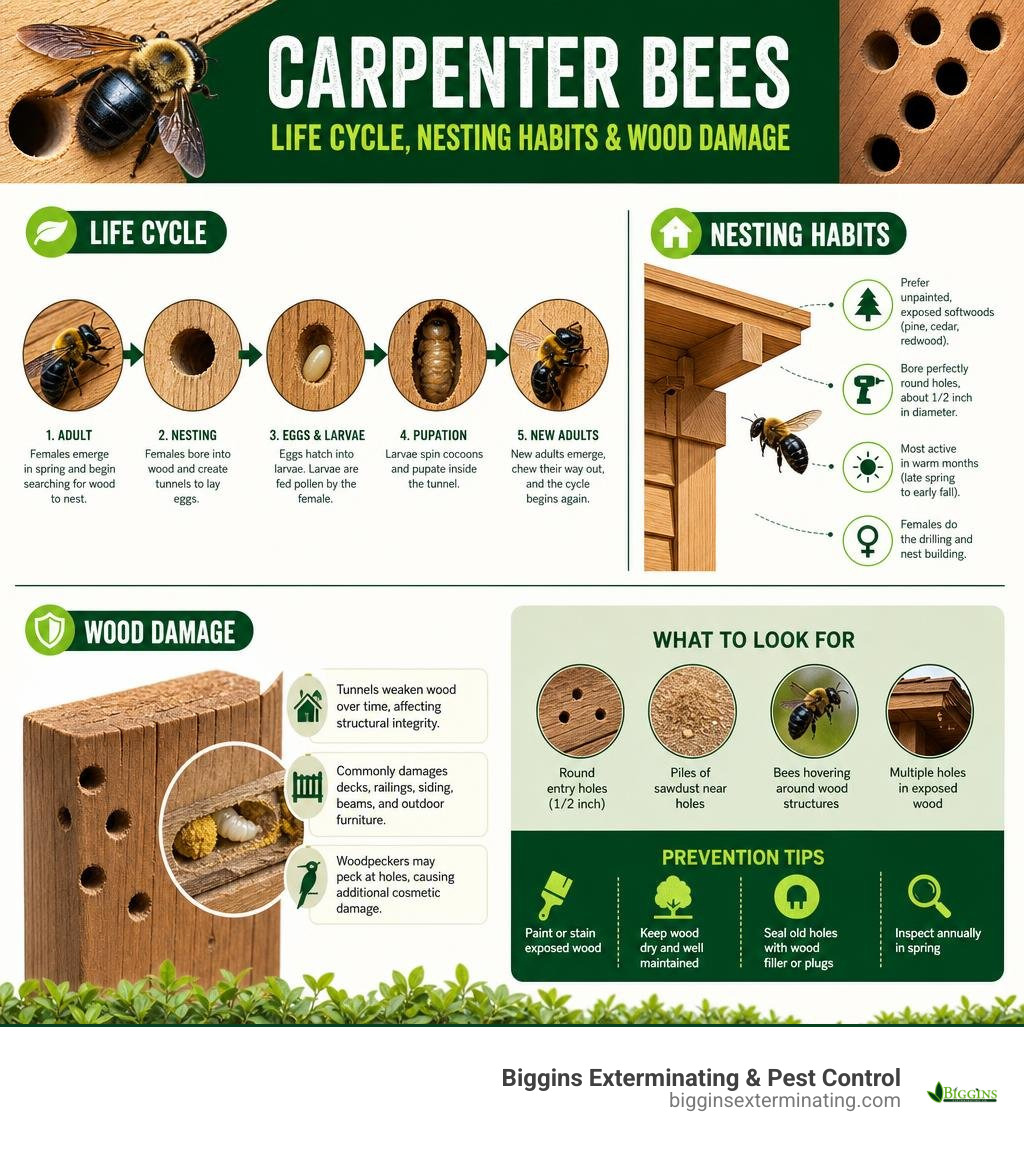
Essential best spray for carpenter bees terms:
Understanding Active Ingredients in the Best Spray for Carpenter Bees
When you are looking for the best spray for carpenter bees, the first thing you need to check is the active ingredient list. Not all bug sprays are created equal, and carpenter bees require specific formulations to ensure both immediate knockdown and long-lasting protection.
The most effective chemical sprays rely on synthetic pyrethroids. These are man-made chemicals that mimic the natural insecticidal properties found in chrysanthemum flowers. Common pyrethroids to look for include:
- Lambda-cyhalothrin: Provides quick knockdown and excellent residual control on exterior wood surfaces.
- Zeta-cypermethrin: Highly active against wood-boring pests, disrupting their nervous systems within minutes.
- Prallethrin: Often used in aerosols for its incredibly fast contact-kill capabilities.
These ingredients work in two ways. First, they provide a “contact kill,” meaning any bee directly sprayed will die within minutes. Second, they offer “residual protection.” When sprayed onto wood surfaces, the active ingredients leave a microscopic barrier. As bees land on the treated wood to drill or groom, they absorb the pesticide, which prevents them from establishing nests.
For a complete breakdown of how these chemical defenses work to safeguard your property, take a look at our guide on How to Choose the Right Pesticide for Carpenter Bees.
Chemical Sprays for Immediate and Residual Control
If you have an active infestation where bees are aggressively hovering around your eaves or deck, you need a heavy-hitting chemical spray. Contact killers containing prallethrin are excellent for immediate knockdown. They stop the bees mid-air, preventing them from attacking you or continuing their excavation.
For long-term peace of mind, ready-to-use (RTU) liquid sprays are the standard. Products like Amdro Quick Kill® Carpenter Bee, Ant & Termite Killer RTU are designed to provide a protective shield over your wood. This particular formula kills on contact and keeps killing outdoor pests for up to 3 months, while offering up to 12 months of control when applied to protected indoor areas (like crawlspaces or unfinished attics).
To maximize this defense, check out our comprehensive Residual Insecticide Carpenter Bees Guide to learn how to time your applications perfectly.
Natural and Non-Chemical Repellent Options
We understand that not every homeowner wants to spray chemical pesticides around their home, especially if they have organic gardens or want to protect local wildlife. Fortunately, natural repellents can be highly effective at deterring carpenter bees from drilling in the first place.
Carpenter bees have an incredibly sensitive sense of smell, and they absolutely despise certain essential oils. The most powerful natural repellents include:
- Lemongrass Oil: Contains high concentrations of citral, which acts as a natural deterrent.
- Citronella Oil: Well-known for masking the wood scents that attract nesting insects.
- Peppermint Oil: A strong, pungent oil that makes unpainted wood surfaces highly unappealing to drilling females.
A fantastic commercial option is the Citrus Carpenter Bee Repellent Spray | Best Bee Brothers . This eco-friendly spray utilizes 24.7% lemongrass oil and 1.9% citronella oil, packaged in a bottle made from reclaimed ocean-bound plastic. It provides a highly aromatic barrier that lasts for days, encouraging bees to move elsewhere.
If you prefer a budget-friendly DIY approach, you can mix 2 tablespoons of liquid Castile soap, water, and 10 to 20 drops of pure peppermint essential oil in a standard spray bottle. Spray this mixture twice a week onto unsealed wooden railings and outdoor furniture. For more eco-friendly tips, read our article on the Best Deterrent for Carpenter Bees.
Foaming Aerosols vs. Liquid Sprays: Which is Best?
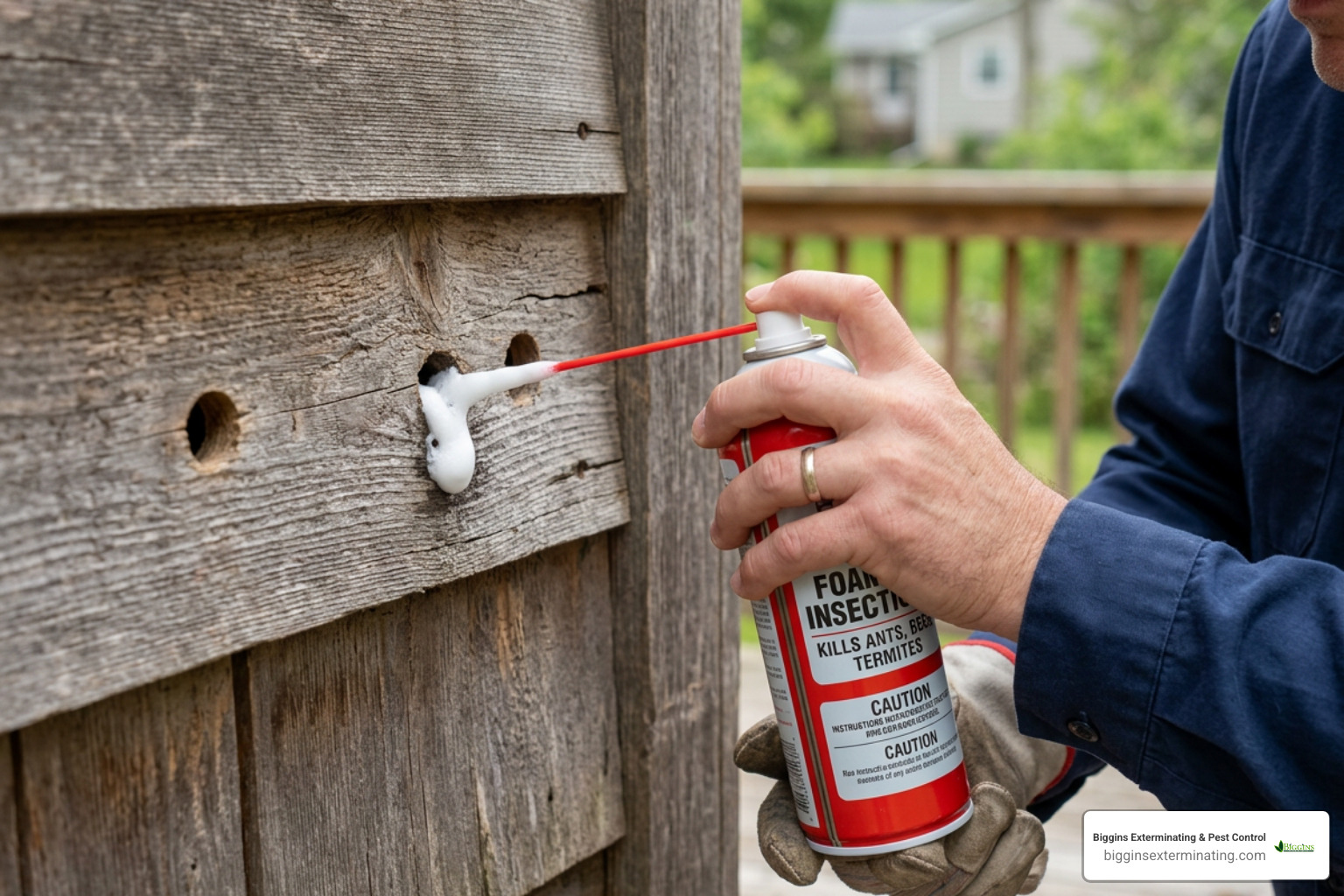
When selecting the best spray for carpenter bees, you will quickly notice two primary delivery methods: foaming aerosols and liquid surface sprays. Understanding the difference between these two is critical for successful eradication.
Foaming aerosols are designed specifically for treating the interior of nesting holes. When you inject a foaming spray into a half-inch entrance hole, the foam rapidly expands to fill the entire gallery tunnel. This ensures that the active ingredient coats every square inch of the internal chamber, reaching the female bee, her eggs, and the pollen balls she has prepared for her larvae.
Liquid surface sprays, on the other hand, are designed for broad exterior applications. You spray these directly onto the surface of siding, decks, and rafters to prevent new holes from being drilled.
| Feature | Foaming Aerosols | Liquid Surface Sprays |
|---|---|---|
| Primary Use | Treating existing holes & deep tunnels | Broad surface protection & prevention |
| Reach | Deep penetration via extension tubes | Wide-area coverage |
| Residual Life | Up to 3 months inside the tunnel | 4 to 12 weeks depending on weather |
| Application Tool | Aerosol can with thin straw | Trigger sprayer or pump sprayer |
How to Apply the Best Spray for Carpenter Bees in Active Tunnels
If you spot the telltale half-inch, perfectly round holes in your cedar siding or pine deck, you are dealing with active gallery tunnels. Treating these requires a systematic approach using a high-quality foaming aerosol.
We highly recommend using Spectracide ® Carpenter Bee & Ground-Nesting Yellowjacket Killer Foaming Aerosol . This product features an expanding foam action that kills on contact using active ingredients like prallethrin (0.025%) and lambda-cyhalothrin (0.010%). It comes with a convenient extension tube to target deep nests. For larger projects, homeowners often opt for multi-packs, such as the 16 oz. Aerosol Carpenter Bee and Ground-Nesting Yellow Jacket Insect Killer Foam (4-Pack) or similar regional options like the True Value America – Carpenter Bee and Yellowjacket Killer, 16-oz. Foaming Aerosol .
Step-by-Step Tunnel Treatment:
- Locate the Holes: Look for fresh sawdust (frass) on the ground beneath wooden structures.
- Insert the Tube: Place the aerosol’s extension tube directly into the entry hole.
- Dispense the Foam: Spray until the expanding foam begins to slightly bubble back out of the hole.
- Leave Open for 48 Hours: Do not plug the hole immediately. Leaving it open for 48 hours ensures that returning bees crawl through the active residue and perish.
- Seal the Hole: After 48 hours, plug the hole with a wooden dowel coated in carpenter’s glue or a high-quality exterior wood putty to prevent future bees from reclaiming the tunnel.
For a detailed guide on finishing this process professionally, read our advice on the Best Way to Fill Carpenter Bee Holes.
Safe Application Practices to Protect Beneficial Pollinators
While carpenter bees can destroy your home, they are also incredibly important pollinators for crops and wild flowers. Because chemical sprays do not differentiate between a destructive carpenter bee and a gentle, beneficial bumblebee, you must apply these products responsibly.
To minimize the impact on non-target insects:
- Spray at the Right Time: Apply sprays in the early morning or late evening when beneficial pollinators are inactive in their hives.
- Avoid Flowers: Never spray pesticides directly onto blooming flowers, flowering shrubs, or fruit trees.
- Target the Wood: Keep your applications confined strictly to the structural wood of your home, deck, or shed.
If you want to protect your wood without using chemical sprays near your garden, consider installing physical traps. Learn how to set them up effectively in our article, How to Trap Carpenter Bees Before They Trash Your Deck.
When to Spray and What to Expect
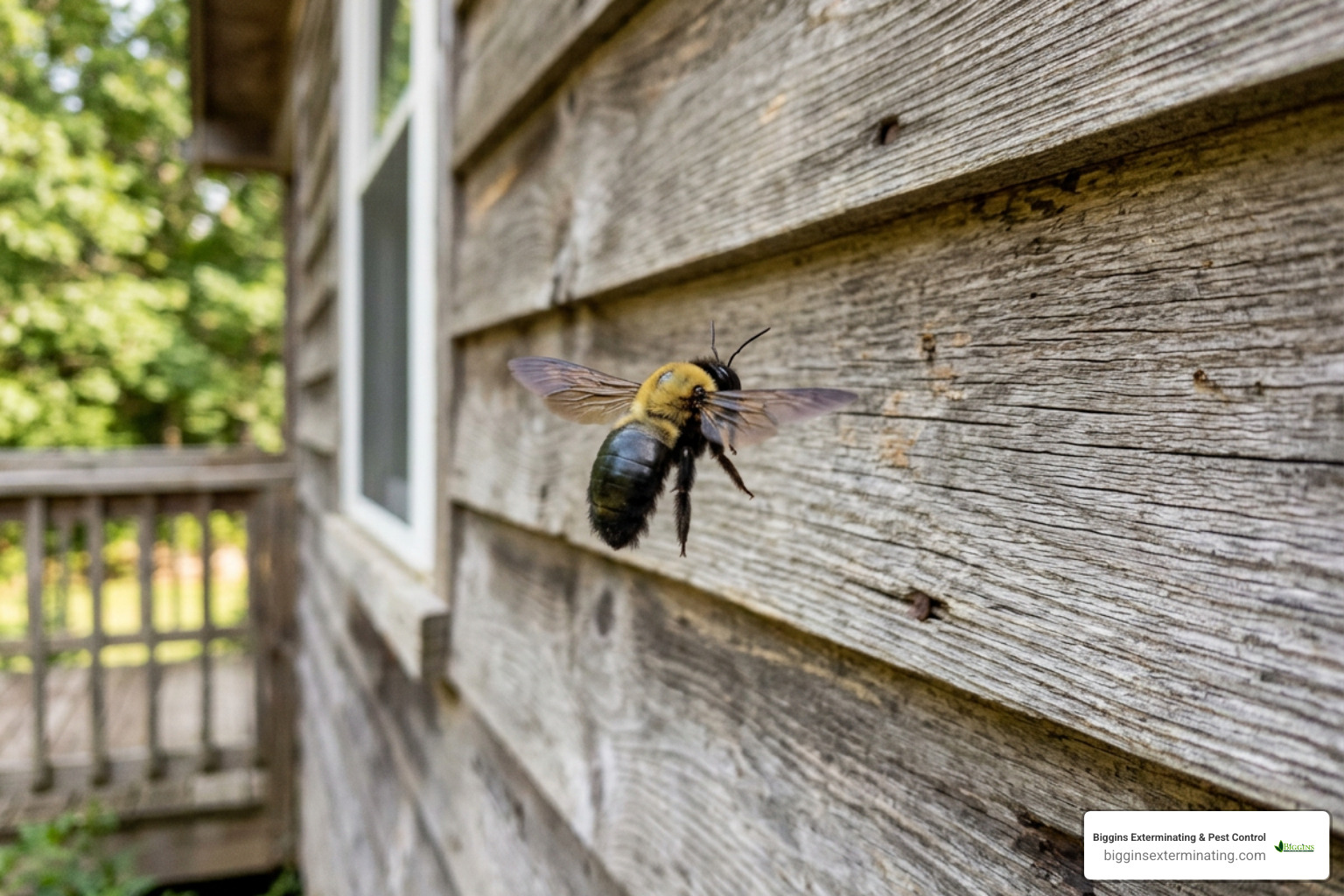
Timing is everything when managing carpenter bees in Massachusetts. In our region—from Wilmington and Woburn to Andover and Lexington—carpenter bees emerge from winter hibernation in early spring (typically April). This is when they begin seeking mates and drilling new nesting sites.
- Spring Nesting (April – June): This is the most critical time to apply preventative surface sprays. Applying the best spray for carpenter bees early in the season prevents females from drilling into your trim, fascia boards, and deck joists.
- Summer Activity (July – August): During the heat of summer, the new generation of bees emerges. You will see increased hovering activity. Focus your efforts on treating active tunnels with expanding foams.
- Fall Preparation (September – October): In the autumn, bees prepare to overwinter inside existing galleries. Sealing and treating holes during this window prevents them from waking up inside your structures next spring.
For homes with complex architectural features, bees can easily find unprotected gaps. Read more about protecting these vulnerable areas in our guide to Carpenter Bees Under Siding.
Choosing the Best Spray for Carpenter Bees Near Pets and Children
Safety is our top priority at Biggins Exterminating. If you have kids playing on the deck or pets roaming the yard, you must take proper precautions when applying pest control products.
- Keep Pets and Children Indoors: Always keep children and pets inside the house while you are actively spraying.
- Wait for the Product to Dry: Most modern liquid sprays, including Amdro Quick Kill, are perfectly safe for pets and children once they have completely dried. Keep everyone away from the treated wood for at least 2 to 4 hours after application.
- Read the Product Label: Always follow the manufacturer’s exact instructions regarding safety gear, ventilation, and disposal.
To better understand the behavior of these pests and how to spot them safely, check out our resource on the Black and Yellow Carpenter Bee.
Professional Treatment vs. DIY Carpenter Bee Sprays
While DIY sprays are great for minor, reachable infestations on a ground-level deck, they often fall short when dealing with large-scale or high-reach infestations. Carpenter bees love to nest high up on rooflines, behind gutters, and under second-story siding. Climbing ladders while trying to spray aggressive, hovering male bees can be incredibly dangerous.
Furthermore, if you miss even one active gallery tunnel, the surviving larvae will chew their way out in the summer, continuing the cycle of structural damage.
When to call a professional:
- Nests are located higher than a standard step ladder can safely reach.
- You have multiple, widespread entry holes across your home’s exterior.
- Woodpeckers have begun destroying your siding to eat the bee larvae.
- You want a guaranteed, long-term solution without the hassle of handling chemical pesticides yourself.
Based on publicly available internet data, the average cost of professional carpenter bee treatment ranges from $150 to $650 or more, depending on the size of your home and the severity of the damage. Please note that these are general industry averages and do not represent Biggins Exterminating’s actual pricing.
At Biggins Exterminating, we provide specialized, contract-free carpenter bee treatments designed specifically for Massachusetts homes. Whether you live in Wilmington, Andover, Bedford, Billerica, Burlington, Lexington, North Reading, Tewksbury, or Woburn, our family-owned team has the professional equipment and 40+ years of experience to solve your bee problem safely and effectively.
For a deeper look at professional eradication methods in our local area, read our Professional Billerica MA Carpenter Bee Killer Guide.
Frequently Asked Questions About Carpenter Bee Sprays
What kills carpenter bees instantly on contact?
Pesticides formulated with synthetic pyrethroids, such as lambda-cyhalothrin, zeta-cypermethrin, or prallethrin, will kill carpenter bees within minutes of direct contact. These active ingredients disrupt the insect’s nervous system, providing immediate knockdown. For detailed safety tips and step-by-step DIY instructions, you can refer to the guide on Getting Rid of Carpenter Bees | Lowe’s .
How long do residual carpenter bee sprays last?
The residual lifespan of a carpenter bee spray depends heavily on weather exposure. High-quality outdoor liquid sprays typically provide protective coverage for about 4 to 12 weeks on exposed exterior wood. However, when applied to protected indoor areas or injected deep inside gallery tunnels, products like Amdro Quick Kill can remain active for up to 3 to 12 months. To compare the longevity of top-rated products, see our analysis of the Best Carpenter Bee Killer.
Can I use natural repellents to stop carpenter bees from drilling?
Yes! Natural repellents made with essential oils like peppermint, lemongrass, and citronella are highly effective preventative tools. Because carpenter bees rely on their sense of smell to locate suitable wood, applying these strong citrus and mint scents to unpainted wood can successfully deter them from drilling. However, natural options wash away quickly in the rain and must be reapplied twice a week during the peak spring nesting season. Learn more about natural deterrent strategies in our guide to Carpenter Bees Control.
Conclusion
Don’t let carpenter bees turn your beautiful wooden deck or home siding into Swiss cheese this season. Finding the best spray for carpenter bees—whether you choose a hard-hitting residual liquid, a targeted expanding foam, or an eco-friendly citrus repellent—is the first step toward reclaiming your outdoor space.
If you are dealing with a persistent infestation, high-reach nesting sites, or structural damage, you don’t have to tackle it alone. Biggins Exterminating & Pest Control is a local, family-owned and operated Massachusetts pest control company with over 40 years of trusted, high-quality service. Based in Wilmington, MA, we proudly serve homeowners in Andover, Bedford, Billerica, Burlington, Lexington, North Reading, Tewksbury, and Woburn. We offer reliable, contract-free services backed by solid warranties and our personal commitment to your satisfaction.
Ready to protect your home from wood-destroying pests? Schedule Professional Carpenter Bees Pest Control with the team at Biggins Exterminating today!