Carpenter Ants Are Costing Massachusetts Homeowners More Than They Realize
Affordable carpenter ant extermination is possible — and acting early is the single biggest factor in keeping costs down.
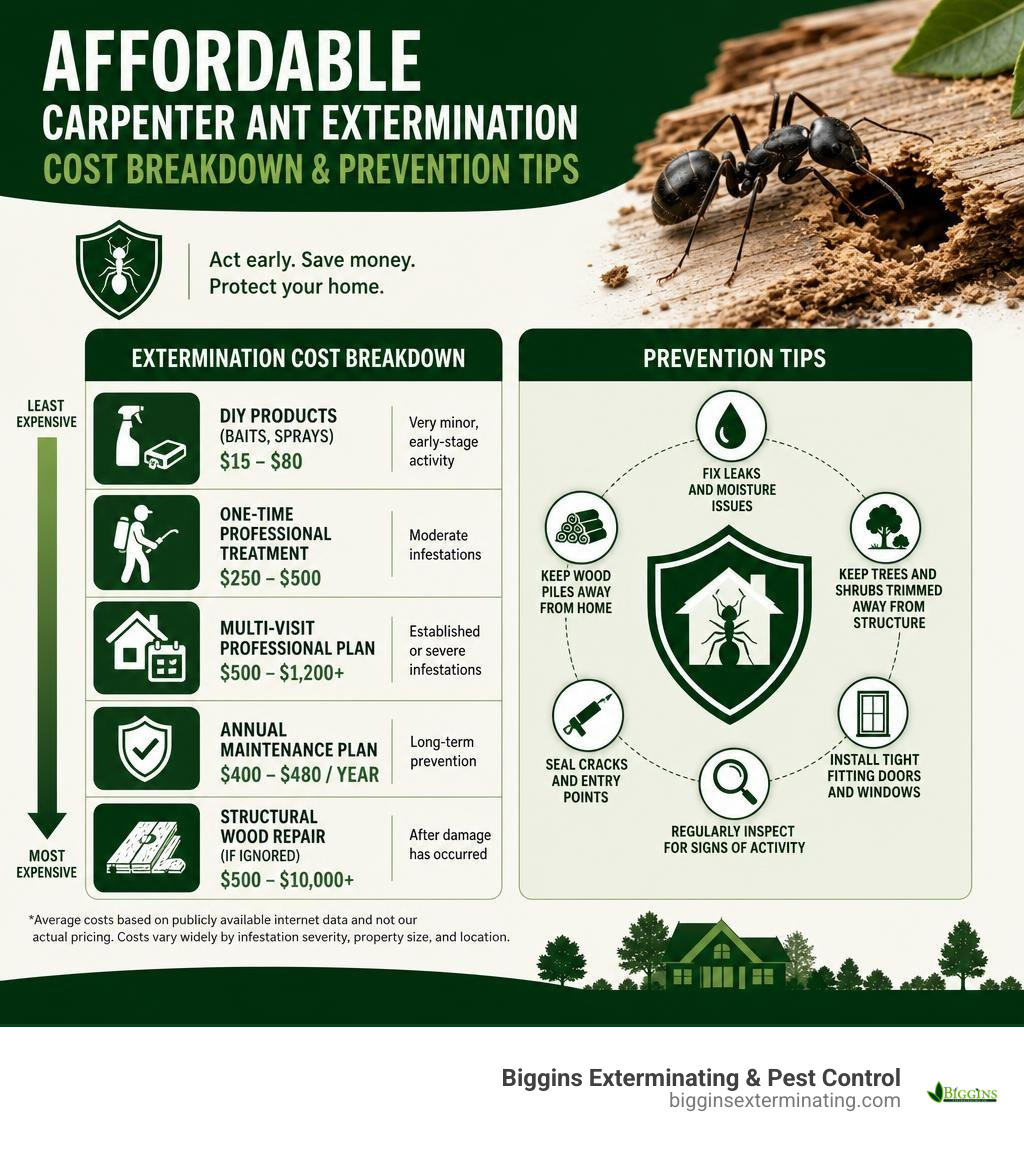
Here are the most budget-friendly options, from least to most expensive:
| Option | Estimated Average Cost* | Best For |
|---|---|---|
| DIY products (baits, sprays) | $15 – $80 | Very minor, early-stage activity |
| One-time professional treatment | $250 – $500 | Moderate infestations |
| Multi-visit professional plan | $500 – $1,200+ | Established or severe infestations |
| Annual maintenance plan | $400 – $480/year | Long-term prevention |
| Structural wood repair (if ignored) | $500 – $10,000+ | After damage has occurred |
*Average costs based on publicly available internet data and not Biggins Exterminating’s actual pricing. Costs vary widely by infestation severity, property size, and location.
If you’ve spotted large black ants in your kitchen, noticed small piles of sawdust near your baseboards, or heard faint rustling inside your walls at night, your home may already be under attack. Carpenter ants are one of the most destructive pests active during Massachusetts summers — and unlike most ants, they don’t just invade your kitchen. They tunnel through the structural wood of your home to build nests, quietly weakening beams, window frames, and deck supports over time.
The tricky part? Most homeowners don’t realize how serious the problem is until the damage is already done.
I’m Stephen Biggins, owner of Biggins Exterminating Co., a family-owned pest control company that has been serving Wilmington, MA and surrounding communities since 1982. Over more than four decades, I’ve helped countless local homeowners find affordable carpenter ant extermination solutions — and I’ve seen how catching the problem early can save thousands in repairs down the road.
Affordable carpenter ant extermination terms you need:
Signs of a Carpenter Ant Infestation in Massachusetts Homes
To protect your wallet and your home, you have to know what you are looking for. Unlike other common household pests, carpenter ants are relatively stealthy. They do not eat wood for nutrition; instead, they use their powerful mandibles to chew galleries out of the soft, damp wood inside your home’s structural framing. This means they are often hiding deep within your walls, ceilings, or crawl spaces, leaving only subtle clues of their presence.
If you want to catch them before they cause catastrophic structural damage, keep an eye (and ear) out for these telltale signs:
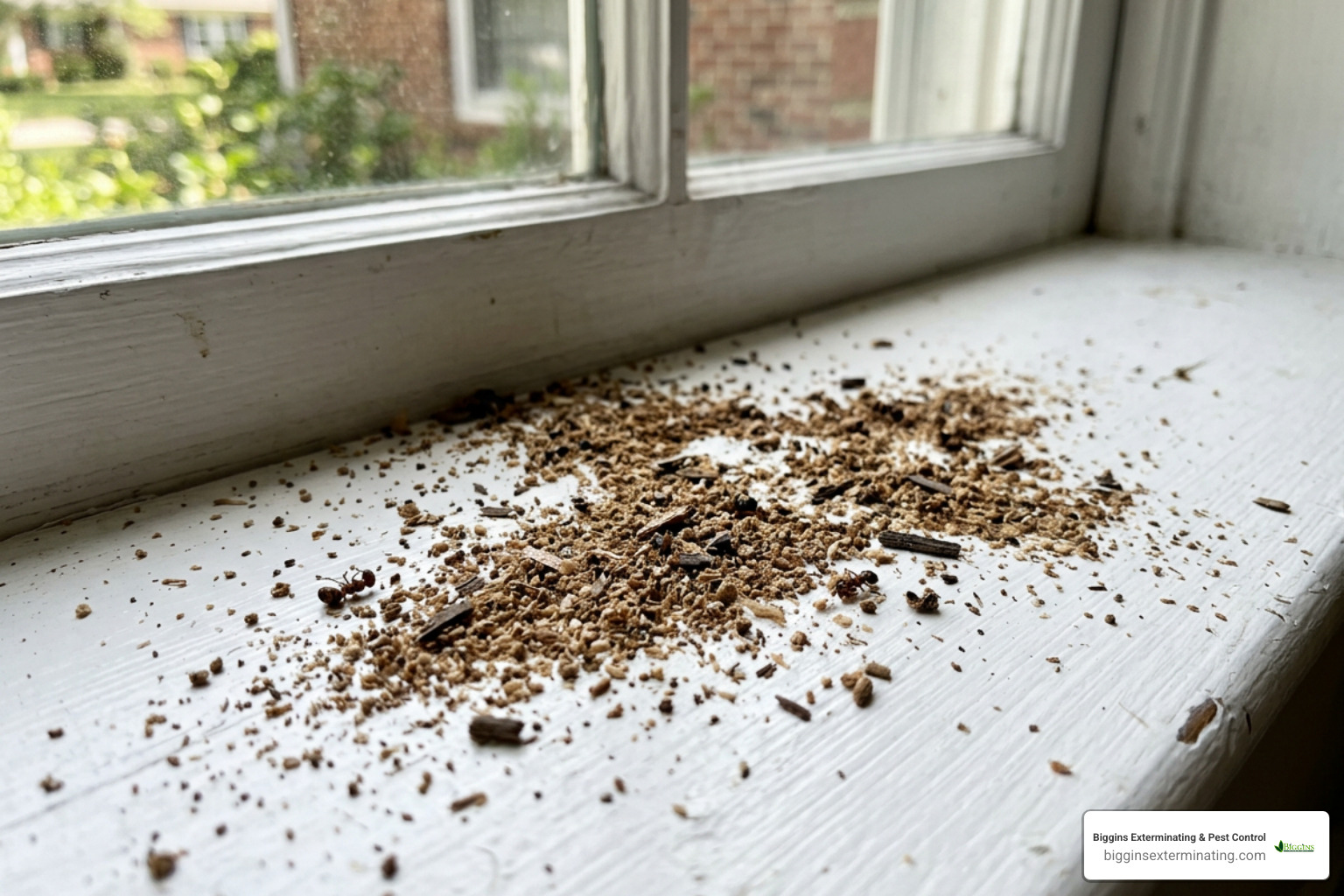
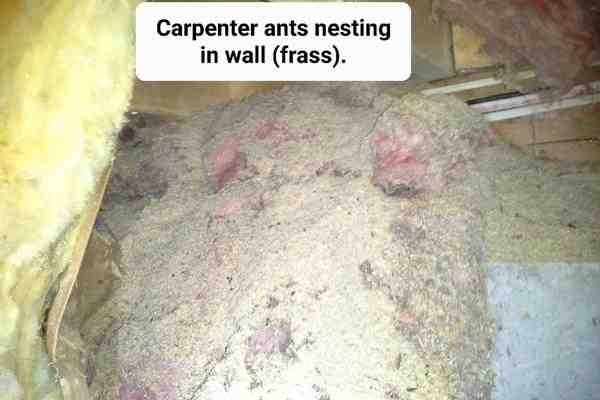
- Wood Shavings (Frass): As carpenter ants excavate their nesting galleries, they must push the unwanted debris out of their tunnels. This debris, known as frass, looks like small piles of sawdust. If you look closely, you will see that it contains uniform wood fragments and often includes tiny pieces of dirt or dead insect parts. You will frequently find these piles near baseboards, windowsills, or in unfinished basements.
- Rustling Sounds in the Walls: When a carpenter ant colony is mature and active, you can actually hear them working. During the quiet hours of a warm July 2026 night, put your ear against a wall where you suspect activity. You might hear a faint, dry rustling sound—similar to the crinkling of cellophane. This is the sound of thousands of tiny ant feet moving through their wooden galleries.
- Winged Swarmers: In the spring and early summer, mature colonies produce winged reproductive ants called swarmers. These swarmers leave the nest to mate and establish new satellite colonies. If you see large, winged black ants flying inside your home or crawling around window screens, it is a clear sign that an established parent colony is nearby.
- Moisture Issues and Damaged Wood: Carpenter ants prefer damp, decaying, or rotted wood because it is much easier to excavate. Areas of your home prone to moisture—such as around leaky window frames, under sinks, near roof leaks, or behind poorly sealed siding—are primary targets. If you tap on a wooden beam or window frame and it produces a hollow sound, the interior may already be hollowed out by a nesting colony.
Understanding these signs is the first step toward safeguarding your home. For more detailed guidance, you can read more info on identifying wood-destroying pests to help you distinguish between various wood-infesting insects.
The Real Cost of Affordable Carpenter Ant Extermination
When homeowners suspect a pest problem, the first question is almost always: How much is this going to cost me?
It is completely understandable to worry about the financial impact. However, the true cost of pest control is not just the price of the treatment itself—it is the cost of not treating the problem. Ignoring a carpenter ant infestation is a massive financial risk. Over time, a mature colony can compromise the structural integrity of your home, leading to sagging floors, warped window frames, and compromised support beams.
To give you an honest perspective, let’s look at the financial trade-offs. The table below compares average professional treatment costs against the potential structural repair bills you could face if the infestation is left unchecked.
| Service or Repair Type | Average Cost Range* | Why the Price Varies |
|---|---|---|
| Minor Infestation Treatment | $150 – $500 | Early-stage, localized colony with easy structural access. |
| Severe Infestation Treatment | $900 – $1,500+ | Multiple satellite nests hidden deep inside wall voids. |
| Annual Prevention / Maintenance | $350 – $700 / year | Regular perimeter treatments to stop ants before they enter. |
| Minor Structural Wood Repairs | $500 – $1,500 | Replacing a single hollowed-out window frame or door sill. |
| Major Structural Wood Repairs | $3,000 – $10,000+ | Replacing compromised load-bearing support beams or deck joists. |
*Note: These are average costs based on publicly available internet data and do not represent the actual pricing of Biggins Exterminating. The high end of these ranges reflects severe, complex scenarios where multiple treatments or extensive structural rebuilding are required.
As you can see, spending a few hundred dollars on professional extermination is a drop in the bucket compared to the thousands of dollars you could face in structural repairs. If you are trying to map out a budget for your home maintenance, you can learn more about ant exterminator prices to see how different service levels stack up.
Factors That Influence the Price of Affordable Carpenter Ant Extermination
Not every home is built the same, and not every ant infestation is identical. When a professional technician evaluates your property, several key factors will dictate the complexity—and therefore the price—of the treatment:
- Colony Size and Nesting Depth: A small, newly arrived colony is much easier and cheaper to eliminate than a massive colony that has been growing for three to six years. Mature colonies often split into multiple “satellite nests” connected by invisible foraging trails, requiring more time and product to wipe out completely.
- Moisture Damage and Wood Decay: Because these ants seek out damp wood, homes with active plumbing leaks, roof leaks, or poor drainage present a double challenge. Technicians must not only treat the ants but also identify the moisture issues that attracted them in the first place.
- Structural Access: If the nest is located in an easily accessible area, like an unfinished basement or an open attic, treatment is straightforward. However, if the colony is nested deep inside finished wall voids or beneath hardwood floors, the exterminator may need to perform specialized void injections, which can increase the overall cost.
- Local Climate and Environmental Considerations: Here in Massachusetts, our humid summers and older historic homes create the perfect storm for wood-destroying insects. For instance, if you need Carpenter Ant Extermination Billerica MA – NW Pest Control, the age and construction style of local homes will heavily influence the treatment strategy.
Why Early Detection Leads to Affordable Carpenter Ant Extermination
The secret to keeping pest control budget-friendly is incredibly simple: act fast.
When you catch a carpenter ant problem in its infancy, it is often a minor, localized infestation. A professional can typically resolve this with a straightforward, localized treatment. This not only keeps the immediate service bill low but also completely prevents the need for costly structural repairs.
Furthermore, investing in preventative maintenance—such as sealing up entry points and correcting moisture issues—is incredibly cost-effective. By stopping the pests before they ever cross your threshold, you enjoy long-term savings and peace of mind. If you want to know how to protect your home permanently, check out our guide on how to get rid of nests forever.
Professional Treatment Methods vs. DIY Risks
It is tempting to head to the local home improvement store, grab a $20 can of insect spray, and try to handle the problem yourself. While DIY products like baits and sprays can be useful for minor, outdoor garden ants, they are rarely effective against carpenter ants—and they can actually make your problem worse.
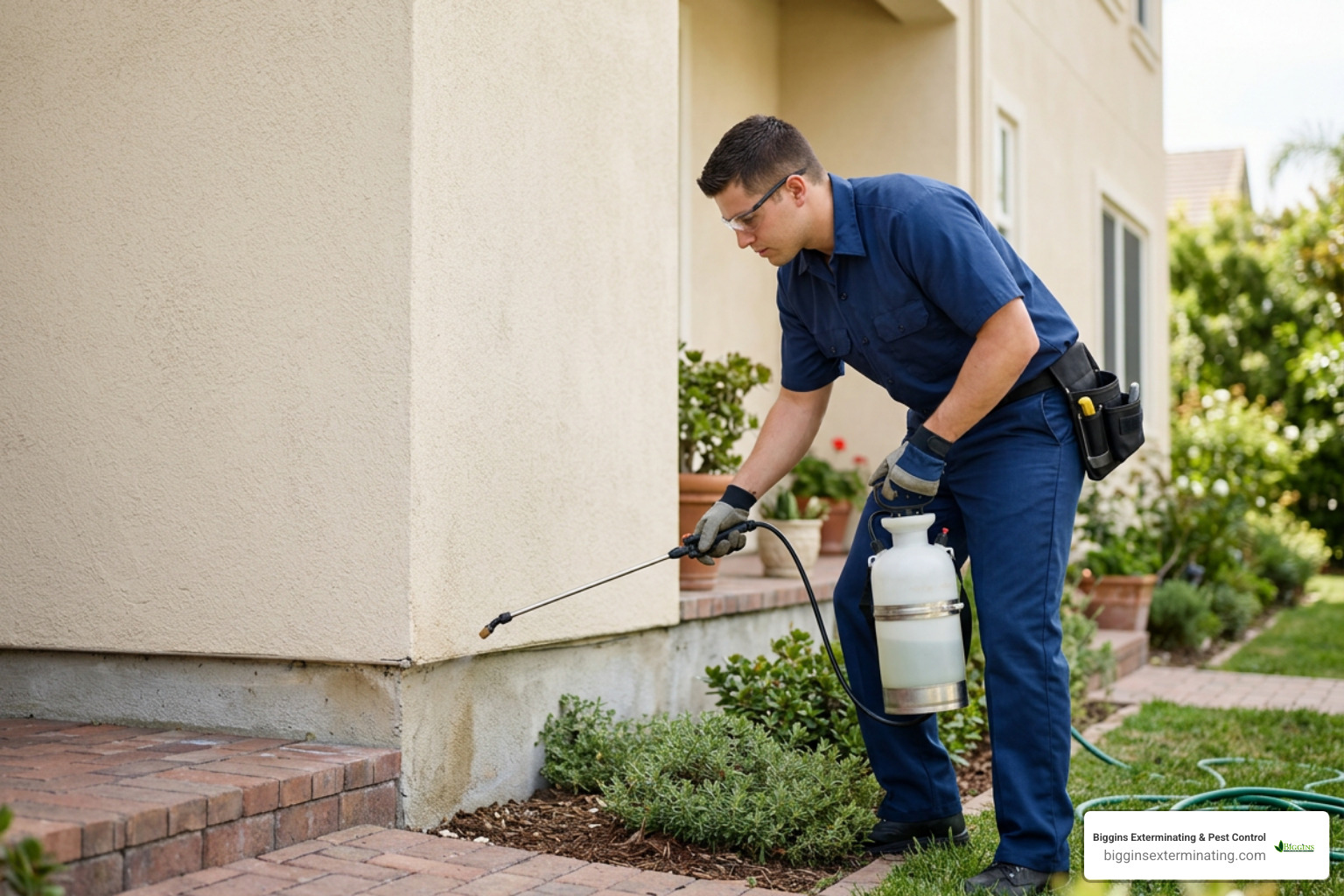
Here is why DIY treatments often fall short:
- The “Budding” Effect: If you spray a standard repellent insecticide on a trail of carpenter ants, you will kill the few foraging workers you see. However, the rest of the colony deep inside the wall will sense the danger. In response, the colony may split into multiple satellite nests (a process called “budding”), scattering the infestation to other parts of your home and making it much harder to eliminate.
- Failing to Reach the Queen: To completely wipe out a carpenter ant colony, you must eliminate the queen. DIY sprays only target the surface workers. Without specialized equipment and professional-grade non-repellent liquid barriers, you cannot reach the heart of the nest.
- Chemical Safety Risks: Over-the-counter pesticides can be hazardous to your family and pets if applied incorrectly. Professional technicians are trained to apply products safely, precisely, and in accordance with strict environmental regulations.
When you hire a professional, they don’t just spray and pray. They use a strategic, multi-faceted approach to guarantee results:
- Thorough Inspections: Locating the parent nest and all satellite colonies is half the battle. Professionals use specialized tools to track ant activity back to its source.
- Non-Repellent Liquid Barriers: These advanced products are undetectable to the ants. Foraging workers walk through the treatment and carry it back to the nest, sharing it with the rest of the colony—including the queen—through a process called horizontal transfer.
- Bait Stations: Highly targeted protein and sweet-based baits are placed along active foraging trails. The ants willingly feed on the bait and transport it deep into the nesting galleries.
- Void Injections: For nests hidden deep inside walls, technicians can drill tiny, inconspicuous holes and inject insecticidal dusts directly into the wall voids, delivering direct contact where the ants live and breed.
For a deeper dive into how the pros get the job done safely and effectively, read the ultimate guide to professional removal.
Frequently Asked Questions about Carpenter Ant Control
What is the difference between carpenter ants and termites?
This is one of the most common questions we get from homeowners. While both pests damage wooden structures, they are completely different biological organisms and require entirely different treatment approaches:
- Physical Appearance: Carpenter ants are typically large, dark black (sometimes reddish), and have a highly defined, pinched waist. They also have bent or “elbowed” antennae. Termites are much smaller, have a straight, uniform body waist, and straight antennae.
- Diet and Behavior: Termites actually eat wood, consuming the cellulose for nutrition. They leave behind hollowed-out wood packed with mud tubes. Carpenter ants do not eat wood; they only excavate it to create clean, smooth nesting galleries. They push their sawdust-like debris (frass) out of the tunnels, creating visible piles.
- Damage Speed: Termites generally cause damage at a much faster rate than carpenter ants. However, a mature carpenter ant colony with thousands of active workers can still cause severe, costly structural damage if left untreated for several years.
How long does it take for professional treatments to work?
Eliminating an entire carpenter ant colony is not an overnight process. Because professional treatments rely on the ants carrying non-repellent products and baits back to the nest to share with the queen, patience is required.
Typically, you can expect the following timeline:
- First 24 to 48 Hours: You may actually see a temporary increase in ant activity. This is completely normal, as the treatment disrupts their patterns and draws them out.
- 1 to 2 Weeks: The active population will begin to drop dramatically as the bait and liquid treatments circulate through the colony.
- 2 to 4 Weeks: Complete colony elimination is typically achieved within this window.
Depending on your location, environmental factors can play a role. For example, if you are seeking carpenter-ant-control-treatment-exterminator-lexington-ma – Security, local soil types, moisture levels, and historic home designs in Lexington, MA can influence how quickly the treatment takes full effect.
How can homeowners prevent carpenter ants from returning?
Once your home is clear of carpenter ants, you want to keep it that way. Prevention is always the most budget-friendly pest control strategy.
Here are the most effective steps you can take to make your property less attractive to these wood-destroying pests:
- Control Moisture: Fix leaky pipes, repair damaged roof shingles, and ensure your gutters are clear and draining water away from your foundation. Address any damp or decaying wood immediately.
- Seal Entry Points: Use high-quality caulk to seal cracks in your foundation, gaps around utility lines, and spaces around exterior windows and doors.
- Trim Landscaping: Keep tree branches, shrubs, and bushes trimmed back so they do not touch your roof or siding. Ants frequently use branches as bridges to bypass ground-level treatments.
- Store Firewood Properly: Keep firewood piles stored off the ground and at least 20 feet away from your home. Only bring in the wood you plan to burn immediately.
- Consider Annual Maintenance: A professional preventative plan can reduce the chance of carpenter ant recurrence by 80% to 90%.
Conclusion
When it comes to protecting your home from structural damage, waiting is the most expensive mistake you can make. Finding affordable carpenter ant extermination is all about partnering with a team that values your safety, your home, and your hard-earned budget.
At Biggins Exterminating & Pest Control, we are a family-owned and operated pest control company with over 40 years of trusted, high-quality service. Based in Wilmington, MA, we proudly serve homeowners across the region, including Andover, Bedford, Billerica, Burlington, Lexington, North Reading, Tewksbury, and Woburn. We believe in providing reliable, honest pest and rodent control services without locking you into rigid, long-term contracts. We stand behind our work with straightforward warranties to ensure your complete satisfaction.
If you are ready to protect your property and get peace of mind, schedule your professional carpenter ant pest control today. We are here to help you keep your home safe, dry, and entirely pest-free!