Identifying Signs of Termite Damage and Infestations
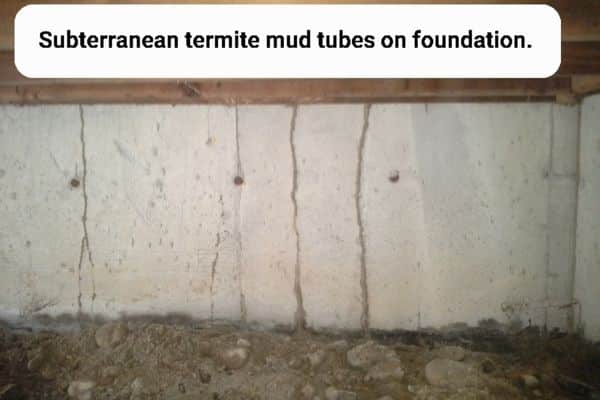
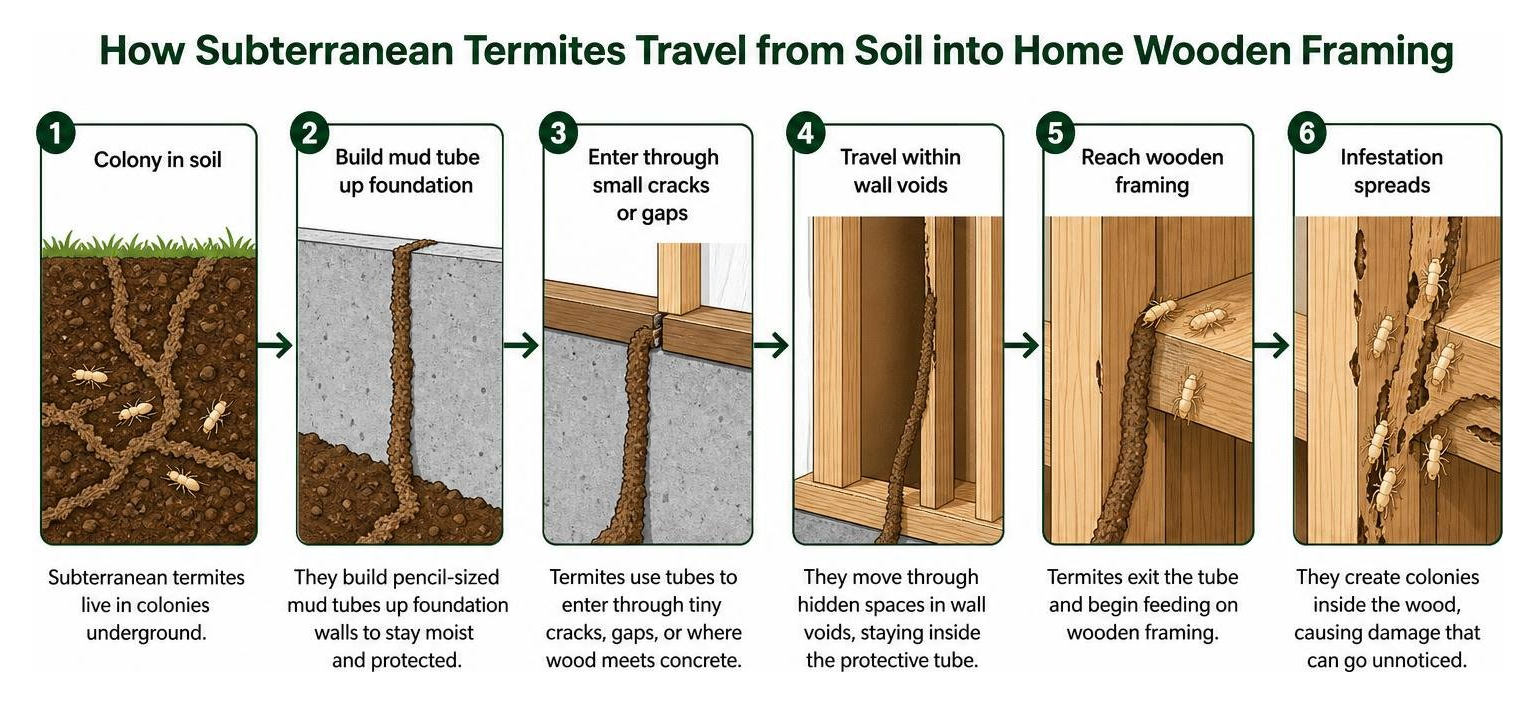
Early detection is your best line of defense against structural destruction. In Massachusetts, Eastern subterranean termites live underground in massive colonies and build protective pencil-sized tunnels made of soil, saliva, and fecal matter—known as mud tubes—to reach above-ground wood sources without drying out.
To spot an active infestation, keep an eye out for these clear indicators:
- Mud tubes on foundations: Look along concrete foundation walls, support piers, joists, and chimney bases. If you break a tube open and see small creamy-white insects crawling inside, or if the tube is rebuilt within a few days, you have an active infestation.
- Blistered or sagging floorboards: Subterranean termites eat timber from the inside out, leaving a thin outer veneer. Floors or baseboards affected by termites may appear wavy, blistered, or dark.
- Hollow-sounding wood: Tap exposed sill plates, floor joists, or wall studs with the handle of a screwdriver. Structural timber consumed by subterranean termites will sound hollow or produce a dull thud.
- Discarded swarmer wings: In spring, reproductive “swarmers” fly out to start new colonies. After mating, they shed their clear, equal-length wings near window sills, door frames, and cobwebs.
- Frass accumulation: While subterranean termites seal their tunnels with mud, drywood termites (which can occasionally enter homes via imported furniture or timber) push out tiny, hard, oval-shaped droppings called frass that accumulate in small piles resembling salt or sawdust.
Understanding these subtle signs of termites and recognizing termite mud tunnels early on can save you thousands of dollars in structural framing repairs. If you notice any signs of termite damage, it is essential to act quickly before the colony expands further into your living space.
Spotting the Difference Between Ants and Subterranean Termites
Homeowners in Middlesex and Essex counties often confuse termite swarmers with flying carpenter ants during early spring. Knowing how to tell them apart ensures you choose the right pest control approach.
| Anatomical Feature | Subterranean Termite Swarmer | Carpenter Ant Swarmer |
|---|---|---|
| Antennae | Straight and beaded | Elbowed (bent like an arm) |
| Waist Line | Broad and straight (no distinct waist) | Pinch-waisted (narrow middle segment) |
| Wings | 4 wings of equal length and shape | Front wings are significantly longer than hind wings |
| Color | Dark brown to black body; clear wings | Dark brown, red, or black body |
For more detail on identifying structural pests, check out our guide on 5 key differences carpenter ants vs termites and learn how to tell if you have termites taking root in your home.
Choosing an Effective Anti Termite Treatment in House Interiors
When applying an anti termite treatment in house interiors, targeted precision and occupant safety are top priorities. Eliminating wood-destroying insects inside living spaces requires specialized formulations approved by the U.S. Environmental Protection Agency (EPA).
Our primary interior treatment methods include:
- Expanding Termiticide Foams: We pump expanding foam formulations into active wall voids, hollow block foundations, and pipe chases. The foam expands to fill hidden voids, distributing termiticide directly to hidden insects without requiring destructive wall removal.
- Borate Wood Treatments: Spraying or brushing disodium octaborate tetrahydrate (borate) onto raw, exposed structural framing creates a long-lasting protective layer. Borates absorb into wood fibers; when termites consume the cellulose, the mineral acts as a metabolic stomach poison while remaining non-toxic to humans and pets once dry.
- EPA Label Compliance: Federal law strictly governs termiticide applications. Every professional anti termite treatment in house walls must follow label directions specifying dilution ratios, application pressures, and mandatory re-entry windows for occupants and pets.
For comprehensive internal and external protection, explore our specialized termite pest control protocols tailored for local homes.
Professional Anti Termite Treatment in House Exterior Foundations
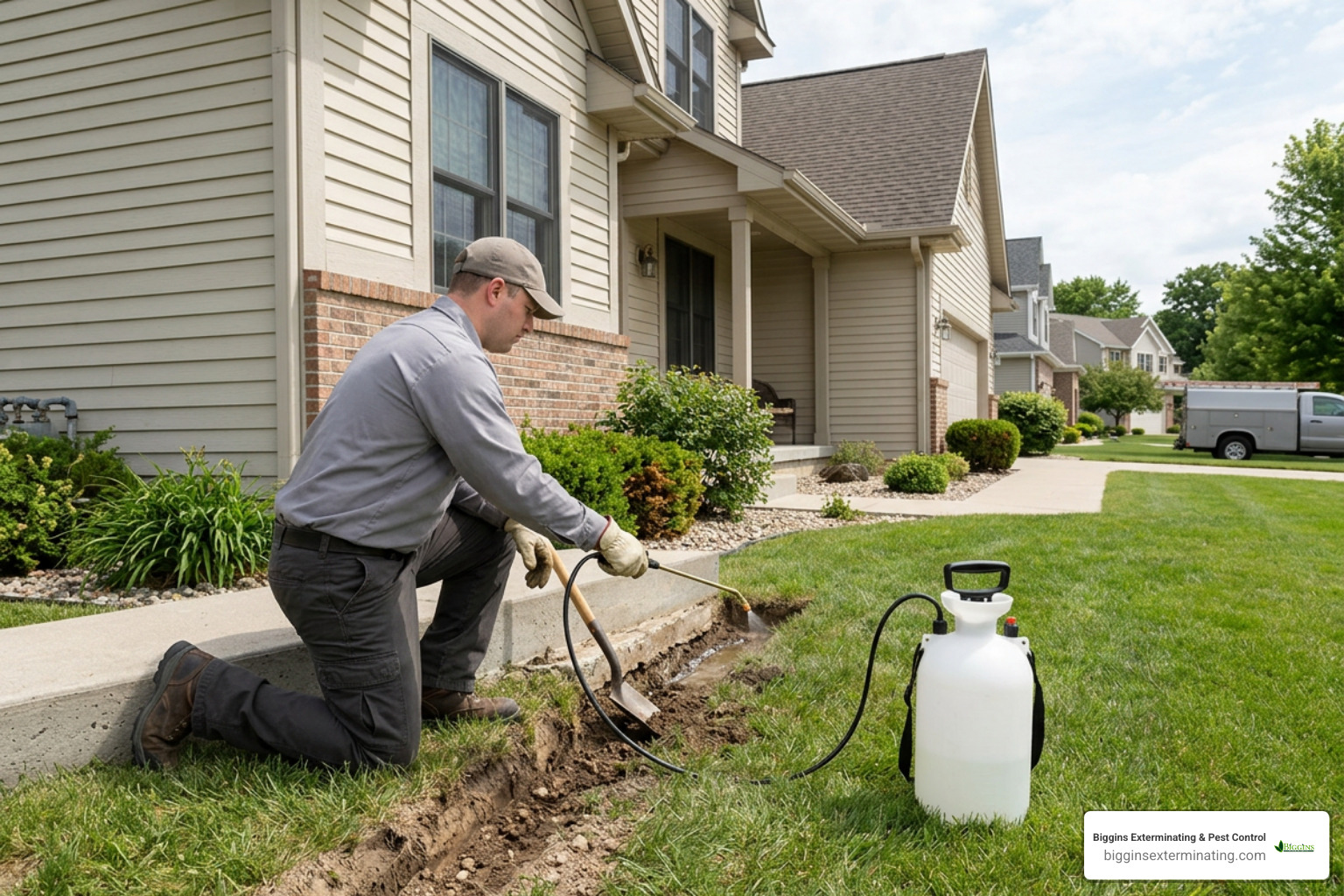
Protecting a structure long-term requires halting subterranean termites at their point of entry: the exterior soil perimeter. Liquid soil barriers create an unbroken zone of treated earth around your home’s entire foundation footprint.
Professional exterior trenching involves digging a 6-inch deep by 6-inch wide trench along exterior foundation walls, rodding the subterranean soil, and injecting professional-grade liquid termiticide at a standard rate of 4 gallons per 10 linear feet per foot of depth down to the top of the foundation footings.
Key components of professional soil barrier applications include:
- Non-Repellent Active Ingredients: Modern termiticides containing fipronil (such as Termidor SC) are imperceptible to foraging insects. Termites pass through the treated zone without knowing it, coated in active ingredient without immediate die-off.
- Sub-Slab Pressure Injection: Where concrete patios, garage floors, or brick walkways abut exterior walls, we drill vertical 1/2-inch holes spaced 12 inches apart through the slab. Termiticide is injected under pressure directly beneath the slab into the underlying soil before sealing the holes with non-cellulose masonry plugs.
- Hollow Masonry Block Void Injection: Termites often travel upwards inside the hollow cores of concrete block foundations. We drill horizontal access points into block voids at the plinth level to treat interior cavities directly.
Installing a continuous termite barrier treatment prevents underground foraging tunnels from reaching sill plates and structural floor joists.
Comparing Liquid Soil Barriers and Cellulose Baiting Systems for an Anti Termite Treatment in House Perimeters
Choosing between liquid soil barriers and exterior baiting systems depends on your home’s construction, slope, soil conditions, and personal preference.
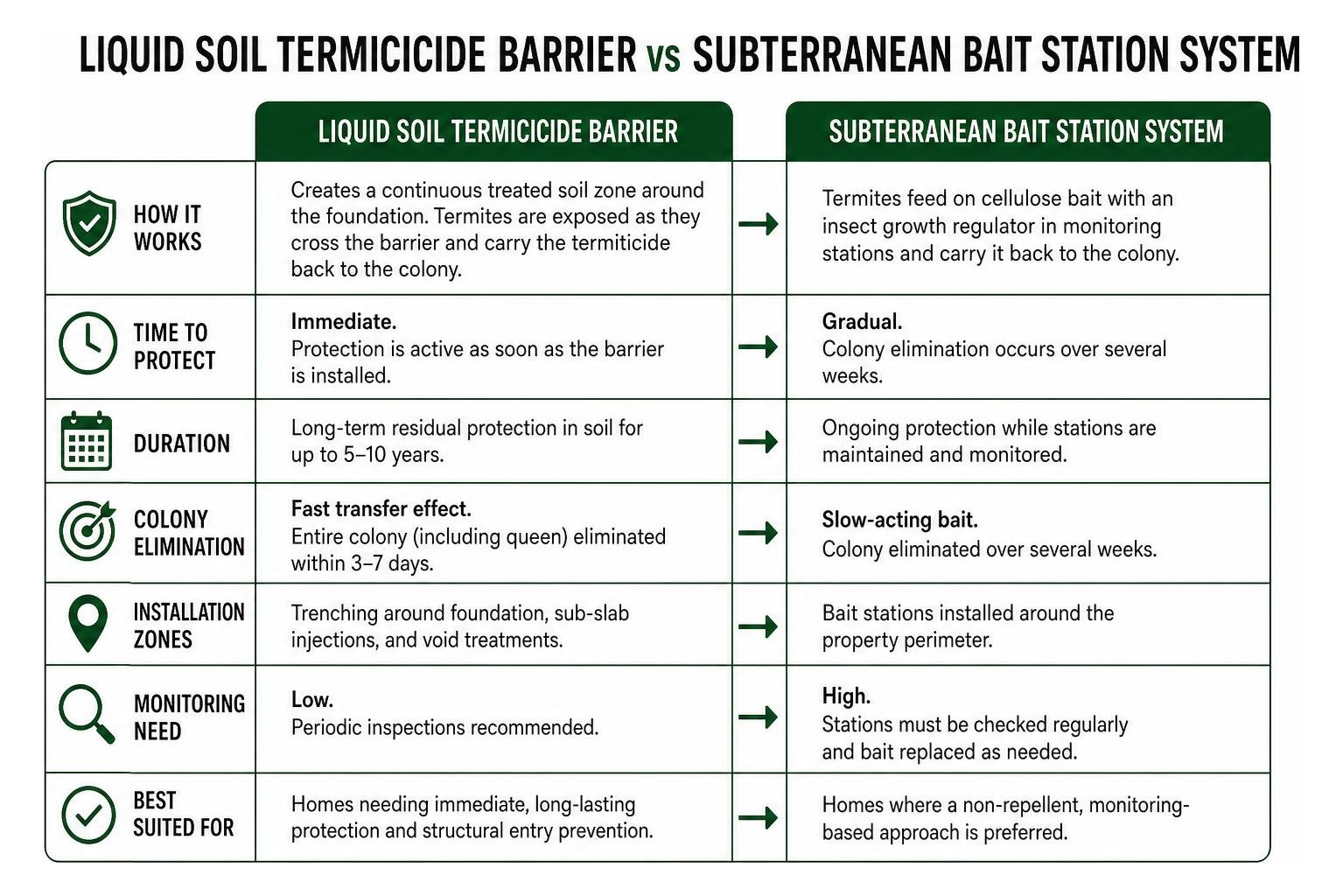
- Liquid Soil Barriers: Provide immediate protection around foundation walls. Fipronil features a “transfer effect” where exposed workers carry the active chemical back to the central subterranean nest, sharing it via social grooming (trophallaxis) to eliminate the queen and entire colony within 3 to 7 days. Soil treatments remain effective in ground soil for up to 5–10 years.
- Cellulose Baiting Systems: Perimeter bait stations (such as Sentricon or Advance ATBS) are installed in the ground every 10–12 feet around the property line. Monitoring cartridges containing cellulose matrix treated with slow-acting Insect Growth Regulators (chitin synthesis inhibitors like hexaflumuron or noviflumuron) disrupt the molting process. Workers feed on the bait, return to the colony, and gradually wipe out the population over several weeks.
- Physical and Sand Barriers: During original construction, installing physical stainless steel mesh (apertures smaller than 0.66 mm) or graded basalt sand (particles too heavy for termites to move and too densely packed to squeeze between) blocks physical entry points without chemical use.
Read our subterranean termite ultimate guide for a deep dive into perimeter barrier selection.
New Construction and Pre-Treatment Soil Barriers
Building standards like IS 6313-3 (2001) and local codes outline strict anti-termite protocols during structural construction, as detailed in comprehensive guides like the Site Setu IS 6313 Guide. Implementing structural defense during new construction is far more cost-effective than treating an active structural infestation later on.
Crucial pre-construction prevention practices include:
- Soil Pre-Treatment: Applying liquid termiticide to excavated ground, plinth fill, and foundation trenches before pouring concrete slabs creates an impenetrable sub-surface shield.
- Ground Clearance Guidelines: Maintaining a minimum clearance of 6 inches between nonstructural wood framing and raw topsoil (and 8 inches for load-bearing structural timber) prevents direct soil-to-wood pathways.
- Sill Plate and Pipe Penetration Protection: Installing metal termite shields over foundation walls and fitting rubberized termite collars around sub-slab plumbing lines prevents pests from using pipe gaps as highways.
- Moisture and Landscaping Controls: Grading surrounding soil so rainwater slopes down and away from foundations (at least 6 inches drop over the first 10 feet) keeps sub-grade soil dry and uninviting to foraging subterranean species.
DIY vs Professional Anti Termite Treatment in House Costs and Protocols
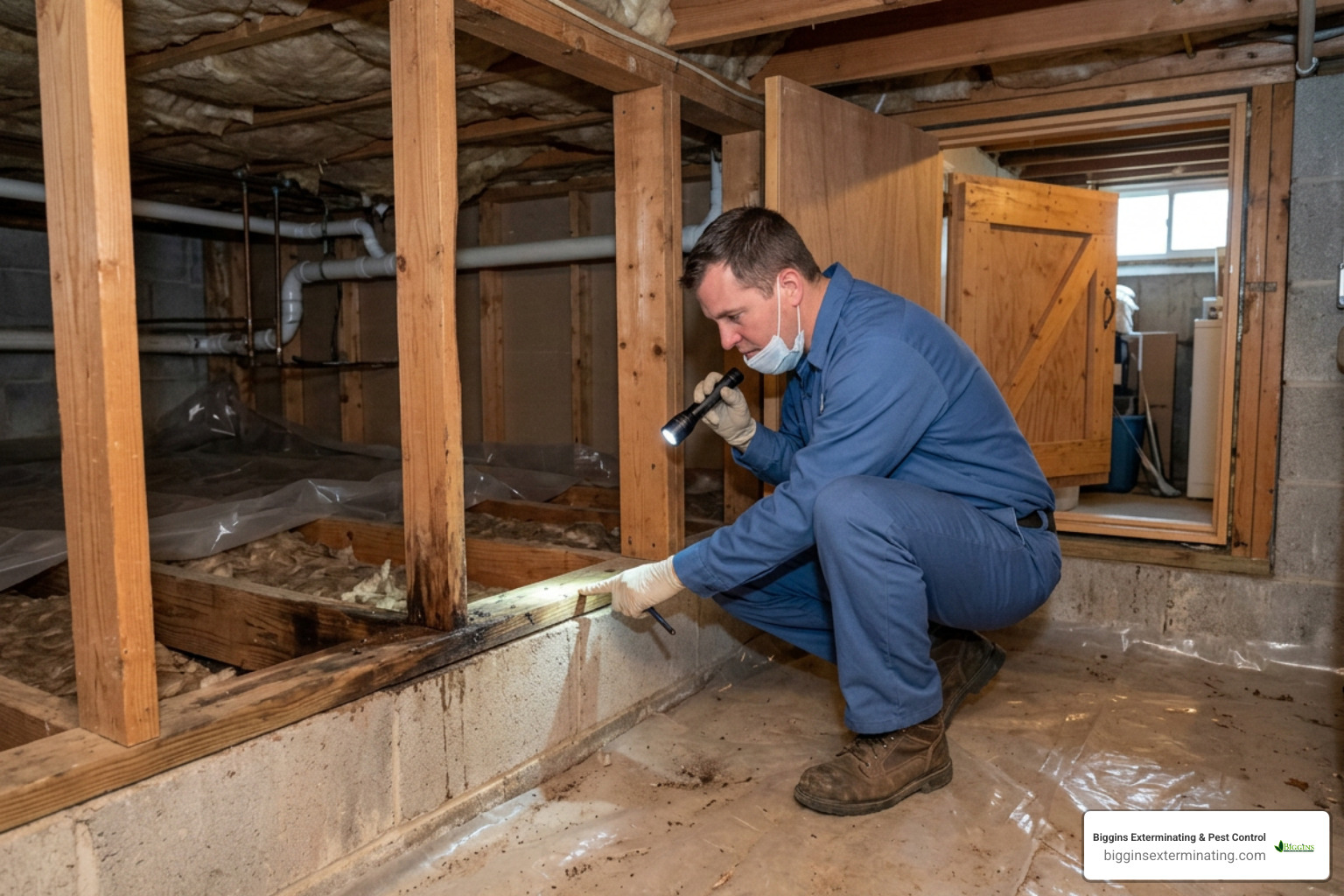
While DIY spray canisters like Spectracide Terminate can kill visible pests on contact, consumer products cannot eliminate subterranean colonies hidden 10 feet underground or behind structural walls.
Relying solely on DIY surface sprays often creates a false sense of security while hidden colonies continue feeding on support beams. Professional exterminators use heavy-duty trenching tools, sub-slab injectors, high-volume pressure pumps, and non-repellent transfer chemistry to achieve complete colony elimination.
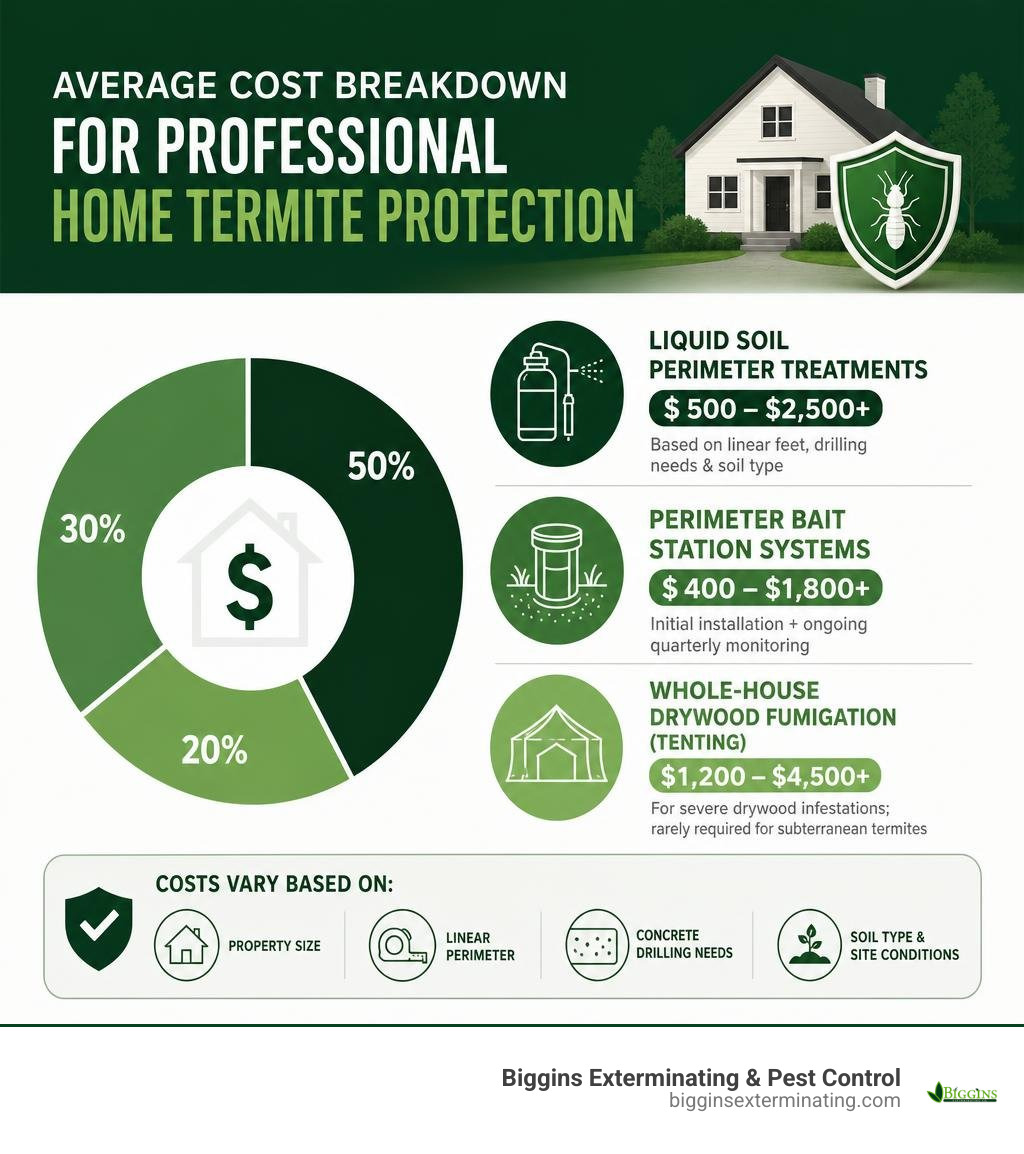
When reviewing overall costs, keep in mind that based on publicly available internet data (and not Biggins Exterminating’s actual pricing), professional pest management expenses vary depending on property square footage and linear perimeter length. Public average cost data typically ranges widely:
- Liquid Soil Perimeter Treatments: $500 to $2,500+ (widely variable based on linear feet, concrete drilling needs, and soil type)
- Perimeter Bait Station Systems: $400 to $1,800+ (initial installation plus ongoing quarterly monitoring contracts)
- Whole-House Drywood Fumigation (Tenting): $1,200 to $4,500+ (for severe drywood infestations; rarely required for Massachusetts subterranean termites)
To better understand pricing factors, read our breakdowns on termite treatment cost, the real cost of getting rid of termites without breaking the bank, and average cost to tent a house for termites explained.
Long-Term Termite Prevention and Inspection Schedules
Once an active colony is controlled, maintaining routine preventative steps ensures wood-destroying pests never return.
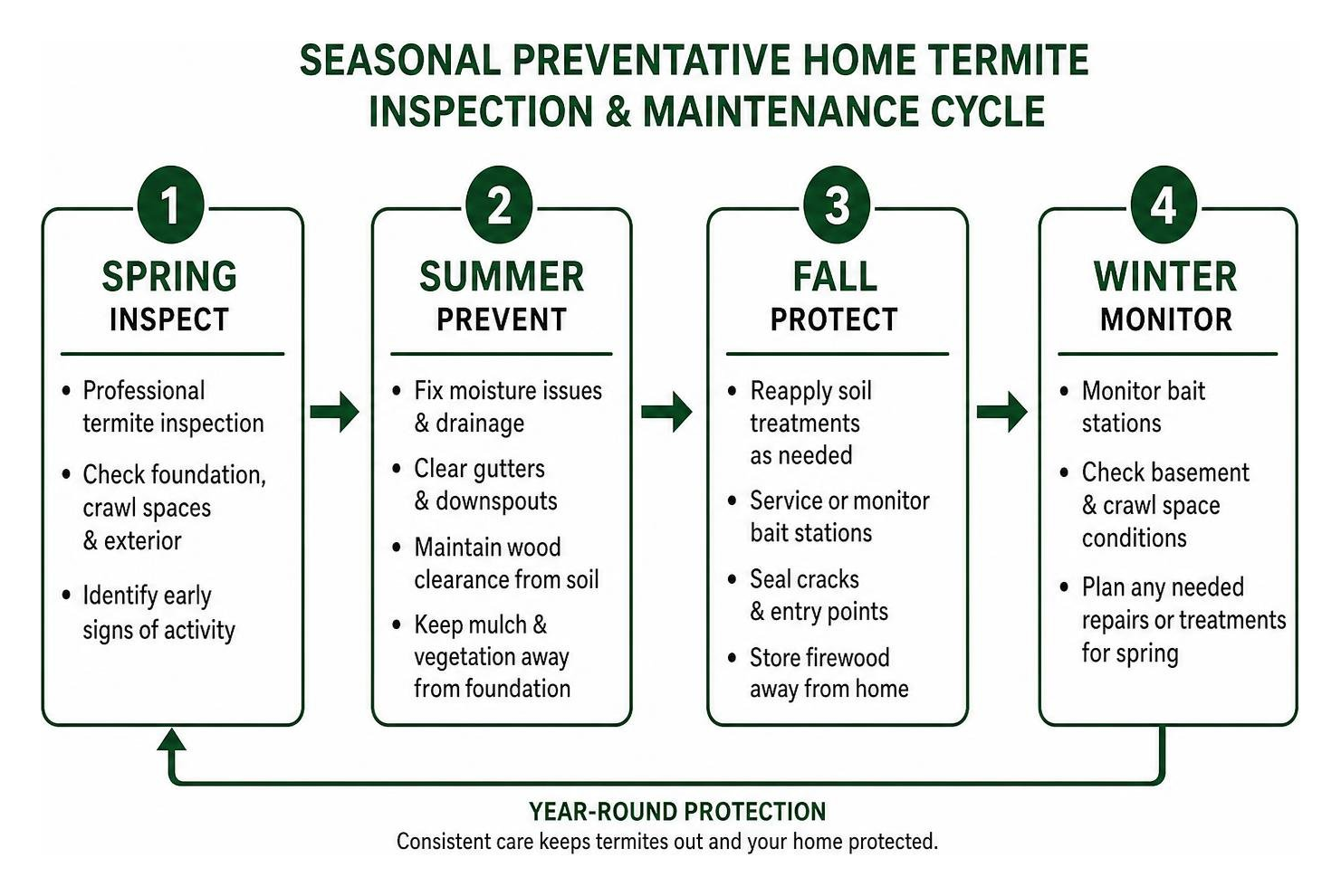
Follow these simple rules for proactive home defense:
- Eliminate Wood-to-Soil Contact: Ensure siding, lattice panels, and door frames do not touch ground soil. Maintain a 6-inch gap between natural soil and wood siding.
- Manage Landscaping Mulch: Organic wood mulch holds moisture against foundation walls. Keep mulch beds at least 12 to 18 inches away from foundation concrete, or replace organic mulch near the house with gravel or crushed stone.
- Clear Gutters and Downspouts: Ensure roof drainage flows at least 5 feet away from foundation walls. Fix leaky hose spigots, AC condensation lines, and plumbing drips immediately.
- Store Firewood Properly: Keep stacked firewood elevated on metal racks at least 20 feet away from your home’s foundation.
Review our dedicated guides on termite prevention and how to prevent termites for step-by-step homeowner maintenance tips.
Frequently Asked Questions About Home Termite Control
What should I do if a termite treatment fails or termites return?
If you notice mud tubes or swarmers returning after a professional application, contact your service provider right away. Reputable pest control companies offer service warranties that guarantee free re-inspections and spot-treatments if pest activity recurs within the warranty window.
If issues persist, technicians will re-examine the soil barrier to locate gaps caused by landscaping work, plumbing repairs, or heavy rain soil erosion. For severe issues or misapplication concerns, homeowners can consult state regulatory bodies like the Massachusetts Department of Agricultural Resources (MDAR) or call the National Pesticide Information Center (NPIC) for assistance.
How often should I inspect my home for termites in Massachusetts?
Homeowners in Middlesex and Essex counties should schedule a professional structural inspection at least once per year. Annual checks are best performed in early spring, right before termite swarming season begins.
During annual checks, technicians carefully inspect crawl spaces, basement sills, utility line penetrations, and exterior foundation edges for early mud tubing or moisture problems before major damage occurs.
What is the government’s role in regulating termite control products?
The EPA evaluates termiticide formulations through extensive scientific testing before issuing registration labels. EPA registration ensures that when applied strictly according to label instructions, the chemical poses minimal risk to human health, non-target species, and groundwater supplies.
Furthermore, state regulatory boards enforce strict licensing requirements for pest management professionals. Only licensed applicators are legally permitted to purchase and apply heavy-duty termiticides designated for complete structural protection.
Protect Your Massachusetts Home with Trusted Local Experts
Protecting your investment against wood-destroying insects requires proven methods, proper equipment, and deep local expertise. Biggins Exterminating & Pest Control is a family-owned and operated pest control company rooted in Wilmington, MA, with over 40 years of dedicated experience protecting local families and homes.
We take pride in delivering honest, highly effective pest management without forcing customers into long-term, rigid contracts. All of our structural treatments are fully backed by warranties to ensure your complete peace of mind.
We proudly serve homeowners across Eastern Massachusetts, including:
- Andover, MA
- Bedford, MA
- Billerica, MA
- Burlington, MA
- Lexington, MA
- North Reading, MA
- Tewksbury, MA
- Wilmington, MA
- Woburn, MA
Don’t wait until hollow floor joists or discarded swarmer wings force an expensive emergency repair. Schedule your thorough free termite inspection with Biggins Exterminating today and secure long-lasting termites pest control protection for your home!