
Spotting the Signs: Your Guide to Termite Mud Tunnels
Termite mud tunnels are a key indicator of a hidden termite infestation. Knowing what they are and why they appear can help you protect your home.
Here’s a quick look at what termite mud tunnels are:
- What they are: Small, pencil-sized tunnels made by subterranean termites.
- What they’re made of: A mix of soil, wood particles, termite saliva, and sometimes fecal matter.
- Why termites build them: To protect themselves from predators and dry air as they travel between their underground colony and a food source like your home’s wooden structures.
- What they look like: Brown or tan, typically 1/4 to 1 inch wide, often resembling dried veins on foundations, walls, or wood.
Think about the vast network of train tunnels New Yorkers use daily, or the pedestrian tunnels people in Moose Jaw, Canada, use to escape the cold. Just like humans build tunnels for protection and travel, tiny termites construct intricate pathways for their survival. But for homeowners, these tunnels are a big warning sign.
I’m Stephen Biggins, owner of Biggins Exterminating Co. With over 40 years in pest control, I’ve seen countless cases of termite mud tunnels and helped homeowners understand these critical signs of infestation. Let’s dig deeper into these hidden pathways.
Explore more about termite mud tunnels:
What Are Termite Mud Tunnels and Why Do They Appear?
When you spot what looks like pencil-sized veins of dirt snaking up your foundation or across a wooden beam, you’re likely looking at termite mud tunnels. These aren’t just random dirt smears; they are carefully constructed pathways built by subterranean termites, the most common type of termites that build these structures.
So, what exactly are these tunnels made of? They’re a clever mix of small pieces of soil, wood particles, and the termites’ own saliva and fecal matter. The termites act as tiny masons, using their saliva as a binding agent to create a surprisingly durable structure. Think of it like a miniature, organic concrete!
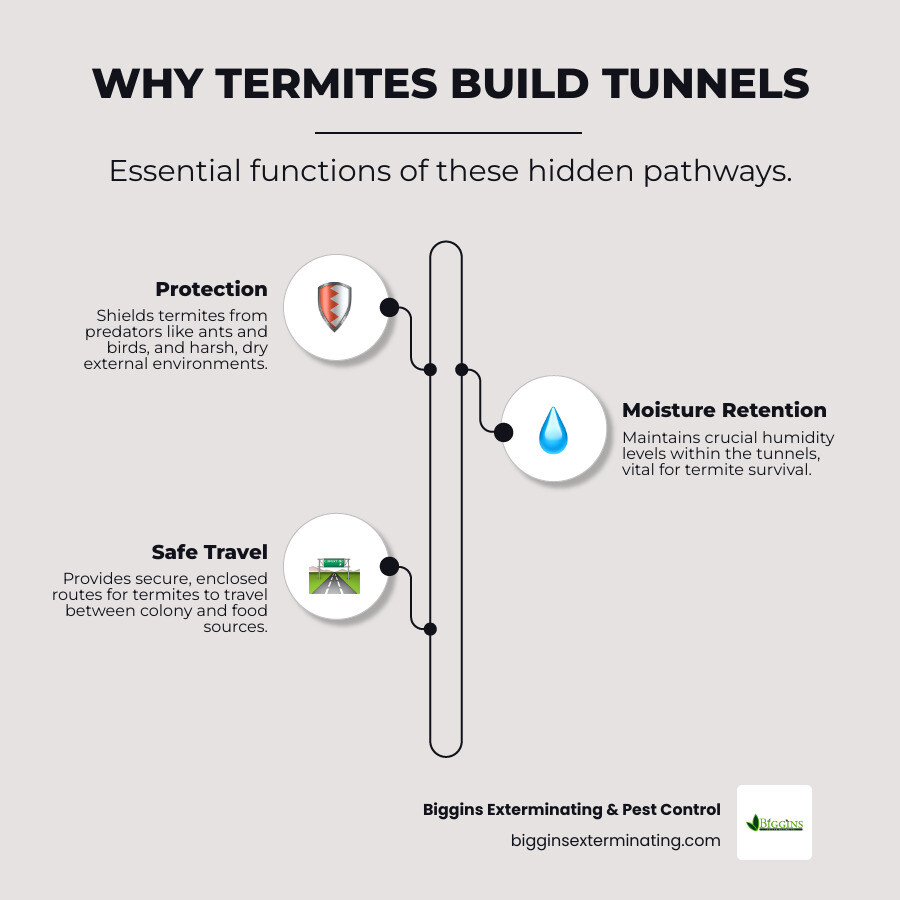
But why do these tiny creatures go to all this trouble? Termites build these tunnels for a few critical reasons, all centered around their survival and the well-being of their colony:
- Moisture Retention: Subterranean termites need a consistently moist environment to survive. Their soft bodies are very susceptible to drying out when exposed to open air. The mud tubes act like a personal, humidity-controlled highway, locking in moisture and protecting them from dry air.
- Protection from Predators: Imagine being blind and soft-bodied, constantly on the move for food. That’s the life of a worker termite! The termite mud tunnels offer a safe haven from predators like ants, birds, and other insects. It’s their armored vehicle, shielding them as they travel back and forth.
- Temperature Regulation: These tunnels also help maintain optimal temperature and humidity levels for the colony. This ensures the termites can thrive and continue their work without being exposed to extreme conditions, keeping their underground world just right.
It’s truly remarkable how quickly these tiny engineers can work. Termites can build small termite mud tunnels surprisingly fast, sometimes even overnight! Larger, more reinforced tubes might take a few days to fully form, depending on the colony’s size, humidity, and the availability of building materials. They are persistent little creatures, working 24/7.
You might wonder if these tunnels are some kind of cocoon. It’s a common misconception, but termites do not undergo complete metamorphosis. Their termite life cycle consists of three stages: egg, nymph, and adult. Unlike insects that spin cocoons to protect a pupa stage, termites don’t have one. Their mud tubes are purely for travel and protection, not a developmental stage.
For more detailed information on these incredible insects, you can explore More info about Subterranean Termites.
How to Identify Different Types of Termite Mud Tunnels
Not all termite mud tunnels are created equal. These clever insects build different types of tubes, each serving a specific purpose within the colony’s daily operations. Understanding these distinctions can give you valuable clues about the extent and nature of an infestation.
Here’s a comparison of the four main types of termite mud tunnels:
| Type of Mud Tunnel | Appearance | Purpose | Location |
|---|---|---|---|
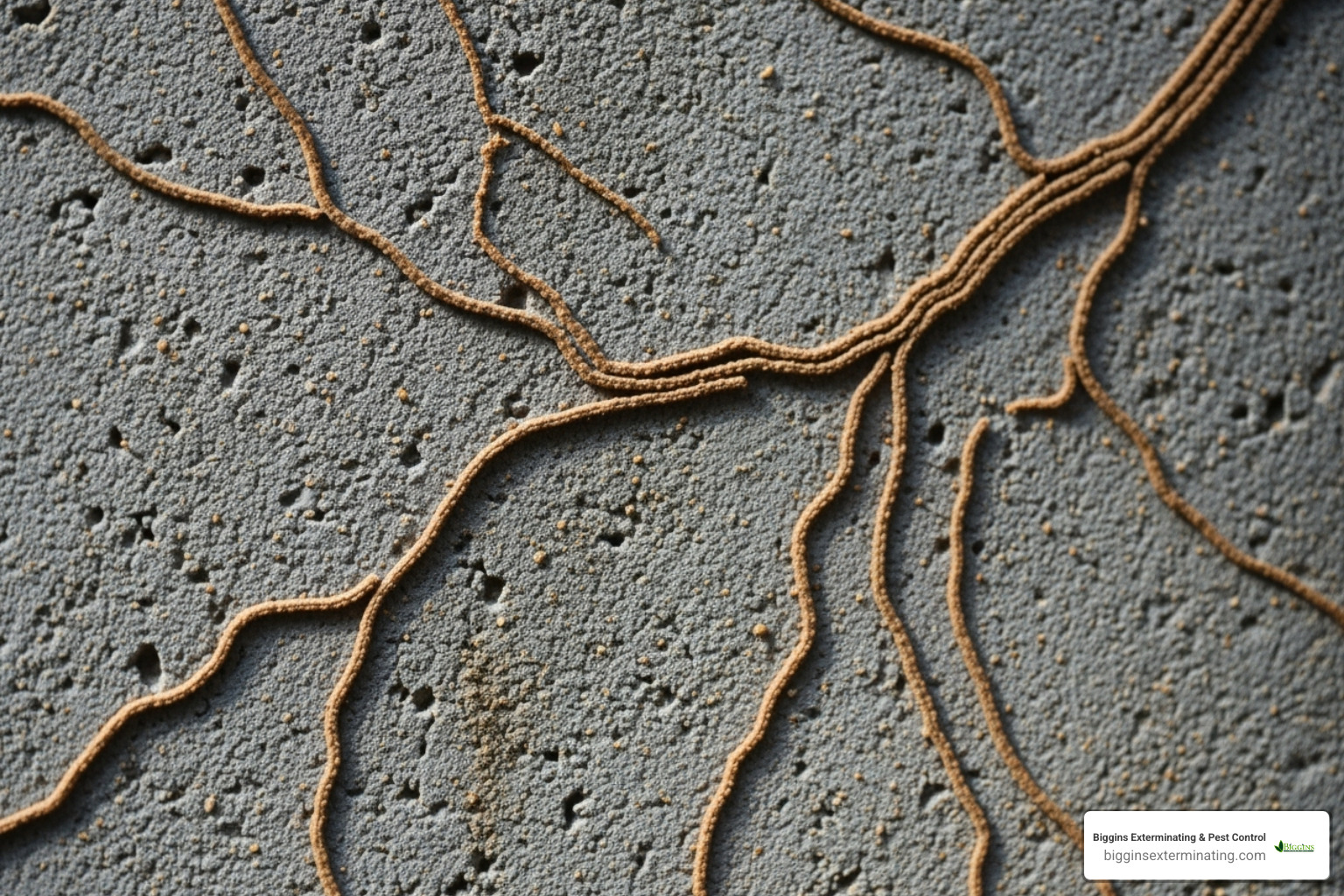
| Exploratory Tubes | Thin, fragile, often branching like delicate veins. They may be abandoned and empty. | Built for scouting new food sources. Termites construct these to search for wood and may abandon them if no food is found. | Can extend far from the ground, sometimes as high as 15 feet or more on walls, posts, or other structures. Often found on basement walls or concrete foundations. |
| Working Tubes | Thicker, typically 1/4 to 1 inch in diameter (about the width of a pencil), earth-colored, and durable. They are well-formed and often contain active termites. | These are the main highways for the colony, used daily for transporting hundreds to thousands of termites between the nest in the soil and food sources. | Commonly found along foundations, joists, subfloors, and other structural timbers, leading directly to wood. |
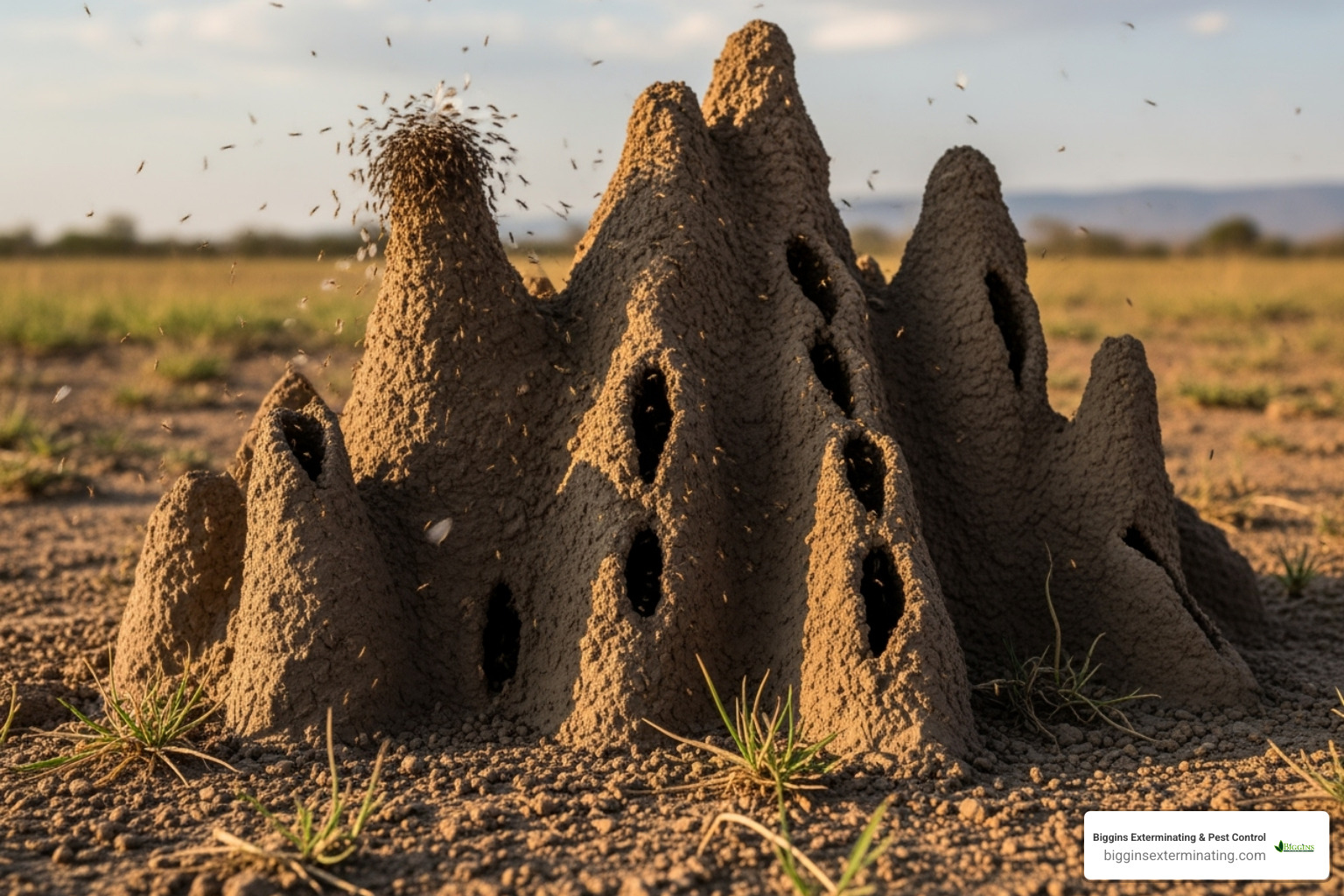
| Swarm Tubes (or Swarm Castles) | Can be very large, up to and larger than four feet wide, with multiple exit holes. They are temporary structures. | Built to protect the delicate winged reproductive termites (swarmers) as they exit the colony during swarming season. Like a temporary “airport” for their departure. | Usually found near the ground or emerging from infested wood, providing a safe passage for swarmers to leave and establish new colonies. |
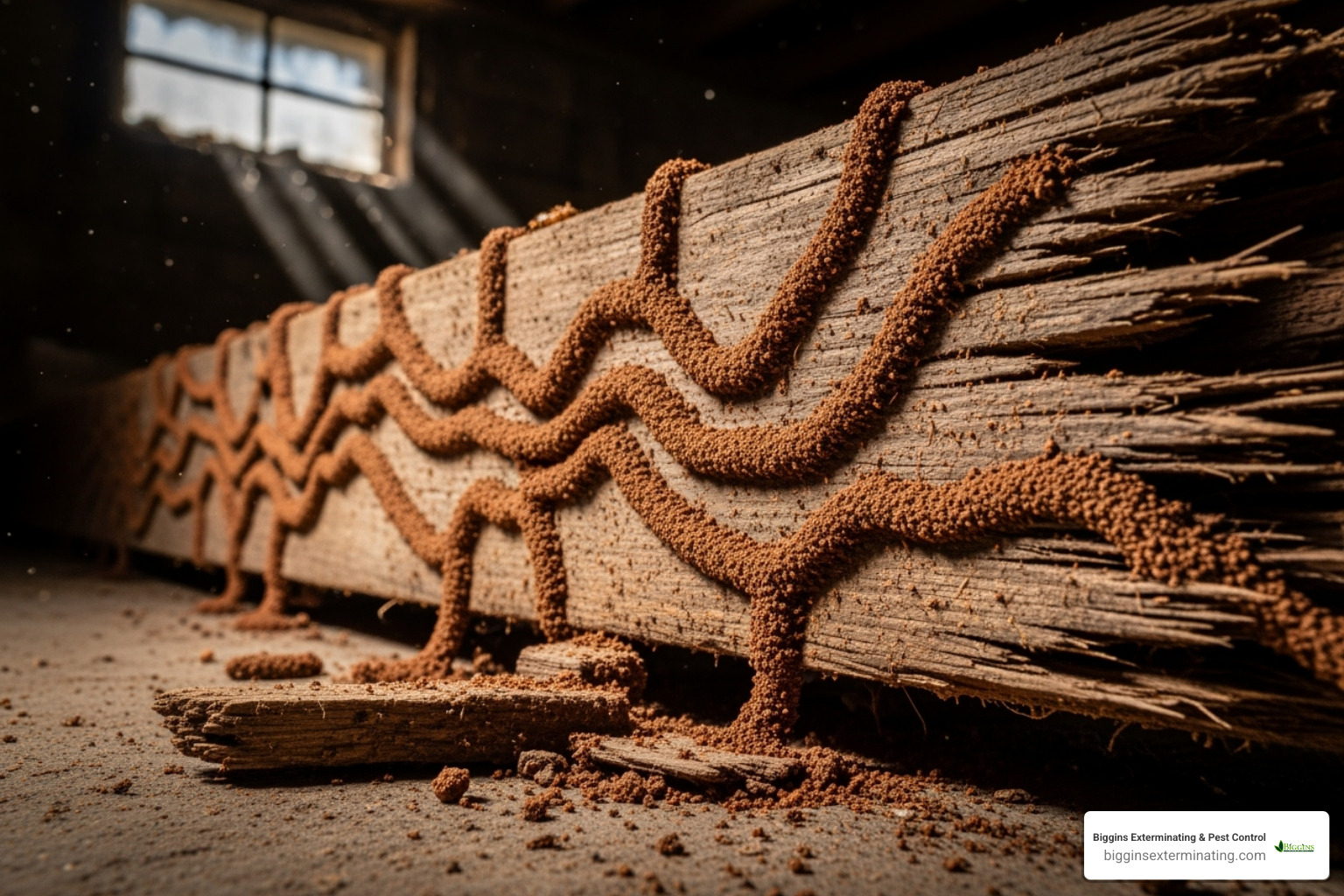
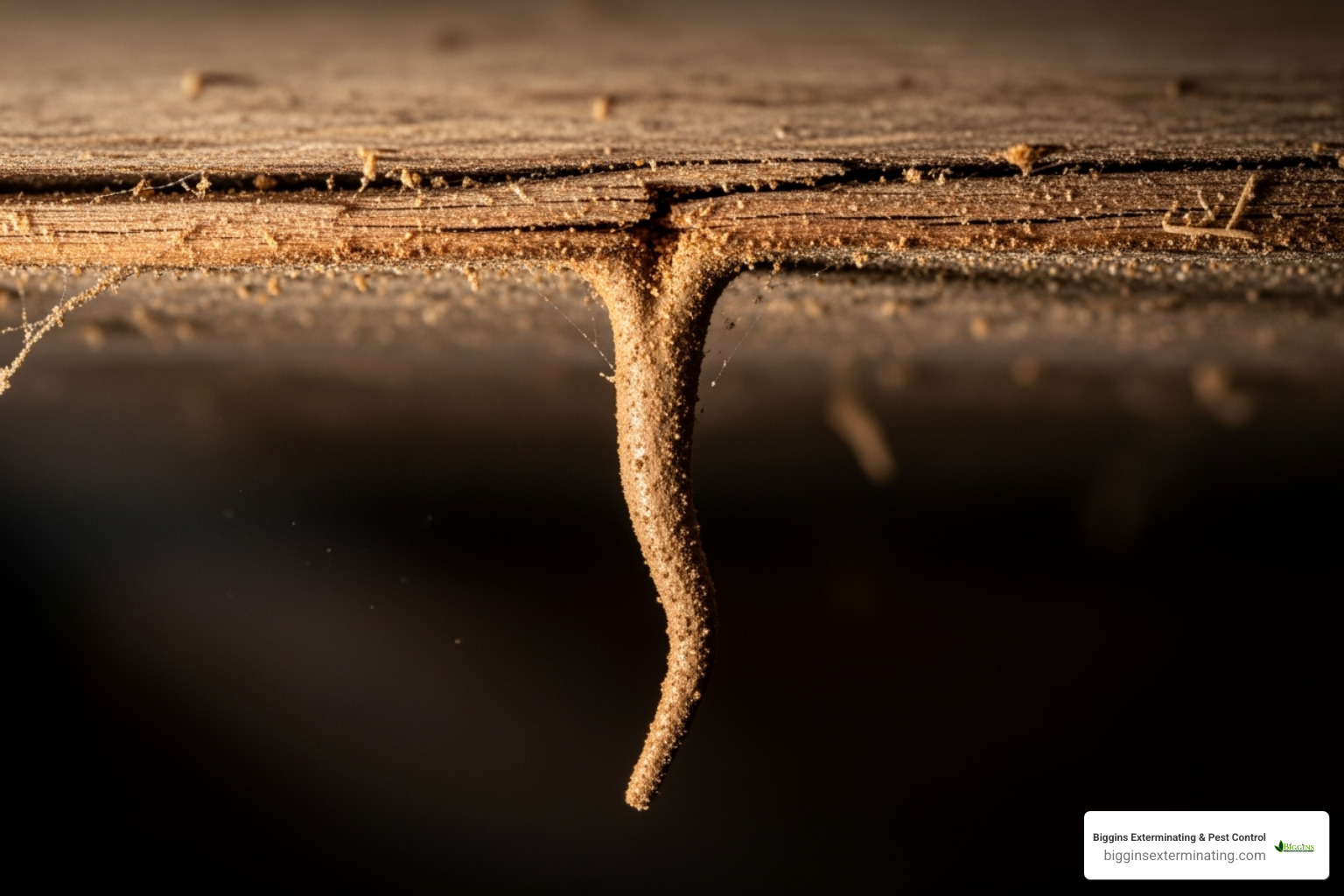
| Drop Tubes | Lighter in color than other tubes, often resembling stalagmites, hanging downwards from overhead structures. They contain more wood fibers. | Built by termites foraging in higher areas, allowing them to re-establish a connection back to the soil for moisture and colony access. Act as expressways. | Found suspended from ceilings, floor joists, or beams, extending downwards towards the ground or lower structures. |
What Kind of Damage Do Termite Tunnels Indicate?
While termite mud tunnels are a clear sign of trouble, they aren’t the direct cause of structural damage themselves. Instead, they are the visible evidence that termites are actively at work, potentially causing hidden damage within your home. These tunnels allow termites to access and consume wood without being exposed, making them truly “silent destroyers.”
Termites typically feed on wood from the inside out, often leaving a thin veneer of wood or paint untouched. This means significant damage can be occurring out of sight, behind your walls, under your floors, or within your structural timbers.
The presence of termite mud tunnels indicates that termites have found a way into your home, often through wood-to-ground contact points, tiny cracks in the foundation, or through utility entry points. Once inside, they target any cellulose-based materials, including subfloors and even the wood hidden within your wall voids.
The damage associated with active termite infestations (which mud tubes confirm) can manifest in several ways. For instance, you might notice hollow-sounding wood when you tap on it, indicating that the inside has been eaten away. In more severe cases, you could see sagging floors or ceilings, or even find that your windows or doors become stiff and difficult to open or close because the wood frames have warped.
Sometimes, discolored or drooping drywall can appear, mimicking water damage, but it’s actually a sign of termites behind the walls. Less commonly, you might spot small, precise holes in drywall, which can be exit points for termites. And finally, excessively noisy flooring – those squeaks and creaks, or a general “give” in your subfloors – can also signal termite activity.
We’ve seen how pervasive and destructive these pests can be, especially here in Massachusetts. If you’ve found termite mud tunnels, it means an active colony is likely at work, and the damage could be ongoing.
Learn more about preventing widespread damage by visiting our page on The Dangers of Termites and How to Prevent Them in Massachusetts.
How to Tell if Termite Tunnels Are Active: A 3-Step Check
Finding termite mud tunnels around your home is concerning, but here’s what you really need to know: not all tubes are actively being used. Some might be old highways that termites have abandoned for newer routes. The key is figuring out whether these tunnels are part of a current infestation.
Think of it like checking if a road is still in use. You wouldn’t just look at the pavement – you’d watch for traffic. The same principle applies to termite mud tunnels.
Here’s a simple way to check if those tubes are still busy with tiny termite traffic:
Step 1: Break a Small Section
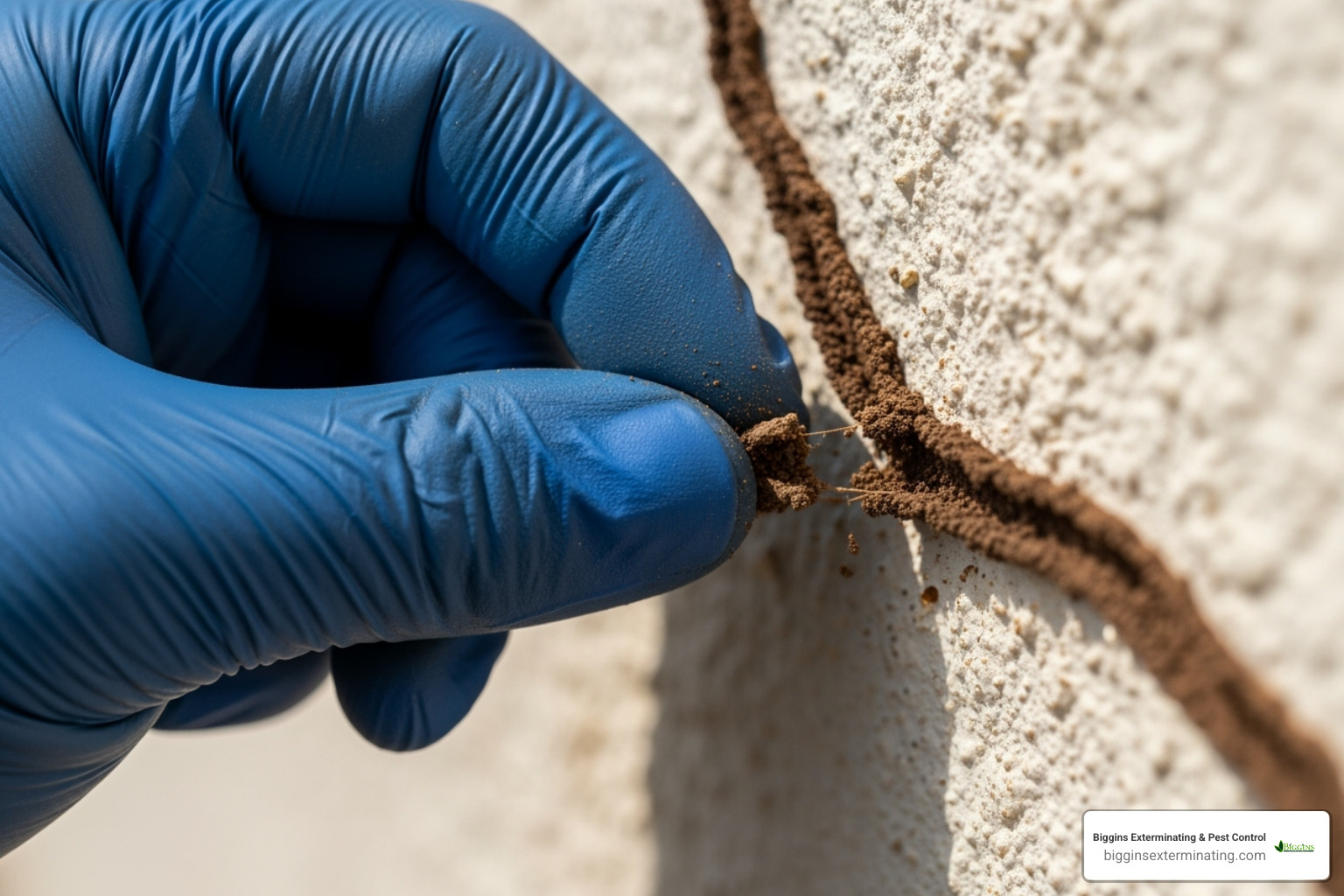
Put on some gloves and carefully break off a small piece from the center of the tunnel. Don’t go crazy here – just create a small opening about the size of a pencil eraser. Leave the sections on either side intact. You’re essentially creating a “road closure” to see how the termites respond.
Step 2: Check for Live Termites
As you break open the tube, look closely inside. Active tubes often contain worker termites that will scatter when exposed to light and air. If you see pale, ant-like insects scrambling around, you’ve got your answer – the tunnel is definitely active.
Step 3: Observe for Repairs
If you don’t spot any termites right away, don’t assume the tunnel is abandoned. Check back in 24 to 48 hours. Active termite colonies are like efficient road crews – they’ll quickly repair any damage to their transportation network. If that broken section gets patched up, you’re dealing with an active infestation.
What Active vs. Inactive Tubes Look Like
Active termite mud tunnels typically have a moist, fresh appearance. They feel solid when you touch them and maintain their structural integrity. The color is usually a rich brown or tan, and they won’t crumble at the slightest touch.
Inactive or abandoned tubes tell a different story. They often appear dry and crumbly, with a faded color that’s lost its richness. These old tubes might have cracks running along their length or sections that have already fallen away naturally.
But here’s the tricky part – even if a tube looks old, it doesn’t necessarily mean your termite problem is over. These clever insects might have simply found a better route and abandoned the old one. It’s like finding an old hiking trail that’s overgrown – just because this path isn’t used doesn’t mean hikers aren’t still in the area.
The Moisture Test
Another telltale sign is moisture content. Active tubes retain moisture because termites constantly travel through them, bringing humidity from their underground colony. If you break open a tube and it feels moist inside, that’s a strong indicator of recent activity.
Even experienced pest control professionals sometimes find it challenging to determine activity levels just by looking. That’s why this simple break-and-observe test is so valuable. It gives you real-time information about what’s happening in your home.
If you find active termite mud tunnels, don’t panic, but don’t delay either. The sooner you address an active infestation, the less damage these persistent insects can cause to your home’s structure.
For a comprehensive guide on identifying these and other termite warning signs, visit our resource on How to Tell if You Have Termites.
What to Do (and Not Do) When You Find Termite Tunnels
Finding termite mud tunnels in or around your home can certainly send a shiver down your spine. It’s a natural reaction to want to grab a broom and sweep them away, as if making them disappear will solve the problem. But when it comes to termites, acting quickly is important, and acting wisely is even more so!
Here’s our best advice: when you spot those tell-tale termite mud tunnels, your very first step should be to pick up the phone and contact a professional pest control service for an inspection. We know the urge to tackle things yourself can be strong, but with termites, DIY approaches come with some significant risks and are almost never effective in the long run.
Think of it this way:
- A False Sense of Security: Simply wiping away the visible termite mud tunnels might make you feel better for a moment, but it doesn’t get rid of the termite colony itself. It’s like removing a symptom without curing the illness. The termites will likely just rebuild their pathways elsewhere, perhaps in an even more hidden spot. This can leave you with a false sense of security while the real problem – the active, wood-munching colony – continues its destructive work out of sight.
- Spreading the Infestation: Disturbing the tunnels can actually cause the termites to panic and scatter. They might establish new, separate colonies in different parts of your home, inadvertently spreading the infestation and making it much harder to contain later on. You could turn one problem area into several!
- Making Professional Treatment Harder: When our trained technicians arrive to assess the situation, those active termite mud tunnels provide invaluable clues. They tell us exactly where the termites are entering, their travel paths, and even help us gauge the extent of the infestation. If you’ve removed them, you’ve essentially erased critical evidence, making our job of effectively locating and treating the entire colony much more challenging.
At Biggins Exterminating, we really believe in smart, targeted solutions, following Integrated Pest Management (IPM) principles. You can learn more about these thoughtful approaches here: Integrated Pest Management (IPM) principles.
If you’ve spotted these tell-tale signs, don’t hesitate. Reach out to us for More info about Termite Inspection Services.
Why You Shouldn’t Remove Termite Mud Tunnels Yourself
We really can’t stress this enough: please do not attempt to remove termite mud tunnels yourself, beyond that small, gentle test we described earlier to check for activity. It’s a very common mistake that, unfortunately, can end up costing homeowners a lot more time, money, and stress down the road.
Here are the key reasons why we strongly advise against DIY removal:
- You’re Destroying Evidence: Those termite mud tunnels are like a detailed roadmap for our pest control experts. They show us precisely where the termites are active, their entry points into your home, and their established travel routes. When you wipe them away, you’re essentially erasing the very clues we need. This means we have to spend more time trying to re-locate the main colony and its pathways, which can delay effective treatment.
- It Leads to Incomplete Treatment: Removing the tunnels only addresses the visible symptom, not the hidden problem. The vast majority of the termite colony – including the queen, the soldiers, and thousands upon thousands of workers – remains hidden deep within the soil or tucked away within your home’s structure. You might clear a few inches of visible mud, but the entire underground network, which can extend hundreds of feet from the nest, remains completely untouched.
- Termites Will Just Rebuild: Termites are incredibly resilient and determined. If you remove their termite mud tunnels, they will simply rebuild them, often within a day or two for smaller tubes, or a few days for larger ones. Sometimes, they’ll even build them in new, harder-to-find locations, making future inspections and treatments even more difficult.
- It Masks the Real Problem: By removing the visible signs, you might trick yourself into thinking the problem is solved, when in reality, the termites are quietly continuing their destructive work. This gives them more time to cause significant, often irreversible, damage to your home’s structure, leading to much more extensive and costly repairs later on.
- You Need Professional Assessment and Colony Location: Our experienced technicians are trained not only to identify active termite mud tunnels but also to use specialized tools and techniques to locate the main colony and determine the full extent of the infestation. We also have access to advanced treatment methods and materials that are simply not available to the general public, ensuring a comprehensive and truly effective solution.
The goal isn’t just to get rid of the mud tubes; it’s to get rid of the termites permanently. And that requires a professional, targeted approach. To learn more about effective, long-term solutions, read our guide on How to Get Rid of Termites Permanently.
Frequently Asked Questions about Termite Tunnels
Over the years, I’ve answered countless questions from worried homeowners who’ve finded those telltale dirt pathways around their homes. Let me share the most common questions we hear at Biggins Exterminating, along with the answers that can help put your mind at ease (or confirm your suspicions).
Do drywood termites build mud tubes?
Here’s some good news if you’re dealing with drywood termites: they don’t build mud tubes at all. This is actually one of the key ways we tell different termite species apart. Termite mud tunnels are exclusively the handiwork of subterranean termites, who need that constant connection to soil moisture to survive.
Drywood termites are quite different creatures. They live entirely inside the wood they’re munching on, getting all the moisture they need directly from their wooden meals. Since they never need to venture back to the soil, there’s no reason for them to build these protective highways.
If you’re dealing with drywood termites instead, you’ll see completely different warning signs. The most obvious is frass – those tiny, hard pellets that look remarkably like coffee grounds or sawdust. You’ll often find neat little piles of these droppings near small holes where the termites push them out of their tunnels.
For a deeper dive into the fascinating differences between termite species, check out our comprehensive guide: More info about different types of termites.
How far can termite tunnels extend?
The answer might surprise you – termites are incredible engineers when it comes to extending their reach. Those thin exploratory tubes can stretch up to 15 feet or more above ground level as scout termites search for new food sources. I’ve personally seen them snaking up three-story buildings!
But here’s where it gets really impressive: while the visible working tubes might only run a few feet along your foundation, the entire underground network can extend hundreds of feet from the main colony. Think of it like an iceberg – what you see above ground is just a tiny fraction of the whole system.
This means a termite colony nesting way across your yard could still be sending work crews into your home’s wooden framework every single day. It’s like having an invisible subway system running right under your property, with your house as one of the major stops.
Are mud tubes from other insects sometimes mistaken for termite tunnels?
Absolutely, and it’s more common than you might think. The most frequent case of mistaken identity involves mud dauber wasps, and I can understand why homeowners get confused.
Mud daubers are actually beneficial insects that build their own mud structures, but they look quite different once you know what to look for. Their nests are typically much larger and lumpier than termite mud tunnels, often resembling organ pipes or irregular clumps of mud stuck to walls, eaves, or attic spaces.
The key difference is purpose and structure. Termite mud tunnels are smooth, consistent pathways about the width of a pencil, designed for constant two-way traffic. Mud dauber nests are more like apartment buildings – individual cells where they store paralyzed spiders for their babies to eat.
If you break open a mud dauber nest (which is safe to do), you’ll find wasp larvae or spiders inside, not the pale, soft-bodied worker termites that would be scurrying around in an active termite tube.
When in doubt, don’t hesitate to give us a call. After four decades in this business, I can usually tell the difference at a glance, and it’ll save you a lot of worry if it turns out to be the harmless mud daubers instead of destructive termites.
Protect Your Home from Termite Damage
Finding termite mud tunnels on your property is like finding an unwelcome highway system that leads directly to your home’s wooden foundation. While it’s certainly not the news any homeowner wants to hear, finding these tunnels is actually your first step toward protecting your most valuable investment.
Think of it this way: these mud pathways are your home’s way of sending up a flare signal, alerting you to a problem that might otherwise go unnoticed for months or even years. Without this visible warning, termites could continue their silent destruction, weakening your home’s structure while you remain completely unaware.
The key is taking swift, professional action. When you spot termite mud tunnels, you’re looking at evidence of an active colony that’s already established a connection between their underground nest and your home. This isn’t a problem that will resolve itself or one that you can simply brush away.
At Biggins Exterminating, we’ve been helping Massachusetts homeowners deal with exactly this situation for over 40 years. As a family-owned business right here in Wilmington, we understand how unsettling it can be to find these signs of infestation. We’ve walked countless homeowners through this process, from that initial moment of concern through to complete peace of mind.
Our approach goes far beyond just treating the visible termite mud tunnels. We locate the source colony, assess the full extent of the infestation, and create a comprehensive treatment plan that eliminates the entire termite population. Because we’re a local company without the overhead of big corporate chains, we can offer this thorough service without locking you into lengthy contracts.
What sets us apart is our commitment to your satisfaction. Every service comes with our warranty, and we stand behind our work. We serve homeowners throughout Andover, Bedford, Billerica, Burlington, Lexington, North Reading, Tewksbury, Wilmington, and Woburn with the same level of care we’d want for our own families.
Don’t let those termite mud tunnels become a pathway to expensive structural repairs. Your home is calling for help, and we’re here to answer that call.
Contact us for a professional termite inspection today, and let’s protect your home together.
