
Why You Should Hire a Carpenter Ant Specialist: Signs and Structural Damage
When carpenter ants invade a home, they rarely make a grand entrance. Instead, they work quietly behind siding, inside window frames, and within wall voids. Recognizing the subtle warning signs early is the key to preventing severe structural issues.
Homeowners across Massachusetts often spot large black ants—measuring anywhere from 1/4 inch to nearly an inch long—crawling across kitchen counters or bathroom floors. While seeing a single ant might just mean an outdoor worker is foraging for food, seeing them consistently indoors is a strong signal that a colony is nearby.
Here are the primary indicators that mean it is time to hire carpenter ant specialist professionals:
- Frass Accumulation: Because carpenter ants do not digest wood, they push small shavings out of their nesting galleries through kick-out holes. This debris, known as frass, looks like fine sawdust and often contains pieces of dead ants and soil. You will typically find small piles on window sills, along baseboards, or near basement joists.
- Rustling Sounds in Walls: During quiet evening hours, a mature colony can actually be heard. If you place your ear against a suspected wall void, you might hear a soft rustling or crackling sound. This is the sound of thousands of ants scraping away at damp, weakened timber.
- Indoor Swarmers: Seeing winged ants inside your home during spring or summer is a clear warning sign. These winged swarmers are reproductive ants setting out to establish new colonies. An indoor swarm almost always indicates an established nest inside the structure.
- Satellite Nests: Carpenter ants operate using a complex network. A single parent colony located outdoors (often in an old tree stump or firewood pile within 300 feet of your house) can establish multiple indoor satellite nests. These satellite nests house worker ants and mature larvae, allowing the infestation to expand rapidly.
Ignoring these early signs can lead to severe structural damage over time. As explained in our guide on how carpenter ants cause wood damage, these pests target structural framing, floor joists, and wall studs. Over months and years, their continuous gallery excavation can compromise the structural integrity of your home, leading to thousands of dollars in repairs. Urgent intervention by a specialist stops this structural decay in its tracks.
Carpenter Ants vs. Termites: Spotting the Key Differences
It is common for homeowners to confuse carpenter ants with termites, but treating them requires very different approaches. Knowing what you are looking at is the first step toward effective pest control.
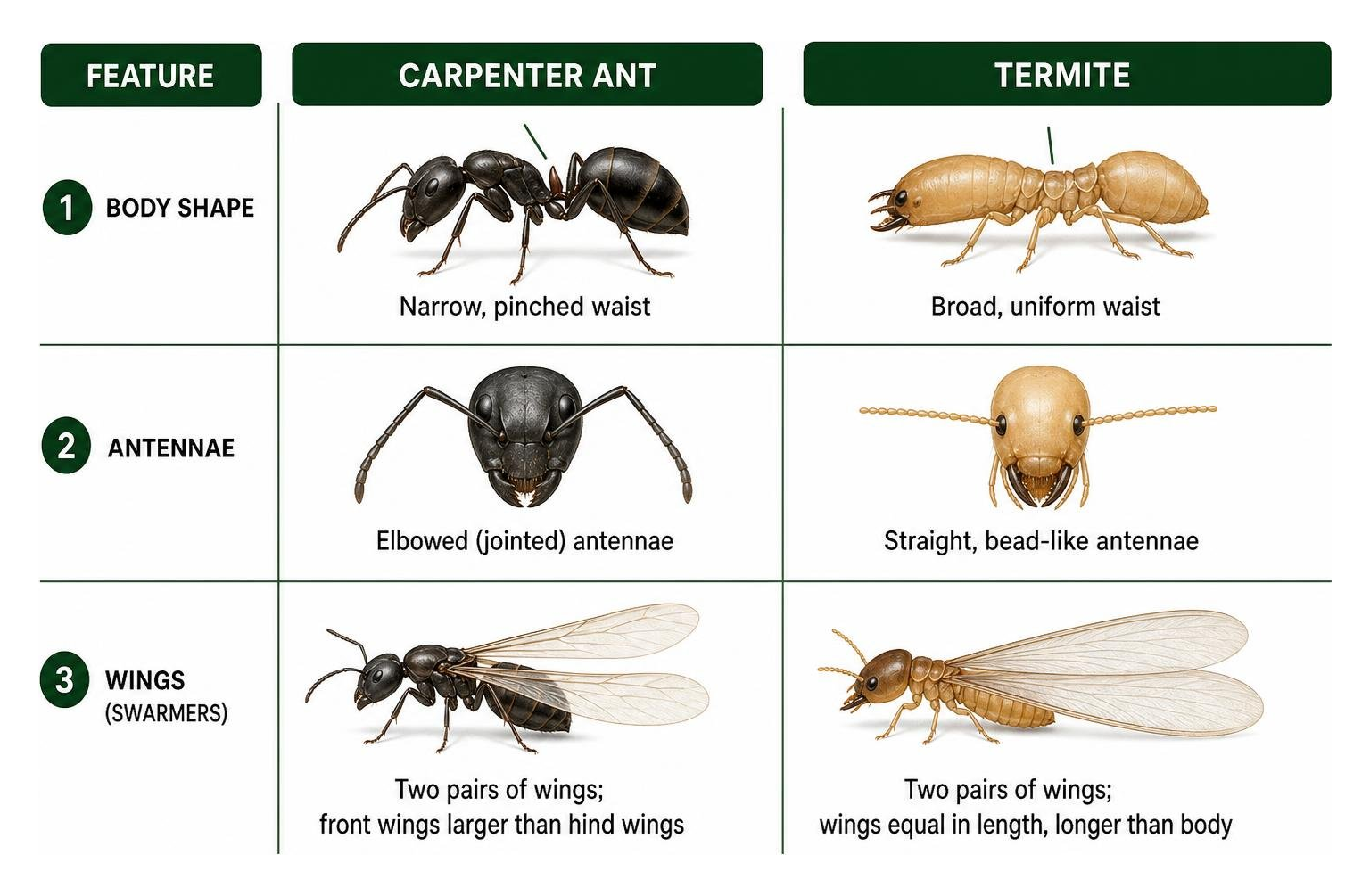
To help you tell them apart quickly, review our breakdown of the key differences between carpenter ants and termites:
- Body Shape: Carpenter ants feature a distinct, narrow pinched waist separating their thorax and abdomen. Termites have a broad, uniform waist with a soft, rectangular body shape.
- Antennae: Antennae provide an easy visual cue. Carpenter ants have elbowed or jointed antennae, whereas termites have straight, bead-like antennae.
- Wings: If you notice flying pests, inspect their wings closely. As detailed in our resource on flying carpenter ant traits, winged carpenter ants have two pairs of wings where the front wings are noticeably larger than the hind wings. Termite swarmers have two pairs of equal-length wings that are significantly longer than their bodies.
- Wood Damage Style: Termites eat wood, packing their mud-filled galleries with dirt and feces. Carpenter ants do not consume wood; they excavate smooth, clean galleries that look as though they have been hand-sanded, leaving frass piles behind.
Professional Inspection and Advanced Eradication Methods
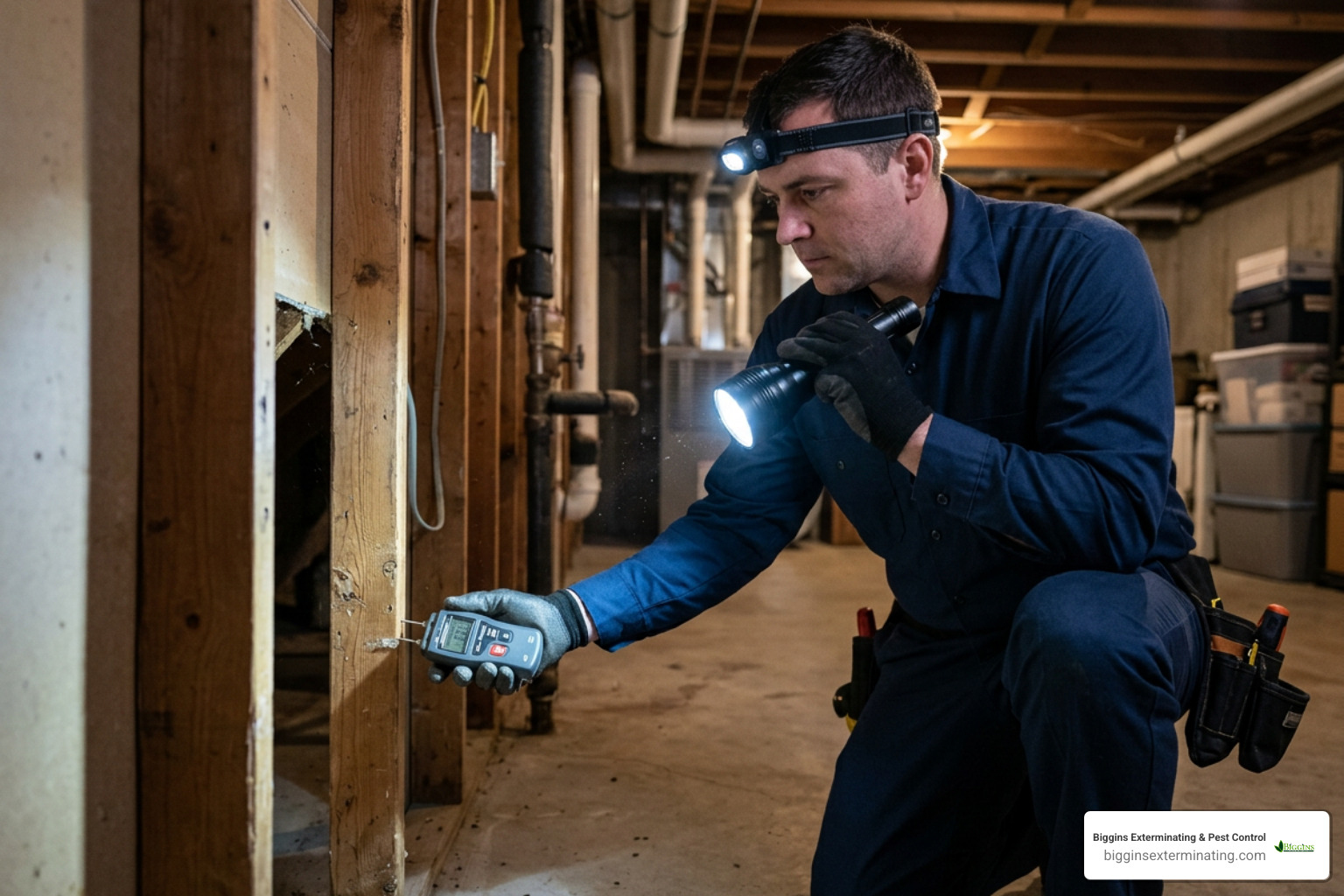
When you hire carpenter ant specialist teams, you receive much more than a routine chemical application. Professional eradication centers on precision diagnostics and targeted nest elimination.
At Biggins Exterminating & Pest Control, our process begins with a detailed inspection of both the interior and exterior of your home. We focus on high-moisture zones, such as plumbing penetrations, roof valleys, deck ledger boards, and damp basements, because carpenter ants prefer soft or decay-softened wood for initial nest building.
Specialists utilize specialized diagnostic tools to locate hidden colonies without tearing down drywall:
- Moisture Meters: Identify hidden water leaks behind walls that create ideal nesting conditions.
- Acoustic Sounding Tools: Allow technicians to gently tap wood beams and listen for hollow responses or rustling activity.
- Thermal Imaging: Helps reveal moisture pockets and dense pest clustering hidden deep inside wall framing.
Locating both the outdoor parent colony and all indoor satellite nests is crucial. If an exterminator only treats an indoor satellite nest, the outdoor parent queen will continue producing thousands of new eggs—a single queen can lay over 300,000 eggs in her lifetime—sending fresh lines of workers right back into your living space.
Why DIY Treatments Fail vs. Professional Expertise
Many homeowners first attempt to clear infestations using over-the-counter bug sprays or store-bought traps. Unfortunately, these DIY methods often make the problem worse.
Most store-bought aerosol sprays rely on repellent chemicals. When sprayed on visible worker ants trailing along baseboards, these products kill the few ants you see on contact. However, the repellent nature of the spray alerts the rest of the colony to a threat. In response, the colony often buds—splitting into several smaller satellite nests spread throughout different wall voids in your home.
Professional exterminators use a completely different approach based on non-repellent transfer technology. Non-repellent active ingredients are invisible to foraging ants. The ants walk across treated zones without knowing it, carrying microscopic particles of non-repellent dusts and liquid treatments directly back into the heart of the main nest. Through grooming and food sharing (trophallaxis), the active material spreads through the population, destroying the satellite colonies and reaching the queen for total colony collapse. You can learn more about finding effective professional services in our guide on expert carpenter ant removal solutions.
How to Hire Carpenter Ant Specialist Technicians for Deep Nest Removal
Deep nest removal requires methodical execution. When our technicians arrive at a home in Lexington or Woburn, we perform deep wall-void injections using specialized dusting and foaming formulations.
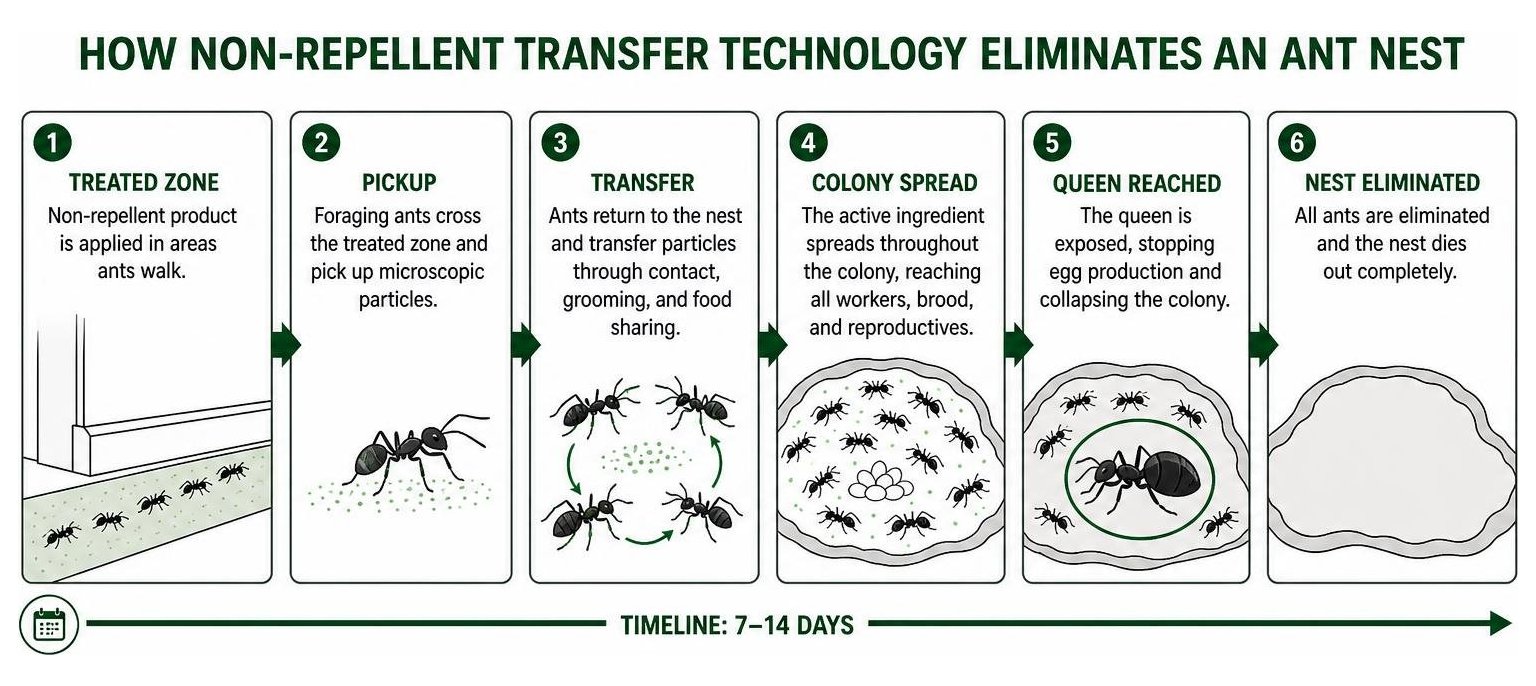
By injecting non-repellent products directly into kick-out holes or small drill penetrations near suspected wall voids, we ensure the material coats the internal gallery surfaces. Over a 7- to 14-day timeline, foraging ants spread the treatment throughout the colony, eliminating all hidden workers and the queen.
Cost Factors, Safety, and Choosing the Right Professional
Understanding the factors that influence service pricing helps homeowners plan effectively when booking professional pest control.
| Cost Factor | Description & Impact on Price | Typical Range / Impact |
|---|---|---|
| Infestation Severity | Single isolated satellite nest vs. multiple widespread structural nests | Standard treatments vs. extensive void applications |
| Property Size | Square footage of the structure and exterior perimeter distance | Larger homes require more inspection time and product |
| Nest Accessibility | Nests located in easy-to-reach crawlspaces vs. high rooflines or behind brick | Accessibility impacts labor intensity and equipment needs |
| Moisture Remediation Needs | Simple pest treatment vs. structural repairs and moisture exclusion | Additional structural adjustments increase overall scope |
Note: The cost figures referenced below represent average regional and national industry pricing trends based on publicly available internet data. They do not reflect actual pricing for Biggins Exterminating & Pest Control.
Nationwide data shows that professional ant control services typically range from $200 for basic single-visit treatments up to $1,500 or more for severe, multi-nest structural infestations. On average, standard carpenter ant courses average around $300 to $500, with required follow-up visits averaging roughly $60 to $100 per visit when necessary.
Beyond cost, family safety is a top priority for every homeowner. Modern professional treatments focus on Integrated Pest Management (IPM). IPM minimizes synthetic chemical use by pairing targeted micro-applications deep inside wall voids with non-toxic perimeter management and moisture control.
When applied according to exact label guidelines by licensed technicians, these applications are formulated to keep your family, pets, and the surrounding environment fully protected. Exterminators provide clear guidelines on pet safety, such as keeping pets out of treated rooms for a brief period while liquid perimeter applications dry completely.
Essential Checklist to Hire Carpenter Ant Specialist Services
Before selecting a company to protect your home, use this quick verification checklist:
- [ ] State Licensing & Insurance: Ensure the company holds active Massachusetts commercial pesticide applicator licenses and adequate liability coverage.
- [ ] Local Experience: Look for an exterminator with decades of hands-on experience handling New England construction styles and local climate pest patterns, such as identifying black carpenter ant signs in Bedford homes.
- [ ] No Contract Requirements: Choose providers that offer single-service solutions and simple warranties without trapping you in mandatory multi-year contracts.
- [ ] Clear Service Guarantees: Verify that your treatment comes with a comprehensive warranty period that covers re-treatments if ants return.
Long-Term Prevention and Follow-Up Protocols
Once the immediate infestation has been eliminated, long-term prevention ensures the pests do not return. Specialists recommend several key maintenance steps around your property:
- Eliminate Wood-to-Soil Contact: Ensure soil, mulch, and landscaping beds do not rest directly against wood siding or sill plates.
- Manage Tree Branches: Trim back overhanging tree branches and shrubs so they do not touch siding or rooflines, eliminating natural bridges for foraging ants.
- Store Firewood Properly: Keep firewood piles stored off the ground, at least 20 feet away from your foundation, and shake logs thoroughly before bringing them indoors.
- Address Moisture Leaks: Fix leaky plumbing, clear clogged gutters, and use dehumidifiers in damp basements to keep structural timber dry.
- Seal Foundation Entry Points: Caulk cracks around basement windows, utility line entries, and exterior siding gaps.
Frequently Asked Questions About Carpenter Ant Control
How long does professional carpenter ant treatment take to eliminate a colony?
While you will often notice a significant reduction in ant activity within 24 to 48 hours of treatment, complete colony collapse typically takes up to two weeks. This timeframe allows foraging ants enough time to travel back and forth through non-repellent transfer zones, distributing the active ingredients to hidden workers, mature larvae, and the queen deep within wall voids.
Are professional carpenter ant treatments safe for pets and children?
Yes, professional applications managed under Integrated Pest Management (IPM) standards are designed with family safety in mind. Technicians place treatments deep inside wall voids, behind switch plates, or along exterior perimeters where children and pets cannot access them. Your technician will provide clear instructions, such as allowing outdoor perimeter sprays to dry completely before letting pets back into the yard.
Can outdoor carpenter ant nests within 300 feet invade my house?
Yes. Outdoor colonies situated in dead trees, hollow logs, or firewood piles within 300 feet of a home frequently establish indoor satellite nests. As outdoor nests expand, worker ants search nearby structures for food, water, and warm framing, eventually building indoor galleries if damp wood is available.
Conclusion
Dealing with a carpenter ant infestation can feel stressful, but you do not have to tackle it alone. Understanding the signs, recognizing the structural risks, and choosing professional nest elimination over temporary DIY sprays protects both your home’s integrity and your peace of mind.
Biggins Exterminating & Pest Control is a local, family-owned and operated Massachusetts pest control company with over 40 years of trusted, high-quality service. Based in Wilmington, MA, we proudly serve our neighbors across Andover, Bedford, Billerica, Burlington, Lexington, North Reading, Tewksbury, Wilmington, and Woburn. We deliver expert, reliable pest control without forcing you into restrictive contracts, backing our work with strong service warranties and a long-standing commitment to our local community.
If you suspect ant activity in your framing, contact us today to learn more about our specialized carpenter ant pest control services and schedule your professional inspection!
