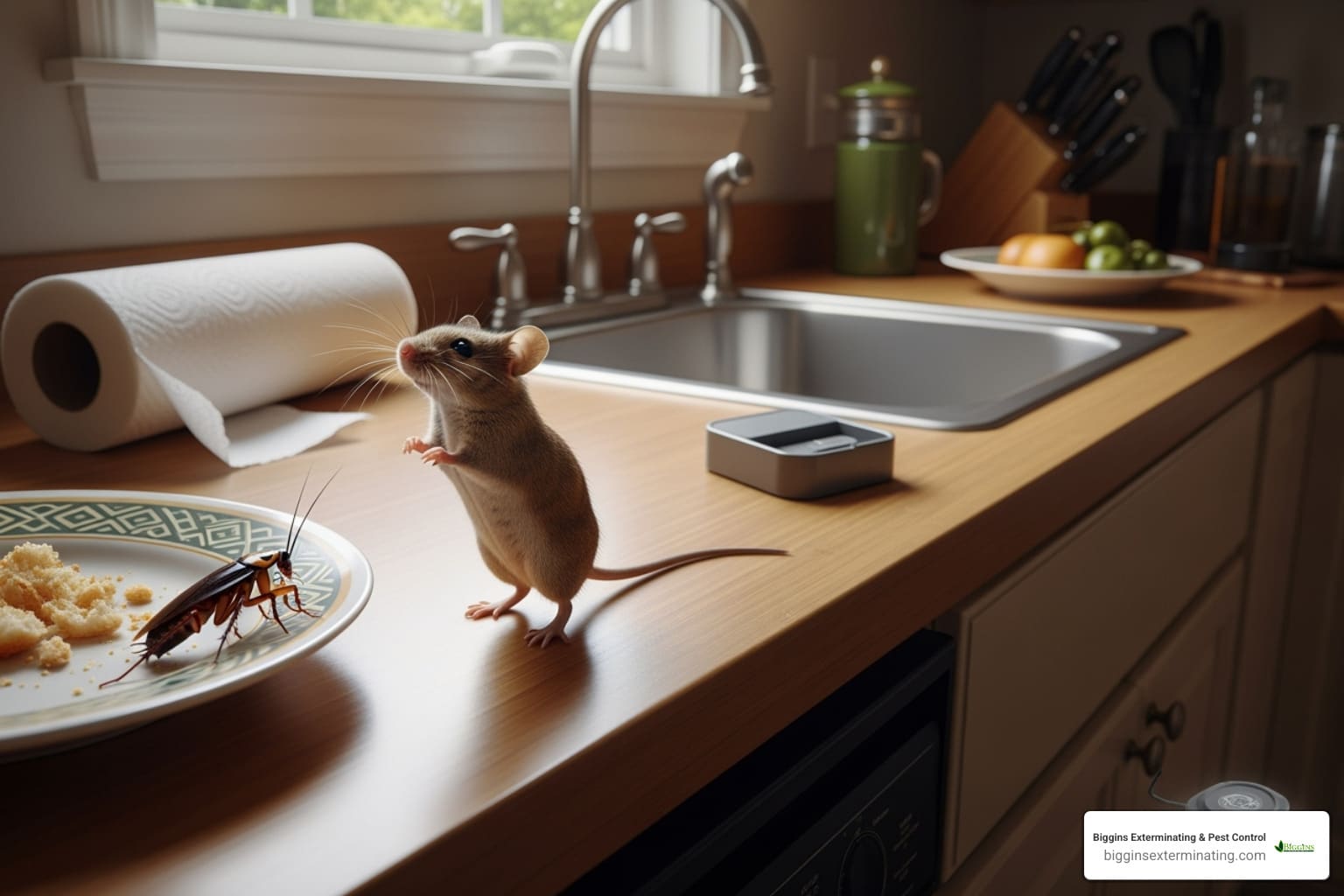
Why Hiring an Exterminator for Mice and Roaches is Essential for Massachusetts Homeowners
An exterminator for mice and roaches provides comprehensive pest control that addresses two of the most common household invaders simultaneously. Since these pests often share hiding spots and food sources, a coordinated treatment is far more effective than tackling each problem separately.
What a professional exterminator does:
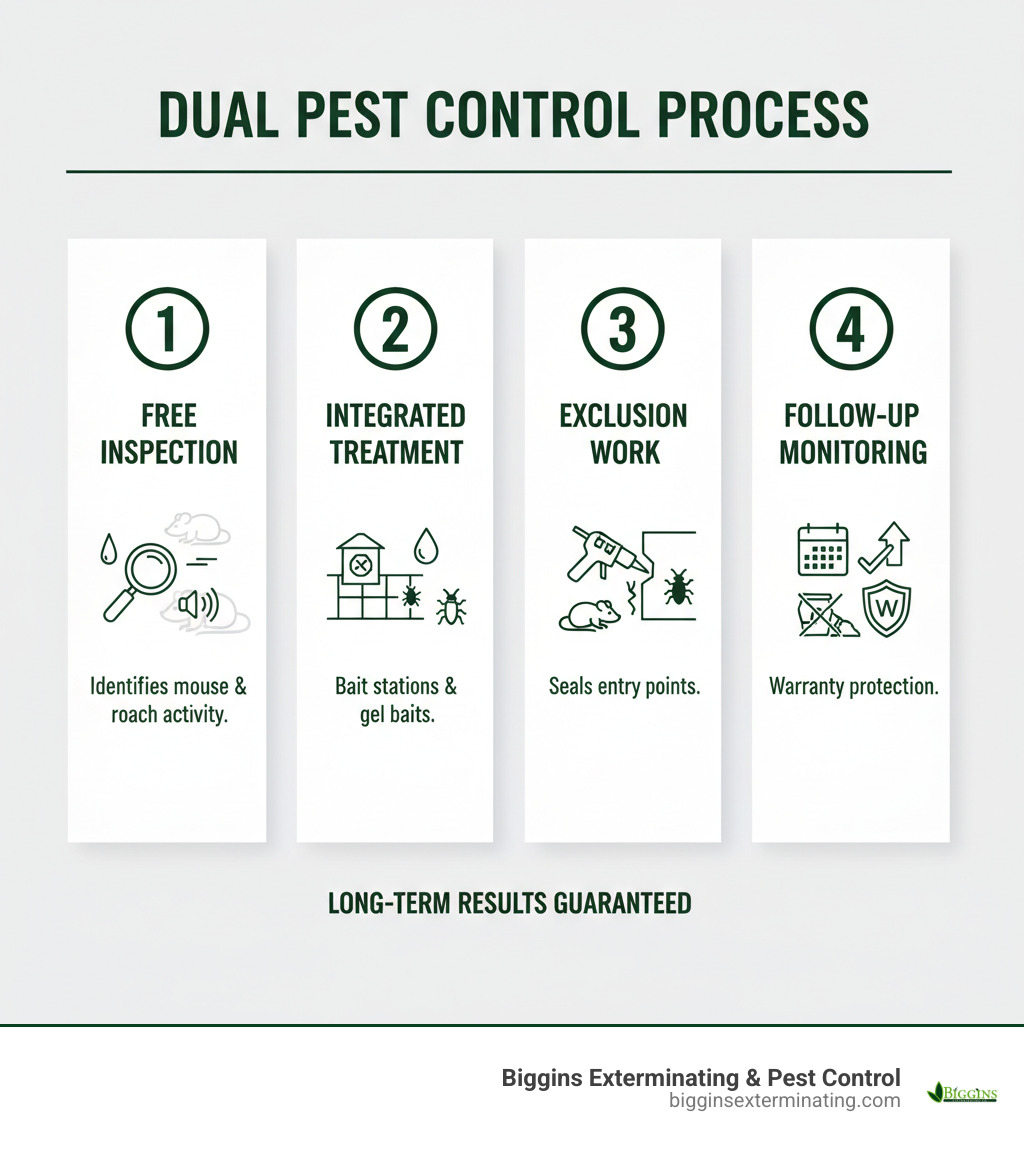
- Thorough Inspection: Identifies all signs of both pests, including droppings, gnaw marks, and entry points.
- Customized Treatment: Uses professional-grade baits, traps, and exclusion methods for both species.
- Strategic Placement: Deploys tamper-proof bait stations and gel baits in high-activity areas.
- Exclusion: Seals entry points to prevent re-entry.
- Follow-Up & Warranty: Monitors activity to ensure elimination and provides protection if pests return.
Spotting a single mouse or cockroach often indicates a much larger hidden population. Mice contaminate ten times the food they eat, while roaches spread pathogens like E. coli and Salmonella. As temperatures drop this winter, both pests are actively seeking the warmth and food your home provides.
I’m Stephen Biggins, and since taking over the family business in 1982, I’ve treated thousands of Massachusetts homes for these infestations. A qualified exterminator for mice and roaches doesn’t just eliminate visible pests—we find out why they’re there and how to keep them from coming back.
Similar topics to exterminator for mice and roaches:
The Unseen Invasion: Identifying a Dual Pest Problem
You flip on the kitchen light late at night and catch a blur of movement. Was it a mouse? A cockroach? Both? The truth is, these pests are masters of staying hidden, so by the time you spot one, a larger problem is likely lurking behind your walls or under appliances.
What should you look for when you suspect mice or roaches?
For mice, a musty, ammonia-like odor is often the first clue. Look for small, dark droppings shaped like rice grains near food or along baseboards. Other signs include gnaw marks on food boxes, furniture, or electrical wires (a serious fire hazard). At night, you might hear scratching sounds from walls or ceilings. Finding shredded paper or fabric in dark corners means you’ve found their nesting material.
Cockroaches leave different signs. Their droppings resemble coffee grounds or black pepper, often found in kitchen cabinets. Look for dark, irregular smear marks on walls in damp areas. As they grow, roaches shed their skins, leaving translucent casings behind. Finding their oval-shaped egg cases (oothecae) in cracks is a major concern. Roaches also produce a musty, oily odor. Seeing one during the day is a red flag for a severe infestation, as overcrowding has forced it out.
As winter settles in, both pests aggressively seek warm shelter. Your home, with its crumbs and warmth, is a five-star resort to them. Recognizing these signs early is key to reclaiming your space. For more on rodent signs, see our guide on How to Identify and Prevent Rodent Infestations in Massachusetts.
Common Culprits in Massachusetts Homes
Knowing which species you’re dealing with helps us target them effectively.
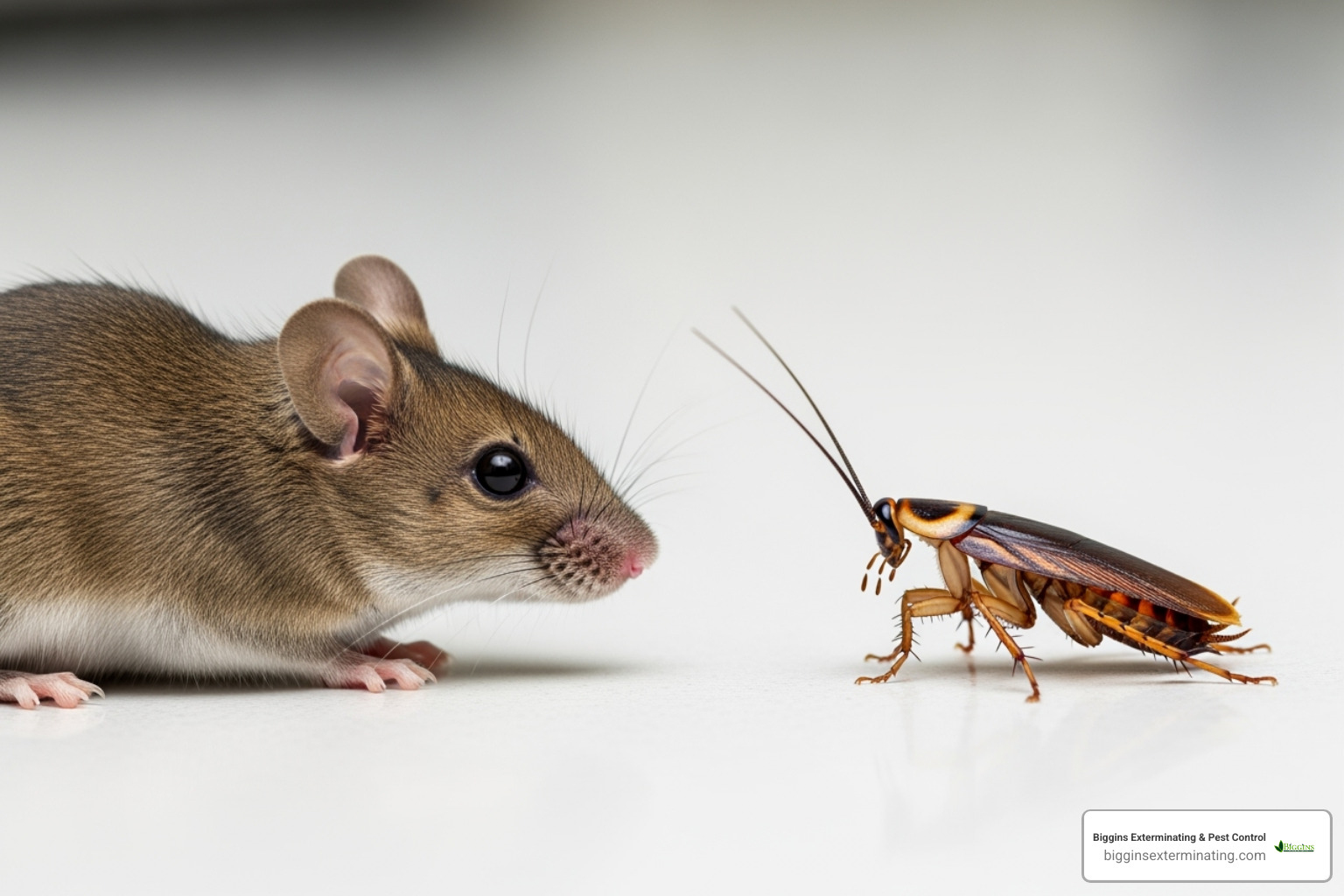
In rodents, the House Mouse is the most common intruder. They are small, gray or brown, and can squeeze through dime-sized openings. The Deer Mouse, slightly larger with a white belly, is also common and a primary carrier of Hantavirus. Our Pest Control Mice page has more on managing them.
For cockroaches, the German Cockroach is public enemy number one. These small, light brown insects reproduce rapidly and love warm, humid spots like kitchens and bathrooms. The larger, reddish-brown American Cockroach prefers basements and drains and can fly short distances. Learn more on our Pest Control For Cockroaches page.
Why “Just One” is Never Just One: Pest Reproduction
If you see one pest, do you need an exterminator? The answer is yes, and it comes down to how quickly they multiply.
Why does seeing just one pest mean there are likely many more?
A single female mouse can have 6-10 litters a year, with 5-6 babies each. Those babies mature in just six weeks and start breeding. One pregnant mouse in the fall can lead to dozens by winter. This exponential growth turns a small problem into a full-blown infestation quickly.
Cockroaches are just as prolific. A female German cockroach produces egg cases (oothecae) containing 30-48 eggs. She can produce several in her lifetime, and the babies mature fast. A few roaches can become hundreds within months.
This rapid breeding cycle is why a professional exterminator for mice and roaches is critical. DIY methods kill visible pests but don’t stop the hidden breeding population. We target the entire population to break the reproductive cycle. Our Rat Exterminating Complete Guide explains more about this comprehensive approach. The bottom line: if you’ve seen one, there are more.
More Than a Nuisance: The Dangers of Mice and Roaches
Finding a mouse or cockroach is more than just unpleasant—it’s a sign of genuine threats to your family’s health and your home’s structure. As these pests seek winter shelter, understanding the dangers they bring is essential.
Health Risks Hiding in Your Home
The biggest misconception is that these pests are merely gross. In reality, they are mobile disease carriers, spreading bacteria and allergens everywhere they go.

Cockroach allergens from shed body parts, saliva, and droppings become airborne and can trigger allergic reactions and asthma attacks, especially in children. If your family’s respiratory issues worsen in winter, roaches could be the hidden cause.
Mice contaminate about ten times more food than they eat through constant urination and droppings. They leave microscopic contamination on countertops, in cabinets, and on food packages.
The pathogen risk is significant. Cockroaches carry E. coli and Salmonella from garbage and sewers to your food prep surfaces. Mice carry even more severe threats, including Hantavirus. According to the CDC’s page on diseases spread by rodents, Hantavirus can be fatal. Other rodent-borne illnesses like Leptospirosis and LCMV are transmitted through infected droppings and urine.
These are real health threats that an exterminator for mice and roaches is trained to address. For more on these dangers, visit our page on the Top 5 Dangers of Rodents in and Around Your Home or Business.
The Cost of Destruction: Property Damage
Beyond health risks, mice and cockroaches wage a destructive campaign against your home, often in unseen places.

Mice chew on electrical wiring because their teeth never stop growing. This creates a serious fire hazard, especially in winter when electrical demand is high. They also tunnel through and contaminate insulation, reducing its effectiveness and driving up your heating bills. This often requires complete replacement.
Structural elements like wood beams, baseboards, and plastic pipes are also at risk. Mice will gnaw through weather stripping and foundation vents, letting cold air in.
Cockroaches leave their mark with dark, oily smear trails that can permanently stain walls and countertops. Both pests contaminate surfaces with waste, requiring extensive professional cleaning.
Appliances are not safe either. Cockroaches nest in refrigerators, dishwashers, and microwaves, damaging internal wiring. They also consume glue in book bindings, wallpaper paste, and fabric. The cost of this damage often far exceeds the cost of professional pest control. An exterminator for mice and roaches protects both your family’s health and your home’s value.
Choosing Your Battle: Why Professional Extermination is the Smart Choice for Mice and Roaches
Many homeowners want to tackle pest problems themselves, and the DIY spirit is understandable. However, after four decades in this business, I’ve learned that mice and cockroaches don’t play by the rules, and store-bought products are often no match for a real infestation.
When should I call a professional exterminator for mice and cockroaches?
The best time is as soon as you spot the first signs. Given how quickly these pests reproduce and the risks they pose, early professional intervention can prevent a manageable situation from becoming a nightmare. This is especially true in winter as pests seek warmth indoors. If you’re wondering Should I Call an Exterminator If I See a Mouse, the answer is almost always yes—that one mouse is never alone.
The Limits of DIY Pest Control
What is the difference between DIY pest control and professional extermination for mice and cockroaches?
The key differences are effectiveness, knowledge, and access to the right tools. DIY traps and baits might kill a few pests, but they rarely address the root cause of an infestation. The hidden breeding population continues to thrive behind walls and under floors.
Surface-level treatment simply doesn’t break the reproductive cycle. A cockroach egg case will hatch regardless of whether you sprayed the counter, and a snap trap in the basement won’t reach mice nesting in the attic.
Safety is another major concern. Improper application of pesticides can expose your family and pets to risks. Misidentifying the pest species can also lead to wasted effort and continued infestation. While DIY methods seem cheaper, repeated purchases add up, and the property damage that occurs in the meantime can cost thousands.
Why a Professional Exterminator for Mice and Roaches is Often Necessary
Professional extermination is different because we use Integrated Pest Management (IPM). We’re not just killing pests; we’re solving the problem that brought them to your home.
Our inspection is a root cause analysis. We find out why pests are there, where they’re entering, and what’s attracting them. This is something a can of spray can’t do. We identify gaps around utility lines, moisture problems under sinks, and unsealed foundation cracks.
Our strategic treatment uses professional-grade products unavailable to consumers. For cockroaches, we use specialized gel baits and Insect Growth Regulators (IGRs) to disrupt their life cycle. For mice, we use tamper-proof bait stations. Crucially, we also perform exclusion work—physically sealing entry points to prevent new pests from entering.
We follow strict safety protocols to protect your family and pets. Our technicians are trained, certified, and can offer humane options. Most importantly, we stand behind our work with guaranteed results. At Biggins Exterminating, we’ve served Massachusetts for over 40 years without requiring binding contracts. If pests return, so do we. This accountability is why we’re recognized as The Top Pest Control Company in Massachusetts A Comprehensive Guide to Mice Eradication.
When you hire an exterminator for mice and roaches, you’re investing in knowledge, experience, and long-term solutions that protect your home and family.
The Professional Approach to a Pest-Free Home
When you hire a professional exterminator for mice and roaches, you’re partnering with experts who follow a methodical process to eliminate the current infestation and prevent future ones. It’s like visiting a doctor: we diagnose the problem before prescribing a solution.
What to Expect from a Professional Exterminator for Mice and Roaches
From your first call, our focus is on delivering lasting results. Here’s our process.
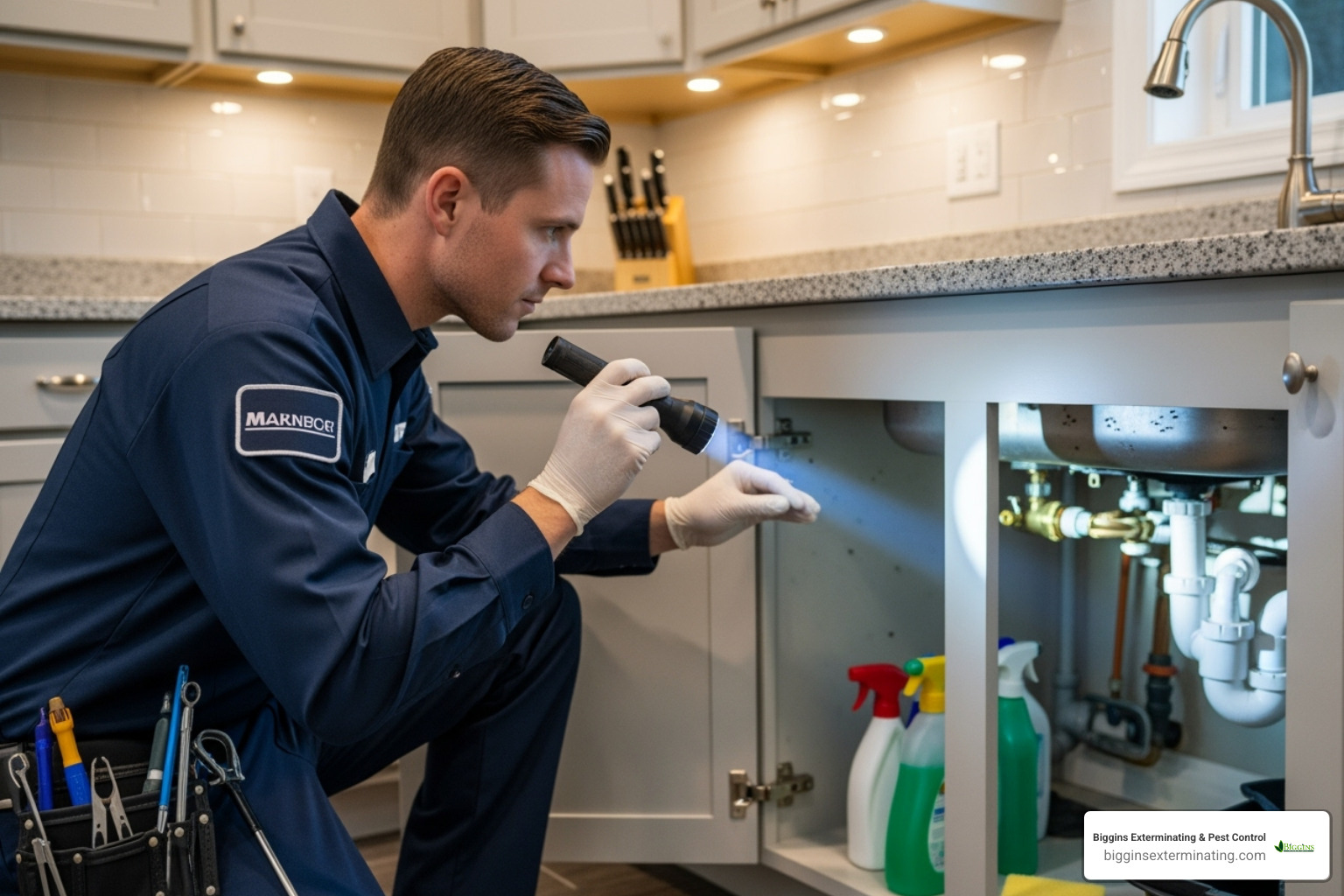
1. Inspection: Our technician conducts a thorough examination of your property, inside and out. We look for droppings, gnaw marks, and smear marks, but more importantly, we identify how pests are getting in and where they’re hiding. We check basements, attics, crawl spaces, and behind appliances to locate entry points and nests.
2. Customized Treatment Plan: Every home is different, so every plan is unique. For mice, we place tamper-proof bait stations along their travel routes. These are safe for children and pets but effective against rodents. For cockroaches, we apply highly attractive gel baits in cracks and crevices. Roaches carry the bait back to their nests, eliminating the entire colony. We may also use Insect Growth Regulators (IGRs) to disrupt the roach life cycle and prevent reproduction.
3. Exclusion Work: This is what truly sets professionals apart. We don’t just eliminate existing pests; we keep new ones out. We seal cracks, gaps, and holes around your foundation, pipes, and vents using materials like steel wool and caulk. This step is vital for long-term success.
4. Humane Options & Follow-Up: We understand and respect clients who prefer humane options for mice and can discuss alternatives like live trapping. Our Humane Rat Extermination Complete Guide offers more details. We also schedule follow-up visits to monitor the treatment, re-apply products if needed, and ensure the infestation is completely gone. Our comprehensive Rodent Control Services Keeping Your Home Critter-Free reflect this commitment.
Understanding the Cost of Extermination
What does professional pest control cost? The honest answer is that it varies based on several factors.
- Severity of Infestation: A small, recent problem is less expensive to solve than a large, established one.
- Property Size: A large home requires more time and materials than a small apartment.
- Treatment Type: The complexity of the solution, from simple baiting to intensive exclusion work, affects the price.
- Number of Visits: Some issues require a single treatment with follow-ups, while severe problems may need a series of visits.
Based on average internet data, professional extermination for mice and cockroaches typically ranges from $200 to $1500 or more, with complex situations sometimes exceeding this. These are average costs based on internet data and not actual costs for Biggins Exterminating services. An accurate quote requires an on-site inspection.
At Biggins Exterminating, we believe in value and transparency. We don’t use long-term contracts and we warranty our work. While some may search for a Cheap Mouse Exterminator, we find that effective, lasting solutions save money in the long run by preventing recurring problems and costly property damage.
Keeping Them Out for Good: Prevention and Cleanup
Eliminating an infestation is a huge relief, but the job isn’t done. The real victory is ensuring pests never return. As winter pushes more pests indoors, solid prevention and cleanup are your best defense.
Long-Term Prevention Strategies
How can I prevent mice and cockroaches from entering my home?
Make your home as uninviting as possible by removing their access to food, water, and shelter.
- Seal Entry Points: This is your first line of defense. Use caulk to seal small cracks around pipes and in the foundation. For larger holes, stuff them with steel wool (which mice can’t chew) and then seal. Install door sweeps and repair damaged window screens.
- Secure Food Storage: Store all dry goods, including pet food, in airtight hard plastic or glass containers. Clean up crumbs and spills immediately, and don’t leave pet food out overnight. Use trash cans with tight-fitting lids.
- Eliminate Water Sources: Fix leaky faucets and pipes. Wipe down sinks and don’t leave standing water out. Ensure bathrooms and kitchens are well-ventilated to reduce humidity, which attracts roaches.
- Declutter Your Home: Piles of boxes, newspapers, and clothing provide perfect hiding spots. Clear out basements, attics, and storage areas. Keep outdoor woodpiles away from your foundation.
- Maintain a Clean Home: Vacuum and sweep regularly, especially in the kitchen. Occasionally clean behind and under appliances. For more tips, see our guides on Winter Mouse Prevention 101 Expert Tips from Exterminators and How to Get Rid of House Mice.
Best Practices for Post-Infestation Cleanup
What are the best practices for cleaning up after a mouse or cockroach infestation?
After your exterminator for mice and roaches has finished, proper cleanup is essential to remove lingering pathogens.
- Prioritize Safety: Wear disposable gloves, a respirator or N95 mask, and safety glasses. Rodent droppings can carry airborne viruses.
- Ventilate First: Open windows and doors for at least 30 minutes before you begin cleaning to disperse airborne particles.
- Don’t Sweep or Vacuum Dry Droppings: This is critical. Instead, spray droppings with a disinfectant solution (one part bleach to ten parts water) and let it sit for five minutes.
- Properly Dispose of Waste: Use paper towels to pick up the dampened droppings and nesting materials. Double-bag the waste in plastic bags before throwing it in an outdoor trash can.
- Disinfect All Surfaces: Wipe down countertops, cabinets, floors, and any other contaminated surfaces with your disinfectant. Wash affected fabrics in hot water.
- Use a HEPA Vacuum: After disinfecting, use a vacuum with a HEPA filter to trap tiny particles that regular vacuums would recirculate.
- Discard Contaminated Food: Throw away any food or packaging that pests may have touched.
For significant infestations, professional cleanup is the safest and most thorough option.
Your Local Solution for Mice and Roach Control
When protecting your home from the dual threat of mice and cockroaches, especially as colder months drive them indoors, a reliable exterminator for mice and roaches is essential. A true professional does more than eliminate visible pests; they identify the root cause and implement strategies to keep them from returning.
For over 40 years, Biggins Exterminating & Pest Control has helped families throughout the Wilmington, MA area. As a family-owned business, we treat every property with the care we’d give our own. We proudly serve Andover, Bedford, Billerica, Burlington, Lexington, North Reading, Tewksbury, Wilmington, and Woburn, MA.
What sets us apart is our straightforward service without binding contracts. We warranty our work because we stand behind our results. If pests return, so do we.
If you’ve seen signs of mice or cockroaches, don’t wait for the problem to multiply. A minor issue can become a major infestation in weeks. The sooner you act, the easier and more affordable the solution.
Ready to reclaim your home? We’re here to help. Contact us today for a free inspection! Let’s work together to keep your home safe, healthy, and pest-free.