Why Wood Destroying Termites Wilmington MA Homeowners Should Act Fast
wood destroying termites Wilmington MA homes face are almost always Eastern Subterranean Termites — and they are far more dangerous than most people realize.
Here’s a quick summary of what you need to know:
- Most common species: Eastern Subterranean Termite (Reticulitermes flavipes)
- Key warning signs: Mud tubes on foundation walls, hollow-sounding wood, discarded wings near windows
- Peak activity: April through May (swarming season)
- Colony size: Up to 500,000 workers actively feeding on your home’s structure
- Average treatment cost: $300–$5,000+ depending on severity and home size (based on publicly available internet data, not Biggins Exterminating pricing)
- Best treatment: Non-repellant liquid soil barrier applied by a licensed professional
These insects work silently. They live underground and tunnel up into your home’s wooden framing, sills, and supports — often for years before you notice anything is wrong. By the time most Wilmington homeowners spot the signs, the structural damage is already done. Repair costs can far exceed what professional treatment would have cost early on.
I’m Stephen Biggins, owner of Biggins Exterminating Co., a family-owned Massachusetts pest control company serving Wilmington and surrounding communities for over 40 years — and wood destroying termites Wilmington MA properties face are one of the most underestimated threats I see season after season. In this guide, I’ll walk you through exactly how to identify them, what damage to expect, and how to stop them for good.
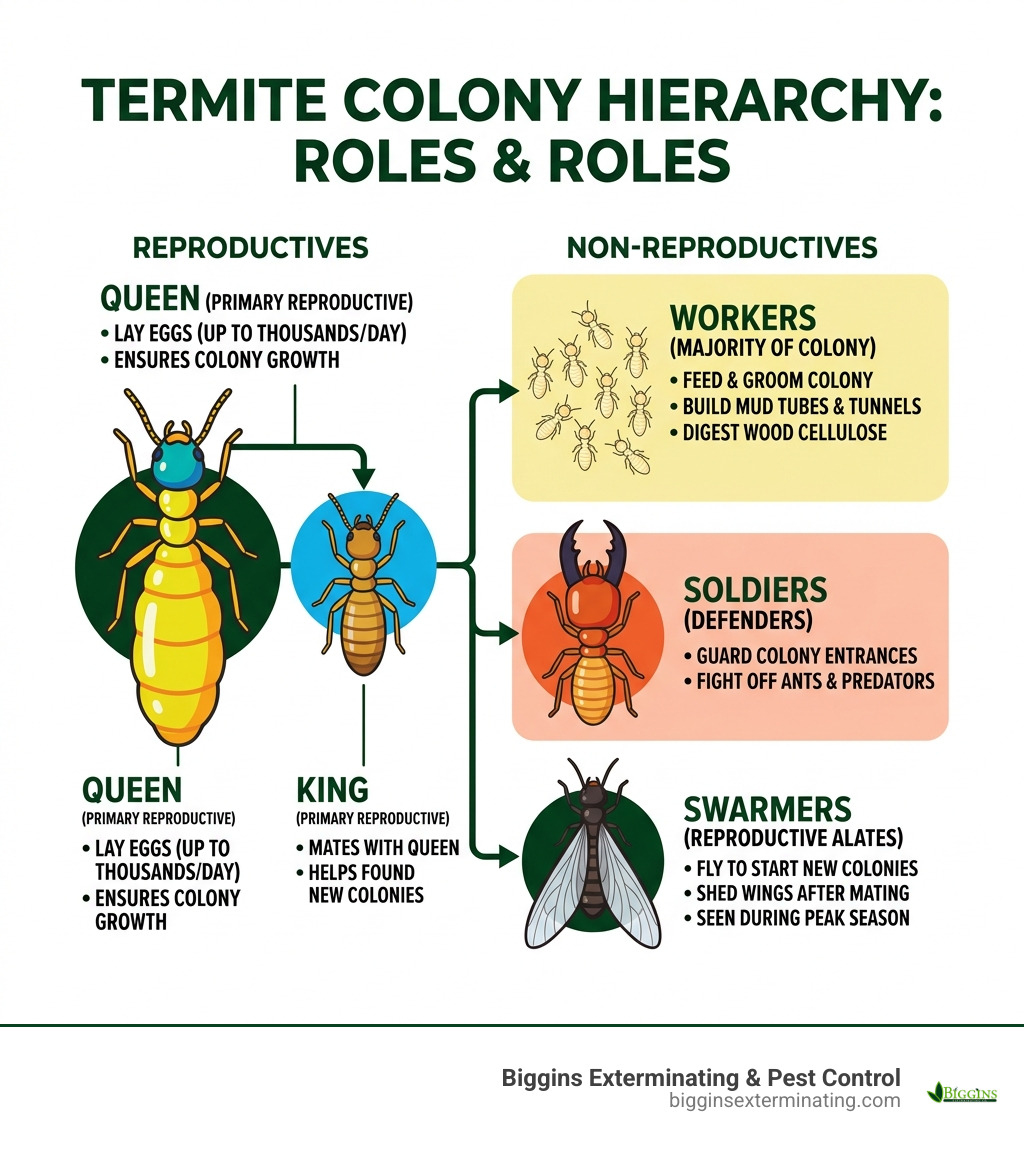
Quick look at wood destroying termites Wilmington MA:
Identifying Wood Destroying Termites Wilmington MA
Identifying an infestation early is the difference between a simple maintenance fix and a structural nightmare. Because Eastern Subterranean termites live in the soil, they don’t just walk across your kitchen floor like ants. They are biological “vampires” of the wood world—they hate the light and need constant moisture to survive.
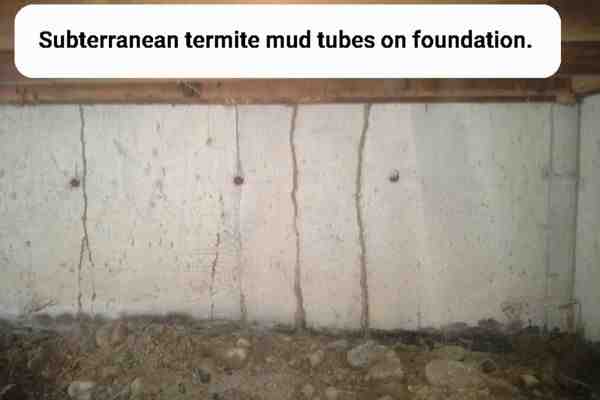
One of the most definitive signs of termites is the presence of mud tubes. These are pencil-width tunnels made of soil, saliva, and waste that termites build to travel from the ground into your home. You will typically find these on concrete foundation walls, in crawl spaces, or along floor joists.
Another red flag is wood that looks perfectly fine on the outside but is hollow on the inside. If you tap on a windowsill or a baseboard and it sounds like a drum, or if your screwdriver easily pokes through the wood grain, you likely have a wood-destroying infestation. To learn more about the specifics of detection, check out our guides on how do you know if you have termites and how to tell if you have termites.
Spotting Wood Destroying Termites Wilmington MA Swarmers
In the spring, usually around April or May, established colonies produce “swarmers.” These are winged reproductive termites whose only job is to fly out, find a mate, and start a new colony. Many homeowners mistake these for flying ants, but the differences are critical.
When looking at a swarmer, check the waist and the wings. Termites have a thick, one-piece body, while ants have a pinched “wasp” waist. Termite wings are also all the same size and will easily break off, leaving piles of discarded wings on your windowsills or near doorways. Because this is so commonly confused, we’ve put together a resource on the 5 key differences between carpenter ants and termites and a guide on how to distinguish carpenter ants from termites to help you identify the menace correctly.
Common Entry Points in Local Residences
Termites are opportunistic. Any point where wood meets the soil is essentially a highway for wood destroying termites Wilmington MA. This includes wooden porch steps, deck posts that aren’t set in concrete, and even mulch that is piled too high against the siding.
Subterranean termites can also enter through cracks in your foundation as small as 1/32nd of an inch. They will follow plumbing lines and electrical conduits through the slab to reach the delicious cellulose in your walls. Once they find a way in, they build those tell-tale termite mud tunnels to keep themselves hydrated while they feast.
The Spring Swarming Season in Wilmington
In the Middlesex County area, the spring swarming season is the one time these silent destroyers become visible. As the ground warms up after a long Massachusetts winter, the humidity levels rise, triggering the colony to release its winged royalty.
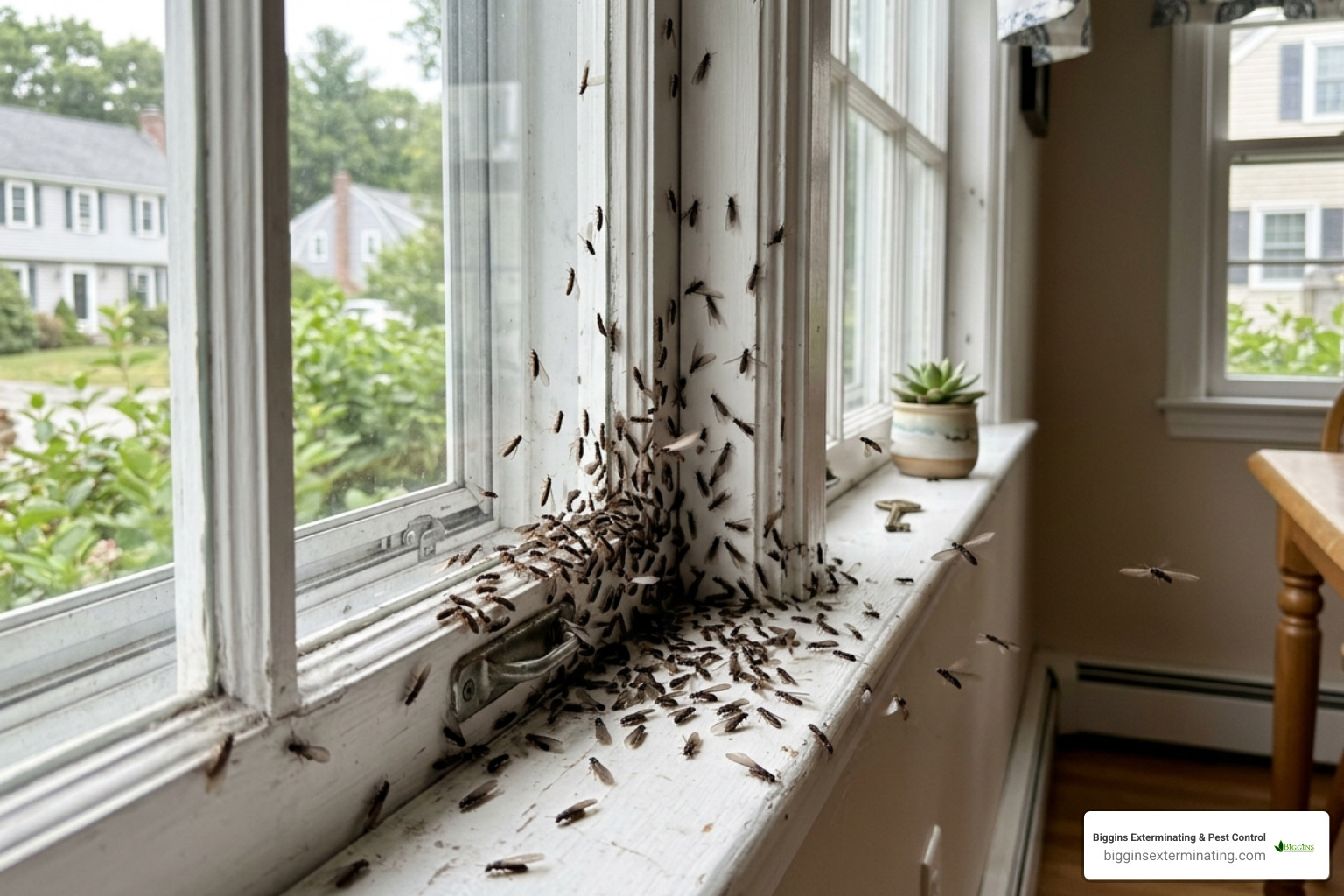
This usually happens on a warm, humid day following a rainstorm. If you see hundreds of small, dark insects fluttering toward your windows inside your home, it is a sign that there is an active colony either inside your walls or very close to your foundation. For a deeper dive into these behaviors, see our subterranean termite ultimate guide or read up on termite prevention to prepare for next season. You can also review local termite activity data to understand the scope of the problem in Massachusetts.
Environmental Triggers for New England Colonies
Our local climate is a double-edged sword. While the cold winters might seem like they would kill off pests, subterranean termites simply retreat deeper into the soil below the frost line. In fact, the warm, moist summers in Wilmington provide the perfect “feeding frenzy” environment.
Many colonies in our area are decades old. A mature queen can live up to 25 years, pumping out thousands of workers who never sleep and never stop eating. Don’t let termites take a bite out of your local property by ignoring the environmental signs of an impending swarm.
Structural Damage and the Cost of Neglect
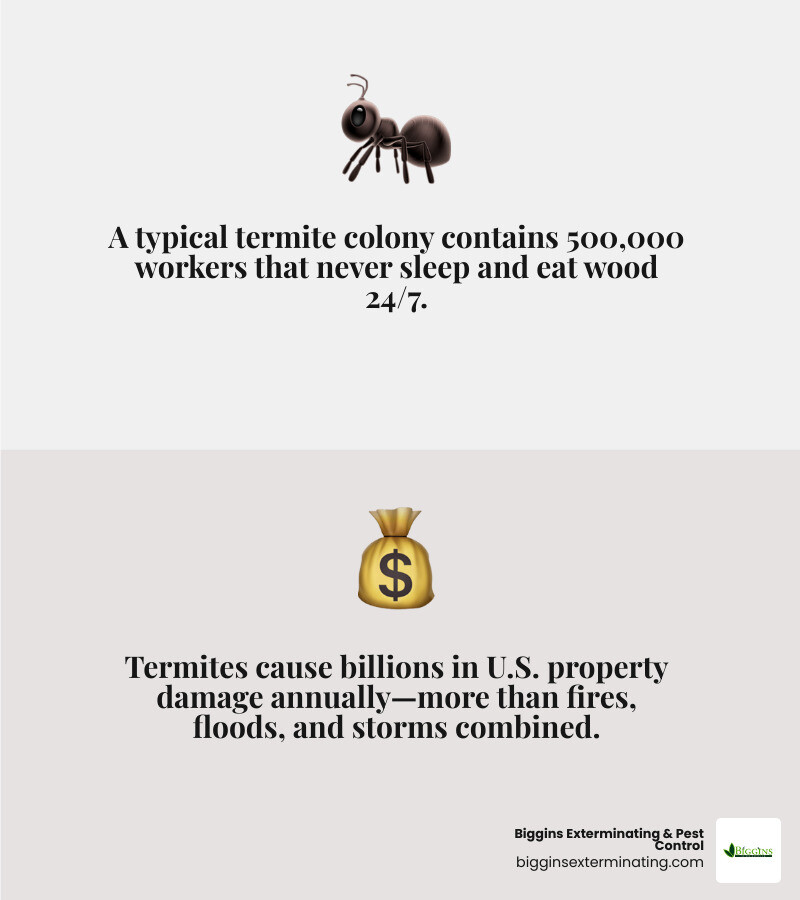
The math on termite damage is sobering. A typical colony can consist of 500,000 workers. While one termite doesn’t eat much, half a million of them working 24/7 can replace over 100,000 workers every year, ensuring the destruction continues unabated. Nationwide, termites cause billions of dollars in damage annually—more than fires, floods, and storms combined.
If you ignore the signs of termite damage, the costs escalate quickly. Based on local data, here is a general breakdown of what you might expect regarding termite treatment cost:
| Service Type | Estimated Cost Range (Public Data) |
|---|---|
| Professional Inspection | $100 – $300 |
| Localized Liquid Treatment | $300 – $800 |
| Full Perimeter Barrier | $1,200 – $3,500 |
| Severe Infestation / Tenting | $5,000+ |
| Structural Wood Repair | $2,000 – $25,000+ |
Note: These are average costs based on publicly available internet data and do not reflect Biggins Exterminating’s actual pricing.
Protecting Home Value in Middlesex County
A termite infestation is a major disclosure item when selling a home. If you live in Billerica, Lexington, or Wilmington, property values are high, and a “termite-eaten” reputation can lead to massive depreciation.
Hidden infestations in sills and floor joists often go undetected during a standard home walk-through, but they will be found during a professional inspection. We recommend reading the best termite exterminators in Billerica MA: a homeowners guide and our notes on termite control North Andover to understand how to keep your property value intact.
Professional Treatment and Elimination Methods
When it comes to wood destroying termites Wilmington MA, DIY “hardware store” solutions almost always fail. They might kill a few hundred termites on contact, but they do nothing to stop the 499,000 others living ten feet underground.
Professional exterminators for termites use specialized equipment to reach the heart of the colony. At Biggins Exterminating, we focus on termites pest control that actually works. Our process involves a thorough inspection to locate the colony and the application of professional-grade products that the termites cannot detect. You can learn how to get rid of termites permanently by using these advanced methods, which adhere to the highest professional termite control standards.
Why Experts Target Wood Destroying Termites Wilmington MA with Liquid Barriers
We often get asked why we recommend liquid barriers over bait stations. The answer is simple: results. Liquid soil treatments create a continuous “curtain” of protection around your foundation. We use non-repellant termiticides, meaning the termites don’t even know it’s there.
As they tunnel through the treated soil, they pick up the active agent and bring it back to the nest. Through their natural grooming and feeding habits, they spread the agent to the entire colony, including the queen. This typically results in total colony elimination within 30 to 90 days. This termite barrier treatment is the gold standard in the subterranean termite control complete guide.
The Role of Wood Destroying Insect Reports (WDIR)
If you are buying or selling a home, or even just refinancing, you will likely need a Wood Destroying Insect Report (WDIR). This is a legal document required for most VA and FHA loans. It certifies that the home has been inspected for termites, carpenter ants, and powder post beetles.
We provide comprehensive termite inspection services for these purposes. If you suspect you have an issue but aren’t sure, we even offer a free termite inspection to give you peace of mind before you list your home.
Frequently Asked Questions
How much does termite treatment cost in Wilmington, MA?
Based on publicly available internet data for 2026, the average cost for termite treatment in Wilmington typically ranges from $300 to $450 for basic applications. However, severe infestations requiring extensive barriers or full tenting can range from $1,500 to $5,000 depending on the home’s square footage and the complexity of the structure. Always get a professional assessment to determine the actual needs of your specific property.
How long does it take to eliminate a termite colony?
Professional liquid soil treatments typically eliminate an entire subterranean colony, including the queen, within approximately 30 to 90 days. This timeline is due to the “transfer effect,” where termites unknowingly carry the treatment back to the nest. While the termites die off relatively quickly, the long-term barrier remains in the soil to prevent new colonies from moving into the area for years to come.
How can I prevent future termite infestations?
The best way to how to prevent termites is to manage moisture and wood contact. Ensure your gutters drain at least five feet away from the foundation. Maintain a 6-inch gap between the soil and your home’s siding. Finally, remove rotted tree stumps, old mulch, and firewood piles from the immediate perimeter of your home, as these are primary attractants for subterranean colonies.
Conclusion
At Biggins Exterminating & Pest Control, we understand that your home is your most valuable asset. As a family-owned company with over 40 years of experience, we’ve seen how wood destroying termites Wilmington MA can devastate a household. We are proud to serve our neighbors in Wilmington, Tewksbury, Billerica, Burlington, Lexington, North Reading, Andover, Woburn, and Bedford.
We believe in high-quality, reliable service without the need for high-pressure contracts. Our goal is simple: eliminate the pests and ensure your satisfaction. Protect your Wilmington home from wood destroying termites today by reaching out for an expert evaluation. Let our family protect yours.