Why Carpenter Ant Control Haverhill Homeowners Need Is More Urgent Than You Think
Carpenter ant control Haverhill homeowners need starts with knowing what you’re dealing with — and acting before serious damage is done. Here’s a quick summary:
Quick Answer: How to Control Carpenter Ants in Haverhill
- Identify the ant — Large black ants (1/4 to 3/4 inch) with segmented bodies and elbowed antennae
- Look for signs — Sawdust-like frass, rustling sounds in walls, or winged ants indoors
- Find moisture problems — Carpenter ants target wet or rotting wood first
- Act before May 20th — Colonies near your home can re-infest after mid-May
- Call a professional — Colony elimination requires treating hidden wall voids, not just visible ants
Carpenter ants are the number one wood-destroying pest in New England. Unlike termites, they don’t eat wood — they tunnel through it to build nests. And they’re patient. A mature colony can take three or more years to develop, quietly hollowing out the framing, beams, and window sills of your Haverhill home before you ever notice a problem.
What makes Haverhill especially vulnerable is its geography. Situated along the Merrimack River, the city’s older homes, high humidity, and proximity to wooded areas create ideal conditions for carpenter ants to thrive year after year.
The damage they cause isn’t just cosmetic. Left untreated, carpenter ant colonies can compromise the structural integrity of your home — leading to repair bills that far outpace the cost of prevention.
I’m Stephen Biggins, owner of Biggins Exterminating & Pest Control. Biggins Exterminating Co. is a local, family-owned and operated Massachusetts pest control company with over 40 years of trusted, high-quality service. While we are based in Wilmington, we provide the carpenter ant control Haverhill-area homeowners and residents in nearby Andover and North Reading need every single spring.
Identifying the Threat: Carpenter Ants in Haverhill
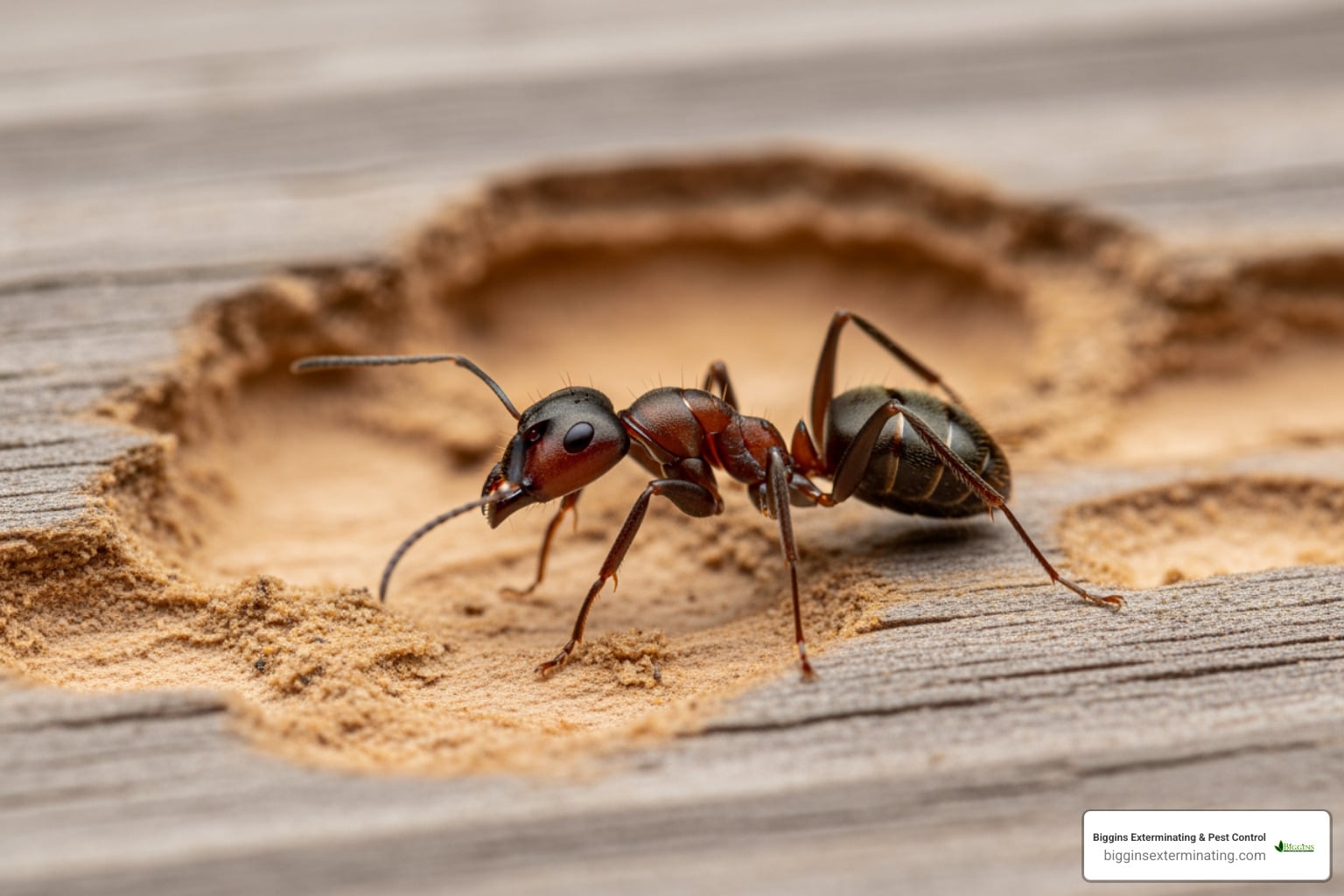
Identifying these pests is the first step toward protecting your home. In Haverhill, we primarily deal with the Black Carpenter Ant (Camponotus pennsylvanicus). These are among the largest ants you’ll ever see in Massachusetts. Workers typically range from 1/4 to 1/2 inch in length, while the queen can reach nearly an inch.
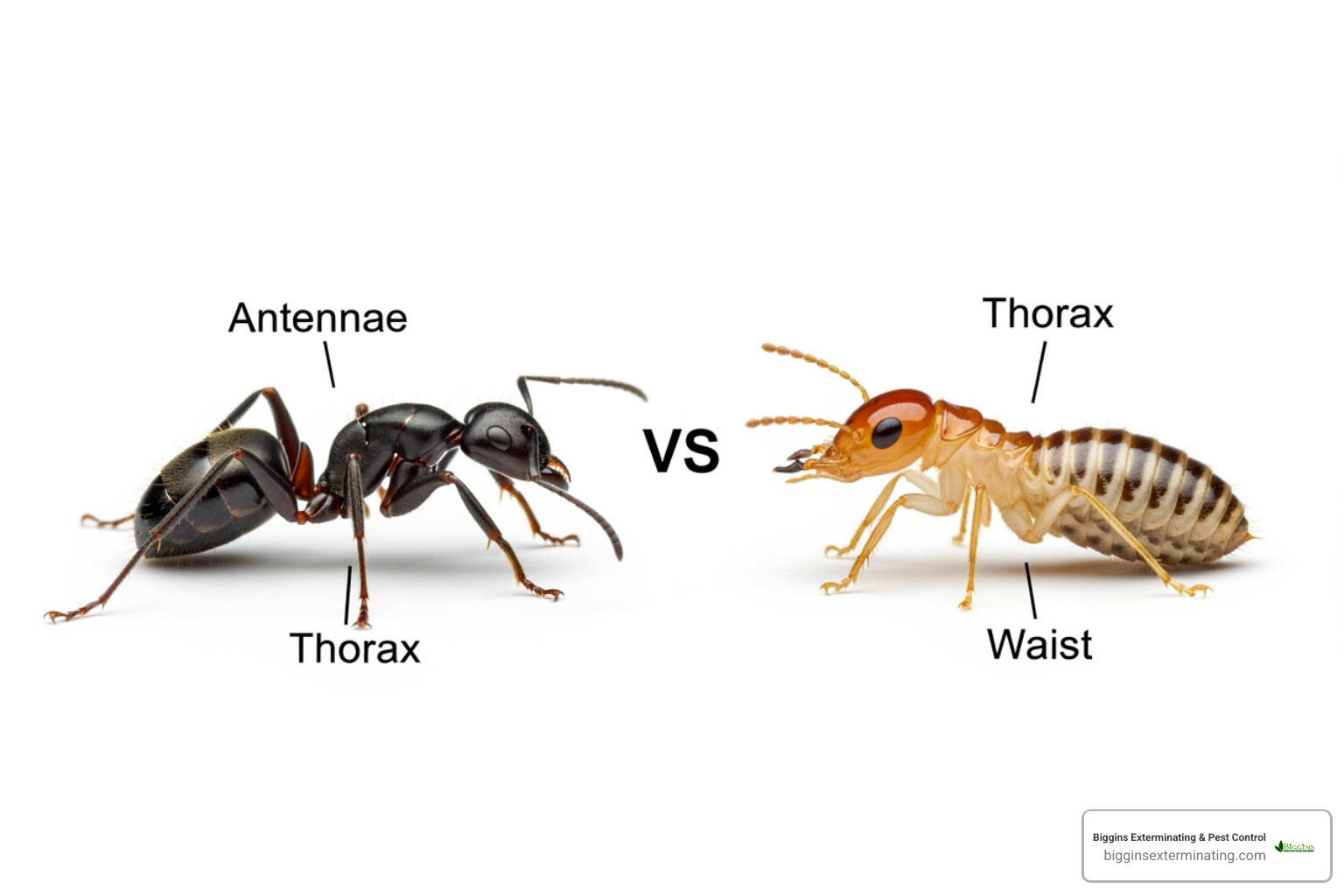
To the untrained eye, any large ant might look like a “carpenter ant,” but there are specific anatomical features to look for. They have a single node (hump) between their thorax and abdomen, a perfectly rounded thorax when viewed from the side, and elbowed antennae. If you aren’t sure what’s crawling on your counter, it helps to how to distinguish carpenter ants from termites because the treatment protocols are entirely different.
One question we get every spring is, “do carpenter ants have wings?” The answer is yes—but only the “reproductives.” These winged ants, or swarmers, are the future kings and queens sent out to start new colonies. If you see them inside your house, it’s a major red flag that a mature nest is already living in your walls.
Common Indicators for Carpenter Ant Control Haverhill
Since these ants are nocturnal and spend most of their time inside wood, you have to be a bit of a detective to find them. Here are the most common signs:
- Frass Piles: This is the “sawdust” they kick out of their tunnels. Unlike termite debris, carpenter ant frass contains bits of dead insects and looks like wood shavings.
- Rustling Sounds: In a quiet room, you can actually hear a large colony. It sounds like crinkling cellophane or dry leaves rustling inside the wall voids.
- Winged Swarmers: Seeing large winged ants trapped in window tracks is a classic sign of an indoor nest.
- Foraging Trails: Look for ants moving along foundation lines or “sky-bridging” from tree branches onto your roof at night.
If you see these signs, don’t panic, but don’t wait. You can find carpenter ant nest locations by following workers at night or checking moisture-prone areas. And if you’re worried about safety, you should know that while they have strong mandibles, the answer to “do carpenter ants bite” is that they rarely bite humans unless handled, though they can spray formic acid into a pinch.
Distinguishing Satellite Colonies from Parent Nests
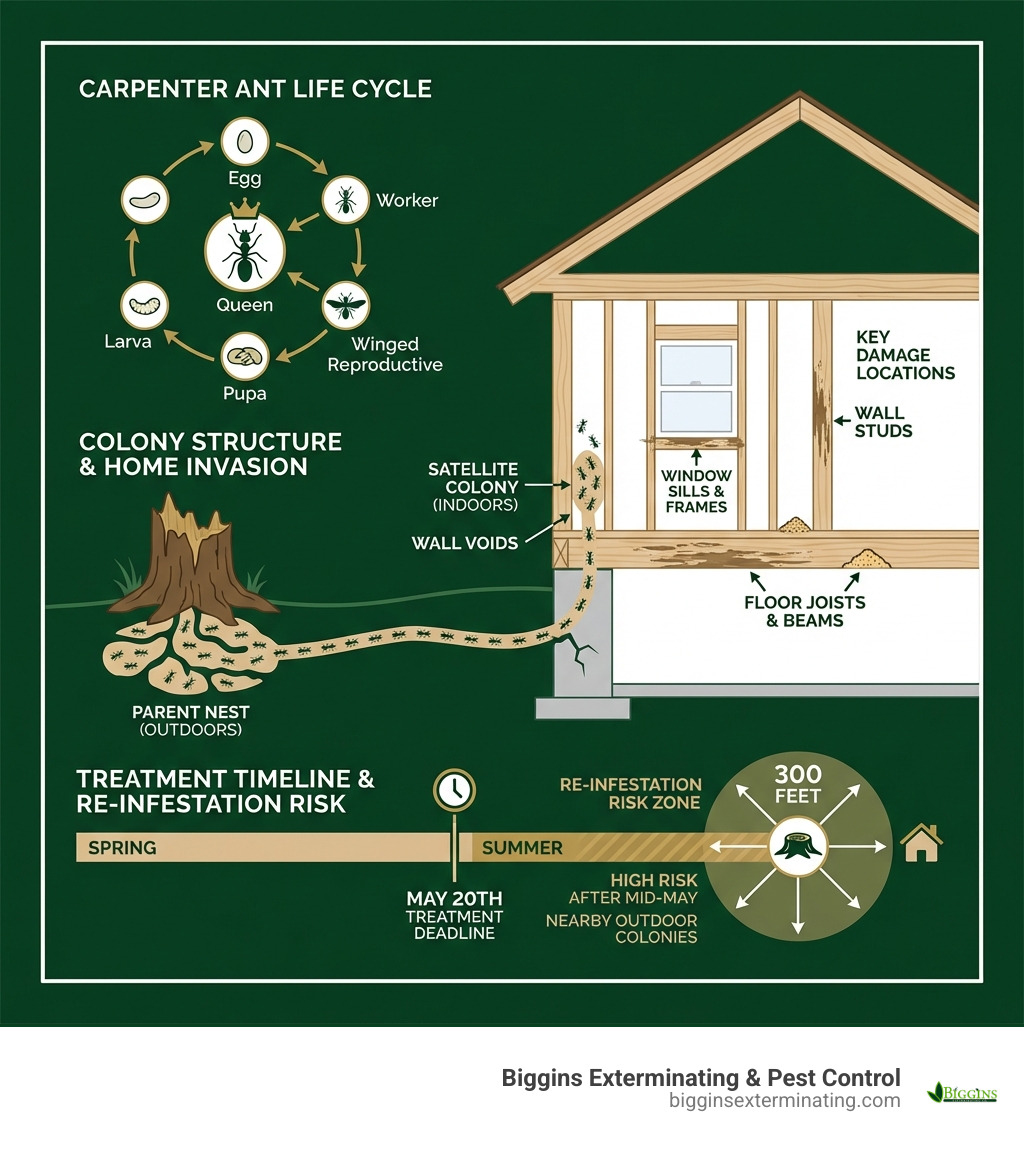
Understanding colony structure is vital for carpenter ant control Haverhill success. The “Parent Nest” is usually located outdoors in a rotting tree, stump, or woodpile. This is where the queen lives and the eggs are laid.
However, carpenter ants often establish “Satellite Colonies” inside homes. These satellite nests don’t require the high moisture levels the queen needs; they just need a safe place to house larvae and workers. If you are seeing a carpenter ant infestation in house structures, you are likely dealing with a satellite colony that is maintaining a “highway” back to an outdoor parent nest.
Why Carpenter Ant Control Haverhill is Essential for Your Home
The reason we take these ants so seriously is the structural damage they cause. Termites eat wood for nutrition, but carpenter ants excavate it for housing. They carve out smooth, clean “galleries” that look like they’ve been finished with sandpaper.
| Feature | Carpenter Ant Damage | Termite Damage |
|---|---|---|
| Wood Consumption | None (excavation only) | Consume wood for food |
| Gallery Appearance | Clean, smooth, sandpapered | Rough, filled with mud/debris |
| Presence of Soil | No soil in tunnels | Mud tubes and soil present |
| Debris | Sawdust-like frass | Tiny fecal pellets (drywood) or none |
Because they prefer wood with a moisture content of 15% or higher, they often target critical areas like sill plates, floor joists, and headers above windows. In the Merrimack Valley, we use EPA-approved materials for pest management to ensure we stop this damage without compromising the safety of your family or pets.
The Cost of Neglect in Essex County
Ignoring a few ants in the kitchen can be a costly mistake. In New England, carpenter ants cause more structural damage than termites on average because they are so much more prevalent. Hidden tunnels can weaken support beams over several years, leading to sagging floors or windows that no longer open correctly.
Investing in more info about carpenter ant services now can save you thousands in structural repairs later. In many cases, homeowners don’t realize they have a problem until they go to sell their house and a home inspector finds the “frass” in the crawlspace.
Local Factors Attracting Ants to Haverhill Properties
Haverhill’s history and environment make it a “hot zone” for these pests. The Merrimack River keeps local humidity high, which softens wood and attracts queens looking to start a nest. Additionally, Haverhill’s industrial past means many neighborhoods have older homes with aging wood and established landscaping.
Trees with branches touching the roof act as bridges, allowing ants to bypass your foundation treatments. If you want to dive deeper into the “how” and “why,” check out our exterminate carpenter ants ultimate guide.
Professional Strategies for Carpenter Ant Control Haverhill
DIY ant control usually involves “over-the-counter” sprays that only kill the ants you see. This is a mistake. When you spray a repellent, you often “split” the colony, causing them to move deeper into the walls.
Our professional pest control for carpenter ants focuses on colony elimination. We use non-repellent residuals that ants can’t detect. They walk through the treatment, pick it up on their bodies, and share it with the rest of the colony through a process called trophallaxis (food sharing). We also utilize carpenter ant baits complete guide strategies to ensure the bait reaches the heart of the nest.
The Importance of Timing in Carpenter Ant Control Haverhill
Timing is everything in Massachusetts. There is a critical “May 20th deadline” that we often discuss with our customers. Research shows that homes within 300 feet of an outdoor colony are at high risk of re-infestation every year.
If you don’t have a preventative barrier in place before mid-May, scout ants from nearby trees will likely find their way back into your wall voids to relocate larvae for the summer. For more on the science behind this, you can read the scientific research on New England carpenter ant biology.
Comprehensive Treatment Plans for Massachusetts Homeowners
A truly effective plan for best exterminator for carpenter ants results involves a two-pronged attack:
- Interior Voids: We use specialized tools like the Micro Injector to project treatment into the hollow spaces behind your walls where the ants actually live.
- Exterior Perimeters: We create a continuous “chemical fence” around your foundation and treat potential entry points like door frames, window sills, and utility line penetrations.
Long-Term Prevention and Structural Maintenance
Once we’ve evicted the current residents, your job is to make sure your home is no longer an “Ant Hotel.” Moisture is the biggest attractant. You must address leaky pipes, damp basements, and clogged gutters that allow water to seep into your fascia boards.
Our carpenter ant prevention ultimate guide details exactly how to harden your home against future attacks. If you’ve already seen activity, learning how to get rid of black carpenter ants through a combination of moisture control and professional help is the only permanent solution.
Exclusion Tactics for Haverhill Residences
Exclusion means physically blocking the ants’ path. We recommend:
- Sealing Cracks: Use high-quality caulk to seal gaps around windows and where siding meets the foundation.
- Landscaping: Trim all tree branches and shrubs so they are at least 12–18 inches away from the house.
- Firewood Storage: Never store firewood against the house or inside the garage. Keep it elevated and at least 20 feet away.
Residents in nearby areas like carpenter ant control in Bedford face similar challenges with wooded lots and should follow these same exclusion rules.
Seasonal Protection in the Merrimack Valley
Pest control isn’t a one-time event; it’s a seasonal cycle. In the winter, ants are largely dormant, but they can wake up on unseasonably warm days if they are nested in a heated wall void. Spring is the time for intensive treatment, while summer and fall are for monitoring and maintaining the exterior barrier.
Whether you are dealing with carpenter ants in Andover or right here in Haverhill, a year-round approach is always the most effective way to prevent structural damage.
Frequently Asked Questions
What is the average cost of carpenter ant control in Haverhill?
Average costs for professional treatment typically range from $250 to $1,000 or more depending on the severity of the infestation and home size. Please note that these are average costs based on publicly available internet data and not Biggins Exterminating’s actual pricing. Factors like the number of satellite colonies and whether the nest is easily accessible will influence the final price.
How long does a professional carpenter ant treatment take?
Initial inspections and treatments generally take 60 to 90 minutes. However, the work doesn’t stop when the technician leaves. Colony elimination through baiting and non-repellent transfers may take several days to several weeks to fully circulate through the entire population and reach the queen.
Why are winged ants appearing inside my home in the spring?
Winged ants, or swarmers, indicate a mature colony (usually over three years old) is present and attempting to expand. When you see them indoors, it almost always means the nest is inside your structural wood, not just “passing through” from the yard. This requires immediate professional assessment to prevent further tunneling.
Conclusion
At Biggins Exterminating & Pest Control, we understand that your home is your biggest investment. Biggins Exterminating Co. is a local, family-owned and operated Massachusetts pest control company with over 40 years of trusted, high-quality service. Based in Wilmington, we’ve helped thousands of homeowners across our service area—including Woburn, Burlington, and Andover—reclaim their properties from wood-destroying insects.
We pride ourselves on providing reliable, high-quality service without the need for long-term contracts. We stand by our work with solid warranties and a commitment to your total satisfaction. If you suspect you have a carpenter ant problem, don’t wait for the “rustling” in the walls to get louder. Contact us for a free estimate today and let our family protect yours.