Introduction: When Buzzing Becomes a Bother
Local bee exterminators in my area are licensed professionals who safely remove bees, wasps, and hornets from residential properties. Here’s what you need to know to find the right help:
Quick Guide to Hiring Local Bee Exterminators:
| Step | Action |
|---|---|
| 1. Identify the Pest | Determine if you have honey bees (call a beekeeper), carpenter bees, wasps, or hornets (call an exterminator) |
| 2. Check Credentials | Verify state licensing, insurance, and positive customer reviews |
| 3. Get Multiple Quotes | Average costs range from $100-$500+, depending on infestation size and nest location |
| 4. Confirm Warranties | Ensure the company offers guarantees on their work |
| 5. Schedule Inspection | A professional will identify the species and create a treatment plan |
As summer arrives in Massachusetts, so do unwanted buzzing guests. A bee nest under your eaves or a yellow jacket colony near your deck isn’t just annoying—it’s a safety concern, especially for families with children or those with bee sting allergies. While some bees are vital pollinators, a hive near your living space requires immediate attention.
The key is knowing when to call a beekeeper for relocation versus when professional extermination is necessary. Gentle relocation is ideal for a passing honey bee swarm, but aggressive yellow jackets in your wall or carpenter bees damaging your home’s structure require swift extermination by a licensed professional. Attempting DIY removal is dangerous and often ineffective, leaving behind honeycomb that can attract other pests and cause structural damage.
I’m Stephen Biggins, and since 1982, my family has been helping Massachusetts homeowners safely remove bees, wasps, and hornets. Through Biggins Exterminating, I’ve guided countless neighbors in finding the right local bee exterminators in my area to protect their homes and families. Let’s walk through exactly what you need to know to hire the right professional for your situation.
Simple local bee exterminators in my area glossary:
1. Identifying Your Unwanted Guests: Bee, Wasp, or Hornet?
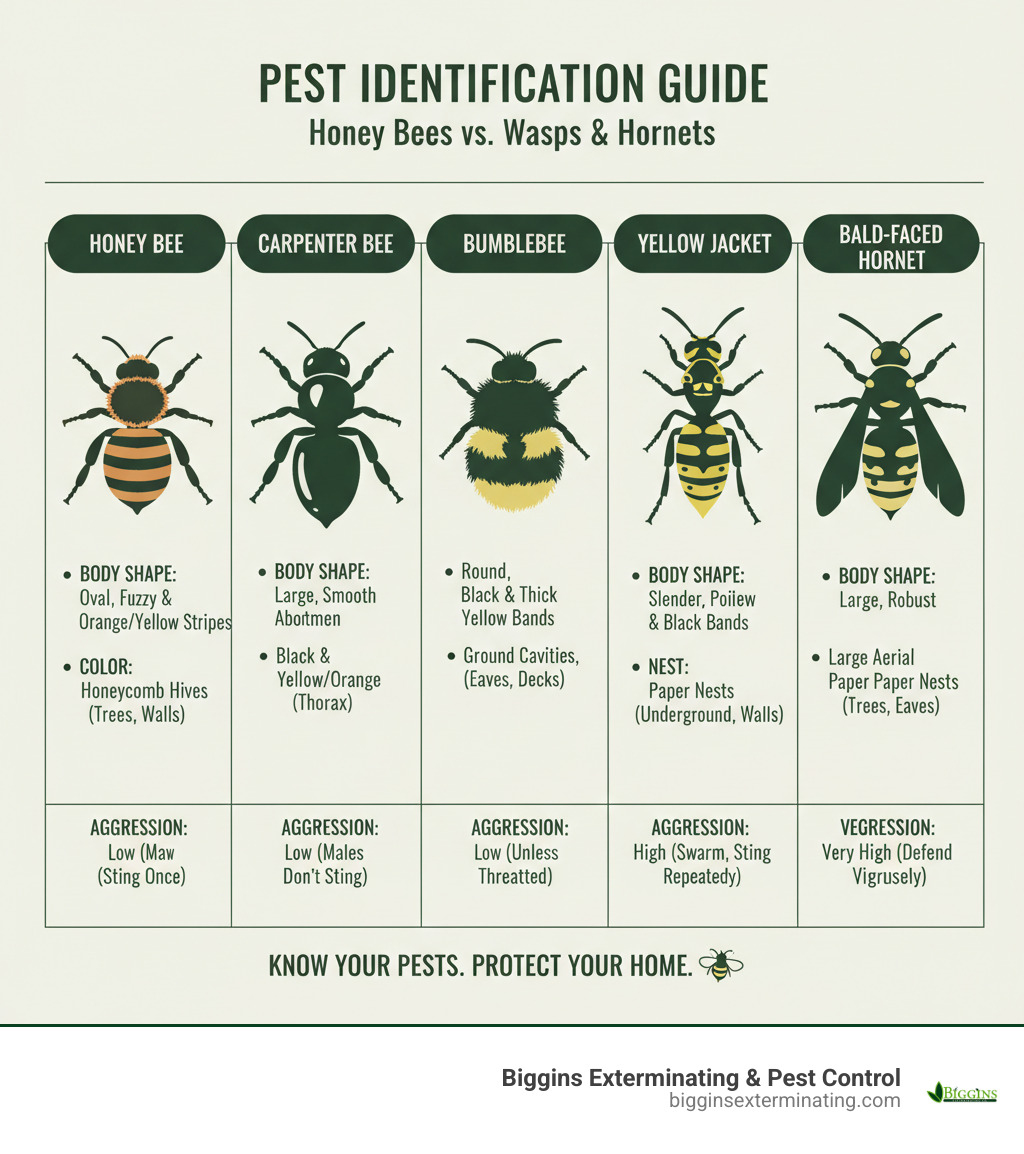
Not all buzzing insects are created equal. Figuring out what’s on your property is the crucial first step in knowing how to handle the situation safely. The difference between a honey bee and a hornet determines whether you need a beekeeper for gentle relocation or local bee exterminators in my area to protect your family from aggressive stingers.
Honey bees are fuzzy, golden-brown pollinators. They build wax comb nests in sheltered spots like wall voids or hollow trees. Generally calm unless their hive is threatened, they are crucial to the ecosystem, making humane relocation the preferred option.
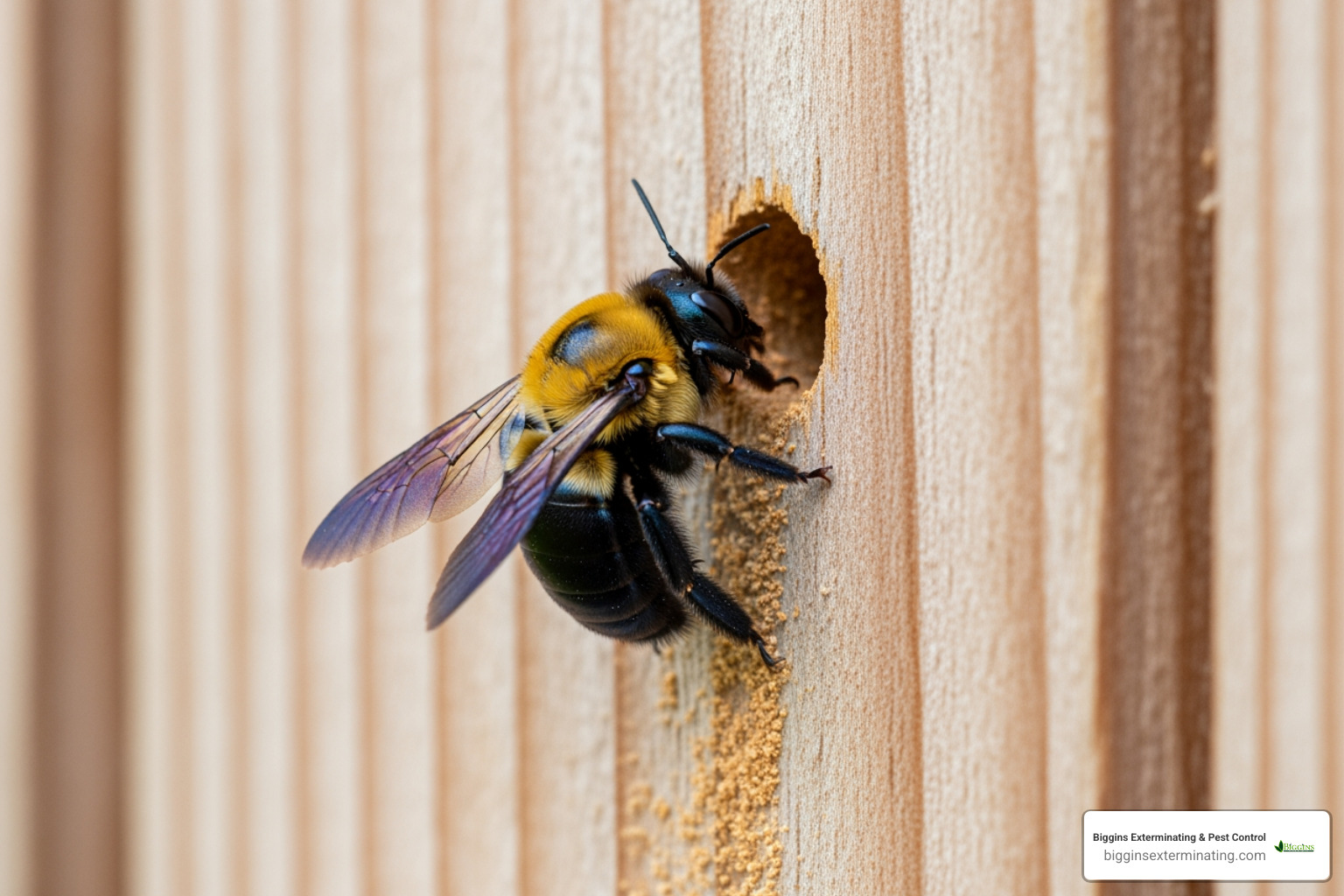
Carpenter bees resemble bumblebees but have a shiny, black abdomen. They drill perfectly round, half-inch holes into untreated wood like decks, eaves, and siding. Piles of sawdust beneath wooden structures are a key sign of their destructive activity.
Bumblebees are large, fuzzy bees with classic yellow and black stripes. As gentle pollinators, they typically nest underground in old rodent burrows and rarely cause problems unless their nest is directly disturbed.
Wasps have a narrow “wasp waist” and smooth, shiny bodies. Paper wasps build umbrella-shaped nests under eaves and porch ceilings. Unlike bees, they can sting multiple times and are highly defensive.
Yellow jackets are a type of wasp known for their aggression, especially in late summer. They build large nests underground, in wall voids, or in dense bushes. A steady stream of them entering a small hole is a clear sign of an infestation.
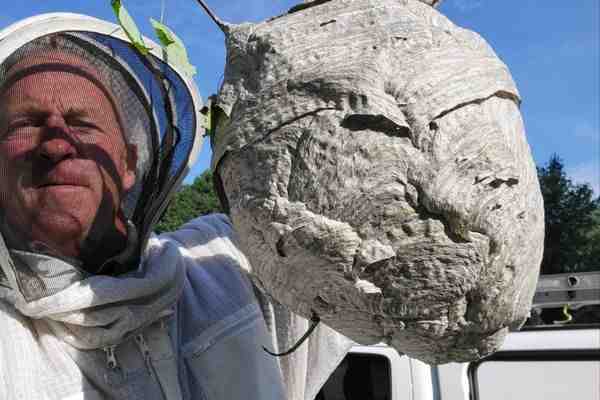
Bald-faced hornets are large wasps, black with a distinctive white-marked face. They build massive, football-shaped paper nests in trees or on buildings and are extremely protective.
Signs of a Bee Infestation or Nest
How do you know it’s time to search for local bee exterminators in my area? Look for these clues:
- High insect traffic: A constant stream of insects flying to and from the same spot on your home indicates an established nest.
- Visible nest structures: Obvious signs include a honeycomb in the attic, a paper nest on the porch, or the round holes drilled by carpenter bees.
- Buzzing sounds from inside your walls: This unsettling sound means a colony has moved into a void space, where it can cause unseen structural damage.
2. Who to Call: Beekeeper vs. Exterminator
Once you’ve identified your buzzing visitors, the next question is who to call. The answer depends on the insect and whether it’s just passing through or has moved in permanently.
Bee Swarms vs. Established Colonies
There’s a big difference between a swarm and an established colony. A bee swarm is a temporary, docile cluster of honey bees looking for a new home. They often hang from a tree branch for a few days and are not aggressive, as they have no hive to defend. An established colony, however, is a permanent home. These bees have built comb, are raising young, and will aggressively defend their nest inside your wall, attic, or chimney.
If you spot a swarm, stay calm and keep your distance. Don’t spray it with water or try to knock it down. Instead, contact a local beekeeper. For more information on swarm behavior, resources like the Texas Apiary Inspection Service provide helpful guidance.
Honey Bee Conservation vs. Aggressive Species & Property Damage
We take honey bee conservation seriously and advocate for their safe relocation whenever possible. But sometimes, safety and property protection must come first.
Call a local beekeeper if you see an accessible honey bee swarm. Many beekeepers will gladly collect it, often for free. They may also perform live removal of an established honey bee colony if it’s in an easy-to-reach spot, though this service usually has a fee.
Call local bee exterminators in my area like Biggins Exterminating if you’re dealing with:
- Carpenter bees drilling into your home’s wood structure.
- Aggressive species like yellow jackets, paper wasps, or bald-faced hornets. These insects pose a direct safety risk and require professional removal.
- Honey bees nested inside walls or other inaccessible areas. Beekeepers are not typically licensed or equipped for structural work. In these cases, professional extermination is often the only safe and practical option to protect your home.
If you’re unsure what you’re dealing with, call us. We’ll identify the species and recommend the right course of action, whether it’s connecting you with a beekeeper or handling the wasp and hornet removal ourselves.
3. The Professional Removal Process: What to Expect
When you call professional local bee exterminators in my area, you’re investing in a safe, effective, and lasting solution. At Biggins Exterminating, we’ve refined our process over four decades to protect your family and home.
Safety First: Why DIY Is a Dangerous Gamble
Attempting to remove a bee or wasp nest yourself is extremely risky. Stings are painful and can trigger anaphylaxis, a life-threatening allergic reaction, even in those with no known allergies. Multiple stings can cause severe complications. Our technicians use full protective gear and specialized tools to manage the nest without provoking an attack, ensuring the safety of everyone on your property.
Inspection and Treatment
Our first step is a thorough inspection to accurately identify the species and locate the nest. This allows us to create a customized treatment plan. There is no one-size-fits-all solution.
- For honey bee swarms, we’ll connect you with local beekeepers for safe relocation.
- For destructive pests like carpenter bees, we apply targeted treatments like a residual insecticide for carpenter bees to eliminate the infestation and prevent new ones.
- For aggressive species like wasps and hornets, we apply effective treatments directly to the nest to ensure complete removal.
Nest Removal and Structural Repairs
Killing the pests is only half the job. Leaving a nest inside your walls creates new problems. Melting honey can stain walls and cause structural damage, while the old comb attracts ants, rodents, and new bee colonies. Decaying matter also creates foul odors. Complete removal and cleanup are critical to prevent future issues. Afterward, we can recommend repairs to seal entry points and fix any damage, preventing future infestations.
The Cost of Hiring Local Bee Exterminators in My Area
Understanding potential costs helps you budget and avoid surprises. The following information is based on general internet data and not the actual costs for Biggins Exterminating services, as every situation requires a personalized estimate.
National data suggests the average cost for pest control is around $175. However, bee and wasp removal can range from $100 for a simple nest to $500 or more for complex situations. Extremely challenging jobs can cost even more.
Several factors influence the final price:
- Infestation Size: A massive yellow jacket colony costs more to remove than a small paper wasp nest.
- Nest Location: A nest inside a wall void or high in a tree is more difficult and costly to access than one under an eave.
- Species: Aggressive species or those requiring structural access often cost more to handle. For example, the cost to remove a bald-faced hornet nest in a difficult spot will be higher due to increased risk and equipment needs.
4. Finding Qualified Local Bee Exterminators in My Area
When pests invade, you need fast, expert help. Finding the right local bee exterminators in my area means hiring someone who understands the difference between a destructive carpenter bee and a beneficial honey bee swarm.

A truly local exterminator understands the seasonal pest patterns in Massachusetts. They know when carpenter bees are most active and when yellow jackets become most aggressive. This local knowledge, gained from decades of experience, is invaluable.
At Biggins Exterminating, we’ve been protecting homes in Andover, Bedford, Billerica, Burlington, Lexington, North Reading, Tewksbury, Wilmington, and Woburn for over 40 years. We know how Massachusetts weather affects pest behavior and are prepared for any challenge. Learn more about our approach at our pest control services page.
What to Look for in Local Bee Exterminators in My Area
Not all pest control companies are created equal. Here’s what to look for when vetting professionals:
- State Licensing: In Massachusetts, companies and technicians must be licensed. This is non-negotiable and proves they meet professional standards.
- Proper Insurance: A reputable company carries liability insurance to protect you and your property from accidental damage.
- Years of Experience: A company with decades of experience has handled countless scenarios and can manage your problem safely and effectively.
- Positive Customer Reviews: Check Google, Yelp, and the BBB for consistent feedback on professionalism and effectiveness.
- Guarantees or Warranties: This shows a company is confident in its work and stands behind its services.
- Knowledge of Local Species: An expert who knows local pests will use the most effective and appropriate treatment, whether it’s professional wasp removal or recommending a beekeeper.
5. Bee-Proofing Your Home: Prevention for Future Peace of Mind
Once your property is pest-free, proactive prevention can keep it that way. At Biggins Exterminating, we believe preventing pests from nesting in the first place is the best approach to avoid needing local bee exterminators in my area again.
Sealing Entry Points: Your First Line of Defense
Bees and wasps can enter through tiny openings. Conduct a thorough inspection of your home’s exterior. Use caulk to seal cracks in the foundation, gaps in siding, and spaces around utility entry points. Ensure all vents (attic, dryer, soffit) are screened and that your chimney cap is secure and undamaged. Check that window and door screens are intact.
Yard Maintenance: Keeping Your Property Less Inviting
A well-maintained yard is less attractive to nesting insects. Trim tree branches and shrubs so they don’t touch your house, as these create highways for pests. Regularly remove debris like old woodpiles, which are ideal nesting sites for yellow jackets. A clean, organized yard offers fewer hiding spots. For more tips, see our guide on preventing hornet and wasp nests.
Managing Attractants: Food and Water Sources
In late summer, yellow jackets are drawn to food. Ensure all outdoor garbage cans have tight-fitting lids and are rinsed out occasionally to remove odors. While primarily for mosquito control, removing standing water by fixing leaky faucets and clearing gutters is also good practice.
Natural Deterrents: Bee-Repellent Plants
Certain plants have scents that naturally deter bees and wasps. Consider planting mint, citronella, eucalyptus, or marigolds in your garden or in pots near entryways to create a less inviting environment.
Regular Property Inspections: Catching Problems Early
Make it a habit to inspect your property in the spring and early summer. Look under eaves, on your deck, and in your shed for increased insect activity or small, newly forming nests. Catching a problem when a nest is the size of a golf ball is much easier and cheaper than dealing with one the size of a basketball.
Frequently Asked Questions about Bee Removal
Over our four decades in business, we’ve heard just about every bee-related question from our Massachusetts neighbors. Here are the most common ones.
Are there humane or eco-friendly bee removal options available?
Yes. For honey bees, we always advocate for humane relocation first. These vital pollinators face population challenges, and we work with local beekeepers who can safely relocate swarms and accessible colonies to their apiaries.
For other insects like wasps and hornets, or when honey bee relocation isn’t feasible, modern pest control focuses on minimizing environmental impact. The pest control industry is increasingly focused on sustainable practices. We follow integrated pest management (IPM) principles, which means we emphasize prevention and use the most environmentally responsible methods available for the specific situation. Accurate species identification is key to choosing the right approach.
What should I do if I encounter a bee swarm?
First, don’t panic. A honey bee swarm may look intimidating, but the bees are surprisingly docile. They are homeless and have no hive or young to defend.
Keep a safe distance of at least 15 feet and do not disturb the swarm by spraying it with water or trying to knock it down. This can provoke them. Instead, contact a local beekeeper immediately. Most beekeepers will collect swarms, often for free, to add to their apiaries. Act quickly, as swarms usually move on within one to three days.
Can I remove a bee nest myself?
We strongly advise against it. In our 40-plus years of experience, we’ve seen many DIY attempts go wrong. The risks are significant:
- High risk of stings: Disturbing a nest can trigger an attack from hundreds or thousands of insects. Multiple stings can cause a severe medical emergency like anaphylaxis, even if you have no known allergy.
- Ineffective removal: Store-bought sprays often fail to eliminate the entire colony, especially if it’s inside a wall or underground. The surviving insects will likely rebuild, sometimes more aggressively.
- Damage from leftover honeycomb: If a nest is left in a wall void, melting honey can cause stains and structural damage. The decaying comb and honey also attract other pests like ants, cockroaches, and rodents, leading to a worse infestation.
As our article on the importance of expert nest removal explains, professionals have the gear and expertise to handle these situations safely and completely. It’s a job best left to trained experts.
Your Partner in Safe and Effective Bee Control
Summer in Massachusetts should be a time of enjoyment, not a source of worry over buzzing pests. We’ve covered the essential steps for handling these unwanted guests: identifying the pest, knowing who to call, and understanding the professional removal process. The most important takeaway is to never handle aggressive stinging insects on your own. The risks of stings, allergic reactions, and ineffective removal are too high. Professional local bee exterminators in my area have the training and equipment to solve the problem safely and effectively.
For homeowners in Wilmington, MA, and the surrounding communities of Andover, Bedford, Billerica, Burlington, Lexington, North Reading, Tewksbury, and Woburn, you don’t have to face these buzzing problems alone. Biggins Exterminating has been your neighbor for over 40 years, and we understand the unique pest challenges that come with Massachusetts summers. As a family-owned business, we treat every home like it’s our own, providing reliable solutions without locking you into long-term contracts. We stand behind our work with warranties and a commitment to your complete satisfaction.
Whether you’ve spotted carpenter bee holes in your deck, found a yellow jacket nest near your entryway, or heard buzzing in your walls, we’re here to help you reclaim your peace of mind.
Ready to enjoy a buzz-free summer? Contact us today for a free estimate! Let’s work together to protect your home and family so you can get back to enjoying everything this beautiful season has to offer.