
Why Bald-Faced Hornet Control Matters for Your Safety
Bald faced hornet control requires immediate attention when these aggressive insects build nests near your home. These black and white wasps can deliver multiple painful stings and pose serious risks to your family’s safety.
Quick Control Methods:
- Professional removal – 95% success rate, safest option
- Timing matters – Night or early morning when hornets are less active
- Peak season – August-September when colonies reach 100-400 hornets
- Safety first – Protective gear essential, never attempt removal without proper equipment
- Emergency response – Call professionals for large nests or allergic reactions
Bald-faced hornets are most dangerous in late summer when colonies peak with up to 400 defenders, making DIY removal extremely risky. Studies show 60-70% of homeowners attempting removal get stung multiple times. These territorial hornets attack any perceived threat and can sting repeatedly, a serious danger for those with allergies.
Why you need professional help:
The risks of DIY removal far outweigh potential savings, while professional services achieve over 95% success rates safely. I’m Stephen Biggins, and I’ve been helping Massachusetts families safely remove hornet nests for over four decades through our family-owned business. Our experience with bald faced hornet control has taught us that proper safety measures and professional expertise are essential for effective removal.
Common bald faced hornet control vocab:
Identifying the Threat: What Are Bald-Faced Hornets?
For effective bald faced hornet control, knowing your enemy is key. These insects are not true hornets but a type of aerial yellowjacket with distinctive features.
Bald-faced hornets have a striking appearance: a mostly black body with bold white markings on their face and white bands on their abdomen. At 5/8 to 3/4 of an inch long, they are noticeably larger than typical yellowjackets.
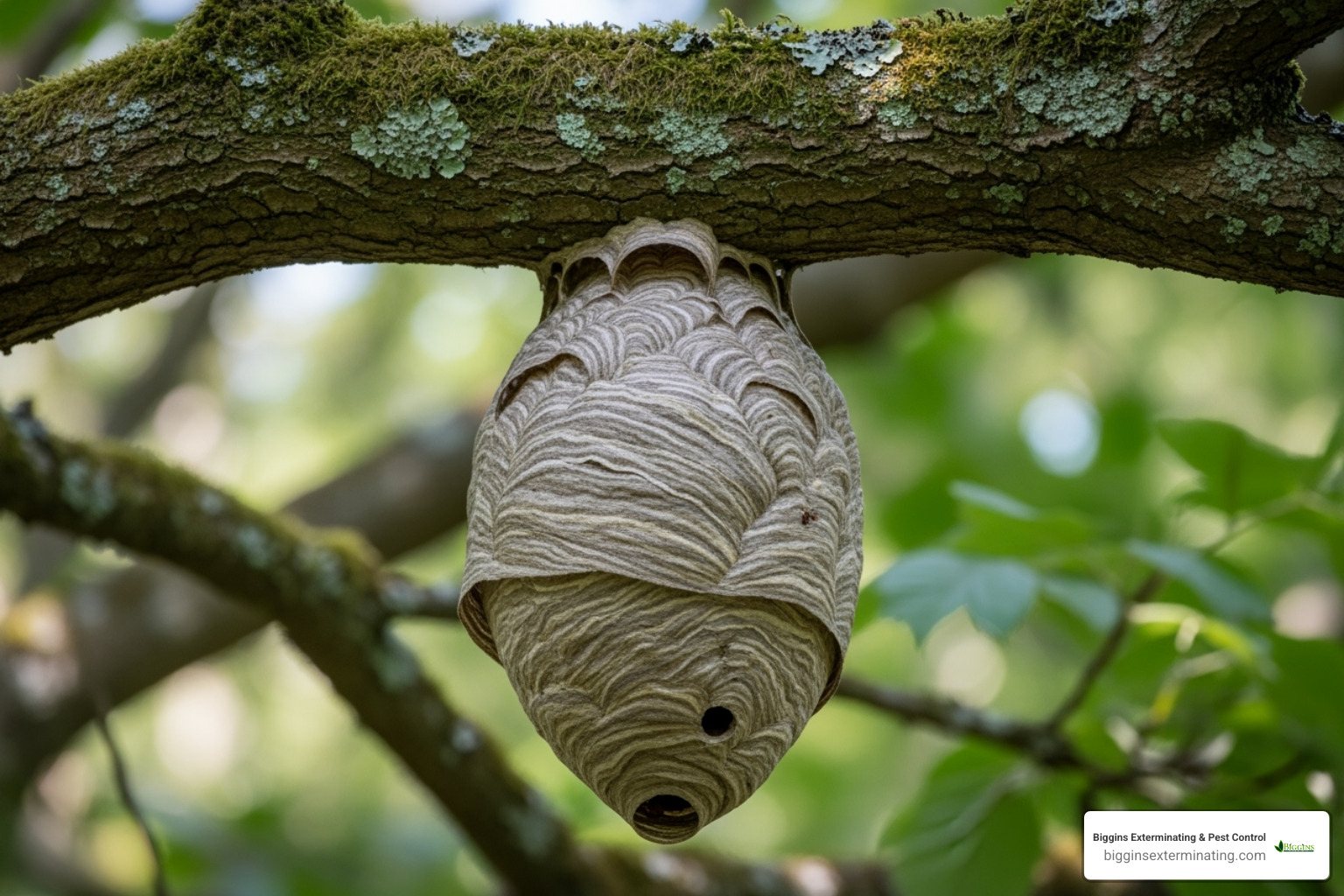
Their nests are a major identifier. Bald-faced hornets build impressive gray, paper-like nests shaped like large footballs or teardrops. These are made from chewed wood fiber mixed with saliva, creating a completely enclosed nest with a single entry hole near the bottom. As the colony grows, nests can reach the size of a basketball or larger.
You’ll typically find these nests in sheltered locations like tree branches, shrubs, utility poles, and the eaves of buildings. They may also build in attics or sheds.
The teardrop shape and gray papery texture make these nests unmistakable. If you spot one, it’s time to consider bald faced hornet control. For more detailed information on identifying these and other stinging insect nests, check out our comprehensive guide on identifying nests and ensuring safety.
The Dangers Lurking Within: Why Hornet Control is Crucial
When it comes to bald faced hornet control, we’re not dealing with gentle garden visitors. These are some of the most aggressive stinging insects you’ll encounter.
Bald-faced hornets are highly defensive. If you get too close to their nest, their aggressive nature kicks in immediately. They don’t give warnings when they sense a threat to their colony.
What makes encounters dangerous is their defensive behavior. Unlike bees, bald-faced hornets have a smooth stinger allowing for multiple stings. Each sting is painful and can cause swelling and throbbing for hours.
A mature colony size can reach 100 to 400 workers by late summer. When disturbed, they swarm, focusing their attack on a single target.
The greatest danger is the risk of anaphylaxis for those with insect allergies—a severe, life-threatening allergic reaction. Symptoms like difficulty breathing, facial swelling, and rapid pulse can develop within minutes, requiring immediate medical attention. Even for non-allergic individuals, especially children or the elderly, multiple stings can cause serious medical complications due to the volume of venom.
While they don’t cause structural property damage like termites, a nest inside walls or an attic creates a significant risk that requires professional intervention.
For immediate guidance on treating stings, the Mayo Clinic provides excellent medical advice for insect stings. However, preventing these encounters is where professional expertise is invaluable. The risks of leaving a nest untreated are too high, which is why professional removal is essential for your family’s safety.
A Guide to Safe and Effective Bald Faced Hornet Control
When it comes to bald faced hornet control, the number one rule is safety first! Attempting to tackle a hornet nest without proper training is extremely dangerous. Studies show that 60-70% of people attempting DIY removal get stung multiple times.

Attempting hornet removal without proper equipment is risky. Professionals use specialized protective gear and proven methods. Proper bald faced hornet control safety includes these essential precautions: Never approach a nest without full protective gear, including a sting-proof suit, gloves, and face veil. Always have an escape route planned. Work during cooler temperatures when hornets are less active. Never use a ladder for aerial nests, as a swarm can cause a dangerous fall. Avoid provoking the nest by throwing objects or spraying water. Don’t use flammable liquids due to fire hazards. Never seal a nest entrance in a wall void, as trapped hornets will chew their way inside. If you have known allergies, do not attempt removal under any circumstances.
Professional methods involve using specialized insecticides applied with long-range equipment to maintain safe distances. For detailed guidance on safe removal techniques, check out our guide on How to approach nest removal.
What is the best time for bald-faced hornet control?
Timing is critical for successful bald faced hornet control. The best time is when these insects are least active.
Nighttime removal is ideal. After dusk, hornets settle in their nest and are less reactive due to poor vision in the dark.
Early morning is another good window, before the sun warms up and hornets begin foraging.
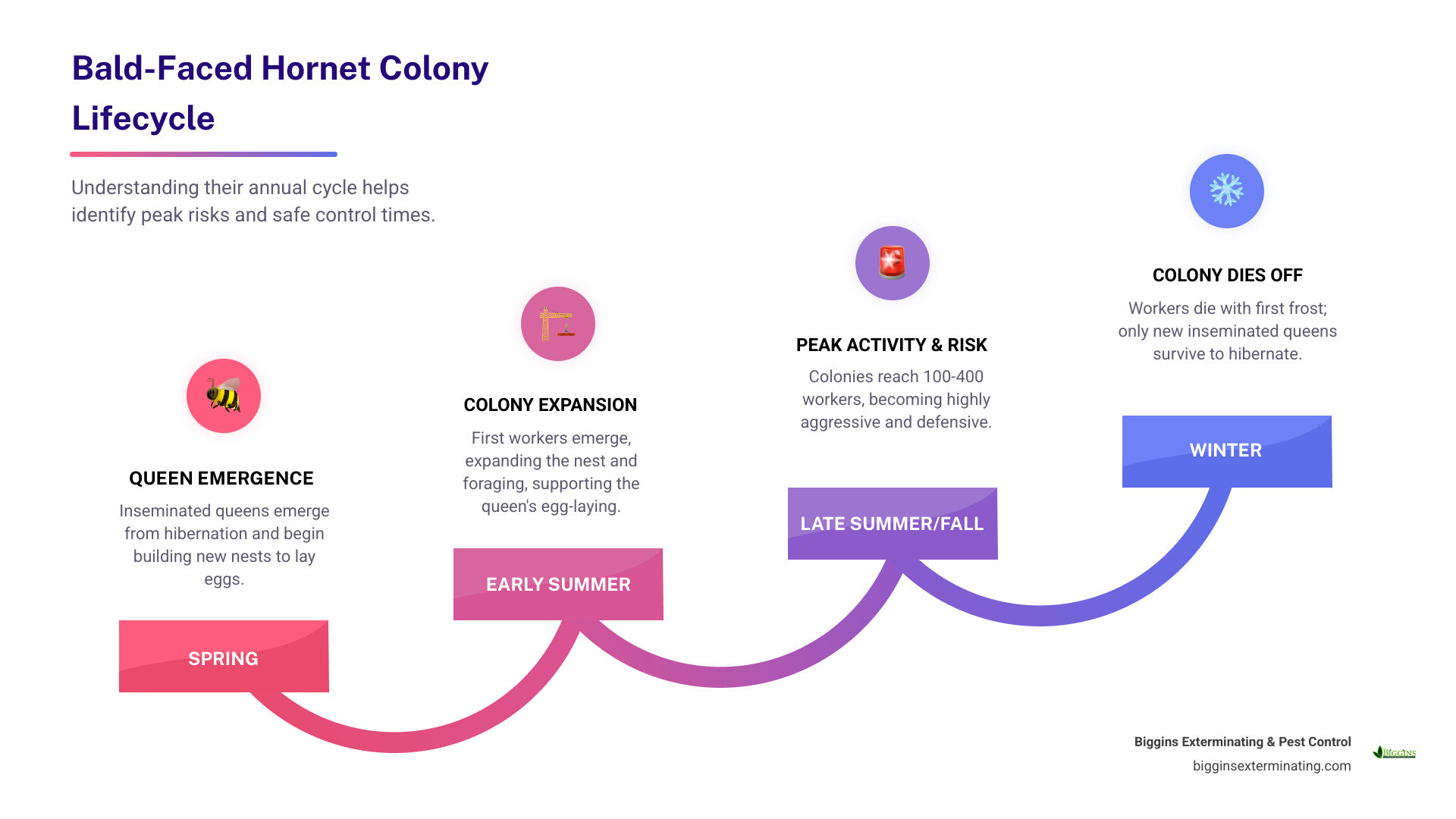
Seasonally, early spring (April-May) is the best time for intervention. You’re only dealing with a single queen building a small starter nest. Late summer and early fall (August-September) is peak season, with nests housing 100 to 400 aggressive defenders at their most protective.
Late fall and winter bring natural relief as frosts kill the colony, leaving only new queens to hibernate elsewhere. The old nest won’t be reused.
For maximum safety, address nests early in the season or wait until late fall if there’s no immediate threat.
Why Professional Removal is the Safest Choice
Underestimating bald-faced hornets is a common mistake; professional removal is a necessity that requires extreme caution.
Our teams use specialized protective clothing, including full-body sting-proof suits, thick gloves, and protective helmets with veils. We also use specialized equipment, such as potent, professional-grade insecticides and long-range applicators to ensure safety and effectiveness.
Our safe removal techniques involve calculated approaches with clear escape routes. We never use ladders for aerial nests due to the risk of falling during a swarm. For large nests, nests high off the ground, or nests inside structures, professional attention is essential. We have the tools and experience to handle these challenges safely, giving you peace of mind.
When to Call the Professionals for Hornet Removal
While DIY knowledge is helpful, some bald faced hornet control situations are too risky to handle alone and require experts. You should call a professional for:
- Large nests: A nest the size of a basketball or larger contains hundreds of hornets, making DIY removal extremely dangerous.
- Nests high off the ground: Nests on second-story eaves, tall trees, or utility poles pose a risk of falling. Professionals use specialized equipment instead of ladders.
- Nests inside structures: Nests in wall voids, attics, or crawl spaces are complex and require direct access to eliminate the colony.
- Known allergies: If anyone in your household has an insect sting allergy, do not take the risk. A single sting can be a medical emergency.
- Failed DIY attempts: If you’ve already agitated a colony, it’s time to step back and let a professional take over.
- Peace of mind: The stress of dealing with aggressive insects is a valid reason to seek professional help.
Professional services achieve over 95% success rates with minimal risk to homeowners. For more reasons to hire an expert, see our 5 compelling arguments for expert removal.
Understanding the Cost of Professional Service
Professional bald faced hornet control is an investment in your family’s safety and peace of mind, especially when considering the potential medical bills or injury from DIY attempts.
Consider the comparison between DIY attempts and professional service:
| Untrained DIY Removal Risks | Professional Benefits |
|---|---|
| High chance of multiple stings (60-70%) | Over 95% success rate without homeowner risk |
| Risk of severe allergic reaction (anaphylaxis) | Technicians trained to handle emergencies |
| Danger of falls from ladders | Specialized equipment for safe high-access removal |
| Incomplete removal, leading to re-infestation | Complete colony eradication for lasting results |
| Exposure to harsh chemicals without proper protection | Safe application of professional-grade products |
| Potential damage to property if nest is inside structure | Expertise in accessing and removing hidden nests |
| High stress and anxiety | Peace of mind knowing the job is done safely and right |
Several factors influence the cost of professional bald faced hornet control. Key factors include nest location (a low branch vs. an attic), nest size (larger colonies require more resources), and accessibility (nests requiring special equipment or structural access are more complex and costly).
Important Disclaimer: The following price ranges are average costs based on internet data and are not actual costs for Biggins Exterminating & Pest Control services. Prices can vary significantly based on your specific situation.
Average costs for professional hornet nest removal can be around $150-$300, but complex situations can increase the cost, with a range from $150 to $600+. Nests requiring extensive access or multiple visits will cost more.
We always recommend getting a direct quote for your specific situation. You can learn more about the general average cost to remove a hornet nest on our website.
Frequently Asked Questions about Bald-Faced Hornets
Here are answers to the most common questions we receive about bald faced hornet control.
What should I do if I am stung by a bald-faced hornet?
If you are stung, don’t panic. Staying calm is crucial. Move away slowly from the nest area to avoid provoking more hornets.
Once safe, wash the sting site with soap and water, then apply a cold compress to reduce swelling and pain. For ongoing relief, you can use hydrocortisone cream or calamine lotion and take an oral antihistamine or pain reliever.
The most important step is to monitor for severe allergic reactions. If you see symptoms like difficulty breathing, swelling of the face or throat, dizziness, or widespread hives, seek immediate medical attention by calling 911. Anaphylaxis is a life-threatening emergency. If you have a prescribed EpiPen, use it immediately and still seek emergency medical help.
Will a bald-faced hornet nest die off in the winter?
Yes, bald-faced hornet nests die off in winter. These are annual colonies that do not survive the cold. The first hard frosts kill the workers, males, and the old queen.
Only the newly fertilized queens survive winter. They leave the nest to hibernate in sheltered spots like under tree bark or in wall voids. In the spring, each surviving queen builds a completely new nest from scratch. Old nests are never reused. Removing the empty nest can still be a good idea to prevent other pests from using it.
For more details about the life cycles of various stinging insects, check out our comprehensive guide on More info on hornet and wasp control.
How can I prevent bald-faced hornets from building a nest on my property?
Prevention is the best approach to bald faced hornet control. While not guaranteed, you can make your property less appealing.
- Seal cracks and crevices on your home’s exterior and repair torn screens to block entry points.
- Keep trash cans tightly sealed and clean up fallen fruit from trees to remove food sources.
- Use decoy nests. These fake nests can deter territorial hornets from building nearby.
- Conduct regular property inspections in spring. Finding and addressing a small, queen-only nest is much safer and easier than dealing with a large, established colony later in the season.
For more detailed prevention strategies, read our article on the Top 5 ways to prevent nests. A little vigilance in spring can save you a lot of trouble.
Your Safest Solution for Bald-Faced Hornet Infestations

Dealing with bald-faced hornets is a serious matter. These aggressive insects, with their painful stings and risk of allergic reactions, can make your property a danger zone. As this guide has shown, when it comes to bald faced hornet control, your safety must always come first.
The risks of DIY removal are significant, with a 60-70% chance of being stung. Facing a large, active nest without proper training and equipment is a gamble not worth taking, especially when professional help is available.
At Biggins Exterminating & Pest Control, we’ve been protecting families in Wilmington, MA, and surrounding communities for over four decades. Our 40+ years of experience means we’ve handled every type of hornet situation, from small starter nests to massive late-summer colonies.
As a family-owned business, we understand the anxiety these pests cause and prioritize your peace of mind. We offer reliable bald faced hornet control services without long-term contracts, backing our work with warranties to ensure your satisfaction.
Our professional success rate of over 95% is a testament to our expertise. We have the specialized equipment and protective gear to handle dangerous situations safely, whether the nest is high in a tree, under your eaves, or inside a wall.
We proudly serve Wilmington, MA, and the surrounding areas including Andover, MA – 01810, Bedford, MA – 01730, Billerica, MA – 01821, Burlington, MA – 01803, Lexington, MA – 02420 / 02421, North Reading, MA – 01864, Tewksbury, MA – 01876, and Woburn, MA – 01801. For guaranteed safe and effective hornet removal, trust our team to handle the problem with professionalism and care.
Don’t let bald-faced hornets keep you from enjoying your property. Put your safety first and let the professionals handle what we do best. Contact us today for professional hornets pest control. We’re here to help you reclaim your space.
