
Why Finding Mice Early Makes All the Difference
How to find mice? Look for small, rod-shaped droppings, fresh gnaw marks, scratching sounds at night, and a musky odor. Check dark, secluded areas like kitchen cabinets, behind appliances, attics, and basements where mice commonly nest.
Quick Signs of Mice:
- Droppings – Small, dark, rice-shaped pellets near food sources or along walls
- Gnaw Marks – Small, clean holes about 1-1/2 inches in diameter on cardboard, wood, or food packaging
- Sounds – Scratching, scurrying, or squeaking noises, especially at night
- Nests – Shredded paper, fabric, or insulation in hidden corners or voids
- Grease Marks – Dark, oily smudges along walls where mice repeatedly travel
- Tracks – Small footprints or tail drag marks in dusty areas
- Odor – A persistent musky, ammonia-like smell in infested areas
Most homeowners will eventually deal with a mouse. These rodents are experts at getting inside, and since they are nocturnal and secretive, you’re more likely to see the signs they leave behind than the mice themselves.
Understanding how to find mice is crucial because early detection prevents a small problem from becoming a full-blown infestation. A single female mouse can produce up to 10 litters a year, meaning a few mice can become dozens within months. The sooner you act, the easier and less costly it is to solve the problem.
Mice aren’t just a nuisance; they pose real risks. They contaminate food, damage structures and wires (increasing fire risk), and can transmit diseases like salmonellosis. Their droppings and urine can also trigger allergies and asthma. As winter approaches in Massachusetts, mice actively seek warmth indoors, making fall and early winter a peak season for infestations.
As Stephen Biggins, owner of Biggins Exterminating Co., I’ve helped Massachusetts homeowners with mouse problems for over four decades. I know that finding mice quickly is key to protecting your home and family. This guide will walk you through the signs and inspection methods to locate these unwanted guests before they multiply.
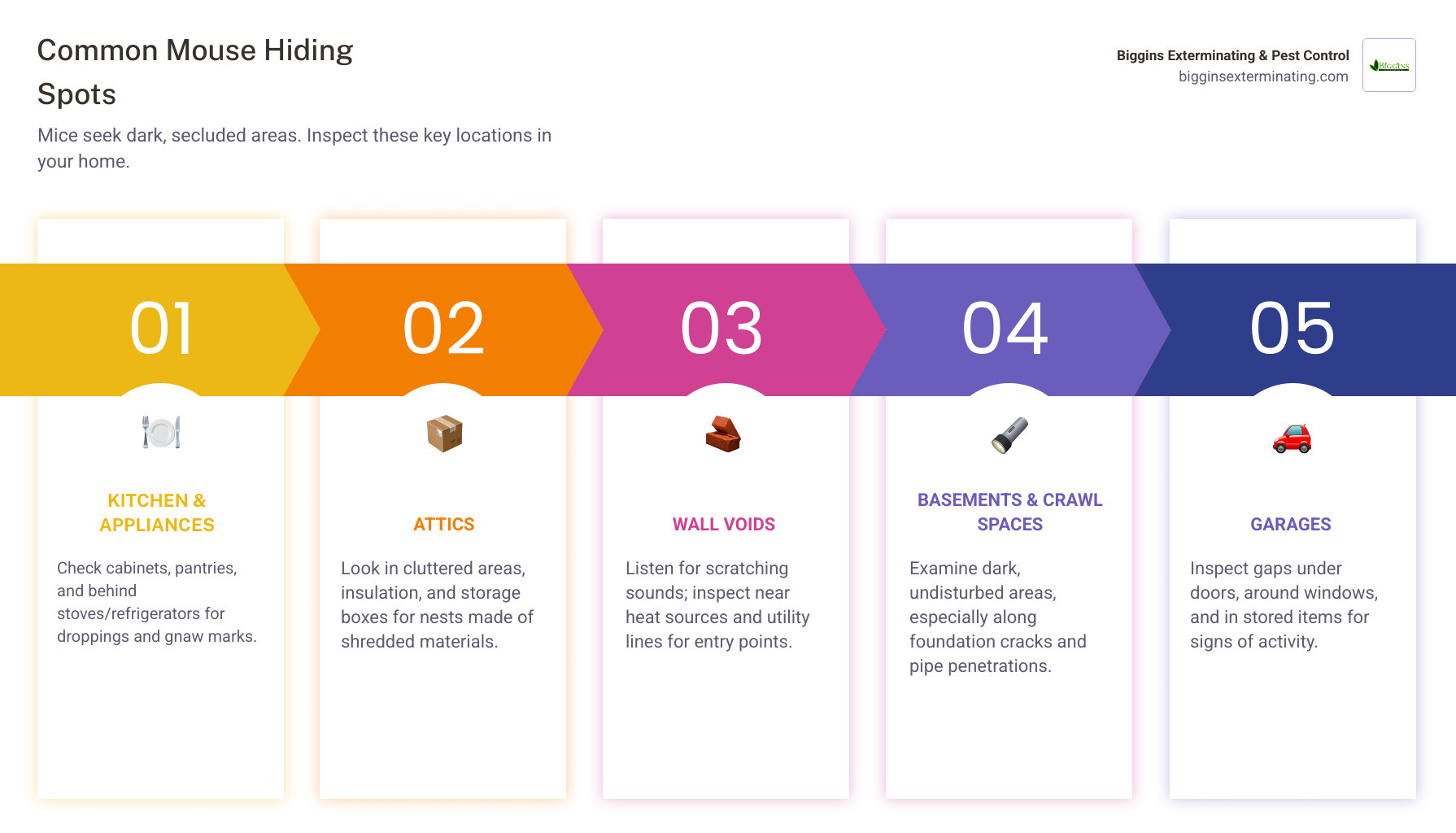
How to find mice? further reading:
The Telltale Signs: Is a Mouse in Your House?
Before you can tackle a mouse problem, you need to confirm you have one. How to find mice? starts with recognizing the evidence they leave behind. Learning to spot these signs is your first step in confirming an infestation and understanding its extent.
Visual and Physical Clues
Mouse droppings are often the first giveaway. These small, dark pellets are rod-shaped, less than 1/4 inch long, and look like grains of rice. Fresh droppings are shiny and soft, while older ones are hard and crumbly. You’ll find them near food, along walls, or in hidden corners.

Because their teeth never stop growing, mice constantly chew. Look for gnaw marks—small, clean holes about 1-1/2 inches in diameter—on cardboard, baseboards, wires, and food packaging. These are clear signs of a pest infestation.
Mice build nests from scavenged materials like shredded paper, fabric, or insulation. These are usually tucked away in secluded spots like behind appliances, in storage areas, or within wall voids. Their oily fur also leaves dark, greasy rub marks along their regular travel routes on walls and baseboards. Finally, food tampering, such as chewed-open bags or boxes, is a dead giveaway that mice are raiding your pantry.
Auditory and Olfactory Clues
Since mice are most active at night, you may hear scratching sounds, light scurrying, or gnawing from inside walls, ceilings, or attics. You might also hear faint squeaking noises as they communicate.
A persistent, musky odor similar to ammonia is another common sign. This smell comes from their urine and is strongest in enclosed spaces with high activity, like cabinets or closets. Also, pay attention to your pets. If a cat or dog is suddenly fixated on a particular wall or area, their superior senses might be alerting you to hidden rodents. Ignoring these warnings can lead to the top dangers of rodents in and around your home or business, including fire hazards from chewed wires.
How to Find Mice? A Step-by-Step Inspection Guide
Once you’ve confirmed the signs, it’s time to actively search. Mice prefer dark, secluded areas close to food and warmth. A systematic inspection of your home, inside and out, will reveal their hiding spots and travel routes. Grab a flashlight and begin your search.
Where to Look for Mice Indoors
Mice seek shelter, food, and warmth, making their hiding spots predictable. Start your inspection in the kitchen. Check inside and behind cabinets, drawers, and appliances like the refrigerator and stove, which offer warmth and seclusion. Also inspect under sinks in kitchens and bathrooms for signs of activity around pipes.
Next, move to less-traveled spaces. Attics are attractive during New England winters, as insulation provides nesting material. Look for tunnels or disturbed areas. Basements and crawl spaces are also ideal habitats due to their many entry points and lack of disturbance. Mice rarely travel more than 30 feet from their nest to food, so if you find droppings in the pantry, the nest is likely nearby. Also check inside stored boxes, wall voids near heat sources, and stored upholstered furniture. Following these steps is part of winter mouse prevention 101: expert tips from exterminators.
How to Find Mice in Walls and Ceilings
To find mice in walls and ceilings, you need to listen. At night, when the house is quiet, listen for scratching sounds, scurrying, or gnawing. These noises often come from the same spots, especially near heat sources like chimneys, hot water pipes, and heating vents. During the day, check for warmth by placing your hand on walls. Also, look closely where utility lines and plumbing penetrations enter walls and floors, as these gaps serve as highways for mice. You may spot grease marks or droppings around these openings. For more about rodent biology from NPIC, understanding their travel patterns is a great help.
Inspecting Your Home’s Exterior
Every indoor mouse problem starts outside. Finding and sealing entry points is crucial for a permanent solution. A mouse can squeeze through a hole the size of a dime (1/4 inch), so be thorough. Walk your home’s perimeter and inspect for:
- Foundation cracks and gaps in siding.
- Unprotected weep vents between bricks.
- Damaged screens on roof vents and gaps around the chimney.
- Worn weather stripping or gaps under garage doors, exterior doors, and windows.
- Openings around utility entry points for cables, pipes, and wires.
Look for gnawing or grease marks around any potential opening. A thorough exterior inspection is a key part of keeping your home mouse-proof: a winter pest control checklist.
Mouse or Rat? Identifying Your Unwanted Guest
Knowing whether you have a mouse or a rat is critical, as control methods differ. A young rat can be mistaken for a large mouse, so proper identification is key when figuring out how to find mice versus rats.
Key Distinguishing Features
The most obvious difference is size. A mature house mouse is 5-7 inches long (including its tail) and weighs about half an ounce. They have large ears, a pointed snout, and a thin tail about the same length as their body. In contrast, a Norway rat is much larger, reaching 11-19 inches long and weighing up to a pound. They have smaller ears, a blunt snout, and a thick, scaly tail that is shorter than their body.

| Feature | House Mouse | Norway Rat |
|---|---|---|
| Size | 5-7 inches long (incl. 3-4″ tail), 0.5-1 oz | 11-19 inches long (incl. tail), 0.5-1 lb |
| Appearance | Small head, large ears, pointed snout, fine fur, small eyes | Large head, small ears, blunt snout, coarse fur, small eyes |
| Droppings | Less than 1/4 inch, pointed on both ends | 1/2 inch or larger, blunt at both ends |
| Gnaw Marks | Small, clean holes (dime-sized) | Larger, rougher holes (quarter-sized), 1/8″ long tooth marks |
| Nesting Habits | Indoors, uses shredded materials like paper, fabric, insulation | Outdoors in burrows; sometimes indoors in basements/crawl spaces |
| Tail | Thin, sparsely haired, about body length | Thick, scaly, shorter than body |
Since you may not see the rodent itself, look at the evidence. Droppings are a reliable indicator. Mouse droppings are small (less than 1/4 inch) with pointed ends, like grains of rice. Rat droppings are much larger (1/2 inch or more) and blunt at the ends.
Gnaw marks also tell a story. Mice leave small, dime-sized holes, while rats create larger, quarter-sized holes with rough edges. Their behavior differs too. Mice prefer to nest indoors in walls or attics. Norway rats typically burrow outdoors but will move into basements or crawl spaces. Understanding these differences is essential for an effective rat exterminating: complete guide. If you’re unsure, a professional can provide a definitive identification.
Tracing Their Steps: Finding and Sealing Entry Points
Finding where mice live is only half the battle. To solve the problem for good, you must find and seal the tiny entry points they use to get inside. A mouse can squeeze through a hole the size of a dime, so understanding how to find mice entry points is critical for long-term control. Without sealing these gaps, new mice will simply replace the ones you remove.
Effective Methods for How to Find Mice Entry Points
Start with a thorough flashlight inspection inside and out. Look for any gaps, cracks, or holes along baseboards, under sinks, behind appliances, and around utility lines. Watch for evidence like grease marks, a high concentration of droppings, or shredded materials near an opening, as these indicate an active entry point. Try to follow their runways—the paths they use along walls and pipes—back to their source. This detective work is essential for how to identify and prevent rodent infestations in Massachusetts.
The Best Ways to Seal Your Home
Once you’ve found the entry points, seal them with chew-proof materials. Mice can gnaw through plastic, rubber, wood, and even expanding foam.
For small holes and cracks around pipes or wires, pack steel wool tightly into the opening. Mice cannot chew through it. For a more permanent fix, cover the steel wool with a high-quality caulk.
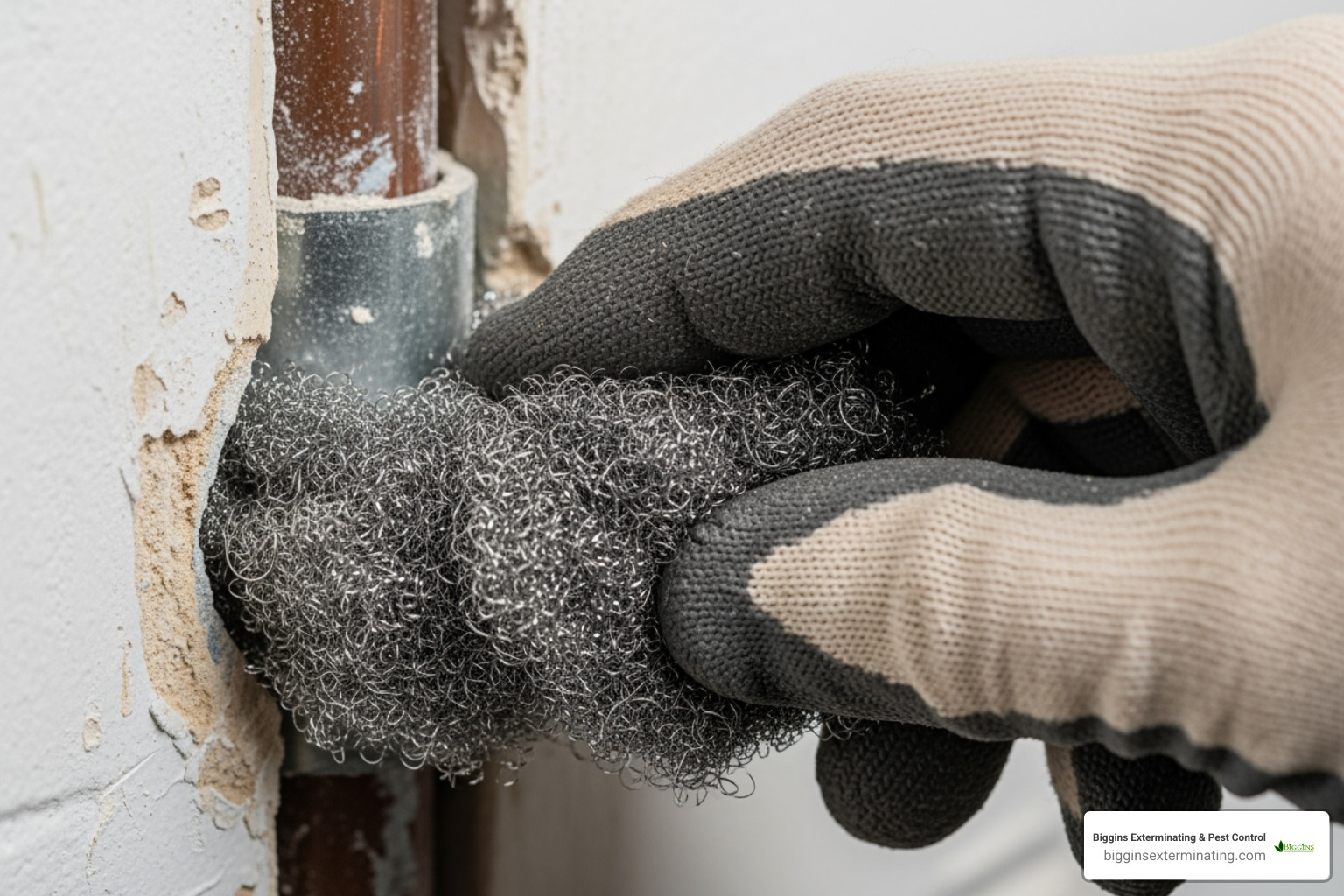
For larger openings, use metal sheeting or hardware cloth (1/4-inch mesh or smaller), secured firmly with screws. For foundation cracks or large gaps, use concrete or mortar. Also, install door sweeps on exterior doors and replace worn weather stripping around doors and windows to eliminate common entry points. For detailed exclusion methods from UC IPM, the focus is always on durable, chew-proof materials.
When to Call for Professional Help
Sometimes, a mouse problem is too much for DIY methods. Knowing when to call for backup can save you time, protect your family’s health, and prevent serious damage to your home. Recognizing when you’re dealing with more than just a few mice is key.
Damage and Dangers of a Mouse Infestation
Mice are more than just a nuisance; they are destructive and pose significant health risks.
- Structural Damage: Constant gnawing can damage wooden beams, pipes, and, most dangerously, electrical wires, creating a serious fire risk.
- Insulation Damage: Mice shred and contaminate attic insulation with urine and droppings, reducing its effectiveness and creating a biohazard.
- Health Risks: Mice contaminate food and can transmit diseases like Salmonellosis. Their urine and droppings also contain proteins that can trigger allergies and asthma, especially in children. Understanding these risks is crucial for knowing how to get rid of house mice safely.
Signs You Need an Exterminator
It’s time to call a professional when you notice these signs:
- Large Infestations: Seeing mice regularly, especially during the day, indicates a large population that traps alone can’t handle.
- Rapidly Growing Population: If your efforts aren’t reducing the problem, the mice are likely reproducing faster than you can control them.
- Recurring Problems: If mice return shortly after you’ve dealt with them, it means you haven’t found all the entry points or nests. Professionals have the tools and experience to find what you’re missing.
- Mice in Living Areas: When mice become bold enough to appear in your living room or kitchen during the day, the infestation is severe.
- Health Concerns: If anyone in your home has allergies, asthma, or a compromised immune system, professional elimination and sanitation are critical.
- DIY Failure: If you’ve tried everything and still hear scratching in the walls, it’s time to let an expert take over. If you’re wondering, should I call an exterminator if I see a mouse?, these factors can help you decide.
Ignoring these signs will only make the problem worse. A professional service can provide a comprehensive inspection, safe removal, and long-term exclusion strategies.
Secure Your Home from Rodents Today
You’ve learned how to find mice by recognizing signs, tracing pathways, and sealing entrances. This knowledge can help you tackle a small mouse problem. However, sometimes the problem is bigger than it appears, and DIY methods fall short.
If you’re still finding droppings, hearing scratching, or simply don’t want to deal with it yourself, professional help is essential. With over 40 years of experience protecting Massachusetts homes, Biggins Exterminating understands the challenges homeowners face, especially as winter drives mice indoors.
As a family-owned business in Wilmington, MA, we serve Andover, Bedford, Billerica, Burlington, Lexington, North Reading, Tewksbury, and Woburn. Our rodent control services are designed to eliminate your current problem and prevent future ones. We don’t use long-term contracts; instead, we solve your problem effectively and back our work with warranties.
If you’re tired of sharing your home with mice, we’re here to help. A professional inspection can reveal hidden entry points and nests that are easy to miss. Don’t let a small issue become a costly disaster.
Ready to reclaim your peace of mind? Visit our Pest Control & Exterminating page to learn more, or Contact Us today to schedule an inspection. Your mouse-free home is just a phone call away.