Conquer the Buzz: Your Guide to Cicada Killer Wasp Extermination
Looking for a cicada killer wasp exterminator near me? Here’s how to find immediate help:
- Contact a local pest control professional. This is the fastest and safest way.
- They can inspect your property and confirm the pests.
- They offer safe removal and prevention tips.
Finding a cicada killer wasp exterminator near me can be a top priority when these large, intimidating insects take over your yard. They are big, flying insects with black and yellow markings. They dig holes in your lawn, which can be alarming. While they look scary, they are generally not aggressive. But their presence can still disrupt your peace. This is especially true during summer months when they are most active. This guide will help you understand these wasps and how to deal with them.
I’m Stephen Biggins, owner of Biggins Exterminating Co. With over 40 years of experience, our family-owned business provides reliable solutions, including expert cicada killer wasp exterminator near me services, to homeowners in Wilmington, MA, and beyond. We are here to help you reclaim your outdoor space.
Cicada killer wasp exterminator near me terminology:
Identifying a Cicada Killer Wasp Problem
This section helps you confirm if the large wasps in your yard are cicada killers and what signs to look for.
What Do Cicada Killer Wasps Look Like?
When you first spot one of these giants buzzing around your yard, it’s natural to feel a bit alarmed. Cicada killer wasps are genuinely impressive insects that often get mistaken for their more aggressive cousins like hornets or oversized yellow jackets.
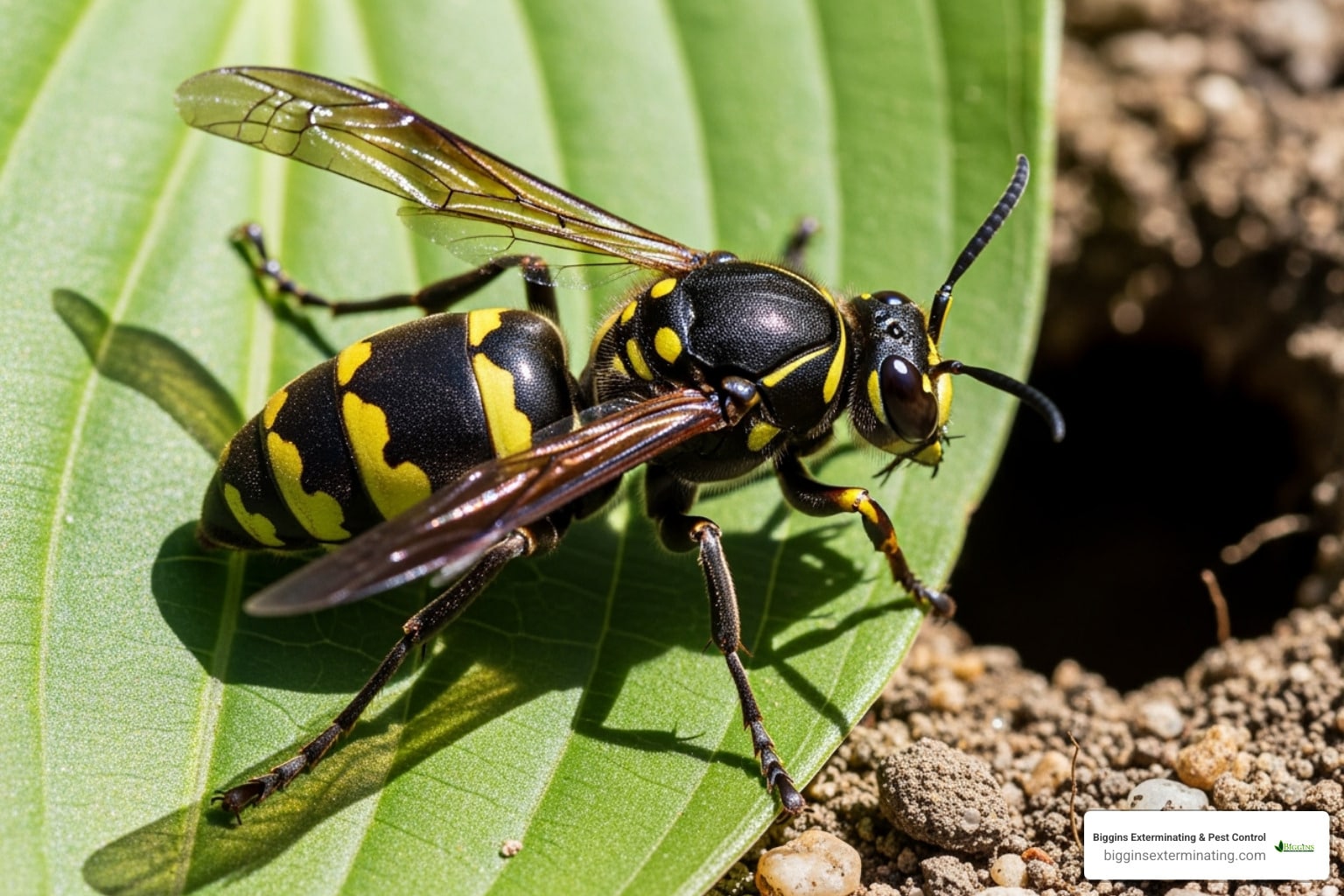
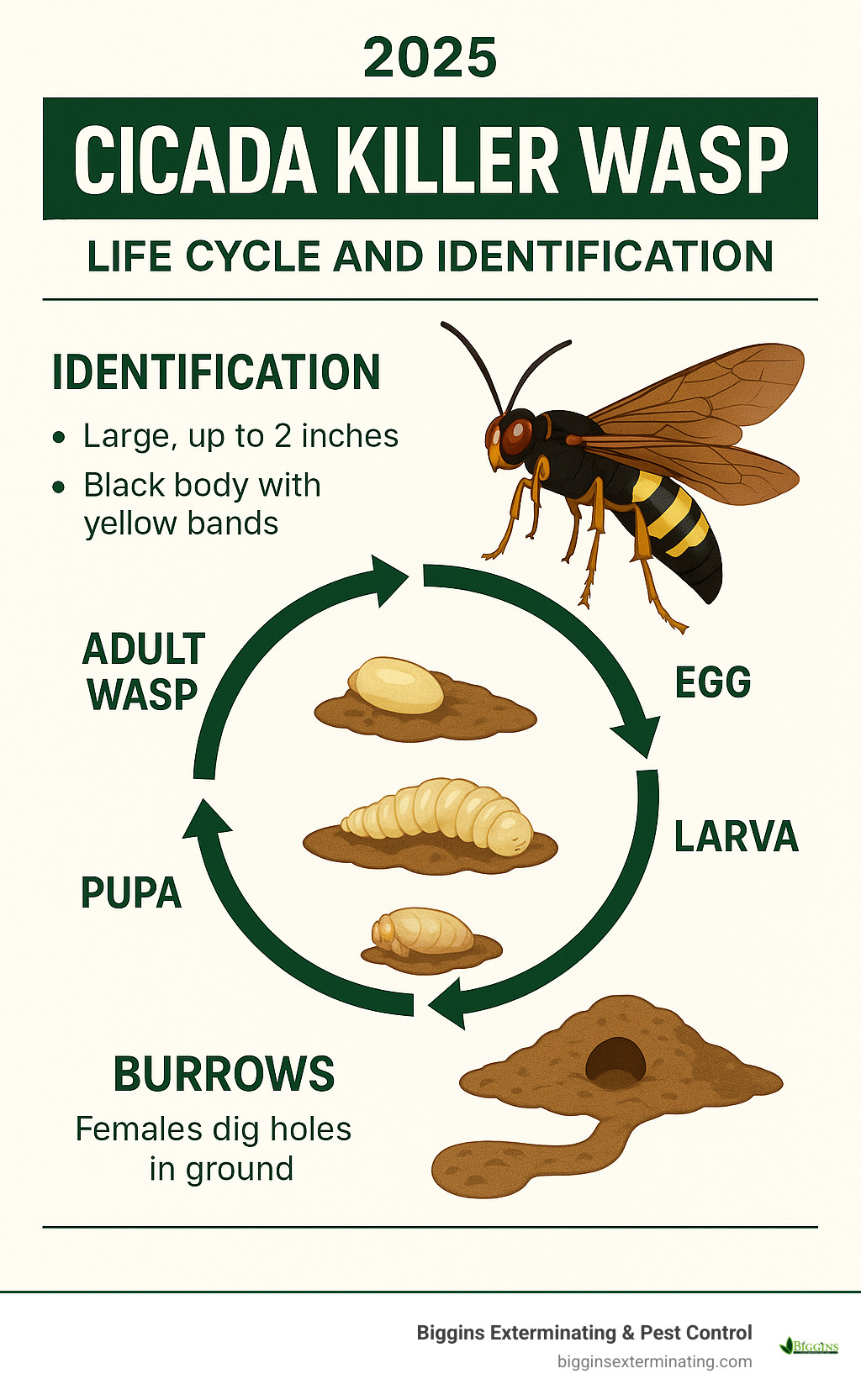
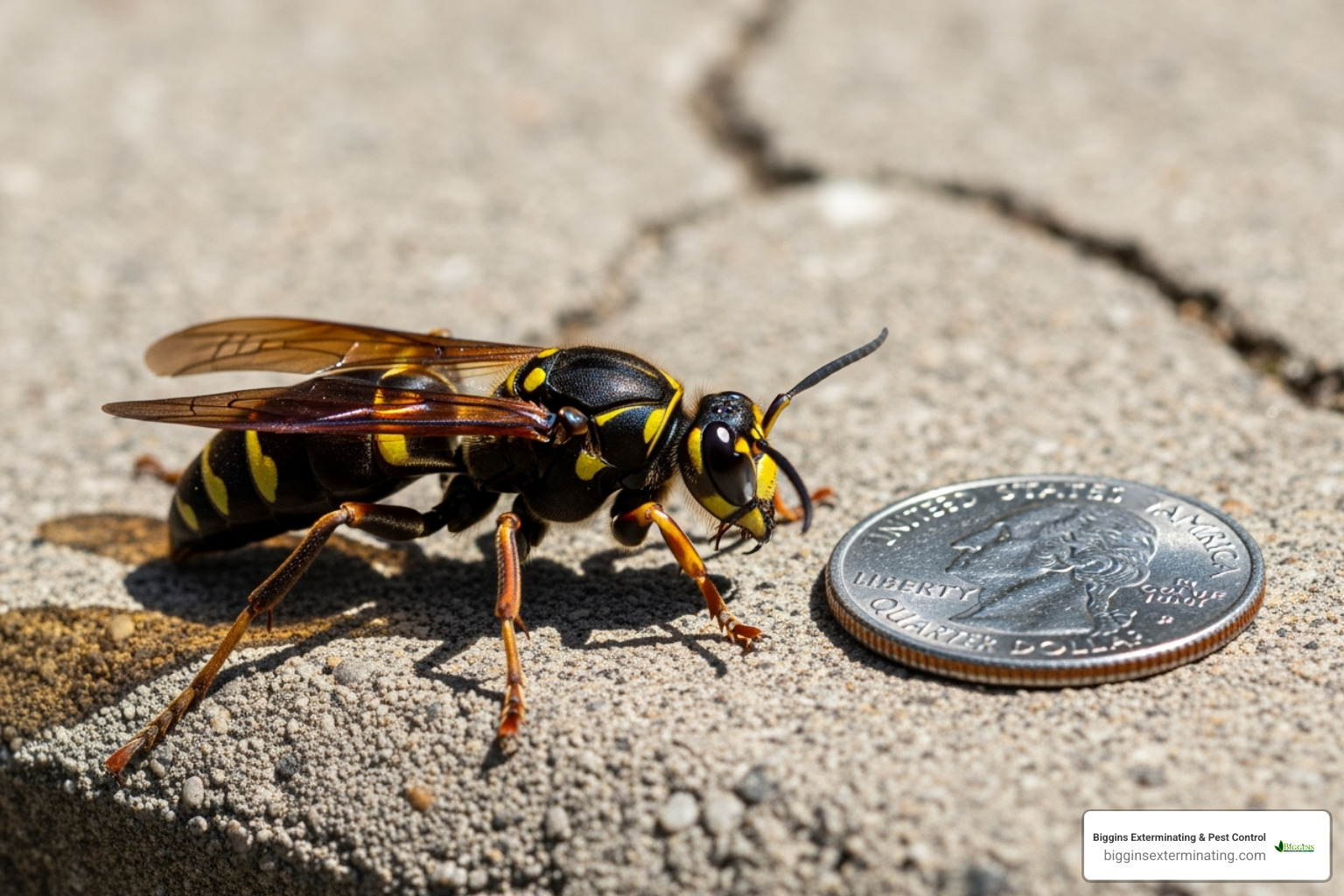
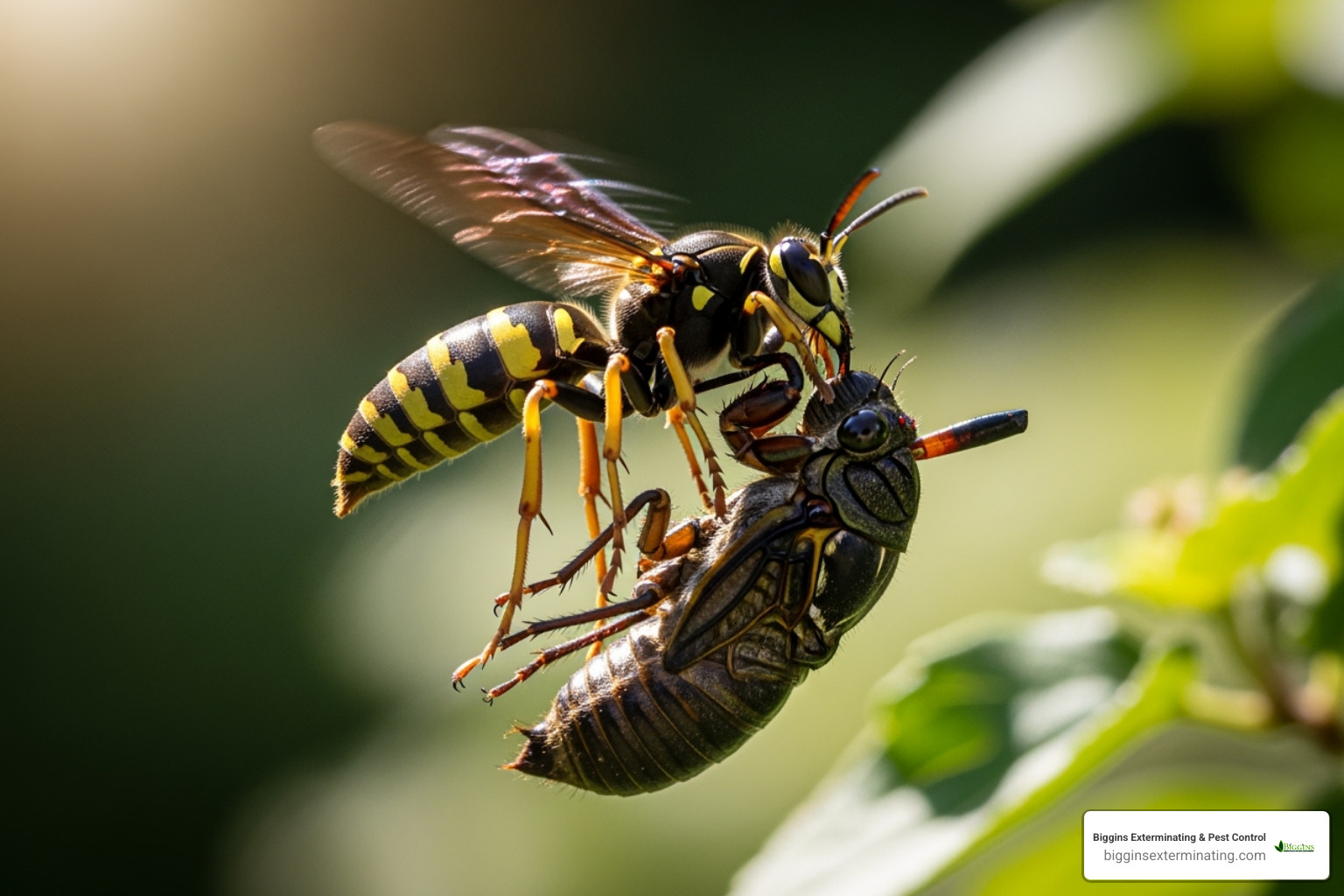
Size is the first giveaway – these wasps are big! Females can reach up to 2 inches long, making them one of the largest wasps you’ll encounter in North America. To put that in perspective, they’re about the size of your thumb. Males are typically smaller, measuring roughly half the size of the females.
Their coloring is quite distinctive once you know what to look for. They sport black or rusty-brown bodies decorated with bright yellow band markings across their abdomen. Their translucent orange wings catch the light beautifully as they fly, giving them an almost amber appearance.
Here’s what makes them different from other stinging insects: cicada killers are solitary wasps. Unlike yellow jackets or hornets that live in busy colonies with queens and workers, each female cicada killer is essentially a single mom managing her own underground nursery. This solitary nature actually makes them less aggressive than their social wasp relatives.
If you see a large, black and yellow wasp flying low over your lawn – especially if it’s carrying what looks like a large fly – you’re likely looking at a cicada killer doing her job.
For more information on dealing with various stinging insects, check out our guide on Wasp & Hornet Control.
Signs of a Cicada Killer Wasp Infestation
Sometimes you’ll notice the evidence before you spot the wasps themselves. These ground-nesting insects leave behind some pretty telltale signs that are hard to miss once you know what to look for.
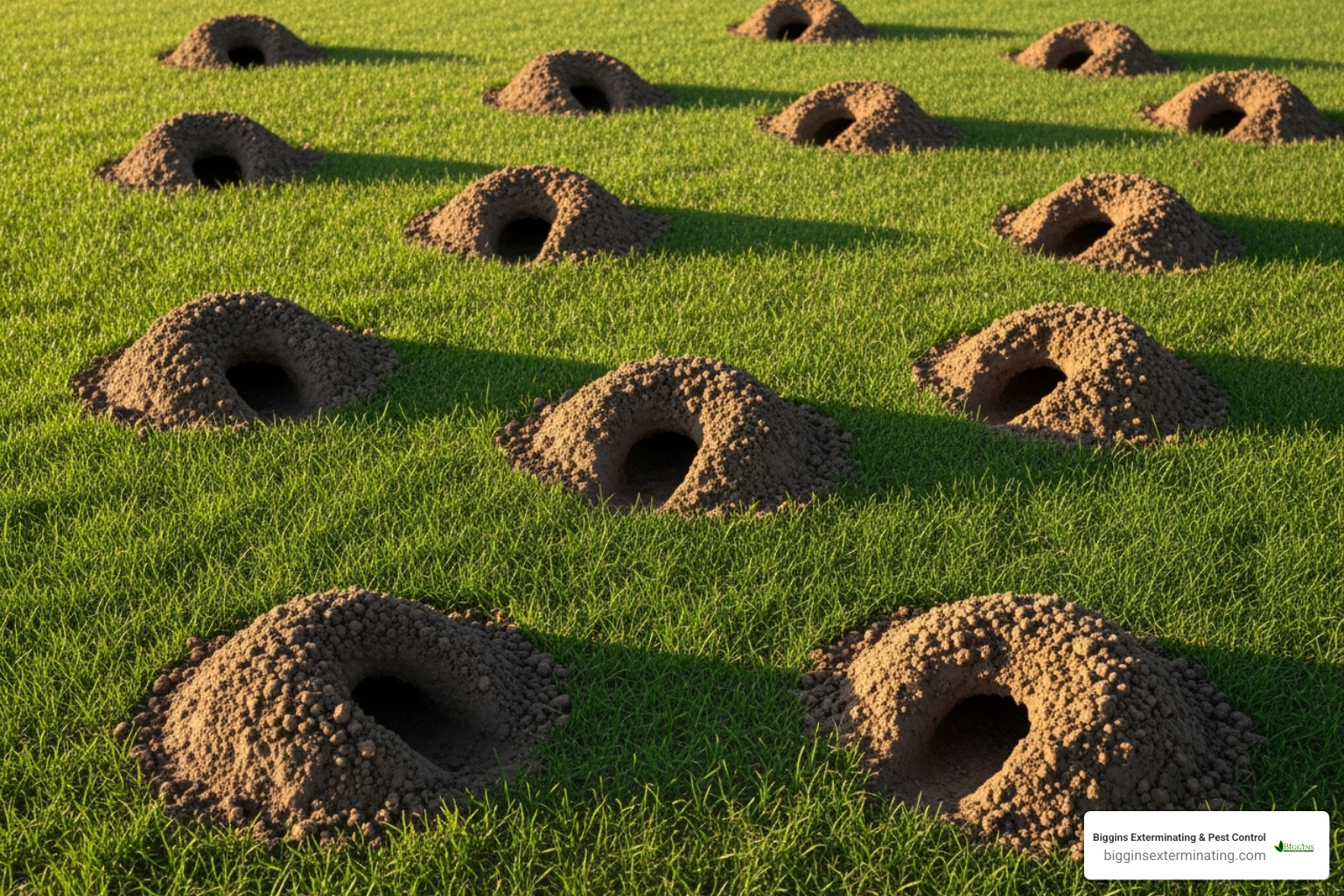
The most obvious clue is their burrows. Look for small, U-shaped mounds of soil scattered across your lawn or garden beds. These little dirt piles look like miniature volcanoes or crescent moons made of excavated earth. At the base of each mound, you’ll find the entrance hole – typically about the size of a quarter.
Don’t let the small entrance fool you, though. These tunnels can extend up to 2 feet deep underground, creating an elaborate nursery system for their young.
Watch for hovering behavior over these nesting areas. You might see the wasps patrolling their territory, flying back and forth over the same patch of ground. The real giveaway is spotting a female wasp carrying a paralyzed cicada. It’s quite a sight – these determined mothers will drag cicadas that are often as large as they are back to their burrows to feed their developing larvae.
If you’re finding these characteristic mounds appearing in your yard, especially during summer months, it’s a strong indication that you have cicada killers setting up shop on your property.
For a broader understanding of pest activity around your home, refer to our Signs That You Have a Pest Infestation guide.
Where Do They Build Nests?
Cicada killers are surprisingly picky about their real estate choices. As ground-nesting insects, they have specific requirements that make digging their elaborate underground homes much easier.
They love loose, sandy soil that’s easy to excavate. Dense, compacted earth is just too much work for them. This preference explains why you’ll often find their burrows in sparse lawns where the grass isn’t thick enough to create a tangle of roots.
Popular nesting spots include flower beds with their typically loose, well-tended soil, and areas near concrete slabs like sidewalks, driveways, or patio edges. The concrete provides a nice boundary, and the soil nearby is often less compacted. Playground sand and golf course sand traps are practically cicada killer heaven – all that lovely, loose sand makes for easy digging.
Here’s something interesting: while each female works alone, they often end up creating what’s called an aggregation. You might find several individual nests concentrated in the same area, sometimes just a few, but occasionally dozens or even a hundred burrows clustered together. It’s like a suburban neighborhood for solitary wasps.
These aggregations can persist year after year if the conditions remain favorable. So if you’ve finded a collection of these quarter-sized holes with their telltale dirt mounds, you’re likely looking at an established cicada killer community that may need professional attention.
Learn more about these fascinating underground structures in our detailed article on Cicada Killer Wasp Nest.
Understanding Cicada Killer Behavior and Risks
When you spot these impressive insects buzzing around your yard, it’s completely natural to feel a bit concerned. The good news? Understanding how cicada killer wasps actually behave can put your mind at ease and help you make informed decisions about managing them.
Are Cicada Killer Wasps Dangerous?
Here’s something that might surprise you: despite their intimidating size and that distinctive buzzing sound, cicada killer wasps are generally not aggressive toward humans or pets. This is actually one of their most important characteristics and sets them apart from the social wasps that many of us have learned to fear.
The key to understanding their threat level lies in knowing the difference between males and females. Male cicada killers cannot sting at all – they simply don’t have the equipment for it. However, they can be quite the show-offs when it comes to defending their territory. If you get too close to their burrows, males may engage in territorial dive-bombing, swooping down toward you or your pets in what looks like an attack. While this behavior can be startling (and frankly, a bit dramatic), it’s all for show – they’re essentially bluffing.
Female cicada killers do have stingers, but they’re remarkably reluctant to use them on anything other than cicadas. A female will only sting a human if she’s directly handled, stepped on, or otherwise feels trapped. Even if a sting does occur, their venom is quite mild compared to other wasps. Most people experience only localized pain, redness, and swelling – similar to a typical bee sting.
The risk to humans and pets remains low overall. However, if anyone in your family has severe allergies to insect stings, it’s wise to take extra precautions and consider professional removal services.
For more guidance on keeping your furry family members safe around pests, check out our Safe Pest Control for Pets page.
The Cicada Killer Life Cycle and Diet
The life of a cicada killer wasp is fascinating and revolves entirely around one thing: cicadas. Their entire reproductive strategy is built around these noisy summer insects, creating one of nature’s most specialized hunting relationships.
Adult cicada killers have simple tastes – they’re content sipping flower nectar and occasionally enjoying fermented tree sap. You won’t find them crashing your barbecue or hovering around your soda cans like some other wasps do. They’re focused on their own business.
The real action happens when it comes to feeding their young. Female cicada killers are impressive hunters, capable of taking down cicadas that can weigh as much as they do. After paralyzing a cicada with a precise sting, the female performs an remarkable feat of strength, carrying or dragging her prey back to her underground burrow. Each paralyzed cicada becomes a living meal for a single wasp larva – fresh food that stays preserved until needed.
The timing of their life cycle is perfectly synchronized with cicada activity. Cicada killers overwinter as larvae deep in their burrows, pupate in spring, then emerge as adults during summer months – typically from July through August. This timing ensures that when hungry female wasps are ready to hunt, cicadas are abundant and active.
Once adults emerge, the females mate and begin their hunting activities. They can provision up to 16 individual nursery cells within a single burrow system. After laying eggs on the paralyzed cicadas, the cycle continues as larvae feed, grow, and eventually overwinter as the next generation.
There’s only one generation per year, which means their presence is seasonal. Both male and female adults die after completing their reproductive duties, making their summer appearance a temporary but notable event.
For more detailed information about stinging insects and their fascinating biology, the National Pest Management Association offers excellent educational resources.
How to Get Rid of Cicada Killers: Prevention and Control
When those impressive two-inch wasps start turning your lawn into their personal construction site, it’s time to take action. While cicada killer wasps aren’t typically aggressive, their intimidating size and ground-digging habits can make your outdoor space feel less welcoming. The good news? There are effective ways to discourage them from choosing your property as their summer home.
How Can I Prevent Cicada Killer Wasps?
The secret to keeping cicada killer wasps away lies in understanding what they love most: loose, sandy soil that’s easy to dig. By making your yard less appealing for their excavation projects, you can often prevent them from settling in entirely.
Maintain a healthy, dense lawn – this is your best defense. Think of it as nature’s own security system. When your grass is thick and lush, female wasps struggle to dig through the root system to create their underground nurseries. Take time to overseed any thin or bare patches, and keep up with regular fertilization to encourage that carpet-like growth.
Water your soil regularly, especially during those dry summer months when cicada killers are most active. These wasps prefer dry, sandy conditions for their digging projects. By keeping your lawn well-watered, you’re essentially making their construction work much more difficult.
Cover bare ground with mulch in flower beds, around trees, and in any sparse areas of your landscape. A thick layer of mulch, gravel, or even landscaping fabric eliminates those perfect digging spots that female wasps scout for their burrows.
While you might think about eliminating cicadas from your area to remove their food source, this approach is impractical and ineffective. Cicadas are widespread and play an important role in the ecosystem – plus, they’re nearly impossible to control on a neighborhood scale.
For a comprehensive guide on keeping these wasps away, visit our page on Prevent Cicada Killer Wasps.
When to Call a Cicada Killer Wasp Exterminator Near Me
Sometimes, despite your best prevention efforts, you need to bring in the professionals. If you’re searching for a cicada killer wasp exterminator near me, you’re likely dealing with a situation that’s beyond simple DIY solutions.
Large aggregations are often the tipping point for homeowners. When you’re looking at dozens or even hundreds of burrows scattered across your property, the problem has grown beyond what weekend warriors can typically handle. These impressive gatherings might look like a miniature archaeological dig, but they require professional expertise to address safely and effectively.
Nests in high-traffic areas pose a different challenge entirely. When burrows appear near your front door, patio, children’s play area, or favorite garden path, the risk of accidental encounters increases significantly. While cicada killers rarely sting, nobody wants to play hopscotch around wasp holes during their morning coffee routine.
If you have family members with allergies to insect stings, even the mild venom of cicada killers becomes a serious concern. Professional exterminators can eliminate the wasps without exposing allergic individuals to any risk during the treatment process.
When DIY methods fail, it’s time to call in the experts. Maybe you’ve tried treating individual burrows yourself, or perhaps the wasps keep returning despite your efforts. Professional-grade treatments and specialized equipment often succeed where home remedies fall short.
At Biggins Exterminating, we understand that you want guaranteed results and peace of mind. With over 40 years of experience serving families in Wilmington, MA and surrounding areas, we provide reliable solutions without requiring contracts. Our warranties ensure your satisfaction, and our expertise means we can accurately identify the problem and apply targeted treatments that actually work.
For detailed strategies on dealing with an existing problem, our guide on How to Get Rid of Cicada Killers offers valuable insights into professional treatment options.
Professional Cicada Killer Wasp Exterminator Near Me: Services and Costs
When those intimidating wasps have made themselves at home in your yard, calling in the professionals isn’t just about convenience—it’s about getting the job done right the first time. Here’s what you can expect when you search for a cicada killer wasp exterminator near me and decide to work with experienced professionals like our team.
What Services Do a Cicada Killer Wasp Exterminator Near Me Offer?
Finding the right cicada killer wasp exterminator near me means finding someone who understands these unique insects and has the tools to deal with them effectively. At Biggins Exterminating, we’ve been tackling pest problems for over 40 years, and cicada killers are no exception.
The process starts with a thorough property inspection. Our experienced technicians don’t just look for the obvious burrows—we examine soil conditions, identify all active nests, and assess what’s drawing these wasps to your property in the first place. This detective work is crucial because each infestation is different.
Once we understand your specific situation, we develop a customized treatment plan custom to your property’s needs. We consider everything: how severe the infestation is, where the nests are located, and whether you have children or pets who use the area. Safety always comes first, but effectiveness is a close second.
The heart of our treatment involves applying specialized insecticidal dust directly into each burrow. This isn’t a spray-and-pray approach. We treat each nest individually, usually in the evening or early morning when the wasps are inside their tunnels. The dust works by coating the wasps as they move in and out of their burrows, ensuring the treatment reaches deep into their underground chambers.
Because cicada killers are solitary, every single burrow needs individual attention. It’s meticulous work, but it’s the only way to ensure complete control. We don’t cut corners or use generic treatments that might miss some nests.
Follow-up visits are often part of our service, especially for larger infestations. We want to make sure the problem is completely resolved and watch for any new activity. Our job isn’t done until your yard is back to normal.
We stand behind our work with warranties because we’re confident in our methods and want you to have peace of mind. No contracts required—just reliable results and exceptional service.
For more details about our comprehensive approach, check out our Professional Wasp Removal services.
What is the Average Cost for Cicada Killer Wasp Removal?
Let’s talk numbers, though keep in mind that every situation is unique. The prices we’ll discuss here are average costs based on internet data and not the actual costs for Biggins Exterminating services. For an accurate quote custom to your specific situation, we always recommend getting a direct assessment.
The size of your infestation is the biggest factor affecting cost. A few scattered burrows in one area of your lawn will cost significantly less to treat than dozens of nests spread across your entire property. Some aggregations can contain over a hundred individual burrows, which naturally requires more time and materials to address properly.
Property accessibility also plays a role in pricing. Burrows located on flat, open lawn areas are straightforward to treat. But if the wasps have nested on steep slopes, in dense landscaping, or in hard-to-reach corners of your property, the extra time and effort required will influence the final cost.
The number of individual burrows requiring treatment directly impacts both the amount of materials needed and the time our technicians spend on your property. Each nest needs individual attention, so more nests mean more detailed work.
Based on general industry data, homeowners can expect to pay anywhere from $150 to $850 or more for cicada killer wasp removal. That’s quite a range, and it reflects the wide variation in infestation sizes and complexity. Smaller, localized problems typically fall on the lower end of this spectrum, while extensive infestations across large properties can exceed the higher estimates.
These are broad estimates, and your actual costs may vary based on your specific circumstances. We believe in transparent pricing and will always provide you with a clear, upfront quote after we’ve had a chance to assess your property.
To better understand how pest control professionals evaluate and price their services, take a look at our Pest Control Inspection Complete Guide.
Frequently Asked Questions About Cicada Killer Wasps
As a cicada killer wasp exterminator near me, I get asked a lot of questions about these impressive insects. Let me share the most common concerns homeowners have and provide you with straightforward answers.
When are cicada killer wasps most active?
If you’re wondering when you’re most likely to encounter these large wasps, timing is everything. Cicada killers are most active during the summer months, typically from July through August. This isn’t a coincidence – their activity perfectly coincides with the emergence of adult cicadas, their primary food source.
These wasps are daytime hunters, so you’ll most often spot them during daylight hours. You might notice them hovering over your lawn, especially around their nesting sites, or see them carrying paralyzed cicadas back to their burrows. Early morning and late afternoon tend to be their peak hunting times when the temperature is just right for their activities.
Are cicada killer wasps beneficial?
This is a great question that many homeowners wrestle with. The answer is yes, in a way. Cicada killer wasps are actually considered beneficial insects because they serve as a primary predator of cicadas, helping to naturally control cicada populations in your area.
However, there’s definitely a downside for homeowners. Their burrowing can damage lawns, creating unsightly holes and mounds of dirt across your yard. Plus, let’s be honest – their large size and intimidating appearance can be quite alarming, especially when they’re hovering around areas where your family spends time outdoors. This is why they’re classified as a nuisance pest for homeowners, even though they play a beneficial role in the ecosystem.
Can I get rid of cicada killers myself?
While some homeowners do attempt DIY methods like using insecticidal dusts, this approach can be both risky and ineffective, particularly when dealing with large infestations. The challenge is that you need to treat each individual burrow, which can be up to two feet deep underground.
Professionals have the proper equipment and products to safely and effectively treat these underground burrows without the risk of being stung. We know exactly when and how to apply treatments for maximum effectiveness. Plus, we can identify all the active burrows on your property – something that’s easy to miss if you’re not trained to spot them.
For homeowners who want to explore their options, our guide on Home Remedy to Kill Cicada Killers provides detailed information about DIY approaches. However, for safe and guaranteed results, professional treatment is your best bet, especially if you’re dealing with multiple burrows or if anyone in your household has allergies to insect stings.
Conclusion: Secure Your Yard from Cicada Killers
When you first spot those large, buzzing wasps hovering over your lawn, it’s completely natural to feel a bit concerned. The good news? Cicada killer wasps, while certainly intimidating in size and appearance, are more of a nuisance than a genuine danger to you and your family.
Throughout this guide, we’ve walked through the key points that can help you take back control of your outdoor space. Understanding their solitary nature and relatively docile behavior can ease your worries, while recognizing the telltale signs of their U-shaped soil mounds and quarter-sized burrows helps you identify the problem early.
The prevention strategies we’ve covered – maintaining a thick, healthy lawn, regular watering, and covering bare soil areas – can go a long way toward making your property less attractive to these ground-nesting wasps. Sometimes, though, prevention isn’t enough, especially when you’re dealing with large aggregations or nests in high-traffic areas where your family spends time.
When you find yourself searching for a “cicada killer wasp exterminator near me,” you’re making a smart choice for your peace of mind. Professional treatment ensures the job gets done safely and effectively, without the guesswork and potential risks that come with DIY approaches.
For homeowners in Wilmington, MA, and the surrounding areas who are dealing with a persistent cicada killer problem, the experienced team at Biggins Exterminating understands exactly what you’re going through. With over 40 years of helping families reclaim their outdoor spaces, we provide reliable solutions backed by warranties – all without locking you into long-term contracts.
Don’t let these impressive insects keep you from enjoying your yard this summer. Contact our local pest control service to get a personalized quote and take the first step toward reclaiming your property. Your outdoor gatherings and peaceful evenings on the patio are waiting.