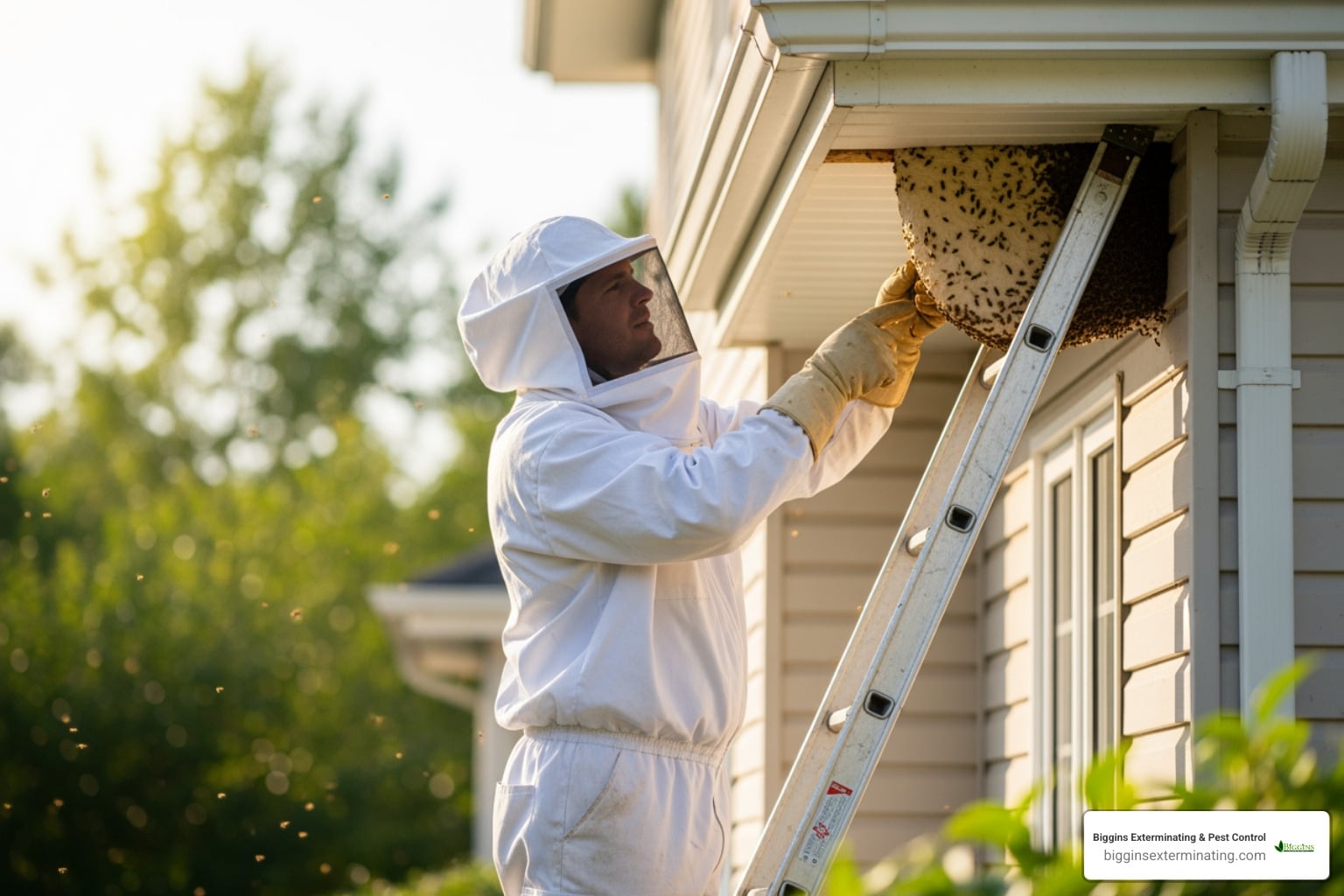
Why Professional Bee Removal Matters in Andover
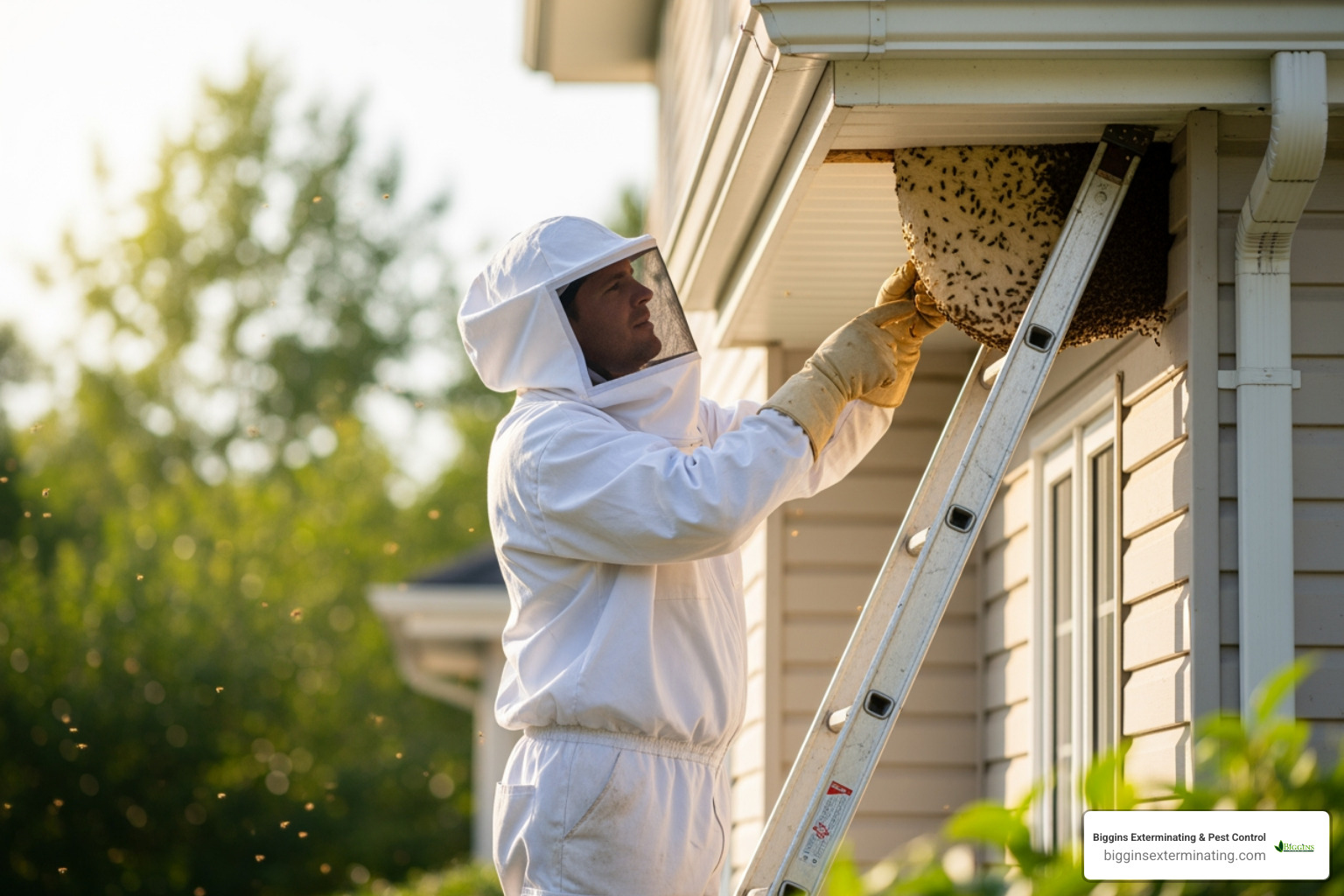
Bee removal Andover MA requires careful attention and professional expertise to keep your home and family safe. Whether you’re dealing with carpenter bees drilling into your deck, a yellow jacket nest under your eaves, or a swarm of honey bees near your front door, removing stinging insects is not a DIY project.
Here’s what you need to know:
- Identify the species first – Honey bees, carpenter bees, bumblebees, wasps, and hornets all require different removal approaches
- Call a professional immediately if you see a nest near high-traffic areas, hear buzzing in your walls, or notice swarms around your property
- Never seal entry holes without removing the hive – this forces bees into your living spaces
- Expect costs to vary based on nest location, species type, and extent of damage (typically ranging from $200 to $1,500+)
- Prevention is key – sealing cracks, removing attractants, and regular inspections help avoid future infestations
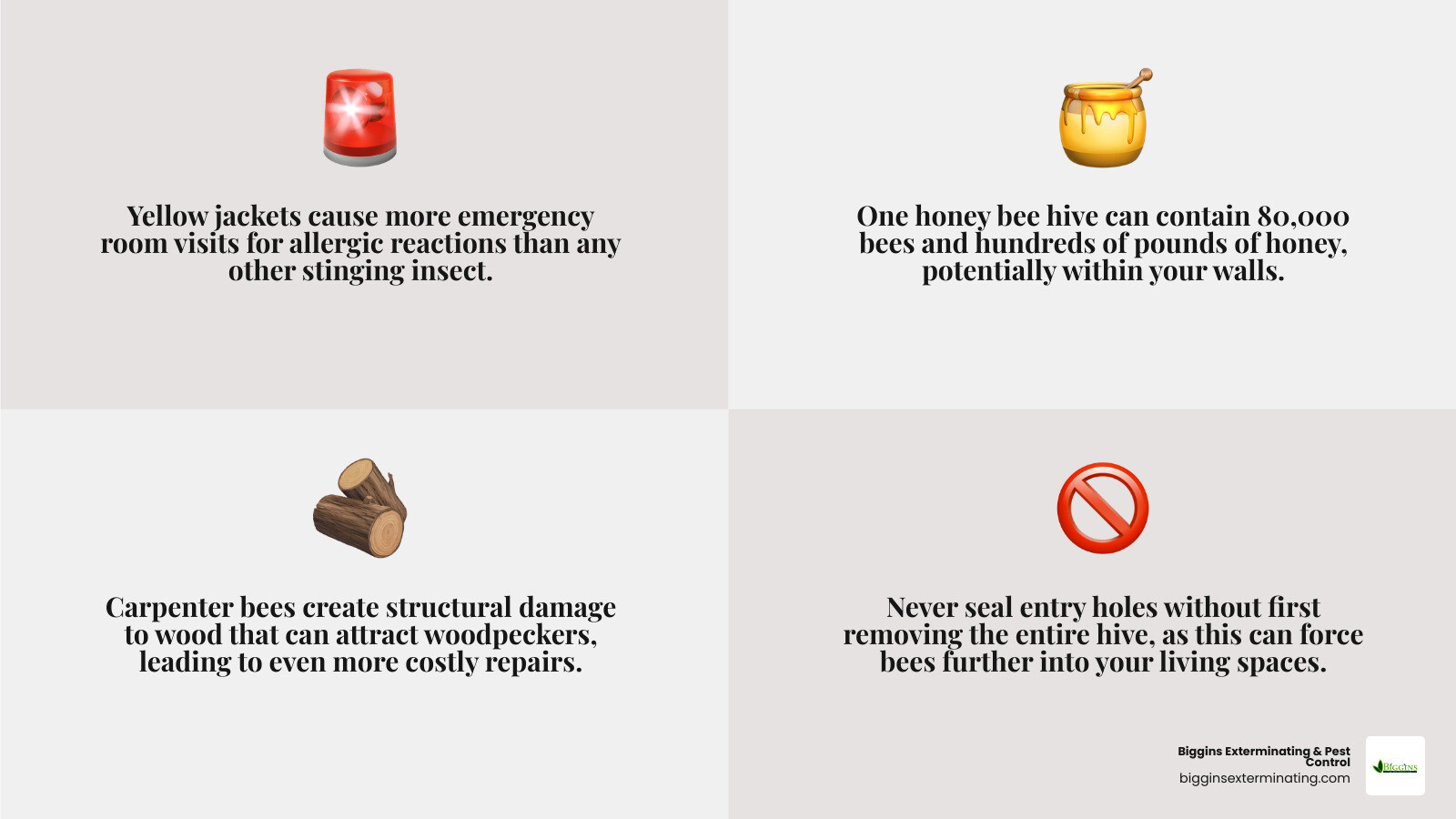
Why professional help is essential: Yellow jackets cause more emergency room visits for allergic reactions than any other stinging insect. One honey bee hive can contain 80,000 bees and hundreds of pounds of honey in your walls. Carpenter bees create structural damage that attracts woodpeckers, causing even more costly repairs.
I’m Stephen Biggins, and I’ve been helping Andover homeowners safely remove bees and wasps for decades through our family-owned pest control company. With over 40 years of experience in bee removal Andover MA and surrounding communities, I’ve seen how quickly a small problem can become a dangerous infestation.
Bee removal Andover MA glossary:
Identifying Common Stinging Insects in Andover
Before we can effectively address a stinging insect problem, it’s crucial to correctly identify what we’re dealing with. In Andover, MA, we encounter a variety of bees and wasps, each with unique characteristics and behaviors. Misidentification can lead to ineffective removal attempts or, worse, dangerous situations.
While many people use “bee” as a catch-all term, there are significant differences between bees and wasps that affect how we approach their removal. Bees are generally hairier and more robust, primarily feeding on pollen and nectar. Wasps, on the other hand, tend to be smoother, with slender bodies and a more pronounced “waist,” and their diet can include insects, nectar, and even human food.
Let’s look at some of the common stinging insects we find in Andover:Seeing bees around your Andover home can be a bit like an unexpected surprise party – sometimes harmless, sometimes a full-blown emergency! The risks associated with a bee or wasp infestation are real and varied, ranging from immediate health concerns to long-term structural damage to your property. We know that nobody wants to think about these things, but understanding the potential dangers helps us protect our families and homes.
Common Signs of an Infestation
Often, the first sign of a problem isn’t a single bee, but rather a noticeable increase in activity or the findy of a nest. Keep an eye out for these indicators:
- Visible Nests: Paper wasps build open, umbrella-shaped nests, often under eaves or deck railings. Bald-faced hornets construct large, enclosed, gray paper nests, often hanging from trees or structures.
- High Number of Bees or Wasps: If you suddenly see a lot of stinging insects congregating around a specific area of your home or yard, it’s a strong sign of a nearby nest.
- Swarms: A honey bee swarm is a large, dense cluster of bees resting temporarily before finding a new home. While often docile, they can be alarming.
- Buzzing Sounds in Walls or Ceilings: This is a classic sign of an established colony (bees or yellow jackets) inside your home’s structure. One honey bee hive can have an average of 80,000 bees inside it!
- Dark Patches on Walls or Ceilings: For honey bee infestations inside walls, this can indicate honey leaking through drywall as the comb expands or melts.
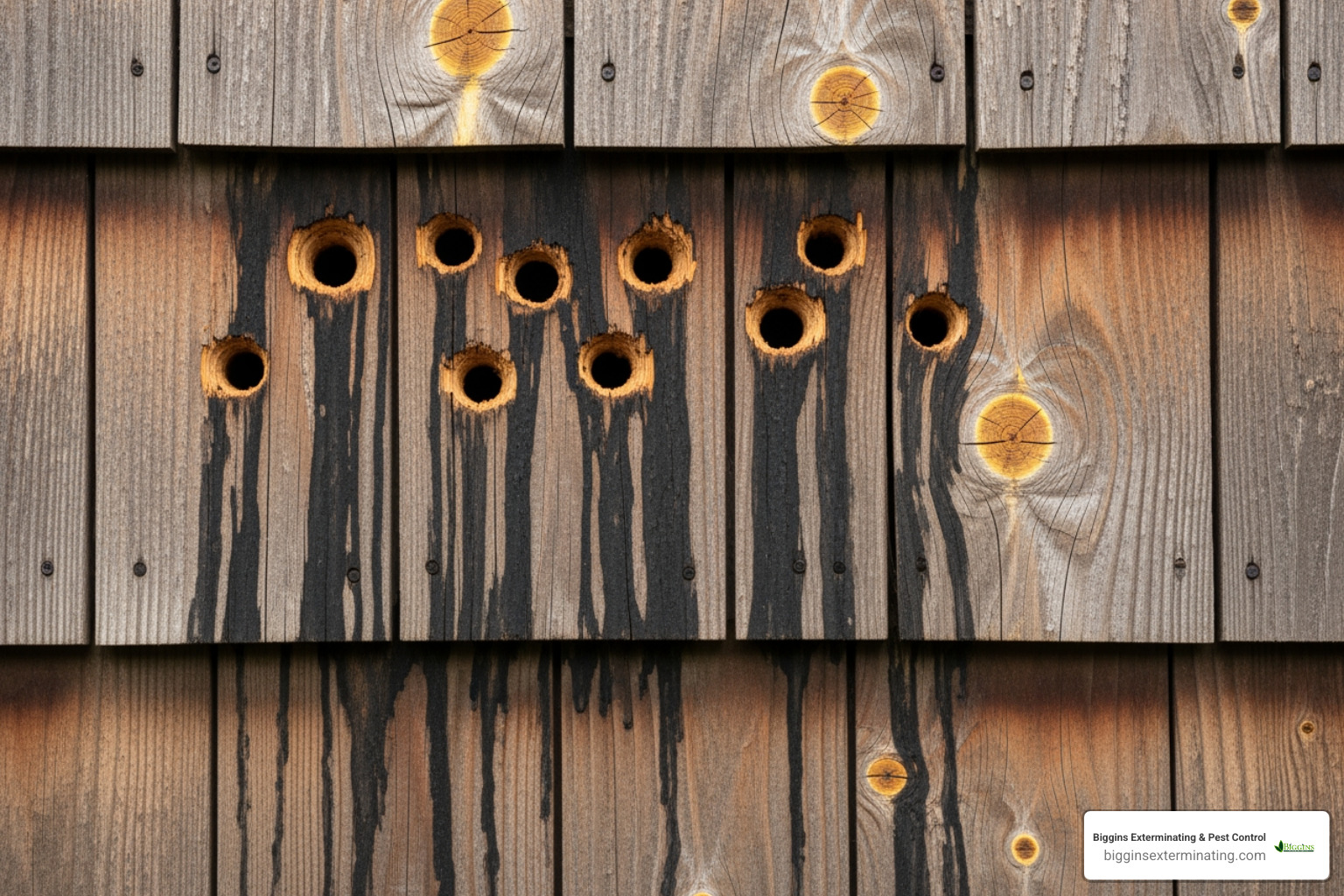
- Perfectly Round Holes in Wood: If you notice ½-inch diameter, perfectly round holes in your deck, fascia boards, or wooden siding, you likely have carpenter bees. These busy bees tunnel into wood to lay their eggs. You might also spot sawdust piles below the holes. For more information on dealing with these wood-boring pests, visit our page on Carpenter Bees Under Siding.
Risks to Your Property
Beyond the immediate threat of stings, stinging insects can cause significant damage to your Andover home:
- Carpenter Bee Tunnels: These bees don’t eat wood, but their tunneling weakens wooden structures over time. They prefer unpainted, untreated wood, making decks, eaves, and window frames vulnerable. Old nests are often reused year after year, expanding the damage.
- Woodpecker Damage: The tunnels created by carpenter bees attract woodpeckers, who will peck at your home’s siding to get to the bee larvae, causing even more extensive and unsightly damage.
- Weakened Structures: If carpenter bee activity is left unchecked for years, the structural integrity of wooden elements can be compromised.
- Honey and Wax Melting in Walls: Honey bee colonies established inside walls can store hundreds of pounds of honey. If the hive dies or temperatures rise, the honey and wax can melt, causing significant structural damage, staining, and attracting other pests like ants, rodents, and even mold. This can be a costly and messy cleanup.
- Attracting Other Pests: The presence of honey or dead insects from a colony can attract secondary pests, leading to a new set of problems.
The potential for property damage makes prompt and professional intervention essential. To learn more about managing these destructive pests, check out our guide on How to Get Rid of Wood Boring Bees.
Your Guide to Professional Bee Removal in Andover MA
When you find a bee or wasp infestation, your first thought might be to grab a can of spray. But hold your horses! Professional bee removal Andover MA is crucial for several reasons, primarily safety and effectiveness. We use specialized equipment and techniques to ensure the job is done right, protecting your family and your property.
The Professional Bee Removal Process
When you call us for bee removal Andover MA, here’s what you can expect:
- Thorough Inspection: Our experienced technicians will conduct a detailed inspection of your property to accurately locate the nest or entry points and assess the extent of the infestation.
- Species Identification: We’ll identify the specific type of stinging insect. This step is critical because removal strategies differ greatly between honey bees, carpenter bees, yellow jackets, and hornets. For example, honey bees are often candidates for relocation, while aggressive yellow jackets typically require extermination.
- Customized Treatment Plan: Based on our findings, we’ll develop a custom plan. This plan considers the species, nest location, size of the colony, and any specific concerns you might have.
- Safe Nest Removal/Treatment: Using appropriate protective gear and industry-leading methods, we will safely remove or treat the nest. Our goal is to eliminate the immediate threat while minimizing disruption to your home and the environment.
- Post-Treatment Prevention: After removal, we’ll advise you on steps to prevent future infestations, which may include sealing entry points or recommending follow-up treatments.
For reliable and experienced service, trust the experts. Find out more about our services at Local Bee Exterminators in My Area.
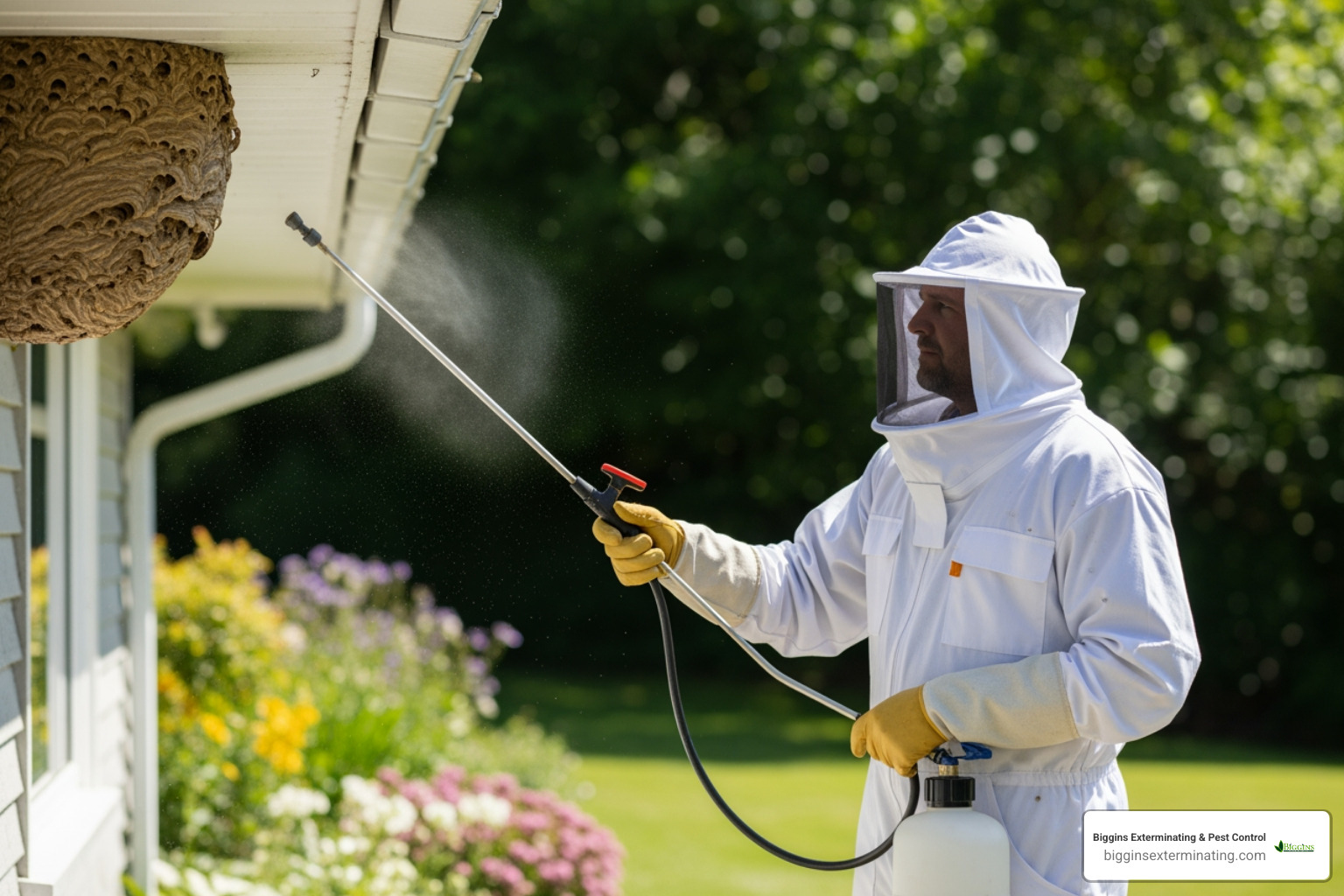
Why DIY Bee Removal is Risky
We understand the urge to handle a pest problem yourself. After all, who wants unwelcome guests? However, when it comes to stinging insects, DIY attempts often lead to more trouble than they’re worth.
- Ineffective Sprays: Over-the-counter sprays might kill a few individual insects, but they rarely reach the entire colony, especially if it’s hidden within walls or underground. This can just agitate the remaining insects.
- Aggressive Colonies: Disturbing a nest without proper protection can provoke a mass attack. Yellow jackets and hornets, for instance, are known for their aggressive defense and can sting repeatedly, chasing intruders across a property.
- Trapping Bees Inside Walls: If you seal an entry point without fully eliminating a colony inside a wall, the insects will seek another way out – often directly into your living space. This can turn a contained outdoor problem into a dangerous indoor emergency.
- Lack of Protective Gear: Professionals wear specialized bee suits and use tools designed to keep them safe. A T-shirt and gardening gloves won’t cut it against an angry swarm.
- Misidentifying the Species: As discussed, different insects require different approaches. Mistaking a protected honey bee for an aggressive yellow jacket could lead to unnecessary harm to beneficial pollinators or an ineffective, dangerous removal.
We always recommend leaving stinging insect removal to the professionals.
When to Call for Emergency Bee Removal in Andover MA
While not every bee sighting warrants an emergency call, some situations demand immediate professional attention to ensure safety:
- Aggressive Swarm Near Home: If you have a large, agitated swarm of bees or wasps in a high-traffic area (like near your front door, a playground, or patio), this poses an immediate threat, especially if children or pets are present.
- Bees/Wasps Inside Living Areas: Finding stinging insects regularly inside your home indicates a nest is likely within the structure or very close by. This is particularly urgent if they are aggressive.
- Known Severe Allergy in Household: If anyone in your home has a severe allergic reaction (anaphylaxis) to bee or wasp stings, any infestation becomes an immediate emergency. Yellow jackets cause the most causes of emergency room visits for allergic reactions than any other stinging bee or wasp.
- Nest in High-Traffic Area: A nest near a doorway, mailbox, or shed entrance increases the risk of accidental disturbance and stings.
For urgent situations, don’t hesitate to call. We’re here to help with Bee and Wasp Exterminator Near Me services.
What to Expect: Costs, Regulations, and Prevention
Dealing with stinging insects involves more than just getting rid of the current problem. It also means understanding the financial implications, local rules, and how to keep them from coming back.
Factors Influencing Bee Removal Costs in Andover
The cost of bee removal Andover MA can vary significantly. Here are the key factors we consider when providing an estimate:
- Nest Location and Accessibility: A nest high on a chimney, inside a wall, or deep underground will be more challenging and time-consuming to access and remove than one hanging from an accessible eave.
- Type of Bee or Wasp: Some species, like yellow jackets or bald-faced hornets, are more aggressive and require more specialized equipment and safety precautions, impacting the cost. Honey bee relocation, while environmentally friendly, can sometimes involve more labor if the hive is deeply embedded in a structure.
- Size of the Infestation: A small, newly formed paper wasp nest will cost less to remove than a mature honey bee colony with tens of thousands of individuals and extensive honeycomb. An average honey bee hive can consist of 30,000 to 60,000 bees.
- Extent of Damage and Repairs Needed: If bees have been nesting in a wall, there might be structural damage from tunneling (carpenter bees) or from melted honey and wax (honey bees) that requires remediation, adding to the overall expense.
Note on pricing: Average costs for bee and wasp removal in Massachusetts are based on publicly available internet data and do not reflect Biggins Exterminating’s actual pricing. These can typically range from $200 for a simple, accessible nest to over $1,500 for complex structural removals requiring repairs.
Local Regulations and Eco-Friendly Options for Bee Removal in Andover MA
Andover, like many communities in Massachusetts, recognizes the vital role bees play in our ecosystem. The good news is that we often have eco-friendly options available for bee removal Andover MA.
- Massachusetts Bee Protection Laws: Honey bees are vital pollinators, responsible for pollinating one-third of the foods we eat. This past winter, 80% of the bee colonies in Massachusetts died, highlighting the importance of saving every bee we can. Therefore, for honey bees, relocation is often the preferred and most environmentally responsible option, rather than extermination. We work to save bees whenever possible, connecting with local beekeepers for safe relocation.
- Protected Species: While honey bees are generally protected, other stinging insects like yellow jackets and hornets are typically treated differently due to their aggressive nature and lack of pollination benefits.
- Eco-Friendly Treatments and Integrated Pest Management (IPM): We prioritize methods that are safe for your family, pets, and the environment. This often involves Integrated Pest Management (IPM) strategies, which focus on long-term prevention, biological control, habitat modification, and targeted treatments only when necessary.
For more information on local ordinances or environmental concerns regarding pests in Andover, MA, residents can refer to the official Andover MA government website.
Effective Prevention Strategies for Your Home
An ounce of prevention is worth a pound of cure, especially when it comes to stinging insects. Here are some strategies to help keep your Andover home bee and wasp-free:
- Sealing Cracks and Crevices: Inspect your home’s exterior for any gaps, cracks, or holes, especially around utility lines, pipes, windows, and doors. Seal them with caulk or appropriate sealants to prevent insects from entering and nesting inside walls.
- Repairing Damaged Screens: Ensure all window and door screens are in good repair to keep flying insects out of your home.
- Removing Food Sources: Keep trash cans tightly sealed, clean up outdoor spills, and pick up fallen fruit from trees. Wasps and yellow jackets are attracted to sugary foods and proteins.
- Managing Flowering Plants: While beautiful, a high concentration of flowering plants close to your home can attract bees. Consider planting them further away from high-traffic areas.
- Regular Property Inspections: Periodically walk around your property, especially in spring and early summer, to look for early signs of nests. Check under eaves, deck railings, sheds, and in dense bushes. Early detection makes removal much simpler and safer.
By taking these proactive steps, you can significantly reduce the likelihood of needing professional bee removal Andover MA. For comprehensive pest management solutions, explore our Residential Pest Control Andover MA services.
Frequently Asked Questions about Bee Removal
What’s the difference between bees and wasps, and does it change the removal process?
Yes, absolutely! The differences between bees and wasps are significant and directly impact our removal approach.
- Appearance: Bees are typically hairy and stockier, with broader bodies, designed for pollen collection. Wasps are usually smoother, with slender bodies, a distinct “waist,” and often brighter, more defined yellow and black markings.
- Diet: Bees are primarily vegetarians, feeding on nectar and pollen. Wasps are predators, feeding on other insects, but also scavenge for sweets and proteins, especially yellow jackets, making them common at picnics.
- Behavior & Stinger: Most bees (except Africanized honey bees) are generally less aggressive unless their nest is directly threatened. Honey bees have barbed stingers and die after stinging once. Wasps have smooth stingers and can sting repeatedly. Yellow jackets are notoriously aggressive, especially in late summer and fall.
- Removal Strategy: For beneficial bees like honey bees, we prioritize live removal and relocation to a beekeeper whenever possible. For carpenter bees, it involves targeted treatment of their tunnels. For aggressive wasps and hornets, due to their danger, extermination is typically necessary. Our Bee and Wasp Removal services are custom to the specific insect.
Are honey bees protected in Massachusetts?
Yes, honey bees are vital to our environment and are considered a protected species in Massachusetts due to their crucial role in pollination. We make every effort to save and relocate honey bee colonies safely to local beekeepers rather than exterminate them. Extermination is always a last resort, only considered if relocation is impossible or if the colony poses an immediate, severe threat that cannot be mitigated otherwise. If you suspect you have honey bees, it’s best to consult with professionals who can assess the situation and explore relocation options.
How can I prevent bees from returning after removal?
Preventing future infestations is key to long-term peace of mind. Here’s how we help and what you can do:
- Seal Entry Points: After removing a nest, especially one inside a structure, we’ll advise on or perform exclusion work to seal off the entry points. This prevents new colonies or other pests from moving into the vacated space.
- Remove the Nest Completely: For honey bees, this means removing all honeycomb and wax. If left behind, it can attract other pests, lead to mold, or simply entice another swarm to move in.
- Address Attractants: Continue practicing good sanitation by keeping outdoor eating areas clean, trash cans sealed, and pet food put away.
- Professional Exclusion Work: Our team can identify and seal potential nesting sites in your home’s exterior, offering a more robust, long-term solution.
For comprehensive strategies and ongoing protection, explore our Pest Control Services Andover MA.
Conclusion
Dealing with bees and wasps can be a stressful and potentially dangerous situation for any homeowner. From the health risks associated with stings and allergic reactions to the significant property damage that can be caused by carpenter bees or honey bee colonies within walls, it’s a problem that demands swift and professional attention.
Accurate identification is the first critical step, as the removal process varies greatly depending on whether you’re facing honey bees, carpenter bees, yellow jackets, or hornets. We’ve seen it all in our decades of service, and we know that DIY attempts often fall short, leading to frustration, injury, or even worsening the problem.
At Biggins Exterminating & Pest Control, we are a family-owned and operated Massachusetts pest control company with over 40 years of trusted, high-quality service. We pride ourselves on our professionalism, expertise, and long-standing commitment to the Andover community and surrounding towns like Wilmington, Bedford, Billerica, Burlington, Lexington, North Reading, Tewksbury, and Woburn. We’re here to provide safe, effective, and humane bee removal Andover MA services, ensuring your home and family are protected.
For trusted and effective Pest Control in Andover MA, contact the experts at Biggins Exterminating today. We’re ready to help you reclaim your home and yard from unwanted stinging guests.