
Why Non-Toxic Carpenter Ant Control Matters for Massachusetts Families
Non-toxic carpenter ant control is one of the most searched pest solutions among Massachusetts homeowners every spring and summer — and for good reason.
Here are the most effective non-toxic methods to get rid of carpenter ants:
- Borax or boric acid bait — Mix with sugar or honey and place near ant trails. Workers carry it back to the colony, including the queen.
- Food-grade diatomaceous earth — Sprinkle along entry points and trails to dehydrate ants on contact.
- Vinegar spray — Equal parts white vinegar and water disrupts pheromone trails.
- Essential oils — Peppermint, clove, and citrus oils repel ants and break up scent trails.
- Boiling water — Pour directly into outdoor nests to destroy colonies at the source.
- Seal entry points — Caulk cracks, fix leaks, and remove damp wood to stop ants from moving in.
These methods are generally safe around kids and pets when used correctly. However, large or established colonies — especially those with satellite nests inside walls — often require professional treatment to fully eliminate.
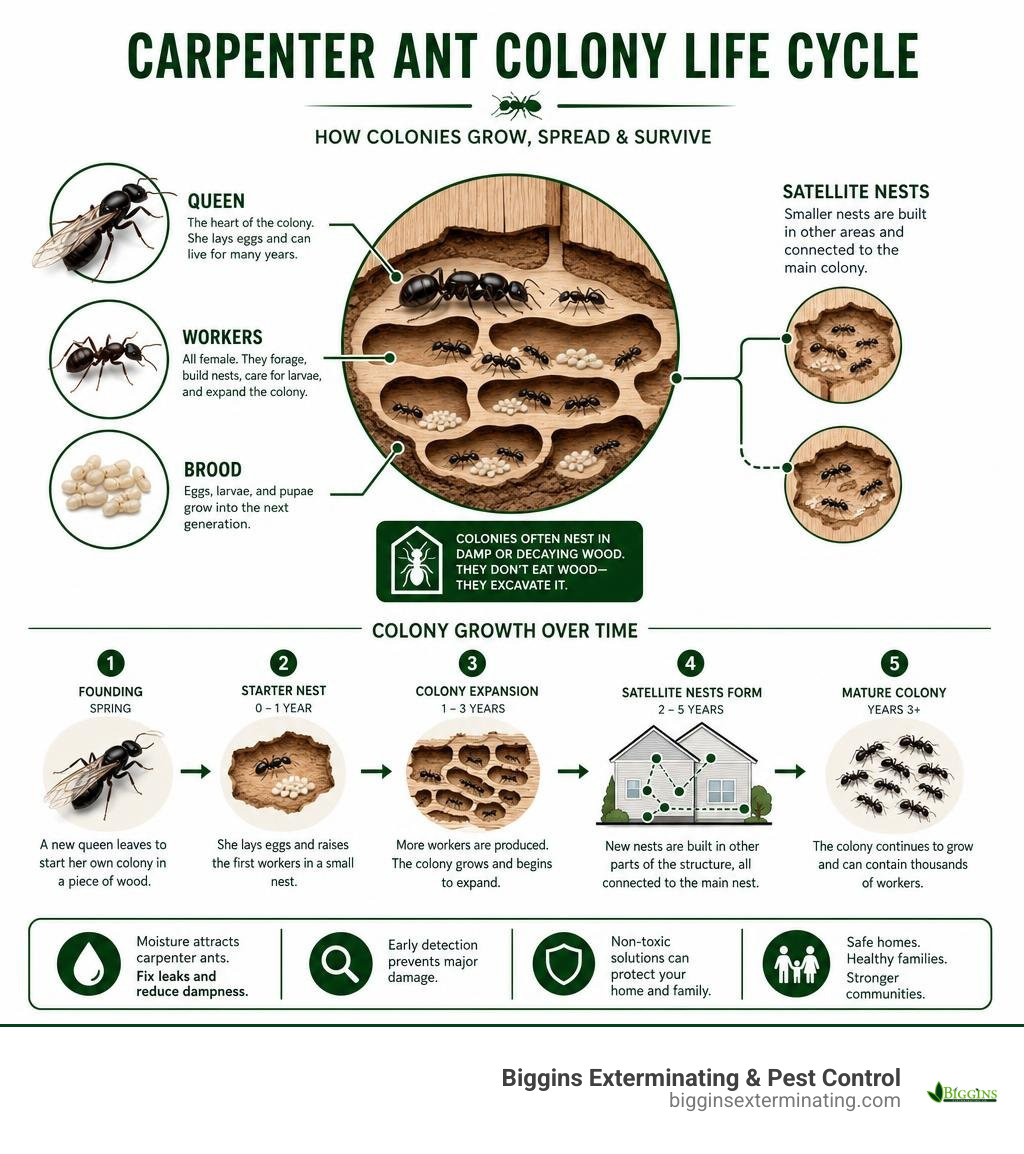
Carpenter ants are among the largest ants found in the US, measuring up to 20mm. Unlike termites, they don’t eat wood — they excavate it to build nests. That distinction matters, because the structural damage they cause is often slow and hidden, making early detection critical.
What draws them in? Moisture. Decaying or water-damaged wood is their first stop. Once inside, a colony can grow to around 3,000 workers within just a few years, with a queen that can live up to 25 years if left unchecked.
The good news: there are safe, family-friendly ways to fight back.
I’m Stephen Biggins, owner of Biggins Exterminating Co., a family-owned pest control company serving Wilmington, MA and surrounding communities since 1982. With over four decades of hands-on experience, I’ve helped hundreds of Massachusetts homeowners implement non-toxic carpenter ant control strategies that protect their families without harsh chemicals. In the sections below, I’ll walk you through exactly what works — and when it’s time to call in a professional.
Quick look at non-toxic carpenter ant control:
Identifying the Threat: Carpenter Ants vs. Termites
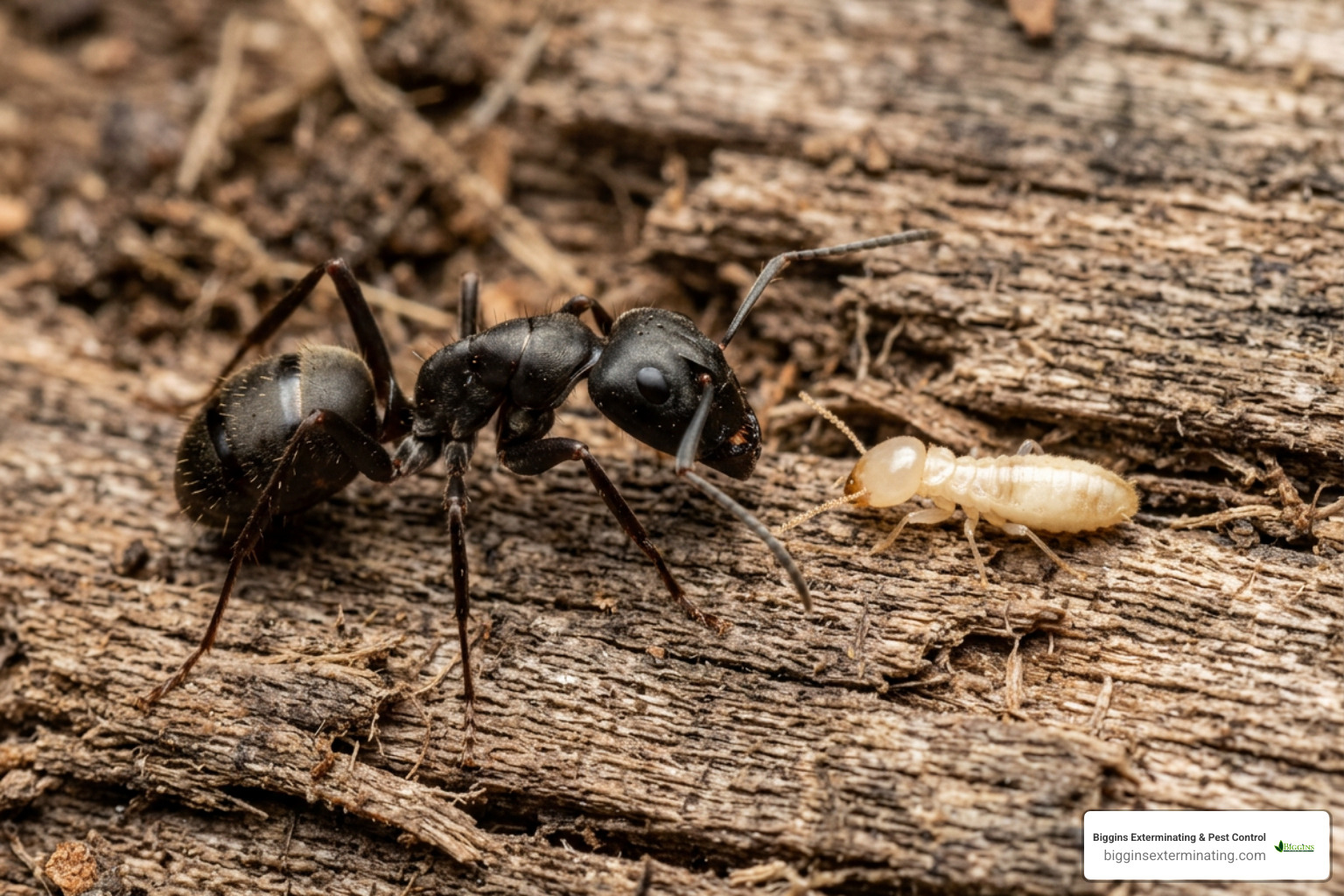
Before you start formulating your natural pest control plan, you must know exactly what you are dealing with. Treating a carpenter ant infestation requires a completely different strategy than dealing with termites. Because both pests target wooden structures, they are easily confused. However, their physical traits and the nature of the damage they leave behind are distinct.
To identify an active carpenter ant problem in your home, look for these telltale signs:
- Frass: This is the most obvious sign. Because carpenter ants do not eat wood, they must push the excavated material out of their galleries. This leaves small, irregular piles of sawdust-like debris (frass) under windowsills, baseboards, or joists. If you look closely, this pile will also contain insect fragments, soil, and dead ants.
- Rustling Sounds: A mature colony inside a wall void can actually be heard. If you listen closely to your walls at night when the house is quiet, you may hear a soft, dry rustling sound as thousands of tiny legs move through the wood galleries.
- Winged Swarmers: Seeing large, winged ants indoors during the late winter or early spring is a major red flag. These are the reproductive members of the colony looking to branch out and start new satellite nests.
- Moisture-Damaged Wood: Carpenter ants are highly attracted to soft, decaying wood. If you have had a recent roof leak, plumbing drip, or window condensation problem, check those areas first.
To help you tell these wood-destroying pests apart, we have put together this simple comparison:
| Feature | Carpenter Ants | Termites |
|---|---|---|
| Diet | Do not eat wood; they only excavate it for nesting. | Eat wood for nutrition (cellulose). |
| Galleries | Sandpaper-smooth, polished, and completely clean. | Rough, messy, and caked with mud or soil. |
| Mud Tubes | None. | Build mud tubes along foundations to stay hydrated. |
| Physical Appearance | Pinched waist, bent antennae, uneven wing sizes (swarmers). | Thick waist, straight antennae, equal wing sizes (swarmers). |
| Debris | Leave piles of sawdust-like “frass” near exit holes. | Leave no sawdust; drywood termites leave tiny fecal pellets. |
Why Carpenter Ants Invade Massachusetts Homes
In eastern Massachusetts towns like Woburn, Burlington, and Lexington, our beautiful historic homes and mature trees provide the perfect environment for carpenter ants. They typically enter homes through tiny entry points: gaps around utility lines, cracks in foundations, or branches touching the roofline.
Once inside, they look for water-damaged wood to establish satellite nests. While the main parent nest (which holds the queen, eggs, and youngest larvae) usually remains outdoors in a damp tree stump or firewood pile, the workers will readily build satellite nests inside your warm, cozy walls. For more details on how these pests behave once they get inside, check out our comprehensive guide on indoor infestations.
The Limits of DIY Natural Baits and Contact Killers
When homeowners seek out non-toxic carpenter ant control, they often start with kitchen-cupboard remedies. While these DIY methods are fantastic for minor, localized issues or temporary relief, they have distinct limitations when dealing with a large, mature colony.
Here is a breakdown of the most popular natural remedies and how they work:
- Borax & Boric Acid Baits: Mixing 1 part borax or boric acid with 3 parts powdered sugar or honey creates a slow-acting stomach poison. The sweetness attracts the foraging workers, who consume the bait and carry it back to share with the rest of the colony.
- Baking Soda & Sugar: Similar to borax, mixing equal parts baking soda and powdered sugar acts as a natural disruptor. When ants ingest baking soda, it reacts with their internal acids, neutralizing them and proving fatal.
- Food-Grade Diatomaceous Earth (DE): This is a natural powder made from fossilized algae. It acts as a mechanical desiccant. When ants walk through it, the microscopic sharp edges scratch their outer waxy exoskeleton, causing them to dehydrate and die.
- Essential Oils: Peppermint, clove, and citrus oils contain natural compounds that overwhelm the ants’ chemoreceptors. Spraying a mixture of these oils with water breaks up their pheromone trails, making it impossible for them to navigate back to food sources.
- Vinegar Sprays: A simple 50/50 mix of white vinegar and water is an excellent non-toxic contact killer and trail disruptor. It cleans away the invisible scent trails that scout ants leave behind.
- Boiling Water: For visible outdoor parent nests in lawns or driveways, pouring boiling water directly down the nest entry hole can collapse the galleries and kill ants on contact.
While these tools are valuable, they rarely solve an indoor infestation on their own. Contact sprays and repellents only kill the foraging workers—which represent less than 10% of the total colony. If you spray a strong repellent near an indoor nest, you risk causing “budding,” where the colony panics, splits, and creates multiple new nests deeper inside your walls. For a deeper look at the science of low-impact pest management, read this resource on least-toxic control methods.
Why Families Choose Non-Toxic Carpenter Ant Control
Traditional pest control often relies on broad-spectrum chemical sprays that leave synthetic residues on your baseboards, carpets, and lawns. For households with curious toddlers who crawl on the floor, or pets who lick their paws, these residues present a worrying hazard.
Furthermore, many homeowners in North Reading and Andover take great pride in their pollinator gardens. Spraying harsh chemicals outdoors can devastate local bee and butterfly populations. Choosing non-toxic alternatives ensures your home remains a safe haven for your family, your pets, and the local ecosystem. You can learn more about protecting your furry family members in our guide to safe pest control for pets.
The Challenge of Eliminating the Queen and Satellite Nests
The ultimate goal of any successful ant control program is to eliminate the queen. If the queen survives, she will simply continue to lay eggs, replacing lost workers and keeping the colony alive.
Because carpenter ants feed through a process called trophallaxis (the mouth-to-mouth transfer of liquid food), slow-acting baits are the only DIY method capable of reaching her. The workers must take the bait, walk all the way back to the parent nest, and feed it to the queen and larvae before they die.
If your bait is too strong, the workers die before reaching the nest. If it is too weak, it won’t be effective. Additionally, because a mature colony can have multiple satellite nests hidden deep inside wall voids, finding and treating every single pocket of activity without opening up your drywall is incredibly difficult. If you plan to mix your own baits, make sure you understand how to use boric acid safely around your home.
Choosing Professional Non-Toxic Carpenter Ant Control
When DIY methods fall short, you don’t have to compromise on your green living standards. Modern professional pest control has evolved far beyond the heavy chemical sprays of the past. Today, we can achieve complete colony elimination using highly targeted, eco-friendly protocols.
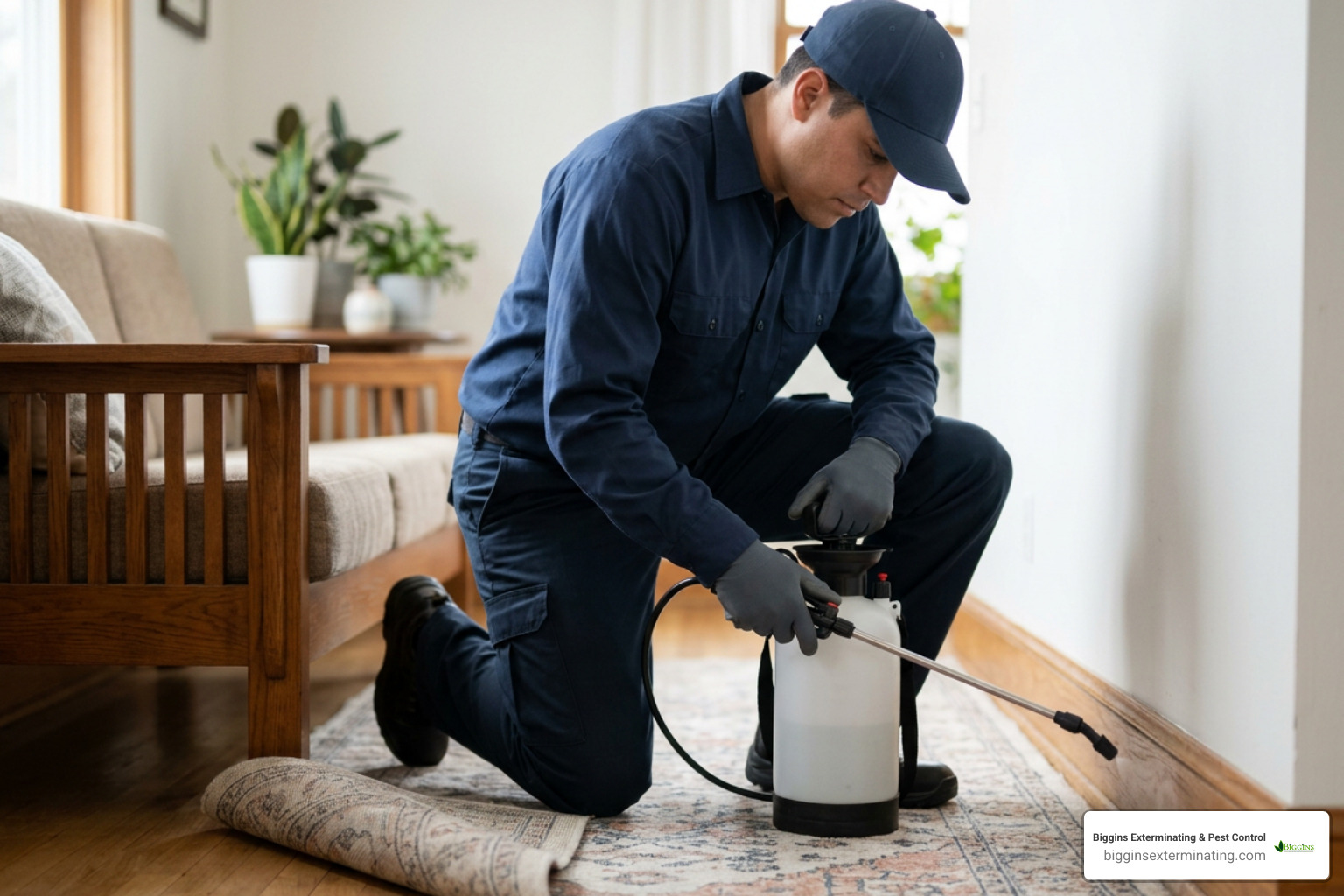
At Biggins Exterminating, our professional green treatments focus on the biology of the pest. Rather than coating your home in synthetic chemicals, we use:
- Botanical Enzymes & Plant Extracts: We use specialized formulas derived from natural plant defenses (like rosemary, peppermint, and clove oils) to neutralize pheromone trails and create long-lasting, kid-safe barriers.
- Mechanical Dusts & Desiccants: We apply non-toxic insecticidal dusts directly into wall voids and entry points where children and pets can never reach them.
- Targeted Biological Baits: We utilize highly advanced, low-impact baits that exploit the ants’ natural food-sharing behaviors to destroy the entire colony, including the queen, without contaminating your living space.
If you are seeing winged swarmers indoors, finding fresh piles of sawdust along your baseboards, or dealing with an infestation that keeps returning every spring, it is time to step away from the DIY sprays and bring in a professional. You can learn more about our philosophy on low-impact treatments by reading about our green pest control services.
Average Costs of Professional Ant Treatments
When considering professional help, it helps to understand the typical investment required. Based on publicly available internet data, the average cost for professional carpenter ant treatments ranges from $150 to $900.
Please note: this is a general industry range based on national data, and does not represent Biggins Exterminating’s specific pricing.
The wide price range exists because every home and infestation is unique. A simple localized treatment for a brand-new satellite nest on a small porch will sit at the lower end of the spectrum. Conversely, a massive, multi-year infestation with multiple satellite nests inside the walls of a large historic home—requiring detailed moisture mapping, wall-void treatments, and extensive exterior barriers—will fall on the higher end.
Preventing Future Infestations: Exclusion and Moisture Control
The most effective form of pest control is preventing them from entering in the first place. Because carpenter ants are entirely dependent on moisture and structural wood damage, keeping your home dry and sealed is 80% of the battle.
Follow these essential steps to secure your home:
- Fix All Leaks Immediately: Check under sinks, around tubs, and near your roof flashing. Repair any plumbing drips or roof leaks as soon as you find them.
- Improve Ventilation: Use dehumidifiers in damp basements and crawlspaces to keep wood joists dry.
- Seal the Perimeter: Use high-quality silicone caulk to seal cracks in your foundation, gaps around window frames, and holes where utility lines enter your home.
- Clear Wood Debris: Remove rotting stumps, old logs, and fallen branches from your yard.
- Keep Branches Away from the Structure: Prune back any tree limbs or shrubs that touch your siding or roof, as these act as natural bridges for scout ants.
For a complete step-by-step checklist on safeguarding your property, refer to our ultimate guide to carpenter ant prevention.
Implementing Non-Toxic Carpenter Ant Control in Your Yard
Your yard is the front line in the battle against carpenter ants. By managing the outdoor environment, you can stop them before they ever reach your foundation.
- Firewood Storage: Always store firewood at least 20 feet away from your home’s foundation and elevate it off the ground on a metal rack. Never bring firewood indoors until you are ready to burn it.
- Foundation Barriers: Create a dry, gravel barrier around the perimeter of your home. Ants hate crossing dry, hot stone barriers, making them less likely to crawl toward your siding.
- Outdoor Baiting: If you find active trails in your yard, placing natural, weather-resistant bait stations near those trails can stop the colony before it migrates toward your home. Discover the most effective strategies in our guide to the best baits for outdoor control.
Frequently Asked Questions About Carpenter Ants
Will carpenter ants bite humans?
Yes, carpenter ants can bite if they feel threatened or if you disturb their nest. Because they are so large, they have powerful mandibles that can pinch hard enough to break the skin, resulting in a mild, stinging sensation. However, they are non-venomous and do not sting or inject acid into the bite, meaning their bites are harmless and only require a quick wash with soap and water.
How long does it take for natural methods to fully eliminate a colony?
Typically, natural baiting methods take 2 to 4 weeks to fully eliminate a colony. Because these non-toxic baits rely on the slow-acting transfer of food (trophallaxis) to reach the queen and the larvae deep inside the nest, patience is key. If the colony is massive or has multiple satellite nests, it may take slightly longer to see complete results.
What is the difference between a regular ant and a carpenter ant?
The easiest way to tell them apart is by their size and shape. Carpenter ants are significantly larger than common house ants, ranging from 7mm to 20mm in length. Physically, a carpenter ant has an evenly rounded thorax (the middle section of the body) and a single node (a small hump) connecting the thorax to the abdomen. Behaviorally, regular ants are simply searching for food spills, while carpenter ants are actively excavating smooth galleries inside wooden structures.
Conclusion
Managing a carpenter ant infestation doesn’t mean you have to flood your living spaces with harsh, synthetic chemicals. By focusing on moisture control, sealing entry points, and utilizing smart, biology-targeted natural remedies, you can protect your home’s structural integrity while keeping your kids and pets completely safe.
If you live in Wilmington, Andover, Bedford, Billerica, Burlington, Lexington, North Reading, Tewksbury, or Woburn, MA, and you are ready to put an end to your carpenter ant worries, we are here to help. At Biggins Exterminating, we are a local, family-owned and operated company with over 40 years of trusted service. We don’t require contracts, we stand behind our work with solid warranties, and we treat your home with the exact same care we would our own.
Don’t let wood-destroying pests compromise your peace of mind. Schedule a professional carpenter ant treatment with us today, and let’s make sure those ants move out for good!
