Why Protecting Your Home from Silent Destroyers Matters
Subterranean termite control is crucial for Massachusetts homeowners. These hidden pests cause over $5 billion in property damage annually across the U.S., and repairs are rarely covered by insurance. Termites work silently inside your walls and floors, compromising your home’s structural integrity 24/7.
The most effective subterranean termite control methods include:
- Liquid Soil Treatment – Creates a chemical barrier around your foundation (lasts 4-10 years)
- Termite Baiting Systems – Eliminates entire colonies including the queen (requires ongoing monitoring)
- Wood Treatment – Preventative application of borate solutions to structural wood
- Fumigation – Comprehensive whole-structure treatment for severe infestations
- Microwave Treatment – Chemical-free spot treatment for localized areas
Spring is peak swarming season for subterranean termites in Massachusetts. As temperatures warm, winged termites emerge to establish new colonies, often targeting your home. A single colony can grow to two million workers, and even a small one can consume over two feet of a 2×4 board in a year.
The challenge is that termites are master hiders. They build mud tubes to travel unseen, and their damage often goes undetected for years. By the time you notice blistering paint or hollow-sounding wood, significant structural damage may have already occurred.
I’m Stephen Biggins, and since 1982, my family’s company has protected homes in Wilmington and surrounding communities from termite damage. Our experience shows that early detection and the right treatment can save homeowners thousands in repairs.
Identifying a Subterranean Termite Infestation
Spotting subterranean termites is tricky since they remain hidden. Knowing the signs is key to catching an infestation early. Here are common indicators we see in Andover, Bedford, and other Massachusetts towns:
- Mud Tubes: Look for pencil-sized tunnels on foundation walls, in crawl spaces, or along pipes. Termites build these tubes from soil and wood to travel safely between their underground colony and your home. You can see an example here: Hollow tubes constructed from soil, climbing up a foundation is a sign of termite activity.
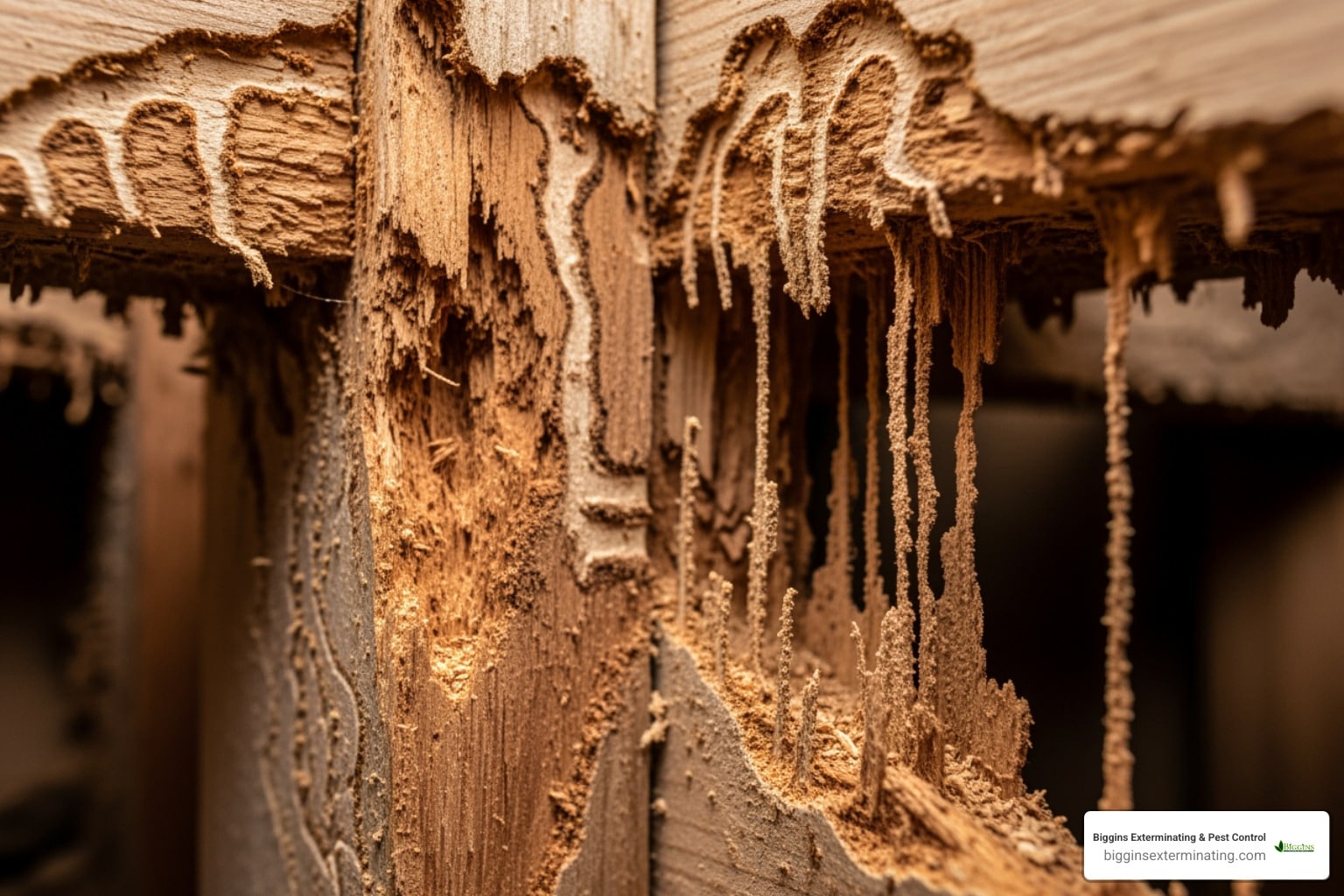
- Damaged Wood: Termites eat wood from the inside out, leaving a thin outer layer. Infested wood sounds hollow when tapped and may have a “honeycombed” appearance. Learn more on our page: Signs of Termite Damage.
- Blistering or Uneven Paint: Tunnels just below the surface can cause paint or wallpaper to bubble, resembling water damage.
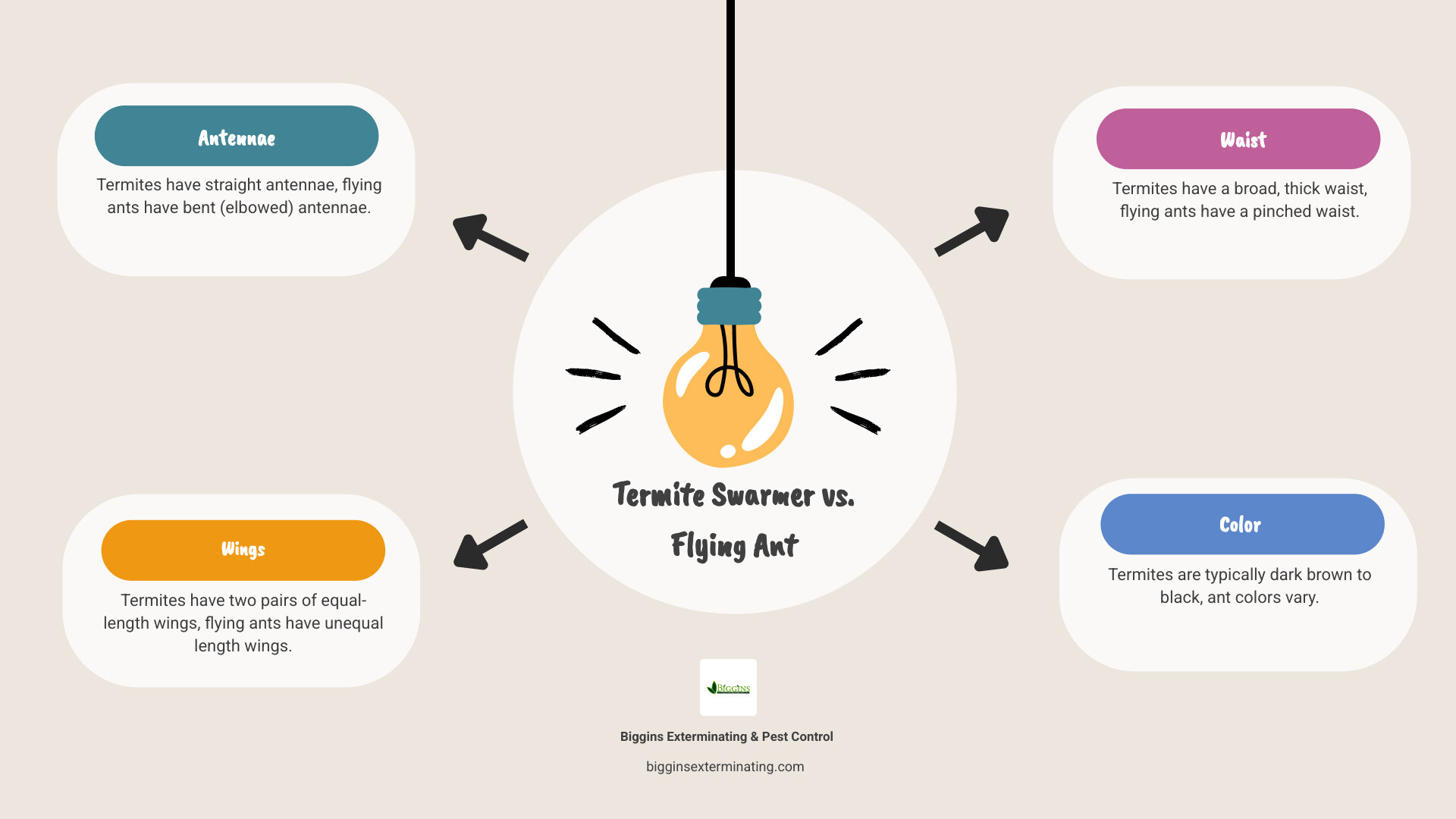
- Discarded Wings: After spring swarms, reproductive termites shed their wings. Piles of these small, translucent wings near windowsills and doors indicate an active colony.
- Termite Droppings (Frass): While uncommon for subterranean termites, you might find small piles of fecal pellets that look like sawdust or coffee grounds near infested wood.
Understanding these signs is crucial. For more help, see our guides on How to Tell If You Have Termites and Signs of Termites. If you’re unsure if you have termites or carpenter ants, our article can help: How to Distinguish Carpenter Ants From Termites: Identifying the Menace in Your Home.
Subterranean vs. Other Termites
It’s important to distinguish between termite types, as control methods differ.
- Subterranean Termites: The most common and destructive type in Massachusetts, they live in underground colonies and need contact with soil for moisture. They build mud tubes to reach food sources (your home’s wood). Learn more about their tunnels on our Termite Mud Tunnels page.
- Drywood Termites: These termites live directly in dry wood without needing soil contact. They get moisture from the wood they consume and leave behind distinct hexagonal fecal pellets (frass).
- Dampwood Termites: Larger than other types, they infest wood with high moisture content, like decaying stumps or wood damaged by leaks. They do not build mud tubes.
For Massachusetts homeowners, subterranean termites are the primary threat. For more identification details, refer to this factsheet: More information about termite identification.
The Life Cycle of a Colony
A termite colony starts with a king and queen. The queen can lay thousands of eggs daily, leading to rapid growth. Eggs hatch into nymphs, which develop into three castes:
- Workers: The most numerous, they are responsible for foraging for wood, building tunnels, and causing all the damage.
- Soldiers: They defend the colony from predators like ants with their large mandibles.
- Reproductives (Swarmers): These winged termites emerge in the spring to mate and start new colonies.
A mature colony can have 60,000 to two million workers and takes 5-10 years to develop. This slow growth allows an infestation to go unnoticed for years while damage accumulates. See their destructive power here: Watch firsthand as termites devour a tiny house.
Top 5 Professional Subterranean Termite Control Methods
When it comes to subterranean termite control, DIY efforts often fall short, especially for established infestations. Termites are persistent, and their colonies are vast and hidden. Professional pest control services offer the expertise, specialized equipment, and effective products needed for comprehensive and long-lasting solutions. At Biggins Exterminating, we’ve seen how crucial a professional approach is to protect your home. For more on why professional help is best, visit our Termite Pest Control page.
Here are the top 5 professional subterranean termite treatment methods:
1. Liquid Soil Treatment (Termite Barrier)
Liquid soil treatment is a highly effective method for subterranean termite control, creating a continuous chemical barrier in the soil around your home’s foundation.
How it works: Technicians apply a liquid termiticide to the soil by digging a shallow trench around the foundation. For concrete slabs like patios or garages, small holes are drilled to inject the termiticide underneath, ensuring a complete barrier. We use non-repellent termiticides, which are undetectable to termites. They pass through the treated zone, carrying the product back to the colony and spreading it to others, leading to colony elimination.
Pros:
- Long-lasting: Provides protection for 4 to 10 years or more.
- Fast-acting: Begins eliminating the colony quickly upon contact.
- Effective: Creates a barrier that stops foraging termites and prevents new entry.
- Cost-effective: A comprehensive solution for active infestations.
Cons:
- Invasive: Requires trenching and sometimes drilling into concrete.
- Chemical use: Involves insecticides, but professionals apply them safely to minimize environmental impact.
- Barrier disruption: Landscaping or plumbing work can create gaps in the barrier, potentially requiring re-treatment.
For more details on this method, check out our Termite Barrier Treatment page.
2. Termite Baiting Systems
Termite baiting systems provide a less invasive, eco-friendly approach to subterranean termite control.
How it works: We install bait stations in the ground around your home’s perimeter. These stations contain a cellulose material that attracts termites. Once termites begin feeding, a slow-acting bait containing an insect growth regulator (IGR) is introduced. Foraging termites consume the bait and share it with the rest of the colony, including the queen. The IGR prevents termites from molting, which gradually eliminates the entire colony.
Pros:
- Less invasive: No trenching or drilling is required, preserving your landscaping.
- Eco-friendly: Uses a small, targeted amount of insecticide within sealed stations.
- Targets the entire colony: Designed to eliminate the queen for long-term relief.
- Monitoring capability: Allows for ongoing monitoring of termite activity.
Cons:
- Slower results: It can take several months for the colony to be eliminated, especially in colder climates like Massachusetts.
- Requires monitoring: Regular professional maintenance is necessary for effectiveness.
- Dependent on termite foraging: Success relies on termites finding and feeding on the bait.
Baiting systems are excellent for long-term management and prevention. Learn more on our page: How to Get Rid of Termites Permanently.
3. Wood Treatment
Wood treatment is a preventative or supplementary measure for subterranean termite control, not a standalone solution for active infestations.
How it works: A borate-based termiticide is applied directly to wooden surfaces. The borates penetrate the wood and kill termites that consume it. This is ideal for pre-construction application or for treating exposed wood like floor joists and sill plates in existing homes.
Pros:
- Preventative: Excellent for deterring termites in new construction or remodels.
- Targeted: Directly protects vulnerable wood.
- Low toxicity: Borates are considered environmentally friendly and have low toxicity to mammals.
- Long-lasting: Can remain effective for many years.
Cons:
- Limited penetration: Only treats the outer layers of wood.
- Not a standalone solution: Does not eliminate the colony in the soil and is best used with other methods for active infestations.
- Requires accessibility: Only exposed wood can be treated.
4. Fumigation (Structural Tenting)
Fumigation, or structural tenting, is a comprehensive method typically used for drywood termites, but its application for subterranean termite control is limited.
How it works: The entire home is tented and filled with a fumigant gas that penetrates all areas, killing termites inside the structure. After treatment, the home is aerated until it is safe for re-entry.
When is it suitable for subterranean termites? Fumigation is generally not the primary method for subterranean termites because it doesn’t affect the main colony living in the soil underground. It only kills termites currently inside the house. It may be used in rare cases of “aerial” colonies within the structure or alongside a soil treatment.
Pros:
- Comprehensive kill within structure: Eliminates all termites inside the building.
- Reaches inaccessible areas: Gas penetrates spaces where other treatments can’t reach.
Cons:
- No residual effect: Offers no protection against the underground colony re-infesting the home.
- Highly disruptive: Residents must vacate for several days.
- Expensive: One of the most costly treatment options.
- Logistically complex: Requires highly trained specialists.
5. Microwave Spot Treatment
Microwave spot treatment is a modern, chemical-free option for localized subterranean termite control in specific, accessible areas.
How it works: A specialized device directs microwaves into infested wood, generating intense heat that kills termites and their eggs. This allows technicians to target only the affected sections.
Pros:
- Chemical-free: An ideal option for those with chemical sensitivities.
- Fast and precise: Quickly treats localized spots with minimal disruption.
- Non-invasive: No need to vacate the home.
Cons:
- Limited to accessible areas: Cannot treat termites inside walls or other inaccessible spots.
- Doesn’t address the main colony: Only kills termites in the treated wood, not the colony in the soil. It must be used with a barrier or baiting system for full control.
- Skill-dependent: Requires a skilled technician for effective application.
Preventing Future Infestations: A Homeowner’s Checklist
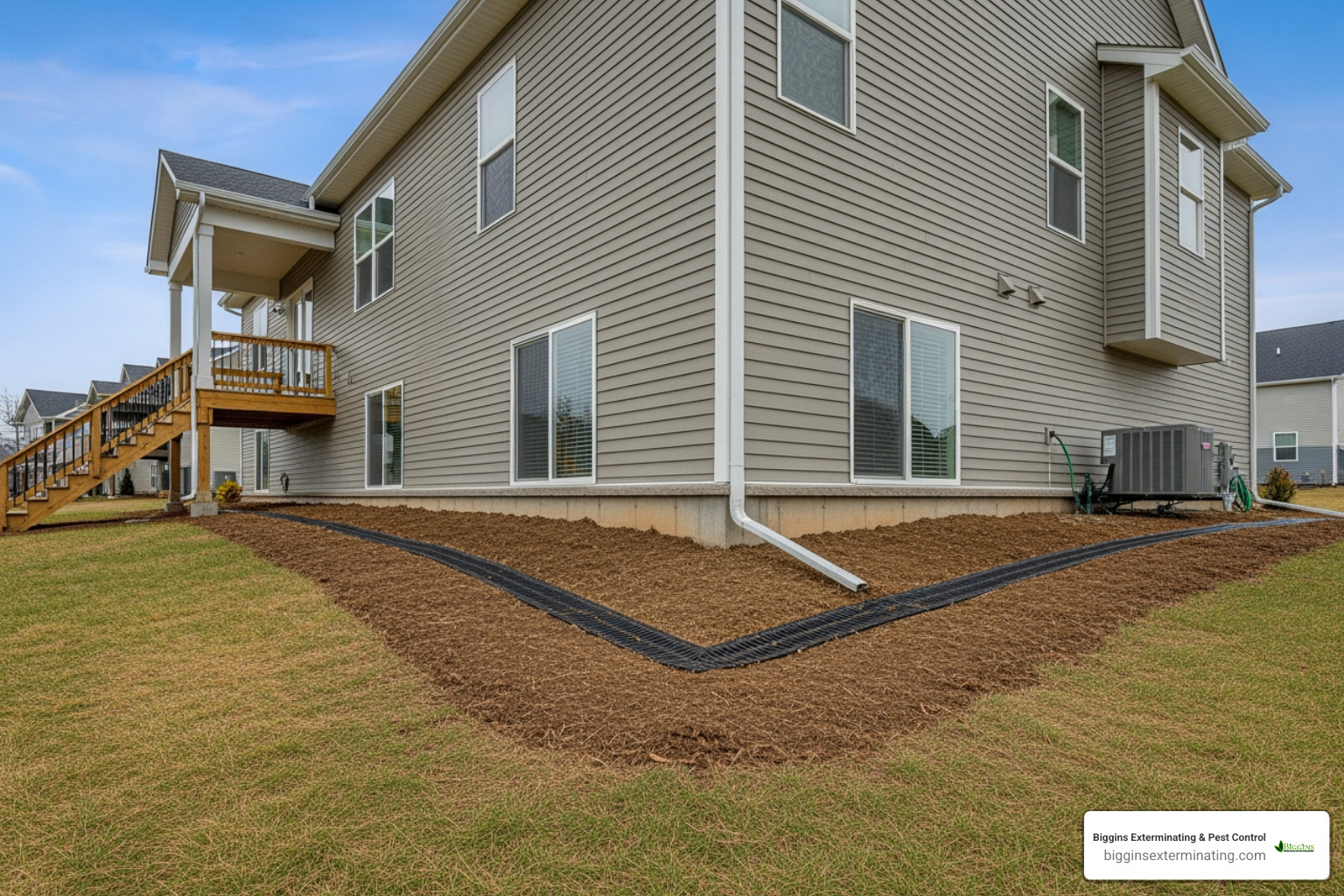
Proactive prevention is better than treating an active infestation. Taking these steps can significantly reduce the risk of termites targeting your home in Burlington, Lexington, and other Massachusetts communities.
- Control Moisture: Termites need moisture. Ensure gutters and downspouts divert water away from the foundation, repair all leaks promptly, and reduce humidity in crawl spaces with proper ventilation.
- Eliminate Wood-to-Soil Contact: This is a primary termite entry point. Maintain a 6-inch gap between soil and any wood siding or trim. Store firewood at least 20 feet from your home and off the ground.
- Remove Wood Debris: Clear away old stumps, construction lumber, and other wood debris from around your foundation.
- Seal Foundation Cracks: Seal any cracks in your foundation and around utility entry points (pipes, wires) to block termite access.
- Manage Landscaping: Keep mulch at least 6 inches from your foundation and avoid planting dense shrubs against the house, as they trap moisture.
- Schedule Regular Inspections: Annual professional inspections are your best defense. Our trained technicians can spot subtle signs of termite activity you might miss. We offer comprehensive Termite Inspection Services for your peace of mind.
These steps are a robust strategy for Termite Prevention.
Choosing the Right Treatment & The Role of a Professional
Deciding on the best subterranean termite control method for your home in Tewksbury or Woburn can be overwhelming. A professional pest control service provides the expert assessment, customized solutions, and safe application needed to protect your property.
A professional service offers:
- Expert Assessment: Trained technicians accurately identify the termite species, infestation level, and entry points.
- Customized Solutions: We create a treatment plan custom to your home’s construction and specific termite problem.
- Specialized Equipment: We use advanced tools and effective products not available to the public.
- Safety & Warranties: Professionals are trained in safe application, and reputable companies like Biggins Exterminating offer warranties for peace of mind.
For advice on selecting a reliable service, this external guide is helpful: How to Select a Termite Control Service. If you need an Exterminator for Termites, we are here to help.
How to Choose the Right Subterranean Termite Control Method
Choosing the right method depends on several factors, including infestation level, home construction, budget, and environmental concerns. A professional can help you weigh these factors.
Here’s a table comparing the different methods to help you visualize the choices:
| Treatment Method | Effectiveness | Speed of Results | Invasiveness | Residual Protection |
|---|---|---|---|---|
| Liquid Soil Treatment | High (colony elimination & barrier) | Fast | Moderate | 4-10 years |
| Termite Baiting Systems | High (colony elimination) | Slower | Low | Continuous, with ongoing monitoring |
| Wood Treatment | Moderate (prevention, supplementary) | Varies | Low | Many years (for treated wood) |
| Fumigation | High (kills all termites inside structure) | Fast | High | None (no residual) |
| Microwave Spot Treatment | Moderate (localized kill) | Fast | Low | None (no residual, only kills treated area) |
Why Professional Subterranean Termite Control is Crucial
Professional subterranean termite control is a necessity, not a convenience. Billions of dollars in termite damage occur annually in the U.S.
- Accurate Identification: Misidentification leads to ineffective treatment.
- Effective Products: Professionals have access to proven, professional-grade products.
- Long-Term Strategy: We implement a comprehensive plan for prevention, monitoring, and follow-up.
- Avoiding Costly Damage: Early professional intervention prevents structural damage that can cost thousands to repair.
Trusting experts is the smart choice to protect your most valuable asset. We pride ourselves on being one of the Best Rated Termite Companies in the North Reading and Burlington areas.
Frequently Asked Questions about Subterranean Termite Control
What is the most effective method for subterranean termite treatment?
For complete subterranean termite control, liquid soil treatments and baiting systems are the most effective. Liquid treatments create an immediate chemical barrier for fast control, lasting 4-10 years. Baiting systems are slower but eliminate the entire colony over time. The best method depends on your home’s construction, the severity of the infestation, and your preferences. A professional inspection is key to making the right choice.
Are there eco-friendly termite treatments available?
Yes. Termite baiting systems are an eco-friendly option, using small amounts of targeted insecticide in sealed stations to minimize environmental impact. For localized infestations, microwave treatment is a chemical-free method that uses heat. Borate-based wood treatments are also considered to have low toxicity.
How long does a termite treatment last?
The duration of subterranean termite control varies by method:
- Liquid Soil Treatments: A liquid barrier can last from four to ten years, depending on the product and soil conditions.
- Termite Baiting Systems: These provide continuous protection as long as they are professionally monitored and maintained.
- Wood Treatments: Borate treatments can protect wood for the life of the structure if it remains dry.
- Fumigation and Microwave Treatments: These offer no residual protection and only kill termites present during treatment. They must be paired with other methods for long-term control.
Annual inspections are always recommended to ensure ongoing protection.
Protect Your Wilmington Home from Termites
Subterranean termites pose a significant and costly threat to your property, but you don’t have to face them alone. Early detection through professional inspection and implementing a strategic control plan are the keys to protecting your investment. With over 40 years of experience serving the Wilmington, MA area, the family-owned team at Biggins Exterminating & Pest Control provides reliable, contract-free solutions to eliminate termites and give you peace of mind. Don’t wait for the damage to become severe; contact us today for a comprehensive pest control evaluation.