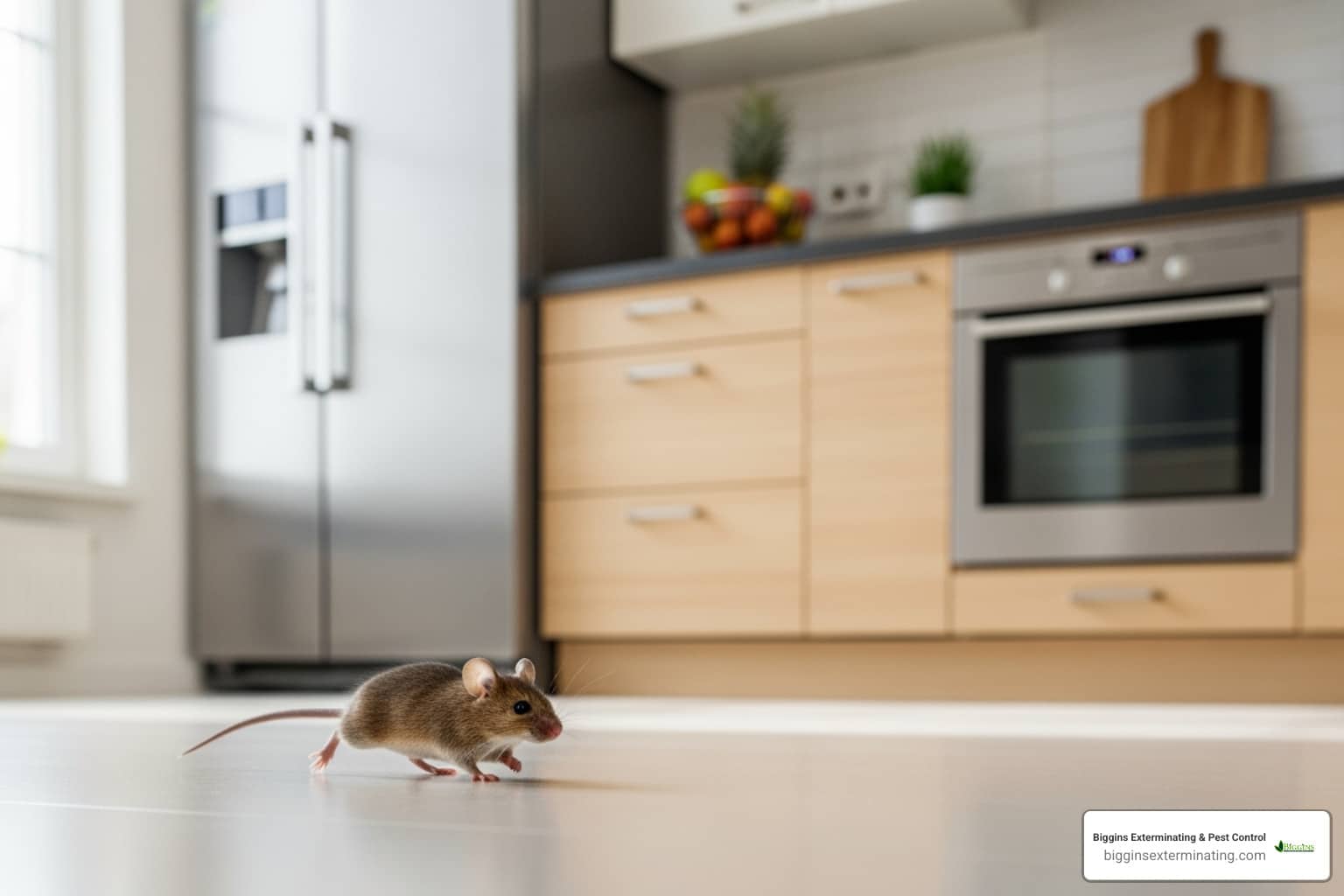
Why Rodent Infestations Demand Immediate Attention
Pest control rodent treatment is a professional service combining inspection, removal, exclusion, and prevention to eliminate rodents and keep them from returning. Here’s what you need to know:
What Professional Rodent Treatment Includes:
- Thorough Inspection – Identifying entry points, nests, and infestation severity
- Strategic Removal – Using tamper-resistant bait stations and professional-grade traps
- Exclusion Work – Sealing gaps as small as 5mm to prevent re-entry
- Ongoing Monitoring – Follow-up visits to ensure complete elimination
- Prevention Guidance – Expert advice on sanitation and property maintenance
As Massachusetts temperatures drop, rodents seek warmth and shelter in your home. A single mouse can squeeze through a dime-sized gap and quickly lead to a full-blown infestation, with one female producing up to 36 offspring annually.
The stakes are high. Rodents contaminate food, spread diseases like Hantavirus and Salmonellosis, and cause structural damage by chewing through wiring and insulation, creating fire hazards. They are a real threat to your family’s health and safety.
DIY methods often fail because rodents are trap-shy and can be resistant to store-bought poisons. Crucially, these methods don’t seal the entry points, allowing new rodents to replace any you eliminate.
I’m Stephen Biggins of Biggins Exterminating Co. For over 40 years, our family-owned business has protected Massachusetts homes. Our pest control rodent treatment uses Integrated Pest Management for lasting results, backed by our warranty: if the pests come back, so do we.
Unmasking the Intruders: Common Rodents and Their Dangers
The scratching in your walls or the droppings behind the stove are calling cards from uninvited guests. Knowing who you’re dealing with is key to effective rodent control.
After four decades in this business, I know that identifying your intruder is the first step to successful pest control rodent treatment. Let’s meet the usual suspects in Massachusetts.
Common Rodents in Massachusetts Homes

In Massachusetts, you’re most likely dealing with the House Mouse or the Norway Rat. Occasionally, we also see Roof Rats. Recognizing their differences helps us customize the most effective treatment.
The House Mouse is our most common invader, small enough to fit through a pencil-sized gap (5mm). They have large ears, a pointed snout, and reproduce incredibly fast. One female can have several litters a year, meaning a small problem can escalate quickly. They survive on very little food but contaminate much more, leaving 50-60 droppings nightly. Our guide on how to get rid of house mice offers more detail.
Norway Rats are much larger, preferring basements and ground floors. They have blunt snouts, small ears, and are powerful burrowers. Cold weather drives them toward the warmth of your foundation.
The Roof Rat is a skilled climber, often found in attics and upper floors. They are sleeker than Norway rats with a long tail and use overhanging tree branches to access homes.
Identifying the species is essential, as treatment for a Norway rat in a basement differs from a roof rat in an attic. Our guide on How to Identify and Prevent Rodent Infestations in Massachusetts can help.
The Hidden Dangers: Health and Property Risks
Rodents are active threats to your family’s health and your home’s integrity. The dangers go far beyond the “ick factor.”
Rodents are serious public health hazards. They spread diseases through their bites, urine, and feces. According to the Centers for Disease Control and Prevention (CDC), this includes Hantavirus, a potentially fatal respiratory disease, and Salmonellosis, a severe food poisoning. A single mouse can leave thousands of droppings per year and contaminates far more food than it eats, turning your pantry into a biohazard zone.
Beyond health risks, property damage is a major concern. Rodents’ constantly growing teeth lead them to gnaw on electrical wiring, creating serious fire hazards. They also shred insulation for nests, which drives up heating bills during our cold winters. They also damage pipes, leading to water leaks, and can even chew through wooden beams and soft concrete, compromising your home’s structure.
Finally, rodents often carry other pests like fleas, mites, and ticks into your home, creating a secondary infestation that can affect your family and pets.
Understanding these dangers underscores why professional pest control rodent treatment is essential protection. For a detailed breakdown, see our article on the Top 5 Dangers of Rodents in and Around Your Home or Business.
DIY Methods vs. Professional Services
When you find signs of rodents, the first instinct is often a trip to the hardware store. While understandable, there’s a huge gap between DIY methods and what professional pest control rodent treatment achieves, especially as rodents seek shelter in your Massachusetts home during colder months.
The Pitfalls of Do-It-Yourself Rodent Control
DIY efforts with store-bought traps and baits might catch a rodent or two, but the problem almost always returns because the root cause isn’t addressed. Here’s why DIY often fails:
- Trap Shyness: Rodents are neophobic (afraid of new things) and will often avoid poorly placed or scented traps.
- Bait Resistance: Many rodent populations have developed resistance to common store-bought poisons, making them ineffective.
- Improper Placement: Effective control requires placing traps and baits along rodent runways, something that requires professional knowledge of their behavior.
- Safety Risks: DIY poisons can be dangerous to children and pets. Glue traps are also widely considered inhumane.
- Failure to Address Entry Points: The biggest flaw with DIY is that it fails to seal the gaps rodents use to get inside. You can trap existing rodents, but more will get in, continuing the cycle.
Why a Professional Pest Control Rodent Treatment is Superior
A professional service from Biggins Exterminating provides a systematic approach refined over decades. It’s a superior solution because we offer:
- Thorough Inspection: Our process begins with a comprehensive inspection of your entire property—from attic to crawlspace—to identify entry points, nests, and activity levels.
- Customized Treatment: We develop a plan custom to the specific rodent, your property’s layout, and your family’s safety. There is no one-size-fits-all approach.
- Integrated Pest Management (IPM): We focus on long-term solutions. We use professional-grade products and perform critical exclusion work—sealing entry points as small as 5mm to prevent re-entry. This is the key to a lasting solution.
- Warranties and Follow-Up: Unlike DIY, our service includes warranties and follow-up visits. We monitor the situation to ensure the problem is solved. If pests return during the warranty period, so do we, at no extra cost.
If you’re wondering whether it’s time for professional help, our article Should I Call an Exterminator If I See a Mouse? can help you decide. The bottom line is that DIY might catch a mouse, but professional treatment solves the problem for good.
The Professional Pest Control Rodent Treatment Process
When you choose Biggins Exterminating for pest control rodent treatment, you’re getting a systematic process perfected over 40 years. Our approach ensures rodents don’t just leave—they stay gone.
Our process is built on three pillars: inspection, treatment, and prevention. This creates a comprehensive defense for your home.
Step 1: Comprehensive Inspection
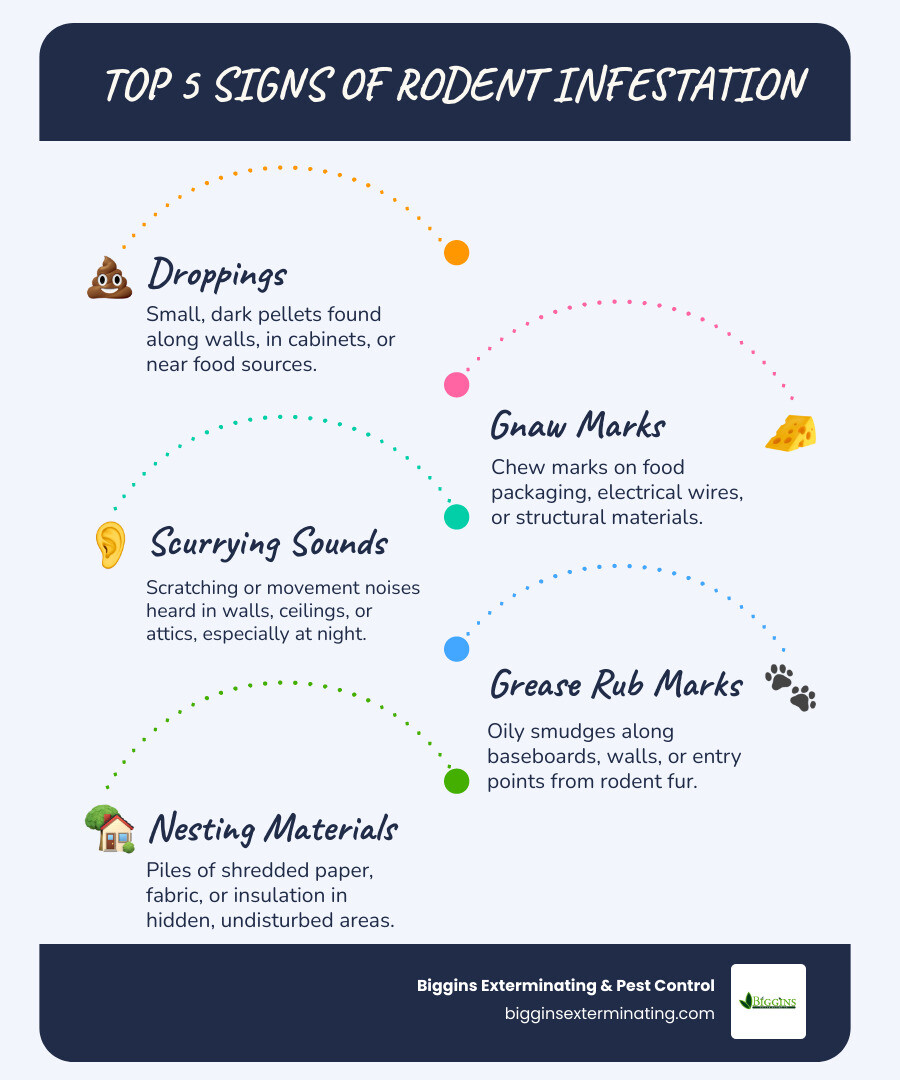
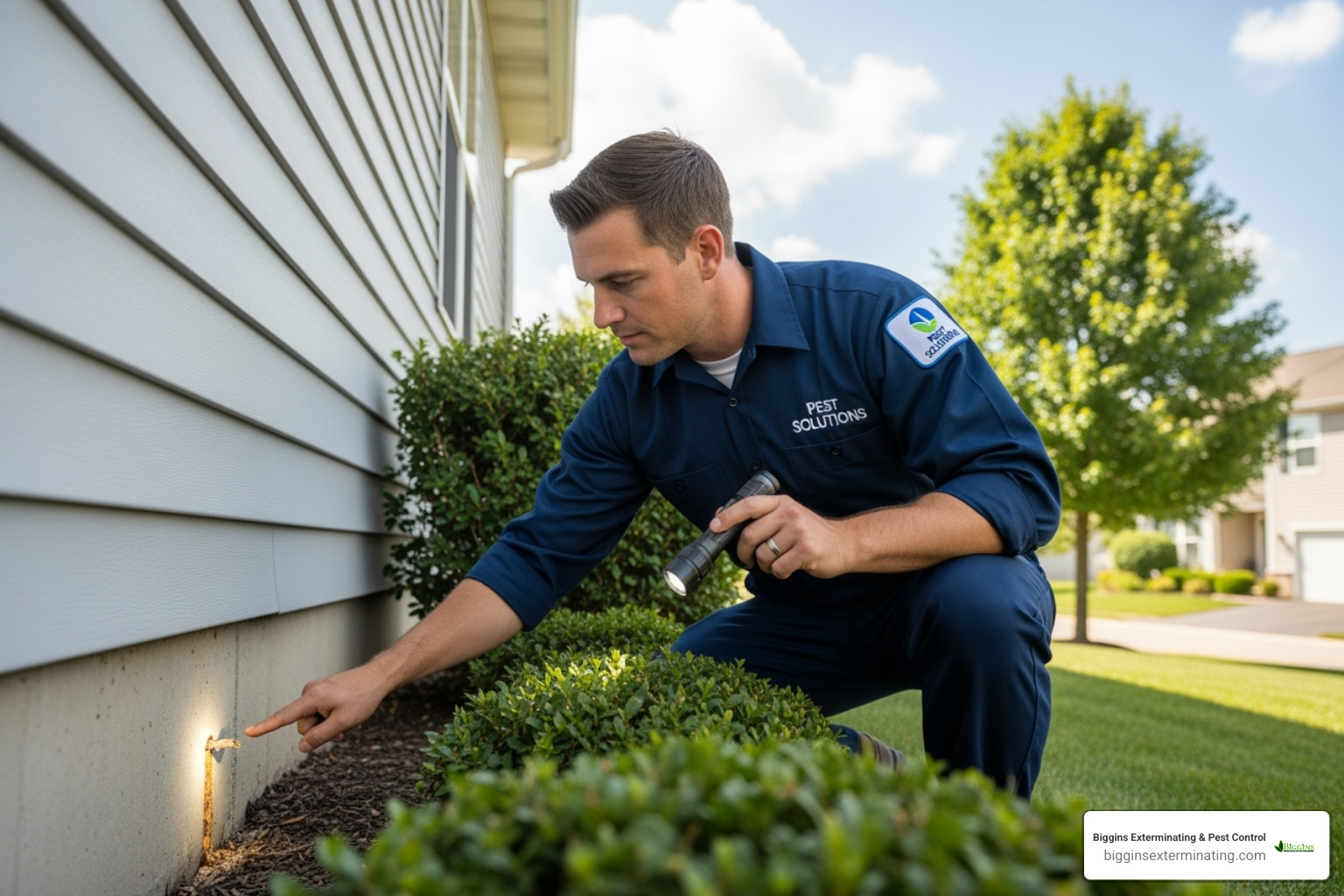
Our technicians act as detectives, using a trained eye to spot subtle signs of rodent activity throughout your home, from basement to attic. We focus on finding entry points, which can be as small as a dime for a mouse. We inspect foundation cracks, gaps around pipes, and damaged vents to identify every potential gateway. We also assess the infestation level by looking for droppings, gnaw marks, and greasy rub marks that indicate travel routes. Attics and basements receive extra scrutiny, as these are prime real estate for rodents seeking warmth during the colder months. This detailed assessment is the foundation of our Rodent Control Services.
Step 2: Customized Treatment and Removal
Using our inspection findings, we create a customized plan. Strategic baiting is a cornerstone of our method. We use professional-grade products in tamper-resistant stations, keeping children and pets safe. Stations are placed along known rodent pathways for maximum effectiveness. We also use trapping methods where appropriate. What truly sets us apart is exclusion work. We seal your home against future invasions using durable, rodent-proof materials like steel wool and commercial-grade sealants to close every entry point we find. We’re not just eliminating current rodents—we’re preventing new ones from getting in. For more on our methods, see our Rat Exterminating: Complete Guide and Humane Rat Extermination: Complete Guide.
Step 3: Monitoring and Long-Term Prevention
Our job isn’t done after the initial treatment. Long-term success requires ongoing attention, as rodents are a year-round threat in Massachusetts. Follow-up visits are scheduled to monitor treatments, replenish bait, and check for new activity. This ensures complete eradication. We also provide sanitation advice, such as storing food in airtight containers, cleaning spills promptly, and securing garbage. Our property maintenance tips include trimming vegetation away from the house, storing firewood properly, fixing leaks, and reducing clutter to eliminate hiding spots. These strategies are even more critical as winter approaches. Our Keeping Your Home Mouse-Proof: A Winter Pest Control Checklist offers seasonal guidance. This combination of professional treatment and homeowner diligence creates a fortress against rodents.
Frequently Asked Questions about Rodent Treatment
Dealing with a rodent problem brings up many questions. As a professional helping Massachusetts homeowners for years, I want to address the most common ones about pest control rodent treatment.
How do I prepare my home for a professional rodent treatment?
Preparing for our visit is simple but helps us work more effectively. A little prep work makes a big difference.
- Clear clutter where you’ve seen activity (kitchens, basements, attics). This gives us access to walls and corners and removes rodent hiding spots.
- Secure food in airtight containers, including pet food. This makes our baits more attractive.
- Remove pet food and water bowls overnight if possible.
- Provide access to key areas like under sinks and behind appliances.
- Share your observations with our technician. Tell us where you’ve seen droppings, heard noises, or found damage. Your input is invaluable.
Are professional rodent treatments safe for my family and pets?
This is a top concern, and the answer is yes. Your family’s safety is our priority. Our treatments are designed for safety. We use commercial-grade, tamper-resistant bait stations that allow rodents in but keep children and pets out. Strategic placement is also key. We place treatments in areas inaccessible to kids and pets, like behind appliances or in crawl spaces. We customize our approach based on your needs. If you have curious pets or small children, we can emphasize trapping over baiting in certain areas. We’ll discuss all options with you. Our Humane Rat Extermination: Complete Guide offers more details on our safe approach.
What is the average cost for rodent control?
The cost of pest control rodent treatment varies. It depends on the rodent type, infestation severity, property size, and the amount of exclusion work required. The best way to know your cost is to request a personalized quote after an inspection.
These are average costs based on internet data and not actual costs for Biggins Exterminating services.
| Service Aspect | Average Cost Range (Internet Data) | What This Typically Includes |
|---|---|---|
| Initial Inspection | $0 – $200 | Some companies offer free inspections; others charge a fee that may be credited toward treatment. |
| Minor Infestation | $200 – $500 | Treatment for a few mice or early-stage rat activity, usually with initial treatment and some follow-up visits. |
| Moderate Infestation | $400 – $1,000+ | More established problems requiring multiple visits, extensive baiting or trapping, and potentially some basic exclusion work. |
| Severe Infestation | $1,000 – $3,000+ | Large, widespread infestations with significant damage, requiring intensive treatment, multiple follow-ups, and extensive exclusion work. |
| Exclusion Work | $200 – $1,500+ (additional) | Sealing entry points with durable, rodent-proof materials. Cost depends on the number and complexity of entry points found. |
| Ongoing Monitoring | $50 – $150 per visit | Monthly or quarterly visits for long-term prevention, especially useful for businesses or properties prone to re-infestation. |
Factors influencing the cost include whether you have rats or mice (rats are often more expensive to treat) and the infestation’s severity. Property size and complexity also matter. A comprehensive plan with exclusion and monitoring costs more than basic baiting but delivers lasting results.
At Biggins Exterminating, we provide clear quotes for our reliable, no-contract services. Our work is backed by a warranty: if the pests return, so do we.
Secure Your Home from Rodents for Good

A rodent-free home is more than just the absence of pests—it’s the peace of mind that comes from knowing your family is safe, your property is protected, and those unwelcome guests won’t be returning when the next cold snap hits.
As a family-owned business serving Massachusetts families for over 40 years, we’ve seen how stressful a rodent problem can be. That scratching in the walls at night, the droppings in your pantry, the gnawed boxes—these aren’t just nuisances. They’re threats to your health and home that deserve immediate, professional attention.
Our approach to pest control rodent treatment goes beyond just setting traps and hoping for the best. We start with a thorough inspection that reveals every crack, gap, and hidden pathway rodents use to invade your space. Then we develop a customized plan that combines strategic removal with comprehensive exclusion work—sealing those entry points so new rodents can’t simply move in after we’ve eliminated the current residents.
But we don’t stop there. Year-round protection means ongoing monitoring, follow-up visits, and expert guidance on keeping your property unattractive to these persistent pests. Whether it’s advice on proper food storage, trimming vegetation away from your foundation, or addressing moisture issues that draw rodents in, we’re here to help you maintain that pest-free environment.
We’re proud to serve communities throughout Massachusetts, including Andover, Bedford, Billerica, Burlington, Lexington, North Reading, Tewksbury, Wilmington, and Woburn. And because we believe in earning your trust through results rather than locking you into lengthy agreements, we offer our services without requiring contracts. Our warranty is simple: if the pests come back, so do we.
Don’t wait until one mouse becomes a family of twenty. Take the proactive step today toward securing your home from rodents for good.
Contact us for a free estimate and let our four decades of experience work for you. Your pest-free home is just one call away.