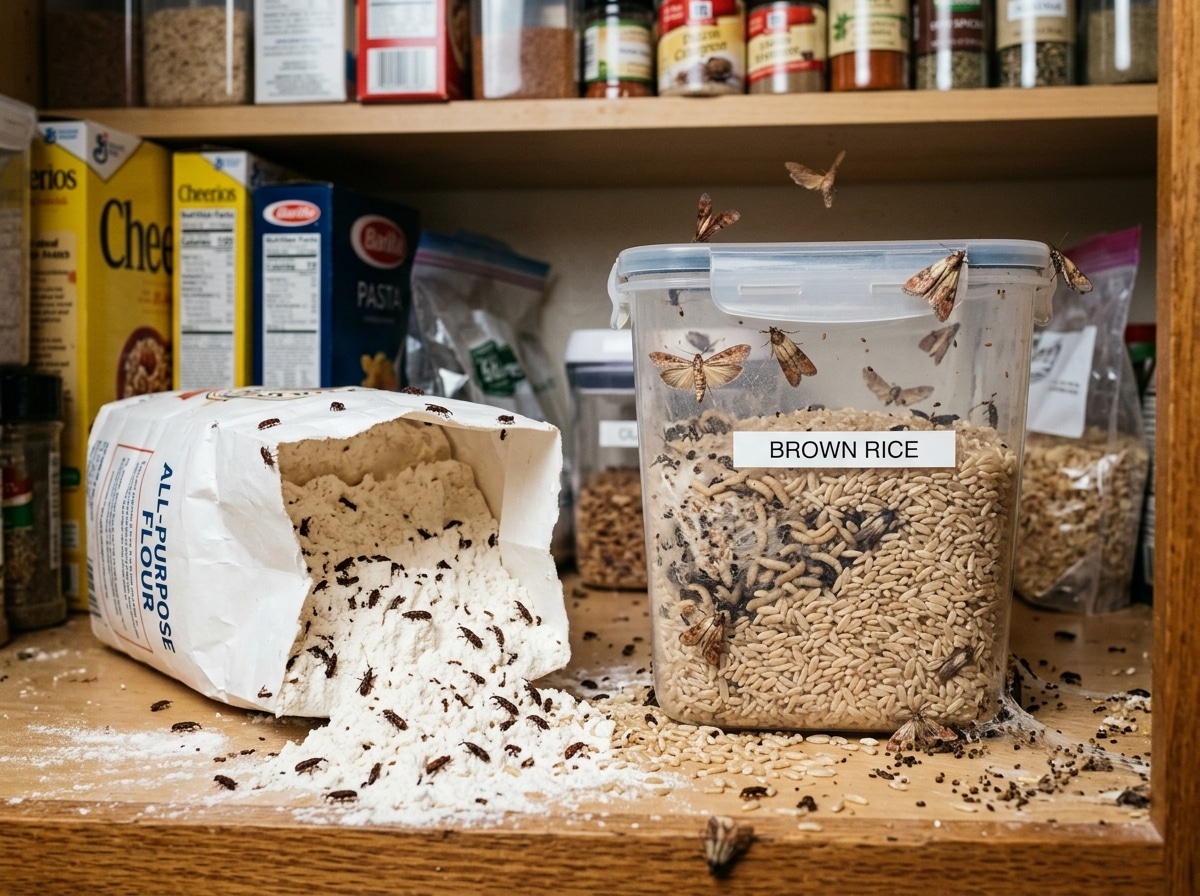
Why Pantry Pests Are a Bigger Problem Than Most Homeowners Realize
Pantry pest control is the process of identifying, eliminating, and preventing insects that infest your stored dry foods — and here’s a quick summary of what to do if you have them right now:
- Remove all food from the pantry and throw away anything infested
- Vacuum all shelves, corners, cracks, and crevices thoroughly
- Wash shelves with warm soapy water and let them dry completely
- Store remaining food in airtight glass or hard plastic containers
- Place pheromone traps to monitor for any remaining adult insects
- Repeat inspections for 10–14 days to confirm the infestation is gone
- Call a professional if pests are still showing up after two weeks
Since more than 80% of the human diet is built around grain-based foods like rice, wheat, and corn, most households will deal with a pantry pest infestation at some point. These tiny insects — moths, beetles, and weevils — can quietly take over your flour, cereal, pasta, and spices before you even notice they’re there. The frustrating part? By the time you spot a moth fluttering near your kitchen light or find webbing in a bag of oats, the infestation is usually already well underway.
I’m Stephen Biggins, owner of Biggins Exterminating Co., a family-owned Massachusetts pest control company with over 40 years of hands-on experience helping homeowners across Wilmington, MA and surrounding communities tackle exactly these kinds of pantry pest control problems. In this guide, I’ll walk you through everything you need to know — from identifying what’s living in your pantry to making sure it never comes back.
Pantry pest control helpful reading:
Identifying Common Kitchen Invaders
Before we can talk about pantry pest control strategies, we need to know exactly who the uninvited guests are. In our 40 years serving towns like Andover and Woburn, we’ve found that most pantry “bugs” fall into a few specific categories. Identifying them correctly is the first step toward a bug-free kitchen.
Indianmeal Moths
The Indianmeal moth is perhaps the most common pantry pest we encounter in Massachusetts. You’ll usually see the adults flying around your kitchen or congregating near lights at night. They have a wingspan of about 5/8 of an inch, with wings that are reddish-brown on the outer half and grayish-white near the body.
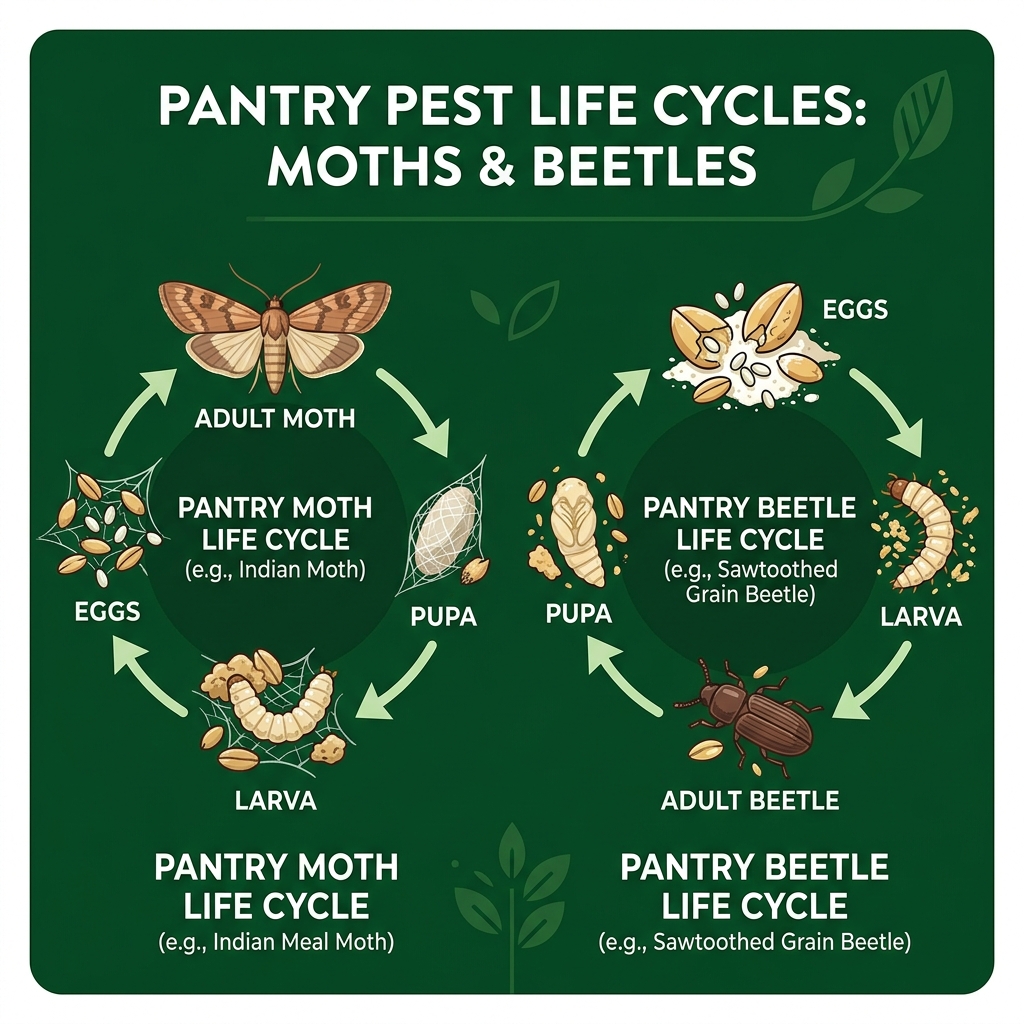
The real damage, however, is done by the larvae. These tiny, cream-colored caterpillars spin silken webbing throughout your food. If you see clumps in your flour or “cobwebs” in the corners of a cereal box, you’ve got Indianmeal moths. They complete their life cycle in about 6 to 8 weeks during warm weather, meaning a small problem can become a massive one in just two months.

The Beetle Brigade: Sawtoothed, Merchant, and Flour Beetles
Beetles are the “heavy lifters” of the pantry pest world. They are small, usually 1/8 to 3/16 of an inch long, and can be incredibly prolific.
- Sawtoothed Grain Beetles: Named for the six saw-like “teeth” on each side of their thorax. These guys are flat, which allows them to crawl into incredibly tight cracks or even inside “sealed” cardboard boxes. A single female can lay up to 300 eggs in her lifetime.
- Merchant Grain Beetles: Very similar to the sawtoothed variety, but these can fly. They are often found in high-fat foods like nuts, chocolate, and cake mixes.
- Red and Confused Flour Beetles: These beetles are reddish-brown and love flour and cereal. They can live for a surprisingly long time — some individuals have been known to live for almost four years! They often leave a “grayish” tint and a disagreeable odor in the flour they infest.
- Warehouse Beetles: These are particularly tricky. The larvae are covered in tiny hairs called setae. If ingested, these hairs can cause gastrointestinal irritation or allergic reactions. They are hardy and can complete a life cycle in as little as 45 days in warm temperatures.
Weevils, Cigarette, and Drugstore Beetles
- Rice and Granary Weevils: These are the ones with the long “snouts.” They actually develop inside whole grains like rice, corn, or wheat. If you see tiny perfectly round holes in your grains, that’s where the adult weevil chewed its way out.
- Cigarette and Drugstore Beetles: These beetles aren’t picky. Despite their names, they’ll eat everything from spices (especially paprika and cayenne pepper) to dried flowers and even prescription drugs. The drugstore beetle has a reputation for being able to “eat anything except cast iron.”
Step-by-Step Cleaning and Infestation Treatment
When it comes to pantry pest control, you can’t just spray a little bug juice and call it a day. Because these pests live in your food, the treatment process is mostly about sanitation and physical removal. We recommend a “scorched earth” approach to cleaning.
1. The Great Disposal
Empty every single item from your pantry. If a package is open and shows signs of webbing, larvae, or adult beetles, throw it away immediately. Do not put it in your kitchen trash can; take it directly to the outdoor bin. Even if a package looks “sealed,” inspect it closely for pinholes or larvae tucked into the folds of the cardboard. If you’re in doubt, throw it out.
2. Vacuuming Every Crevice
This is the most critical step. Use a vacuum with a hose attachment to suck up every crumb, stray grain, and insect egg. Pay special attention to:
- The corners of shelves.
- The tracks of sliding doors.
- Shelving peg holes: This is a pro tip we always share with our neighbors in Burlington and Billerica. Small moth larvae love to crawl into the tiny holes meant for adjustable shelf pegs to pupate. Vacuum these holes out thoroughly!
3. Deep Cleaning and Washing
After vacuuming, wash the shelves with hot, soapy water. Avoid using bleach or ammonia; they don’t provide any extra protection against the bugs and can leave harsh odors near your food. For a more comprehensive approach to keeping your home safe, you might consider our General Pest Treatment which addresses the perimeter of your home to stop new invaders from entering.
4. Temperature Sterilization
If you have items you aren’t sure about but don’t want to toss (like expensive spices or bulk grains), you can use temperature to kill any hidden life stages.
- Freezing: Place items in a freezer at 0°F for at least four days.
- Heating: Spread grains on a cookie sheet and bake at 130°F for 30 minutes.
While these methods work, we generally recommend our Household Pest Control Services for residents who want to ensure the entire kitchen environment is protected from cross-contamination.
Effective Products for Pantry Pest Control
Once the cleaning is done, you may want to use specific products to monitor the situation or treat the cracks where eggs might be hiding. In pantry pest control, “less is more” when it comes to chemicals near your food.
Pheromone Traps vs. Residual Sprays
| Product Type | Purpose | Best Use Case |
|---|---|---|
| Pheromone Traps | Monitoring and mating disruption | Catching adult male moths to track activity. |
| Residual Aerosols | Killing larvae/adults in hiding | Treating empty cracks, crevices, and baseboards. |
| Growth Regulators (IGR) | Breaking the life cycle | Preventing larvae from becoming breeding adults. |
| Sticky Monitors | General detection | Placing in corners to see if beetles are still crawling. |
Using Pheromone Traps Correctly
Pheromone traps are excellent for Indianmeal moths. They use a scent to lure male moths to a sticky board. However, a common mistake we see in Wilmington is “trap overkill.” Research shows that if you use more than two traps in a standard home, you can actually oversaturate the air with pheromones. This confuses the moths so much they can’t find the traps at all! Stick to one or two traps per kitchen area.
Targeted Crack and Crevice Treatments
If you choose to use an insecticide, it must be labeled for use in food storage areas and applied only to cracks and crevices while the food is removed. Look for products containing Pyrethrins for a quick “knockdown” or an IGR like Gentrol to stop the bugs from maturing. For more technical details on these methods, the Common Pantry Pests and Management guide from NC State is an excellent resource.
At Biggins Exterminating, we believe the Best Pest Solutions are those that prioritize family safety. We always recommend letting any treatment dry completely before restocking your pantry.
Professional Pantry Pest Control in Massachusetts
Sometimes, despite your best efforts, the moths keep fluttering back. This often happens because the infestation has spread to an unusual spot — like a forgotten bag of birdseed in the garage, a child’s craft project made of macaroni, or even a decorative “cornucopia” stored in the attic.
Persistent infestations require a professional eye. Our Pest Exterminator Service involves a top-to-bottom inspection of your home. We don’t just look in the pantry; we look for the source. Whether you’re in Lexington or North Reading, our team is trained to find those hidden “reservoirs” where pests breed.
Why DIY Pantry Pest Control Often Fails
The biggest reason DIY efforts fail is the “invisible” nature of the eggs. A single female beetle can lay hundreds of eggs that are essentially invisible to the naked eye. If you miss one crack or one shelving peg hole, the cycle starts all over again in 30 days. Furthermore, improper use of sprays can actually repel the insects, causing them to move deeper into your walls or into other rooms. For a deeper dive into why some pests are so hard to kick, check out our Complete Pest Control Management Guide.
Long-Term Prevention and Storage Habits
The goal of pantry pest control isn’t just to kill the bugs you have; it’s to make sure you never see them again. This requires a change in how you shop and store your food.
1. The Power of Airtight Storage
Forget about chip clips and “resealable” bags. Many pantry pests can chew through plastic bags, foil, and cardboard. The only way to truly protect your food is to move it into hard-sided containers.
- Glass Jars: Excellent because you can see inside for any activity.
- Hard Plastic: Look for containers with gasket seals.
- Metal Tins: Great for flour and sugar.
2. The FIFO Method (First In, First Out)
Don’t let food sit at the back of the shelf for years. Use a marker to write the “purchase date” on your containers. Always use the oldest stock first. Most pantry pests thrive in food that has been sitting undisturbed for months. For more local tips, see The Most Common Pests Found in Massachusetts and How to Prevent Them.
3. Inspect Before You Buy
Most pantry infestations start at the grocery store. Before you put a bag of flour or a box of pasta in your cart, check it for:
- Tiny pinholes.
- Broken seals.
- Webbing near the “ears” of the box.
- Expiration dates (older stock is more likely to be infested).
4. Manage Pet Food and Bulk Items
Pet food and birdseed are huge magnets for moths and beetles. We often find that a “pantry” problem actually started in a 40-pound bag of dog food stored in the garage. Treat pet food just like human food: store it in a sealed, airtight bin and keep it off the floor.
Frequently Asked Questions about Pantry Pests
Are pantry pests harmful to humans or pets?
Generally, no. They do not sting, bite, or carry diseases like roaches or mosquitoes do. However, they do contaminate food with their waste, shed skins, and silk. As mentioned earlier, the hairs on Warehouse beetle larvae can cause irritation if eaten. Additionally, in very humid conditions, these pests can introduce moisture that leads to mycotoxins (fungal toxins). While eating a few “extra protein” larvae won’t kill you, it’s definitely not recommended for food safety!
How do pests get into factory-sealed packages?
It seems like magic, but it’s just biology. Many beetles have powerful mouthparts that allow them to bore through plastic and cardboard. Others, like the sawtoothed grain beetle, are so flat they can simply walk through the tiny gaps where a box is folded. In many cases, the eggs were already in the product at the processing plant or warehouse before it was even sealed.
Can I use standard bug spray in my food cabinets?
Absolutely not. You should never spray general-purpose household insecticides inside cabinets where you store food. The risk of chemical contamination is much higher than the risk posed by the bugs themselves. If you are dealing with a severe infestation that requires chemical intervention, you should always seek professional guidance to ensure the application is limited to cracks and crevices using food-safe protocols.
Conclusion
Dealing with a kitchen full of moths or beetles can feel overwhelming, but with a little patience and a lot of cleaning, you can win the war. The key to successful pantry pest control is a combination of thorough sanitation, smart storage, and consistent monitoring.
At Biggins Exterminating & Pest Control, we’ve spent over 40 years helping our neighbors in Wilmington, MA and the surrounding towns keep their homes safe and comfortable. We are a local, family-owned business that treats your home like our own. We offer reliable service without the need for long-term contracts, and we stand behind our work with solid warranties.
If you’ve tried the DIY route and those persistent pests are still fluttering around your kitchen in Andover, Bedford, or Woburn, don’t wait for the problem to get worse. Give us a call or visit our Pest Control Billerica MA page to schedule an inspection. Let our family help yours get back to a bug-free life!