
The Hidden Doors Rodents Use to Invade Massachusetts Homes
Rodent entry points are small gaps, cracks, and openings in your home’s structure that mice and rats use to get inside — and they’re probably closer than you think.
Here are the most common ones to check first:
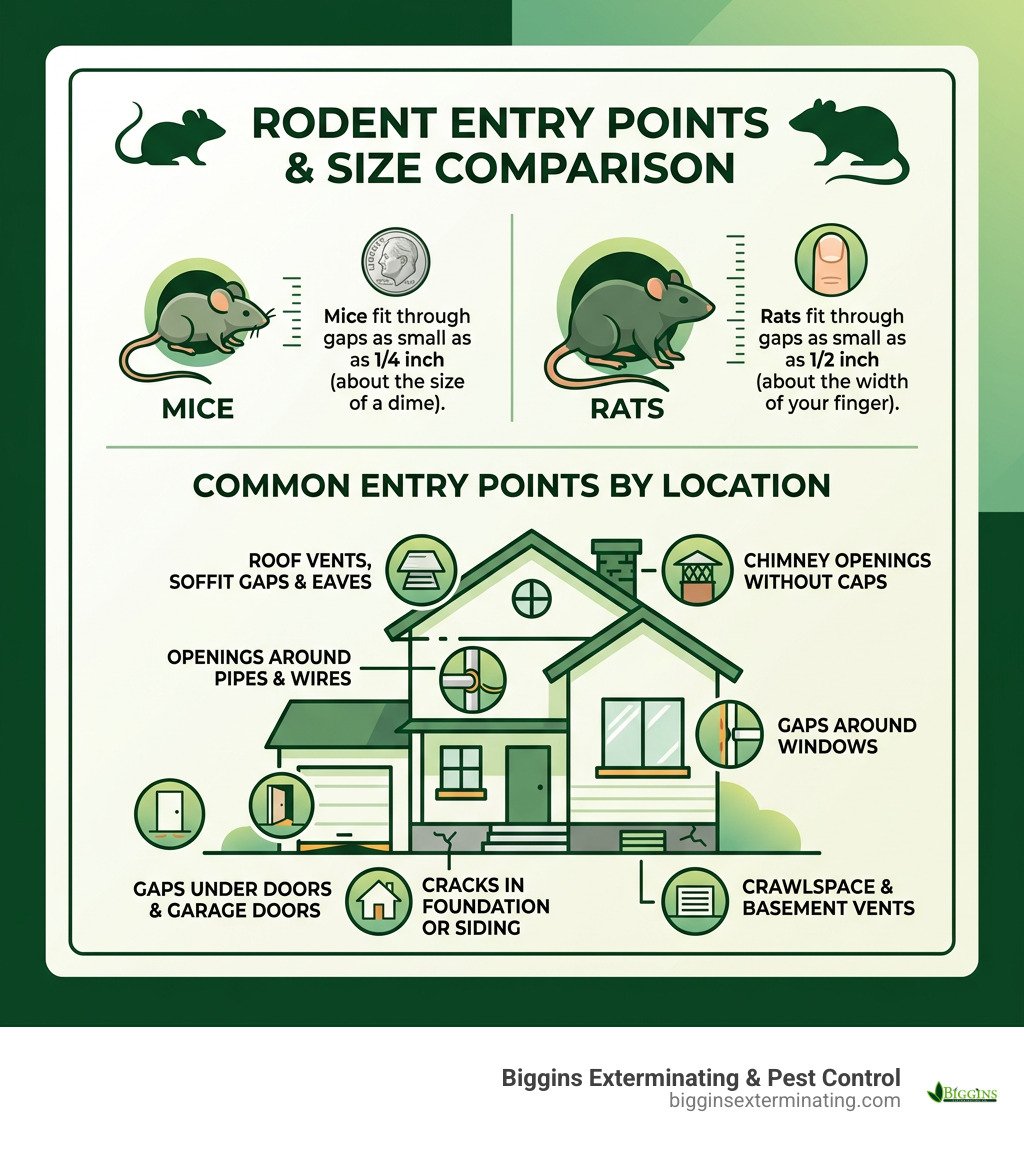
- Gaps under doors and garage doors (even 1/4 inch is enough)
- Cracks in the foundation or siding
- Openings around pipes, wires, and utility lines
- Roof vents, soffit gaps, and eaves
- Crawlspace and basement vents
- Gaps around windows and damaged weatherstripping
- Chimney openings without caps
The scary part? Mice only need a gap the size of a dime — about 1/4 inch — to squeeze inside. Rats need just a little more: roughly 1/2 inch, about the width of your finger.
And in Massachusetts, fall and winter are peak season for rodents pushing their way in. As temperatures drop, mice and rats actively search for warmth, food, and shelter — and your home checks all three boxes.
Once inside, they don’t just cause a nuisance. Rodents chew through electrical wiring (a leading cause of house fires), contaminate food, damage insulation, and breed fast. A single pair of mice can produce up to 10 litters a year, each with 6 to 12 babies.
The good news: most of this is preventable. Finding and sealing these entry points is the single most effective thing you can do to keep rodents out for good.
I’m Stephen Biggins, owner of Biggins Exterminating Co., and with over 40 years of hands-on pest control experience serving Wilmington, MA and surrounding communities, I’ve tracked down rodent entry points in hundreds of local homes. In this guide, I’ll show you exactly where to look and how to shut those doors for good.
Rodent entry points definitions:
How Small Can They Go? Understanding Rodent Entry Points
When we talk about Rodent entry points, homeowners are often shocked by the sheer physical capabilities of these pests. We aren’t dealing with rigid creatures; mice and rats have highly flexible skeletons and no collarbones. If their head can fit through a hole, their body can usually follow.
For a common house mouse, an opening of just 1/4 inch (6mm)—about the width of a standard pencil—is a wide-open door. To put that in perspective, if you can slide a dime into a crack, a mouse can likely wiggle through it. Rats are slightly larger but still incredibly agile, requiring a gap of just 15mm (roughly 0.6 inches) to enter your property.
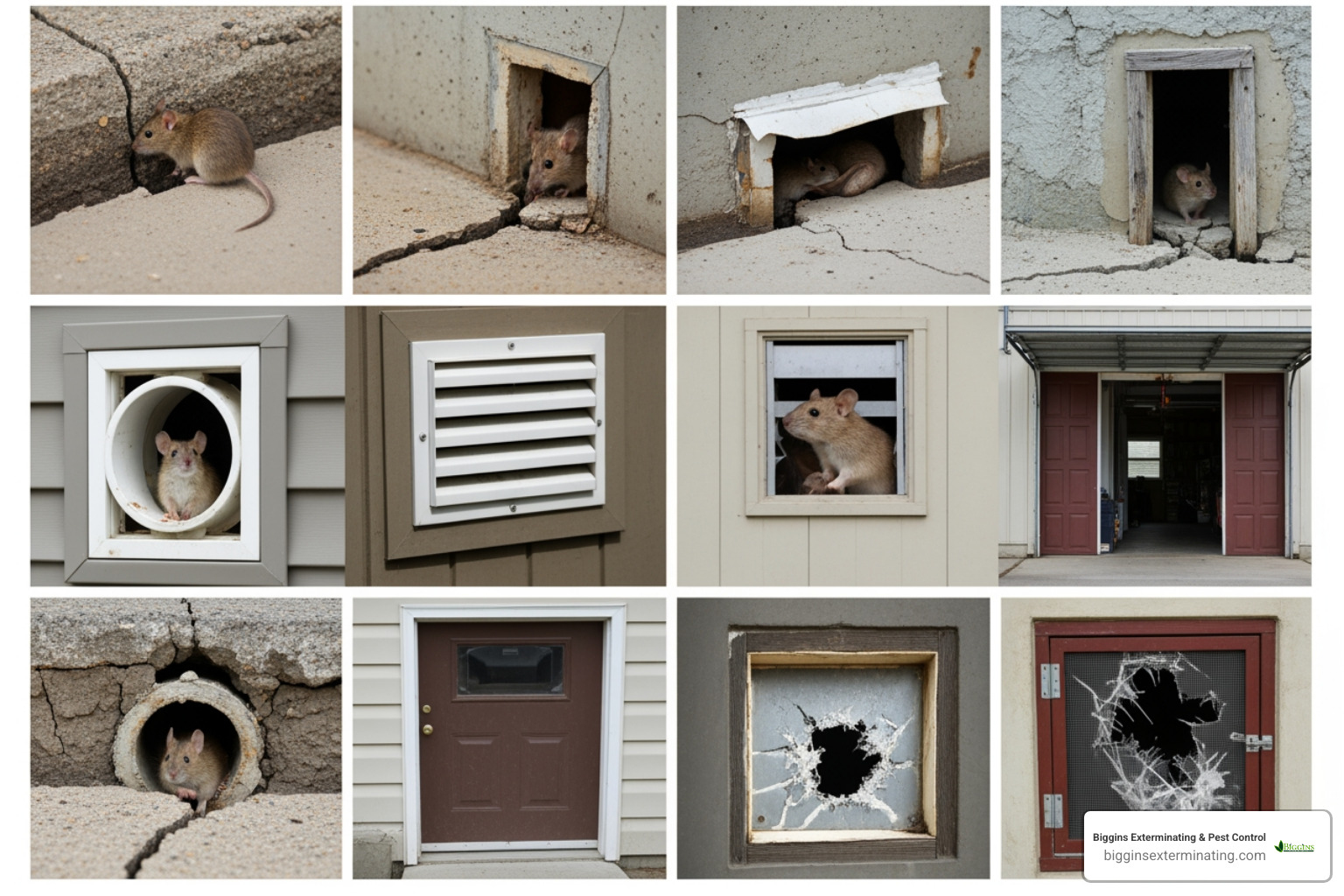
These biological “superpowers” allow them to exploit structural vulnerabilities that most humans would ignore. This is why how-to-mouse-proof-your-house begins with a shift in perspective: you have to look at your home through the eyes of a creature that can collapse its ribcage to fit through a sliver of space. According to CDC guidelines on sealing up, identifying these tiny thresholds is the first line of defense in any integrated pest management strategy.
Common Exterior Vulnerabilities from Foundation to Roof
In our 40 years serving towns like Andover and Billerica, we’ve seen that rodents don’t just walk through the front door. They are expert climbers and burrowers. A comprehensive inspection must cover the entire “envelope” of your home.
The Ground Level: Foundations and Utilities
Rodents often start at the bottom. Foundation cracks, especially in older Massachusetts homes, provide easy access. Even more common are the gaps where utility lines enter the house. Whether it’s a plumbing pipe, an electrical conduit, or an HVAC line, builders often leave the surrounding hole slightly larger than the pipe itself. These “utility penetrations” are essentially a highway for mice.
The Upper Levels: Roofs and Siding
Don’t assume your roof is safe. Roof rats and mice are excellent climbers, often using overhanging tree branches or even the texture of your siding to reach the top. Once there, they exploit:
- Roof vents and attic fans: If the mesh is missing or made of plastic, they’ll chew right through.
- Soffit gaps and eaves: The junction where the roof meets the wall is a notorious weak spot.
- Chimney crowns: Missing mortar or a lack of a chimney cap can turn your fireplace into a rodent entry point.
Identifying these areas is critical because Signs of rodent infestation often appear first in the attic or crawlspace. Keeping a keeping-your-home-mouse-proof-a-winter-pest-control-checklist handy during the fall can help you spot these issues before the first snow hits Wilmington.
Identifying Rodent Entry Points Around Doors and Windows
Doors and windows are high-traffic areas for both people and pests. Over time, houses settle, and materials wear out, creating perfect Rodent entry points.
- Door Sweeps: If you can see light under your exterior door, a mouse can get in. Standard rubber or brush sweeps are often chewed through by determined rats.
- Garage Doors: This is perhaps the #1 entry point we see in Bedford and Woburn. The rubber seal at the bottom of a garage door often warps or gets gnawed at the corners, leaving a “mouse-sized” gap.
- Weatherstripping: Worn weatherstripping around windows or side doors creates easy access.
- Window Screens: Small tears in basement window screens are an open invitation.
If you are struggling to find where they are coming from, our guide on how-to-find-mice offers professional tricks for tracking their movements.
Hidden Rodent Entry Points in Attics and Crawlspaces
Attics and crawlspaces are the “quiet zones” of your home where rodents love to nest. In these areas, they often enter through:
- Roofline junctions: Where two roof angles meet, there is often a small gap that isn’t fully sealed.
- Crawlspace vents: These are designed for airflow but often have damaged or wide-gauge mesh that allows entry.
- Floor drains and sewer lines: Rats, in particular, are excellent swimmers and have been known to enter through poorly maintained floor drains or old sewer pipes.
Dealing with rats-in-attic or basement invaders often requires specialized equipment. If the infestation has moved into these hard-to-reach zones, consulting crawlspace-mouse-extermination-pros is usually the most efficient way to clear the area and seal it properly.
The Best Materials for Permanent Exclusion
One of the biggest mistakes we see homeowners in Tewksbury and Lexington make is using the wrong materials to seal holes. Rodents are “gnawing machines”—their teeth never stop growing, so they are biologically programmed to chew through soft materials.
What to Use:
- Steel or Copper Mesh: This is the gold standard for small gaps. Rodents hate the feeling of metal on their teeth and cannot chew through it.
- 19-Gauge Hardware Cloth: For larger openings like vents, use 19-gauge galvanized hardware cloth (1/2″ x 1/2″ mesh for rats, or 1/4″ x 1/4″ for mice).
- Galvanized Sheet Metal: Perfect for patching larger holes or creating “kick plates” on the bottom of wooden doors.
- Concrete Mortar: Use this to repair foundation cracks. It’s much more durable than simple caulk.
- Silicone or Polyurethane Sealant: Use this to hold your mesh in place and provide a weather-tight finish.
What to Avoid:
- Spray Foam: While convenient, standard expanding foam is like cotton candy to a rat. They will chew through it in minutes. If you use foam, it must be packed with steel wool first.
- Plastic Mesh: It offers zero protection against gnawing.
- Wood or Rubber: Determined rodents will eventually chew through these to widen an existing gap.
Following Rodent-proof construction methods ensures that once you seal a hole, it stays sealed for the long haul.
A Step-by-Step Guide to Inspecting Your Property
Finding Rodent entry points requires a bit of detective work. Grab a high-powered flashlight and follow this professional inspection routine:
- The Pencil Test: If you find a gap, try to slide a pencil into it. If it fits, a mouse can fit.
- Look for Rub Marks: Rodents have oily fur. As they travel the same paths daily, they leave dark, greasy “smudges” or rub marks along walls, pipes, and foundation edges.
- Check for “Clean” Areas: Ironically, a very clean spot in a dusty basement can indicate a high-traffic rodent runway.
- Follow the Droppings: Droppings are the most obvious signs-that-you-have-a-pest-infestation. They are usually concentrated near entry points and nesting sites.
- Listen for the Scratching: Often, you’ll hear them before you see them. Scratching sounds in the walls or ceiling are a dead giveaway of an active entry point nearby.
- Sniff Around: A stale, musky odor often lingers near well-used entry points or nesting areas.
For a more localized perspective, check out our guide on how-to-identify-and-prevent-rodent-infestations-in-massachusetts, which highlights specific challenges we face here in the Northeast.
Why Professional Exclusion Beats DIY
While many homeowners attempt to seal their own homes, professional exclusion is a different beast entirely. Here’s why calling a pest control specialist is often the safer and more cost-effective choice:
- Hidden Access Points: We have the ladders and safety gear to inspect rooflines and chimney crowns that are dangerous for the average homeowner to reach.
- Comprehensive Trapping: If you seal a home while rodents are still inside, they will become desperate and may chew new holes through your drywall or cabinets to find food. We ensure the interior is clear before the final seal.
- Fire Prevention: Rodents are suspected of causing thousands of house fires every year by chewing on wires. A pro knows how to spot this damage early. Understanding the top-5-dangers-of-rodents-in-and-around-your-home-or-business helps emphasize why this isn’t just about “scary bugs,” but about property safety.
- Sanitation Protocols: Rodents leave behind pheromones that attract other rodents. We don’t just seal the hole; we clean the area to remove the “scent trail.”
Frequently Asked Questions about Rodent Access
How do I know if a hole is an active entry point?
Look for “fresh” signs. This includes dark, moist droppings, new gnaw marks on the edges of the hole, or the grease smudges mentioned earlier. If you aren’t sure, you can lightly sprinkle some flour or talcum powder near the hole and check for footprints the next morning.
Can rodents chew through the materials I use to seal gaps?
If you use the right materials—like galvanized steel, concrete, or heavy-duty hardware cloth—the answer is no. However, they will chew through wood, plastic, vinyl siding, and even thin aluminum if they are motivated enough.
Should I seal the holes if I already have mice inside?
This is a common dilemma. If you seal the holes while an infestation is active, you might trap them inside. They may then cause more damage trying to escape or die inside your walls, leading to terrible odors. The best practice is to set traps inside to reduce the population while simultaneously sealing the exterior to prevent new rodents from joining the party.
Conclusion
Protecting your Massachusetts home from rodents is a year-round commitment, but it all starts with identifying and plugging those Rodent entry points. Whether you’re in North Reading, Wilmington, or Andover, the goal is the same: make your home less accessible and less attractive than the woods next door.
At Biggins Exterminating & Pest Control, we’ve spent over 40 years perfecting the art of rodent exclusion. We are a local, family-owned company that understands the specific structural challenges of homes in the Merrimack Valley. We don’t believe in high-pressure contracts; we believe in results, warranties, and keeping your family safe.
If you’ve heard scratching in the walls or spotted a gap you can’t reach, don’t wait for the population to explode. Contact us today for our rodent-control-services-keeping-your-home-critter-free and let our family protect yours.
Our Service Areas:
- Wilmington, MA
- Andover, MA
- Bedford, MA
- Billerica, MA
- Burlington, MA
- Lexington, MA
- North Reading, MA
- Tewksbury, MA
- Woburn, MA
