
Why Rodent Control Matters for Middlesex County Homeowners
Rodent control Middlesex County is essential for protecting your home from the serious health risks and property damage that mice and rats bring. In towns like Wilmington, Burlington, or Woburn, rodents don’t just make a mess; they chew through walls and wires, contaminate food, and carry diseases, putting your family and pets at risk.
Quick Answer: How to Address a Rodent Problem
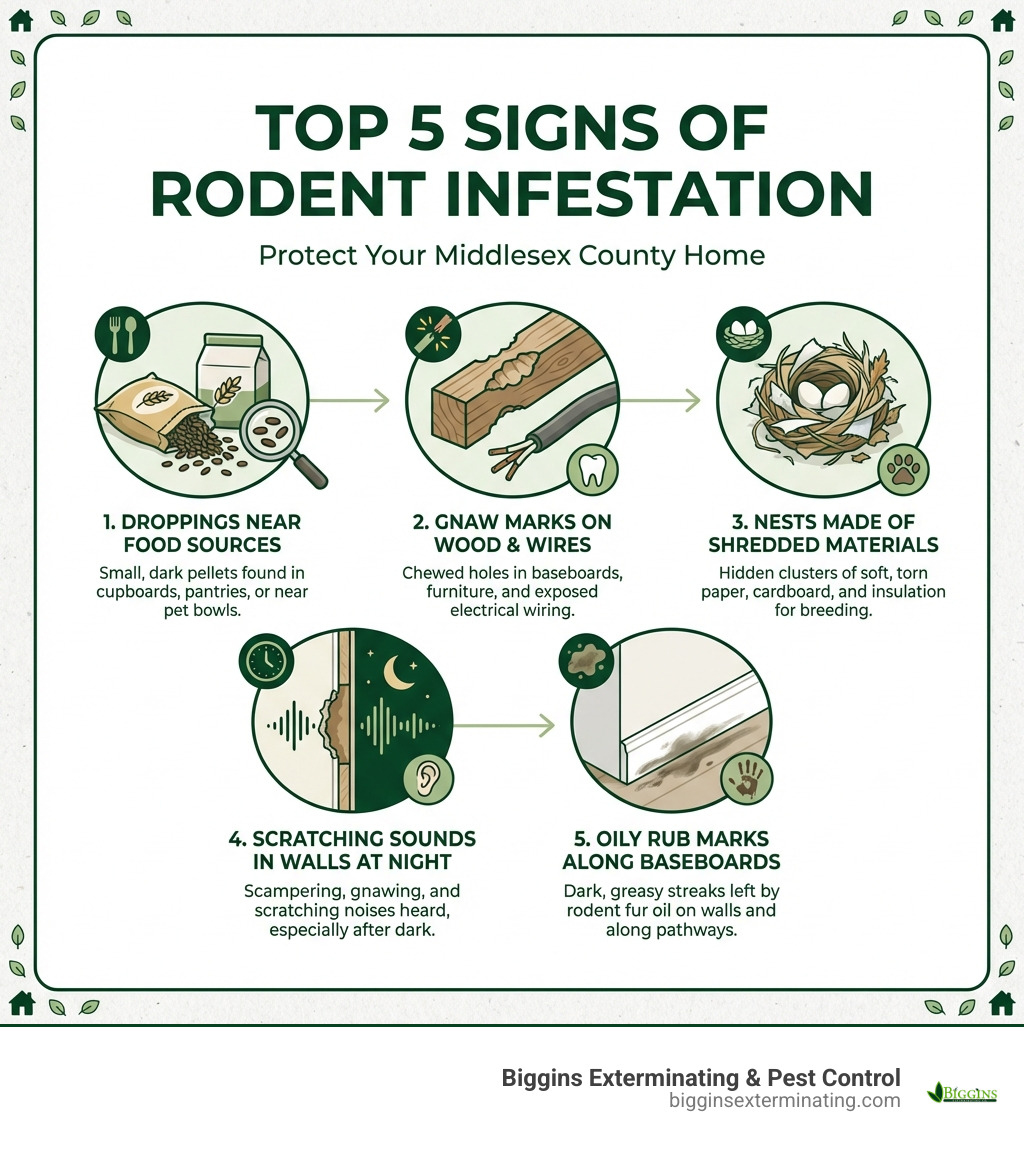
- Identify the signs – Look for droppings, gnaw marks, scratching sounds, and oily rub marks
- Seal entry points – Use steel wool and caulk to block gaps larger than ¼ inch
- Remove food sources – Store food in airtight containers and secure trash bins
- Call a professional – Contact a licensed pest control company for persistent or growing infestations
- Prevent future problems – Regular inspections and exclusion work keep rodents out long-term
Rodents carry diseases like Hantavirus and Salmonellosis and create fire hazards by chewing electrical wires. Once inside, they multiply quickly—a single pair of mice can produce dozens of offspring in just months.
The good news? A combination of prevention, exclusion, and professional treatment can help you reclaim your home from these unwanted guests.
I’m Stephen Biggins, owner of Biggins Exterminating Co., and for over 40 years our family-owned business has helped Middlesex County residents solve their rodent problems with honest, effective solutions. Rodent control Middlesex County requires local knowledge of how these pests behave in Massachusetts homes, and we’ve built our reputation on providing that expertise without unnecessary contracts or hidden fees.
Quick look at Rodent control Middlesex County:
Identifying the Unwanted Guests: Common Rodents in Middlesex County
When it comes to rodent control Middlesex County, knowing your enemy is half the battle. While many people think of all rodents as “mice” or “rats,” there are distinct species common to our Massachusetts communities. The most frequent culprits we encounter in homes across Andover, Lexington, and Billerica are the House Mouse, the Norway Rat, and occasionally, the Deer Mouse.
The House Mouse
The House Mouse is our most common invader. Small (2.5-3.5 inches long), light brown or grey, with large ears and a long tail, they can squeeze through dime-sized openings. House mice are curious, prolific breeders that nest in secluded areas like wall voids, attics, and basements, using shredded paper, fabric, or insulation. Their rapid breeding makes them a significant challenge for rodent control Middlesex County.
The Norway Rat
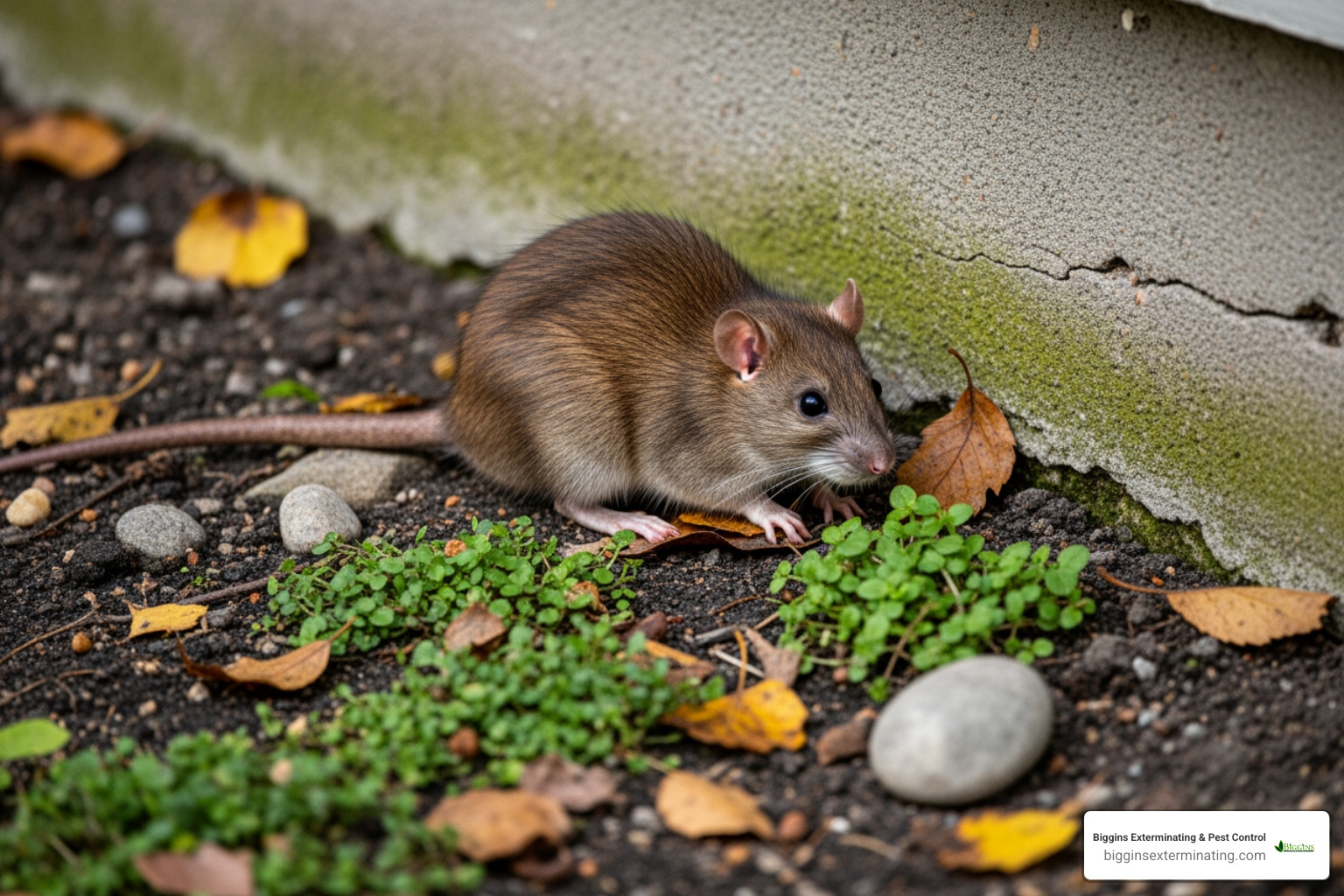
The Norway Rat, or brown rat, is larger than a house mouse (7-10 inches long) with coarse brown fur, small ears, and a blunt snout. These burrowers often enter homes in towns like Tewksbury and North Reading during colder months, seeking food and shelter. We typically find them in basements, crawl spaces, and near foundations. Their cautious nature can make trapping them tricky.
The Deer Mouse
The Deer Mouse has distinct two-toned fur (brown on top, white on the belly) and a long, bi-colored tail. While they prefer the outdoors, they enter homes in suburban areas for warmth, often nesting in attics, garages, and sheds. Deer mice are known carriers of Hantavirus, making them a serious health concern.
Understanding these differences is crucial for effective rodent management. Our team at Biggins Exterminating is expert at identifying the specific rodent species invading your property, which allows us to tailor the most effective treatment plan. For more detailed identification tips, check out our guide on How to identify and prevent rodent infestations in Massachusetts.
Telltale Signs You Have a Rodent Problem
Rodents are masters of stealth, but they leave behind undeniable clues. Catching these signs early is key to successful rodent control Middlesex County. Here’s what to look for:
- Droppings: Mouse droppings are small and pellet-shaped, like grains of rice. Rat droppings are larger, about ½ to ¾ inch long and capsule-shaped. You’ll find them near food, in cupboards, along baseboards, and in attics or basements.
- Gnaw Marks: Rodents constantly gnaw to keep their teeth short. Look for small grooves on wood, plastic, pipes, and electrical wires. Chewed wires are a serious fire hazard.
- Nests: Rodents build nests from shredded materials like paper, fabric, and insulation. They are often found in hidden, warm places like wall voids, attics, or behind appliances.
- Scratching or Scurrying Sounds: At night, you might hear scratching, gnawing, or scurrying sounds from inside walls, ceilings, or attics. This is a clear indicator of their presence.
- Oily Rub Marks: As rodents travel, oils from their fur can leave greasy, dark smudges along walls, baseboards, and pipes.
- Unpleasant Musky Odors: A persistent, stale, or musky odor, particularly in enclosed spaces like cupboards, can indicate a significant rodent presence from their urine and droppings.
If you’re noticing any of these signs in your home in Woburn, Bedford, or Burlington, it’s time to take action. Understanding How to find mice can help you pinpoint their activity.
The Hidden Dangers: Health and Property Risks of Rodents
Rodents may appear small, but the problems they bring are anything but. In our 40+ years of providing rodent control Middlesex County, we’ve seen how these pests pose serious threats to both your home’s structure and your family’s health.

Property Damage
Rodents’ constant need to gnaw causes extensive and costly property damage. We’ve seen it all in towns like Lexington and Tewksbury:
- Structural Damage: They chew through wood, drywall, plastic pipes, and insulation to create pathways and nests, which can compromise your home’s structure over time.
- Fire Hazards from Chewed Wires: One of the most dangerous consequences is the chewing of electrical wires. Exposed wires can spark and ignite flammable materials, leading to devastating house fires.
- Contaminated Food Supplies: Rodents access pantries and contaminate food with their droppings, urine, and saliva, rendering it unsafe for consumption.
- Insulation Damage: Rodents tunnel through and compress insulation in attics and walls, reducing its effectiveness and increasing energy bills. Their waste also soils the insulation, requiring costly replacement.
Health Risks
Beyond property damage, rodents are vectors for numerous diseases and allergens, making effective rodent control Middlesex County a critical public health concern.
- Spread of Diseases: Rodents transmit diseases directly (bites, urine, droppings) or indirectly (fleas, ticks, mites). According to health authorities like the Centers for Disease Control and Prevention (CDC), some of the diseases they carry include:
- Hantavirus: Transmitted via aerosolized particles from rodent urine, droppings, or saliva. Symptoms can be severe and life-threatening. Learn more from the CDC’s page on Hantavirus pulmonary syndrome.
- Salmonellosis: A bacterial infection causing fever and diarrhea, often spread by consuming food or water contaminated with rodent feces. General background is available on Salmonellosis.
- Leptospirosis: A bacterial disease spread through contact with water or soil contaminated with infected rodent urine. See Leptospirosis for additional details.
- Lymphocytic Choriomeningitis (LCMV): A viral disease transmitted through fresh urine, droppings, saliva, or nesting materials of infected rodents; more information is on the Lymphocytic choriomeningitis page.
- Allergies and Asthma Triggers: Rodent dander, urine, and droppings can trigger allergic reactions and worsen asthma symptoms, especially in sensitive individuals.
Our internal article, Top 5 dangers of rodents in and around your home or business, provides even more insight into these risks. Dealing with a rodent problem isn’t just about comfort; it’s about safeguarding your property and well-being.
Your Action Plan for Effective Rodent Control in Middlesex County
A rodent infestation can feel overwhelming, but a clear action plan helps you regain control. While homeowners can take initial steps, effective rodent control Middlesex County often requires a professional, multi-pronged approach.
Prevention is always the most crucial step. Making your home less appealing and accessible to rodents significantly reduces the chances of an infestation. However, once rodents are established, DIY methods often fall short. We’ve seen countless homeowners in Wilmington and Woburn try traps and baits with limited success, only to find the problem worsening.
DIY methods often fail because rodents are smart and reproduce rapidly. A few traps rarely eliminate an entire population, and misusing baits can be dangerous for pets and children.
This is where professional intervention is key. With over 40 years of expertise, our team at Biggins Exterminating understands rodent behavior and can identify hidden entry points. We have the tools to safely eliminate infestations and prevent their return by addressing the root cause, not just the symptoms.
Proactive Prevention: Your First Line of Defense
Before an infestation takes hold, or after a professional treatment, proactive prevention is your best strategy for rodent control Middlesex County. Think of it as fortifying your home against tiny invaders.
- Sealing Entry Points: This is paramount. Mice can squeeze through a quarter-inch opening, and rats a half-inch. Thoroughly inspect your home’s exterior, focusing on:
- Cracks in the foundation and walls.
- Gaps around utility pipes and dryer vents.
- Damaged screens on windows and doors.
- Openings around attic vents and eaves.
- Gaps under garage and entry doors.
Use durable materials like steel wool (which rodents can’t chew) backed with caulk for small gaps. Larger holes may require patching with cement or mesh.
- Proper Food Storage: Store all human and pet food in sturdy, airtight containers. Don’t leave pet food out overnight.
- Good Sanitation Practices: Keep your home clean and crumb-free. Regularly clean under appliances, sweep floors, and wipe counters.
- Eliminating Clutter: Clutter provides hiding and nesting spots. Keep basements, attics, and garages tidy.
- Securing Trash Bins: Use trash cans with tight-fitting lids, both indoors and outdoors.
These preventative measures are vital as colder weather approaches and rodents seek warmth indoors. Our article on Winter mouse prevention 101: expert tips from exterminators offers more seasonal advice.
When to Call for Professional Rodent Control in Middlesex County
While preventative steps are helpful, some signs clearly indicate it’s time for professional rodent control Middlesex County. Delaying can make the problem larger and more dangerous.
- Persistent Infestations: If you’ve tried DIY methods and the problem continues, it’s time for expert help. Rodents reproduce too quickly for a few traps to be effective against a growing population.
- Seeing Rodents During the Day: Rodents are nocturnal. Spotting them in daylight in your Andover or Burlington home often suggests a large, established population.
- Rapidly Growing Problem: An increase in droppings, gnaw marks, or sightings means the infestation is expanding quickly.
- Significant Property Damage: If you find extensive gnaw marks, particularly on electrical wires, or damage to insulation, professional intervention is crucial to mitigate safety risks.
- Health Concerns for Family and Pets: Given the diseases rodents carry, any concern for the health of your loved ones warrants immediate professional attention.
Our recommendation? If you suspect a rodent problem, call us sooner rather than later. As our guide Should I call an exterminator if I see a mouse explains, early intervention can save you headaches and expenses.
What to Expect from Professional Rodent Control Services
When you call Biggins Exterminating for rodent control Middlesex County, you get a comprehensive, professional approach designed for long-term results. We believe in transparency and effective solutions, which is why we employ Integrated Pest Management (IPM) strategies.
Integrated Pest Management (IPM) is an environmentally sensitive approach using common-sense practices. Instead of just applying chemicals, IPM focuses on understanding the pest and its environment to control it with minimal risk to people, pets, and the environment. For rodents, this means:
- Thorough Inspection: We start with a meticulous inspection of your property in towns like Billerica or Wilmington to identify the rodent species, pinpoint entry points, locate nests, and assess the infestation’s severity.
- Customized Solutions: There’s no one-size-fits-all solution. We develop a custom treatment plan based on your property’s unique characteristics and the extent of the problem.
- Long-Term Prevention: Our goal isn’t just to remove current rodents but to prevent future infestations through exclusion work, sanitation advice, and monitoring.
The Professional Process: A Comprehensive Approach
Our approach to rodent control Middlesex County is systematic and thorough.
- Initial Inspection: Our licensed technicians conduct a detailed examination of your home, inside and out. We look for droppings, gnaw marks, and all potential entry points, no matter how small.
- Identifying Species and Entry Points: Identifying whether you have house mice, Norway rats, or deer mice guides our treatment. We simultaneously identify all current and potential access points, a core part of our Rodent control program.
- Creating a Customized Treatment Plan: Based on our findings, we’ll outline a strategy that might include a combination of methods designed for your specific situation.
- Exclusion Work: This is a cornerstone of lasting rodent control Middlesex County. We seal identified entry points using durable materials like steel wool, hardware cloth, and sealants to create a physical barrier.
- Trapping and Baiting: We use professional-grade traps and, when necessary, tamper-resistant bait stations. These are strategically placed in areas of high rodent activity, away from children and pets, to safely reduce the population.
- Follow-Up Visits: Rodent control is rarely a one-time job. We schedule follow-up visits to monitor treatment effectiveness, remove captured rodents, and ensure the problem is fully resolved.
Ensuring Safety for Your Family and Pets
The safety of your family and pets is our top priority during any rodent control Middlesex County service. Our methods are designed to be as low-impact and safe as possible.
- Pet-Safe Bait Stations: When bait is used, we only use tamper-resistant bait stations designed to be inaccessible to children and pets.
- Tamper-Resistant Traps: We use professional-grade traps placed discreetly and securely to minimize the risk of accidental contact.
- Strategic Placement of Control Devices: Our technicians are experts at placing traps and bait stations where rodents travel but are out of reach for children and pets, such as in wall voids or attics.
- Clear Communication with Homeowners: We thoroughly explain our methods, the products we use, and any precautions you should take. We encourage you to ask questions.
- Low-Impact, Professional Methods: Our IPM approach emphasizes non-chemical methods like exclusion and trapping first. When chemicals are necessary, we use them judiciously and responsibly. For more on safe and effective rat removal, see our Humane rat extermination complete guide.
We’re proud to be a family-owned business serving Middlesex County for over 40 years, and we treat your home with the same care we would our own.
Frequently Asked Questions about Rodent Control
We know you’ll have questions when dealing with a rodent problem in your Middlesex County home. Here are some of the most common ones we hear:
How much does professional rodent control cost in Middlesex County?
The cost of professional rodent control Middlesex County varies because every infestation is unique. Factors include:
- Infestation Severity: A small, new problem will cost less than a long-standing, widespread infestation.
- Property Size and Layout: Larger homes with more potential entry points require more extensive work.
- Extent of Exclusion Work Needed: Structural repairs to seal entry points will add to the overall cost.
- Number of Treatments/Follow-ups: Some infestations require multiple visits to ensure complete eradication.
Based on publicly available internet data, costs can range from $200 for a basic treatment to over $1,000 for complex infestations requiring extensive exclusion work. Please remember, these are average costs based on general internet data and not Biggins Exterminating’s actual pricing. We provide a transparent quote after a thorough inspection. For more information on pricing, you can consult our Rodent treatment cost guide 2025.
Are professional treatments safe for my home in towns like Andover or Billerica?
Absolutely. The safety of your family and pets is our top priority when performing rodent control Middlesex County.
- Integrated Pest Management (IPM): We prioritize non-chemical solutions like exclusion and trapping. When pesticides are necessary, we select the safest, most effective products and apply them strategically.
- Minimizing Risk: Our licensed technicians use tamper-resistant bait stations and place traps in discreet, secure locations inaccessible to children and pets.
- Licensed Technicians: All our technicians are licensed by the state of Massachusetts and undergo continuous training on safety protocols.
- Adherence to State Regulations: We strictly adhere to all local, state, and federal pest control regulations.
- Protecting People and Pets: We communicate clearly about any necessary precautions and answer all your questions. Our goal is to eliminate rodents while maintaining a safe environment. If you’re in Andover, learn more about our commitment to safety by visiting our Pest control company near Andover MA page.
How long does it take to get rid of rodents completely?
The timeline for complete rodent control Middlesex County varies based on infestation severity, rodent species, and how quickly you act.
- Initial Reduction: You can often see a significant reduction in rodent activity within a few days of the initial treatment.
- Complete Elimination: Achieving complete elimination of an entire population typically takes several weeks. Follow-up visits are crucial to monitor progress and adjust strategies.
- Importance of Monitoring and Prevention: True success means not just eliminating the current population but also preventing future ones through exclusion work and ongoing monitoring.
For a comprehensive look at the process, our Extermination of mice guide offers detailed insights. Patience and professional expertise are key to a rodent-free home.
Conclusion: Reclaim Your Middlesex County Home from Rodents
We’ve explored rodent control Middlesex County, from identifying common invaders to understanding the serious risks they pose. While prevention is key, a persistent infestation demands a professional, integrated approach.
Rodents are more than a nuisance; they are a threat to your home’s structure, a fire hazard, and carriers of dangerous diseases. Ignoring the problem allows them to multiply, causing further damage and health concerns.
A comprehensive, professional approach is vital. At Biggins Exterminating, we provide long-term peace of mind. As a local, family-owned Massachusetts pest control company with over 40 years of trusted service, we bring unparalleled expertise to our community’s unique pest challenges. We are committed to safe, effective solutions that prioritize the well-being of your family and pets.
Don’t let rodents run rampant in your home any longer. Reclaim your space and protect what matters most. For expert rodent control Middlesex County and the surrounding towns we serve, including Andover, Bedford, Billerica, Burlington, Lexington, North Reading, Tewksbury, Wilmington, and Woburn, trust the local experts.
Ready to say goodbye to unwelcome guests? Contact us for expert pest control services in Middlesex County MA today for a thorough inspection and a customized plan to make your home rodent-free.
