
Why Termites Are a Serious Threat to Middlesex County Homes
Middlesex County termite treatment is something every Massachusetts homeowner should understand — because termites cause more structural damage each year than most people realize.
Here’s a quick summary of your main options:
| Treatment Type | How It Works | Best For |
|---|---|---|
| Liquid termiticide barrier | Applied to soil around foundation to block and kill termites | Active infestations, immediate protection |
| Termite bait systems (e.g., Sentricon) | Slow-acting bait shared through colony, eliminates queen | Long-term colony elimination |
| Combination treatment | Liquid barrier + bait stations | Severe or widespread infestations |
| Annual monitoring | Ongoing inspection and bait station checks | Prevention and early detection |
Termites are quiet destroyers. They work inside walls, floors, and structural beams for years without a single obvious sign. By the time most homeowners notice the damage, repairs can run into the thousands of dollars — and nationwide, termites cause over $1.5 billion in damage to more than five million homes every year.
In Middlesex County, wet spring conditions create ideal termite habitat. Moist soil, wood-to-ground contact, and aging home foundations give subterranean termites everything they need to move in undetected.
I’m Stephen Biggins, owner of Biggins Exterminating Co., and with over 40 years of hands-on pest control experience serving Massachusetts families, I’ve seen how quickly a termite problem can escalate — making timely Middlesex County termite treatment one of the most important investments a homeowner can make. In the sections below, I’ll walk you through exactly how to identify, treat, and prevent termite infestations in your home.
Middlesex County termite treatment terms to remember:
- Pest Control Services in Middlesex County MA
- Pest control Middlesex County
- ant exterminator Andover MA
Identifying Termite Activity in Massachusetts Homes
In our neck of the woods, from the historic streets of Lexington to the suburban neighborhoods of Wilmington and Billerica, the Eastern Subterranean termite is the primary culprit. These pests live in massive underground colonies and travel through the soil to reach your home’s wooden structure. Because they live underground, they are masters of stealth.
Knowing how to tell if you have termites is the first step in protecting your investment. We often tell our neighbors in North Reading and Woburn that if you wait until you see a hole in the wood, you’ve waited too long.
Here are the primary signs of termites we look for during an inspection:
- Mud Tubes: These are pencil-sized tubes made of mud and debris that termites build to travel between their underground colony and your home’s wood. You’ll usually find them on foundation walls, in crawl spaces, or along floor joists.
- Discarded Wings: During the spring, “swarmers” (reproductive termites) leave the nest to start new colonies. Once they find a mate, they shed their wings. If you find piles of small, translucent wings on windowsills or near doorways, it’s a major red flag.
- Hollow-Sounding Wood: Termites eat wood from the inside out. If you tap on a beam or baseboard and it sounds hollow or papery, there’s a good chance the interior has been consumed.
- Frass: While subterranean termites don’t always leave obvious droppings like drywood termites do, you may notice small piles of what looks like sawdust or tiny wood-colored pellets near exit holes.
- Swarmers: Seeing actual flying insects that look like ants but have straight antennae and equal-length wings is a definitive sign of an active colony nearby. According to Scientific research on termite biology and behavior, these swarmers are often attracted to light, so check your light fixtures and window screens.
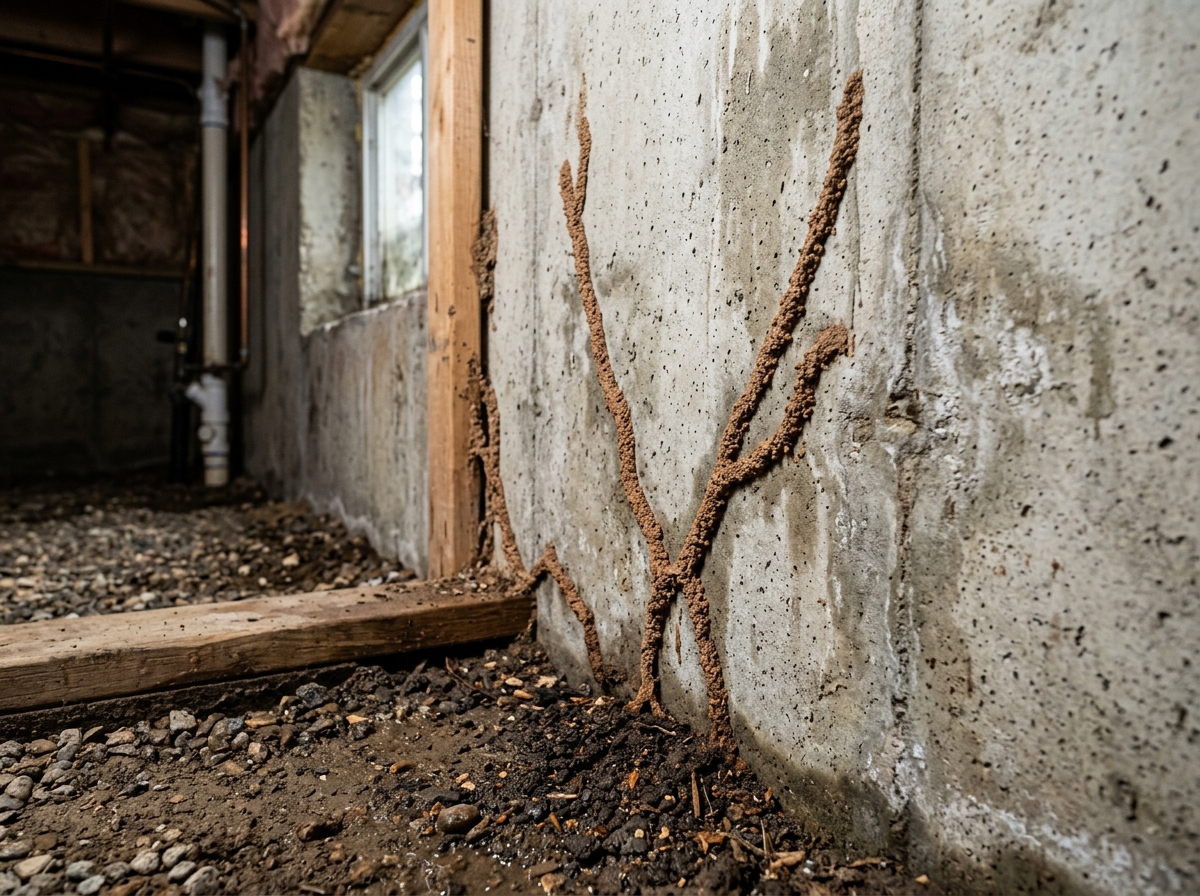
Early Warning Signs for Middlesex County Termite Treatment
Beyond the obvious biological signs, your home’s physical condition can offer clues. Recognizing signs of termite damage early can save you a fortune in structural repairs.
- Buckling Floors or Sagging Ceilings: When termites eat through structural supports, the weight of the house begins to shift. This can lead to floors that feel “spongy” or ceilings that appear to be dipping.
- Stuck Windows and Tight Doors: As termites consume the wood around window and door frames, the wood can swell or warp due to the moisture termites bring with them. If a window that used to open easily is suddenly jammed, it’s worth asking, “how do you know if you have termites?“
- Moisture Patterns: Termites love humidity. Sometimes, what looks like water damage or bubbling paint is actually a sign of termites tunneling just beneath the surface.
Professional Middlesex County Termite Treatment Options
When it comes to Middlesex County termite treatment, there is no “one-size-fits-all” solution. At Biggins Exterminating, we’ve spent four decades refining our approach to ensure we use the most effective methods for the specific soil and weather conditions in Massachusetts.
The two heavy hitters in the industry are liquid barriers and baiting systems.
Liquid Termiticides
A termite barrier treatment involves applying a specialized liquid termiticide into the soil around the entire perimeter of your home. This creates a “treated zone.” Modern non-repellent liquids are incredible because termites can’t detect them. They crawl through the treated soil, pick up the product, and share it with the rest of the colony. This is particularly effective for subterranean termite control because it provides immediate protection.
Bait Systems (Sentricon Always Active)
Baiting systems, such as Sentricon with RecruitHD, are a more “green” approach that uses very little product. We install discreet stations around your property. These stations contain a bait that termites actually prefer over wood. The foraging termites find the bait, take it back to the colony, and it eventually eliminates the queen, effectively killing the entire colony.
| Feature | Liquid Barriers | Baiting Systems |
|---|---|---|
| Speed of Action | Immediate barrier protection | Gradual colony elimination |
| Application | Trenching/drilling around foundation | Discreet stations in the yard |
| Duration | Lasts several years in soil | Requires ongoing monitoring |
| Environment | Higher volume of product | Low impact, targeted bait |
Choosing the Right Middlesex County Termite Treatment
The choice between liquid and bait often depends on your home’s construction. For example, a home in Lexington with a stone foundation might require a different approach than a modern build in Burlington.
Our goal is always colony elimination. We don’t just want to kill the termites currently eating your house; we want to destroy the source. A professional exterminator for termites will conduct a thorough inspection to determine the extent of the infestation before recommending a plan. For more details on the differences, you can check out our subterranean termite ultimate guide.
The Financial Impact of Termite Damage in New England
We hate to be the bearers of bad news, but termites are expensive roommates. Because they target structural timber — the very bones of your home — the damage they cause is often hidden until it becomes a safety issue.
The termite-treatment-cost is a drop in the bucket compared to repair expenses. If termites compromise your floor joists or sill plate (the wood that sits directly on your foundation), you could be looking at structural repairs that cost tens of thousands of dollars. Furthermore, termite damage can significantly tank your property value, as most buyers will require a clean termite-inspection-services report before closing.
What does it cost? Based on publicly available internet data, the average cost for professional termite treatment can vary wildly depending on the size of the home and the severity of the infestation. You might see a price range from $500 to $4,500 or more.
Note: These are average costs based on general market data and do not reflect Biggins Exterminating’s actual pricing. We provide custom quotes based on your specific property needs.
Preventing Future Infestations in Middlesex County
Prevention is always cheaper than a cure. Once we’ve cleared an infestation, we work with our clients in towns like Andover and Tewksbury to make their homes less attractive to future colonies.
Here is a simple “how-to” for termite prevention:
- Manage Moisture: Subterranean termites need moisture to survive. Ensure your gutters are clear, downspouts lead away from the foundation, and your crawl space is dry.
- Seal the Foundation: Termites can fit through cracks as thin as a credit card. Seal any gaps in your foundation or where utility lines enter the house.
- Mulch Management: Mulch is essentially a “welcome mat” for termites. It holds moisture and provides food. Keep mulch at least 12 inches away from your foundation, or consider using pine bark or rubber mulch.
- Firewood Storage: Never stack firewood against your house. Store it at least 20 feet away and keep it elevated off the ground.
- Eliminate Wood-to-Ground Contact: Ensure that the wooden siding or trim of your home does not touch the soil. There should be at least a 6-inch gap of concrete or stone.
For a deeper dive into these strategies, read our guide on how to prevent termites and learn about the dangers of termites and how to prevent them in Massachusetts.
Frequently Asked Questions
Do termites return after a professional treatment?
They certainly can if the home isn’t monitored. While a professional treatment will eliminate the current colony, new colonies can form nearby or move into the area years later. This is why we recommend annual inspections and ongoing monitoring stations. Our goal is to show you how to get rid of termites permanently through a combination of initial treatment and long-term vigilance.
What is the difference between DIY and professional termite control?
We love a good DIY project as much as anyone, but termites pest control is not the place to experiment. Over-the-counter sprays usually only kill the termites they touch, which might represent only 1% of the colony. Professional-grade equipment and products are required to reach the nest deep underground. If you miss even a small part of the colony, they will simply relocate to another part of your home and continue eating.
Why are termites so active in Middlesex County during the spring?
Spring in Massachusetts brings the “perfect storm” for termites. As the soil temperature rises and the spring rains increase humidity, subterranean termites are triggered to swarm. The humidity allows the swarmers to survive long enough to find a mate and a new place to tunnel. In Wilmington and surrounding areas, this usually happens between March and May.
Conclusion
At Biggins Exterminating & Pest Control, we take termites personally. As a family-owned business with over 40 years of experience right here in Wilmington, MA, we know that your home is more than just a building — it’s your sanctuary.
We provide reliable termite-pest-control services to our neighbors in Andover, Bedford, Billerica, Burlington, Lexington, North Reading, Tewksbury, Wilmington, and Woburn. We don’t believe in trapping you with long-term contracts; we believe in earning your trust through high-quality work and guaranteed results.
Don’t wait for the mud tubes to appear. Protect your home today! Reach out to us for a professional inspection and let our family protect yours.
