
Why North Reading Homes Need Professional Pest Inspections
Pest inspection North Reading services are your first line of defense against termites, carpenter ants, rodents, ticks and mosquitoes the pests most likely to damage property or endanger health in our wooded Massachusetts community.
Quick facts you need to know:
Common offenders: termites, carpenter ants, mice, ticks, mosquitoes
Recommended schedule: annual inspection for most homes, quarterly for highrisk properties
Hotspots: foundation, attic, basement, crawl spaces and any damp area
Typical costs: $75$350 for basic visual checks, $150$700 for full assessments*
Best timing: before purchase, after major storms and at seasonal changes
Required by: many realestate lenders, FHA / VA loans, some insurance policies
*Average internet ranges; not Biggins Exterminating pricing.
North Readings mix of 1700s colonials and modern builds, coupled with the Ipswich Rivers wetlands, creates perfect conditions for pests. Historic homes develop foundation gaps over centuries, while modern additions often trap moisture that invites insects. Even new construction faces pressure from surrounding woodlands and shifting climate patterns that lengthen pest seasons.
Im Stephen Biggins, and for 40plus years my familys company has protected North Reading homes. Weve seen how a quick professional look can save tens of thousands in repairs. This guide distills that experience so you can spot problems early, schedule inspections wisely and keep your home pestfree.
Who This Guide Helps
Firsttime home-buyers who need pest insights before closing
Sellers wanting clean reports to avoid dealbreaking surprises
Landlords required to provide pestfree rentals
Homeowners planning renovations that could expose hidden colonies
What Youll Learn
The stepbystep inspection process
Early warning signs you can spot yourself
How findings affect realestate deals and insurance
Average pricing and ecofriendly followups
Why Regular Pest Inspections Matter in North Reading
Living among centuriesold houses and dense tree cover is charmingand irresistible to pests. Colonial foundations built with fieldstone and lime mortar develop cracks over time, while handhewn beams shrink and shift, opening gaps big enough for insects and mice. Modern renovations sometimes make things worse by sandwiching moisture between old and new materials.
Health is on the line too. Ticks in North Reading carry Lyme disease, Rocky Mountain spotted fever and Tularemia. Humid summers fuel mosquito populations that can spread West Nile virus and Eastern Equine Encephalitis.
Hidden Dangers in 18thCentury & New Builds
Stone foundations become rodent highways as mortar crumbles.
Postandbeam joints loosen, inviting carpenter ants.
Modern additions can trap condensation, a fivestar termite resort.
Top Local Culprits
Termites silently consume structural wood, leaving only a paperthin shell.
Carpenter ants tunnel through damp timber; colonies may hit 500,000 individuals.
Mice squeeze through dimesized holes, contaminate food and chew wiring.
Ticks & mosquitoes thrive in shaded, wet landscapes and transmit disease.
Risks of Skipping Inspections
Structural repair after hidden termite damage can exceed $40,000.
Rodentchewed wiring sparks thousands of U.S. home fires annually.
Insurance claims may be denied if regular pest prevention cant be documented.
A modest annual inspection fee is pocket change compared with these risks.
Pest inspection North Reading: Step-by-Step Walkthrough
A professional pest inspection North Reading is far more detailed than a quick look around. Our certified technicians take 6080 minutes to investigate every place pests hide.
| Home Inspection | Pest Inspection |
|---|---|
| Broad check of all house systems | Laser focus on pest entry, activity & damage |
| 2–4 hrs | 1–2 hrs |
| Notes visible defects | Uses moisture meters & thermal imaging |
| Often required by lenders | Required for FHA/VA or highrisk loans |
Pre-Inspection Prep
Move stored items 18″ off basement & attic walls.
Secure pets in a separate room.
Provide past treatment records.
See more tips: signs that you have a pest infestation.
Exterior & Foundation Checks
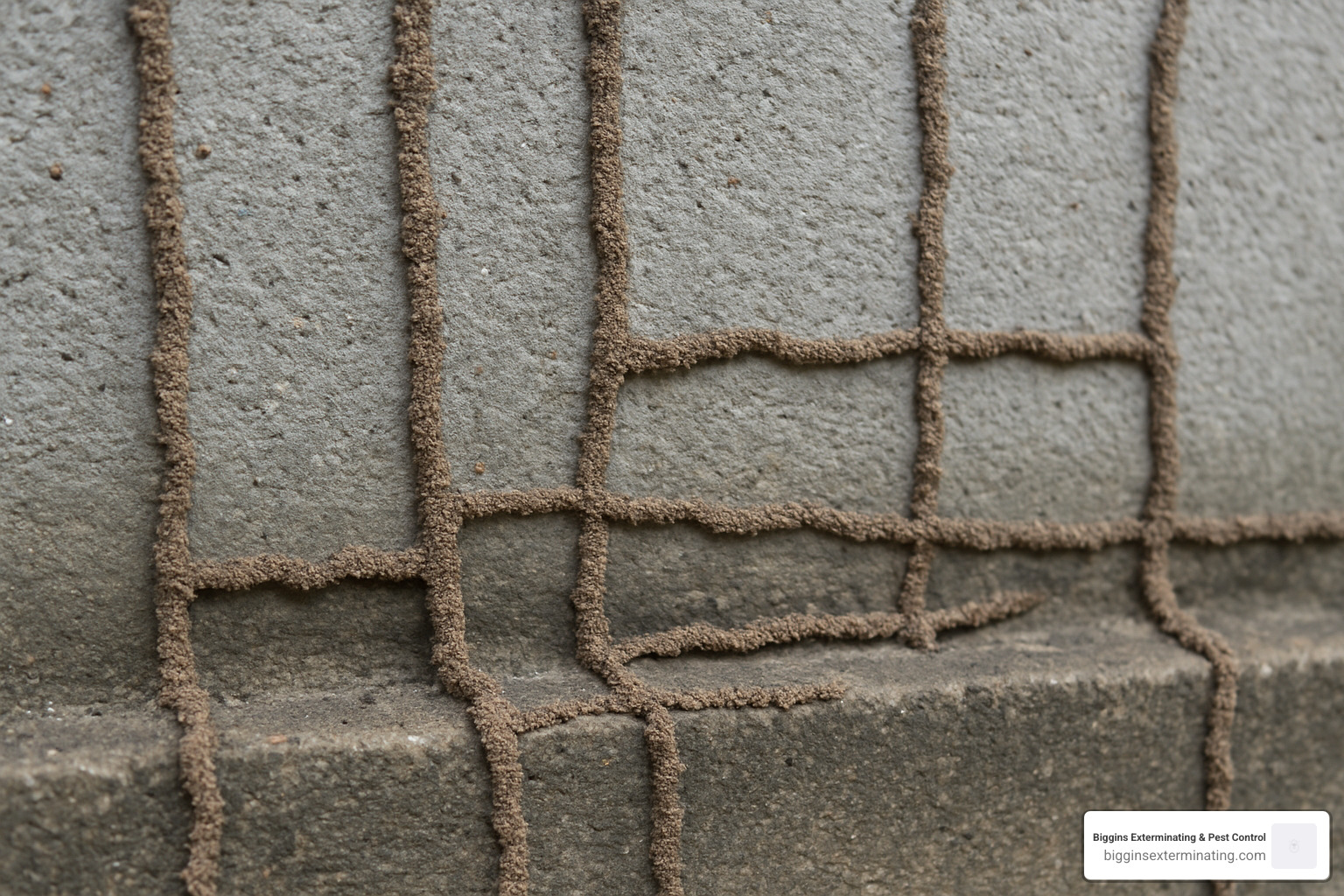
We hunt for mud tubes, wood-soil contact, mulch piled against siding, gaps in plumbing penetrations and rodent burrows. Overgrown shrubs touching the house get flagged for trimming.
Interior Hotspots
Kitchens, baths and utility rooms supply food or moisture. We pull appliances forward, check under sinks and probe wall voids for droppings, frass or gnaw marks.
Attic, Basement & Crawl Spaces
Moisture meters reveal hidden dampness; thermal cameras show heat signatures of nesting rodents. We document any wiring or insulation damage.
Understanding the Report
Results arrive in a detailed PDF that includes photos, moisture readings and a Wood-Destroying Insect Report (WDIR) when required. Buyers use it for negotiations; homeowners use it to plan treatment or claim warranties. More on leveraging reports: safeguarding your home and health.
Warning Signs, Scheduling & Cost Breakdown
Early red flags include:
Musty odors in basements or crawl spaces
Nighttime scratching or tapping in walls
Tiny piles of sawdust (frass) below beams or windows
Shed termite wings near light sources
Grease streaks along baseboards from rodent traffic
How Often to Inspect
Annual comprehensive inspection + quarterly check-ups is ideal. Historic or heavily wooded properties may need bi-annual full inspections.
Average Costs*
Basic visual inspection: $75 – $350
Comprehensive (moisture + thermal imaging): $150 – $700+
*Wide ranges gathered from online sources; not Biggins actual prices.
When to Book
Before purchase (within the inspection contingency)
After severe storms or flooding
At spring and fall transitions to catch termites or rodents early
Real-Estate Impact
Inspection findings can mean seller credits from a few hundred dollars for minor ant activity to several thousand for structural termite repair. FHA and VA loans demand clear WDIRs before closing.
Prevention & Eco-Friendly Follow-Up
Inspection finished? Now build layers of defense:
Seal cracks with exterior caulk or expanding foam.
Control moisture: Keep basements below 50% RH with dehumidifiers.
Trim landscaping and maintain an 18-inch mulch-free zone.
Store firewood 20 ft from the house and lift it off soil.
Fix leaks fast; a dripping pipe is a carpenter ant magnet.
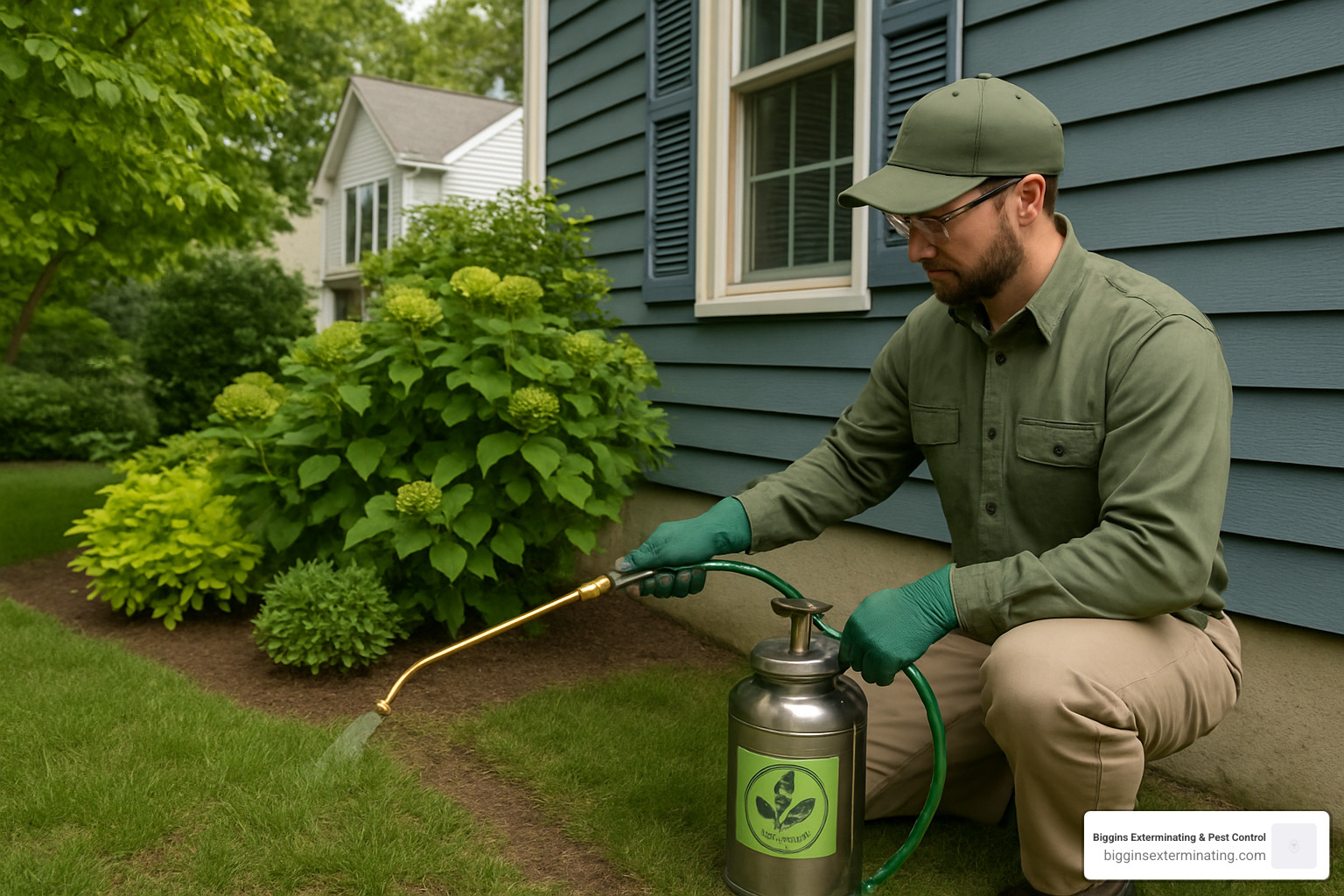
Green options include botanical sprays and EPA-approved bait stations that target pests without harming pollinators. Quarterly monitoring adapts treatments to North Readings seasons.
For rodent-specific tips see: how to identify and prevent rodent infestations in Massachusetts.
Frequently Asked Questions about Pest inspection North Reading
How often should I schedule an inspection?
Most North Reading homeowners should plan for annual comprehensive inspections paired with quarterly check-ups throughout the year. This schedule catches problems early while keeping costs manageable. Think of it like going to the dentist – regular visits prevent bigger, more expensive problems down the road.
Historic properties need extra attention due to their age and construction vulnerabilities. If your charming 1800s colonial has dealt with pest issues before, consider bumping up to twice-yearly comprehensive inspections. The same goes for homes nestled in heavily wooded areas or near the Ipswich River, where pest pressure stays high year-round.
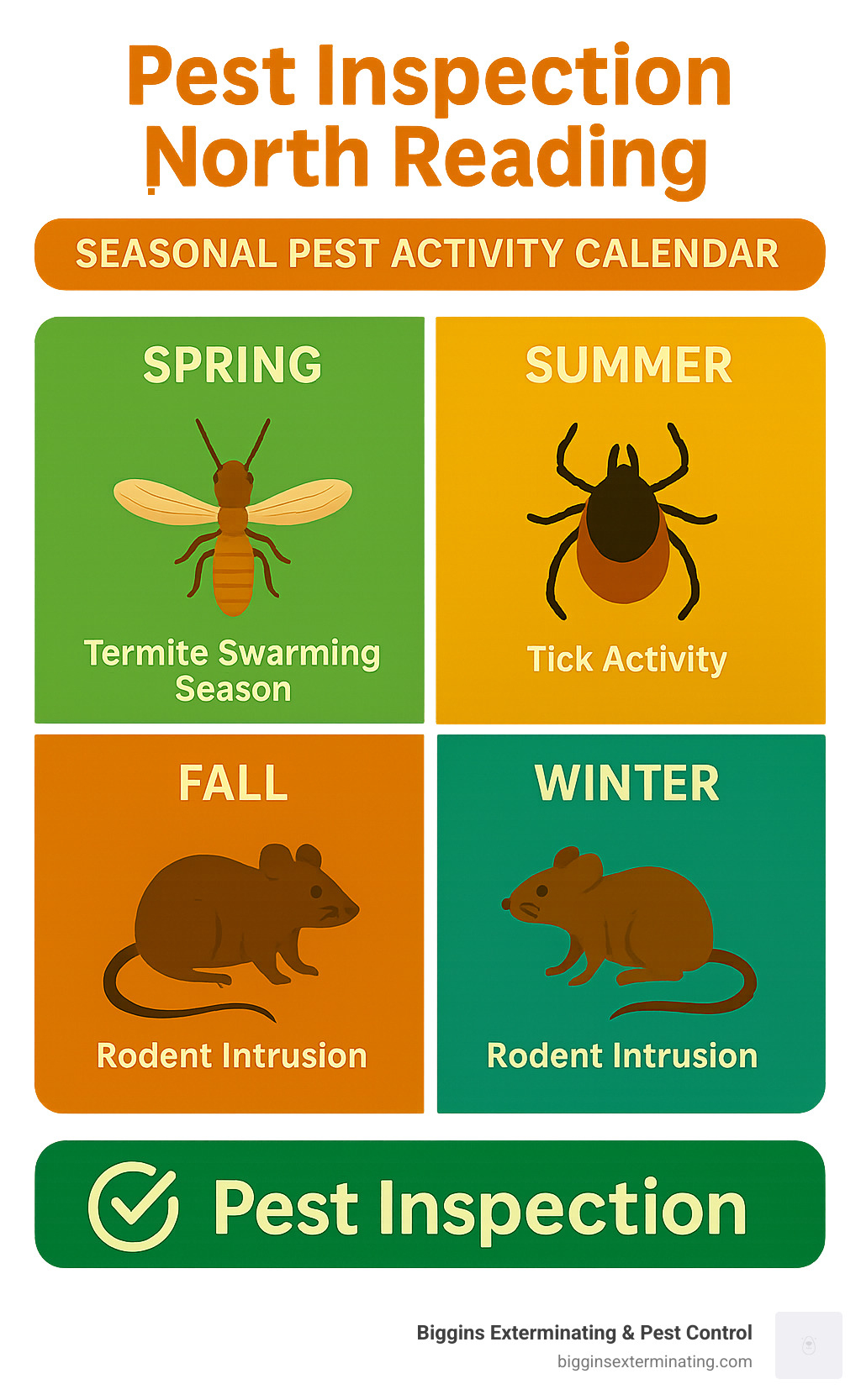
Timing your pest inspection North Reading visits strategically makes a huge difference. Spring inspections catch those notorious termite swarms just as they’re getting active, plus emerging carpenter ant colonies looking for new territory. Fall inspections spot mice and rats before they turn your cozy home into their winter retreat.
Different pests follow different schedules, which is why year-round monitoring works best. What might look pest-free in January could be crawling with activity by June.
Is a pest inspection different from a home inspection?
Absolutely, and the differences matter more than you might think. Your general home inspector does an amazing job checking electrical, plumbing, HVAC, and structural systems, but they’re covering a lot of ground in those 3-4 hours. Pest inspections dive deep into pest-specific issues with laser focus and specialized training.
We spend our 1-2 hours using tools your home inspector doesn’t carry – moisture meters that detect hidden dampness attracting termites, thermal imaging that spots pest activity inside walls, and specialized knowledge about pest behavior patterns. We know exactly where carpenter ants like to hide and what termite damage looks like in its earliest stages.
The reports serve different purposes too. Home inspection reports cover everything from roof shingles to basement foundations. Pest inspection North Reading reports zero in on pest activity, damage assessment, and specific treatment recommendations. For real estate deals, you’ll often need both reports to get the complete picture.
Think of it this way: a home inspector is like your family doctor doing a general checkup, while we’re the specialists focusing on one particular health concern with much greater detail and expertise.
What happens if pests are found during the inspection?
Finding pests during an inspection isn’t the end of the world – it’s actually the beginning of solving your problem properly. Most pest issues can be resolved quickly and effectively when caught early through professional inspection.
We’ll walk you through exactly what we found, which pests are involved, and how extensive the situation is. Treatment options vary widely based on what we’re dealing with. A small ant problem might need targeted baiting, while a termite colony requires comprehensive treatment and monitoring. We explain everything in plain English, no confusing technical jargon.
For real estate transactions, pest findings become negotiating tools rather than deal-breakers. Buyers and sellers can work out who handles treatment costs, whether repairs are needed, and how to document everything for the lender. We’ve seen countless deals proceed smoothly even with pest issues once everyone knows what they’re dealing with.
Our approach focuses on customized solutions without locking you into long-term contracts. We’ll recommend what you actually need, not what makes us the most money. Some situations need immediate treatment, others benefit from monitoring, and many require a combination approach.
The key is having professional documentation and a clear treatment plan. Pest problems that seem overwhelming often have straightforward solutions when handled by experienced professionals who’ve seen it all before.
Conclusion
Professional pest inspection North Reading services from Biggins Exterminating & Pest Control keep historic charm and modern comfort intact without long-term contracts. Regular inspections protect your familys health, safeguard property value and provide documentation lenders and insurers respect.
Dont wait for sagging floors or chewed wires. Book your inspection today and join thousands of Middlesex County neighbors who trust our 40-plus years of local expertise.
Learn more or schedule here: local team.