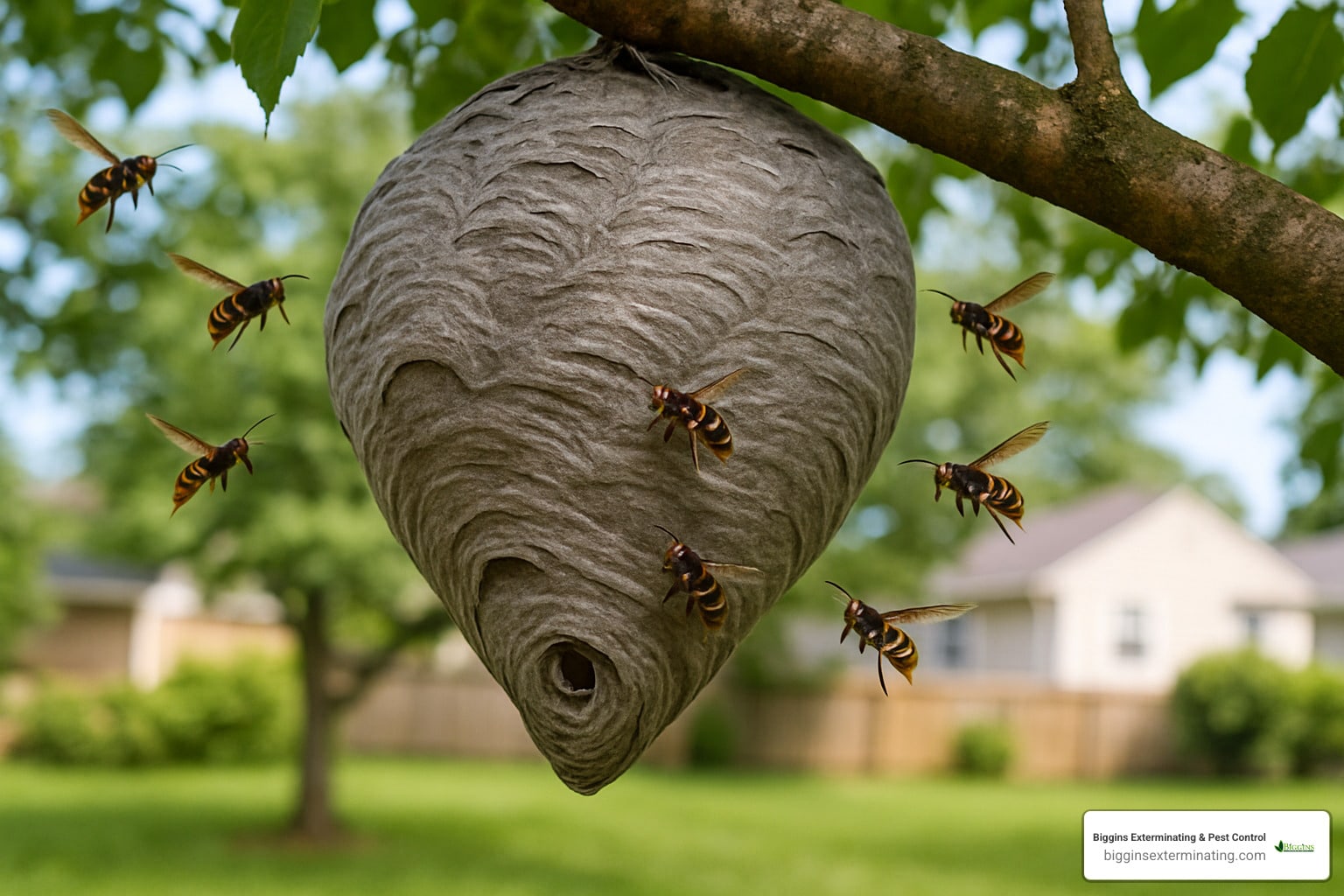
Why Professional Pest Control Hornets Nest Services Matter
Pest control hornets nest removal is a serious safety concern that sends over 70,000 people to emergency rooms annually across North America. Unlike bees that sting once and die, hornets can deliver multiple painful stings and even spray venom into your eyes, causing temporary blindness.
Quick Answer for Hornet Nest Removal:
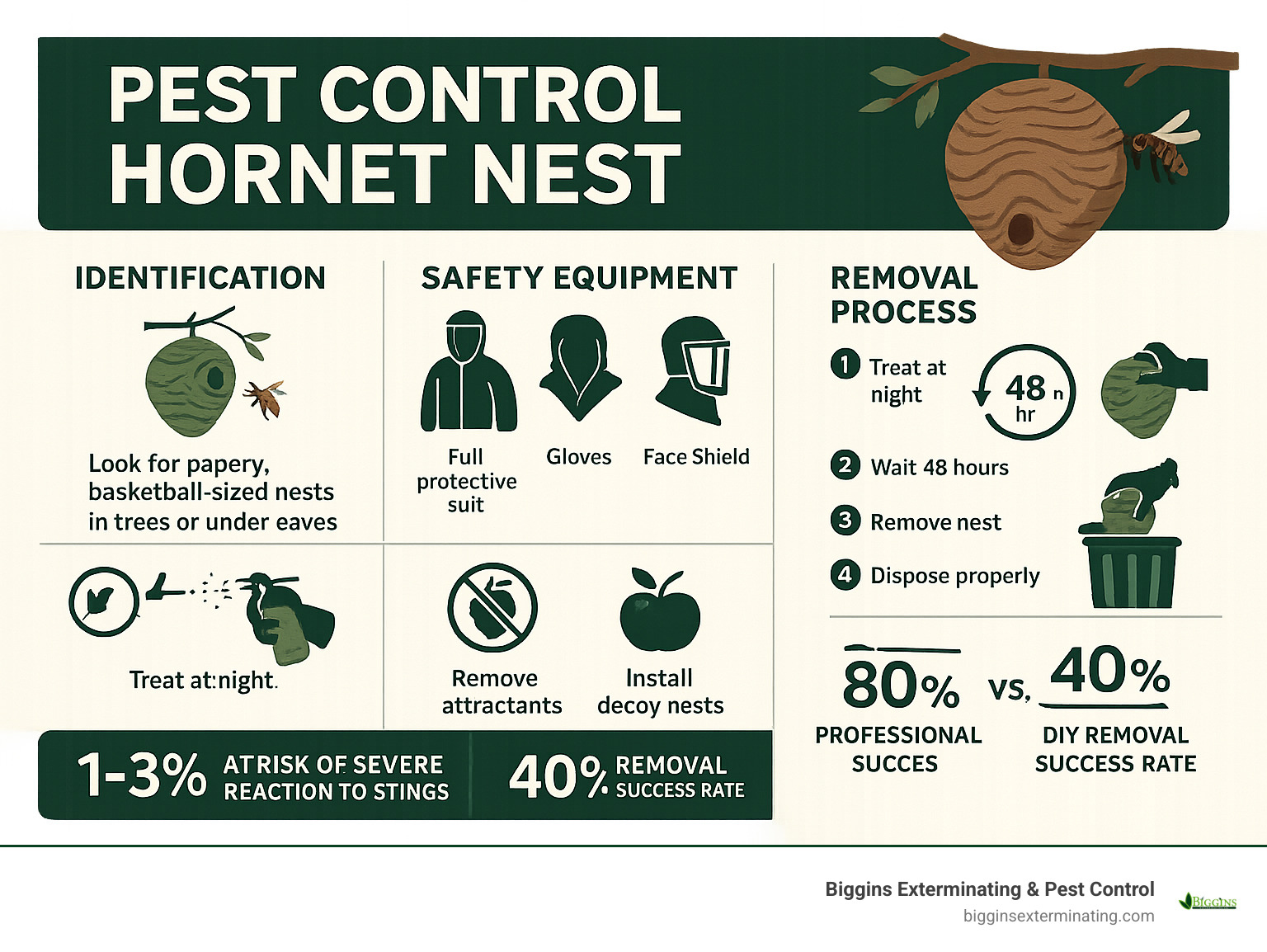
– Identify the threat: Look for basketball-sized papery nests in trees, eaves, or wall voids
– Assess the danger: Large nests can house 100-700 aggressive hornets
– Choose your approach: DIY for small, accessible nests OR professional removal for large/dangerous situations
– Remove safely: Use protective gear, treat at night, wait 48 hours before nest removal
– Prevent return: Seal entry points, remove attractants, install decoy nests
The stakes are high when dealing with hornet nests. These social wasps become extremely aggressive when their colony is threatened, and their stings can trigger severe allergic reactions in 1-3% of the population.
This comprehensive guide will walk you through proven identification techniques, safe removal methods, and long-term prevention strategies to protect your family while respecting these beneficial insects.
I’m Stephen Biggins, owner of Biggins Exterminating Co., and I’ve been helping Massachusetts families with pest control hornets nest challenges for over four decades.
Related content about pest control hornets nest:
– average cost of exterminator for wasps
– can i remove a wasps nest in winter
– remove wasp nest from soffit
Why This How-To Matters
Wasps and hornets are responsible for over 70,000 emergency room visits annually in North America, with hornets delivering more venom per sting than any other stinging insect. Multiple stings can overwhelm even healthy individuals, while those with allergies face life-threatening anaphylaxis.
Understanding proper identification and removal techniques isn’t just helpful—it’s potentially life-saving.
Hornets, Wasps & Bees: Know Your Enemy
When you spot a buzzing insect near your home, knowing whether you’re dealing with a hornet, wasp, or bee can literally be the difference between a minor inconvenience and a medical emergency. Pest control hornets nest situations require accurate identification because your response strategy depends entirely on what species you’re facing.
Hornets are actually a type of social wasp, just bigger and meaner. In our area, we mainly deal with two troublemakers: the European hornet (Vespa crabro) and the bald-faced hornet (Dolichovespula maculata)—which, confusingly, is actually a yellowjacket wasp despite its name.
Both species build distinctive papery nests from chewed wood pulp that look like oversized gray footballs. Their smooth stingers mean they can sting multiple times without losing their weapon, unlike bees that sting once and die.
Hornets aren’t just flying menaces—they’re actually beneficial predators that control aphids, flies, and other garden pests. They even do some pollinating work. When hornets get aggressive, they’re just protecting their home.
For anyone dealing with severe reactions, Scientific research on insect sting allergies provides crucial medical information about treatment options.
Hornets 101
Every pest control hornets nest situation starts with understanding the enemy’s game plan. Hornet colonies follow a predictable seasonal cycle that smart homeowners can use to their advantage.
In spring, a single fertilized queen emerges from winter hibernation and starts house-hunting. She begins construction using saliva mixed with chewed wood fibers, creating those papery walls we all recognize. She lays her first batch of eggs and tends them until they hatch into sterile female workers.
Once those first workers emerge, the colony hierarchy kicks into high gear. The queen focuses solely on egg-laying while her daughters take over construction, food gathering, and defense duties. By midsummer, a thriving colony can house 100-700 individuals—all ready to defend their home.
The colony reaches peak aggression in late August and September when food becomes scarce. Come winter, everyone except the newly fertilized queens dies off, and the cycle starts fresh next spring.
Hornets vs Wasps vs Bees
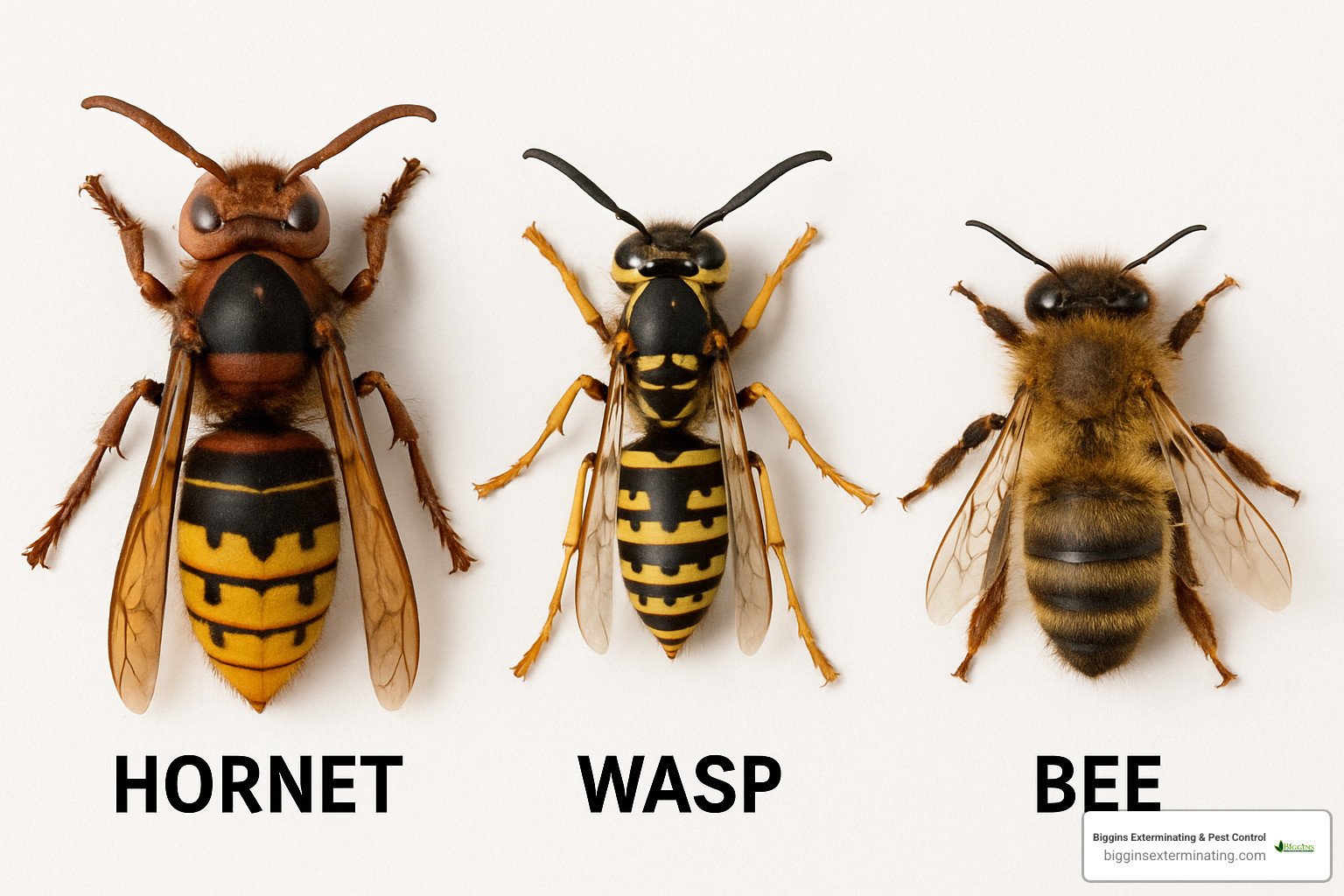
Hornets are the heavyweight champions at 1-1.5 inches long, with robust brown and yellow bodies. They’re highly aggressive when threatened and pack the most venom per sting.
Wasps are typically 0.5-0.75 inches with bright yellow and black stripes and that classic narrow waist. They’re moderately aggressive and also deliver multiple stings, but with less venom than hornets.
Bees have fuzzy, rounded bodies in brown and amber tones built for collecting pollen. They’re rarely aggressive unless directly handled, and their barbed stingers mean they can only sting once before dying.
All three species provide ecological benefits—hornets and wasps control pest populations, while bees are essential pollinators. However, hornets pose the greatest risk to homeowners, making professional pest control hornets nest removal often the wisest choice.
Spotting Trouble Early: Pest Control Hornets Nest Detection
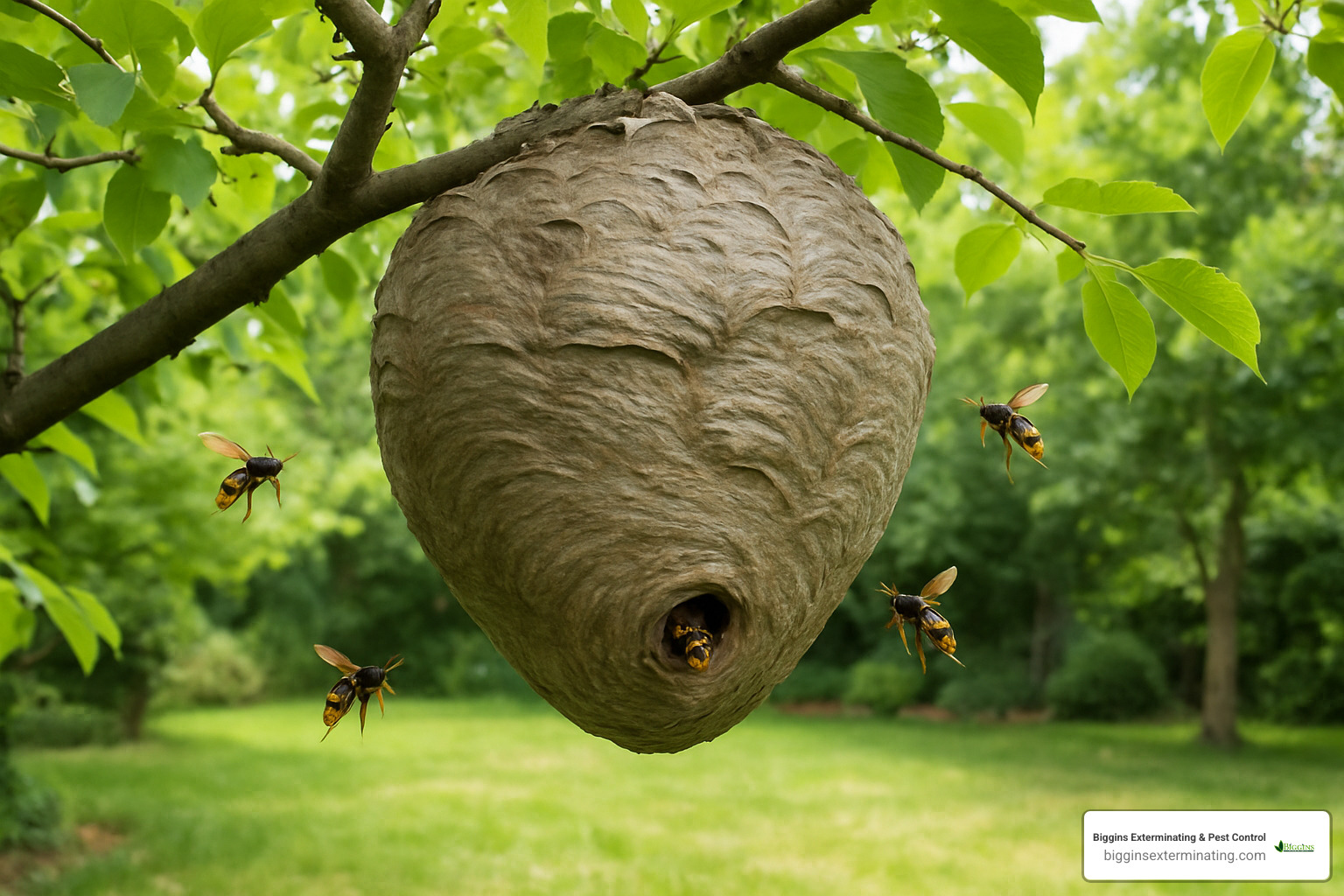
Early detection is your best defense against a dangerous pest control hornets nest situation. Hornet nests start small in late spring but can grow to basketball size or larger by fall, housing hundreds of aggressive defenders.
The key visual cues include a distinctive papery texture created from chewed wood fibers, heavy insect traffic in and out of a single entrance, and scraping sounds as workers gather nest-building materials. You might also notice chew marks on wooden fences, decks, or siding where hornets harvest wood pulp.
When hornets feel threatened, they release alarm pheromones that trigger mass attacks from nest-mates. This defensive behavior makes disturbing even small nests extremely dangerous without proper preparation.
Signs of a Pest Control Hornets Nest
Watch for these warning signs around your property:
- Sudden increase in large flying insects around specific areas
- Scraping or chewing sounds from walls, eaves, or trees
- Wood fiber debris beneath potential nesting sites
- Aggressive insect behavior when you approach certain areas
- Night activity around exterior lights (European hornets are active after dark)
- Sweet, fermented odors from decaying nest materials
We’ve found that homeowners who catch infestations early save both money and stress. Small nests with fewer than 30 workers are much safer to address than mature colonies.
Common Nest Locations
Hornets prefer protected locations that offer shelter from weather and predators. Based on our four decades of experience in Massachusetts, here are the most common nesting sites:
Aerial Locations:
– Tree branches and hollow trunks
– Under roof eaves and soffits
– Inside attics and wall voids
– Beneath decks and porches
– In sheds and outbuildings
Ground Locations:
– Abandoned rodent burrows
– Under bushes and shrubs
– In compost piles
– Beneath deck stairs
For comprehensive guidance on nest identification, check out our detailed article on Hornets and Wasps: Identifying Nests and Ensuring Safety.
When to Call Pest Control Hornets Nest Experts
Certain situations absolutely require professional intervention:
- Anyone with known insect sting allergies should never attempt DIY removal
- Nests larger than a softball typically house 100+ aggressive defenders
- Hard-to-reach locations like high tree branches or inside walls
- Multiple nests on the same property
- Previous sting incidents that resulted in severe reactions
- Nests near high-traffic areas like doorways, playgrounds, or outdoor dining spaces
We always tell our customers: when in doubt, call us out. The cost of professional removal is minimal compared to emergency room bills or structural damage from failed DIY attempts.
DIY vs Professional: Why Going Solo Can Sting
After four decades in the pest control hornets nest business, I’ve seen too many homeowners turn a manageable situation into a dangerous disaster by trying to handle it themselves. While I admire the DIY spirit, hornet nest removal is one of those jobs where good intentions can literally come back to sting you.
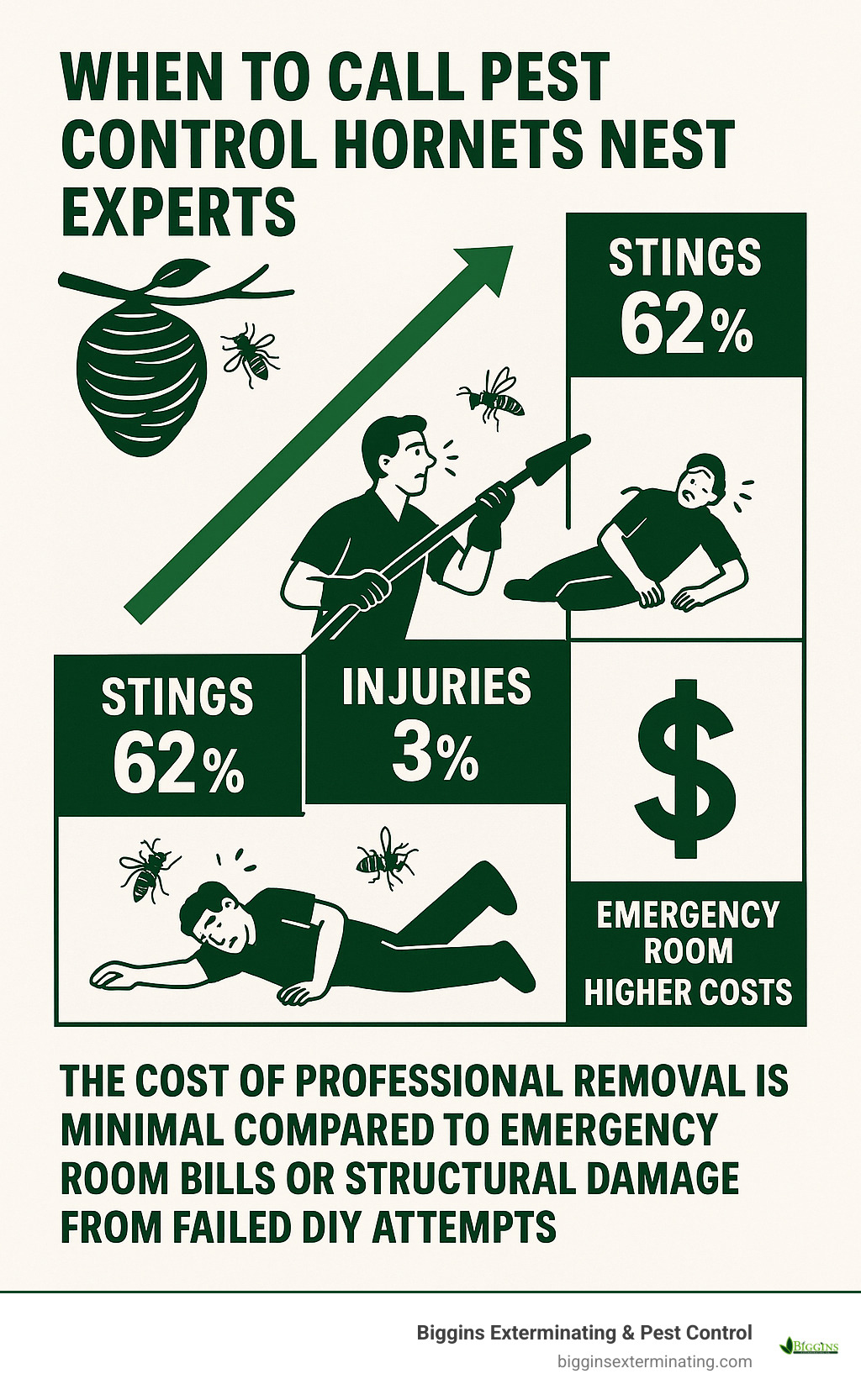
The appeal is understandable. You spot a nest, think “how hard can it be?” and head to the hardware store. But hornets are incredibly smart and coordinated defenders. When you attack their home, they don’t just fight back—they call for backup.
Professional pest control technicians undergo specialized training for stinging insect behavior. We carry liability insurance, use commercial-grade equipment, and have protocols for safely accessing tricky locations. Most importantly, we know how to read the situation before things go sideways.
The most dangerous DIY mistakes are inadequate protective gear, attempting removal during daylight hours when colonies are most active, and incomplete nest elimination that leaves angry survivors to rebuild nearby.
Health & Safety Risks
Hornet stings are much worse than bee stings. Their smooth stingers allow for multiple injections of venom—they can keep stinging until physically removed. They can actually spray venom directly into your eyes, causing temporary blindness and excruciating pain.
When one hornet feels threatened, it releases alarm pheromones that send an “all hands on deck” signal to the entire colony. We’ve responded to emergency calls where homeowners suffered dozens of stings after disturbing what they thought was a small nest.
Even without allergies, multiple hornet stings can cause severe swelling and pain lasting days, nausea and dizziness from venom overload, and secondary infections from excessive scratching.
Financial & Structural Costs
Failed DIY attempts often cost more than professional service. Customers have called us after spending hundreds on sprays, protective gear, and equipment rentals, only to make the problem worse.
Hidden costs include medical bills from sting injuries ranging from hundreds to thousands of dollars, property damage from panicked homeowners using inappropriate chemicals or tools, and repeated product purchases when treatments fail.
The worst part? Structural repairs become necessary when partially treated hornets relocate inside walls or attics, turning an outdoor problem into an indoor nightmare requiring cutting into drywall.
Professional Edge
Licensed pest control companies provide more than just better equipment. Our certified technicians understand hornet behavior and seasonal patterns. We use commercial-grade protective equipment tested for multiple stings and designed for professional use.
We carry liability insurance covering accidental property damage and offer 100% satisfaction guarantees with free follow-up treatments if hornets return.
Our proven A.I.M. approach—Assess, Implement, Monitor—ensures complete elimination. We’ve safely removed nests from 30-foot trees, wall voids, underground burrows, and every challenging location imaginable.
For detailed information about professional removal benefits, check out our article on 5 Compelling Arguments to Leave Hornet Nest Removal to Massachusetts Pest Control Experts.
Your safety and your family’s well-being are worth more than the cost difference between DIY and professional pest control hornets nest removal.
Proven Professional Techniques for Removing Hornet Nests
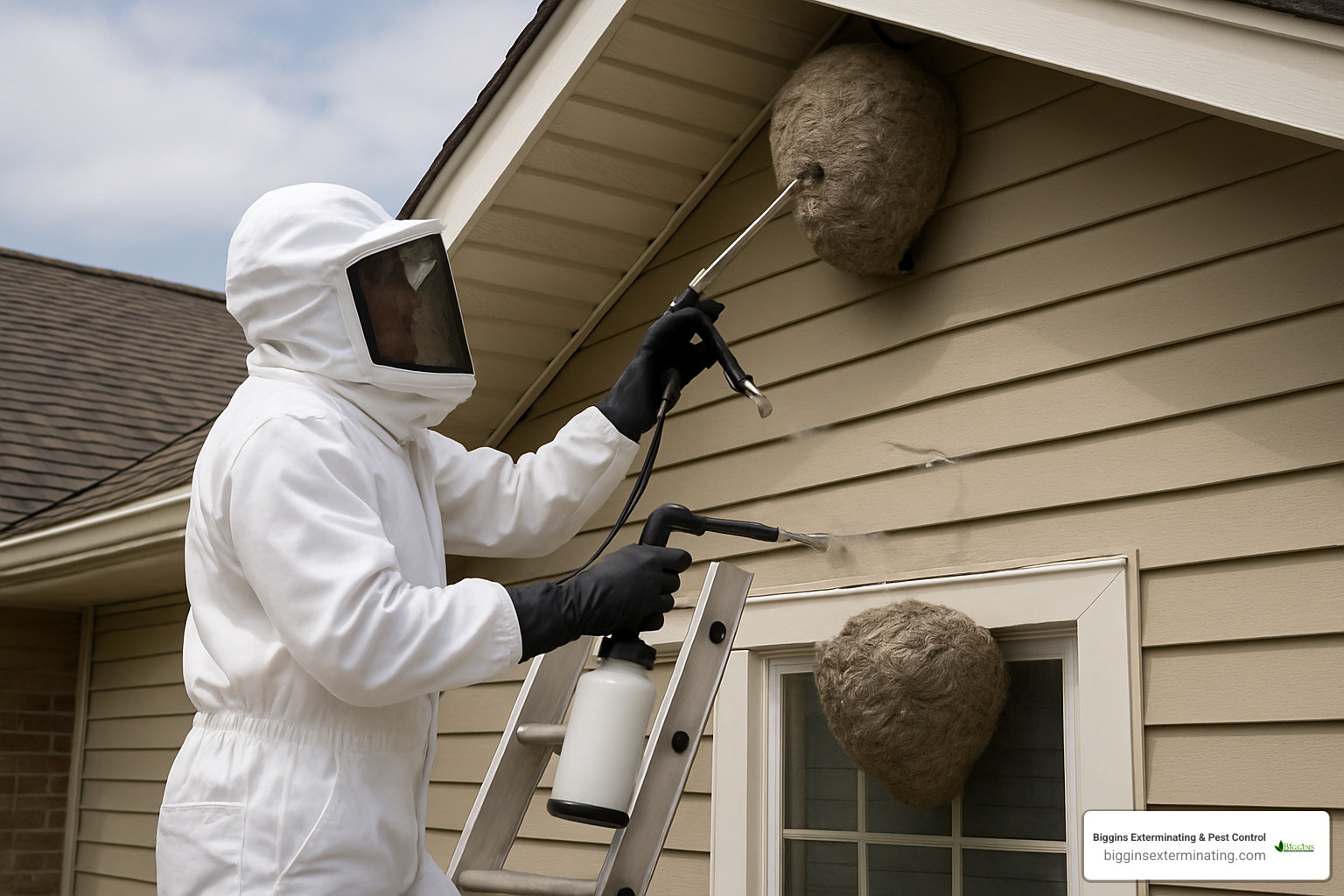
When it comes to pest control hornets nest removal, professional technicians follow a carefully orchestrated process refined over decades of experience. At Biggins Exterminating, we’ve developed our A.I.M. approach—Assess, Implement, Monitor—which has delivered consistent results across Massachusetts for over 40 years.
Based on internet research, homeowners can expect professional removal costs ranging from $100 to $1,300, though these figures represent general market averages and don’t reflect our specific pricing at Biggins Exterminating.
What sets professional removal apart is the combination of specialized equipment, proven techniques, and experience to adapt when things don’t go according to plan.
Step 1 – Inspection & Safety Prep
Every successful removal starts with detective work. Our technicians arrive with knowledge about how different hornet species behave and where they’re likely to cause problems.
Species identification is crucial because European hornets and bald-faced hornets require completely different approaches. European hornets stay active after dark and often nest in wall voids, while bald-faced hornets build distinctive aerial nests and become dormant at night.
The safety preparation phase involves commercial-grade bee suits with reinforced seams and full-face protection tested against multiple stings. The difference between professional and consumer protective equipment becomes obvious when facing hundreds of angry hornets.
Timing strategy can make or break the operation. Most treatments happen at dusk when hornets are settling in, but European hornets remain active after dark. We use specialized red-filtered lighting that doesn’t alert the colony.
Step 2 – Treatment & Extraction
The removal process varies dramatically based on inspection findings. Aerosol treatments work beautifully for accessible nests, using high-pressure jets reaching up to 20 feet away. The foam formulation ensures treatment stays where needed and provides residual protection.
Dust applications become our go-to method for wall voids and underground burrows. The insecticidal dust clings to hornets’ bodies and gets carried throughout the colony, reaching areas sprays can’t penetrate.
Vacuum extraction comes into play for certain situations, especially when removing live hornets from sensitive areas. Physical nest removal happens only after confirming complete elimination, using specialized tools to carefully extract nests without property damage.
Cold-weather removal eliminates the danger of active defenders since only queens survive Massachusetts winters, making late fall and winter ideal for addressing abandoned nests.
For detailed information about handling aerial colonies, our guide on How to Remove Bald Faced Hornet Nest walks through species-specific techniques.
Step 3 – Guarantees, Pricing & Follow-Up
Professional pest control hornets nest services include something DIY approaches can never offer—accountability. We stand behind our work with money-back satisfaction guarantees.
Six-month warranties cover re-treatment at no additional cost if hornets return to treated areas. Follow-up monitoring visits help us catch problems before they become dangerous situations.
The preventive recommendations we provide after removal often prove more valuable than the initial service. Simple changes like sealing entry points and removing attractants can prevent future infestations entirely.
Please note: The pricing ranges mentioned ($100-$1,300) represent internet averages only and don’t reflect actual costs for Biggins Exterminating services. Contact us directly for accurate local pricing.
Prevention & Aftercare: Keeping Hornets From Rebuilding

Successfully handling a pest control hornets nest situation doesn’t end when the last hornet is gone. The real victory comes from keeping them from coming back next year. Since new queens emerge each spring looking for prime real estate, your property could become their next target without proper prevention.
After four decades of helping Massachusetts families, I’ve learned that customers who take our prevention advice seriously rarely call us back with the same problem. It’s much easier to keep hornets away than to remove them once they’ve moved in.
Hornets are creatures of habit drawn to the same types of locations year after year, and they actually avoid areas where other colonies have been established. This gives us several smart ways to discourage them from choosing your property.
Yard & Home Maintenance
Your home’s exterior is like a hornet real estate listing. Sealed cracks and gaps make your property much less attractive to nest-building queens. Walk around your home each spring looking for potential entry points.
Structural repairs should be your first priority. Repair damaged screens on vents and windows, and fill cracks in eaves, soffits, and siding with caulk or expanding foam.
Hornets chew weathered wood to make their papery nests, so painting or staining exposed wood makes it less appealing as building material. Trim tree branches away from your roofline so queens can’t easily access potential nesting spots. Remove dead trees and stumps that provide natural nesting cavities.
Your sanitation habits matter more than you might think. Secure garbage cans with tight-fitting lids, and clean up fallen fruit promptly. Hornets have a sweet tooth, and overripe fruit creates a hornet magnet. Remove pet food and water sources from outdoor areas.
For detailed strategies that have worked for thousands of our customers, check out our guide on Top 5 Ways to Prevent Hornet and Wasp Nests on Your Property.
Eco-Friendly Deterrents
Decoy nests work because hornets are territorial creatures. When a queen scouts for nesting sites, she’ll avoid areas where she thinks another colony is already established. These artificial nests cost around $15-30 and provide protection for the entire season.
Essential oil sprays create natural scent barriers that hornets dislike. Peppermint, clove, and eucalyptus oils are particularly effective when applied monthly around potential nesting areas.
Your landscaping choices can work for or against you. Native plants like mint, basil, and marigolds create beautiful gardens that hornets naturally avoid.
Year-Round Monitoring
Effective prevention follows the seasons. Spring scouting from March through May is crucial because this is when queens emerge and start building new nests. Small nests with just a few workers are infinitely easier to deal with than mature colonies.
Summer monitoring means keeping an eye on established deterrents and maintaining sanitation practices. Fall removal from September through November is actually ideal for nest elimination since colonies are naturally declining.
Winter preparation focuses on sealing potential hibernation sites and planning next year’s prevention strategy. This is when queens find protected spots to survive until spring.
The beauty of year-round prevention is that it becomes second nature, giving you confidence and peace of mind about keeping your family safe from pest control hornets nest emergencies.
Frequently Asked Questions about Pest Control Hornets Nest
Is winter the best time to remove a hornet nest?
Absolutely! Winter is hands-down the safest time for pest control hornets nest removal. By December here in Massachusetts, the worker hornets have all died off from the cold, and only the fertilized queens survive—but they’re tucked away hibernating in completely different locations like tree bark or under house siding.
This means those scary-looking nests hanging from your trees or tucked under your eaves are completely empty and harmless. You can remove them without any protective gear or worry about angry hornets defending their home.
But here’s the thing—if you find an active nest during the warmer months, don’t wait for winter to roll around. The longer you delay, the more dangerous that colony becomes. A nest that starts with just a queen in May can house 700 aggressive defenders by September. We always recommend immediate professional assessment for any active nest, especially if it’s near areas where your family spends time.
There’s another good reason to remove those empty winter nests: other critters love to move into abandoned hornet homes. We’ve found mice, spiders, and all sorts of insects setting up shop in old nests, creating a whole new set of pest problems for homeowners.
How painful and dangerous are hornet stings compared to bees?
If you’ve ever been stung by a bee, imagine that pain multiplied by about five—that’s what you’re looking at with a hornet sting. Hornets pack significantly more venom per sting, and unlike bees that die after stinging once, hornets can keep stinging you with their smooth stingers.
The pain from a hornet sting is often described as a burning or crushing sensation that can last for hours, compared to the sharp but brief pain of a bee sting. But the real danger isn’t just the pain—it’s what happens when you get multiple stings.
We’ve responded to emergency calls where homeowners received 10-15 hornet stings and needed immediate medical attention, even though they had no known allergies. Multiple stings can overwhelm your body’s ability to process all that venom, leading to serious health complications.
Here’s something that really sets hornets apart from bees: they can actually spray venom directly into your eyes, causing temporary blindness and intense burning pain. This defensive behavior makes disturbing a pest control hornets nest particularly dangerous without proper protection.
For anyone with known insect sting allergies, even a single hornet sting can trigger life-threatening anaphylaxis. That’s why we always tell customers with allergies to call us immediately—it’s just not worth the risk.
Do hornets reuse old nests or build new ones each year?
This is one of the most common misconceptions we hear about hornets. The truth is, hornets are fresh-start kind of insects—they build brand new nests every single year and never reuse old ones. When spring arrives, those surviving queens don’t bother with last year’s real estate; they scout out new locations and start building from scratch.
This annual cycle means that scary-looking nest from last summer is basically just an empty paper shell by winter. But before you think you can just leave it there, consider this: while hornets won’t reuse it, plenty of other pests will gladly move in.
We’ve found everything from mice to spiders making themselves comfortable in abandoned hornet nests. Plus, those decomposing nest materials can create unpleasant odors and stains on your home’s exterior.
Some homeowners think leaving old nests up will scare away new queens, but our 40+ years of experience shows this isn’t reliable. Queens choose their building sites based on practical factors like protection from weather, nearby food sources, and available wood fibers for construction—not whether there’s an old nest in the neighborhood.
The smart move is removing those empty nests during winter when it’s completely safe, then taking preventive steps to make your property less attractive to next year’s house-hunting queens.
Conclusion
When it comes to pest control hornets nest removal, your family’s safety should always come first. We’ve walked through the identification process, explored the real risks of DIY attempts, and outlined professional techniques that ensure complete elimination without putting anyone in danger.
The bottom line is simple: small, accessible nests might be manageable for confident homeowners with proper protective gear and a solid understanding of hornet behavior. But when you’re dealing with large colonies, difficult locations, or anyone with allergies, professional help isn’t just recommended—it’s essential.
Hornets aren’t villains in your backyard story. These impressive insects actually help control garden pests and contribute to a balanced ecosystem. The goal isn’t to eliminate every hornet from your property, but rather to safely remove nests that pose genuine threats to your family’s daily activities.
Prevention really is your best defense. Regular property monitoring in spring, maintaining clean outdoor spaces, and sealing potential entry points can save you from dealing with dangerous nests in the first place. Those simple steps we covered—like cleaning up fallen fruit and repairing damaged soffits—make a huge difference in keeping queens from choosing your property as their new home.
At Biggins Exterminating & Pest Control, we’ve been part of the Massachusetts community for over 40 years, helping families in Andover, Bedford, Billerica, Burlington, Lexington, North Reading, Tewksbury, Wilmington, and Woburn solve their stinging insect challenges safely and effectively.
Our approach is straightforward: no long-term contracts, comprehensive warranties, and single-visit guarantees that give you peace of mind. We’ve seen too many families end up in emergency rooms after DIY attempts went wrong, and we’re here to prevent that from happening to yours.
When you’re facing a pest control hornets nest situation, don’t gamble with your safety or spend money on ineffective sprays and inadequate protective gear. Our experienced technicians have the training, equipment, and insurance to handle even the most challenging removals.
Ready to protect your family? Visit our Hornets Nest Removal page or give us a call. We’re the trusted local experts who’ve been keeping Massachusetts homes safe for four decades—and we’re here when you need us most.