
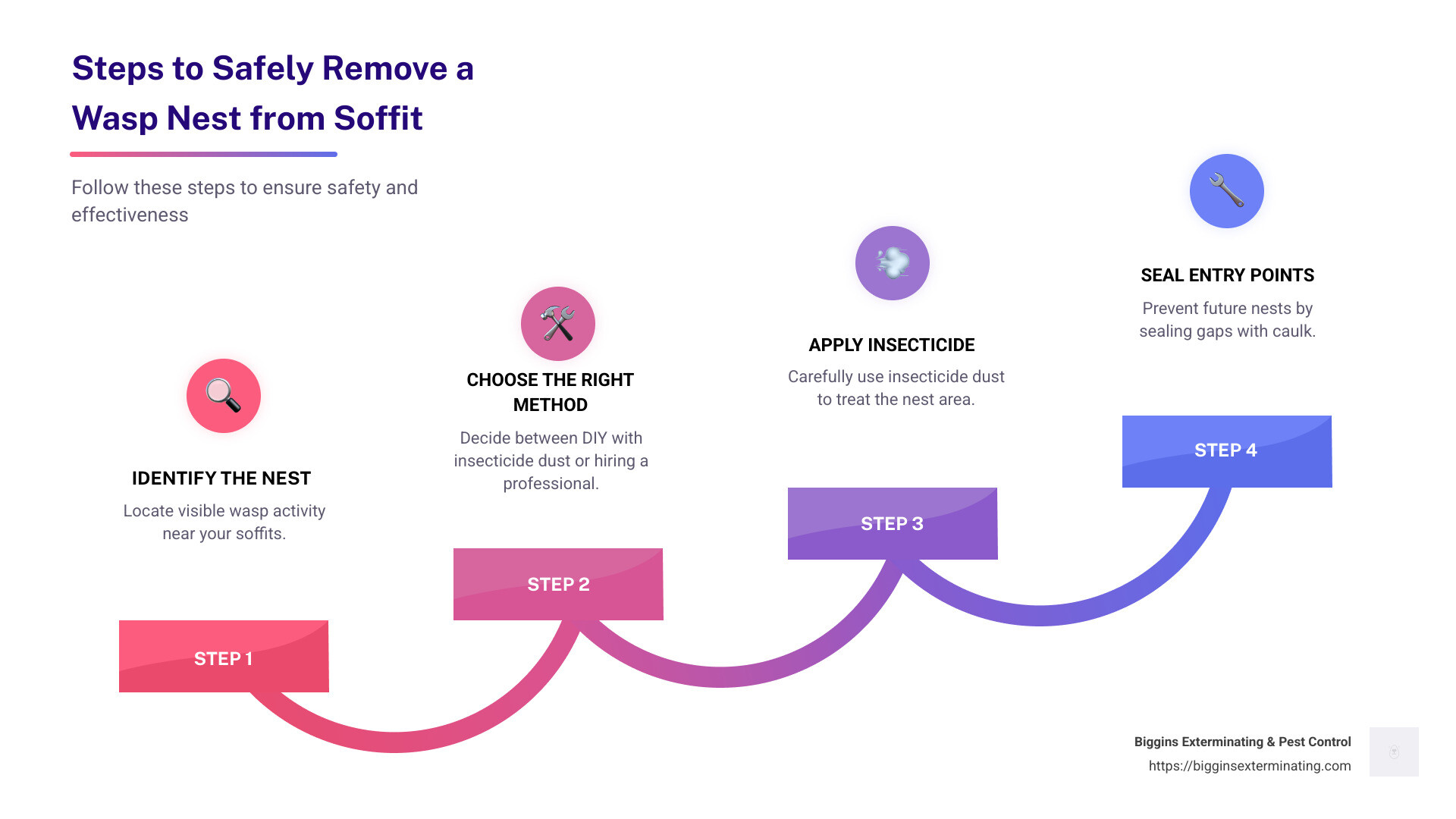
Remove wasp nest from soffit! Are buzzing wasps creating a nuisance near your home? Don’t let them ruin your peace. Here’s a quick guide:
- Identify the Nest: Locate visible wasp activity near your soffits.
- Choose the Right Method: Decide between DIY with insecticide dust or hiring a professional.
- Apply Insecticide: Carefully use insecticide dust to treat the nest area.
- Seal Entry Points: Prevent future nests by sealing gaps with caulk.
- Consult a Professional: For complex problems, always consult a pest control expert.
Encountering wasp nests around your home, especially in soffits, is a common issue faced by homeowners like Helen in Massachusetts. Wasp nests in these areas can pose risks not only to your peace of mind but also to your property’s structure. Whether it’s buzzing between aluminum soffits and facias or behind decorative shutters, it’s important to address these nests promptly.
In this guide, we’ll walk you through effective ways to safely remove wasp nests from soffits. By understanding wasp behavior and selecting the right removal approach, you can enjoy a wasp-free home environment while potentially helping to preserve these insects’ crucial role in our ecosystem.
Understanding Wasp Behavior
When dealing with wasps, especially in areas like soffits, it’s important to understand their behavior to effectively remove wasp nests from soffits. Let’s break down some key aspects: entry points, aggressive behavior, and nesting habits.
Entry Points
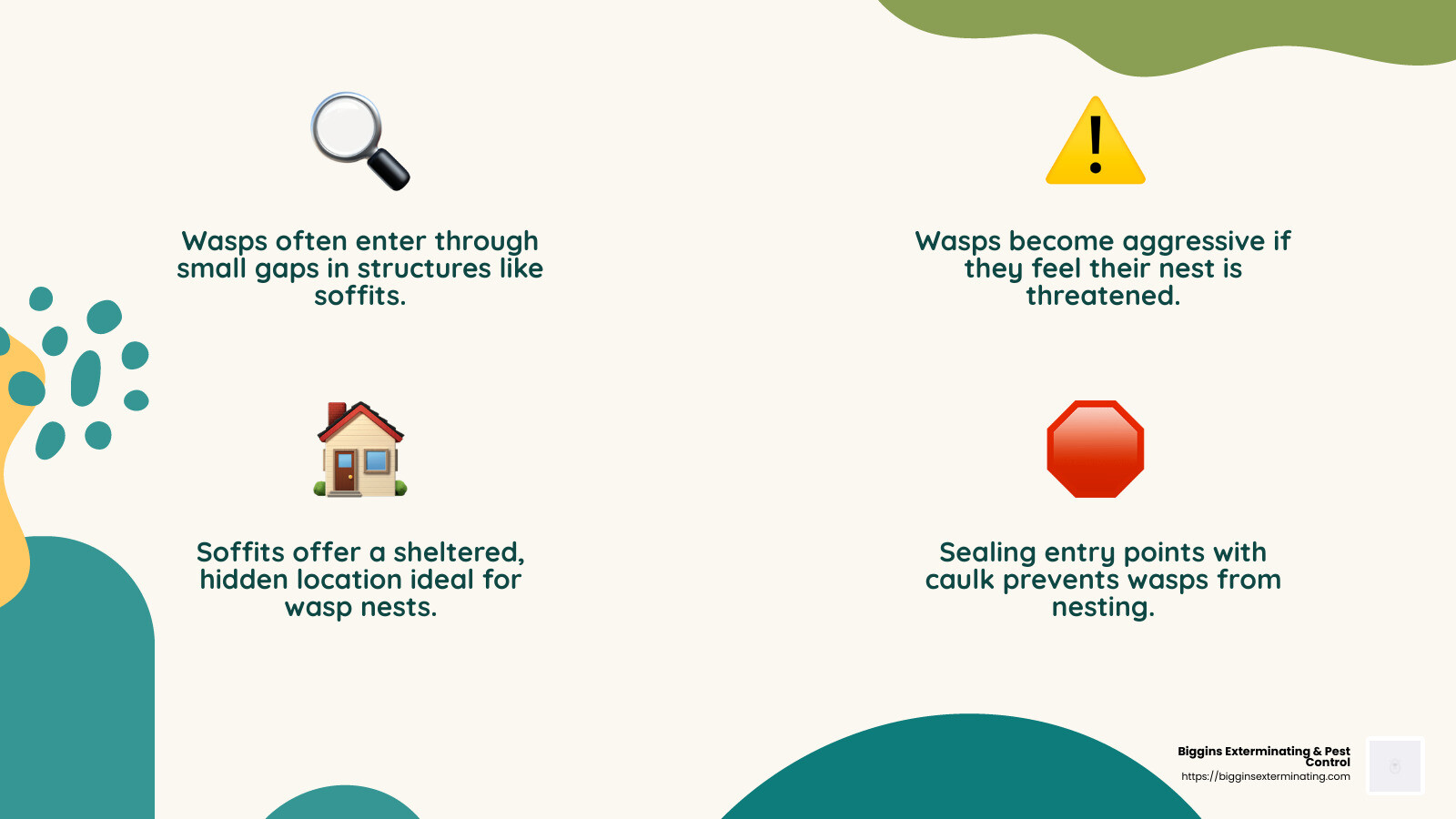
Wasps are expert infiltrators. They often find small gaps and crevices in structures, such as the spaces between aluminum soffits and facias, to build their nests. These entry points are not just limited to soffits; wasps can also enter through gaps around window shutters or even furnace inlet/exhaust pipes. Sealing these entry points with caulk or sealant is crucial to prevent wasps from making your home theirs.
Aggressive Behavior
While not all wasps are aggressive, they will defend their nests if they feel threatened. This defensive behavior can result in painful stings, especially if nests are disturbed. It’s a common myth that all wasps are out to sting unprovoked. In reality, they mostly sting when their nest is threatened. Keeping a safe distance and understanding their protective nature can help minimize the risk of stings.
Nesting Habits
Wasps prefer sheltered locations for their nests, which is why soffits are a popular choice. They build nests in hidden crevices, making them less visible until disturbed. Interestingly, not all wasps build large, visible nests. Some species prefer smaller, concealed nests, which can be tricky to locate and remove. Knowing these habits helps in identifying and addressing potential nests early, reducing the chances of a wasp infestation.
By grasping these aspects of wasp behavior, homeowners can better prepare to tackle wasp nests. Whether it’s sealing entry points or choosing the right time to approach a nest, understanding these behaviors is key to a wasp-free home.
Next, we’ll explore how to safely remove a wasp nest from soffit, including the use of insecticide dust and sealing techniques.
How to Safely Remove a Wasp Nest from Soffit
Removing a wasp nest from your soffit can be daunting, but with the right tools and techniques, it can be done safely and effectively. Let’s explore the steps you need to take.
Using Insecticide Dust
When it comes to removing a wasp nest from soffit, insecticide dust is your best friend. Unlike aerosols, dust has a longer-lasting effect and can reach those hidden spots where wasps love to nest.
Steps to Use Insecticide Dust:
- Remove Soffit Covers: Carefully remove any soffit covers to gain access to the nest area. This might require a ladder, so ensure you’re stable and safe.
- Apply Dust with a Hand Duster: Use a hand duster, like the popular Puffer Duster, to apply the dust. Fill the duster about one-third full with a recommended insecticide dust such as Tempo dust. This dust is known for its residual effectiveness, lasting for months as long as it stays dry.
- Target Entry Points: Puff the dust into the areas where you see wasps entering and exiting. In some cases, you might need to drill small holes to reach the nest effectively. The dust will spread with air movement, reaching deep into the voids.
- Residual Effectiveness: The beauty of using dust is its ability to remain effective over time. While it might not offer the immediate results of an aerosol, its lasting power ensures that wasps returning to the nest will be eliminated.
Sealing Entry Points
Once you’ve treated the nest, it’s crucial to seal entry points to prevent future infestations.
Steps to Seal Entry Points:
- Use Caulk or Sealant: After dusting, seal any gaps or holes with caulk or a suitable sealant. This step is essential to stop wasps from re-entering your soffit.
- Inspect for Other Entry Points: Check for other potential entry points around your home, such as gaps in window shutters or around pipes, and seal these as well.
- Prevent Re-entry: By sealing these points, you not only keep wasps out but also deter other pests from finding their way into your home.
By following these steps, you can confidently tackle a wasp nest in your soffit, ensuring your home remains wasp-free. Up next, we’ll discuss the pros and cons of DIY versus professional wasp nest removal.
DIY vs. Professional Wasp Nest Removal
When considering how to remove a wasp nest from soffit, you might wonder whether to tackle it yourself or hire a professional. Both options have their pros and cons, but safety should always be a top priority.
DIY Risks
Taking the DIY route can seem appealing due to cost savings. However, it comes with significant risks:
- Safety Concerns: Wasps can be aggressive, especially if they feel threatened. Disturbing a nest can provoke a swarm, leading to painful stings and potential allergic reactions.
- Lack of Expertise: Without the proper knowledge and equipment, you might not fully eliminate the nest, leaving room for re-infestation.
- Property Damage: Using the wrong tools or chemicals can inadvertently damage your property. For example, harsh chemicals might harm your siding or surrounding plants.
Professional Services
Hiring a professional pest control service, like Biggins Exterminating & Pest Control, offers several advantages:
- Expert Knowledge: Professionals have the training to handle wasp nests safely and effectively. They know how to locate hidden nests and use the right techniques to ensure complete removal.
- Safety and Equipment: Equipped with protective gear and specialized tools, professionals minimize the risk of stings and property damage. They also use eco-friendly methods to reduce environmental impact.
- Peace of Mind: With insurance and warranties often included, you can rest easy knowing any unexpected incidents or re-infestations will be covered.
- Long-term Solutions: Professionals not only remove the current nest but also provide advice on preventing future infestations, such as sealing entry points and regular inspections.
Making the Choice
Choosing between DIY and professional removal depends on your comfort level with the risks involved and the complexity of the situation. If you’re unsure or dealing with a large or difficult-to-reach nest, opting for professional services is the safest and most effective choice.
In the next section, we’ll address some frequently asked questions about wasp nest removal, providing further insights into this common household issue.
Frequently Asked Questions about Wasp Nest Removal
How do I get rid of wasps in my soffit?
Removing wasps from your soffit involves a few key steps for effective and safe results. Dust insecticide is often the preferred method. It has a long-lasting effect and can reach hidden areas where wasps hide. Use a hand duster, like the popular Puffer Duster, to apply the dust. This tool helps distribute the insecticide effectively into the soffit’s crevices.
After applying the dust, seal entry points with caulk or a suitable sealant. This prevents wasps from re-entering and finding new nesting spots. Wasps can be aggressive, so take all necessary precautions to protect yourself from stings.
Can you remove a wasp nest yourself?
While it’s possible to remove a wasp nest yourself, it’s important to be aware of the risks. DIY removal can be dangerous due to the aggressive nature of wasps. If you disturb their nest, they may swarm and sting. This can lead to painful reactions, especially if you are allergic.
Additionally, without proper knowledge and tools, you might not effectively eliminate the nest, leading to re-infestation. For these reasons, many experts, including those at Biggins Exterminating & Pest Control, recommend hiring professionals. They have the expertise and equipment to handle wasp nests safely and ensure complete removal.
What happens if you block the entrance to a wasp’s nest?
Blocking the entrance to a wasp’s nest might seem like a quick fix, but it can lead to unintended consequences. Wasps are resourceful and may become more aggressive if they find their entry blocked. In their search for a new way in, they might create alternative entrances, potentially causing more damage to your property.
Moreover, trapping wasps inside can lead to increased aggression as they try to escape. This can make the situation more dangerous for you and anyone nearby. Instead of sealing the entrance immediately, it’s better to first apply insecticide dust to eliminate the wasps and then seal the entry points to prevent future infestations.
Conclusion
At Biggins Exterminating & Pest Control, we understand that dealing with wasp nests, especially in tricky spots like soffits, can be daunting. Our family-owned business has been serving the Wilmington, MA area for over 40 years, offering expert pest control services without the hassle of long-term contracts. Our commitment to customer satisfaction is unwavering, and we take pride in providing safe and effective solutions for all your pest problems.
Our experience has taught us that pest control expertise is key to successfully handling wasp infestations. We use proven techniques and tools, like the Puffer Duster for insecticide dust application, to ensure that wasps are removed effectively and safely from your property. Our services not only eliminate current infestations but also protect your home from future invasions by sealing entry points and providing ongoing advice.
Choosing professional help for wasp nest removal means you can avoid the risks associated with DIY methods, such as aggressive wasp behavior and incomplete removal. Our team is equipped to handle these challenges with precision and care, ensuring your home is safe and wasp-free.
For more information on our services and to see how we can help you with wasp nest removal, visit our Hornets Pest Control page. Let us help you reclaim your space from unwanted pests, ensuring a safe and comfortable environment for you and your family.
