
The Unwanted Houseguest: Your Guide to a Mouse-Free Home
Dealing with a mouse problem can be frustrating, but effective pest control for mice is achievable. If you’ve noticed small droppings, gnaw marks, or heard scurrying sounds, you likely have unwanted guests. These tiny rodents are more than just a nuisance; they can multiply rapidly, posing significant health risks and causing costly damage to your home.
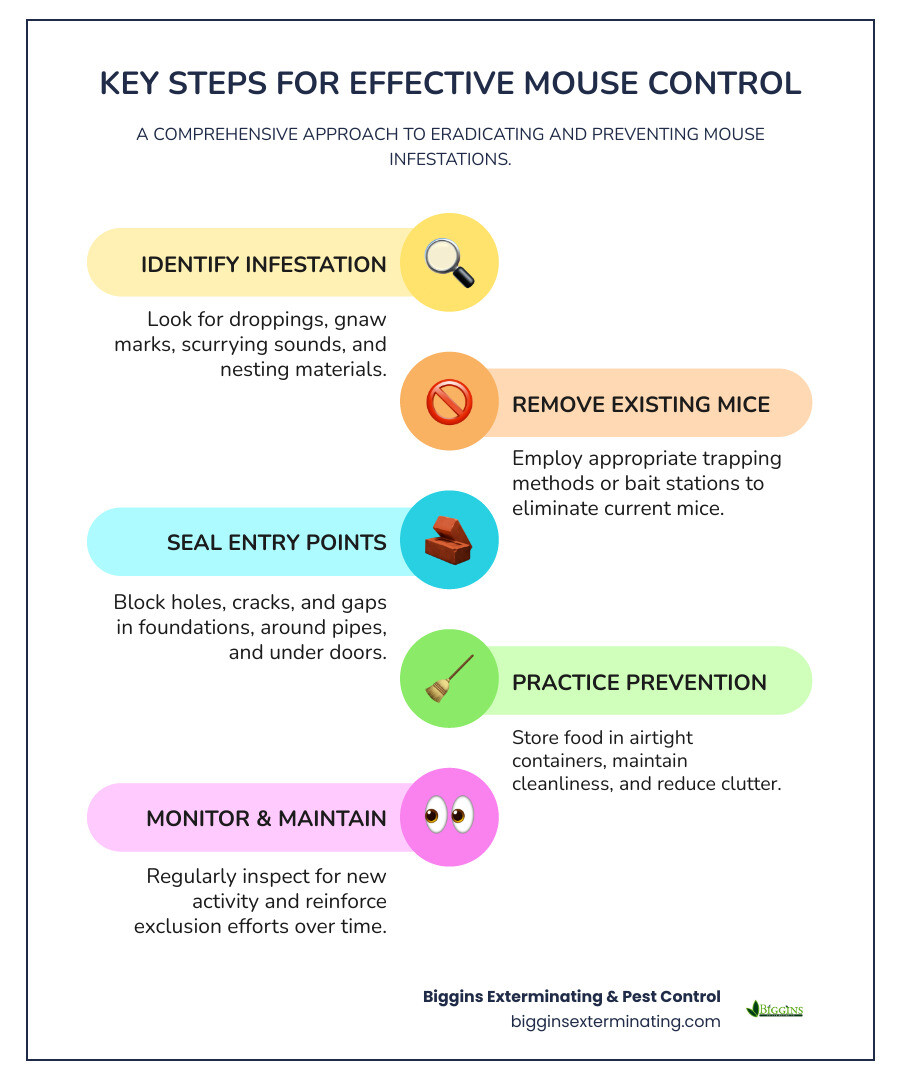
Here’s what effective pest control for mice generally involves:
- Identification: Spotting the clear signs of an infestation early.
- Removal: Eliminating existing mice from your living spaces.
- Exclusion: Sealing entry points to prevent future invasions.
- Prevention: Implementing strategies to keep mice out for good.
Mice reproduce incredibly fast. A female can have 3-4 litters per year, with up to 9 young per litter. This means a small problem can quickly become a large infestation. They contaminate about 10 times as much food as they actually eat, and one mouse is capable of leaving 9,000 highly toxic droppings in a single year. Beyond being a nuisance, mice pose serious health risks by contaminating food and surfaces and carrying diseases. They also cause property damage by chewing through wires, insulation, and even structural elements.
As Stephen Biggins, owner of Biggins Exterminating Co., I’ve spent over four decades helping homeowners with effective pest control for mice. Our family-owned business provides reliable solutions to keep your home safe and healthy. In this guide, we’ll cover everything you need to know to win the war against mice.
Pest control for mice terms simplified:
Identifying a Mouse Infestation: Telltale Signs and Clues
Mice are tiny, stealthy creatures, often preferring to move under the cover of darkness. This means you might not actually see a mouse, even if you have a significant infestation. However, they leave behind plenty of clues that give away their presence. Knowing these signs is the first crucial step in effective pest control for mice.
Here are the most common signs of a mouse infestation we look for:
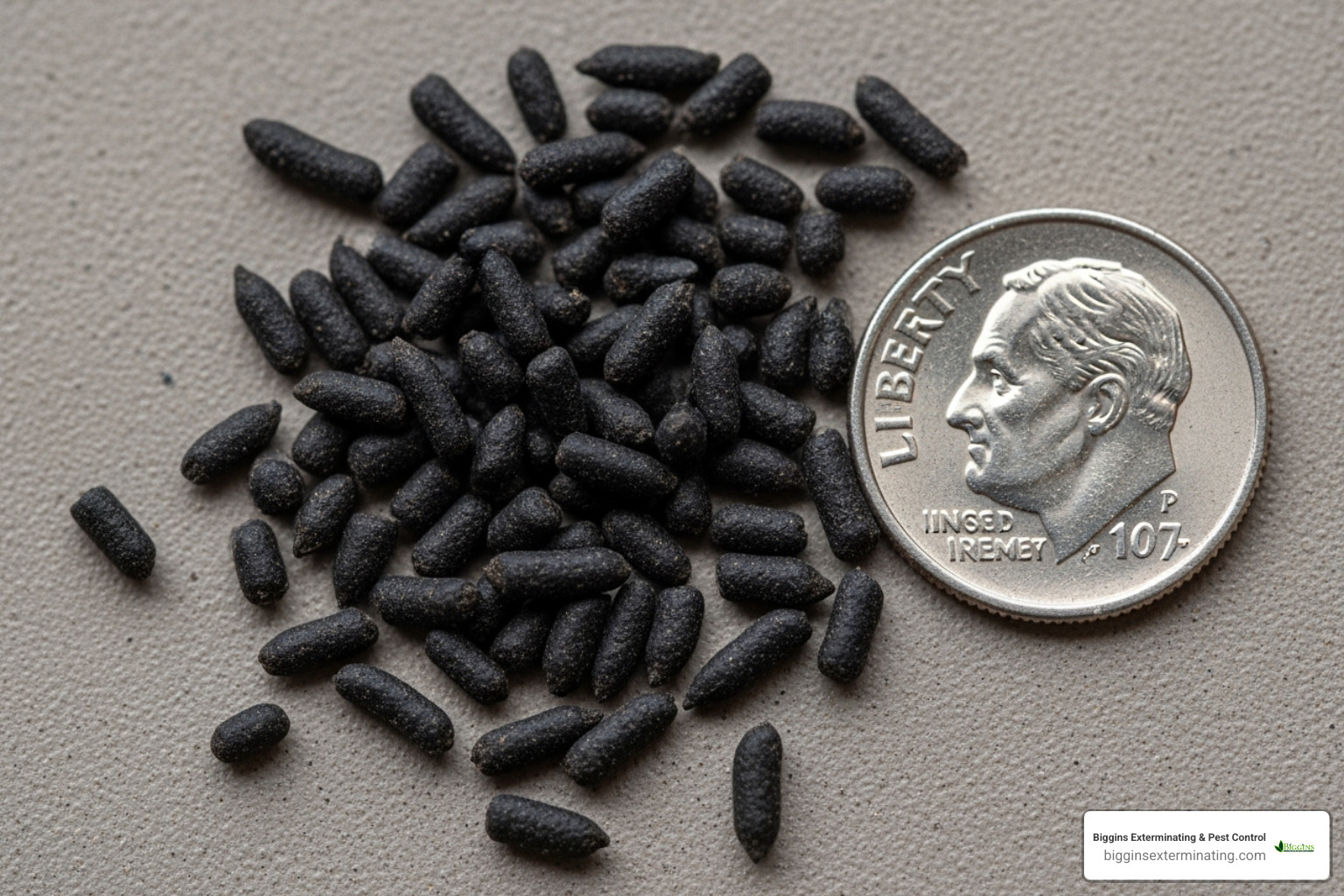
- Mouse droppings: These are perhaps the most definitive sign. Mouse droppings are small, black, and pellet-like, often pointed at one or both ends. They resemble tiny grains of rice, usually about 6 mm long. You’ll typically find them near food sources, in drawers, cupboards, under sinks, or along baseboards. A single mouse can produce 50-60 droppings per night, so if you see them, you already have a rodent infestation.
- Gnaw marks: Mice have continuously growing incisors, so they constantly gnaw on things to keep them trimmed. Look for small chew marks on food packaging (cereal boxes, bags of pasta), wooden furniture, baseboards, wires, or even plastic pipes. These marks are usually small and ragged.
- Nesting materials: Mice build nests using soft materials like shredded paper, fabric, insulation, or even dried plant matter. If you find small piles of these materials in secluded, warm areas like inside walls, attics, basements, or behind appliances, it’s a strong indicator of a nest.
- Scratching or scurrying sounds: Mice are nocturnal, so you’re most likely to hear them at night. Listen for scratching, gnawing, or scurrying sounds coming from inside walls, ceilings, attics, or under floors. This can be a particularly unsettling sign, especially when you’re trying to sleep!
- Musty odor: A persistent, stale, musky odor, especially in enclosed areas like pantries or cabinets, can indicate a large and active mouse population. This smell comes from their urine and droppings, which they produce very frequently and use to mark their territory.
- Greasy rub marks: As mice travel, the oil and dirt from their fur leave dark, greasy smudges along walls, baseboards, and pathways they frequently use. These “runways” are often found in tight spaces where mice squeeze through.
If you observe any of these signs, it’s time to take action. Ignoring them will only allow the problem to escalate due to their rapid reproduction rate.
For more detailed information on identifying and preventing rodent issues specific to our region, visit our guide on How to Identify and Prevent Rodent Infestations in Massachusetts.
Mouse vs. Rat: Know Your Opponent
While both mice and rats are rodents and can cause similar types of damage, they are distinct creatures with different characteristics. Identifying whether you have mice or rats is important, as it can influence the specific pest control for mice (or rats!) strategies we employ.
Here’s a quick comparison to help you tell them apart:
| Feature | House Mouse | Norway Rat |
|---|---|---|
| Size | Small, slender body (8-10 cm body, 9-10 cm tail) | Large, heavy body (20-25 cm body, 15-20 cm tail) |
| Weight | 15-30 grams | 200-480 grams |
| Head Shape | Small, triangular head | Blunter snout |
| Ears | Large, prominent, relatively hairless | Small, fur-covered |
| Tail | Thin, hairless, often longer than body | Thicker, scaly, shorter than body |
| Droppings | Small, pellet-like, pointed ends (6 mm) | Larger, capsule-shaped (2.5-3 cm) |
| Activity | Curious, explore new things | Cautious, avoid new things (neophobia) |
| Entry Point | Can squeeze through openings as small as 1/4 inch (pen cap size) | Can squeeze through openings as small as 1/2 inch (thumb size) |
If you’re unsure whether you’re dealing with mice or rats, don’t worry! Our experienced technicians can accurately identify the pest during our initial inspection.
More Than a Nuisance: Health Risks and Property Damage
At first, a few mice may seem like a minor annoyance, but after 40+ years in homes we know they’re far more serious. They threaten your family’s health and can rack up surprising repair bills. Effective pest control for mice is about safety and protecting your biggest investment.
Health Risks Associated with Mice
Mice are tiny carriers of germs that spread easily to people. They leave droppings and urine on counters, pantry shelves, and anywhere they roam.
Key dangers include:
- Food contamination: A single mouse can taint ten times more food than it eats.
- Disease transmission: Mice spread illnesses directly (droppings, saliva) or indirectly (fleas, ticks). Serious examples are:
- Hantavirus – a sometimes-fatal respiratory disease.
- Salmonellosis – food poisoning from salmonella bacteria.
- Leptospirosis – can lead to liver or kidney damage.
- E. coli infection – some strains cause severe stomach illness.
- Allergy and asthma triggers: Droppings, urine, and dander aggravate breathing problems, especially in children.
See the CDC’s guidance on diseases directly transmitted by rodents for more detail.
Property Damage Caused by Mice
Mice gnaw constantly to wear down their ever-growing teeth, damaging wood, plastic, and even wiring.
- Structural damage: Holes in walls, floors, and ceilings; they only need a 1/4-inch gap to enter.
- Fire hazard: Chewed electrical insulation can spark dangerous shorts.
- Ruined insulation: Nesting shreds material and contaminates it with waste, slashing energy efficiency.
- Contaminated belongings: Urine and droppings ruin clothing, documents, and keepsakes stored in boxes.

For more details, read our article on the Top 5 Dangers of Rodents in and Around Your Home or Business. Comprehensive pest control for mice protects both your family and your property.
Taking Action: Effective Methods for Mouse Removal
Okay, you’ve identified those sneaky little invaders. Now for the exciting part: taking action! Once you know you have a mouse problem, the next step is active removal. There are several effective methods available for pest control for mice, from DIY solutions to more advanced professional systems. Often, the best approach is a combination of these, custom to your home and the scale of your infestation.
Trapping Methods
Trapping is a tried-and-true way to reduce mouse populations. It allows you to see immediate results and can be very effective when done right.
- Snap Traps: These are probably what first comes to mind! Snap traps are incredibly common and, when set correctly, can be very effective. Many consider them a humane option because they deliver a quick, fatal blow. For the best results, bait them with high-protein foods like a dab of peanut butter, a small piece of cheese, or even a bit of chocolate. Place them carefully where you’ve seen signs of mouse activity.
- Electronic Traps: If you’re looking for a cleaner, perhaps less “messy” option, electronic traps are a great choice. They use a high-voltage shock to humanely kill mice quickly. They’re often reusable, which is a nice bonus.
- Live-Catch Traps: For those who prefer a completely non-lethal approach, live-catch traps capture mice without harming them. However, if you use these, it’s super important to release the mouse far from your home – at least a mile away – to make sure they don’t just find their way back. That releasing a mouse into an unfamiliar environment can be stressful for them, and they might not survive.
- Bait Stations: These are enclosed, tamper-resistant units designed to hold rodenticides (mouse poison). They’re generally safer to use around children and pets because the bait is contained within the station. Mice enter, nibble the bait, and then leave. The trick with bait stations is placing them strategically in areas where mice are active, but away from direct interaction with people or pets. Also, it’s important to use the right kind of bait, as some mice can develop resistance to certain rodenticides over time.
Proper Placement Strategy
No matter which trap you choose, where you place it is absolutely crucial. Mice are creatures of habit and prefer to stick to walls, dark corners, and secluded areas. Think like a mouse! Place your traps and bait stations right along baseboards, inside cabinets, behind appliances, and in those often-forgotten spaces like attics or basements where you’ve seen droppings or other signs of activity. Mice are curious, but also pretty cautious, so it might take a few days for them to feel comfortable enough to approach a new trap.
Natural Deterrents
You might have heard about natural deterrents like peppermint oil, cloves, or even cayenne pepper being used to keep mice away. While these might smell nice to us, our decades of experience and extensive industry research show that these methods are generally not effective at preventing or getting rid of an established mouse or rat infestation. They might offer a very temporary, localized scent that a mouse avoids for a short time, but they certainly won’t solve a real problem. They’re definitely not a substitute for robust pest control for mice.
For more detailed guidance on handling specific mouse issues in your home, we’ve put together some helpful resources. You can explore our guides on How to Get Rid of House Mice and House Mice Control for even more tips and tricks.
DIY vs. Professional Pest Control for Mice: Knowing When to Call for Help
When you first find a mouse problem, it’s natural to think about tackling it yourself. Many homeowners reach for DIY solutions, hoping to quickly get rid of these unwelcome visitors. While DIY methods can seem appealing for very small, isolated issues, there are often significant limitations and risks involved. Knowing when to call in the professionals for pest control for mice can truly save you time, money, and a whole lot of frustration in the long run.
DIY Limitations
The truth is, DIY approaches often fall short, especially when dealing with mice. Here’s why:
- Small-Scale Problems Only: DIY methods might handle a single rogue mouse or the very first sign of an infestation. But remember, mice reproduce incredibly fast! A female mouse can have 3-4 litters per year, with many babies in each. So, what seems like a “small problem” can quickly become a large, overwhelming infestation. If you’ve seen one mouse, chances are there are many more hidden away.
- Recurring Infestations: Without truly understanding mouse behavior, and without finding and sealing all entry points, DIY efforts often lead to mice coming back. You might catch a few, but the root of the problem remains unsolved. It’s like putting a band-aid on a bigger issue.
- Safety Risks of DIY Products: Over-the-counter rodenticides (mouse poisons) can pose serious risks to children and pets if not used correctly. Plus, if mice eat the bait and then die within your walls or other hard-to-reach spots, they can create terrible odors that linger for weeks. This is definitely not a pleasant surprise!
- Limited Effectiveness: The traps and baits available at your local store might not be as strong or effective as the professional-grade products we use. Also, some mice populations have even developed a resistance to common rodenticides over time.
Common DIY Pest Control for Mice Methods
Here are some typical ways homeowners try to handle mouse problems on their own:
You might try store-bought traps, like classic snap traps or even glue boards (though we advise against glue boards because they’re not humane). Some people use bait blocks, which are pre-packaged rodenticide placed where mice might find them. Another common DIY step is sealing small holes with steel wool, trying to block tiny entry points.
What to Expect from Professional Pest Control for Mice
Professional pest control for mice offers a clear advantage, especially when you’re dealing with an established or recurring infestation. With over 40 years of experience, we’ve seen every kind of mouse problem, and we have the expertise to handle even the trickiest situations.
Here’s what you can expect when you partner with us at Biggins Exterminating:
- Thorough Property Inspection: Our licensed technicians don’t just guess. We conduct a comprehensive inspection of your home, both inside and out. We look for all the signs of mouse activity – droppings, gnaw marks, runways – but more importantly, we find potential entry points, nesting spots, and food sources that are attracting them. We know mice can squeeze through cracks as small as a pen cap, and we’ll find them!
- Identification of Entry Points: This is a crucial step that DIY efforts often miss. We’ll pinpoint all those hidden cracks, gaps around pipes, utility lines, vents, and foundation cracks that mice use to sneak into your home.
- Customized Treatment Plan: Based on what we find, we create a custom pest control for mice plan just for your home. It’s not a one-size-fits-all approach. Our plan considers how bad the infestation is, your home’s layout, and any specific concerns you have (like pets or young children). We also use an Integrated Pest Management (IPM) approach, which focuses on long-term prevention and uses the most effective and environmentally responsible methods.
- Use of Commercial-Grade Products: We use tried-and-true treatment methods and professional-grade products. These are much more effective and safer than what you can buy at the store. This includes tamper-proof bait stations and smart trap placement. We always prioritize treatments that are safe for your family and pets.
- Exclusion Work to Seal Entry Points: A key part of our service is performing exclusion work. This means we seal those identified entry points with durable materials like steel mesh, copper mesh, cement, or caulk. We don’t just get rid of the mice; we help prevent them from coming back.
- Follow-up Visits and Warranties: We don’t just treat your home and leave. Our services often include follow-up visits to check on things, make sure the treatment is working, and handle any lingering issues. We stand by our work with comprehensive warranties, giving you real peace of mind. Our main goal is 100% customer satisfaction.
So, when you’re asking yourself, “Should I Call an Exterminator if I See a Mouse?”, the answer is almost always yes, especially if you want a lasting solution. You can learn more about this decision in our article: Should I Call an Exterminator if I See a Mouse?. We provide reliable Rodent Control Services: Keeping Your Home Critter-Free for homeowners throughout Wilmington, MA, and the surrounding areas, including Andover, Bedford, Billerica, Burlington, Lexington, North Reading, Tewksbury, and Woburn.
Fortifying Your Home: Long-Term Mouse Prevention
Once you’ve successfully removed those unwelcome houseguests, the battle isn’t over. In fact, this next phase might be the most crucial: long-term prevention. Effective pest control for mice isn’t just about getting rid of them; it’s about making your home so uninviting and inaccessible that they don’t even think about coming back. Think of it as building a fortress against future invasions!
Here’s how we recommend you fortify your home:
The first and most impactful step is to seal up every tiny crack and hole. Mice are incredible contortionists. If an opening is larger than a pen cap (that’s about 1/4 inch or 0.6 cm!), it’s an open invitation for a mouse. Don’t underestimate them! For larger holes, we suggest packing them tightly with steel wool and then sealing over it with caulk. Mice absolutely hate chewing through steel wool. Pay special attention to gaps around pipes where they enter your home, inspecting your foundation for any cracks, and making sure your weather stripping for doors creates a tight seal. Even a small gap under a door can be a mouse-sized welcome mat.
Next up, let’s talk about proper food storage. Mice are perpetually hungry, and your pantry is their ideal buffet. To keep them from feasting, store all your dry goods – cereal, pasta, rice, even pet food – in sturdy, airtight containers made of glass, metal, or thick plastic. Those cardboard boxes and flimsy bags are no match for a determined mouse!
Beyond storage, cleanliness and sanitation are key. Wipe up crumbs and spills right away, wash dishes promptly, and never leave pet food out overnight. A mouse can survive on just 3 grams of food a day, so even tiny crumbs are a feast. Lastly, use secure garbage receptacles with tight-fitting lids, both inside and outside your home, and dispose of food waste regularly.
Don’t forget about removing clutter. Clutter inside your home, especially in basements, attics, and garages, provides perfect hiding spots and nesting materials for mice. Try to store items in sealed plastic bins rather than cardboard boxes. The same goes for outside your home! Clear away any debris, woodpiles, or overgrown vegetation near your foundation. These can become cozy harborage areas or easy pathways for mice to sneak into your house.
Finally, consistent landscaping maintenance plays a bigger role than you might think. Keeping your yard tidy isn’t just for curb appeal; it’s a vital part of pest prevention. Make sure your grass and weeds are trimmed (we recommend they don’t exceed about 20 cm in growth), and trim any tree branches that touch your house. This eliminates easy access routes for rodents.

By thoughtfully implementing these preventative measures, you’re truly making your home a fortress against mice. This drastically reduces the likelihood of future infestations, saving you a lot of worry and hassle down the road. For an even more comprehensive checklist to keep your home mouse-proof, especially as the seasons change, be sure to check out our Keeping Your Home Mouse-Proof: A Winter Pest Control Checklist.
Reclaim Your Space with Confidence
You’ve journeyed with us through mouse control, and now it’s time to feel confident about reclaiming your home! Winning against mice isn’t just about spotting them; it’s a smart, step-by-step process. It means first identifying those sneaky signs, then removing the unwanted guests, and finally, making your home a fortress through smart exclusion and lasting prevention.
While a DIY approach might help with a single mouse, a bigger problem often needs a bigger solution. Remember how fast mice multiply? A small issue can quickly become a huge headache! Plus, we’ve seen the health risks they carry and the damage they can do to your home. That’s why quick, complete pest control for mice isn’t just nice to have – it’s truly essential for your family’s safety and your home’s well-being.
That’s where Biggins Exterminating & Pest Control comes in! For over 40 years, our family has been helping homeowners like you. We know the challenges faced right here in Wilmington, MA, and nearby towns like Andover, Bedford, Billerica, Burlington, Lexington, North Reading, Tewksbury, and Woburn. We don’t just get rid of the mice you see today. We offer a full solution! This includes finding and sealing their entry points. Plus, we stand by our work with reliable warranties. Your peace of mind and satisfaction are our top goals – and we do it all without long-term contracts.
Don’t let these tiny invaders take over your comfortable home any longer. Ready for a lasting solution to your mouse problem? We’re here to help! Explore our Pest Control and Exterminating services and let us help you reclaim your space with confidence.