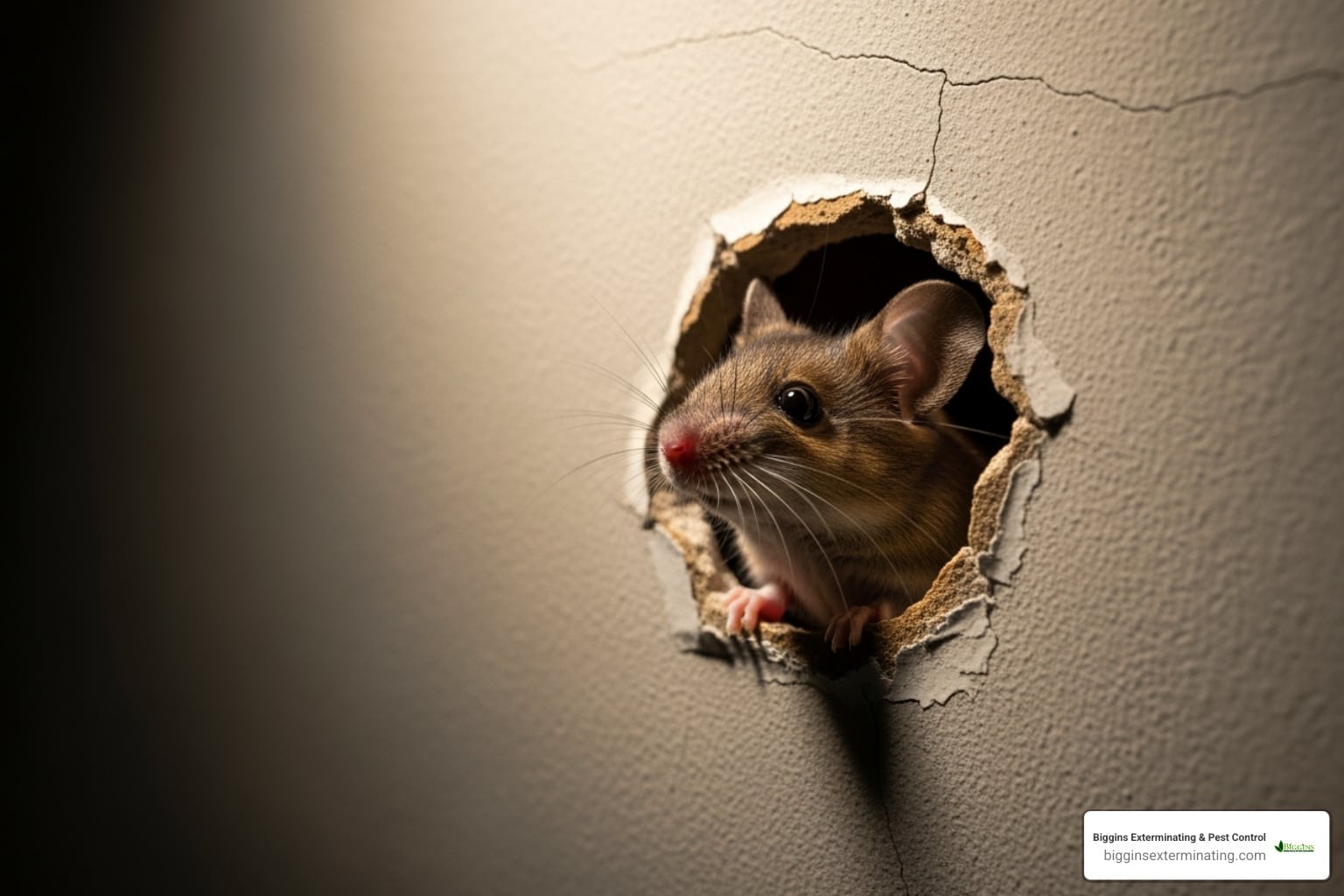
Why Non-Lethal Rodent Control Matters This Fall and Winter

Safe and effective, non lethal rodent control manages rodent problems without the risks of traditional poisons. Key methods include:
Top Non-Lethal Rodent Control Methods:
- Exclusion – Seal entry points with steel wool, caulk, and door sweeps (gaps as small as 6mm)
- Sanitation – Remove food sources, secure trash, and eliminate clutter
- Natural Repellents – Use peppermint oil, vinegar spray, or plant mint around your property
- Live Traps – Capture and release rodents humanely, checking traps frequently
- Electronic Deterrents – Install ultrasonic devices or motion-activated lights
- Natural Predators – Encourage barn owls (which can eat 3,000 rodents per season)
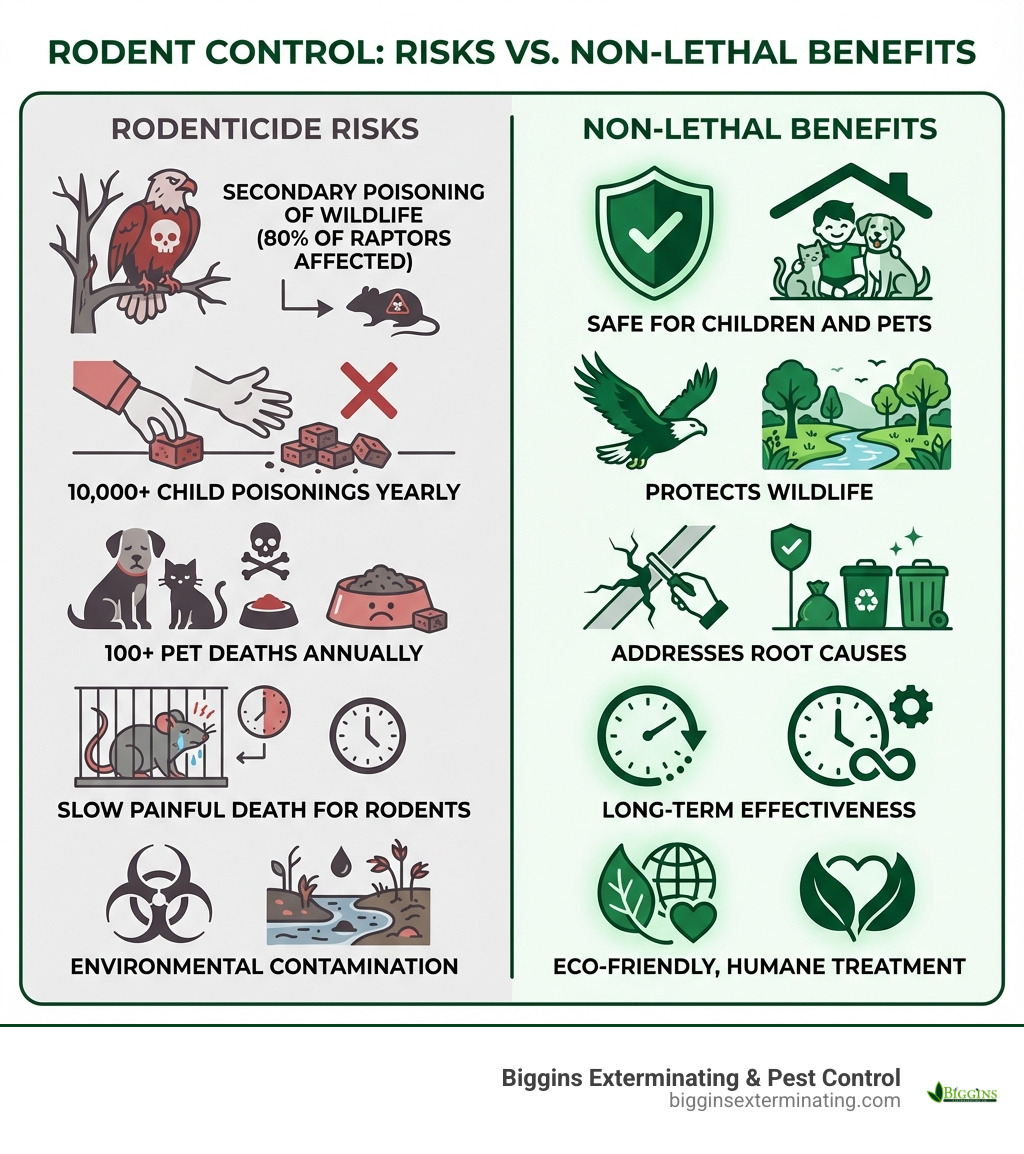
This fall and winter, as rodents seek shelter indoors, Massachusetts homeowners face an increased risk of infestation. Traditional rodenticides pose serious dangers to children (over 10,000 accidental ingestions annually), pets (100+ deaths per year), and wildlife (nearly 80% of raptors test positive for secondary poisoning).
The good news? Humane alternatives work just as effectively – and they’re safer for your family, pets, and the environment. Non-lethal methods focus on prevention and long-term solutions rather than just addressing symptoms.
I’m Stephen Biggins, and at Biggins Exterminating Co., we’ve been helping Massachusetts families since 1982 with honest, effective pest solutions. Our experience has shown that non lethal rodent control methods, when properly implemented, provide lasting results without the risks of traditional poisons.
Non lethal rodent control terms you need:
The Dangers of Traditional Poisons: Why Choose a Humane Approach?
When faced with a rodent problem, many homeowners instinctively reach for rodenticides. However, we’ve seen the devastating ripple effects these traditional poisons can have. Choosing non lethal rodent control isn’t just about being kind; it’s about safeguarding your home, family, pets, and the wider ecosystem.
Here’s why we advocate for avoiding traditional rodenticides:
- Slow, Painful Death for Rodents: Rodenticides cause a slow, agonizing death over several days. The poisoned, sluggish rodent becomes easy prey, spreading the poison to other animals.
- Threat to Pets: The EPA reports over 100 pet deaths annually from rodenticides. Curious pets may eat the bait directly or consume a poisoned rodent.
- Danger to Children: Over 10,000 children in the U.S. accidentally ingest rodenticides annually. The brightly colored baits can be mistaken for candy.
- Secondary Poisoning in Wildlife: Poisoned rodents become easy prey for predators like owls, hawks, and foxes. This leads to secondary poisoning, which kills the predators and disrupts the ecosystem. WildCare research shows nearly 80% of raptors test positive for rodenticides, harming the very animals that provide natural pest control.
- Ineffective Long-Term: Poisons are a temporary fix that don’t address the root cause. As long as your home provides entry points and resources, new rodents will replace those that are killed, creating an endless cycle.
We believe that understanding these risks is the first step toward embracing safer, more effective non lethal rodent control strategies. For more detailed information on the dangers rodents can pose to your home, see our guide on More on the dangers of rodents in your home. You can also learn more about protecting wildlife and families from these harms by visiting Safe Rodent Control information.
An Integrated Approach to Non-Lethal Rodent Control
At Biggins Exterminating, we’ve found that the most successful and humane way to manage rodents is through an Integrated Pest Management (IPM) approach. This isn’t just about setting a trap; it’s a comprehensive strategy that focuses on understanding rodent behavior, eliminating attractants, and creating an environment where they simply can’t thrive. It’s about prevention over reaction for long-term effectiveness.
Here’s how we apply IPM principles to non lethal rodent control:
Step 1: Inspection – Know Your Unwanted Guests
Before we can deter rodents, we need to know who we’re dealing with. A thorough inspection helps us identify the extent of the problem and specific entry points. Keep an eye out for these tell-tale signs:
- Droppings: The first and most common sign. Mouse droppings are rice-sized; rat droppings are larger. Look for them near food, along walls, and in hidden areas.

- Gnaw Marks: Look for chew marks on wood, wires, pipes, and food packaging. Rodents gnaw constantly to file their teeth and create access.
- Tracks and Runways: Greasy rub marks along baseboards and footprints in dusty areas indicate common rodent paths.
- Nests: Found in secluded areas (attics, basements, wall voids), nests are made of shredded paper, fabric, or insulation.
- Strange Noises: Listen for scratching, scurrying, or gnawing in walls and ceilings, especially at night.
- Unusual Odors: A persistent musky smell can indicate an established infestation.
Identifying these signs early is crucial for effective non lethal rodent control. If you suspect you have mice, our guide on How to Find Mice in your home offers more detailed tips.
Step 2: Exclusion – Your First Line of Defense for Non-Lethal Rodent Control
Exclusion is your most effective long-term defense. Sealing all entry points is crucial, as mice can fit through dime-sized gaps (6mm) and rats through quarter-sized holes. This is especially important in fall and winter when rodents seek warmth indoors.
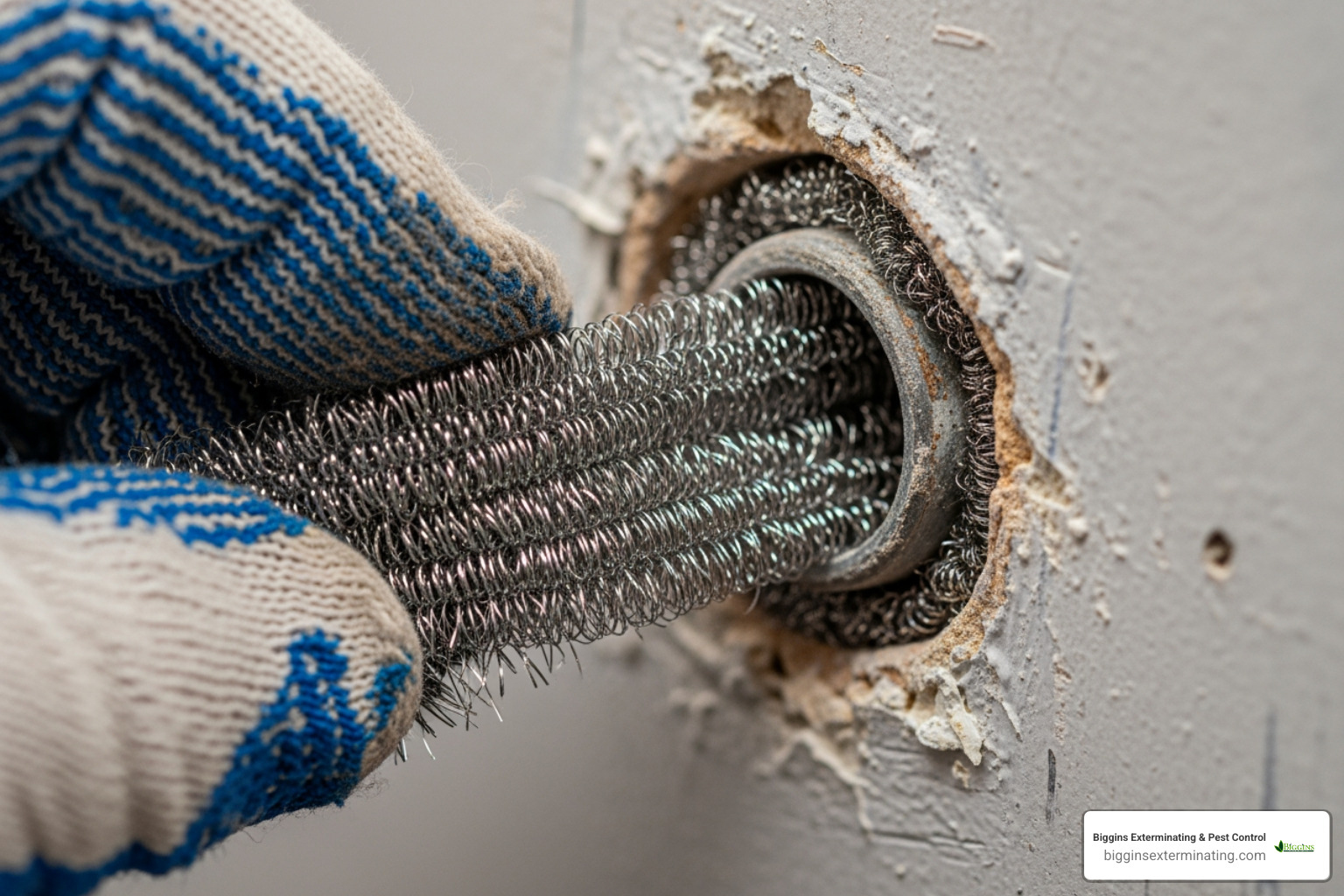
Common entry points we focus on include:
- Foundation Cracks: Seal any cracks. For larger gaps near foundations, install L-shaped hardware cloth barriers to prevent digging.
- Utility Openings: Seal gaps around pipes, wires, and cables.
- Vents: Use sturdy metal covers for crawlspace, attic, and dryer vents. Check out Crawlspace vent covers for examples.
- Doors and Windows: Install door sweeps and repair weather stripping to seal gaps (keep them under 5mm).
- Roof and Soffits: Repair damaged soffits, shingles, and gaps where the roofline meets the walls, as rats can climb.
- Chimneys: Install a cap to block access.
Materials we use for effective exclusion:
- Steel Wool: Stuff into small holes; rodents can’t chew through it.
- Hardware Cloth: Use 1/4-inch wire mesh to cover larger openings like vents. Here is a link to buy hardware cloth.
- Caulk and Sealant: Use a rodent-proof sealant for small cracks, not soft materials.
- Door Sweeps and Weather Stripping: Essential for sealing gaps under doors and around windows.
By diligently sealing these entry points, you’re putting up a “No Vacancy” sign for rodents. For more tips, see our Keeping Your Home Mouse-Proof: A Winter Pest Control Checklist.
Step 3: Sanitation – Removing the Welcome Mat
Sanitation removes the food, water, and shelter that attract rodents. Since a mouse needs only a tiny amount of food daily, even small crumbs can sustain a population. Make your property less appealing by managing these attractants:
- Food Storage: Keep all food (including pet food) in airtight metal or thick plastic containers.
- Pet Food: Don’t leave pet food out overnight. Remove uneaten food promptly.
- Trash Cans: Use trash cans with tight-fitting lids. Secure outdoor bins with bungee cords if needed.
- Cleanliness: Regularly sweep floors, wipe counters, and clean up spills immediately, especially in the kitchen.
- Remove Clutter: Clear clutter from basements, attics, and garages. Outdoors, stack firewood away from the house and trim overgrown vegetation to eliminate hiding spots (harborage).
- Water Sources: Fix leaky faucets and pipes. Eliminate standing water in gutters, buckets, and bird baths.
- Yard Maintenance: Harvest garden produce promptly and clean up fallen fruit. Use rodent-proof compost bins and place bird feeders away from the house.
By being diligent with sanitation, you’re eliminating the primary reasons rodents want to share your space. For additional tips, explore our Natural Mice Extermination Tips.
Step 4: Deterrents – Making Your Home Uninviting
After inspection, exclusion, and sanitation, use deterrents to make your property unpleasant for rodents. These methods use strong scents and sounds to drive them away.
- Natural Repellents: Use strong scents that rodents dislike.
- Peppermint Oil: Soak cotton balls in peppermint essential oil and place them near entry points and activity areas, reapplying every few days. Or, make a spray with peppermint oil, alcohol, and water in a spray bottle.
- Vinegar Spray: A 50/50 mix of white vinegar and water can be sprayed in affected areas.
- Planting Mint: Grow mint around your home’s perimeter as a natural barrier.
- Used Cat Litter: The scent can deter rodents. Place a tray near outdoor burrows, away from pets and children.
For more insights into natural repellents, check out the National Pesticide Information Center (NPIC).
- Electronic Devices: These can complement other methods but are not a standalone solution.
- Ultrasonic Repellents: These devices emit high-frequency sounds that bother rodents. Use them as part of a larger strategy. For more information, you can explore products from companies like Victor Pest.
- Motion-Activated Lights: Install these in dark areas like attics, crawlspaces, or yards to startle rodents. We recommend bright LED daylight temperature bulbs with string lights.
- Sound Deterrents: A radio left on a talk station can make an area feel unsafe for rodents.
By combining these deterrents with exclusion and sanitation, you create an environment that actively pushes rodents away.
A Guide to Humane Live Trapping and Release
If a rodent gets inside despite your prevention efforts, humane live trapping is the next step in non lethal rodent control. The goal is to capture and release the animal without harm.
- When to Use Traps: Use live traps for existing indoor infestations. They are safe for use around children and pets.
- Choosing the Right Trap:
- Live-Capture Traps: These are enclosed boxes with a one-way door that safely contains the rodent. Ensure the design has good ventilation.
- Multi-Catch Traps: These larger traps can catch several mice at once, making them effective for larger infestations.
- DIY Humane Traps: You can create simple traps using a bucket and a baited cardboard tube balanced on a counter.
- Best Practices for Trapping:
- Baiting: Use high-protein baits like peanut butter, nuts, or seeds. Place the bait at the far end of the trap.
- Placement: Set traps along walls and in corners where you’ve seen rodent activity.
- Check Traps Frequently: This is critical. Check traps at least twice a day (morning and evening). A trapped rodent can die from stress or dehydration if left too long.
- Safety: Wear gloves when handling traps and captured rodents.
Best Practices for Releasing a Captured Rodent
Releasing a captured rodent requires care to ensure its survival and prevent it from returning.
- Distance: Release the rodent at least 2-3 miles from your home to prevent its return.
- Habitat: Choose a wooded or overgrown area with cover, food, and water. Avoid open fields.
- Season: Avoid releasing during extreme weather, as it reduces survival chances.
- Nests with Babies: If you trap a nursing female, she has a nest nearby. Releasing her far away will orphan her young. Either release her on-site after sealing entry points or contact a wildlife rehabilitator for help.
- Quick Release: Open the trap and let the rodent leave on its own to minimize stress.
By incorporating humane traps into your rodent control efforts, you can address infestations compassionately. For detailed instructions, refer to information provided by organizations like the Humane Society.
Advanced & Long-Term Humane Rodent Solutions
Beyond immediate deterrence and trapping, long-term non lethal rodent control involves leveraging natural processes and innovative technologies.
The Role of Natural Predators
Nature has its own highly efficient pest control system. Encouraging natural predators is a sustainable and eco-friendly way to manage rodent populations.
- Owls are Top Predators: A single barn owl family can eat 3,000 rodents in a season. Great Horned Owls are also highly effective.
- How to Encourage Them:
- Install Nest Boxes: Attract owls by installing nest boxes on your property.
- Eliminate Rodenticides: This is crucial. Secondary poisoning kills predators, so avoid using poisons.
- Create a Predator-Friendly Yard: Use native plants for cover and perches, and maintain some open space for hunting.
By welcoming these natural allies, you’re contributing to a healthier ecosystem in your Massachusetts backyard.
Innovative Non-Lethal Rodent Control Technology
New technologies offer promising future solutions for humane population management. While these may not currently be offered by Biggins Exterminating & Pest Control, they show the evolution of non lethal rodent control:
- Fertility Control (Rodent Birth Control): Products like ContraPest from SenesTech reduce rodent reproduction rates. This approach targets the source of population growth, offering a long-term, humane solution by limiting births instead of killing individuals.
These innovative solutions offer a glimpse into a future where rodent management is even more humane, targeted, and environmentally responsible.
When to Call for Professional Exclusion Services
For complex or persistent infestations, DIY methods may not be enough. Professional exclusion services offer an invaluable solution.
Advantages of Professional Services: Professionals offer thorough inspections to find all entry points, use durable, professional-grade materials for lasting results, and focus on permanent prevention. This saves you time and provides peace of mind, often with a satisfaction guarantee.
Disadvantages of Professional Services:
- Cost: Professional services have a higher upfront cost than DIY methods. However, this investment can save money long-term by preventing future damage and repeated infestations. Average costs for professional rodent exclusion can vary widely based on the severity of the infestation and the size of the property. These are average costs based on internet data and not actual costs for Biggins Exterminating services.
Here’s a quick comparison:
| Feature | DIY Exclusion | Professional Exclusion Services |
|---|---|---|
| Inspection | Limited to visible areas, potential for missed entry points | Comprehensive, expert assessment of all potential entry points |
| Materials | Often consumer-grade, may not be durable or rodent-proof enough | High-quality, professional-grade, long-lasting materials |
| Effectiveness | Can be effective for minor issues, but often temporary for larger problems | High success rate for long-term prevention |
| Time & Effort | Requires significant time, research, and physical effort | Saves time, handled by experienced technicians |
| Knowledge | Basic understanding, learning curve involved | In-depth knowledge of rodent behavior and building construction |
| Cost | Lower upfront material cost | Higher upfront cost, but long-term value and guarantees |
| Warranty/Guarantee | None | Often includes warranties and satisfaction guarantees |
By enlisting the expertise of professionals, you can safeguard your home against future rodent incursions. Learn about professional rodent control programs and how we can help you achieve a rodent-free home in Massachusetts.
Frequently Asked Questions About Humane Rodent Control
We often hear similar questions from homeowners in Massachusetts who are exploring non lethal rodent control options. Here are some of the most common ones:
How do humane solutions differ from traditional methods?
Humane solutions prioritize prevention, exclusion, and gentle removal, avoiding the harm and suffering caused by lethal traps and poisons. The focus is on eliminating attractants and access points to encourage rodents to move on. This approach is safer for families, pets, and wildlife, offering a sustainable, long-term solution.
Are natural repellents like peppermint oil really effective?
Natural repellents like peppermint oil use strong scents to deter rodents. While they can make an area less appealing, their effectiveness varies. They work best as part of a larger Integrated Pest Management (IPM) strategy—including exclusion and sanitation—rather than as a standalone solution for an existing infestation.
What should I do if I find a nest with baby mice?
If you find a nest with baby mice, it’s best to leave it undisturbed. The mother will likely move her young when they are old enough. If removal is absolutely necessary, contact a wildlife rehabilitator or a humane pest control service (like us!) for guidance. They can help relocate the family together safely, maximizing their chance of survival.
Conclusion
Embracing non lethal rodent control is a powerful way to protect your Massachusetts home from unwanted guests while upholding your commitment to safety and humane treatment. By adopting an Integrated Pest Management (IPM) approach—which involves thorough inspection, robust exclusion, diligent sanitation, and strategic deterrence—you create a comprehensive defense against rodents.
The power of prevention cannot be overstated. By understanding rodent behavior and proactively making your property less inviting, you can avoid infestations altogether. Non-lethal control methods are not only effective but also safe for your children, pets, and the precious wildlife that shares our environment.
For complex infestations or when you need expert assistance in implementing a lasting non lethal rodent control solution, Biggins Exterminating & Pest Control is here to help. With over 40 years of experience serving Andover, Bedford, Billerica, Burlington, Lexington, North Reading, Tewksbury, Wilmington, and Woburn, MA, we understand the unique challenges faced by homeowners in our communities. We provide reliable pest and rodent control services without requiring contracts, offering warranties and ensuring your satisfaction.
For expert help with humane and effective rodent solutions, explore our Rodent Control Services. Let us help you achieve a peaceful, pest-free home this fall and winter.