
Why Natural Mice Extermination Matters for Your Massachusetts Home
Natural mice extermination provides effective ways to remove mice without harsh chemicals. As Massachusetts enters the colder months, mice seek warmth and food inside homes, posing health risks and causing property damage. Eco-friendly solutions can protect your family, pets, and the environment.
Proven natural approaches include:
- Sealing entry points with steel wool and caulk.
- Using natural repellents like peppermint and cedarwood oil.
- Deploying humane traps for catch-and-release.
- Eliminating food sources in airtight containers.
- Removing shelter by decluttering.
The key is to act quickly, as mice reproduce rapidly. A single mouse can lead to a serious infestation in weeks. While natural methods are effective, especially when combined with prevention, it’s also important to understand their limitations.
I’m Stephen Biggins, owner of Biggins Exterminating Co. Our family business, founded in 1982, has helped Massachusetts families with rodent issues for decades. I’ve seen how well natural mice extermination can work when applied correctly, but I also know when professional help is necessary.

Natural mice extermination terms you need:
First Step: Identify and Understand the Problem
Before any natural mice extermination method can work, you must first play detective. Understanding where mice are coming from, what attracted them, and what signs they’re leaving behind is crucial for effective control. Mice leave plenty of evidence if you know what to look for.
Recognizing the Signs of a Mouse Infestation
- Droppings: Small, dark, rice-sized pellets with pointed ends are often the first sign. You’ll find them near food, along baseboards, and in cabinets.
- Gnaw Marks: Mice constantly chew to trim their teeth. Look for damage on food packaging, wires, wood, and pipes. Gnawed wires are a serious fire hazard.
- Nests: As winter approaches, mice build nests from shredded paper, fabric, or insulation in hidden, warm areas like attics, basements, and behind appliances.
- Scratching Sounds: As nocturnal creatures, mice are most active at night. Faint scurrying or scratching noises in walls or ceilings are a telltale sign.
- Oily Rub Marks: Mice have poor eyesight and stick to the same paths along walls. The oil and dirt from their fur leave dark, greasy smudges on these routes.
- Musty Odor: A persistent, ammonia-like smell from urine and droppings can indicate a significant infestation, especially in enclosed spaces like pantries.
- Pet Behavior: Cats and dogs often detect mice long before humans. If your pet is fixated on a wall or acts agitated, they may be sensing rodents.
For a deeper dive, check our guide on How to Identify and Prevent Rodent Infestations in Massachusetts. Understanding these signs helps protect your home from the Top 5 Dangers of Rodents in and Around Your Home or Business.
Understanding Mouse Habits for Better Control
Understanding mouse behavior is your secret weapon. They are predictable creatures.
- Nocturnal Nature: Mice are most active between dusk and dawn, which is why you often hear them at night. Control efforts should target their nighttime travel routes.
- Travel Paths: They avoid open spaces, preferring to scurry along walls and baseboards. This predictability helps in placing traps and repellents effectively.
- Tiny Entry Points: It’s a surprising fact that mice can squeeze through an opening as small as a dime. A quarter-inch gap is all they need to get inside, making sealing entry points critical.
- Prolific Breeders: If you see one mouse, assume there are more. A single female can produce up to ten litters a year, so a small problem can quickly become a major infestation.
- Basic Needs: Mice are driven by the need for food, water, and shelter. By eliminating these essentials, you make your home far less appealing.
This knowledge is the foundation for a strategic and successful natural control plan.
Prevention First: Your Foundation for a Mouse-Free Home
The most effective natural mice extermination strategy is prevention. It’s far easier to keep mice out than to evict them once they’ve settled in. As Massachusetts winter approaches, mice seek warm shelter and food. Your job is to cut off their access to the essentials: food, water, and shelter.
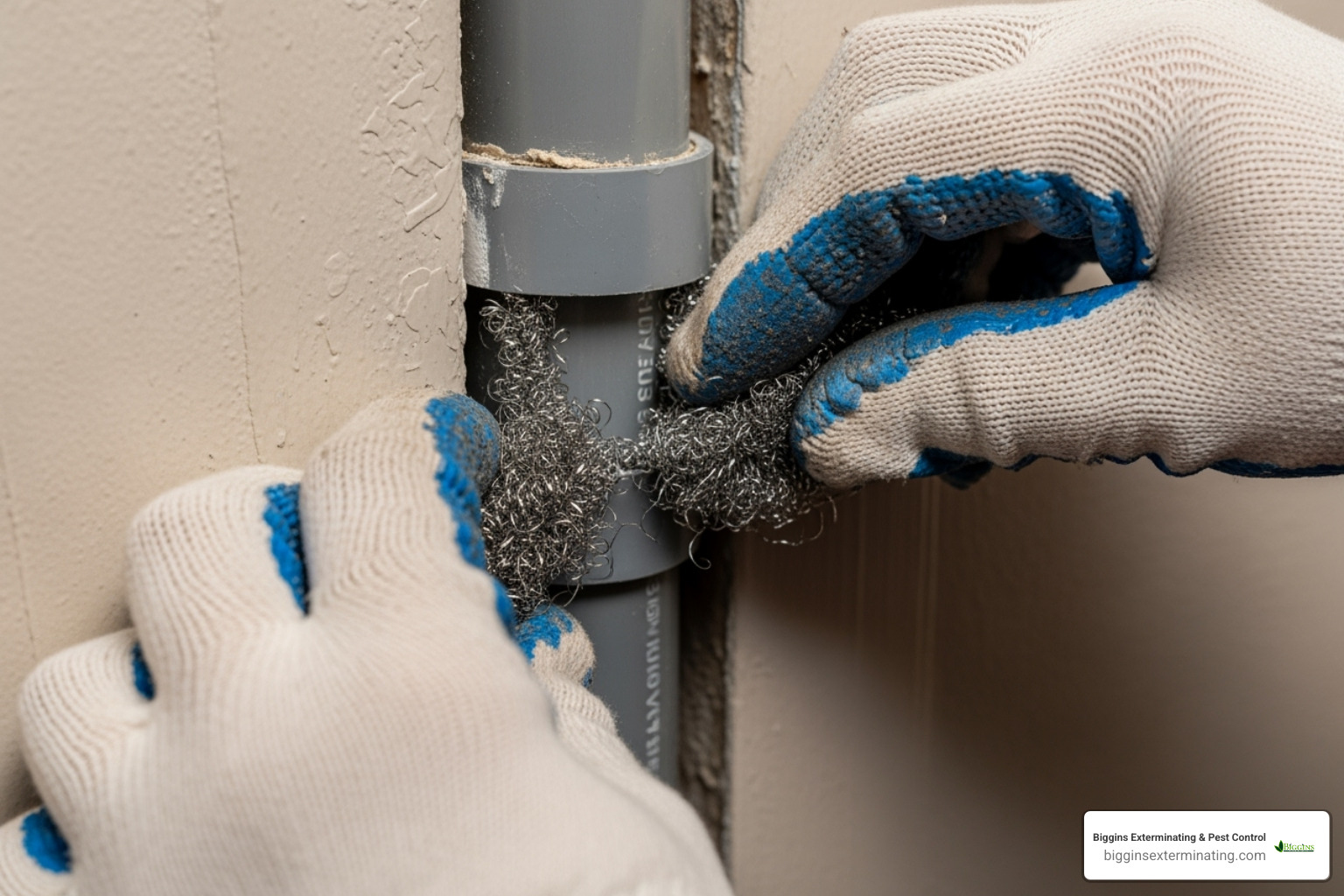
The Foundation of Natural Mice Extermination: Sealing Entry Points
Since a mouse can squeeze through a dime-sized gap, meticulous sealing is non-negotiable.
- Inspect your home’s exterior for cracks and holes, paying close attention to where utility lines, pipes, and cables enter.
- Use steel wool and caulk to seal openings. Mice can’t chew through steel wool. For larger holes, stuff them with steel wool first, then seal with caulk or foam.
- Install door sweeps on all exterior doors, especially those leading to garages and basements.
- Secure all vents with tight-fitting screens.
- Check the roof for gaps around chimneys or where utility lines enter.
For a complete guide, see our Keeping Your Home Mouse-Proof: A Winter Pest Control Checklist.
Eliminating Food and Shelter
If a mouse gets inside, make sure it doesn’t want to stay by removing food and shelter.
- Food Storage: Transfer all food, including pet food and birdseed, from original packaging into airtight glass, metal, or thick plastic containers.
- Cleanliness: Wipe down counters, sweep up crumbs, and vacuum regularly. Don’t leave pet food out overnight and use trash cans with tight-fitting lids.
- Decluttering: Mice love clutter for hiding and nesting. Store items in sealed plastic bins instead of cardboard boxes.
- Yard Maintenance: Keep your yard tidy. Remove wood and leaf piles near your foundation and trim back shrubs. Fix leaky faucets and drains to eliminate water sources.
Combining sealing with sanitation creates an environment where mice cannot thrive, making natural mice extermination effective long-term. For more tips, read our Winter Mouse Prevention 101: Expert Tips from Exterminators.
A Guide to Natural Mice Extermination Methods
After fortifying your home, it’s time to address any mice already inside. The focus of natural mice extermination is on methods that are effective, humane, and safe for families and pets.

Active Natural Mice Extermination: Using Scents They Hate
Mice have a keen sense of smell, which we can use to our advantage. Certain strong odors are offensive to them and create an invisible “not welcome” barrier.
- Peppermint Oil: A popular repellent. Soak cotton balls in pure peppermint oil and place them near entry points, under sinks, and in pantries. Refresh them every few days.
- Cedarwood Oil: Scientific research supports the effectiveness of essential oils. Cedar blocks or oil-soaked cotton balls work well in closets and attics. Use with caution around pets and children, as prolonged exposure may be a concern according to toxicity studies.
- Cayenne Pepper & Vinegar: Sprinkling cayenne pepper or spraying a white vinegar solution can irritate and deter mice. Be careful with cayenne, as it can also irritate humans and pets.
Warning: Avoid using ammonia or mothballs. They are hazardous to handle and contain toxins harmful to children and pets, as noted by poison control centers. The risks far outweigh any benefits.
Mice may adapt to scents if a food source is available. Repellents work best as part of a comprehensive approach. For more strategies, see our guide on House Mice Control.
Humane Trapping: Catch and Release
Humane catch-and-release traps are an excellent non-lethal option for removing mice.
- Baiting: Use high-protein foods like peanut butter, sunflower seeds, or oats. Wear gloves when baiting to avoid leaving your scent.
- Placement: Place traps along walls, in corners, and in high-traffic areas like kitchens, pantries, and basements.
- Checking Traps: This is critical. Check traps at least daily. Mice can become stressed and dehydrated quickly.
- Relocation: Release any captured mice at least one to two miles away from your home in a suitable habitat like a wooded area, away from other residences. Clean the trap thoroughly before reusing it.
Humane trapping is an effective part of natural mice extermination, offering peace of mind. For more on this topic, explore our Humane Rat Extermination Complete Guide.
Natural vs. Chemical: Weighing Your Options
When facing a mouse problem, you must choose between natural mice extermination and chemical solutions. It’s important to understand the pros and cons of each.
Chemical rodenticides are powerful and can eliminate a large population quickly. However, these poisons pose serious risks. As made clear by sources like the UConn Health Poison Control, they are dangerous to children and pets. They can also cause secondary poisoning in wildlife and lead to unpleasant odors from mice dying in walls.
Natural methods are safer for your family and the environment. They focus on long-term solutions by addressing why mice are getting in. The trade-off is that they require more effort and patience. Natural repellents and traps may not be sufficient for a large, established infestation.
| Feature | Natural Repellents & Humane Trapping | Chemical Rodenticides |
|---|---|---|
| Effectiveness | Best for prevention and minor issues; temporary for established infestations | Highly effective for established infestations |
| Safety | Generally safer for children and pets, though some oils can be toxic if ingested | High risk of poisoning to children, pets, and non-target wildlife |
| Cost (DIY) | Low ($5-$20 for essential oils/traps) | Low-Moderate ($10-$50 for baits/traps) |
| Long-term Results | Requires consistent reapplication and monitoring; best when combined with exclusion | Can eliminate current population, but without prevention, re-infestation is likely |
| Environmental Impact | Minimal to none | Potential for secondary poisoning of predators; environmental contamination |
| Humane Aspect | Designed to deter or capture without harm | Lethal |
| Effort Required | Moderate to High (consistent application, trap checks) | Low (set and forget, but requires careful placement) |
| Speed of Results | Slower, more gradual deterrence | Faster elimination of active rodents |
Please note: The costs listed above are average internet data for DIY products and not actual service prices for Biggins Exterminating. Professional pest control services will vary in cost based on the severity of the infestation and the specific treatment plan.
The best approach depends on your situation. For a single mouse caught early, natural mice extermination with prevention is a great choice. For a severe infestation with constant signs of activity, natural methods alone may not be enough, and a professional assessment is valuable.
No method works long-term without prevention. Sealing entry points and removing food sources are essential to keep new mice from moving in.
When DIY Isn’t Enough: Calling a Professional
While natural mice extermination methods are great for many situations, some problems are too big to handle alone. Knowing when to call a professional is a smart decision that protects your home and family.
When the Problem Won’t Go Away
If you’ve tried everything—sealing gaps, using repellents, and setting traps—but still find fresh droppings or hear scratching, you likely have a persistent infestation. Mice reproduce so quickly that DIY methods can’t keep up with a large population. What seems like a few mice could be a much larger colony hidden in your walls. Professionals have the tools and expertise to find hidden nests and assess the true scope of the problem.
Health and Safety Concerns
Mice carry diseases like Hantavirus and Salmonella and can bring fleas and ticks into your home. For households with children, elderly members, or individuals with compromised immune systems, a mouse infestation is a serious health risk. In these cases, professional intervention is often necessary to ensure your family’s wellbeing. The question “Should I Call an Exterminator If I See a Mouse?” becomes critical.
The Value of Professional Expertise
A professional offers more than just stronger products; they bring experience. At Biggins Exterminating, we use our 40+ years of knowledge to create integrated pest management (IPM) plans. We solve the underlying issues, not just the immediate problem, minimizing chemical use and providing warranties for our work. Calling a professional can also save you time and restore your peace of mind.
Our Commitment to You
As a family-owned business serving Wilmington, Andover, Bedford, Billerica, Burlington, Lexington, North Reading, Tewksbury, Woburn, and surrounding Massachusetts communities, we understand your home is your sanctuary. We don’t require contracts and we care about solving your problem for good. While natural methods are a great first defense, we are here when you need professional help. Our comprehensive Rodent Control Services are designed for lasting results.
Frequently Asked Questions about Natural Mouse Control
Here are answers to common questions about natural mice extermination.
Will mice leave on their own if I use natural repellents?
Not likely. Natural repellents are excellent deterrents, but they won’t make an established mouse population leave. If your home provides food and shelter, a mouse will eventually tolerate an unpleasant scent to survive, especially during a harsh Massachusetts winter. Repellents work best as part of a comprehensive prevention strategy that includes sealing entry points and removing food sources.
How many mice are there if I only see one?
If you see one mouse, assume there are more. Mice are social creatures that live in family groups and are mostly active at night. Seeing one in the daytime can indicate an overcrowded nest. Since a single female can produce up to 60 pups a year, it’s crucial to act quickly and assume you have a family of mice, not a lone wanderer.
Are natural methods effective for a severe infestation?
For a severe infestation, natural methods alone are unlikely to work. A large, established population will overwhelm the deterrent effect of scents and traps. If you’re finding droppings throughout your home, hearing constant scratching, or catching mice regularly, the problem has likely grown beyond what DIY methods can handle. This is when a professional assessment is crucial for effective, lasting control.
For more detailed guidance, our Pest Control for Mice Guide 2025 offers comprehensive insights.
Conclusion
Protecting your home from mice is achievable with the right knowledge and strategy. Natural mice extermination starts with prevention—your strongest ally. Sealing entry points, securing food, and eliminating clutter are the cornerstones of a mouse-free home, especially as colder Massachusetts weather drives rodents indoors.
For minor issues, natural repellents and humane traps are excellent, eco-friendly options. However, it’s important to be realistic. While these methods are great for prevention, they often fall short against severe infestations.

Lasting success requires consistency. Mouse control is an ongoing commitment, not a one-time fix.
If you’re facing a persistent problem in Wilmington, Andover, Bedford, Billerica, Burlington, Lexington, North Reading, Tewksbury, Woburn, and surrounding Massachusetts communities, don’t hesitate to seek professional help. With over 40 years of experience, Biggins Exterminating provides effective, reliable solutions to protect your family and home.
Contact us for expert mice pest control today and enjoy the peace of mind that comes with a mouse-free home.
