
Why Natural Rat Extermination Is Essential for Massachusetts Homeowners
Natural rat extermination offers a safer, more humane approach to protecting your home from unwanted rodents without exposing your family and pets to dangerous chemicals. With more than 14 million U.S. households reporting rodent sightings in 2021, finding effective solutions has never been more critical.
Most Effective Natural Rat Extermination Methods:
- Prevention & Exclusion – Seal entry points with steel wool and caulk
- Scent-Based Repellents – Use peppermint oil, cayenne pepper, or vinegar on cotton balls
- Physical Barriers – Install hardware cloth over vents and gaps
- Trap & Remove – Deploy snap traps or humane bucket traps with peanut butter bait
- Environmental Changes – Remove food sources and reduce clutter
The stakes are high when dealing with rats. These persistent invaders cause approximately 20-25% of undetermined house and structure fires each year in the U.S. by chewing through electrical wiring. Beyond property damage, rats carry over 31 diseases and can produce up to 2,000 offspring annually – making swift action essential.
Natural methods work by targeting rats’ powerful sense of smell and exploiting their behavioral patterns. Unlike chemical rodenticides that pose serious risks to children, pets, and the environment, natural approaches offer peace of mind while effectively deterring these unwelcome guests.
I’m Stephen Biggins, owner of Biggins Exterminating Co., and I’ve been helping Massachusetts families tackle pest problems for over four decades using both traditional and natural rat extermination techniques. My experience has shown that combining natural prevention methods with targeted removal strategies often provides the most sustainable, family-safe solution for rat control.
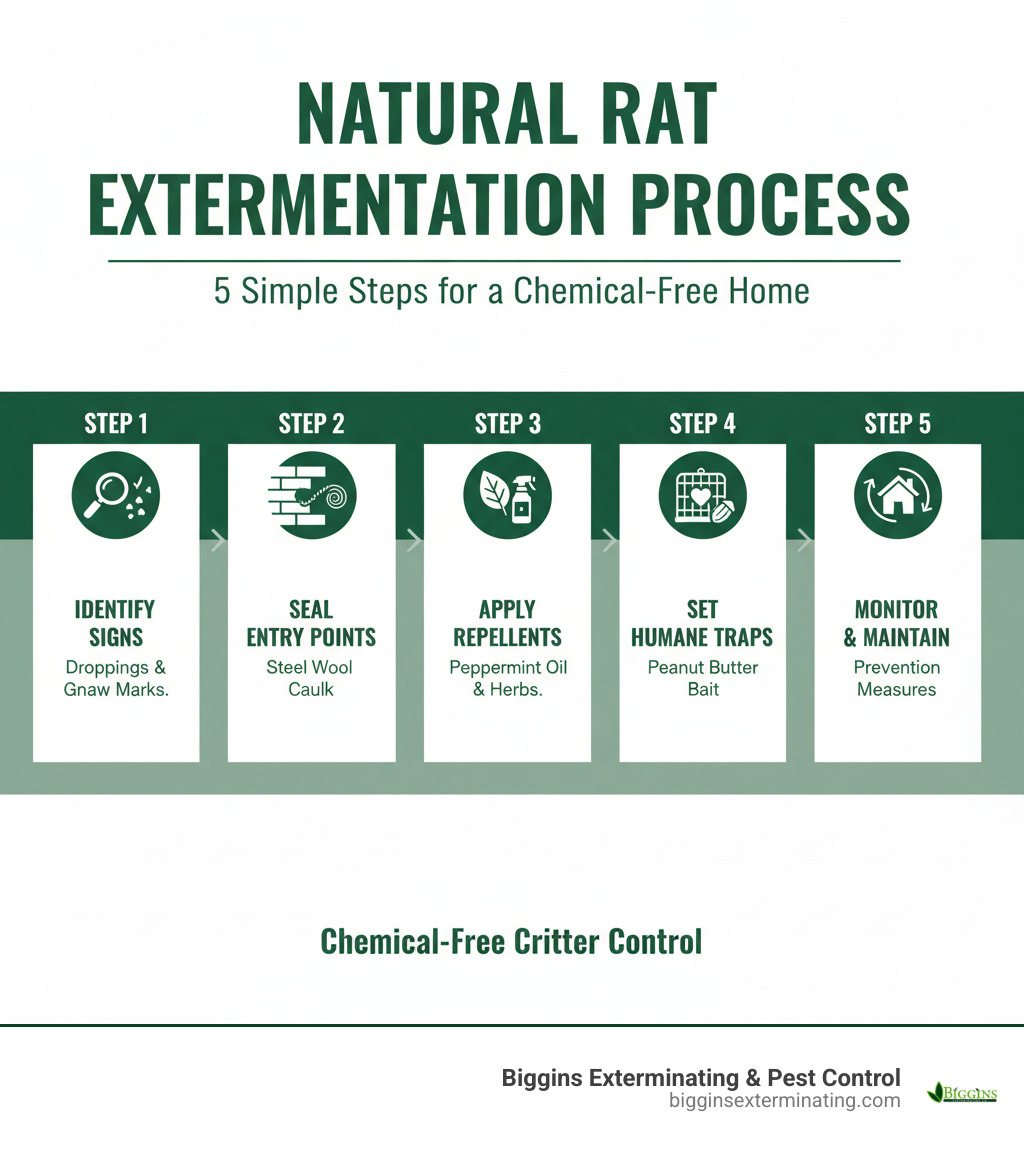
Step 1: Identify the Problem and Know Your Intruder
The first rule of natural rat extermination is to understand the problem. Rats are sneaky, but they leave behind plenty of evidence if you know what to look for.
Signs of a Rat Infestation
- Droppings: These small, dark pellets are a primary clue. Norway rat droppings are capsule-shaped (½ to ¾ inch), while roof rat droppings are smaller with pointed ends.
- Gnaw Marks: Rats constantly chew to manage their growing teeth. Look for parallel grooves on wood, plastic, and electrical wires. This habit causes about 20-25% of house fires with undetermined origins.
- Scratching Noises: As nocturnal creatures, rats create scurrying sounds in walls, ceilings, or attics, usually at night.
- Nests: Rats build nests from shredded paper, fabric, or insulation in quiet, hidden spots like behind appliances or in storage areas.
- Rub Marks: Dark, greasy smudges along walls and baseboards mark their established travel routes.
- Pet Behavior: Dogs and cats may become agitated or fixated on specific areas where they sense rodents.
For a deeper dive into identification, check out our guide on How to Identify and Prevent Rodent Infestations in Massachusetts.
Knowing Your Intruder: Common Rat Species
In Massachusetts, you’ll likely encounter two species. Knowing which one you have helps focus your natural rat extermination efforts.
- Norway rats: These are larger, stockier rats with brownish fur that prefer ground-level living. They are poor climbers, typically found in basements and crawl spaces.
- Roof rats: Sleeker and smaller with long tails, these are excellent climbers. They prefer attics, upper floors, and other high-up areas.
Understanding these behavior differences and nesting habits is key. Once you know your intruder and where they live, you can move on to making your home unwelcoming.
Step 2: The Foundation of Natural Rat Extermination: Prevention and Exclusion
The most effective natural rat extermination is preventing rats from entering in the first place. As Dr. Mike Bentley from the National Pest Management Association notes, rodents seek warmth and food indoors as the weather cools. Your goal is to make your home an unattractive destination.
Sealing Entry Points: Your First Line of Defense
Rats can squeeze through openings as small as a quarter. Conduct a thorough inspection of your home’s exterior and foundation, paying close attention to gaps around utility pipes and vents.
- For small gaps, use steel wool, which rats cannot chew through.
- For tiny cracks, apply a quality caulk.
- For larger openings like vents, secure hardware cloth (heavy-duty wire mesh).
Eliminating Food and Water Sources
Easily accessible food and water are major attractants.
- Store all food, including pet food, in airtight containers made of glass, metal, or thick plastic.
- Use trash cans with secure lids both indoors and outdoors.
- Clean up spills and crumbs promptly and don’t leave dirty dishes out.
- Fix leaky pipes and dripping faucets. Remove standing water from your yard by cleaning gutters and emptying containers.
Reducing Clutter: Taking Away Hiding Spots
Clutter provides rats with hiding places and nesting material.
- Keep basements, attics, and garages organized, storing items off the floor.
- Maintain your yard by trimming vegetation near the foundation and removing debris like woodpiles.
This prevention-focused approach works 24/7. By sealing entry points and removing attractants, you create an environment where rats simply don’t want to be.
Step 3: Using Natural Repellents to Make Your Home Unwelcoming
Rats have a powerful sense of smell, which we can use against them in our natural rat extermination strategy. Certain scents that are pleasant or neutral to us are overwhelming to rats.

Top 5 Scent-Based Natural Repellents
- Peppermint Oil: The most popular option. Its intense aroma overwhelms a rat’s sensitive nose.
- Cayenne Pepper: Contains capsaicin, which irritates rats’ noses and paws.
- White Vinegar: The sharp, acidic smell is a strong deterrent.
- Eucalyptus Oil: Works similarly to peppermint oil. Research suggests a combination of eucalyptus, peppermint, and geranium oil is especially effective.
- Fresh Garlic/Onions: Release sulfur compounds that rats find offensive.
Effective Application Strategies
Success with repellents requires consistent and strategic application.
- Cotton Balls: Soak cotton balls in essential oils or vinegar and place them along rat travel routes, near entry points, and in nesting areas. Refresh them weekly.
- Sprays: Mix essential oils with water and a drop of dish soap. Spray along baseboards and around trash cans. Reapply frequently in high-activity zones.
- Planting: For outdoor protection, plant marigolds or daffodils around your home’s perimeter, as rats instinctively avoid them.
The key is persistence. Natural repellents lose potency and must be reapplied regularly to maintain an effective barrier.
Limitations of DIY Natural Repellents
While useful, natural repellents are not a magic bullet. It’s important to understand their limitations:
- Best for Deterrence: They work best for preventing new rats or dealing with minor issues, not for eliminating large, established infestations.
- Effectiveness Varies: Some rats are more determined or may become accustomed to the scents over time.
- Time Commitment: Natural methods require consistent monitoring and reapplication, which can be time-consuming.
- Pet Safety: Some natural repellents, like certain essential oils, onions, and garlic, can be toxic to pets. Always place them where pets cannot reach them.
Natural methods are one tool in a comprehensive strategy that must include exclusion and sanitation. For more on the risks rats pose, see our guide on the Top 5 Dangers of Rodents in and Around Your Home or Business.
Step 4: Active Removal with Traps and Other Methods
When prevention and repellents aren’t enough, natural rat extermination requires a more direct approach. Trapping is a primary removal method that offers immediate results without the risks of chemical baits.
Trapping as a Primary Removal Method
- Snap traps: These are affordable, reliable, and provide a quick, humane kill when set properly. Place them perpendicular to walls where rats travel, with the trigger end facing the wall. Use a small dab of peanut butter as bait.
- Bucket traps: This DIY method can catch multiple rats. It typically involves a ramp leading to a five-gallon bucket, with a baited, spinning can over the top that causes rats to fall in.
- Live traps: These capture rats without injury but require frequent checking. Be aware that local regulations may restrict the relocation of captured wildlife, and rats often return or become a problem elsewhere.
Debunking Myths in Natural Rat Extermination
Don’t waste time on ineffective home remedies.
- Baking Soda: The theory that baking soda causes fatal bloating in rats is a myth. Rats are cautious eaters and can expel gas, making this method highly unreliable and inhumane.
- Ultrasonic Devices: Rats may be initially wary of the high-frequency sound, but they quickly adapt. The sound waves also don’t penetrate walls or furniture, leaving plenty of safe havens.
- Glue Traps: Avoid these entirely. They are exceptionally inhumane, causing prolonged suffering, and are often ineffective as larger rats can escape.
Effective trapping requires patience and strategic placement. For comprehensive solutions, our Rodent Control Services can develop a custom strategy for your home.
Natural vs. Chemical: Weighing Your Options
Choosing between natural rat extermination and chemical methods is a critical decision for your family’s safety and peace of mind.
Benefits of Natural Methods
Natural approaches offer significant advantages beyond being “chemical-free.”
- Safety First: This is the most compelling reason. With no poisons, there’s no risk of accidental ingestion by children or pets. Rodent baits are designed to be eaten, and their poisons can remain in the ecosystem, harming pets or wildlife that encounter the dead rodent.
- Humane Treatment: Repellents encourage rats to leave, while a well-placed snap trap provides an instantaneous death, unlike the prolonged suffering caused by anticoagulant poisons.
- Environmental Responsibility: Natural methods keep harmful chemicals out of the groundwater and local food chain.
Dangers of Chemical Rodenticides
While sometimes fast-acting, chemical rodenticides come with serious risks.
- Secondary Poisoning: A predator like an owl or a neighborhood cat that eats a poisoned rat can also be poisoned, creating a deadly ripple effect in the local ecosystem.
- Toxicity: Common rodenticides like warfarin are anticoagulants that cause slow internal bleeding and are highly toxic to any mammal that ingests them, not just rats.
- Health Risks: Accidental ingestion by children is a serious concern, and rats that die inside walls can create odor and disease hazards, as they carry pathogens like leptospirosis.
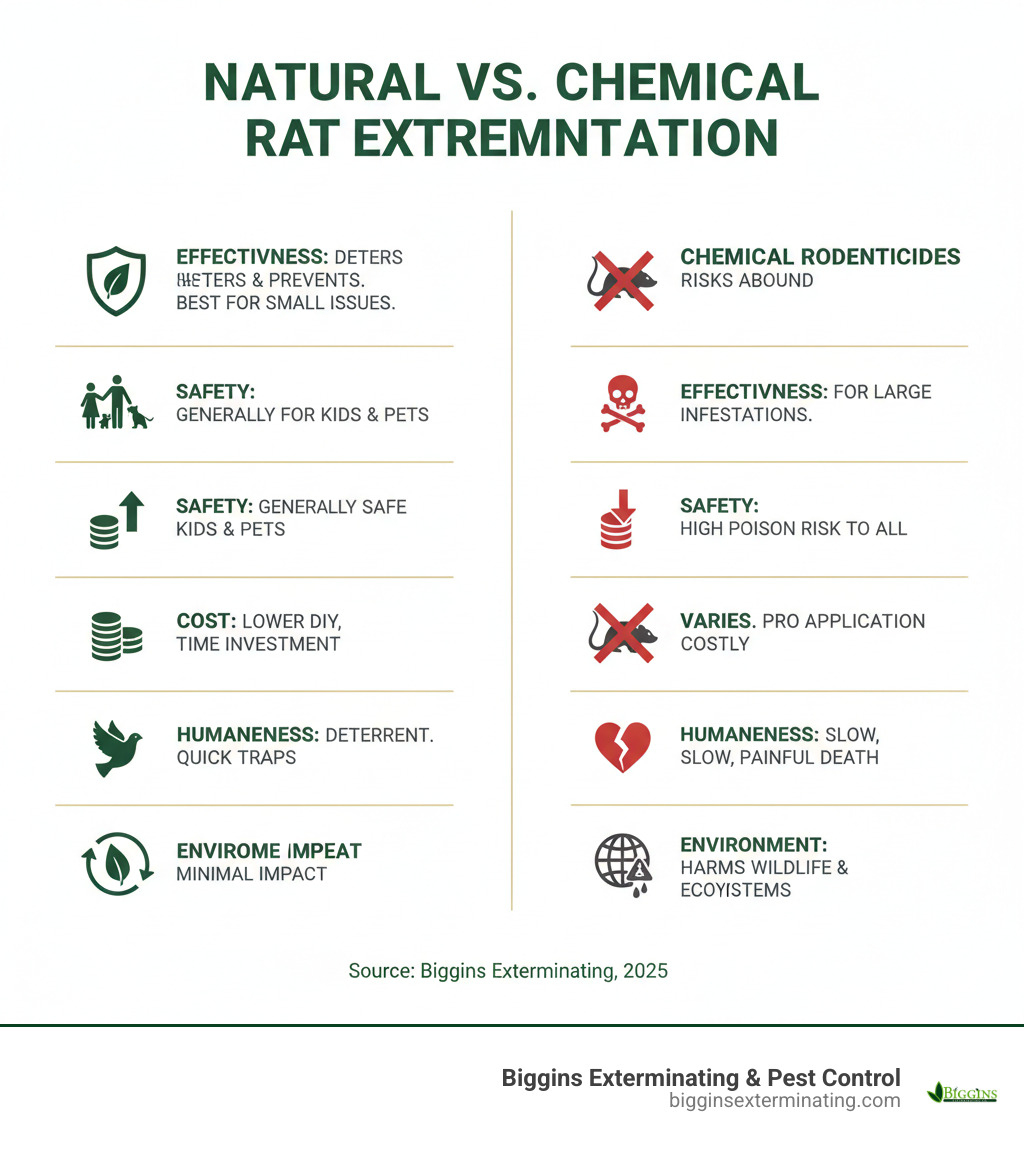
Here’s how these approaches stack up when you compare them side by side:
| Feature | Natural Repellents & Trapping | Chemical Rodenticides |
|---|---|---|
| Effectiveness | Best for deterrence, small infestations, prevention. Requires consistent effort. | Can be effective for larger infestations, but risks abound. |
| Safety | Generally safe for children and pets when used correctly. | High risk of accidental poisoning to children, pets, and wildlife. |
| Cost | Often lower DIY cost for materials, but requires time/effort. | Varies; can be costly for professional application. |
| Humaneness | Repellents deter; snap traps are quick kill. Live traps are humane if monitored. | Often cause slow, painful death. |
| Environmental Impact | Minimal to none. | Can harm non-target wildlife and leach into the environment. |
For many homeowners, natural rat extermination provides the best balance of effectiveness and safety, especially as part of a comprehensive prevention strategy.
When to Call a Professional for Rat Control
Even the most dedicated DIY natural rat extermination efforts can fall short against a persistent infestation. Knowing when to call for professional help is key to protecting your home and family.
Signs Your Infestation Needs Professional Help
It’s time to call an expert if you notice:
- Daytime Sightings: Rats are nocturnal, so seeing them during the day often indicates a large, overcrowded population.
- Rapid Reproduction: A single pair of rats can produce up to 2,000 babies in a single year, meaning a small problem can escalate quickly.
- Persistent Activity: If you hear constant scratching noises or find fresh droppings daily despite your efforts, the infestation is likely beyond DIY control.
- Structural Damage: Gnawed electrical wires are a serious fire hazard, causing 20-25% of undetermined house fires. Damage to pipes or beams also warrants immediate professional attention.
- Health Concerns: The risk of diseases like leptospirosis and salmonella is too great to manage alone, especially with vulnerable family members.
For more on this topic, read our guide on The Importance of Hiring a Professional Pest Control Service in Massachusetts.
What Professionals Like Us Do
A professional service brings a systematic, experienced approach. We practice Integrated Pest Management (IPM), combining natural methods with targeted, professional-grade solutions. This includes:
- A Thorough Inspection: We identify hidden entry points and assess the true scope of the infestation.
- Professional Exclusion: We use commercial-grade materials to create lasting barriers that rats cannot breach.
- Strategic Interventions: We use our knowledge of rat behavior for effective trap placement and sanitation recommendations.
- Safe Cleanup Guidance: We help you safely handle contaminated areas and maintain a rat-free home.
Natural methods are great for prevention, but for established infestations, professional help saves time, money, and provides peace of mind.
Frequently Asked Questions about Natural Rat Control
Are natural rat repellents safe for my pets?
While generally safer than chemical poisons, some natural repellents can be harmful to pets. Concentrated essential oils (like peppermint and eucalyptus) as well as onions and garlic are toxic to cats and dogs if ingested. To keep pets safe, place repellents completely out of their reach, such as inside wall voids or behind heavy appliances. Never use mothballs, as they are highly toxic. If you suspect your pet has ingested a repellent, call your vet immediately.
How long does it take for natural methods to work?
Natural rat extermination is about long-term prevention, not instant results.
- Repellents may deter new rats within a few days but are unlikely to remove an established colony.
- Exclusion and sanitation work immediately by making your home less accessible and appealing.
- Trapping can yield results within hours but may take days or weeks to eliminate an entire population.
The timeline depends on the size of the infestation and the consistency of your efforts. Patience is key.
Can a cat or dog solve my rat problem?
While a pet’s presence can be a minor deterrent, it is not a reliable or safe natural rat extermination strategy. Most pets are not efficient hunters, and rats can easily avoid them. More importantly, rats carry diseases like leptospirosis and parasites that can be transmitted to your pets and family. It’s best to rely on proven prevention and removal methods rather than putting your pet at risk.
Your Partner in Safe and Effective Pest Management
This guide has outlined a comprehensive approach to natural rat extermination, focusing on safety and effectiveness. The strategy is multi-layered:
- Prevention: Your strongest weapon is sealing entry points and removing food and clutter.
- Repellents: Scent-based deterrents like peppermint oil serve as a second line of defense.
- Trapping: A safe, chemical-free solution for active removal.
However, DIY methods have limitations. Recognizing when to call a professional isn’t defeat; it’s a smart move to protect your home and family.
At Biggins Exterminating, we understand this balance. As a family-owned business with over four decades of experience in Massachusetts communities like Andover, Wilmington, and Woburn, we’ve seen it all. We don’t use one-size-fits-all approaches or require contracts. We assess your unique situation, implement responsible solutions, and back our work with a warranty for your peace of mind.
Rats can cause significant property damage and pose serious health risks. When facing a persistent or large-scale infestation, the stakes are too high for DIY methods alone.
For persistent or large-scale rat problems in Massachusetts, a professional approach ensures your home is protected safely and effectively. Don’t let rats jeopardize your property or your family’s health. Contact our rat control experts today for a comprehensive solution.