Introduction: Your Business’s First Line of Defense
Commercial pest management is a specialized service that protects businesses from pest infestations through proactive strategies, regular monitoring, and customized treatment plans designed to prevent disruptions to operations, protect brand reputation, and ensure compliance with health regulations.
Key aspects of commercial pest management include:
- Integrated Pest Management (IPM) – A proactive approach focusing on prevention, monitoring, and targeted treatment rather than reactive extermination
- Regular inspections and monitoring – Scheduled visits to identify pest activity before it becomes a major problem
- Industry-specific solutions – Customized programs for restaurants, offices, warehouses, hotels, and other commercial facilities
- Sanitation and exclusion – Eliminating food/water sources and sealing entry points to prevent pest access
- Documentation and compliance – Detailed reporting to meet health code requirements and pass third-party audits
Why commercial pest control matters for Massachusetts businesses:
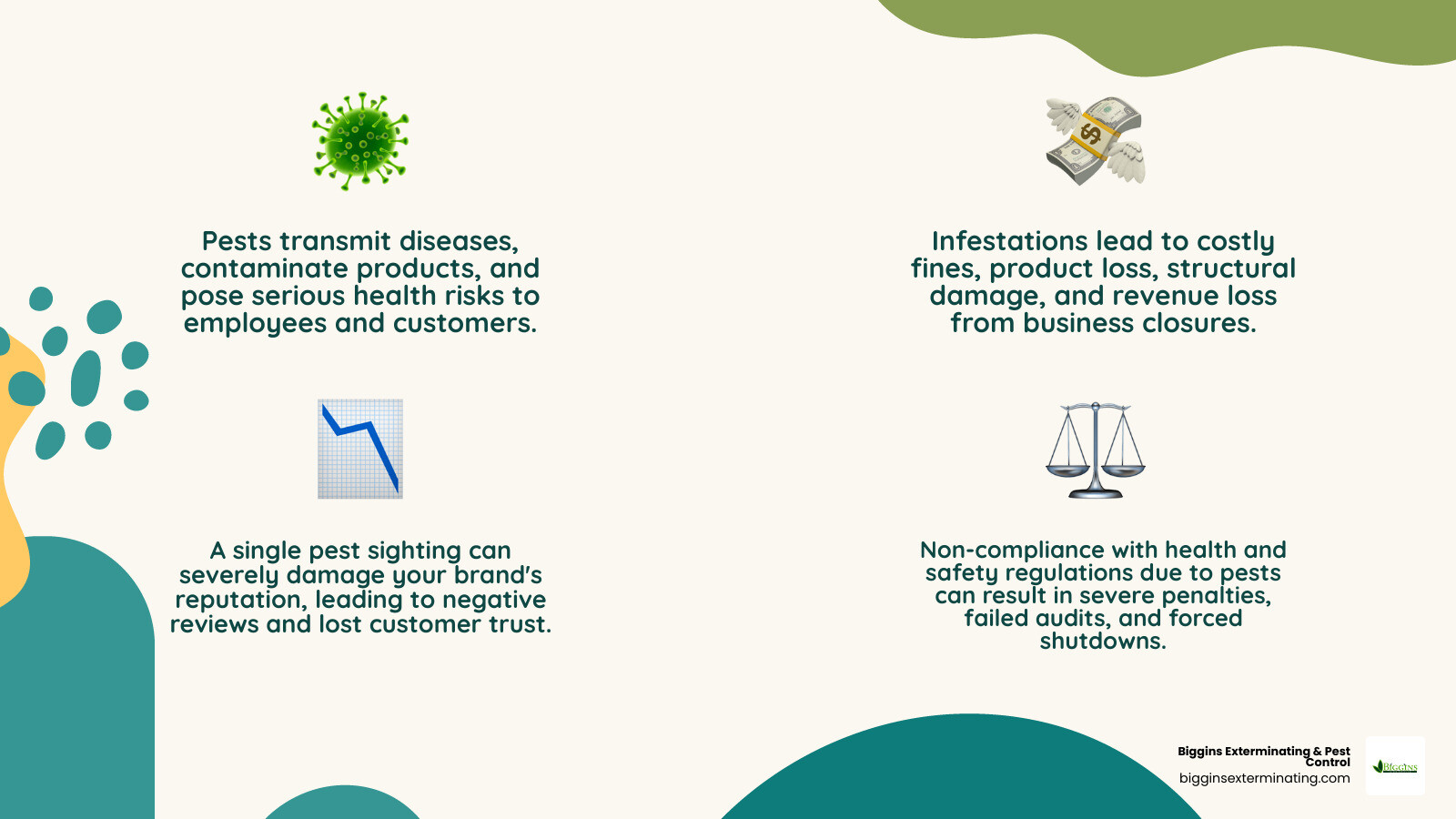
A single pest sighting can trigger health code violations, customer complaints, and reputation damage that takes years to repair. Unlike residential properties, commercial facilities face zero-tolerance policies from health inspectors, strict regulatory standards, and the constant threat of social media exposure. The financial impact extends beyond treatment costs—businesses can face regulatory fines, lost revenue from closures, product contamination, and structural damage from pests like rodents and termites.
Commercial properties in Massachusetts are experiencing increased demand for pest control services due to population growth, urban development, and the unique challenges of high-traffic environments. Whether you operate a restaurant in Burlington, manage apartment complexes in Woburn, or run a warehouse in Billerica, professional pest management isn’t optional—it’s essential business protection.
As Stephen Biggins, owner of Biggins Exterminating Co., I’ve spent over four decades helping Massachusetts businesses implement effective Commercial pest management programs that protect their operations, employees, and customers. Our family-owned company has seen how the right preventative approach saves businesses from costly infestations and regulatory headaches.
Why Commercial Pest Control is a Different Ballgame
When it comes to pest control, a business is not just a bigger house. Commercial pest control presents a unique set of challenges that go far beyond what we typically encounter in residential settings. While a homeowner might tolerate a few ants, a restaurant can face severe penalties, closures, and irreparable damage to its reputation from even a single cockroach sighting.
The scale of commercial properties in places like Andover, Lexington, or Tewksbury, with their complex structures, vast common areas, and multiple potential entry points, makes them inherently more vulnerable to infestations. We’re talking about extensive square footage, often with interconnected units, shared utilities, and constant human traffic. This creates a dynamic environment where pests can quickly establish themselves and spread.
Beyond the physical complexities, the stakes are significantly higher. Many commercial facilities operate under stringent health and safety regulations, particularly those in the food service, healthcare, and hospitality sectors. These industries often have zero-tolerance policies for pests, and a breach can lead to immediate fines, operational shutdowns, and even legal action. The financial implications are massive, encompassing not just direct costs like lost inventory or structural damage, but also indirect costs from lost business, regulatory penalties, and the time-consuming process of rebuilding trust.
We understand that businesses rely on property management firms to provide a pest-free environment, but factors like building structure, climate, and even human behavior can hinder pest control efforts. This is why a specialized, proactive approach to Commercial pest management is absolutely essential.
| Factor | Commercial Pest Control | Residential Pest Control |
|---|---|---|
| Scale | Large, complex buildings; multi-unit properties | Single-family homes, apartments |
| Pest Pressure | High due to constant traffic, diverse food/water sources | Moderate, depending on habits and environment |
| Regulations | Strict health codes, audits, legal compliance | Generally less stringent |
| Impact | Reputation damage, financial loss, health risks, legal issues | Discomfort, property damage, potential health risks |
| Treatment Strategy | Integrated Pest Management (IPM), proactive, custom, discreet | Often reactive, general treatments |
The Core of Professional Commercial Pest Management: Integrated Pest Management (IPM)
At the heart of effective Commercial pest management lies Integrated Pest Management (IPM). IPM is a comprehensive, science-based approach that focuses on long-term prevention of pests or their damage through a combination of techniques such as biological control, habitat manipulation, modification of cultural practices, and the use of resistant varieties. Pesticides are used only after monitoring indicates they are needed according to established guidelines, and treatments are made with the goal of removing only the target organism.
This philosophy allows us to be proactive rather than merely reactive, controlling costs and minimizing chemical use while maximizing effectiveness. IPM is a key strategy for commercial pest control, focusing on identifying causes, controlling costs, and minimizing chemical use. It’s about understanding the “why” behind an infestation, not just treating the “what.”
You can learn more about IPM principles from reliable sources like the Environmental Protection Agency.
The 5 Steps of a Successful IPM Program
An effective IPM program isn’t a one-time fix; it’s an ongoing cycle of smart, strategic actions. Our approach typically involves these five critical steps:
- Inspection & Assessment: We start with a thorough assessment of your facility. This includes detailed inspections of entry points, water sources, food sources, harborage points, and common areas in places like Burlington, North Reading, or Woburn. We’re looking for signs of pest activity and vulnerabilities in your building’s structure.
- Pest Identification: Accurate identification is crucial. Different pests require different strategies. Knowing whether we’re dealing with carpenter ants, bed bugs, or mice allows us to select the most effective and least-toxic solutions.
- Monitoring: Constant monitoring and maintenance are critical to the success of IPM. We use traps and other tools to track pest populations, understand their movement patterns, and assess the effectiveness of our treatments. Regular check-ins allow us to adapt our strategy as needed.
- Control Methods: Based on our findings, we implement a combination of control methods. This often prioritizes non-chemical options and exclusion methods first. If chemical treatments are necessary, we use them judiciously and in targeted ways, ensuring safety for your employees and customers. We also offer a range of pest control products including aerosols, baits, sprays, and dusts, as well as non-insecticidal products like bedbug-proof mattress encasements and mechanical/pheromone traps.
- Communication & Documentation: Communication with commercial building employees is crucial for gathering accurate information on pest sightings to prevent and control infestations. We also maintain accurate reporting of insect and rodent sightings and keep proper records for customers and regulatory officials. This transparency is vital for compliance and long-term success.
For more information on our comprehensive approach, visit our page on pest control and exterminating.
Why Sanitation is Critical for Commercial Pest Management
If IPM is the brain of Commercial pest management, then sanitation is its backbone. Without rigorous sanitation, even the most advanced pest control techniques will struggle to provide lasting results. Sanitation schedules have a direct impact on overcoming pest buildup both inside and outside commercial buildings.
Pests are constantly on the lookout for three things: food, water, and shelter. By diligently managing these resources, you can significantly reduce your facility’s attractiveness to pests:
- Eliminating Food Sources: This means promptly cleaning up spills, properly storing food in sealed containers, regularly emptying trash, and ensuring dumpsters are clean and far from building entrances. In a restaurant in Bedford or a grocery store in Billerica, this is non-negotiable.
- Eliminating Water Sources: Leaky pipes, condensation, and standing water provide essential hydration for many pests. Addressing these issues through regular maintenance and promptly repairing leaks denies pests a vital resource.
- Proper Waste Management: A robust waste management system, both indoors and out, is paramount. This includes secure, lidded bins, frequent trash removal, and keeping loading docks and refuse areas spotless.
A clean environment drastically reduces the allure for pests, making our professional treatments far more effective and sustainable.

The Role of Exclusion in Commercial Pest Management
Exclusion is a powerful, proactive strategy in Commercial pest management that aims to physically prevent pests from entering your facility in the first place. It’s about sealing off their access points, turning your building into a fortress against unwanted intruders. Exclusion methods and non-chemical options should always be considered before other pest control options.
We focus on identifying and sealing:
- Cracks and crevices: Even tiny gaps in foundations, walls, or around windows and doors can be entry points for insects and rodents.
- Door sweeps: Gaps under doors, especially those leading outdoors or to loading docks, are prime entry points. Installing or repairing door sweeps can make a significant difference.
- Window screens: Damaged or missing screens are an open invitation for flying insects.
- Utility penetrations: Gaps around pipes, wires, and other utilities entering the building must be sealed.
By implementing robust exclusion techniques, we can drastically reduce the number of pests that gain access to your property, leading to fewer infestations and a decreased reliance on other control methods. This is a crucial component of any successful IPM program. For more tips on keeping pests out, check out our guide on How to Keep Pests Out of Your Massachusetts Business.
Custom Pest Solutions for Massachusetts Industries
We understand that no two businesses are alike, and neither are their pest control needs. A cannabis facility in Burlington will have vastly different pest concerns than a healthcare facility in Lexington. Each industry has its unique vulnerabilities and regulatory requirements that demand a customized approach to Commercial pest management.
Our expertise allows us to develop custom plans that not only address current pest issues but also proactively prevent future infestations, ensuring regulatory compliance and peace of mind for business owners across our service areas.
Food Service & Hospitality (Restaurants, Hotels)
The food service and hospitality industries, including restaurants, hotels, and cafes in places like Woburn and North Reading, are particularly vulnerable to pest infestations. The constant presence of food, water, and shelter, combined with high customer turnover, creates an ideal environment for pests.
Common pests we encounter in these settings include:
- Cockroaches: These resilient pests can contaminate food, spread disease, and are a major health code violation risk.
- Rodents: Mice and rats can chew through wiring, contaminate food, and deter guests.
- Flies: Attracted to food waste and can spread bacteria.
- Bed Bugs: A significant threat to hotels and lodging establishments, leading to severe reputation damage and financial losses.
Health code compliance is paramount in these industries. A single pest sighting can lead to immediate fines, temporary closure, and devastating reviews. Our programs focus on discreet, effective treatments that minimize disruption to your operations while upholding the highest standards of hygiene. For more specific information, you can visit our page on commercial pest control in Bedford.
Property Management & Offices
Property managers of apartment complexes, condos, and commercial office buildings in areas like Billerica and Wilmington face the unique challenge of managing pests across multiple units and common areas. Pests can quickly spread from one tenant to another, creating widespread problems and tenant dissatisfaction.
Common pests in property management and office settings include:
- Rodents: Often seeking warmth and food, they can infest walls and ceilings, causing damage and alarm.
- Cockroaches: Thrive in shared spaces, kitchens, and bathrooms.
- Ants: Especially carpenter ants and pavement ants, which can be a nuisance in common areas and individual units.
- Bed Bugs: A persistent problem in multi-family dwellings due to their ability to hitchhike between units.
Maintaining tenant satisfaction and property value is critical. We work closely with property managers to implement comprehensive pest control solutions that address the specific challenges of multi-unit properties, focusing on early detection and preventing inter-unit spread. Learn more about our specialized services for property managers on our Pest Control for Property Managers page.
Warehousing, Manufacturing & Retail
Warehousing, manufacturing facilities, and retail stores, including those in Andover and Tewksbury, present their own distinct pest challenges. Large spaces, stored products, and frequent deliveries create ample opportunities for pests to enter and thrive.
Common pests in these environments include:
- Rodents: Can damage inventory, chew through electrical wiring, and contaminate products.
- Stored Product Pests: Beetles and moths can infest grains, dried foods, and other stored goods, leading to significant product loss.
- Birds: Can nest in rafters, contaminate products with droppings, and damage property.
Product contamination, structural damage, and health risks to employees are major concerns. Our Commercial pest management programs for these sectors focus on perimeter defense, exclusion, and monitoring to protect inventory and infrastructure. For businesses in Woburn, MA, seeking specialized solutions, visit our page on Best Commercial Pest Control Woburn, MA.
Frequently Asked Questions about Protecting Your Business
We get a lot of questions about Commercial pest management, and for good reason! Protecting your business from pests is a serious matter. Here are some of the most common inquiries we receive:
How often does my business need pest control service?
This is one of the most common questions we hear, and the honest answer is: it varies! There’s no one-size-fits-all schedule because the ideal frequency depends on several factors:
- Industry Type: A restaurant or food processing plant in Wilmington will likely require more frequent and intensive service than a low-traffic office building in Lexington due to higher pest pressure and stricter regulations.
- Pest Pressure: If your business is in an area with historically high pest activity, or if you’ve had recurring issues, more frequent visits might be necessary.
- Building History and Structure: Older buildings with more cracks and crevices, or facilities with frequent open doors (like loading docks), are more susceptible.
- Proactive vs. Reactive Approach: Our IPM philosophy emphasizes a proactive approach. Regular scheduled visits (monthly, bi-monthly, or quarterly) are designed to monitor for early signs of activity and prevent infestations before they become major problems. This is generally more cost-effective and less disruptive than reactive emergency treatments.
It’s best to consult with an expert to review your business’s specific amenities and create a plan based on your building’s history, business type, and known pests in the Massachusetts area. We offer free evaluations to help determine the best plan for you.
What are the most common pests in Massachusetts commercial properties?
While pests can vary by location and season, some unwelcome visitors are consistently problematic for Massachusetts businesses, including those in Andover, Bedford, and Billerica. Based on our 40+ years of experience, here are the usual suspects:
- Rodents (Mice, Rats): These are year-round threats, especially as weather changes. They seek warmth, food, and shelter, often entering through small gaps. They can contaminate food, damage property, and spread disease.
- Cockroaches: Resilient and adaptable, cockroaches are a major concern for food-related businesses. They hide in dark, damp places and can rapidly multiply, posing serious health risks.
- Ants (Carpenter, Pavement): Ants are a constant nuisance, invading commercial kitchens, break rooms, and even office spaces in search of food. Carpenter ants can also cause structural damage.
- Stored Product Pests (Beetles, Moths): Found in warehouses, grocery stores, and food processing facilities, these pests infest packaged goods, leading to product loss and contamination.
- Flies: Attracted to food waste and unsanitary conditions, flies are a major health concern, especially in restaurants and healthcare facilities.
- Bed Bugs: A persistent problem in hotels, multi-family housing, and even offices, they are masters at hitchhiking and can quickly spread.
- Spiders: While often less of a direct health threat, spiders can create an unsightly and unwelcoming environment for customers and employees.
Are pest control treatments safe for my employees and customers?
Absolutely. The safety of your employees, customers, and the environment is our top priority. Our commitment to Integrated Pest Management (IPM) means we always aim to use the most effective yet least-toxic solutions available.
Here’s how we ensure safety:
- IPM Focus: We prioritize prevention and non-chemical methods like sanitation and exclusion. Chemical treatments are a last resort, used only when necessary and in targeted applications.
- Targeted Applications: Instead of broad, indiscriminate spraying, we apply treatments precisely where pests hide and travel, minimizing exposure to non-target areas.
- Approved Products: We only use products approved by federal and state governments, ensuring they meet strict safety standards. All chemicals used are approved by the Federal and State Government.
- Technician Communication: Our licensed and trained technicians will always inform you about the products being used, any necessary precautions, and re-entry times. We’re committed to ongoing training and education to ensure we stay up-to-date with the latest pest control techniques and safety protocols.
- Discreet Service: We understand the importance of discretion for your business. Our services are performed with minimal disruption, often outside of business hours, to ensure the comfort of your customers and staff.
We are a local, family-owned company, and the well-being of our community in places like Woburn, Burlington, and Tewksbury is paramount to us.
Your Partner in Pest Prevention: Choosing the Right Professional
When it comes to Commercial pest management, choosing the right partner is not just about eliminating pests; it’s about protecting your entire business ecosystem. A professional pest control company does more than spray for bugs – we safeguard your brand reputation, ensure the health and safety of your staff and customers, and help you maintain compliance with complex regulations.
Effective commercial pest control requires a personalized approach, including detailed inspections, attention to entry points, water/food sources, and common areas. Businesses rely on property management firms to provide a pest-free environment, and we are here to support that goal. Implementing specific integrated pest management (IPM) and pest prevention programs is crucial for long-term success.
Why a Local Partner Matters
In pest control, local expertise makes a significant difference. As a local, family-owned company serving Andover, Bedford, Billerica, Burlington, Lexington, North Reading, Tewksbury, Wilmington, and Woburn, we offer distinct advantages:
- Fast Response: When you have a pest emergency, you can’t wait. Our local presence means we can provide a quicker, more responsive service. We understand that immediate action can prevent a minor issue from becoming a major crisis.
- Knowledge of Local Pests: We live and work in these communities, giving us an intimate understanding of the specific pest pressures, seasonal patterns, and environmental factors unique to Massachusetts. This local knowledge translates to more effective and targeted solutions.
- Community Commitment: We’re not just a service provider; we’re your neighbors. Our long-standing commitment to the community means we care deeply about the success and well-being of local businesses.
- Personalized Service: You’re not just another account number to us. We pride ourselves on building relationships with our clients, offering personalized attention and custom solutions that big, national chains often can’t match.
The Biggins Exterminating Advantage
For over 40 years, Biggins Exterminating Co. has been the trusted name in Commercial pest management across Massachusetts. As a local, family-owned and operated company based right here in Massachusetts, our deep roots in the community mean we understand the local challenges and are committed to providing the highest quality service.
Here’s what sets us apart:
- Local, Family-Owned: We’re not a faceless corporation. We’re a family dedicated to serving our local businesses with integrity and professionalism.
- 40+ Years of Experience: Our extensive experience means we’ve seen it all and know how to handle any pest challenge your business might face.
- No-Contract Services: We believe in earning your business through superior service, not binding contracts. Our flexibility allows us to adapt to your needs.
- Warranties and Satisfaction: We stand behind our work. Our goal is your complete satisfaction, and we offer warranties to ensure your peace of mind.
- Expert Technicians: Our team is comprised of highly trained and state-certified professionals who are continuously educated on the latest IPM techniques and safety standards.
We specialize in carpenter ants, bedbugs, termites, and mice, among a wide range of other pests common in commercial settings. We offer a free evaluation of your commercial building and facilities to help you get started on a path to a pest-free environment.
Don’t let pests compromise your business’s reputation or bottom line.
Get a free evaluation for your business today to speak with a member of our team and find how we can protect your commercial property.