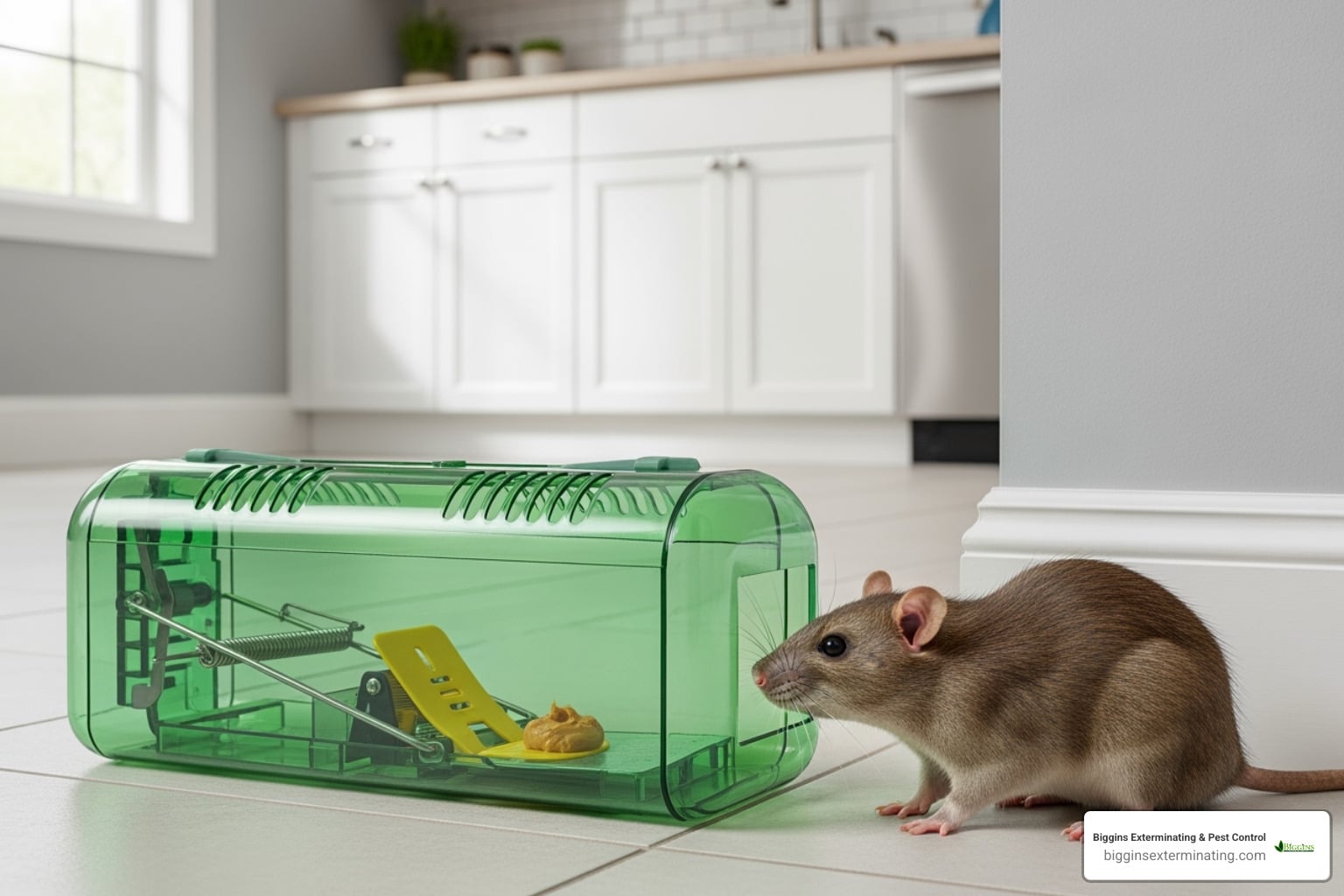
Why Humane Rat Extermination Matters More Than Ever
Humane rat extermination focuses on methods that minimize animal suffering while effectively controlling rodent populations. This approach prioritizes prevention through exclusion and sanitation, using high-welfare snap traps only when lethal control is unavoidable.
Quick Answer: Most Humane Rat Control Methods
- Prevention first – Remove food, water, and shelter sources
- Exclusion – Seal entry points with steel wool and hardware cloth
- High-welfare snap traps – Designed for quick, irreversible unconsciousness
- Avoid inhumane methods – No glue boards, anticoagulant poisons, or drowning
- Professional help – For large infestations or when DIY methods fail
When rats invade our homes, it’s tempting to use the fastest elimination method. However, a growing understanding of animal welfare demands we choose methods that cause the least suffering. Research confirms that there are no truly humane ways to kill rodents, only methods that are less inhumane.
The challenge is balancing effective pest control with the ethical treatment of rats, which are intelligent creatures that pose genuine health risks and cause property damage. Modern humane extermination involves understanding rodent behavior, implementing preventative strategies, and selecting control methods based on welfare science. This is the core of Integrated Pest Management (IPM).
As Stephen Biggins of Biggins Exterminating, my four decades of experience have shown that the most successful humane rat extermination strategies focus on prevention first, using the most welfare-conscious lethal methods only as a last resort.
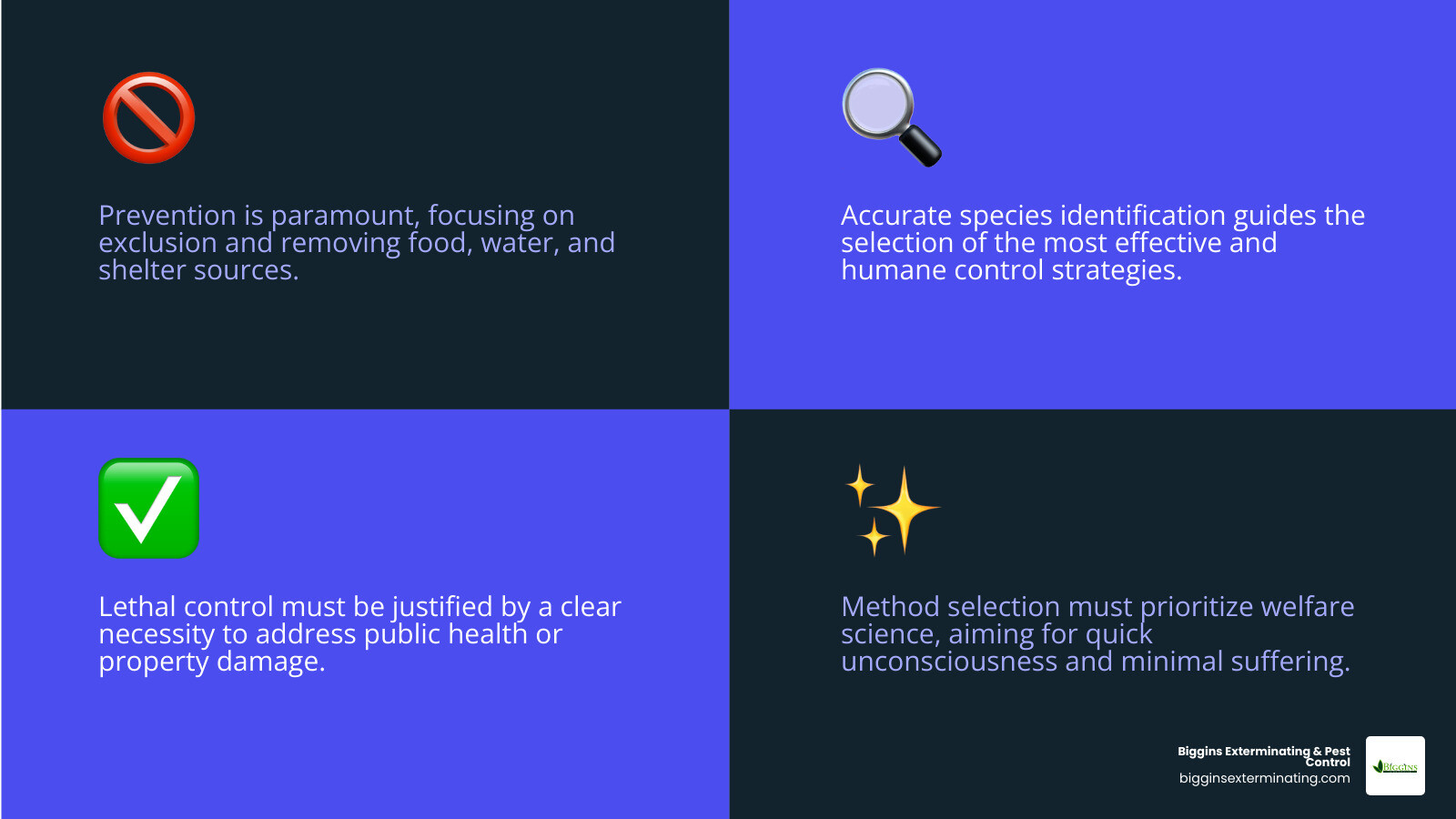
First Step: Identify Your Unwanted Guest
Before beginning humane rat extermination, you must first identify your unwanted guest. Knowing the specific rodent species is key to choosing the most effective and humane approach.
Look for the Evidence
Rodents are secretive but leave clear clues. Droppings are a primary sign; rat droppings are about half an inch long and tapered, while mouse droppings are much smaller, like a grain of rice. Gnaw marks are another giveaway. Rats create holes up to 2 inches wide on baseboards or wiring, while mice leave smaller marks. Also, look for greasy smudge marks along walls from their fur and nests made of shredded materials in hidden corners.
Listen for Clues
At night, listen for scratching noises in walls or attics. A persistent musky, ammonia-like odor can also indicate a large infestation. Pay attention if pets are fixated on a specific area, as they may sense rodents.
Why Species Matters for Humane Control
Identification is crucial for humane rat extermination because different species have different habits. For example, ground-dwelling Norway rats and acrobatic roof rats require different trap placements and baits. Getting the ID right ensures you use the most appropriate methods from the start.
For more detailed guidance on spotting these common invaders, check out our comprehensive guide on How to Identify and Prevent Rodent Infestations in Massachusetts.
| Characteristic | Norway Rat (Brown Rat) | Roof Rat (Black Rat) | House Mouse |
|---|---|---|---|
| Size | Large (21-29 cm body) | Medium (15-24 cm body) | Small (7-10 cm body) |
| Ears | Small, covered by fur | Large, prominent, hairless | Relatively large |
| Tail | Shorter than head and body | Longer than head and body | Longer than head and body |
| Droppings | 10-20mm, tapered, dark brown | 10-15mm, spindle-shaped | 3-8mm, black, granular |
| Habitat | Burrows, ground-level | High places (attics, trees) | Nests anywhere indoors |
Getting the identification right from the start saves time and ensures you’re using the most appropriate humane methods for your specific situation.
Prevention: The Foundation of Humane Rodent Control
The most humane rat extermination method is prevention. By making your property unwelcoming, you encourage rodents to live elsewhere. This is not only kinder but also more effective and affordable long-term than eliminating an established colony. The key is to remove their three basic needs: food, water, and shelter.
Removing Attractants
To make your home less appealing, start by securing all food sources. Store pet food, birdseed, and pantry items in airtight containers made of metal, glass, or heavy-duty plastic. Clean up kitchen crumbs and spills immediately, and promptly pick up fallen fruit outdoors.
Next, eliminate water sources by fixing leaky pipes and faucets and emptying any standing water.
Finally, remove shelter by keeping firewood on raised platforms away from your house and clearing away debris piles where rats could hide.
Structural Changes: Exclusion Methods
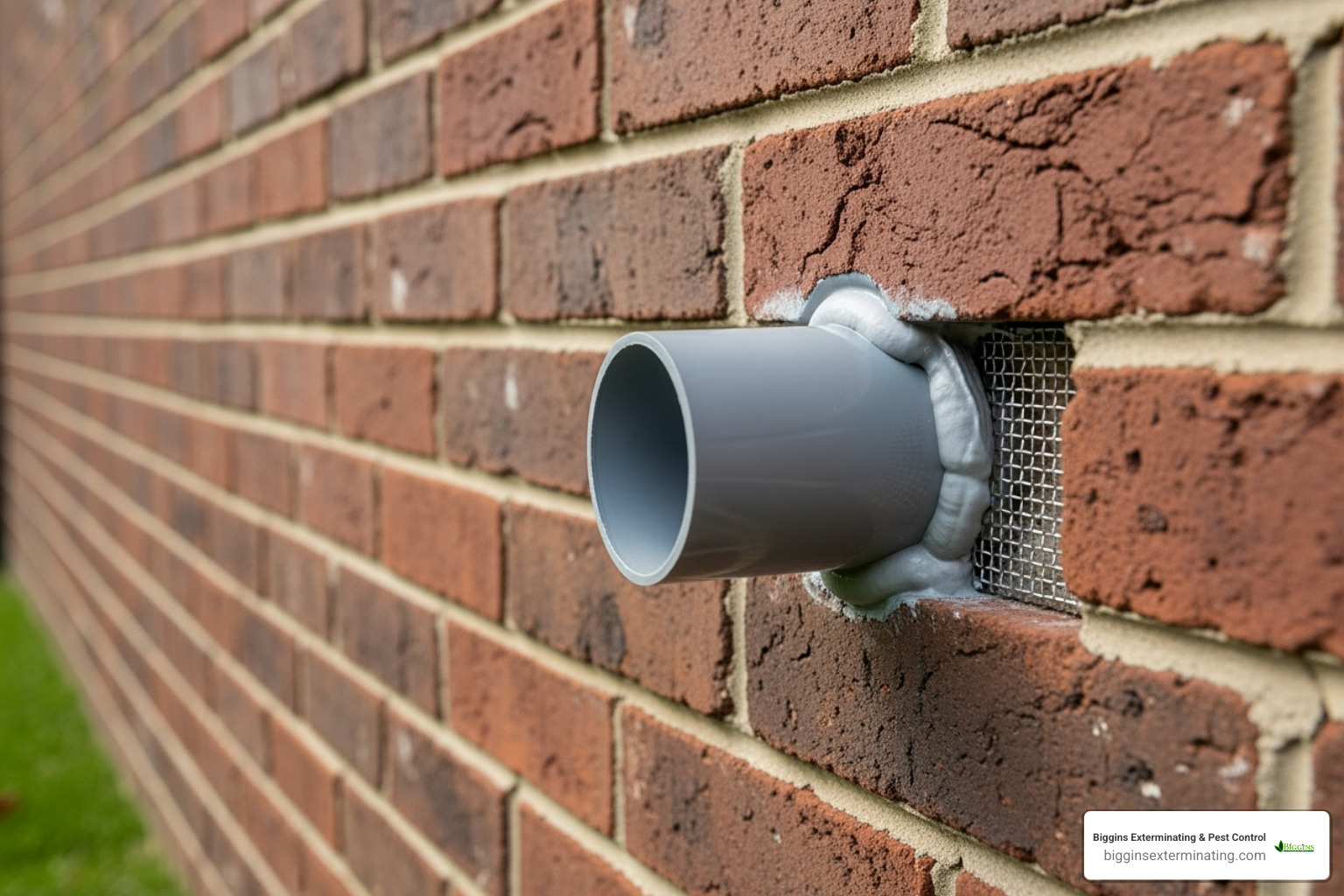
Rats can squeeze through quarter-sized holes, and mice through gaps as small as a pencil eraser. Sealing entry points is therefore critical. Inspect your home’s foundation, walls, and roofline for any gaps where utilities enter.
Use rodent-proof materials like steel wool, copper mesh, and hardware cloth to seal these openings, as rats cannot chew through them. For a complete seal, finish with caulk. Also, ensure windows have intact screens and install metal door sweeps to block gaps under doors.
This preventative approach is the gold standard of humane rat extermination, as it can eliminate the need for lethal methods entirely.
For more detailed guidance on seasonal prevention strategies, especially as colder weather drives rodents indoors, check out our comprehensive guide: Winter Mouse Prevention 101: Expert Tips from Exterminators.
A Guide to Humane Rat Extermination Methods
When prevention fails and lethal control is necessary, the goal is to use methods that cause a quick death with minimal suffering, leading to irreversible unconsciousness as rapidly as possible. As outlined in the Guiding Principles for the Humane Control of Rats and Mice, no method is truly humane, only less inhumane.
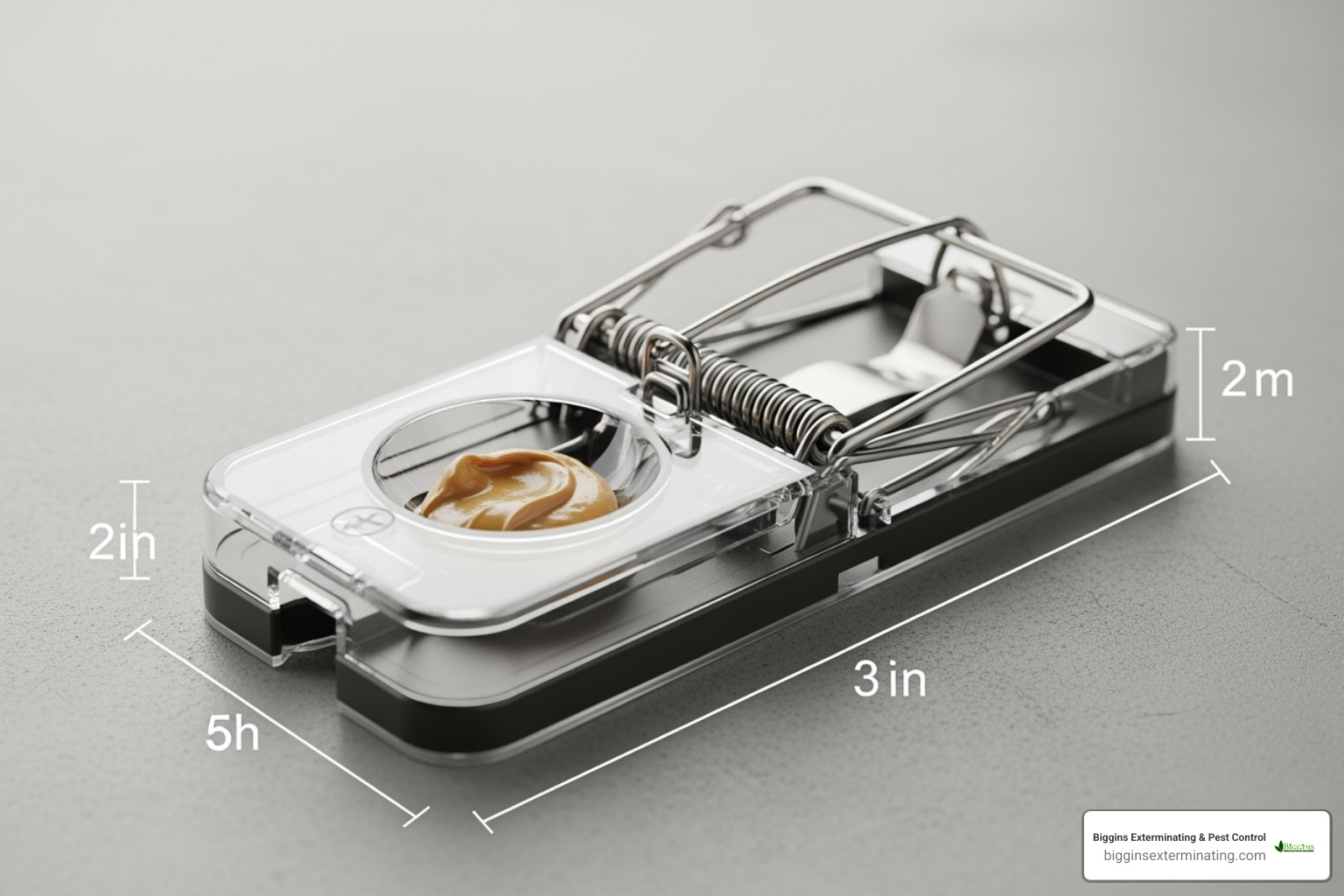
High-Welfare Snap Traps
High-quality snap traps are widely considered the most humane lethal option. These modern traps are engineered to deliver a rapid, fatal blow, ensuring quick unconsciousness. The advantages are clear: they provide a quick kill, don’t introduce poisons into the environment, and offer visible results. However, their disadvantages include wide performance variation between brands and the potential for non-lethal injury if used incorrectly.
For a humane outcome, choose a high-welfare design with a powerful spring and a strike bar that targets the head. Correct placement and use are critical. Place traps perpendicular to walls on known rodent pathways. Use a small amount of fresh bait like peanut butter, and wear gloves to avoid leaving your scent. Most importantly, check traps frequently (at least every 12 hours) to ensure any captured animal is disposed of quickly and to prevent prolonged suffering. For more detailed guidance on effective trapping methods, check out our Pest Control for Mice Guide 2025.
The Complexities of Live Trapping
Live traps seem compassionate, but the reality is more complex and often less humane. The stress, fear, and potential for injury, dehydration, or exposure inside the trap can cause significant suffering.
Relocation issues are the biggest challenge. Relocated rodents have very low survival rates in unfamiliar territory and may be attacked by established populations. Furthermore, legal restrictions in many areas, such as the Wildlife and Countryside Act 1981, prohibit the release of captured wildlife.
If you use a live trap, you must check it every 12 hours and be prepared to perform humane dispatch, typically a strong, accurate concussive blow to the head. Drowning is inhumane and illegal.
Other Lethal Options
Newer technologies offer alternatives to traditional snap traps.
Electrocution traps use a high-voltage shock to cause rapid death and must meet strict welfare standards.
Captive-bolt traps, like those from Goodnature, use a CO2-powered piston to deliver a fatal concussive blow. These devices reset automatically, making them suitable for situations requiring continuous control, but their higher cost often reserves them for professional use.
Methods to Avoid: Understanding Inhumane Practices and Their Risks
When you find rats in your home, the urgency to eliminate them can lead to some hasty decisions. I’ve seen homeowners grab whatever’s available at the hardware store, often choosing methods that seem effective but actually cause tremendous suffering. After four decades in pest control, I can tell you that some commonly available options should never be your first choice – or frankly, any choice at all.
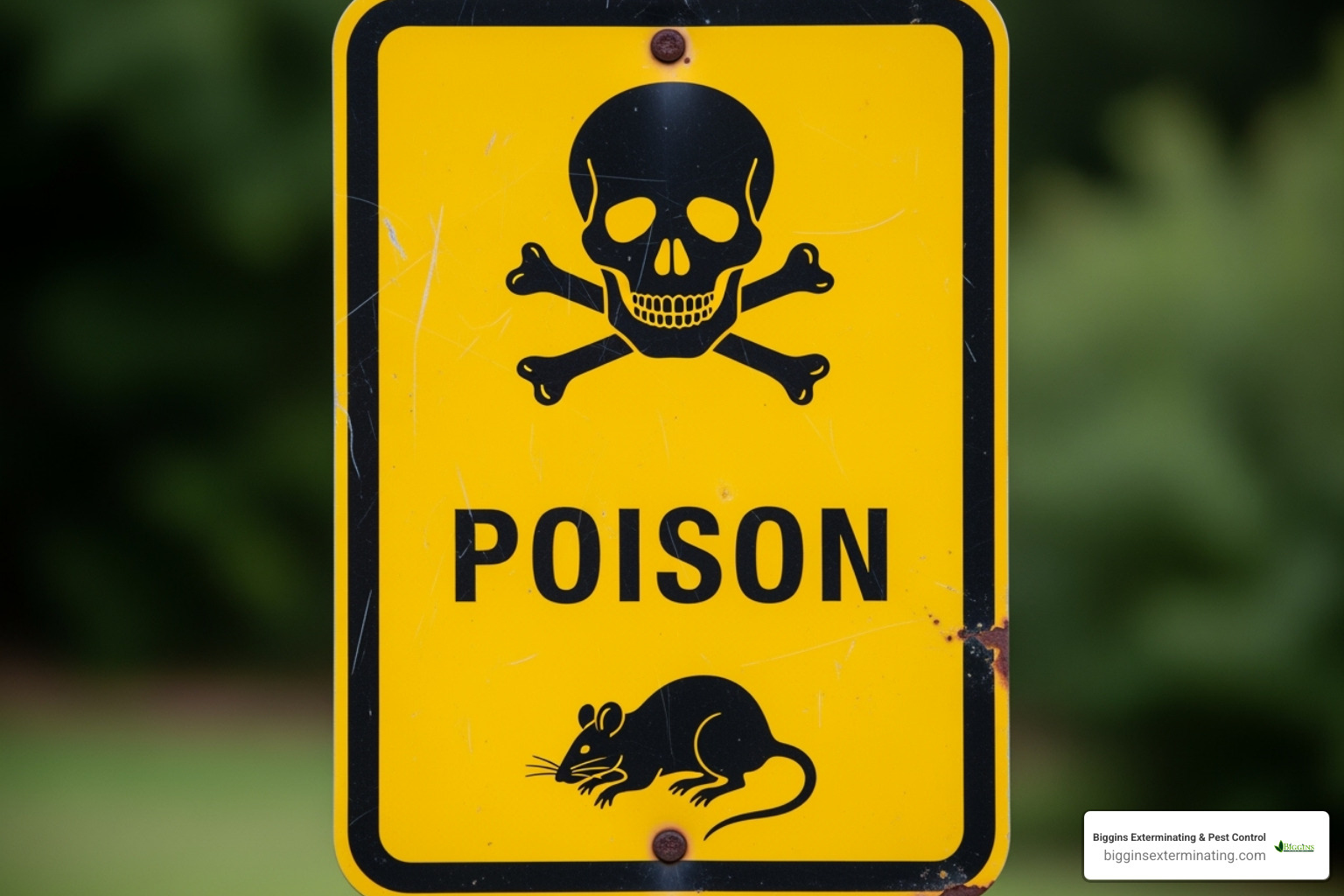
Understanding why certain methods fall short of humane rat extermination standards isn’t just about animal welfare – it’s about making informed choices that protect your family, pets, and local wildlife. The methods we’re about to discuss either cause prolonged suffering or create serious risks that extend far beyond the target rodent.
Before we dive into these problematic approaches, it’s worth noting that rodents do pose genuine health and safety risks to your home. For a comprehensive overview of why effective control matters, please read our article on the Top 5 Dangers of Rodents in and Around Your Home or Business.
The Reality of Rodenticides and Humane Rat Extermination
Rodenticides, especially anticoagulant poisons, are a common but cruel choice. They work by preventing blood clotting, leading to a slow, agonizing death from internal bleeding that can last for days. The animal experiences severe pain and distress while remaining conscious. This is the opposite of humane control.
The danger extends beyond the target rat. Secondary poisoning occurs when a predator like an owl, hawk, or fox—or a family pet—eats a poisoned rodent. Studies show that a high percentage of predatory birds are contaminated with these poisons.
Other poison types, like cholecalciferol (a Vitamin D overdose) and cellulose pellets, also cause prolonged suffering and organ failure over several days. For these reasons, and based on evidence from Research on rodenticide welfare impacts, poisons are not a humane option.
Why Glue Traps Cause Unacceptable Suffering
If rodenticides represent a slow path to suffering, glue traps might be even worse. I’ll be direct: glue traps have no place in humane rat extermination. The RSPCA explicitly opposes their use, and after seeing their effects firsthand, I understand why.
When an animal steps on the trap, it becomes stuck and endures hours or days of terror and frantic struggling. In their desperation, animals may chew off their own limbs to escape before eventually dying from exhaustion, dehydration, or starvation.
These traps are also indiscriminate, catching birds, lizards, and other non-target animals who suffer the same horrific fate. While some professional guidelines mention them as a last resort, the extreme cruelty they inflict makes them unacceptable for general use.
The bottom line is simple: if your goal is humane rat extermination, these methods should never be on your consideration list. The temporary convenience they seem to offer comes at a cost that extends far beyond the target animal, affecting your family’s safety, your pets’ health, and your local wildlife population.
When to Call a Professional for Humane Rat Extermination
Sometimes, despite your best prevention efforts, a rat problem persists or grows too large to handle. If you’re seeing rodents during the day, finding droppings frequently, or your DIY methods are failing, it’s time to call for professional help.
Large infestations and the public health risks they pose—such as Hantavirus and Salmonella—require the expertise and equipment of a trained technician.
For smaller infestations, you might wonder if professional help is necessary. Our guide Should I Call an Exterminator If I See a Mouse? can help you make that decision.
The Professional Approach to Humane Rat Extermination
At Biggins Exterminating, we practice humane rat extermination by combining over 40 years of experience with a commitment to ethical methods. Our CEPA-certified technicians follow an Integrated Pest Management (IPM) approach.
The process begins with a thorough inspection to identify the rodent species and all potential entry points. Based on this, we provide sanitation advice to remove attractants and perform professional structural exclusion to permanently seal your home. We use professional-grade materials and can install one-way doors that let rats out but not back in.
When lethal control is necessary, we use high-welfare snap traps placed strategically for a quick, humane kill. We ensure the problem is solved with regular monitoring, follow-up visits, and guaranteed results, all while adhering to our legal responsibilities under animal welfare legislation.
For expert humane rat extermination that combines decades of experience with ethical responsibility, contact our Rat Experts Near Me team at Biggins Exterminating.
Frequently Asked Questions about Humane Rat Control
Homeowners often have questions about what truly works for humane rat extermination. With four decades of experience, I can provide some honest answers to the most common concerns.
Is it possible to get rid of rats without killing them?
Yes, but it requires a dedicated effort. The most effective non-lethal approach is thorough prevention and exclusion: sealing every entry point and removing all access to food and water. Professional exclusion services can install one-way doors, allowing rats to leave but not re-enter.
However, once a large colony is established, non-lethal removal is very challenging. Live trapping and relocation often lead to a low survival rate for the animal and may be illegal. The most humane strategy often combines aggressive prevention with the least inhumane lethal methods when required.
Are natural repellents like peppermint oil effective?
While many people hope natural repellents like peppermint oil are a gentle solution, their effectiveness is limited. Rats can quickly grow accustomed to strong scents or simply find a way around them.
These repellents are not a reliable standalone solution for an existing infestation and work best only as a minor, additional layer in a comprehensive prevention strategy that includes sanitation and exclusion.
How do I know if a rat trap is truly humane?
A humane trap is one that causes immediate, irreversible unconsciousness. The goal is to eliminate suffering. Look for high-welfare snap traps with a powerful spring mechanism and a strike bar designed to deliver a swift, fatal blow to the head.
The trap must also be sized correctly for the target species – a rat trap for a rat. Rely on traps that have undergone scientific assessment for their welfare performance, not just marketing claims. Even the best trap is only humane if placed correctly and checked frequently (at least every 12 hours).
No lethal method is perfectly humane – we can only choose the least inhumane options when prevention fails. That’s why at Biggins Exterminating, we always start with exclusion and only move to lethal control when absolutely necessary.
Conclusion
Dealing with unwanted rodent guests in your home doesn’t have to involve choosing between effectiveness and compassion. Throughout this guide, we’ve explored how humane rat extermination starts with a simple truth: the kindest approach is often the most practical one.
Prevention truly is your best friend here. By removing food sources, eliminating water access, and sealing those sneaky entry points with steel wool and hardware cloth, you’re not just being humane – you’re being smart. It’s much easier to keep rats out than to deal with them once they’ve decided your attic makes a perfect nursery.
When prevention isn’t enough and lethal control becomes necessary, the choice of method matters enormously. High-welfare snap traps, designed for quick and decisive results, represent our best balance between effectiveness and ethical responsibility. Meanwhile, avoiding cruel methods like glue traps and understanding the serious welfare concerns with rodenticides protects not just the target animals, but also the wildlife, pets, and family members we care about.
The Integrated Pest Management approach we use at Biggins Exterminating isn’t just industry jargon – it’s a philosophy that puts prevention first, identifies problems accurately, and chooses the most appropriate solutions. After four decades of helping families throughout Wilmington, Woburn, Lexington, and surrounding Massachusetts communities, we’ve learned that the most successful pest control combines scientific knowledge with genuine care for animal welfare.
Sometimes the kindest thing we can do is recognize when a problem is beyond our DIY capabilities. Large infestations, recurring problems, or situations involving public health risks deserve professional attention. We believe in transparency about our methods, education about prevention, and delivering results that last – all without locking you into long-term contracts.
Your home should be a sanctuary for your family, not a battleground with rodents. For a comprehensive and ethical solution to your rodent problems, explore our professional Rats Pest Control services. Let us help you reclaim your peace of mind using methods that are both effective and humane.