
The Hidden Danger of Yellow Jackets Nesting in Your Bushes
Bush yellow jacket extermination is something every Massachusetts homeowner should take seriously — especially when a nest appears in a shrub near your front door.
Here’s a quick overview of what to do:
- Do not disturb the nest — yellow jackets release alarm pheromones that trigger swarming attacks
- Identify the nest location by watching flight patterns from a safe distance
- Treat at dusk or dawn when yellow jackets are least active and temperatures are cooler
- Use a pyrethroid aerosol or insecticide dust directed at the nest entrance
- Call a professional if the colony is large, the nest is hard to reach, or anyone nearby is allergic to stings
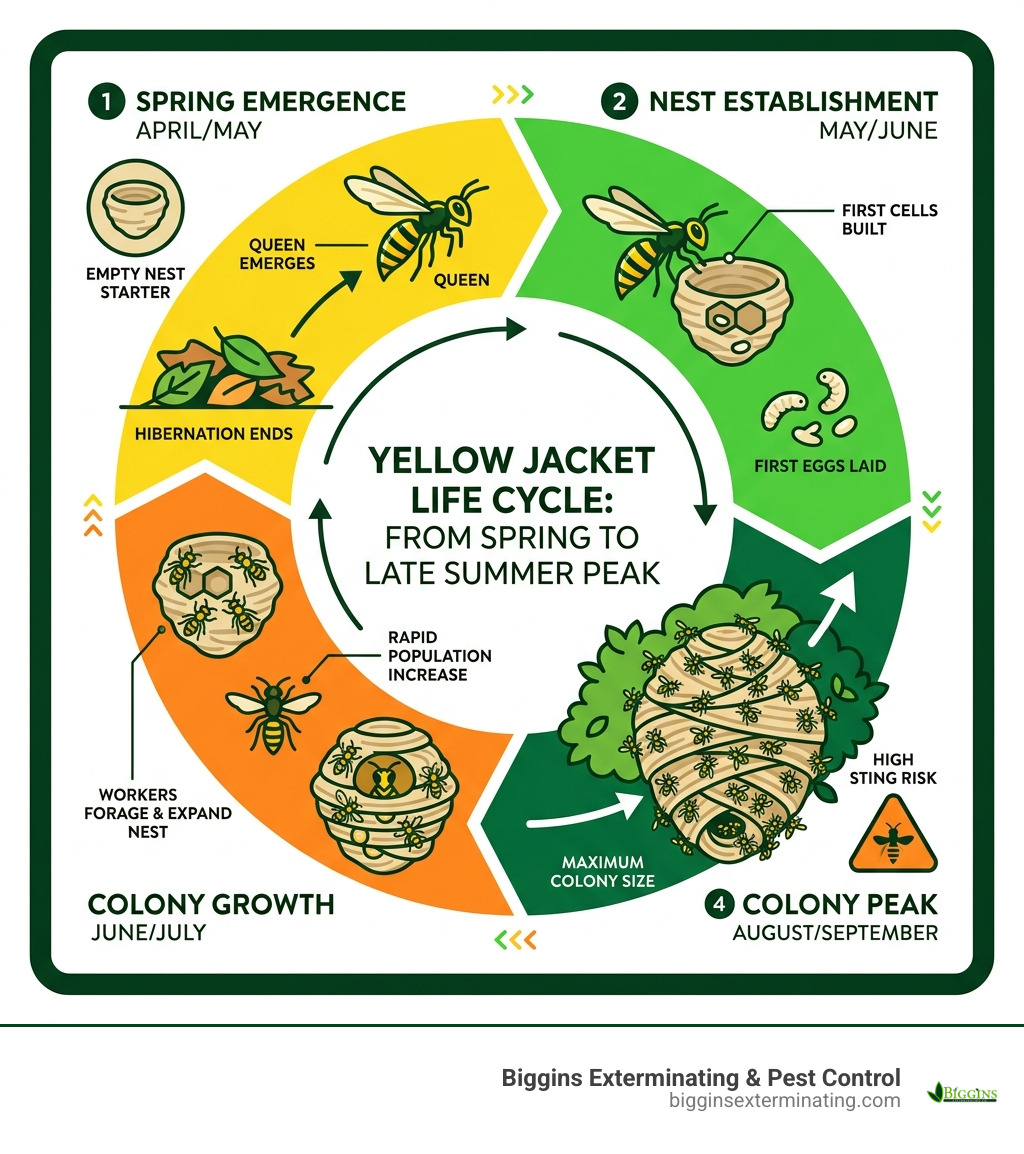
Yellow jackets are not bees. They’re aggressive wasps that can sting multiple times and fly at speeds of up to 30 mph when provoked. A single colony inside a backyard shrub can grow to contain 4,000 to 5,000 workers by late summer — and a nest near a front door puts your whole household at risk every time someone walks in or out.
What makes bush nests especially tricky is that the dense foliage hides them until the colony is already well established. By the time you notice the buzzing, you could be dealing with hundreds — or thousands — of stinging insects just feet from your home.
I’m Stephen Biggins, owner of Biggins Exterminating Co., and with over 40 years of hands-on experience in bush yellow jacket extermination across Wilmington, MA and surrounding communities, I’ve seen how quickly these situations can escalate. Read on for everything you need to know to handle this safely and effectively.
Identifying Yellow Jacket Nests in Residential Landscaping
Identifying a nest before you accidentally prune it or run a lawnmower past it is the first step in staying safe. In April 2026, as the weather warms up in towns like Andover and Billerica, queen yellow jackets are busy scouting for new homes. While most people think of yellow jackets as ground-nesters, certain species (specifically those in the Dolichovespula and Vespula genera) frequently choose the dense, protected environment of a boxwood, yew, or arborvitae.
Visual and Auditory Signs
Unlike the open, umbrella-shaped nests of paper wasps, yellow jackets build enclosed, paper-like nests. These structures are created from chewed wood fibers mixed with their saliva, resulting in a grayish-brown, basketball-sized orb.
To find a nest in a bush, look for:
- Flight Patterns: Watch for “air traffic.” Yellow jackets have a very distinct flight path, often moving side-to-side before entering a specific point in the foliage.
- Buzzing Sounds: If you hear a low, constant hum coming from a shrub, back away immediately. A large colony can produce a noticeable vibration.
- Chewed Leaves: You might notice small sections of leaves or bark being stripped away as they gather nesting material.
The Front Door Risk
Nests located in bushes near entryways are particularly hazardous. Yellow jackets are highly territorial and sensitive to vibrations. The simple act of closing a front door or walking across a porch can be enough to trigger a defensive response. Because they release an alarm pheromone when they feel threatened, one sting can quickly turn into a swarm. For more information on identifying these pests, check out our high-quality hornet and wasp removal resources.
Professional Bush Yellow Jacket Extermination Methods
When we arrive at a home in Burlington or Woburn for bush yellow jacket extermination, we don’t just start spraying. We use a strategic approach to ensure the entire colony, including the queen, is eliminated.

Our professional toolkit includes:
- Aerosol Pyrethroids: These provide a quick “knockdown” effect, essential for stopping aggressive guards.
- Insecticide Dusts: Products like Delta Dust are highly effective because they don’t kill instantly. Returning foragers walk through the dust and carry it deep into the nest, eventually reaching the queen.
- Residual Foams: These expand to fill the cavities within the nest, ensuring every chamber is treated.
For a deeper dive into these strategies, see our Yellow Jacket Extermination Complete Guide. You can also find proven methods that work for long-term control.
Why DIY Bush Yellow Jacket Extermination is Risky
We often get calls from homeowners in Lexington or North Reading who tried the “can-at-the-end-of-a-stick” method and ended up in the emergency room. Here is why DIY is dangerous:
- The 30 MPH Factor: You cannot outrun a yellow jacket. They are faster than they look and will pursue a threat for long distances.
- Protective Gear Gaps: Standard clothing is no match for their stingers. Professionals wear specialized suits with veils and sealed joints.
- Ineffective Coverage: Store-bought sprays often only hit the outer layer of the nest, leaving thousands of angry wasps inside ready to counterattack.
- Anaphylaxis: Even if you’ve never been allergic before, multiple stings can trigger a sudden, life-threatening reaction.
Steps for Effective Bush Yellow Jacket Extermination
If you are watching a professional work, or if you are dealing with a very small, early-season nest, the process follows these steps:
- Locate all entrances: Many bush nests have a primary hole and a secondary “emergency” exit.
- Establish a perimeter: Ensure pets and children are indoors and neighbors are notified.
- Direct Injection: Using an extension pole or specialized nozzle, the insecticide is injected directly into the heart of the nest.
- Entrance Saturation: The surrounding foliage is treated to catch any wasps returning from foraging.
- Monitoring: We wait 24 to 48 hours to ensure all activity has ceased before physically removing the nest.
Safety Protocols and Optimal Timing for Treatment
Timing is everything in pest control. If you try to treat a nest in the middle of a sunny Tuesday afternoon, half the colony is out foraging and will return to find you attacking their home.
The Golden Rule: Dawn or Dusk
The best time for bush yellow jacket extermination is when the sun is down.
- Low Activity: Yellow jackets are diurnal, meaning they are active during the day. At night, the entire colony is tucked inside the nest.
- Cooler Temperatures: When temperatures drop toward 50 degrees Fahrenheit, yellow jackets become sluggish. Their metabolic rate slows down, making them less likely to fly or attack.
- Visibility: While it’s harder for you to see, it’s also harder for them to target you.
| Time of Day | Activity Level | Risk Level | Recommendation |
|---|---|---|---|
| Midday | High | Extreme | Avoid the area |
| Afternoon | Peak | Extreme | Do not disturb |
| Dusk | Low | Moderate | Best for treatment |
| Night | Minimal | Low | Safe for inspection |
| Dawn | Low | Moderate | Good for follow-up |
Essential Protective Gear
If you must be near a nest, you need more than just a sweatshirt. A professional setup includes:
- A heavy-duty protective suit (wasp-proof).
- A mesh veil that is kept away from the face (wasps will spit venom through the mesh).
- Sting-resistant gloves tucked into sleeves.
- Boots with pants tucked into socks.
- A Clear Escape Route: Always know exactly where you will run if the situation goes south.
Average Costs for Professional Removal in Massachusetts
We believe in transparency. While we can’t give an exact quote without seeing the nest, we can provide average costs based on internet data for the Massachusetts region in 2026. That these are estimates; a nest 20 feet up in a tree or buried deep in a thorny hedge will cost more than a small nest on a low-hanging branch.
Regional Pricing Estimates for 2026
- Small/Accessible Nests: $250 – $750. This usually covers a single, easily reached nest in a standard shrub or under an eave.
- Medium/Complex Removals: $600 – $1,800. This applies to larger colonies, nests in dense or thorny bushes, or those requiring ladders.
- Full Property Management: $1,500 – $3,000+. For properties in towns like Tewksbury or Wilmington with multiple nests or recurring infestations, a comprehensive management plan is often the best value.
For more details on what goes into these numbers, visit our Yellow Jacket Exterminator Cost page.
Factors That Influence Cost
- Accessibility: Is the nest in a manicured boxwood or a 10-foot-tall overgrown hedge?
- Size: A “volleyball” nest has significantly more members than a “softball” nest.
- Location: Nests near high-traffic areas (like a front door) require more careful setup and safety precautions.
- Emergency Service: Same-day or after-hours removals typically carry a premium.
Frequently Asked Questions about Bush Yellow Jackets
What attracts yellow jackets to the bushes near my front door?
Yellow jackets are looking for three things: food, water, and shelter. In the spring, they want protein (like the spiders and caterpillars living in your bushes). In the late summer, they crave sugar (like the nectar from flowering shrubs or the soda can you left on the porch). Dense bushes provide the perfect “attic” for their nests—dry, hidden from predators, and close to your trash cans.
Can yellow jackets rebuild a nest in the same bush after treatment?
They don’t usually “rebuild” the exact same nest, but they are highly attracted to pheromones. If a nest is destroyed but the area isn’t cleaned, a new queen might find the lingering scent and decide it’s a proven, safe spot to start her own colony next year. We recommend removing the physical nest and treating the area with a residual spray to prevent this.
What should I do if I am stung during a bush yellow jacket extermination attempt?
If you are stung, leave the area immediately. The sting releases a pheromone that tells every other wasp in the nest to attack you.
- Clean the site: Use soap and water to remove any leftover venom or pheromones.
- Cold Compress: Apply ice to reduce swelling.
- Antihistamines: Over-the-counter meds can help with the itching and localized swelling.
- Seek Emergency Care: If you experience difficulty breathing, swelling of the throat, or dizziness, call 911 immediately.
Conclusion
At Biggins Exterminating & Pest Control, we’ve spent four decades protecting families in Wilmington, Woburn, Burlington, Lexington, Billerica, Bedford, Tewksbury, North Reading, and Andover. We are a family-owned, local business that understands the specific pests our Massachusetts neighbors face.
We don’t believe in locking you into long-term contracts. We believe in high-quality work, backed by a warranty and a 40-year reputation for excellence. Whether you’re dealing with a massive nest in your front-yard shrubs or wasps under your eaves, we have the tools and experience to handle your bush yellow jacket extermination safely.
Don’t risk a trip to the hospital. Let the experts handle the stingers. Contact us today for our professional bee and wasp removal services and reclaim your yard. Your satisfaction is guaranteed!
