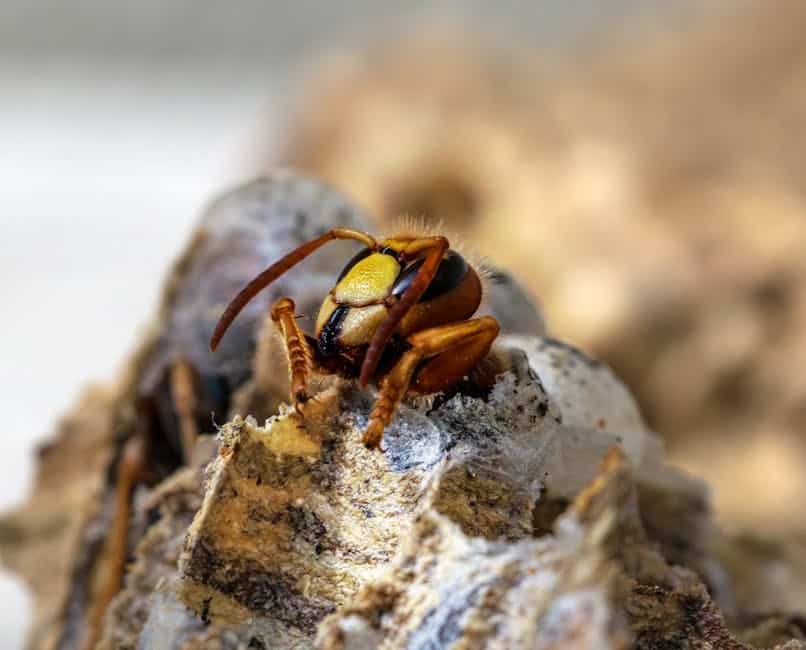
What You Need to Know About Bald-Faced Hornet Nest Removal
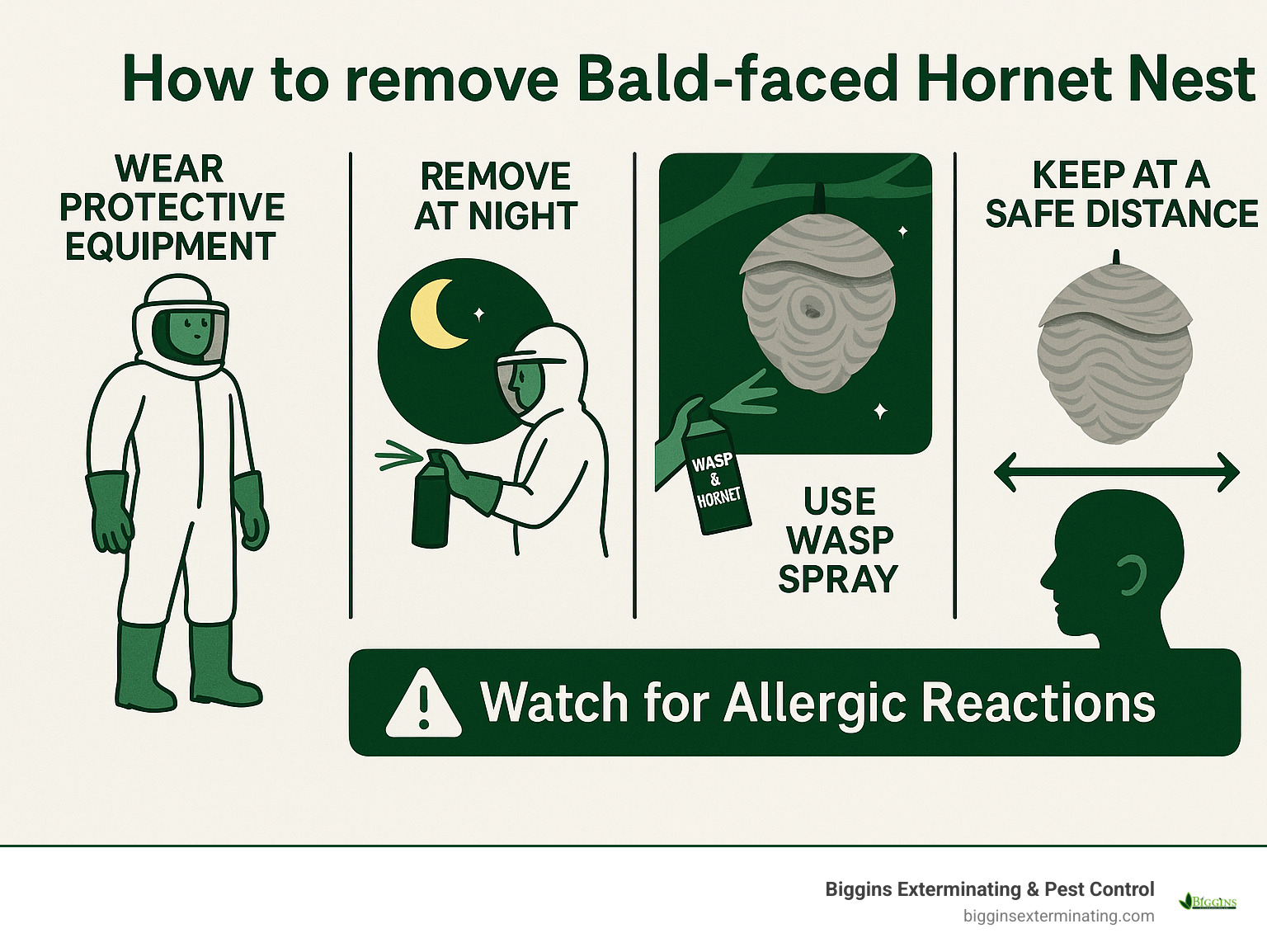
How to remove a bald faced hornet nest safely requires careful planning and proper precautions. For those who need immediate guidance, here’s a quick overview:
Quick Guide to Bald-Faced Hornet Nest Removal:
1. Wait until nighttime when hornets are less active
2. Wear protective gear (bee suit, veil, gloves, closed shoes)
3. Use a wasp/hornet spray with long-range capabilities
4. Spray directly into nest entrance
5. Retreat quickly and avoid shining bright lights
6. Remove the nest after 24-48 hours when activity has ceased
7. If allergic or the nest is in a difficult location, call professionals
Bald-faced hornets are among the most aggressive stinging insects you might encounter on your property. These large black and white hornets build distinctive paper-like nests that hang from trees, bushes, or building eaves. While they do provide some benefit by controlling other insect populations, their defensive nature makes them a significant safety concern for families and pets.
These hornets don’t need much provocation to attack, and their painful stings can cause severe allergic reactions in sensitive individuals. A single nest can house hundreds of hornets, making DIY removal potentially dangerous without proper knowledge and equipment.
As Stephen Biggins, owner of Biggins Exterminating Co., I’ve safely removed countless bald-faced hornet nests throughout Wilmington and surrounding areas since 1982, developing effective techniques for how to remove a bald faced hornet nest while minimizing risks to our customers and their properties.
Important how to remove bald faced hornet nest terms:
– average cost to remove hornets nest
– can i remove a wasps nest in winter
– remove wasp nest from soffit
How to Remove Bald-Faced Hornet Nest
Let’s face it – dealing with a bald-faced hornet nest isn’t anyone’s idea of a fun Saturday afternoon. These ornery insects don’t take kindly to visitors, and they’re quick to let you know it! After 40+ years of removing these nests across Wilmington and Middlesex County, we at Biggins have learned that safety isn’t just important—it’s everything when tackling how to remove a bald faced hornet nest.
Protective Gear Essentials
Think of protective gear as your armor in this particular battle. Skimping here is never worth the risk of multiple painful stings!
You’ll need a proper full bee veil and hat to shield your face and neck—these are the spots hornets tend to target first and where stings hurt the most. Pair this with a thick protective suit that covers your entire body. Those paper-thin suits might look similar, but trust me, angry hornets can sting right through flimsy material!
Don’t forget heavy-duty gloves to protect your hands and wrists. I’ve seen folks use regular gardening gloves and regret it immediately. Complete your outfit with boots and thick socks, and use duct tape to seal any gaps between your gloves and sleeves or boots and pant legs. These crafty insects can find the tiniest openings!
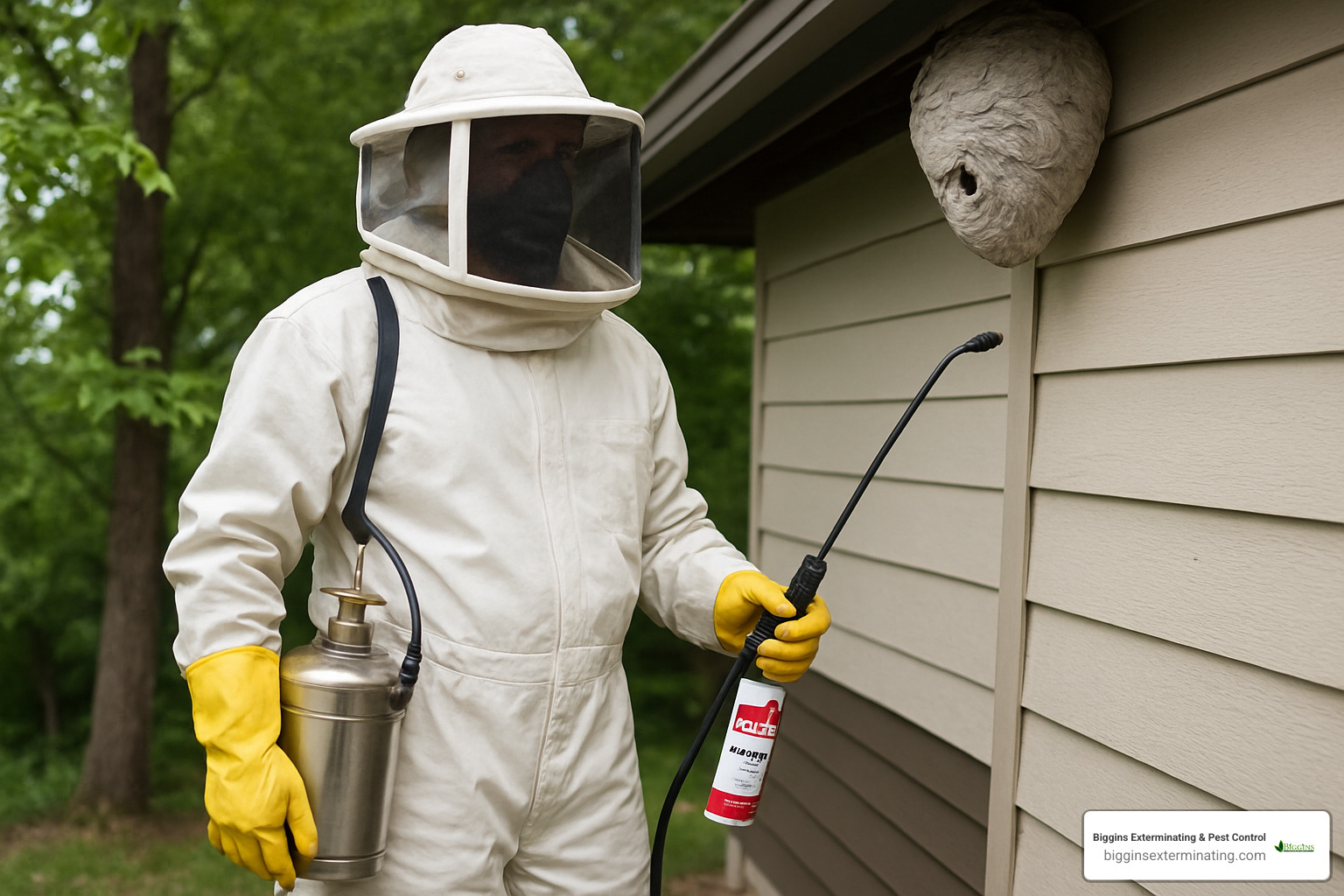
I can’t stress this enough: if you’re allergic to hornet stings, please don’t attempt this yourself. No amount of protective gear provides 100% guaranteed protection, and it’s simply not worth the risk. Our team is always ready to handle these situations safely.
Nighttime Removal Strategy
Timing can make all the difference between a smooth removal and a painful experience. Hornets are like most of us—they prefer to stay home at night!
Wait until after dark when most hornets have returned to the nest and are less active. Bring a red-filtered flashlight if possible—hornets don’t see red light as well as white light, making you less noticeable to them. Before you begin, identify your escape route so you can move away quickly if needed.
Apply an aerosol wasp insecticide specifically designed for hornets with a long spray range (15-20 feet is ideal). Target the entrance at the bottom of the nest, saturating it thoroughly. Be quick but thorough with your application—this isn’t the time for hesitation or half measures!
After spraying, retreat immediately. Don’t stick around to admire your handiwork or check if it’s working. Trust the process and give the insecticide time to do its job.
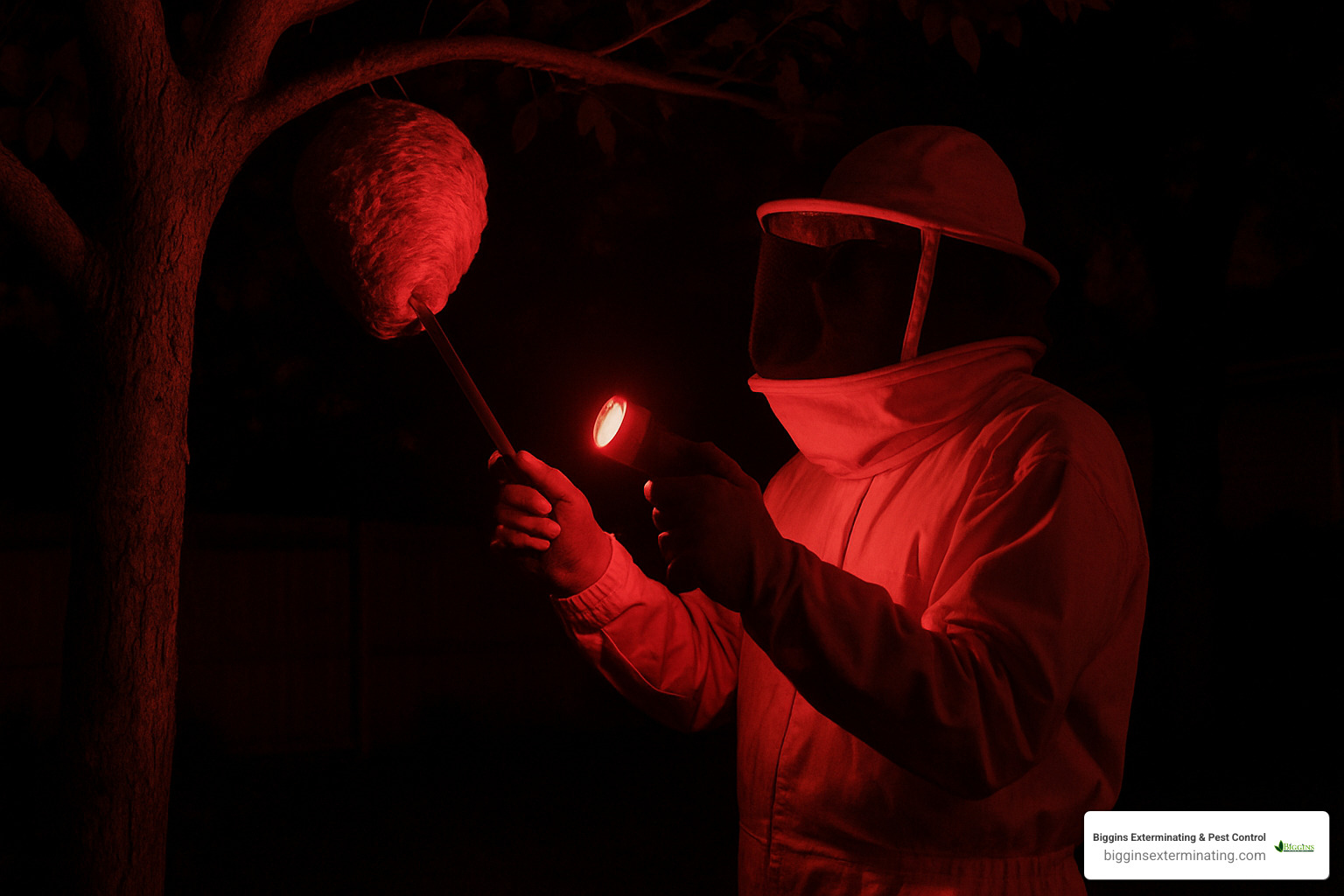
For those hard-to-reach nests, you’ll need either a sturdy ladder (never climb alone—always have someone spotting you) or a specialized bee pole that extends your reach while keeping you at a safer distance.
Wait a full 24-48 hours before removing the nest to ensure all hornets are eliminated. When it’s time for removal, turn a garbage bag inside out, carefully pull it over the nest, then detach the nest from its attachment point. This contains any remaining insects and makes disposal much cleaner.
There’s no shame in calling professionals like us at Biggins Exterminating if you’re uncomfortable with any part of this process. We’ve been safely removing hornet nests since 1982, and we’re just a phone call away!
Natural Methods for Hornet Nest Removal
Let’s face it – not everyone is comfortable using chemical insecticides around their home. As someone who’s been removing hornet nests for decades, I understand the desire for gentler solutions. While chemicals work fastest for established nests, these natural alternatives can be effective for smaller nests or as preventative measures.
Using Natural Deterrents
Mother Nature has provided some surprisingly effective tools for dealing with hornets – especially when catching problems early:
A simple peppermint oil mixture can work wonders for small nests. I’ve seen good results combining a few drops each of peppermint, clove, and geranium oils with water in a spray bottle. The strong scent disrupts the hornets’ navigation and communication.
Vinegar solutions are another household remedy worth trying. Equal parts white vinegar and water create an acidic environment hornets typically avoid. Apply during early evening when the buzzing slows down, but remember to keep your distance – even natural sprays can agitate hornets if they feel threatened.
For very small, newly-established nests, a dish soap solution (2 tablespoons in water) can be surprisingly effective. The soap breaks down the waxy coating on hornets’ bodies, making it difficult for them to stay dry and ultimately causing them to dehydrate.

Minimizing Nesting Habitats
In my 40+ years of pest control experience, I’ve learned that preventing hornets is infinitely easier than removing them. Here’s how to make your Wilmington home less appealing to these aggressive insects:
Regular property inspections should become a monthly habit during spring and summer. I always tell my customers to pay special attention to eaves, overhangs, and tree branches – favorite spots for bald-faced hornets to begin construction.
Keeping vegetation trimmed creates a less hospitable environment for nest-building. When branches touch your house, they essentially create highways for hornets to access your home.
Sealing potential entry points with tight-fitting screens on vents and repairing holes in siding eliminates convenient access to sheltered areas where hornets love to build.
Reducing food sources makes your property less attractive to hornets searching for sustenance. Keep those garbage cans tightly sealed and clean up fallen fruit promptly – what looks like garden waste to you looks like dinner to a hornet.
Even removing abandoned nests is important preventative maintenance. Old nests can attract new queens looking for nesting sites, so clearing them away (safely, after ensuring they’re truly abandoned) helps break the cycle.
While these natural methods can help with prevention and small nests, how to remove bald faced hornet nest safely often requires professional expertise for larger, established colonies. For more information about hornet behavior and biology, check out the Smithsonian’s insect information page. When in doubt, give us a call at Biggins Exterminating – we’ve been helping Middlesex County stay pest-free since 1982!
Professional Hornet Nest Removal Services
Let’s face it – sometimes DIY just isn’t the way to go, especially when dealing with aggressive insects like bald-faced hornets. As a homeowner, recognizing when to call in the pros is just as important as knowing how to remove a bald faced hornet nest yourself. Professional help becomes your safest bet when:
- The nest has grown to basketball size or larger
- You’re dealing with a hard-to-reach location (like high in a tree or under eaves)
- Someone in your household has allergies to insect stings
- You’ve already tried removal without success
- The nest is hidden inside walls or structural voids
At Biggins Exterminating & Pest Control, our technicians bring over four decades of experience to every hornet nest removal job throughout Wilmington, Andover, Bedford, and neighboring Massachusetts communities. We’ve seen it all – from massive nests in precarious locations to infestations that other methods couldn’t tackle. Our specialized equipment and time-tested techniques ensure we get the job done right the first time, with minimal risk to you and your family.
Average Cost of Professional Removal
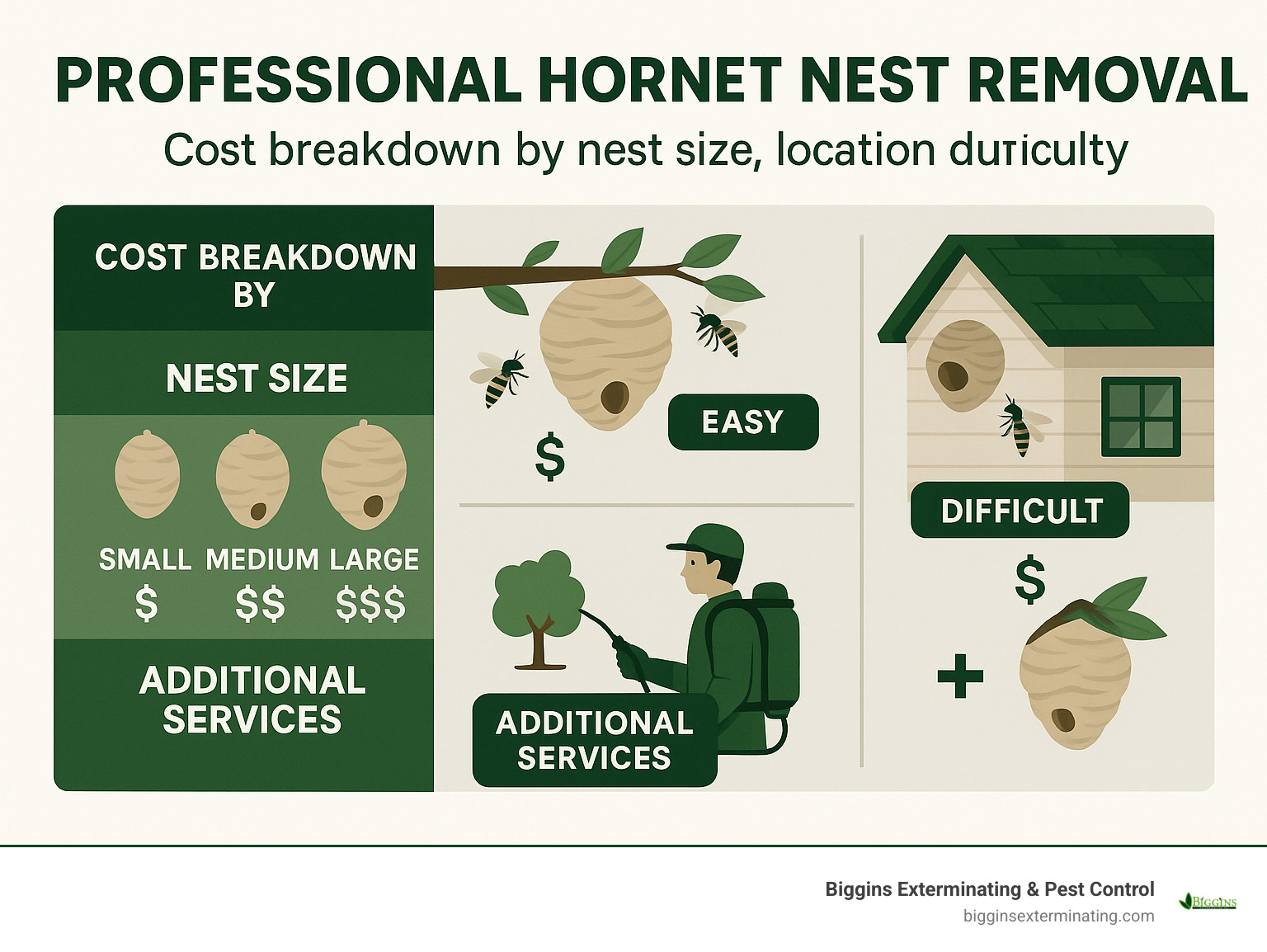
“How much is this going to set me back?” It’s probably the first question on your mind when considering professional help. The truth is, costs for bald faced hornet nest removal vary widely based on several key factors.
First, consider the nest’s size and location – that towering oak tree nest will typically cost more than one hanging from a low shrub. Multiple nests will naturally increase your total, and late-season removals often come with higher price tags since the nests have had time to grow enormous. Many homeowners also opt for preventative treatments to avoid a repeat performance next season.
Based on internet research, most homeowners pay between $300 and $700 for professional hornet nest removal, though the full range typically spans from $100 to $1,200. For particularly complex situations – like nests buried deep in structural voids or truly massive colonies – costs can climb to $1,500 to $2,500.
These figures represent industry averages based on online data, not Biggins Exterminating’s specific pricing. Every situation is unique, which is why we provide custom quotes custom to your specific circumstances. We’ve built our reputation on transparent pricing and flexibility – you won’t find us pushing long-term contracts when all you need is a one-time nest removal. For an accurate quote that addresses your particular hornet situation, just give our Wilmington office a call.
Frequently Asked Questions about Bald-Faced Hornets
Can Bald-Faced Hornets Kill You?
“Are these hornets really dangerous?” This is one of the most common questions we hear at Biggins. The truth is, while bald-faced hornet stings are certainly painful, fatalities are quite rare and typically only occur in two specific scenarios: severe allergic reactions or an overwhelming number of stings.
Unlike honeybees that lose their stinger after one use, bald-faced hornets can sting repeatedly during an attack, injecting venom each time. This venom contains proteins that cause intense pain, noticeable swelling, and redness around the sting site. For most healthy adults without allergies, a few stings—though unpleasant—won’t be life-threatening.
However, certain symptoms demand immediate medical attention. If you experience difficulty breathing, facial or throat swelling, a racing heartbeat, dizziness, confusion, or nausea after being stung, don’t wait—seek emergency care right away. These could indicate a serious allergic reaction that requires prompt treatment.
Should I Remove a Bald-Faced Hornet Nest Myself?
The DIY versus professional debate comes down to your specific situation. While how to remove bald faced hornet nest information is readily available, sometimes calling in the experts is the smarter choice.
Professional removal is strongly recommended if you have known allergies to insect stings (even mild ones), if the nest is larger than a basketball (indicating a mature colony), or if it’s in a hard-to-reach spot like high in a tree or under your eaves. Similarly, if the nest is tucked inside a wall cavity or structural void, professional equipment and expertise become essential.
Don’t have proper protective gear? That’s another reason to call us. Attempting removal with inadequate protection is simply not worth the risk.
On the flip side, DIY removal might be reasonable for small, newly established nests that are easily accessible. If you have proper protective equipment and some experience handling insect problems, you might feel comfortable tackling it yourself—provided no one in your household has allergies.
When in doubt, our team at Biggins Exterminating is always happy to help folks throughout Billerica, Burlington, Lexington, and all our service areas. We’d rather you stay safe than sorry!
What Happens to Hornet Nests in Winter?
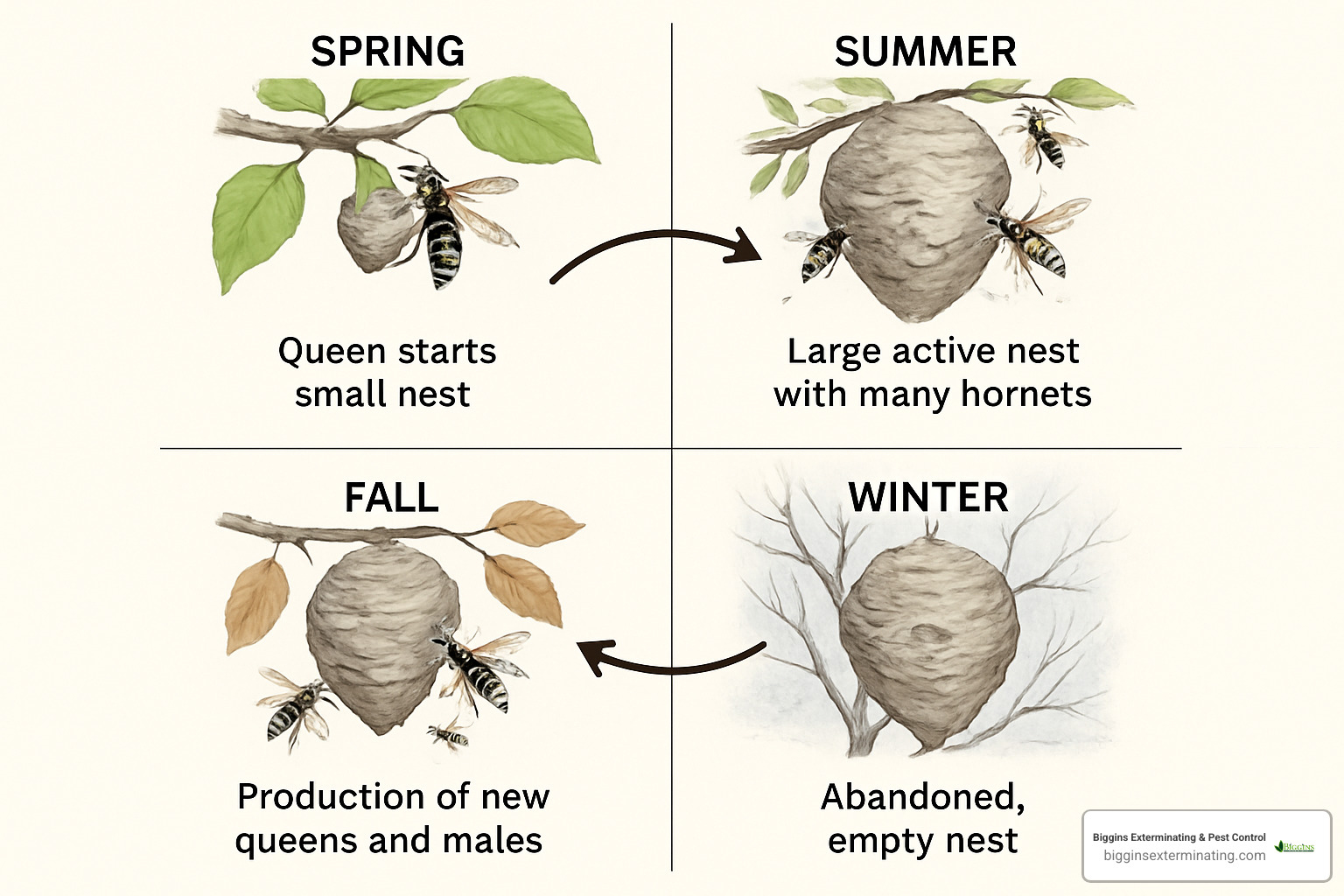
Nature has its own way of handling hornet populations through the seasons. Bald-faced hornet colonies operate on an annual lifecycle that’s fascinating to understand.
In spring, fertilized queens wake up from their winter hibernation and begin building small starter nests. By summer, these colonies are booming—the nest expands rapidly and worker numbers increase dramatically. Come fall, the colony’s focus shifts to producing new queens and males for mating.
Then winter arrives, bringing the colony’s natural end. The original queen, all the workers, and the males die off as temperatures drop. Only the newly fertilized queens survive by finding protected spots to hibernate until the following spring.
This natural cycle means that by late fall or early winter, most nests are already empty—the colony has completed its yearly mission. This timing makes winter an ideal, risk-free opportunity to remove abandoned nests from your property.
Is winter removal necessary? Not for safety reasons, since the nest is already abandoned. It’s primarily for aesthetics or to prevent new queens from potentially establishing nests nearby when spring returns. If left alone, the paper-like material of the nest will naturally decompose over time, becoming part of nature’s recycling program.
Conclusion
Dealing with bald-faced hornets isn’t a task to take lightly. These territorial insects demand our respect – and a healthy dose of caution. Whether you’ve decided to tackle that papery nest yourself or you’re wisely calling in reinforcements, understanding the risks and following proper procedures is absolutely essential to keep yourself and your loved ones safe.
Here at Biggins Exterminating & Pest Control, we’ve been the trusted neighborhood solution for residents throughout Wilmington, MA, and surrounding communities since 1982. As a family-owned business, we understand what matters most to homeowners – reliable service without the hassle of long-term contracts. That’s why we stand firmly behind our work with solid warranties and a simple promise: your satisfaction guaranteed.
How to remove a bald faced hornet nest safely is knowledge we’ve perfected over four decades of service. We’ve seen nests of all sizes in every imaginable location – from the straightforward to the downright tricky – and we’ve safely removed them all.
If you’re currently watching hornets buzz around your property in Andover, Bedford, Billerica, Burlington, Lexington, North Reading, Tewksbury, Wilmington, or Woburn, our experienced team is just a phone call away. We’ll not only safely eliminate your current hornet problem but also provide practical recommendations to help keep these aggressive insects from returning next season.
When it comes to stinging insects, especially ones as defensive as bald-faced hornets, safety should always trump DIY bravery. Those painful stings aren’t worth risking, particularly if you or a family member has sensitivity to insect venom. When in doubt, reach out to the professionals at Biggins Exterminating & Pest Control – we’ll help you reclaim your outdoor spaces with confidence and peace of mind.