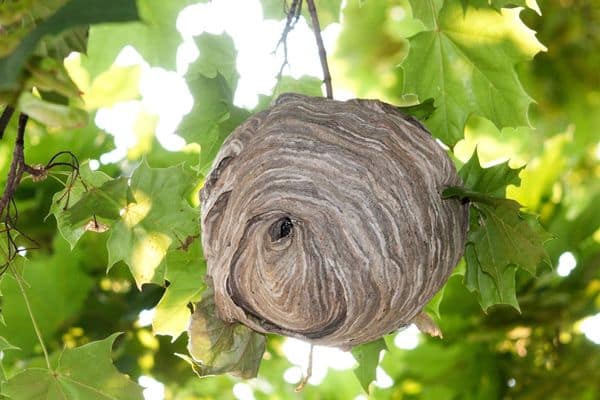
Understanding the Threat: Hornets Nests on Your Property
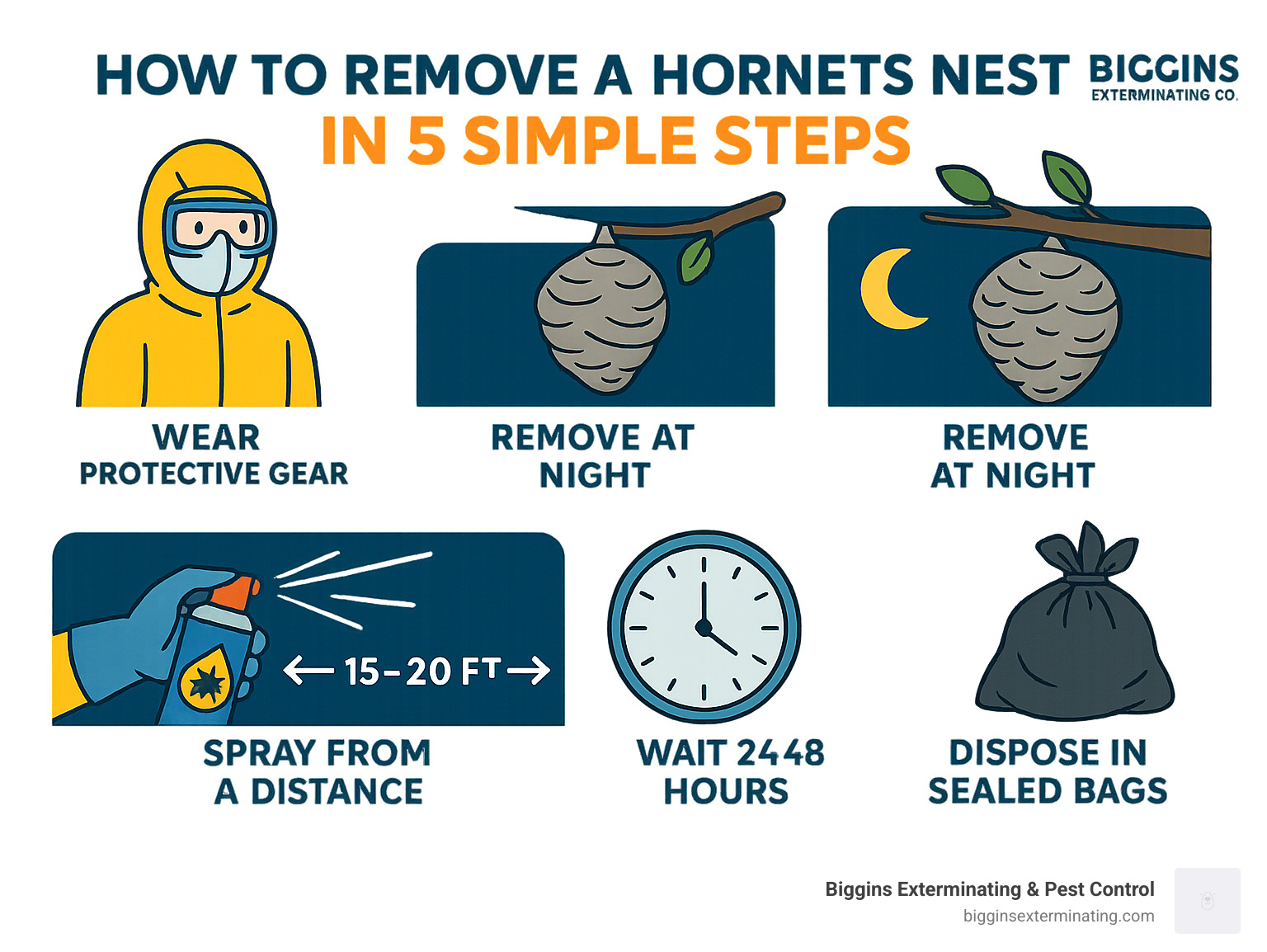
Hornets nest removal can be safely accomplished by following these 5 key steps:
- Identify the nest – Confirm it’s hornets, not wasps or bees
- Plan for nighttime removal – Hornets are less active after sunset
- Wear protective clothing – Cover all skin with thick clothing, gloves, and head protection
- Spray from at least 15-20 feet away – Use hornet-specific insecticide spray
- Remove the inactive nest – Wait 24-48 hours, then bag and dispose of the nest
Finding a hornets nest on your property can be alarming. These paper-like structures housing aggressive stinging insects pose a real danger to your family and pets. A single nest can contain between 100-700 hornets, and unlike bees, hornets can sting repeatedly when defending their territory.
While hornets do play a beneficial role in controlling other insect populations, nests located near human activity areas should be removed promptly. The good news is that smaller nests (tennis ball size or less) can often be handled by homeowners with proper precautions, while larger nests may require professional intervention.
I’m Stephen Biggins, owner of Biggins Exterminating Co., and with over 40 years of experience in hornets nest removal, I’ve safely eliminated thousands of nests throughout Massachusetts using proven techniques that minimize risk while ensuring complete eradication.
Hornets nest removal definitions:
– average cost of exterminator for wasps
– remove wasp nest from soffit
Step 1: Identify the Culprit & Confirm It’s a Hornet Nest
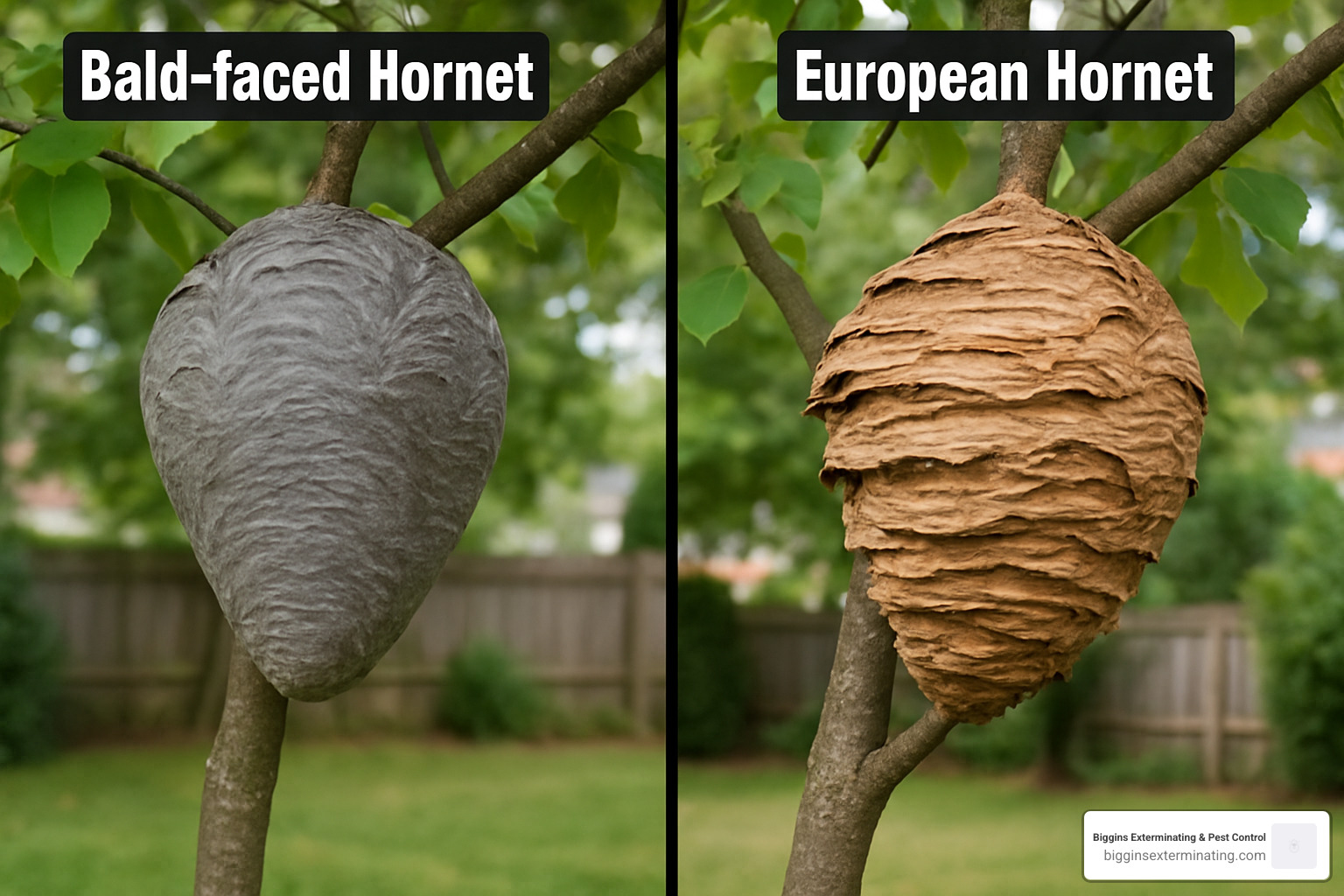
Before you reach for that spray can, let’s make sure you know exactly what you’re up against. I can’t tell you how many frantic calls we’ve received from homeowners who mistook a harmless paper wasp nest for a hornet’s fortress!
“Many homeowners mistake paper wasp nests for hornets,” explains our senior technician with 25 years of experience. “The difference is crucial because hornets are typically more aggressive and their nests house significantly more insects.”
When it comes to hornets nest removal, proper identification is your first line of defense. Those beautiful, intricate paper-like structures might look similar to the untrained eye, but treating the wrong nest can lead to ineffective results or unnecessary risks.
Here’s how to spot a genuine hornet nest: They’re typically built at least 3 feet off the ground, attached to trees, shrubs, building eaves, or siding. European hornets (our only true hornet species in North America) sometimes prefer hollow trees or wall voids. The nest itself has a distinctive gray or brown papery outer shell – literally made from chewed wood fibers mixed with hornet saliva – with a single entrance hole usually at the bottom.
Size is another giveaway. Spring nests start small, about golf-ball sized, but can grow to rival a basketball by late summer. And if you observe the nest from a safe distance, you’ll notice distinct, direct flight patterns as hornets zip in and out. Heavy traffic is a sure sign of an active colony.
According to scientific research from Penn State University, the bald-faced hornet (which, despite its name, is technically a type of yellowjacket) builds large, football-shaped aerial nests that can house up to 700 workers by summer’s end. That’s a lot of potential stingers!
Hornets vs. Wasps vs. Bees
In my four decades of pest control experience, I’ve found that understanding the differences between these stinging insects is crucial for safe and effective hornets nest removal.
Hornet nests are typically 5-10 times larger than wasp nests, often reaching basketball size and housing 100-700 insects. Their colonies respond to threats with impressive coordination – when one hornet sounds the alarm, the entire colony can mobilize to defend their home. Their paper-like nests have enclosed outer shells, unlike the open-celled structures of paper wasps.
Wasps, by comparison, build smaller nests (usually 4-8 inches across) with fewer residents (20-30 insects). They’re still territorial, but generally less aggressive unless directly threatened. Both hornets and wasps serve as natural predators, helping control other insect populations.
Honey bees are an entirely different story. These beneficial pollinators create distinctive wax honeycomb structures and live in colonies of thousands. They’re generally docile unless provoked, and in many areas, they’re protected species. If you’ve identified honey bees on your property, consider calling a beekeeper for humane removal rather than extermination.
“The biggest mistake I see homeowners make,” notes Stephen Biggins, “is rushing to treat any paper nest they find. Taking a few minutes to properly identify what you’re dealing with can save you from unnecessary stings – or from destroying beneficial pollinators.”
For more detailed guidance on identifying different types of nests and ensuring your safety, check out our comprehensive guide on identifying nests and ensuring safety.
Step 2: Schedule & Suit Up for Safe Action
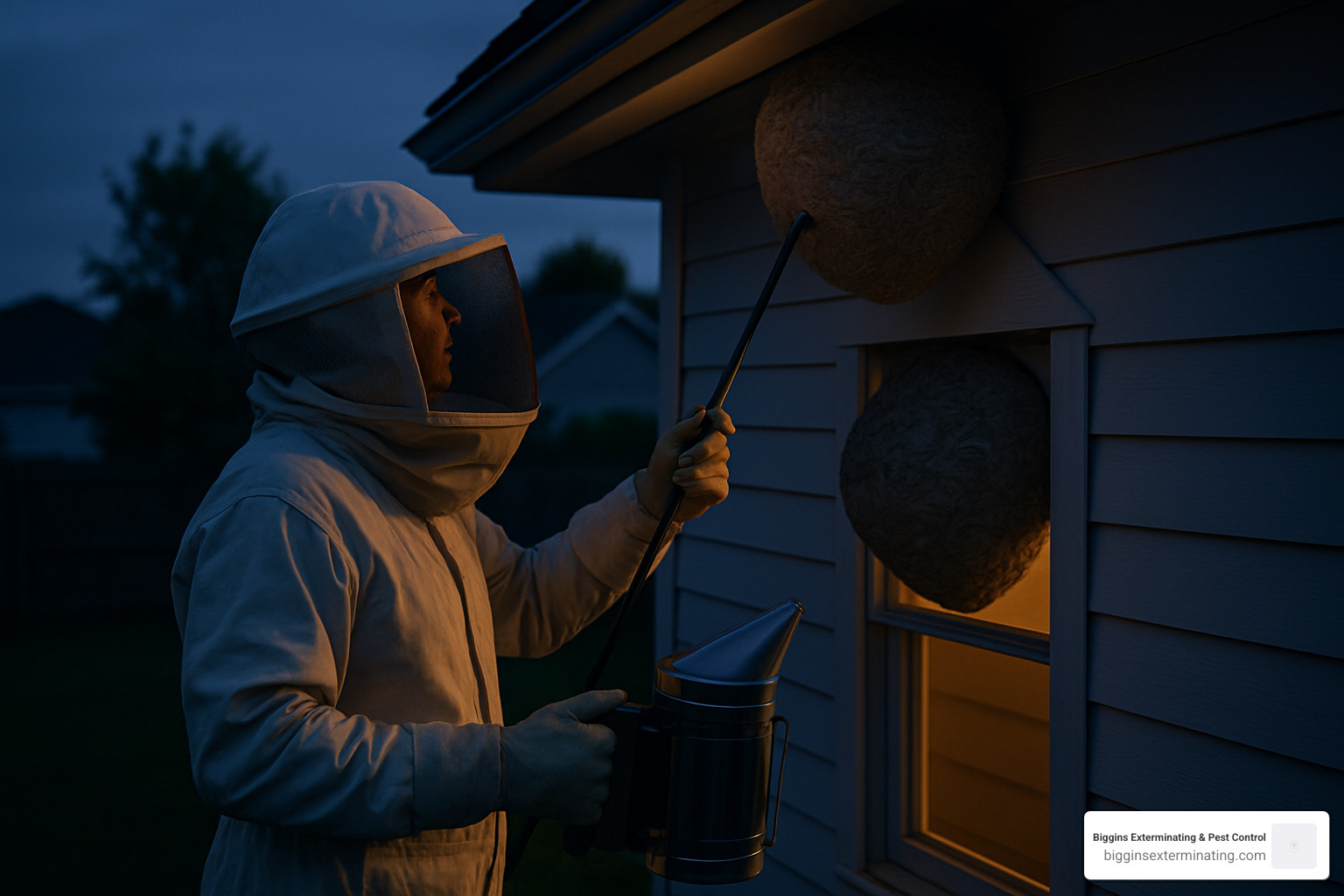
Timing is everything when it comes to hornets nest removal. Now that you’ve identified what you’re dealing with, let’s focus on when and how to approach the situation safely.
Optimal Timing for Hornets Nest Removal
The golden rule of hornet removal? Darkness is your friend.
“I’ll never forget the client who decided noon was a good time to tackle a hornets nest,” shares our veteran technician with a grimace. “That decision earned him multiple stings and an ambulance ride. Trust me—nighttime removal isn’t just a suggestion, it’s essential for your safety.”
Plan your removal for after sunset or before dawn when the colony has returned to the nest and hornets become naturally sluggish. The cooler temperature further reduces their activity and aggression.
Here’s a tip from our four decades of experience: bring a flashlight with a red filter. Hornets have poor vision in red light, allowing you to see what you’re doing without triggering their defensive response. Smart, right?
Weather matters too. Choose a dry, calm evening—wind can make spraying difficult and rain might force you to rush the job, leading to mistakes. And remember, early season nests (spring to early summer) are smaller and easier to handle than the massive structures you’ll find by late August.
Essential PPE for hornets nest removal
Never—and I mean never—attempt hornets nest removal without proper protection. One angry hornet can sting multiple times, and an entire colony defending their home can be dangerous or even life-threatening.
“The most painful mistakes I’ve seen in my career involve people thinking a baseball cap and sunglasses qualify as protective gear,” says Stephen Biggins, shaking his head. “Hornets will find every gap in your clothing and make you regret your overconfidence.”
Your protective ensemble should include:
Full-body coverage with thick, long-sleeved shirts and pants in light colors (hornets are more aggressive toward dark colors). Secure all openings at your wrists, ankles, and waist with elastic bands or tape—these are common entry points for determined hornets. Protect your head with a proper bee veil that fully covers your face and neck, and don’t forget sealed goggles for your eyes and thick rubber gloves that extend past your wrists. Complete the outfit with closed-toe shoes and socks.
Is this overkill? Not when you’re facing insects that can deliver multiple painful stings in seconds.
Mapping Your Exit Strategy
Before you get anywhere near that nest, know exactly how you’ll leave if things go south.
“Always assume hornets will become aggressive during removal,” our senior technician advises. “Having a clear path to retreat quickly can make all the difference between a successful job and a dangerous situation.”
Identify a clear escape route without trip hazards or obstacles. Keep a minimum distance of 15 feet from the nest during treatment—hornets can cover that distance in seconds when defending their home. If possible, use the buddy system with someone watching from a safe distance who can assist if needed.
Make sure all children and pets remain indoors during and for several hours after treatment. And keep antihistamines available in your first aid kit just in case.
One final, critical note: If you have known allergies to insect stings, please don’t attempt DIY hornets nest removal. No nest is worth risking anaphylaxis. Learn more about prevention instead, and call the professionals for removal.
Step 3: Execute Safe Hornets Nest Removal
Now comes the critical moment—actually eliminating the nest. This step requires careful execution and the right tools for successful hornets nest removal.
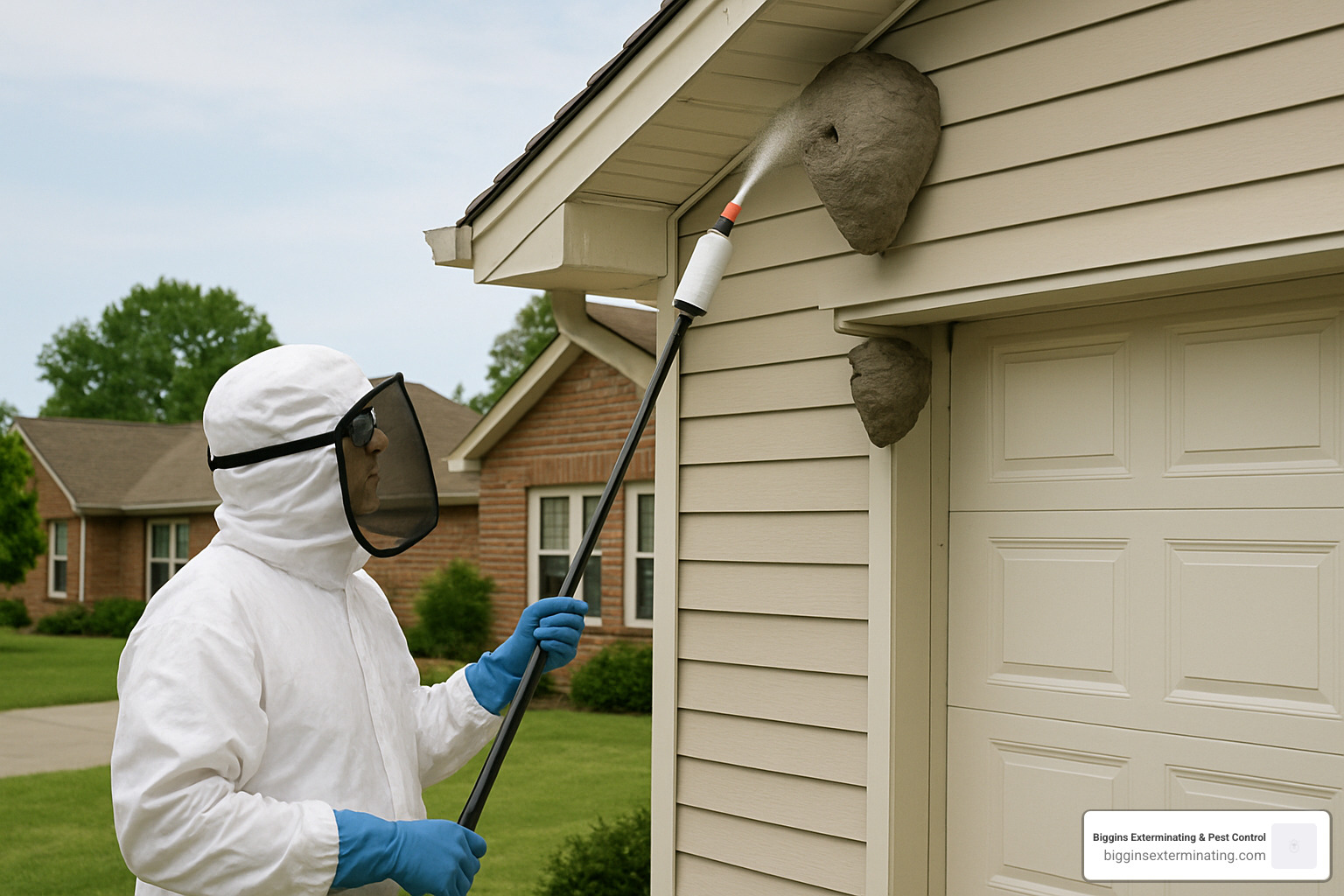
How to Spray a Hornets Nest Safely
I’ve seen my share of DIY disasters over the years. Take the case of a Wilmington homeowner who thought regular household cleaner would do the trick on a hornet nest. The predictable result? Multiple painful stings and a nest that remained very much active.
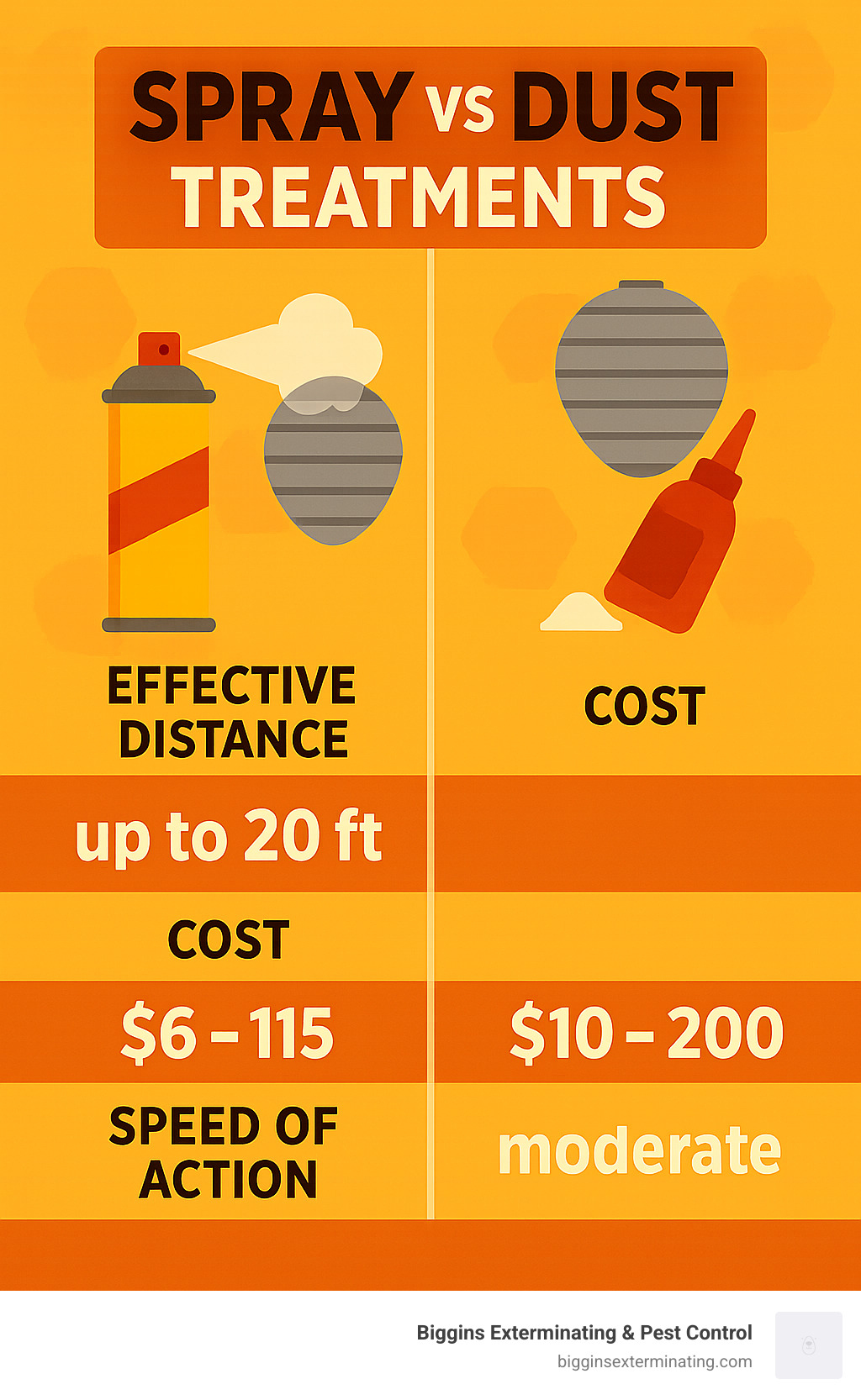
For effective DIY removal, you’ll want a commercial hornet and wasp spray with specific features. Look for long-range capability (at least 20 feet) to keep you safely distant, foaming action that expands inside the nest to coat surfaces and block escape routes, and knockdown ingredients like tetramethrin or prallethrin that work quickly.
The actual spraying process is straightforward but requires precision. Position yourself about 20-30 feet away, staying upwind from the nest. Aim directly at the entrance hole (typically at the bottom) and spray continuously for at least 10 seconds until the entrance is thoroughly saturated. Then retreat immediately—this isn’t the time to stick around and admire your work! Even with a successful spray, some hornets may still emerge, disoriented and aggressive.
“The most common mistake I see is people underestimating how quickly they need to move away after spraying,” says our veteran technician. “Those 20 feet between you and the nest can disappear pretty quickly when angry hornets are involved.”
For ground nests or those tucked away in wall voids, insecticidal dust often works better than spray. You’ll need to apply it directly into the entrance hole using a proper duster applicator. The dust clings to the hornets’ bodies and gets carried deep into the nest, reaching areas spray might miss.
Cutting, Bagging & Destroying the Inactive Nest
Patience truly is a virtue when it comes to hornets nest removal. I remember a client in Andover who waited only 6 hours before attempting to remove what he thought was a dead nest. He learned the hard way that some hornets were still very much alive inside. Always give the insecticide sufficient time to work—at least 24-48 hours after your final treatment.
Before approaching the nest for removal, carefully observe it during daylight hours. You should see absolutely no activity. No hornets entering or exiting, no buzzing, nothing. Only then is it safe to proceed.
When you’re confident the nest is inactive, prepare a heavy-duty garbage bag for disposal. Carefully scrape or cut the nest from its attachment point, letting it fall directly into the bag. Seal the bag immediately and dispose of it in an outdoor trash container. Don’t forget to thoroughly clean the area with soap and water afterward to remove pheromones that might attract other hornets to the same spot.
For those tricky-to-reach nests, an extension pole with a scraper attachment can be a lifesaver, allowing you to safely dislodge the nest from a distance. Just be sure to position your garbage bag strategically to catch the falling nest.
“The removal phase is where most DIYers let their guard down,” notes Stephen Biggins. “They’ve sprayed the nest, waited a day, and think all danger has passed. But even a mostly dead nest can house a few survivors ready to defend their home. Always maintain full protection during removal.”
According to the Angi wasp & hornet removal cost guide, if this process sounds too risky for your comfort level, professional removal services are a safe alternative, with costs typically determined by nest size, location, and the extent of the infestation.
Step 4: Post-Removal Cleanup & Future Proofing
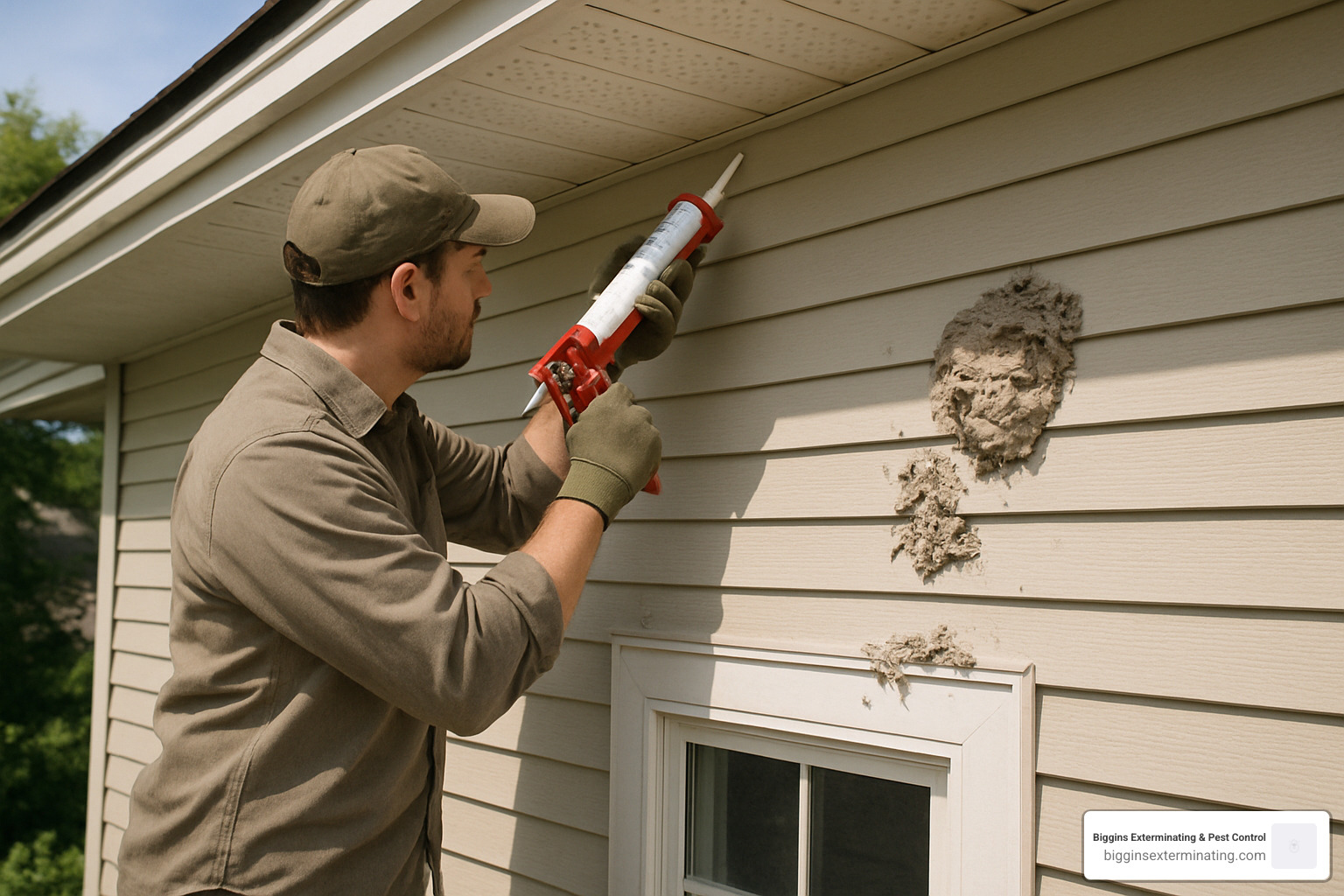
The battle isn’t over once you’ve bagged that pesky nest. In fact, what you do after hornets nest removal can be just as important as the removal itself. Think of it as closing the door and changing the locks so those unwanted guests don’t return.
“I remember a family in Tewksbury who called us three summers in a row for the exact same spot,” says Stephen Biggins with a chuckle. “They’d remove the nest but skip the cleanup steps. Those hornets kept coming back like they had a timeshare reservation!”
Start your post-removal routine with a thorough cleaning of the area. A simple solution of soap and water works wonders for dissolving the chemical trails and pheromones hornets leave behind. These invisible signals can attract new queens looking for promising nest sites the following spring.
Don’t forget to carefully gather any nest fragments that might have fallen during removal. Even small pieces can contain pheromone traces that act like a “hornets welcome” sign on your property.
For areas where nests have been a recurring problem, consider applying a residual insecticide labeled for hornet control. This creates an invisible barrier that discourages new nest building for several weeks.
“The most effective long-term solution we’ve found in our 40+ years of hornets nest removal is sealing up those tempting nesting spots,” explains our senior technician. “Hornets love protected corners and overhangs. Take those away, and they’ll look elsewhere.”
Prevent Repeat Infestations
Your best defense against future hornet troubles starts with some simple home maintenance. Grab a tube of exterior silicone caulk and seal any cracks or gaps in your home’s exterior, paying special attention to eaves, fascia boards, and soffits. These are prime real estate in the hornet housing market.
Install fine mesh screens over vents and openings larger than ¼ inch. Hornets are surprisingly resourceful at finding ways into attics and wall voids where they can build massive nests undisturbed.
That beautiful ivy climbing your chimney? The shrubs brushing against your siding? They’re providing perfect highways for hornets to access your home. Trim vegetation at least 3 feet away from your house to eliminate these easy access points.
Outdoor food sources are like ringing the dinner bell for hornets. Keep trash containers tightly sealed, clean up fallen fruit promptly, and cover sweet drinks when dining outdoors. One clever trick from a long-time Wilmington customer: hang a commercial decoy nest in spring. Hornets are territorial and generally avoid building near what they perceive as an established colony.
“The smartest homeowners in our service area have us conduct a yearly spring inspection,” notes Biggins. “Catching those tiny starter nests in April or May means you’ll never deal with a basketball-sized problem in August.”
Make hornets nest removal a thing of the past by adopting a regular inspection routine. Circle your home once a month during spring and summer, checking all the common nesting spots: eaves, playground equipment, deck undersides, and outbuildings. A quick five-minute walk-around can save you hours of trouble later.
For many of our clients in the Wilmington area, the peace of mind that comes with professional prevention is worth every penny. Our expert nest removal services include not just elimination but comprehensive prevention strategies custom to your specific property.
Step 5: When to Call a Professional Exterminator
While DIY hornets nest removal can be appropriate for small, accessible nests, there are many situations where professional help is not just recommended—it’s essential for safety.

I’ve seen too many DIY removal attempts go sideways over my years in this business. Just last summer in Woburn, we removed a massive hornets nest that had grown inside a client’s attic wall. The poor homeowner had no idea it was there until they heard buzzing through the drywall. Talk about a surprise!
That situation absolutely required professional intervention, and yours might too. It’s time to call in the pros when you’re facing nests larger than a basketball. These large colonies can contain hundreds of aggressive defenders ready to protect their home. Similarly, if the nest is tucked away inside wall voids or your attic, professionals have specialized equipment and techniques to safely access these tricky spots.
Don’t hesitate to call experts if you’re dealing with multiple colonies on your property, as this significantly increases the risk. And please, if you or anyone in your family has a known sting allergy, don’t attempt removal yourself – the risk simply isn’t worth it.
Another often overlooked danger is ladder risk. Many serious injuries happen when homeowners try to reach high nests on their own. Professional exterminators have proper equipment and training to safely access liftd nests.
Average Professional Hornets Nest Removal Costs
Based on internet data (not Biggins Exterminating pricing), professional hornets nest removal typically ranges from $100 to $1,300+, with the national average hovering around $375. These costs vary widely depending on your specific situation.
Location plays a huge role in pricing. Removing nests from attics might run $325-$450, while interior wall extraction could cost $350-$875. Chimney removals tend to be pricier at $475-$600, given the technical challenges they present.
Several factors influence what you’ll ultimately pay. Nest accessibility is a major consideration – hard-to-reach nests require specialized equipment and more time. The size of the infestation matters too, as larger nests generally cost more to remove safely. Different treatment methods (spray, dust, or vacuuming) come with different price tags, and some situations require follow-up visits to ensure complete elimination.
If wall access is needed for removal, there may be additional structural repair costs to consider. These figures represent national averages from internet data, not Biggins Exterminating’s specific pricing. As a family-owned business serving Wilmington and surrounding communities, we provide customized quotes based on your unique situation.
Smart Questions to Ask Before Hiring
When you’re ready to bring in help for hornets nest removal, asking the right questions ensures you get quality service. First, always verify they’re licensed and insured for pest control. This protects you in case of accidents or property damage – something I’ve seen happen when homeowners hire unqualified “handymen.”
A professional should be able to explain what removal method they recommend specifically for your situation. Their answer shouldn’t be one-size-fits-all but custom to your nest’s location and size.
If you have children or pets, ask whether their products are safe for your family. Professional exterminators should use targeted treatments with minimal risk to non-target organisms while still effectively eliminating the hornets.
Always ask about warranties or guarantees. At Biggins Exterminating, we stand firmly behind our work with solid guarantees because we’re confident in our results. Additionally, request a written estimate before work begins – never proceed without clear pricing.
Finally, discuss prevention strategies. A good exterminator doesn’t just solve your current problem; they help ensure it doesn’t happen again. I remember a client in North Reading who hired someone claiming to be an expert who simply knocked down the nest with a broom. The hornets scattered and rebuilt elsewhere on the property within weeks. True professional pest control is about complete elimination and prevention, not just removing what’s visible.
At Biggins Exterminating & Pest Control, we bring over 40 years of experience to every hornets nest removal job, serving communities throughout Middlesex County including Andover, Bedford, Billerica, Burlington, Lexington, North Reading, Tewksbury, Wilmington, and Woburn. When hornets make themselves at home on your property, we make it our business to show them the door – safely and completely.
Conclusion: Safe and Effective Hornets Nest Removal
After dealing with thousands of nests over the years, I’ve seen how relieved homeowners feel once that threatening hornets nest is finally gone from their property. Whether you’ve tackled this project yourself or called in the professionals, you’ve taken an important step in protecting your family and reclaiming your outdoor spaces.
Successfully removing a hornets nest comes down to respecting these powerful insects while taking methodical, safety-focused steps. Let’s recap our 5-step approach to hornets nest removal:
- Identify the nest correctly – knowing exactly what you’re dealing with ensures you’ll use the right approach.
- Schedule removal for nighttime – working when hornets are dormant dramatically reduces your risk.
- Wear complete protective gear – those multiple stings aren’t just painful; they can be dangerous or even life-threatening.
- Apply insecticide properly – maintaining a safe distance and using the right products makes all the difference.
- Remove and dispose of the inactive nest – complete the job by eliminating the physical nest and preventing future problems.
DIY removal is only appropriate for small, easily accessible nests. That basketball-sized monster under your deck or the mysterious buzzing coming from inside your walls? That’s when it’s time to call the professionals.
“In my forty years serving Massachusetts families,” as Stephen Biggins often tells our customers, “I’ve treated thousands of nests, but I’ve also treated too many homeowners who tried to handle large nests themselves. Trust me when I say there’s absolutely no shame in calling for help – it’s often the wisest decision you can make.”
Safety should always remain your primary concern. Even experienced professionals approach every hornets nest removal with careful planning and respect for these territorial insects. If you’re uncertain about any aspect of the removal process, picking up the phone is always safer than picking up that spray can.
For residents throughout Wilmington, Andover, Woburn, Lexington and all our surrounding Massachusetts communities, our family at Biggins Exterminating stands ready to help. We’ve built our reputation on reliable, warranty-backed hornets nest removal without requiring those frustrating long-term contracts that many larger companies demand.
We understand that when hornets invade your space, you need a solution that’s prompt, effective, and delivered with the care that only a family-owned business with deep community roots can provide.
Ready to reclaim your outdoor spaces and enjoy peace of mind? Contact us today to schedule an inspection and say goodbye to those unwelcome stinging guests.
Learn more about our hornets pest control services