Why At Home Termite Control Matters Before the Damage Gets Out of Hand
At home termite control is something every Massachusetts homeowner should understand — because termites rarely make themselves known until the damage is already serious.
Here’s a quick overview of your main DIY options:
| Method | Best For | Effectiveness |
|---|---|---|
| Liquid/granular barriers | Perimeter protection | Moderate |
| Bait stations | Colony suppression | Moderate to high |
| Termite foam | Spot treatment of cracks/voids | Low to moderate |
| Boric acid/natural methods | Minor, localized issues | Low |
Quick answer: DIY termite treatments can help with minor or early-stage activity. For an active infestation, professional treatment is almost always more effective and longer-lasting.
Termites cause more than $5 billion in damage across the U.S. every year — and most homeowners insurance won’t cover a single dollar of it. Worse, termites typically stay hidden inside walls, foundations, and wood framing for years before any visible signs appear. By the time you notice the warning signs, the colony may already be well-established.
That’s the real problem with waiting.
I’m Stephen Biggins, owner of Biggins Exterminating Co. in Wilmington, MA. With over 40 years of hands-on pest control experience serving Massachusetts families, I’ve seen how quickly termite damage can escalate — and I’ve helped countless homeowners understand which at home termite control steps actually work and when it’s time to call in a professional. Let’s walk through everything you need to know.
Identifying Termite Species and Signs of Infestation
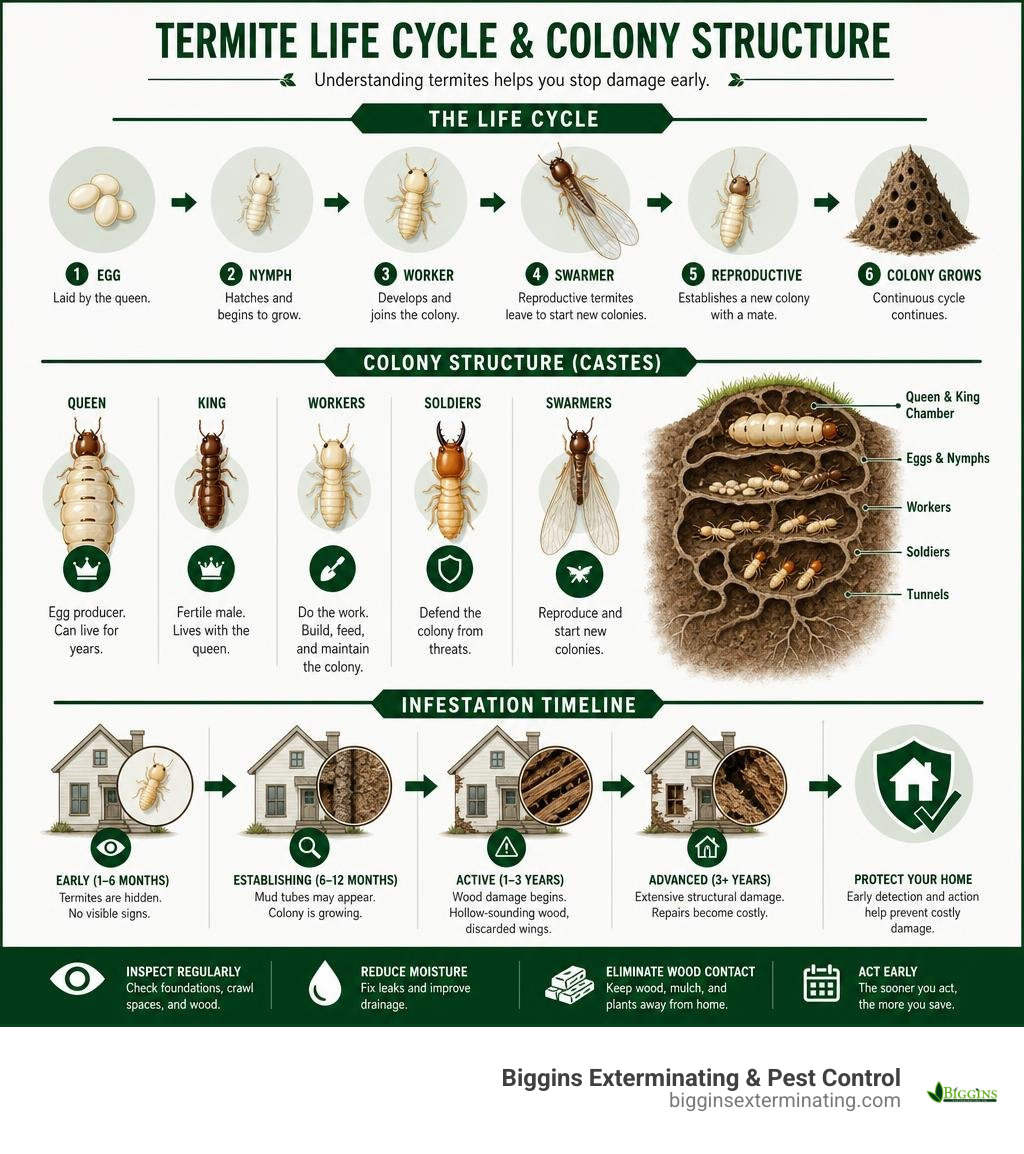
Before you can even begin thinking about at home termite control, you have to know what you are fighting. In our corner of Massachusetts, we deal almost exclusively with one major threat: Subterranean termites. These underground-dwelling pests are incredibly destructive because they build massive colonies in the soil and tunnel upward into your home’s wooden framing.
While drywood termites (which live entirely inside dry wood) and dampwood termites (which prefer highly saturated wood) are common in warmer or wetter climates, they are rarely a structural concern here. For Massachusetts homeowners, subterranean termites are the primary enemy.
So, how do you know if you have termites? Spotting them early requires knowing the difference between a harmless flying ant and a destructive termite swarmer.
Swarmers vs. Ants: Spot the Difference
In the spring, usually after a warm rainfall, termite colonies release winged reproductives called “swarmers” to find new nesting sites. Many homeowners mistake these for flying ants. Here is how you can tell them apart:
- Antennae: Termite antennae are straight and look like tiny strings of beads. Ant antennae are bent or “elbowed.”
- Waist: Termites have a thick, uniform waist. Ants have a pinched, narrow waist.
- Wings: Termites have four wings of equal length that are twice as long as their bodies. Ants have four wings, but the front wings are larger than the back wings.
Common Signs of Termites in Your Home
Because these insects eat wood from the inside out, they can remain hidden behind drywall for years. Keep an eye out for these classic signs of termites:
- Piles of Discarded Wings: Swarmers shed their wings shortly after landing. If you find small piles of translucent wings on windowsills or near your foundation, a colony is close by.
- Hollow-Sounding Wood: Tap your baseboards, sill plates, and support beams. If they sound hollow or a screwdriver easily punctures the surface, you are likely looking at signs of termite damage.
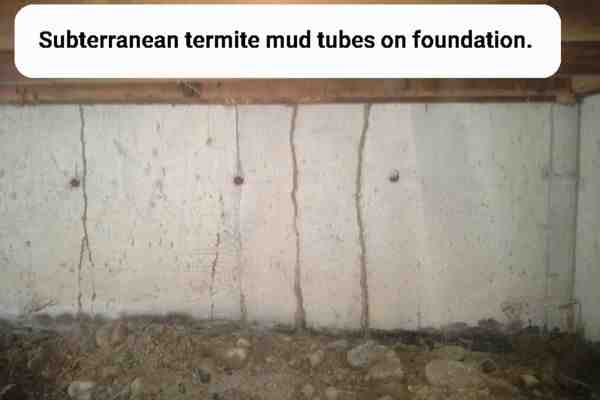
- Mud Tubes: Subterranean termites require moisture to survive. To travel safely between their underground nests and your home’s wood, they build pencil-sized dirt tunnels. Finding these termite mud tunnels on your concrete foundation or crawl space walls is a definitive sign of an active infestation.
The Reality of At Home Termite Control: DIY vs. Professional Treatment
When homeowners discover termites, their first instinct is often to look up DIY solutions. It is easy to see why: DIY termite treatments typically cost only about 10% of what professional termite companies charge. However, there is a massive catch. Saving money upfront does not help if the treatment fails and the termites continue eating away at your home’s structural integrity.
To help you weigh your options, let us look at how DIY methods stack up against professional services:
| Feature | DIY Termite Control | Professional Termite Control |
|---|---|---|
| Primary Goal | Localized spot treatment / prevention | Complete colony eradication |
| Equipment Used | Handheld spreaders, basic bait stations | High-pressure soil injectors, commercial monitoring tools |
| Chemical Access | Consumer-grade retail products | Professional-grade non-repellent termiticides |
| Warranty & Guarantee | None | Comprehensive service warranties and damage guarantees |
| Best Used For | Minor prevention & early monitoring | Active infestations & long-term structural protection |
If you are dealing with a localized, minor issue or want to set up preventative boundaries, DIY products can be a helpful tool. But if you want to know how to get rid of termites permanently, a professional treatment is the gold standard. Professionals use non-repellent liquid barriers that termites cannot detect. Instead of avoiding the chemical, termites walk right through it, carry it back to the nest, and pass it to the queen, successfully collapsing the entire colony.
Understanding the Cost of Termite Protection
When researching the termite treatment cost, it is important to understand the price landscape. Based on publicly available internet data (and not Biggins Exterminating’s actual pricing), the average cost of professional termite treatment can range widely depending on the size of your home and the severity of the infestation.
Typically, homeowners can expect a wide average pricing range from $400 to $3,500 for professional remediation. While DIY products are much cheaper, a failed DIY attempt that allows termites to continue damaging your home can easily result in tens of thousands of dollars in structural repairs down the road.
Liquid Barriers and Granular At Home Termite Control
For those who want to take a proactive approach to at home termite control, creating a chemical barrier around the exterior foundation is a popular starting point.
One of the most common consumer-grade options is Bayer Advanced Termite Killer Ready to Spread Granules, Bio Advanced Termite Killer Granules . This product uses Imidacloprid as its active ingredient. Imidacloprid is a systemic insecticide that works through contact and ingestion, disrupting the pests’ nervous systems.
How to Apply Granular Soil Barriers:
- Clear the Perimeter: Remove mulch, leaves, and debris from a 6-inch band directly adjacent to your home’s foundation.
- Spread the Granules: Apply the granules in a continuous 6-inch band around the entire exterior perimeter of the building.
- Water It In: Lightly water the treated area immediately after application to release the active ingredient into the soil. Be careful not to water to the point of runoff.
- Reapply Regularly: These granules generally provide protection for up to 6 months before requiring a reapplication.
While granular treatments are easy to apply, they only penetrate the top layers of soil. They are excellent for general prevention, but they rarely go deep enough to intercept deep-tunneling pests. For true, deep-soil protection, professional subterranean termite control using professional liquid soil injection is required.
Baiting Systems for At Home Termite Control
If you prefer not to apply liquid chemicals directly to your soil, termite baiting systems are an excellent alternative. Instead of creating a continuous chemical wall, baiting systems leverage the natural foraging behavior of subterranean termites.
A highly regarded DIY option is the Trelona ATBS Home Monitoring Kit . This system is designed to be installed in the ground around the perimeter of your home.
How Termite Baiting Works:
- Installation: Stations are placed in the ground 10 to 15 feet apart, about 2 to 4 feet away from your home’s foundation.
- Monitoring: The stations initially contain wood or cellulose monitoring bait. You inspect them periodically for signs of termite feeding.
- Active Baiting: Once termites are found inside a station, you replace the monitoring bait with an active bait cartridge containing a chitin synthesis inhibitor (such as Novaluron).
- Colony Collapse: Chitin synthesis inhibitors prevent termites from shedding their outer skeletons as they grow. When the worker termites feed on the bait and share it with the rest of the colony, the termites are unable to molt, leading to the collapse of the entire nest.
For localized spot treatments inside the home, homeowners often turn to products like Terminate ® Termite Killing Foam 2 (Aerosol) . This expanding foam can be injected directly into wall voids, cracks, and crevices where active tunneling is suspected. The foam expands to fill the space, killing termites on contact. However, foam is strictly a localized spot treatment and will not eliminate the underground colony. For a deeper look into subterranean behavior, check out our subterranean termite ultimate guide.
(Note: While some homeowners try using general household pest products like TERRO® Liquid Ant Baits | Model T300 for wood-boring pests, these are formulated specifically for sweet-eating ants and are completely ineffective against termites.)
Pros, Cons, and Safety Precautions of DIY Termite Methods

Before committing to a DIY termite control plan, it is vital to understand both the benefits and the serious risks involved.
The Pros of DIY Methods:
- Cost Savings: The immediate out-of-pocket cost of granules or bait kits is significantly lower than professional service fees.
- Convenience: You can monitor and apply treatments on your own schedule without waiting for an appointment.
- Great for Prevention: Setting up monitoring stations is an excellent way to keep tabs on your property’s vulnerability.
The Cons of DIY Methods:
- Limited Reach: Consumer products cannot easily penetrate deep concrete slabs, crawl spaces, or hollow block foundations where termites actually enter.
- No Guarantee: If you miss a spot, the termites will find it. DIY treatments do not come with structural damage warranties.
- User Error: Misapplying termiticides can result in chemical runoff, pet exposure, or ineffective barriers.
Essential Safety Precautions:
If you do choose to handle pest control chemicals yourself, you must prioritize safety. the dangers of termites and how to prevent them in Massachusetts extends to the chemicals we use to fight them.
- Wear Protective Gear: Always wear chemical-resistant gloves, safety goggles, long sleeves, and closed-toe shoes when handling granules, foams, or liquid concentrates.
- Keep Pets and Kids Away: Never allow children or pets near treated soil until the product has completely dried or been watered into the ground as directed.
- Read the Label: The label is federal law. Never over-apply chemicals or use outdoor-rated products inside your home.
Long-Term Termite Prevention and When to Call a Professional
The best way to handle termites is to make your home as unattractive to them as possible. By implementing smart termite prevention habits, you can stop infestations before they ever start.
Here is how to prevent termites around your property:
- Control Moisture: Subterranean termites cannot survive without moisture. Fix leaking outdoor spigots, clear clogged gutters, and ensure your downspouts divert water at least 3 feet away from your foundation.
- Eliminate Wood-to-Ground Contact: Never store firewood, construction lumber, or cardboard directly against your home’s siding or foundation. Keep mulch at least 6 inches below your siding.
- Seal Entry Points: Use cement or outdoor-rated caulk to seal any cracks in your concrete foundation or around utility penetrations.
When to Call in the Pros
While DIY monitoring is a great habit, you should always contact a professional if:
- You find active mud tubes on your foundation.
- You discover swarming termites inside your living spaces.
- You find hollowed, damaged structural wood.
At Biggins Exterminating, we make it easy to get peace of mind. We offer a completely Free Termite Inspection to help you identify active colonies and structural vulnerabilities before they turn into costly repairs.
We proudly serve homeowners throughout our local Massachusetts communities, including:
- Andover
- Bedford
- Billerica
- Burlington
- Lexington
- North Reading
- Tewksbury
- Wilmington
- Woburn
Conclusion
When it comes to protecting your greatest investment, you cannot afford to take shortcuts. While at home termite control products like baits and granules are excellent for early detection and preventative maintenance, an active termite infestation requires the training, equipment, and heavy-duty products that only a licensed professional can provide.
At Biggins Exterminating & Pest Control, we are a local, family-owned and operated Massachusetts pest control company with over 40 years of trusted, high-quality service. Based right here in Wilmington, MA, we believe in doing things the right way. That is why we offer reliable termite solutions with no contracts required, backed by clear warranties to guarantee your complete satisfaction.
Do not let termites eat you out of house and home. Whether you live in Andover, Bedford, Billerica, Burlington, Lexington, North Reading, Tewksbury, Wilmington, or Woburn, we are here to help. Contact us today to schedule your professional inspection, and let us help you secure your home with our expert Termite Pest Control services.