
Identifying the Threat in Your Yard
Exterminating hornets nest can be one of the most challenging and dangerous pest control tasks homeowners face. These aggressive stinging insects build paper-like nests that can house anywhere from 100 to 700 workers, making them a serious threat to your family’s safety.
Quick Answer for Exterminating Hornets Nest:
- Safety first – Wear full protective gear and work at night when hornets are less active
- Use long-range insecticide spray – Apply EPA-approved hornet spray directly into nest entrance
- Wait 24-48 hours – Allow treatment to eliminate all hornets before removal
- Remove and dispose – Carefully bag the inactive nest and dispose in outdoor trash
- Call professionals for large nests, high locations, or if anyone has allergies
The key difference between hornets and other stinging insects lies in their size and aggression. European hornets can grow up to 1.5 inches long, while bald-faced hornets (technically a type of yellowjacket) reach about 3/4 inch. Both species are significantly more aggressive than regular wasps when their nests are threatened.
Warning signs you’re dealing with hornets include:
- Large, gray paper-like nests with a single entrance
- Insects flying in and out during daylight hours
- Nests located in trees, under eaves, or in wall voids
- Aggressive behavior when approached
As research shows, dozens of people die each year from allergic reactions to wasp stings, making proper identification and safe removal crucial for protecting your family.
I’m Stephen Biggins, and over the past four decades at Biggins Exterminating, I’ve safely handled countless cases of exterminating hornets nest throughout Massachusetts. My experience has taught me that while some small nests can be removed by homeowners with proper precautions, many situations require professional intervention to ensure complete safety and effectiveness.
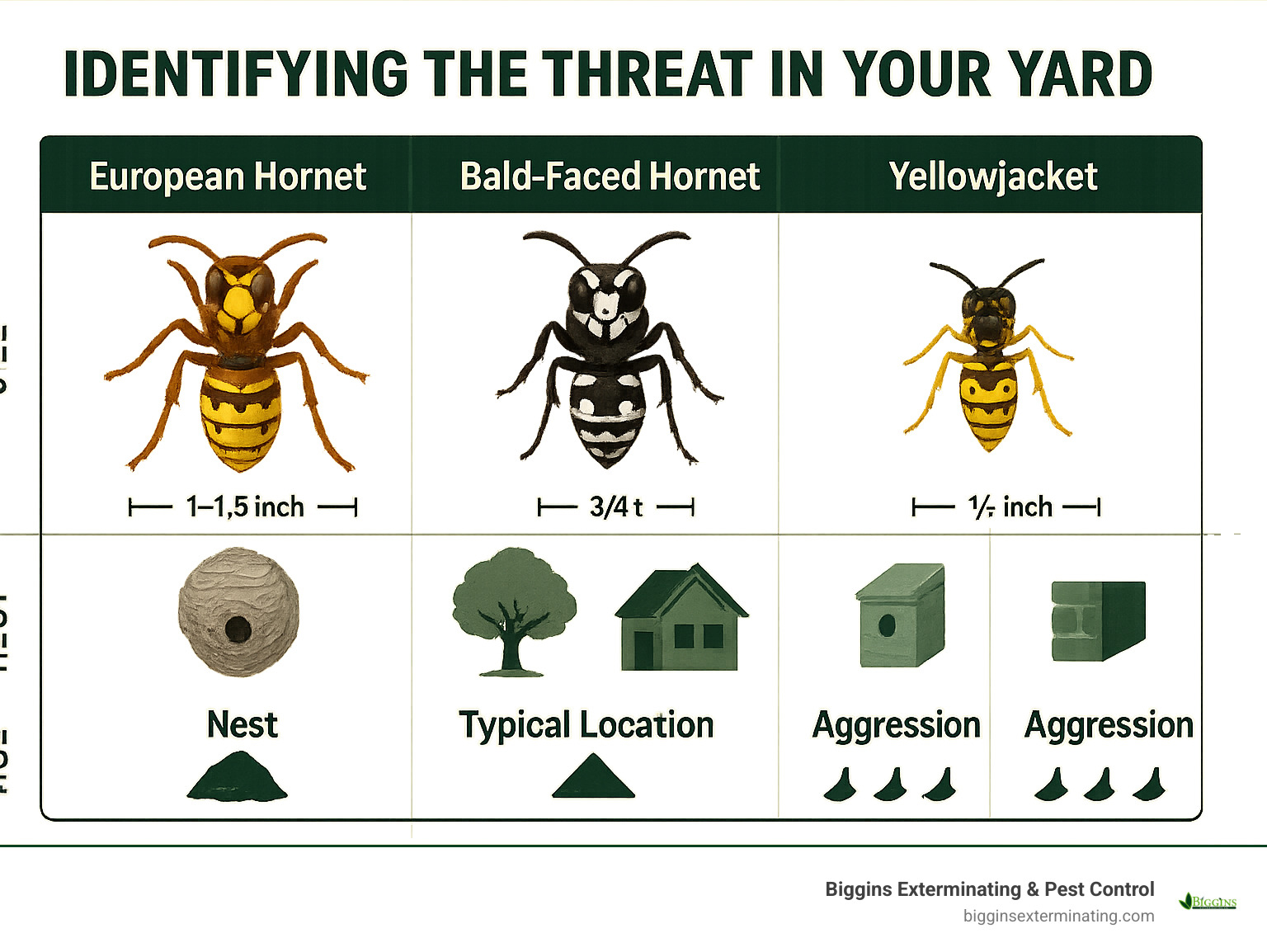
Exterminating hornets nest terms explained:
Before You Begin: Safety First and Foremost
Let me be crystal clear about this: exterminating hornets nest is not a casual weekend DIY project. These aren’t your garden-variety wasps we’re talking about—hornets are the neighborhood bullies of the stinging insect world, and they don’t mess around when defending their home.
Here’s a sobering reality check: dozens of people die each year from allergic reactions to wasp stings. That’s not meant to scare you away from protecting your property, but it should definitely make you think twice about rushing in unprepared.

Protective clothing isn’t optional—it’s your lifeline. A proper bee suit with full coverage, including a veiled hat, thick gloves, and eye protection, gives you the best chance of walking away sting-free. If you don’t have professional gear, layer up with the thickest clothing you own. Long sleeves, long pants tucked into socks, and closed-toe shoes are your minimum armor. Light colors work better since dark clothing can trigger their aggressive instincts.
Timing is everything when you’re dealing with these aggressive colonies. Attempting removal during daylight hours is like walking into a hornet convention uninvited—you’re guaranteed a hostile reception. The sweet spot for nighttime removal is after sunset or just before dawn, when the entire colony is tucked inside and less active. If you need light, use a red-filtered flashlight since hornets can’t see red wavelengths as well.
Before you even think about approaching that nest, plan an escape route. I’m serious about this one. Clear any obstacles between you and safety, and make sure you can move quickly if things go sideways. Keep children and pets away—and I mean far away, preferably inside with windows closed. The last thing you need during a hornet encounter is a curious dog or worried family member creating distractions.
Now, let’s talk about the elephant in the room: allergic reactions. If anyone in your household has known allergies to stinging insects, please don’t attempt this yourself. Even if you’ve never had a reaction before, your first encounter with hornet venom could be your worst. It’s simply not worth the risk when professional help is available.
For more insight into why DIY pest control can be dangerous, check out our detailed guide on The Dangers of DIY Pest Control in Massachusetts. Your safety—and that of your family—should always come first.
A Step-by-Step Guide to Exterminating Hornets Nest
Now that you’re properly protected and have your safety plan in place, let’s walk through the actual process of exterminating hornets nest. I’ll be honest with you—this isn’t a job for everyone, and there’s no shame in calling professionals when you’re dealing with a particularly large or aggressive colony. For comprehensive professional services, check out our Hornet and Wasp Removal options.
How to Identify a Hornet Nest
Before you can tackle any nest, you need to be absolutely certain you’re dealing with hornets and not another type of stinging insect. Trust me, the wrong identification can lead to using the wrong approach—and that’s a mistake you don’t want to make.
What hornet nests actually look like is quite distinctive once you know what to watch for. These structures have a papery, almost cardboard-like texture that’s created when hornets chew wood fibers and mix them with their saliva. The finished product resembles a large, gray paper mache project that nature built. Most hornet nests have that classic teardrop or football shape, and here’s the key identifier: they typically have just one small entrance hole, usually located at the bottom of the nest.
When I first started in this business over 40 years ago, I remember being amazed at how these nests can start as small as a golf ball in spring and grow to the size of a basketball—or even larger—by late summer. Some of the European hornet nests I’ve encountered could easily house 400 to 700 workers by peak season.
Where you’ll typically find these nests varies depending on the species. European hornets, which are our only “true” hornets here in Massachusetts, love to build high up in trees, attics, and wall voids. They’re the ones you’ll often find tucked away in tree cavities or making themselves at home in your attic space. Bald-faced hornets (which are technically a type of yellowjacket, despite their name) prefer soffits, eaves, and sometimes dense shrubs. These are the nests you’ll commonly see hanging from porch overhangs or nestled in the corner of a shed.
The location can tell you a lot about what you’re dealing with. If you’re seeing a large gray nest hanging from your soffit or tree branch, you’re likely looking at a bald-faced hornet colony. For more detailed identification tips, I recommend reading our guide on Hornets and Wasps: Identifying Nests and Ensuring Safety.
Safe Approaches for Exterminating Hornets Nest
Once you’ve confirmed you’re dealing with hornets and you’re fully geared up, it’s time for the actual treatment. This should only be attempted at night when the colony is less active and most hornets are inside the nest.
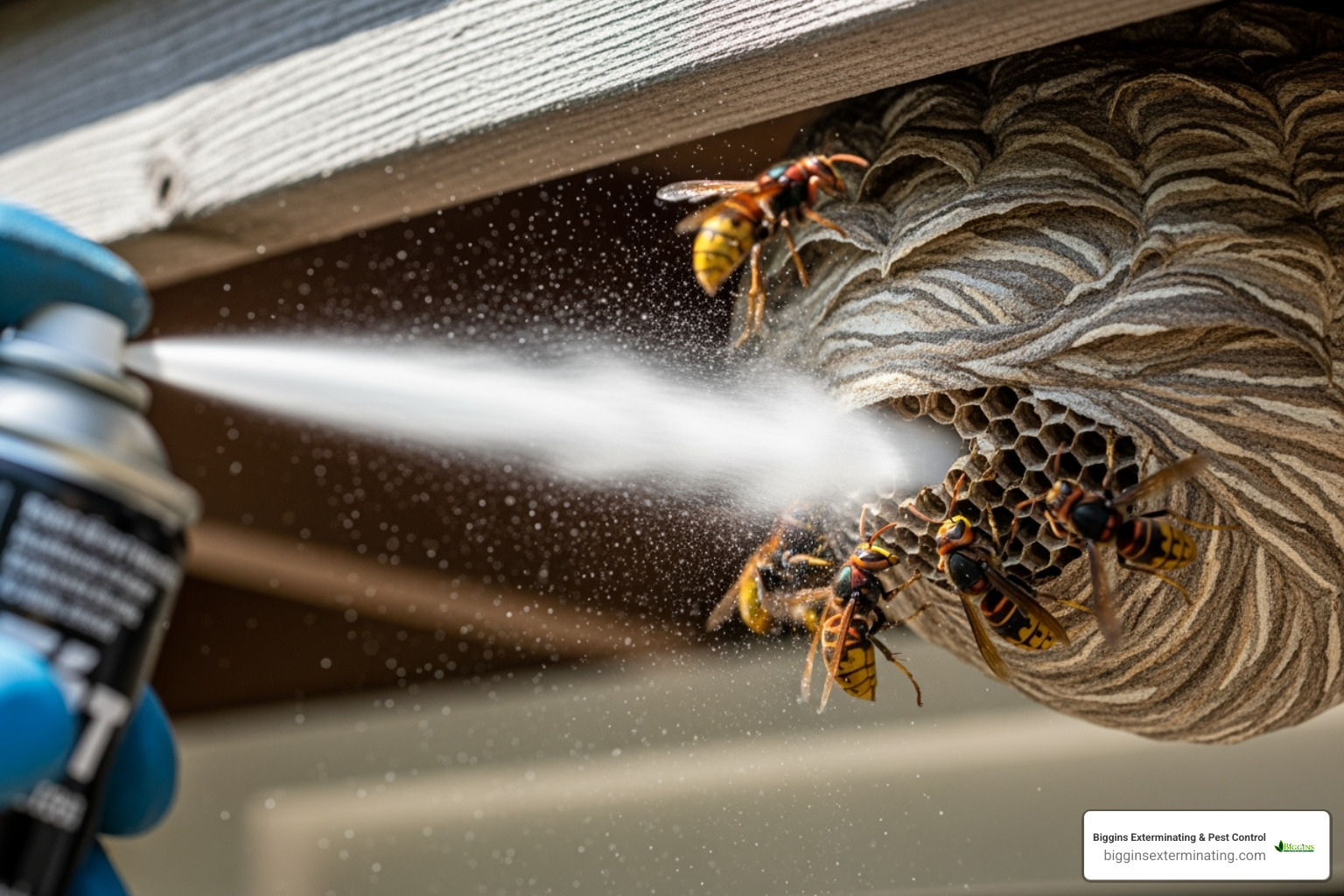
Long-range insecticide sprays are your best bet for most hornet nests, especially those hanging from eaves or in trees. Look for products specifically labeled for wasps and hornets—these usually shoot a powerful stream that can reach 20 to 30 feet, keeping you at a much safer distance. When you’re ready to spray, aim directly at that single entrance hole I mentioned earlier. This is crucial because you want the insecticide to penetrate deep into the nest where the colony is concentrated.
Apply the spray generously for at least 10 to 15 seconds, saturating both the interior through the entrance and coating the exterior of the nest. The moment you finish spraying, calmly but quickly retreat along your planned escape route. Don’t stick around to admire your work—angry hornets may start emerging, and you want to be long gone by then.
For nests in wall voids or other enclosed spaces, insecticidal dust can sometimes be more effective than sprays. The dust works by coating the hornets as they move in and out of the nest, and they actually help distribute it throughout the colony. Using a duster applicator, puff the dust directly into the main entrance. This method typically takes longer to work—often 24 hours or more—but it can be very thorough.
Here’s something I can’t stress enough: only use EPA-approved products with clear registration numbers on the label. I’ve seen homeowners try everything from gasoline to homemade concoctions, and these approaches are not only ineffective but downright dangerous. Always follow the label instructions to the letter—they’re not suggestions, they’re requirements for safe and effective use.
After treatment, patience is absolutely critical. Wait at least 24 to 48 hours before approaching the nest again. I know it’s tempting to check on your handiwork, but hornets can survive for quite a while after initial treatment, and disturbing them too early can result in a very unpleasant surprise. Observe from a safe distance during daylight hours. If you still see activity after 48 hours, you may need to repeat the treatment. For specific guidance on bald-faced hornets, check out our detailed article on How to Remove Bald Faced Hornet Nest.
Post-Treatment Nest Removal and Cleanup
The final phase of exterminating hornets nest is just as important as the initial treatment, and it requires the same careful attention to safety and detail.
Before you even think about touching that nest, spend at least an hour during daylight observing it from a distance. You should see absolutely zero hornet activity—no insects flying in or out, no movement around the entrance. If you spot even a few stragglers, resist the urge to proceed. Re-treat the nest at night and wait another full day.
When you’re confident the nest is completely inactive, still wear protective gear during removal. I always recommend at least thick gloves and long sleeves, even for “dead” nests. You never know if there might be a survivor tucked away inside, plus you want to avoid contact with any insecticide residue.
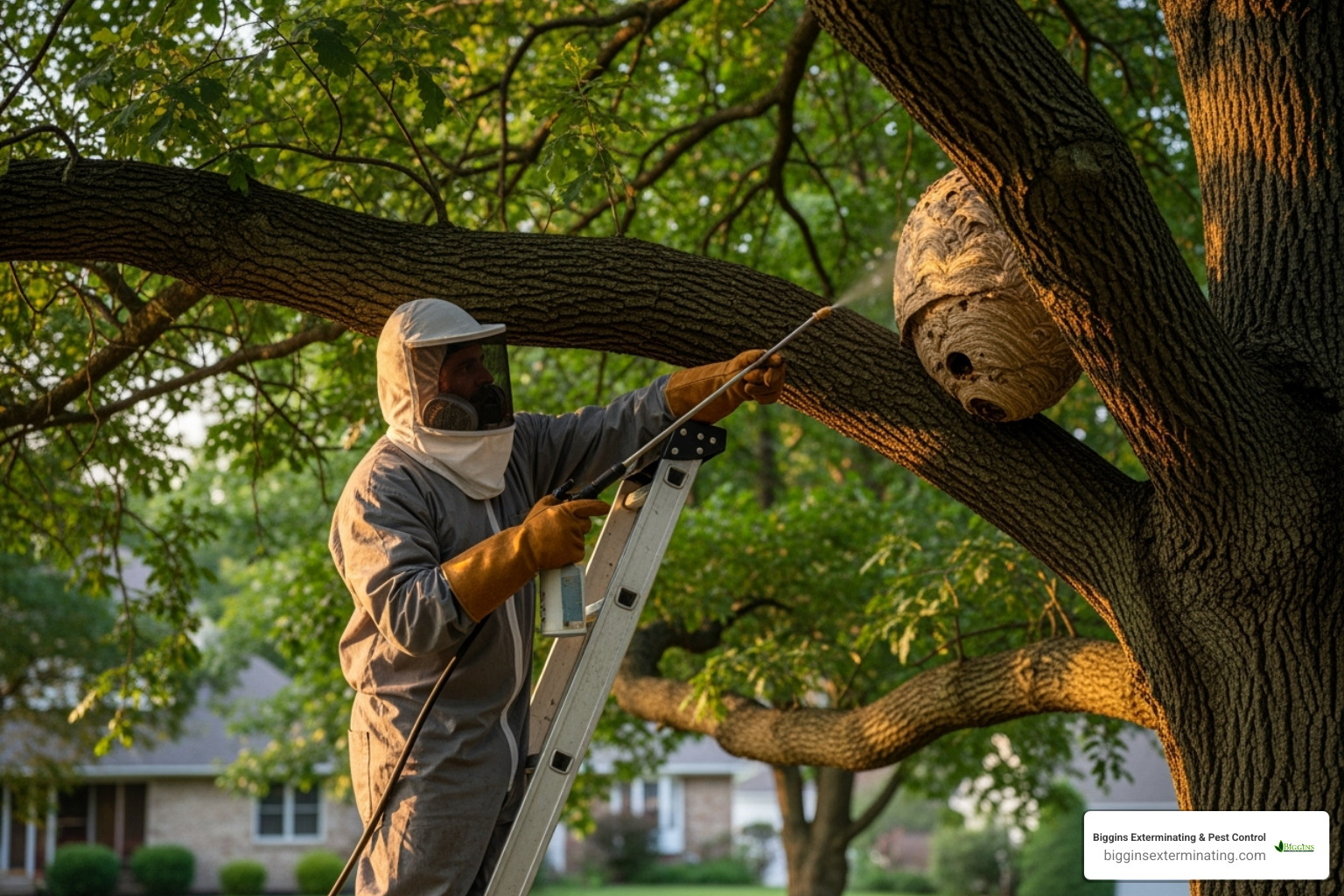
Removing the actual nest requires a bit of strategy depending on its location. For aerial nests, I like to use a long-handled tool—maybe a scraper or pruning shears—to knock the nest down into a heavy-duty garbage bag held open underneath. For nests in bushes or lower locations, you can carefully cut them away from their attachment point. Work deliberately but don’t dawdle—you want to get this done efficiently.
Once the nest is in the bag, seal it immediately and double-bag it for good measure. This prevents any potential escapees (though unlikely at this stage) and contains any insecticide residue. Dispose of it right away in your outdoor trash bin with a secure lid.
The cleanup phase is where many people make a critical mistake—they stop too early. Hornets leave behind pheromones that basically put up a “Great Location for Nests!” sign for future colonies. Thoroughly clean the area where the nest was attached using warm, soapy water. This removes those chemical trails that could attract new hornets next season.
Finally, take this opportunity to seal any entry points around your home. Look for cracks in your foundation, gaps in siding, or openings around windows and doors. Hornets are always scouting for protected spots to build, and a well-sealed home is much less attractive to them. For more specific tips on dealing with nests in tricky locations, our guide on Remove Wasp Nest From Soffit offers additional insights.
Methods to Avoid and When to Call a Professional
While it might seem tempting to try unconventional methods, some approaches to exterminating hornets nest are downright dangerous and should never be attempted. Knowing when to call in the experts can save you a lot of pain, hassle, and even your life.
Dangerous Methods You Should Never Try
Over the years, we’ve heard some truly hair-raising stories from homeowners who tried to get creative with hornet removal. Trust me, these tales don’t end well, and some are downright tragic.
Using fire tops our list of “never, ever do this” methods. We’ve actually had customers call us after setting their barn on fire trying to burn out a nest. Fire and hornets are a recipe for disaster – you’ll end up with angry, scattered hornets and potentially lose your property. Gasoline and other flammable liquids near a nest can cause explosions that put your life at risk.
Flooding with water might seem logical, but a garden hose will only make hornets furious without eliminating the colony. They’ll scatter, become highly aggressive, and likely rebuild in the same spot. You’re essentially giving them a cold shower they’ll never forgive you for.
Knocking down nests with objects – whether it’s a stick, broom, or pole pruner – is like hitting a hornet piñata, except the treats sting! This leads to an immediate, coordinated attack from hundreds of angry insects. Any survivors will rebuild nearby, often more aggressively than before.
Daytime removal puts you at maximum risk since hornets are most active and defensive during daylight hours. You’re practically guaranteed multiple stings and a very unpleasant experience.
Perhaps most importantly, never swat at hornets flying around you. When a hornet is killed or feels threatened, it releases a chemical pheromone that alerts the entire colony to danger. This alarm signal can turn a minor annoyance into a full-scale swarm attack in seconds.
These methods aren’t just ineffective – they’re genuinely dangerous to you, your family, and your property. For a deeper understanding of why professional intervention is crucial, explore Why Professional Hornet and Wasp Nest Removal is Essential.
Signs You Need a Hornet Exterminator Near Me
After four decades of helping homeowners throughout Wilmington, Andover, Bedford, Billerica, Burlington, Lexington, North Reading, Tewksbury, and Woburn, we’ve learned to recognize when DIY simply isn’t safe or practical.
Large nests – anything bigger than a soccer ball – likely house hundreds or thousands of hornets. The sheer number makes DIY removal extremely dangerous, no matter how well-prepared you think you are.
Nests inside walls or attics require specialized tools and expertise to access without causing significant property damage. Hornets can chew through drywall, creating new entry points into your living space that complicate removal significantly.
High-location nests in tall trees or on liftd eaves combine the risk of falls with the risk of stings. Even with a ladder, you’re putting yourself in a precarious position with limited escape routes.
If anyone in your household has known allergies to stings, DIY removal is absolutely off-limits. A single sting could trigger a life-threatening reaction, making professional removal the only safe option.
Aggressive colonies that dive-bomb you just for walking nearby are already on high alert. Attempting to disturb their nest will only escalate their hostility to dangerous levels.
When weighing your options, consider that DIY removal carries high risks with low effectiveness, while professional removal offers extensive expertise, specialized equipment, and safety guarantees. The time investment alone – not to mention the stress and potential for injury – often makes professional removal the smarter choice.
The average cost to remove a hornets nest, based on internet data, can range from $100 to over $1,300, depending on factors like nest size, location difficulty, and hornet species. While these figures represent average costs from various internet sources and not actual prices for Biggins Exterminating services, they help illustrate the investment involved. When you factor in peace of mind, family safety, and guaranteed results, professional removal often proves most cost-effective in the long run – especially when you avoid potential medical bills or property damage from DIY attempts gone wrong.
Frequently Asked Questions about Exterminating Hornets Nest
After 40 years of helping Massachusetts families deal with stinging insects, we’ve heard just about every question you can imagine about exterminating hornets nest. Here are the ones that come up most often during our service calls:
What is the best time of year to remove a hornet nest?
The timing for nest removal can make all the difference between a manageable task and a dangerous encounter. Let me walk you through the best windows of opportunity.
Early season removal in late spring is your golden opportunity if you’re considering DIY removal. Picture this: a lone queen emerges from her winter hideout and starts building what looks like a small paper golf ball hanging from your eave. At this stage, she’s working solo or with just a handful of workers. The nest is small, the population is minimal, and your chances of success are highest.
Late fall after the first frost is actually the safest time of all for removal, though by then it’s more about cleanup than extermination. Here’s something many homeowners don’t realize: hornet colonies are annual, meaning they don’t survive the winter. Once that first hard frost hits, the workers die off, and only the fertilized queens survive by finding cozy spots to hibernate. The old nest sits there empty, and it won’t be reused next year.
The timing you want to avoid? Mid to late summer when colonies reach their peak size of 100 to 700 workers or more. These are the months when hornets are most aggressive and numerous. It’s like the difference between dealing with a few grumpy neighbors versus an entire angry mob.
For more details about winter nest removal, check out our guide on Can I Remove a Wasps Nest in Winter?.
How can I prevent hornets from building nests on my property?
Prevention really is your best defense, and it’s much easier than dealing with an established colony. Think of it as making your property less appealing to house-hunting queens in early spring.
Sealing cracks and crevices is your first line of defense. Every spring, take a walk around your home with a caulk gun in hand. Look for gaps in siding, foundation cracks, loose soffit boards, and spaces around windows and doors. Queens are incredibly resourceful at finding tiny entry points to start their colonies inside wall voids or attics.
Securing trash cans might seem obvious, but it’s amazing how many hornet problems start with an unsecured garbage bin. These insects have a sweet tooth and are drawn to anything sugary or rotting. Make sure those lids fit tight, and clean up any spills immediately after outdoor barbecues or picnics.
Removing fallen fruit from under your apple or pear trees is crucial if you have fruit-bearing plants. That fermenting fruit on the ground is like a neon “Welcome” sign for hornets. Pick it up regularly, especially in late summer when hornets are most active.
Using decoy nests is an interesting approach that some of our customers swear by. Hornets are territorial creatures, so hanging a fake nest might convince them that the area is already claimed. It’s not foolproof, but it’s worth trying in problem areas.
Regular property inspections in early spring can save you months of headaches. Set a reminder to check your property when the weather starts warming up. Look for those small, golf ball-sized starter nests when they’re still manageable.
For a comprehensive prevention strategy, read our detailed guide on Top 5 Ways to Prevent Hornet and Wasp Nests on Your Property.
Are bald-faced hornets actually hornets?
This question always makes me chuckle because it highlights one of nature’s most confusing naming conventions. The short answer is no, they’re not true hornets at all!
Despite their intimidating name, bald-faced hornets (Dolichovespula maculata) are actually a type of aerial-nesting yellowjacket. The only genuine hornet we have in the United States is the European hornet (Vespa crabro).
So why the mix-up? Bald-faced hornets are larger than typical yellowjackets, reaching about 3/4 inch in length, which gives them that “hornet-like” presence. Their distinctive black and white markings set them apart from the usual yellow and black stripes we associate with yellowjackets. That bold white face pattern is where they get their “bald-faced” name.
But here’s what really earned them their fearsome reputation: their aggressive behavior. When their nest is threatened, bald-faced hornets can be incredibly defensive. They’ll chase perceived threats much farther than most other stinging insects, and they can sting multiple times without losing their stinger.
From a practical standpoint for exterminating hornets nest, it doesn’t matter much what we call them. They build large, gray, paper-like nests, they’re aggressive when disturbed, and their stings are painful. Whether they’re technically hornets or yellowjackets, they require the same careful approach for safe removal.
Want to learn more about these fascinating (if intimidating) insects? Check out our article Debunking Myths About Hornets and Wasps: Separating Fact from Fiction.
Conclusion: Reclaim Your Yard Safely
Exterminating hornets nest doesn’t have to be a nightmare scenario that keeps you trapped indoors all summer. With the right approach, you can successfully reclaim your outdoor spaces and enjoy your yard again.
Throughout this guide, we’ve covered the essential steps for safe hornet nest removal. Safety is always your top priority – never cut corners on protective gear, always work at night when hornets are less active, and have that escape route planned before you even approach the nest.
Honest assessment is crucial. Take a step back and really evaluate what you’re dealing with. Is the nest small and accessible, or are you looking at a basketball-sized fortress twenty feet up in a tree? Are there known allergies in your household? Sometimes the bravest thing you can do is recognize when a job is beyond your comfort zone.
Know when to call for professional help. Large nests, those tucked inside your home’s walls or high up in trees, and situations involving anyone with sting allergies are clear signals that it’s time to bring in the experts. There’s no shame in making that call – it’s actually the smart move.
For over 40 years, the family-owned team at Biggins Exterminating has helped homeowners throughout Wilmington, MA, and surrounding communities including Andover, Bedford, Billerica, Burlington, Lexington, North Reading, Tewksbury, and Woburn tackle their hornet problems safely and effectively. We’ve seen it all, from tiny early-season nests to massive colonies that would make even seasoned professionals pause and plan carefully.
What sets us apart is our commitment to reliable service without the hassle of contracts, backed by warranties that give you peace of mind. We understand that dealing with hornets is stressful enough without worrying about whether your pest control company will stand behind their work.
Your outdoor spaces should be places of relaxation and enjoyment, not anxiety about buzzing threats overhead. Whether you decide to tackle a small nest yourself or call in professional help, the important thing is that you’re taking action to protect your family and reclaim your yard.
For guaranteed and warrantied Wasps Pest Control, contact us today. Let our decades of experience work for you, ensuring your home becomes a haven of peace rather than a scene of “hornet havoc.” Learn more about Protecting Your Home and Family: The Importance of Expert Nest Removal and take that first step toward a safer, more enjoyable outdoor experience.
