
Why Bald-Faced Hornet Removal Costs More Than Other Wasps
The cost to remove bald faced hornet nest typically ranges from $625 to $750, with some cases reaching up to $2,000 or more depending on nest location and accessibility. This makes bald-faced hornet removal one of the most expensive wasp extermination services available.
Quick Cost Breakdown:
- Average cost: $625-$750
- Low-end cost: $400-$500
- High-end cost: $1,500-$2,000+
- Emergency services: Additional $100-$200
Note: These are average costs based on internet data and not actual costs for Biggins Exterminating services.
Bald-faced hornets build their football-sized nests high up in tree canopies, making them particularly challenging and dangerous to remove. Unlike other wasps, these aggressive insects are highly territorial and will attack in swarms when their nest is threatened. The combination of their liftd nesting locations and fierce defensive behavior requires specialized equipment, extensive safety gear, and expert handling – all factors that drive up removal costs.
As Stephen Biggins, owner of Biggins Exterminating Co., I’ve encountered countless situations where homeowners underestimate both the danger and cost to remove bald faced hornet nest safely. With over 40 years of family experience in pest control, we’ve seen how these aerial predators can turn a simple removal into a complex, multi-visit operation requiring ladders, lifts, and professional-grade protective equipment.
Important cost to remove bald faced hornet nest terms:
Understanding the Cost to Remove Bald-Faced Hornet Nest
Finding a bald-faced hornet nest can get your heart racing—and your mind wondering, “How much will this cost?” While the exact price varies, understanding the final bill can help you feel prepared. All prices discussed here are national averages from internet data, not direct quotes or actual costs for Biggins Exterminating services.
Average Cost to Remove Bald-Faced Hornet Nest
So, let’s get down to the numbers. The average cost to remove bald faced hornet nest usually lands somewhere between $625 and $750. This is significantly higher than what you’d pay for other common wasp species, which often range from $100 to $400 for paper wasps or mud daubers. For bald-faced hornet removal, prices typically start around $400, but they can easily climb to $800 or, in trickier situations, even soar past $2,000!
Why such a big difference? Every nest presents a unique challenge. A small, easily accessible nest might be on the lower end of that scale. But a giant, football-sized nest packed with hundreds of hornets high in a dense tree needs special equipment and might require more than one visit, naturally coming with a higher price. If you need emergency service—perhaps the nest is in a high-traffic area or poses an immediate threat—that can add an extra $100-$200 to the total.
For a broader look at hornet removal costs, why not check out our detailed guide on the Average Cost to Remove Hornet’s Nest?
Key Pricing Factors
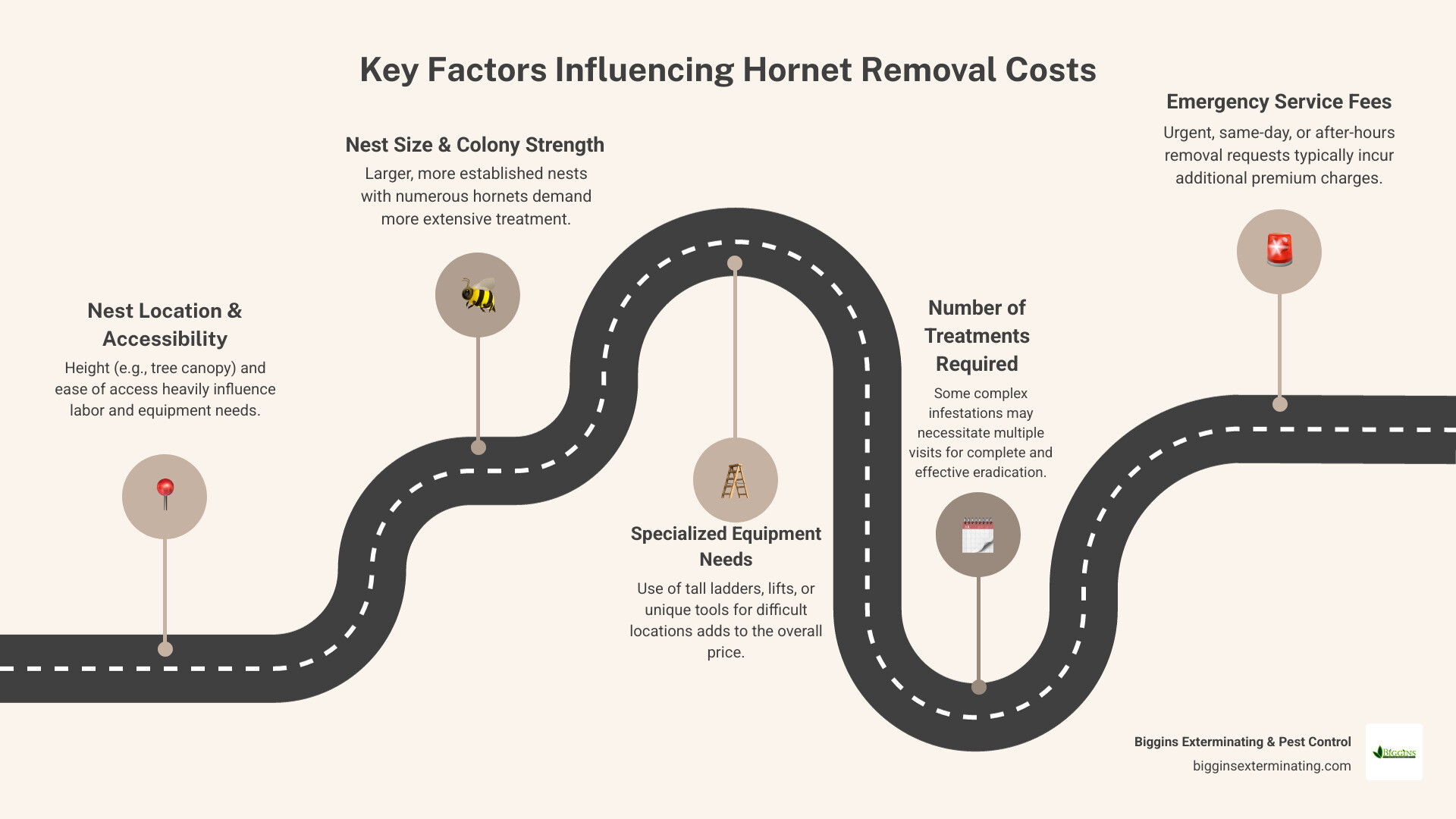
When our experts size up a bald-faced hornet nest for removal, several key things influence the final cost to remove bald faced hornet nest:
First up is Nest Location. This is often the biggest factor. Bald-faced hornets build large paper nests high in trees, making them tough to reach. They don’t always stick to trees, however; nests inside walls, attics, chimneys, or under eaves can drive up the cost. For example, an attic removal might cost $300-$500, while a chimney removal could be $400-$600. A nest on a second story or higher may incur extra fees for ladder work.
Next, we look at Nest Size. A small, new nest with just a few dozen wasps is a much simpler job than a massive one, buzzing with hundreds of angry hornets. Larger nests mean more work, stronger treatments, and extra safety precautions, all adding to the price.
Then there’s Accessibility. Can we easily see and reach the nest with standard equipment? Or do we need special tools like tall ladders, lifts, or even scaffolding? If our technicians have to steer obstacles, squeeze into tight spaces, or work in high-risk spots, the job becomes more complex and the cost goes up.
This leads us to Special Equipment. As you might guess, those hard-to-reach nests often require specific gear. Using lifts, extra-long poles, or even thermal imaging (to find hidden nests inside your home’s structure) adds to the overall expense.
Sometimes, a single treatment isn’t enough. The Number of Treatments needed can also affect the cost. While many nests are handled in one visit, large or hidden colonies might need a follow-up. Initial visits typically run $150-$300, with ongoing monthly treatments at $40-$70. If multiple visits are needed for one nest, the total cost will increase.
Finally, the Severity of Infestation plays a role. This could mean multiple nests on your property, or one giant nest that has grown to an enormous size. A more severe problem will make the removal process more involved and take more time. And the Treatment Type used will also factor in. Different methods, like aerosol sprays, dusting, or even vacuuming (often used for nests inside homes), have different costs depending on the nest’s location and the professional’s assessment.
All these factors help explain why the cost to remove bald faced hornet nest can swing so widely. For even more general information on what pest control services typically cost, our Pest Control Services Cost page has plenty of insights.
Why Bald-Faced Hornets Are a Dangerous and Costly Problem
Bald-faced hornets aren’t ordinary wasps. Their aggressive nature makes them a challenging and costly problem, which is why professional removal is a necessity, not a convenience.
Identifying Bald-Faced Hornets and Their Nests
Knowing what you’re dealing with is the first step. Bald-faced hornets (scientifically known as Dolichovespula maculata) are distinct from other common wasps like yellow jackets or paper wasps.
Unlike their yellow and black striped cousins, bald-faced hornets are easily identified by their black bodies with prominent white or ivory markings, especially on their face (hence the “bald-faced” name) and the end of their abdomen. They are a type of aerial yellowjacket, not true hornets, but are commonly called hornets due to their larger size and aggressive demeanor.
Their nests are equally distinctive. Bald-faced hornets construct large, enclosed paper nests that are typically football-shaped or tear-dropped. These impressive structures are made from chewed wood fibers mixed with saliva, giving them a papery texture. They almost always build their nests above ground, often high up in trees, large shrubs, or sometimes attached to buildings under eaves, in attics, or on the sides of homes. A single nest can grow to the size of a basketball or larger by late summer. You can learn more about their classification on the Bald-Faced Hornets (Dolichovespula maculata) page.
Understanding the visual cues of these insects and their nests is crucial for proper identification and determining the right removal strategy. Our guide on Hornets and Wasps: Identifying Nests and Ensuring Safety provides more details.
The Risks: Aggression and Painful Stings
The bald-faced hornet’s aggressive nature and potent sting contribute to the higher cost to remove bald faced hornet nest. These insects are fiercely territorial and will defend their nest with extreme prejudice, attacking en masse if disturbed, even inadvertently.
- Aggressive Defense: If you get too close to their nest, or even if you’re just in their perceived “danger zone,” they will launch a coordinated attack. They don’t need much provocation.
- Multiple Stings: A single bald-faced hornet can sting repeatedly, injecting venom with each jab. This means a single encounter can result in numerous painful stings.
- Painful Venom: The sting of a bald-faced hornet is widely regarded as more painful than that of most other insects. Their venom is potent, causing immediate, sharp pain, swelling, redness, and itching.
- Allergic Reactions: For individuals with venom allergies, a sting can trigger a severe, life-threatening allergic reaction known as anaphylaxis. Symptoms can include difficulty breathing, dizziness, swelling of the face or throat, and a rapid drop in blood pressure. While only about 3% of the population has venom allergies, the risk is significant, especially given the potential for multiple stings.
- Alarm Pheromones: A particularly dangerous aspect of bald-faced hornets (and wasps in general) is their use of alarm pheromones. If you swat or kill a single hornet, it releases a chemical signal that alerts other hornets in the colony to danger. This can immediately trigger a mass attack, turning a minor annoyance into a hazardous swarm. This is why attempting DIY removal is incredibly risky.
The health hazards created by having bald-faced hornets on your property far exceed any benefits they might offer (such as preying on other insects). Their presence, especially near human activity, makes professional intervention essential. For more on the necessity of expert help, see our page on Why Professional Hornet and Wasp Nest Removal is Essential.
Why Professional Removal is the Best Choice
Given the risks, professional removal is the safest and most effective option. While the initial cost to remove bald faced hornet nest is an investment, it pales in comparison to the dangers and hidden expenses of a DIY attempt.
The Dangers of Attempting Removal Without Professional Help
We understand the temptation to save money with DIY methods. However, with bald-faced hornets, this is a gamble with potentially severe consequences.
- Risk of Stings: This is the most obvious and immediate danger. As we’ve discussed, bald-faced hornets are highly aggressive and will sting repeatedly. Without proper protective gear, you’re essentially walking into a battle unprotected. A staggering 65% of sting incidents occur during amateur removal attempts.
- Inadequate Equipment: Store-bought sprays lack the power and reach of professional treatments. They may only kill a few hornets, leaving the rest of the colony agitated and ready to attack.
- Ineffective Store-Bought Sprays: Many DIY sprays are designed for smaller, less aggressive wasp species. They might not penetrate the thick paper layers of a bald-faced hornet nest or have the residual effect needed to eliminate the entire colony, especially the queen.
- Triggering Swarm Attacks: The most dangerous outcome of a botched DIY attempt is triggering a mass attack. Killing individual hornets releases alarm pheromones, signaling the rest of the colony to attack the perceived threat. This can lead to dozens, if not hundreds, of painful stings and potentially life-threatening allergic reactions.
- Incomplete Colony Removal: It’s highly unlikely you’ll eliminate the entire colony, especially the queen. An incomplete removal means the problem will persist, and the hornets will likely rebuild or relocate. This can lead to recurring infestations and higher costs down the line.
- Hidden Nests: Bald-faced hornets can sometimes build nests in less obvious locations, such as inside wall voids or attics. Without professional expertise and equipment like thermal cameras, you might miss a hidden nest, leaving the core problem unresolved.
As we often say, “You should only tackle wasp removal yourself if you know what you’re doing, and even then, there is always a risk you’ll get stung.” The potential for serious injury, medical bills, and recurring infestations makes DIY a false economy for bald-faced hornets. We’ve seen The Dangers of DIY Pest Control in Massachusetts and strongly advise against it for these formidable insects.
Benefits of Hiring a Professional Exterminator
Hiring a professional for bald-faced hornet removal offers unparalleled safety, effectiveness, and peace of mind. Here’s why the investment is truly worth it:
| Feature | DIY Attempt | Professional Removal |
|---|---|---|
| Cost | Low initial spray cost, but high potential for medical bills, property damage, and recurring infestations. | Higher upfront cost, but effective, often guaranteed, and prevents future issues. |
| Safety | High risk of multiple, painful stings; potential for severe allergic reactions. | Technicians wear full protective gear; minimal risk to homeowner. |
| Effectiveness | Often incomplete removal; hornets may rebuild or relocate. | Complete elimination of the colony, including the queen; prevents re-infestation. |
| Time | Multiple frustrating attempts; problem may persist. | Efficient, targeted treatment; often resolved in one visit. |
- Proper Safety Gear: Professional exterminators arrive equipped with specialized protective gear, including thick suits, gloves, and head coverings, that provide a barrier against stings. This keeps them safe, and by extension, keeps you and your family safe.
- Commercial-Grade Treatments: We use powerful, targeted insecticides that are not available to the general public. These chemicals are designed to be highly effective against bald-faced hornet colonies, penetrating their thick nests and eliminating the entire population, including the queen. Many first-line wasp treatments use pyrethroid chemical insecticides, which are highly effective.
- Experience and Training: Our technicians are trained experts in insect behavior, identification, and removal techniques. They know where to look for nests, how to approach them safely, and the most effective methods for complete eradication. This expertise comes from years of hands-on experience and continuous learning.
- Guaranteed Removal: Many reputable pest control companies, including Biggins Exterminating, offer warranties or guarantees on their work. This means if the hornets return within a specified period, we’ll come back and re-treat the area at no additional cost. This provides valuable peace of mind and ensures the job is done right the first time.
- Peace of Mind: Knowing that a dangerous bald-faced hornet nest has been safely and completely removed by professionals allows you to reclaim your outdoor spaces without fear. There’s no price on that kind of comfort.
When selecting a pest control service, it’s wise to consider their experience, licensing, and insurance. The EPA offers helpful pest control selection tips that can guide your decision. With Biggins Exterminating, you’re choosing a family-owned company with over 40 years of experience serving the communities of Andover, Bedford, Billerica, Burlington, Lexington, North Reading, Tewksbury, Wilmington, and Woburn, MA. We provide reliable pest control without requiring contracts, offering warranties, and ensuring customer satisfaction.
Preventing Future Bald-Faced Hornet Nests
After removing a bald-faced hornet nest, you don’t want a repeat performance. While wasps don’t reuse nests, your property might still attract new queens looking to build a colony. Taking proactive steps can significantly reduce the chances of future infestations.
Here are some actionable tips to make your property less inviting to bald-faced hornets and other stinging insects:
- Seal Entry Points: Inspect your home’s exterior for cracks, gaps, or holes around eaves, soffits, and utility pipes. Wasps can use small openings to build nests inside walls or attics. Seal cracks wider than 3mm with silicone caulk, ensure window and door screens are intact, and install 1.6mm mesh over vents.
- Manage Trash Cans Properly: Wasps are attracted to sugary substances and protein, often found in household waste. Always use tight-fitting lids on outdoor trash cans and compost bins. Tie up trash bags securely before placing them in the bins.
- Remove Food Sources: Keep your property free of accessible food. Clean barbecue grease traps weekly during warmer months. Promptly pick up any fallen fruit from trees in your yard. If you have pets that eat outdoors, don’t leave pet food bowls outside for extended periods.
- Consider Decoy Nests: Wasps are territorial and often avoid building a new nest near an existing one. You can purchase or create “dummy nests” and hang them under eaves or in other potential nesting spots in early spring. This can trick new queens into believing the area is already claimed, encouraging them to look elsewhere. These typically cost around $10-$20.
- Regular Property Inspection: Make it a habit to regularly inspect your property, especially in spring, for any signs of new nest construction. Early detection makes removal much easier and less costly. Look in sheltered spots like under deck railings, in sheds, under eaves, and in dense shrubs.
- Natural Repellents: Certain plants and substances are known to deter wasps. Planting eucalyptus, peppermint, basil, or lemongrass around your home can act as a natural deterrent. You can also use natural substances like vinegar, coffee grounds, or cinnamon strategically around key entry points.
By implementing these preventative measures, you can make your home and yard less appealing to bald-faced hornets, helping to avoid the unpleasant surprise of a new nest next season. For more detailed prevention strategies, check out our Top 5 Ways to Prevent Hornet and Wasp Nests on your property.
Frequently Asked Questions about Bald-Faced Hornet Removal
With over 40 years in pest control, we’ve heard nearly every question about bald-faced hornets. Here are the most common ones, with answers to help you understand these formidable insects.
Do bald-faced hornets return to old nests?
Here’s some good news: bald-faced hornets never return to old nests. These colonies are strictly annual, meaning each nest has a one-season lifespan.
When fall arrives and temperatures drop, the entire colony dies off, including workers, drones, and the old queen. Only newly mated queens survive, hibernating in spots like tree bark or wall voids. In spring, these queens emerge to start completely new nests from scratch.
Even though they won’t reuse the old nest, we still recommend removing abandoned ones when possible. Old nests can leave behind pheromone trails that might attract other insects, and occasionally other wasp species might try to move into the vacant real estate. Plus, nobody wants a football-sized paper nest hanging around as a reminder of last summer’s hornet drama.
When is it okay to leave a hornet nest alone?
This is a tricky question. With bald-faced hornets, the answer is almost never “leave it alone,” but there are rare exceptions where you might consider waiting it out.
Location matters most. If you find a very small, new nest far from your home, walkways, or play areas, you might have some wiggle room. We’re talking about nests deep in wooded areas, well beyond your property boundaries.
Timing can be everything. If it’s late fall or early winter and you spot a nest, there’s a good chance it’s already abandoned. By November or December, most bald-faced hornet colonies have naturally died off, leaving behind empty paper shells that pose no threat.
Proximity to your home is the deal-breaker. If the nest is anywhere near high-traffic areas, entry points to your house, or places where family activities happen, professional removal becomes essential. The cost to remove bald faced hornet nest is always less than potential medical bills from stings or the stress of living in fear of your own backyard.
What starts as a small, seemingly harmless nest in spring can explode into a dangerous colony of hundreds by late summer. The health risks these aggressive insects create simply outweigh any benefits they might provide by eating other bugs.
How many hornets are in a bald-faced hornet nest?
The population of a bald-faced hornet nest changes dramatically throughout the season, which helps explain why professional removal becomes more critical as summer progresses.
Spring starts small. Every nest begins with just one overwintered queen who builds the initial structure and lays her first batch of eggs. During these early weeks, you’re dealing with maybe a dozen hornets at most.
Summer brings rapid growth. As the first generation of workers matures and takes over nest expansion and foraging duties, the population explodes. By midsummer, a typical nest houses several hundred active, defensive hornets.
Late summer peaks are the most dangerous. This is when colonies reach their maximum size and aggression levels. A mature bald-faced hornet nest typically contains 400 to 700 workers by August and September. At this stage, the football-sized nest is buzzing with activity as the colony prepares to produce new queens and males for next year’s generation.
These peak numbers explain why the cost to remove bald faced hornet nest can be higher in late summer – you’re not just dealing with a few dozen insects, but potentially hundreds of highly territorial, aggressive defenders. It’s also why we always recommend addressing hornet problems as early in the season as possible, when colonies are smaller and removal is safer and more straightforward.
Secure Your Property from Aggressive Hornets
Finding a bald-faced hornet nest is unsettling for good reason. Their aggressive nature, painful stings, and the risk of allergic reactions make them a formidable foe. While the cost to remove bald faced hornet nest is an expense, it’s a vital investment in your family’s safety and peace of mind. DIY removal is a gamble that can lead to painful stings, incomplete removal, and higher costs from medical bills or recurring infestations.
That’s where Biggins Exterminating & Pest Control comes in. Your safety is always our top priority. We’re a family-owned business with over 40 years of experience, and we’ve been safely and effectively removing bald-faced hornet nests for generations of homeowners. From Andover to Woburn, and all points in between like Bedford, Billerica, Burlington, Lexington, North Reading, Tewksbury, and Wilmington, MA, we know the local challenges. We bring the expertise, specialized equipment, and commercial-grade treatments needed to handle even the most stubborn nests.
We believe in keeping things clear and simple, with reliable service and no sneaky contracts. Our main goal is to get the job done right, ensuring your complete satisfaction and giving you back the comfort of your home and yard. You shouldn’t have to live with the constant worry of these aggressive insects turning your outdoor space into a no-go zone.
For safe and effective hornet control, contact our experts today. We’re ready to help you reclaim your property!
