
Identifying the “Gentle Giant” of the Wasp World
If you’re searching for cicada killer wasp killer methods, you’re likely dealing with these intimidating but mostly harmless insects. Here’s what you need to know:
Quick Solutions for Cicada Killer Wasps:
- Natural methods: Keep soil moist, maintain thick turf, apply mulch to reduce bare soil
- Professional treatment: Insecticidal dust applied directly to burrows (most effective)
- Prevention: Regular lawn fertilization and proper watering to discourage nesting
- Safety note: Males cannot sting; females rarely sting unless directly handled
Few insects cause as much alarm as the cicada killer wasp. Despite their intimidating size – reaching up to 1.5 inches long – these “gentle giants” are among the least aggressive wasps you’ll encounter. Male cicada killers may aggressively fly right up to people in defense of their nest even though they cannot sting, while females reserve their mild sting primarily for paralyzing cicadas.
These solitary wasps are often mistaken for more dangerous species like European hornets or murder hornets. However, cicada killers are beneficial insects that help control cicada populations while posing minimal threat to humans and pets.
The main concern for homeowners isn’t danger – it’s the unsightly soil mounds and tunnels these wasps create when nesting in lawns, gardens, and sandy areas. Each female can excavate nearly a half-gallon of soil for a single burrow, potentially damaging turf and creating trip hazards.
I’m Stephen Biggins, and in over four decades of pest control experience at Biggins Exterminating, I’ve helped countless Massachusetts homeowners understand that effective cicada killer wasp killer strategies focus more on management than elimination. These beneficial insects rarely require aggressive treatment, but when they do, proper identification and targeted approaches yield the best results.
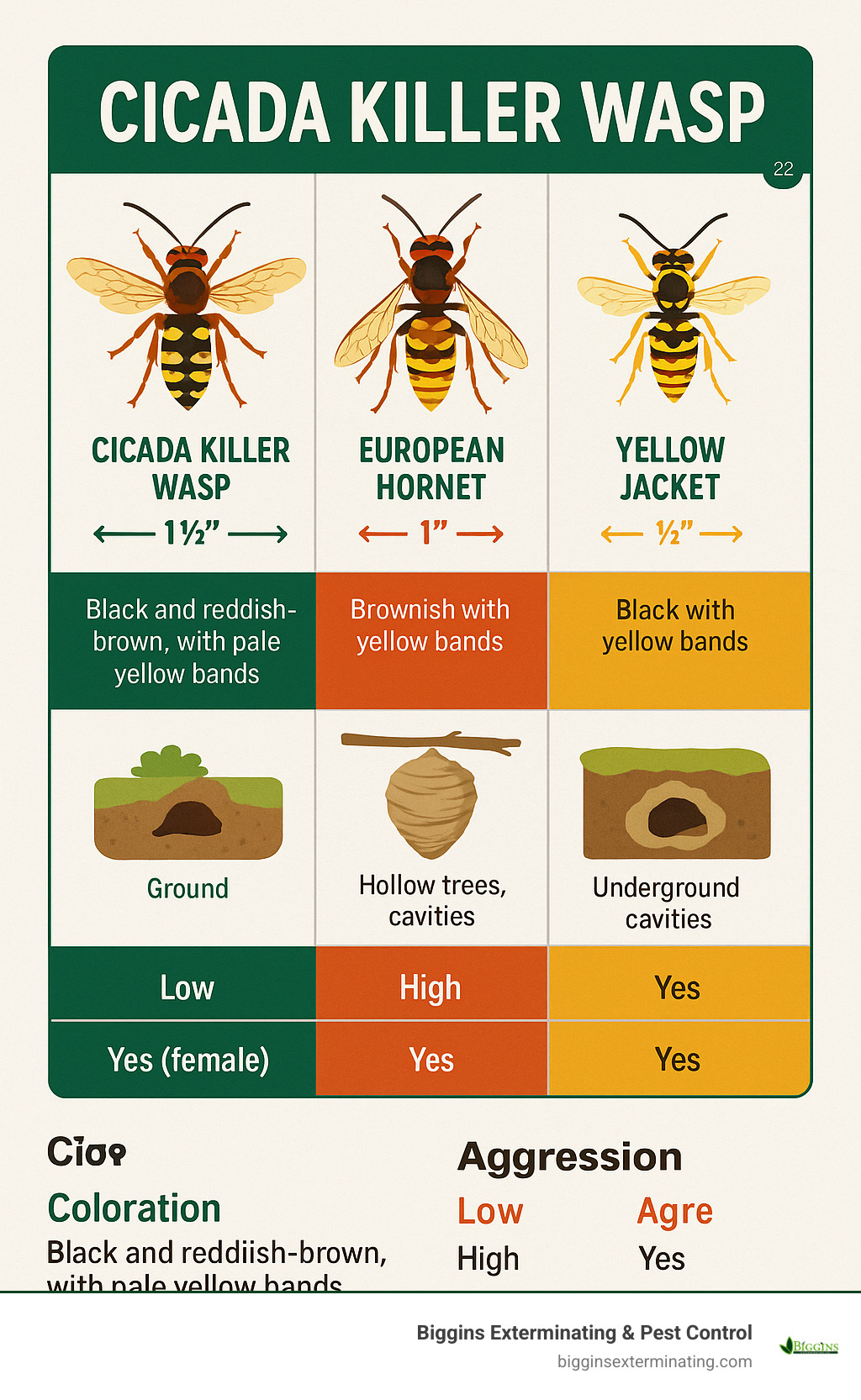
Basic cicada killer wasp killer glossary:
The Life and Habits of a Cicada Killer Wasp
These impressive wasps lead surprisingly complex lives that unfold over nearly a full year. Understanding their behavior helps explain why they’re actually quite harmless to humans despite their intimidating appearance. For a concise scientific overview, the Rutgers NJAES fact sheet on cicada killers offers additional background on their biology.
Are Cicada Killer Wasps Dangerous to Humans or Pets?
Here’s the truth that might surprise you: cicada killer wasps are remarkably gentle creatures. Despite their imposing size and sometimes aggressive-looking behavior, they pose minimal threat to humans and pets.
The key difference lies in understanding male versus female behavior. Male cicada killers are all show and no substance – they cannot sting at all because they have a false stinger that’s completely harmless. You might see them hovering aggressively near people, but this territorial display is pure bluff. They’re basically the tough guys of the wasp world who can’t back up their threats.
Female cicada killers can sting but rarely choose to. Their powerful stinger is designed for paralyzing cicadas, not defending against threats. Research shows they reserve their venom for hunting unless they’re directly handled or molested. One researcher who experienced a female’s sting described it as “not much more than a pinprick” – significantly less painful than yellow jacket or hornet stings.
Pet safety is generally not a concern, though there are a few things to watch for. Dogs or cats that catch female cicada killers might get stung, especially in the mouth. If this happens, monitor your pet for severe reactions that may require veterinary attention. The good news is that cicada killers lack the nest-guarding instinct of other wasps, making encounters much less likely.
Their low venom toxicity and non-aggressive nature make them one of the safest large wasps you’ll encounter. The rarity of stings speaks volumes about their gentle temperament.
Learn more about cicada killer wasps and how they differ from more aggressive wasp species.
The Fascinating Life Cycle and Hunting Prowess
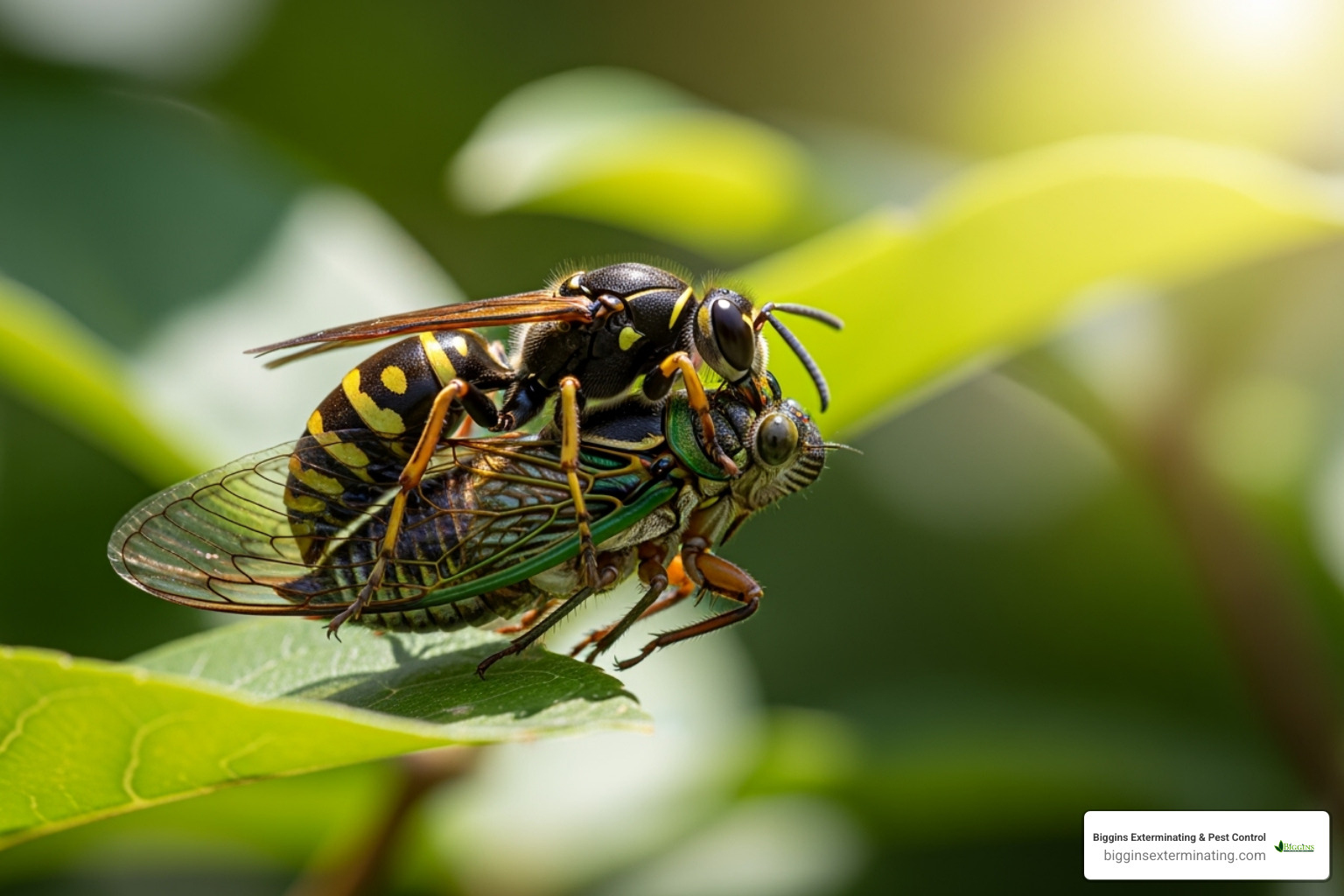
The cicada killer’s life story is a marvel of timing and precision that spans nearly a full year. Their entire existence revolves around one spectacular hunting season.
The cycle begins with adult emergence in midsummer, perfectly timed with cicada abundance. After mating, females start on an incredible provisioning mission that would impress any helicopter parent.
Each egg hatches in just 2-3 days, revealing tiny larvae ready to feast on their cicada provisions. The larval stage lasts 10-14 days of non-stop eating, consuming every bit of their paralyzed prey. Then comes the long wait – larvae spin silken cocoons and overwinter as pupae, surviving harsh New England winters underground.
The adult lifespan is remarkably brief – just 60-75 days from emergence to death by mid-September. But what they accomplish in that short time is extraordinary.
Female hunting technique is pure precision. They use vision rather than sound to locate cicadas, then execute a perfect aerial takedown. The paralyzing venom keeps cicadas alive during the entire feeding process – fresh food delivery at its finest.
The provisioning strategy reveals remarkable planning. Male larvae receive one cicada since they’ll be smaller adults with less energy needs. Female larvae get 2-3 cicadas because they need extra nutrition for their larger size and future egg-laying duties.
Consider this impressive math: each burrow may contain up to 20 cells, with 1-2 cicadas and one egg per cell. A single female can gather 100 or more cicadas in her lifetime, with each cicada weighing about twice as much as she does. That’s like you carrying home 200 pounds of groceries every shopping trip.
Nesting Habits: Where Do They Live and What Damage Do They Cause?
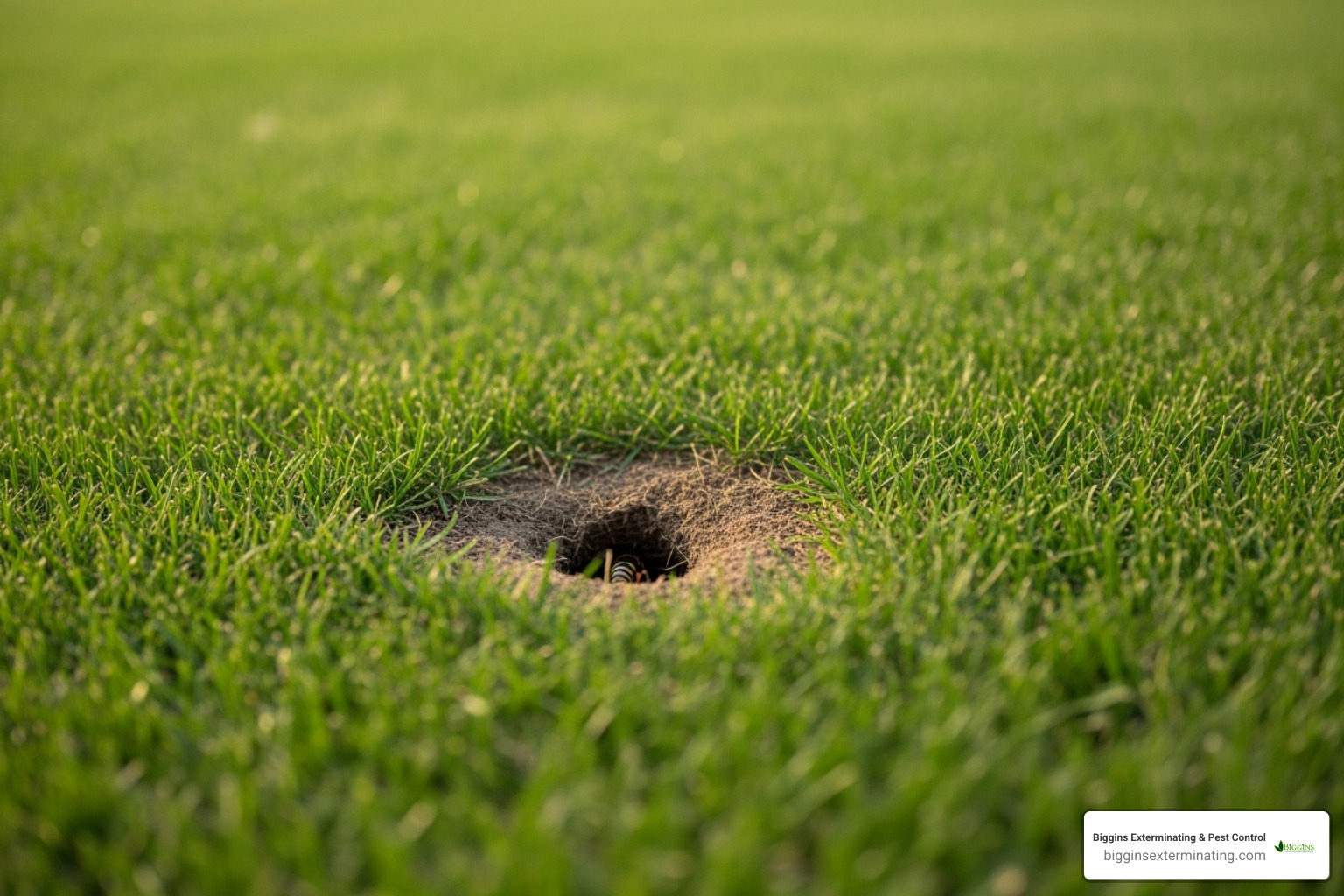
Cicada killers are incredibly picky about their real estate choices. They prefer well-drained, sandy or light-textured soils in sunny locations with sparse vegetation. Southeast-facing slopes near deciduous trees are prime real estate in their world.
The nest structure itself is an engineering marvel. These burrows extend 25-50 cm deep and can stretch 30-70 inches horizontally. The entrance measures 1-1.5 inches in diameter with a distinctive U-shaped collar of excavated soil that makes them easy to identify.
Inside, tunnels branch into an average of 15 egg-shaped brood cells, each carefully provisioned and sealed. The entire structure represents an enormous investment of time and energy.
Lawn damage is the primary concern for homeowners. Each female can excavate up to 100 cubic inches of soil per burrow, creating unsightly mounds and potentially killing grass above. The soil aeration they provide is actually beneficial, helping rainwater penetrate, but most homeowners prefer their lawns without volcano-like mounds.
Structural damage can occur when cicada killers nest under brick patios laid on sand. Their tunneling can destabilize these surfaces, creating uneven areas or loose bricks. Gardens may also suffer when burrows disrupt plant root systems.
The irony is that while their excavation creates cosmetic problems, it also aerates compacted soil and improves drainage – a classic case of good intentions with messy results.
Learn more about cicada killer wasp nests and their impact on your property.
The Ecological Role of Cicada Killers
Before reaching for any cicada killer wasp killer methods, consider the important work these insects do in our ecosystem. They’re actually beneficial insects that earn their keep in several ways.
Cicada population control is their primary ecological service. Female cicadas damage tree branches when laying eggs, while nymphs feed on tree root sap for years underground. By controlling cicada numbers naturally, these wasps help protect our urban forest from excessive damage.
Adult cicada killers are effective pollinators too. They feed on flower nectar, tree sap, and other sweet plant juices, visiting various flowering plants during their foraging activities. Their large size makes them particularly effective at transferring pollen between flowers.
They also support the broader food web by serving as prey for numerous predators. Birds like chickadees, sparrows, orioles, and bluebirds hunt them, while bats catch them during evening flights. Even other insects like praying mantises and dragonflies prey on cicada killers.
Velvet ants parasitize their larvae, creating another layer of natural population control. This complex web of predator-prey relationships helps maintain ecological balance in ways we’re still finding.
Understanding their beneficial nature helps explain why most pest control professionals recommend management rather than elimination. These gentle giants truly deserve their reputation as the good guys of the wasp world.
Your Guide to Cicada Killer Wasp Control Methods
While cicada killers are beneficial insects, large numbers can become problematic for homeowners. The good news is that effective cicada killer wasp killer strategies exist, ranging from simple prevention to professional treatment.
Natural and DIY Cicada Killer Wasp Control Techniques
The most successful approach to managing cicada killers often starts with making your property less attractive to these ground-nesting wasps. Think of it as changing the “Welcome” mat to “No Vacancy.”
Cultural control methods focus on creating conditions that discourage nesting. The key is understanding what cicada killers hate: thick, healthy turf and moist soil. These wasps prefer sparse vegetation and well-drained, sandy areas for their burrows.
Lawn health becomes your first line of defense. Regular fertilization promotes dense grass growth that makes digging difficult for female wasps. Watering deeply with 1-1.5 inches weekly keeps soil conditions unfavorable for burrowing. When mowing, keep grass at 3-4 inches tall – this height discourages the wasps from settling in.
Soil modification can be remarkably effective. Keep soil consistently moist during peak season (July through September), as cicada killers avoid wet or muddy conditions. Adding lime and fertilizers encourages tall grass growth, while mulching flower beds with 3+ inches of organic material eliminates the bare soil these wasps seek.
For immediate intervention, physical removal can work in small infestations. Block burrow entrances with sticks after evening activity ceases, or regularly churn sand in playgrounds to disrupt established tunnels. Planting ground cover reduces exposed soil areas that attract new settlers.
Simple DIY treatments include pouring boiling water directly into burrows to eliminate occupants, or using soapy water mixed with dish soap poured into nests at night when wasps are inside. Food-grade diatomaceous earth sprinkled around entrances can also deter activity.
Learn more about home management of cicada killers for additional natural control methods that work in Massachusetts conditions.
Professional Treatments for a Cicada Wasp Nest
When natural methods aren’t sufficient, professional treatment becomes the most effective cicada killer wasp killer solution. At Biggins Exterminating, we’ve learned that targeted approaches work better than broad-spectrum treatments.
Large aggregations of 100 or more burrows require professional intervention. Nests near high-traffic areas like walkways, patios, or children’s play areas also warrant expert treatment. If you have allergic individuals in the household or structural damage concerns, professional help ensures both safety and effectiveness.
Professional-grade insecticidal dust applied directly into burrows using specialized equipment provides the most reliable control. We use pyrethroid-based dusts that continue working for weeks after application. The timing matters – night treatment when wasps are inside their burrows maximizes contact and effectiveness.
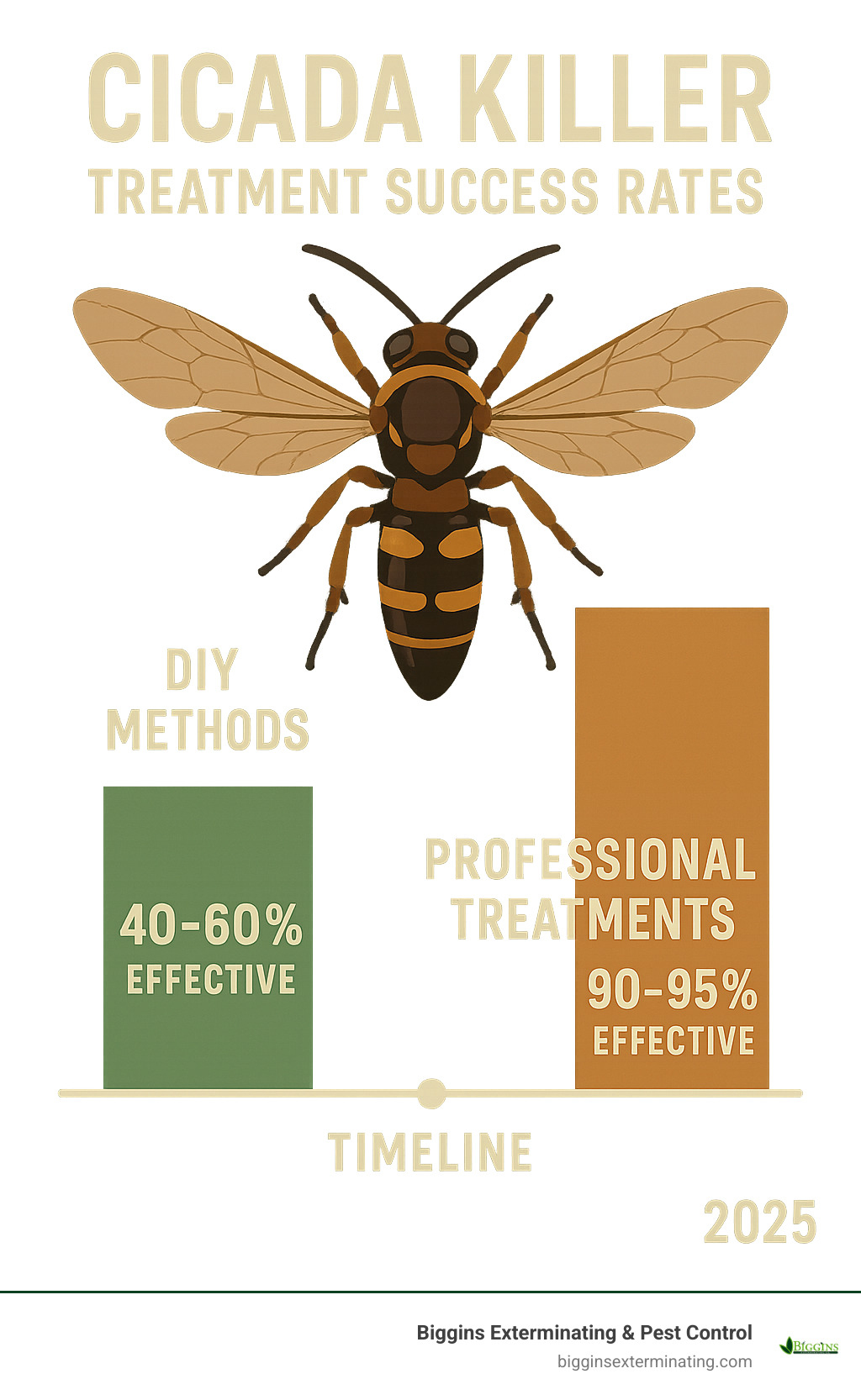
Liquid insecticides offer another professional option. Non-repellent formulations that wasps can’t detect are applied to soil around burrow entrances. These treatments affect both larvae and emerging adults, providing 3-6 month residual protection.
Safety precautions are paramount in professional treatments. Our technicians wear personal protective equipment and follow strict protocols to protect your family, pets, and the environment. Post-treatment monitoring ensures the problem is fully resolved.
Average costs for professional cicada killer treatment range from $200-$600 based on internet data, though prices vary significantly depending on property size and infestation severity. These are not actual costs for Biggins Exterminating services.
Learn more about professional cicada killer wasp treatment and our specific protocols for Massachusetts properties.
Long-Term Prevention: How to Keep Them from Coming Back
The most effective cicada killer wasp killer strategy is prevention. Even after successful treatment, the site remains attractive to new settlers unless you modify the habitat that drew them initially.
Habitat modification requires understanding the cicada killer lifecycle. Since approximately 40% of developing larvae emerge as adults the following year, breaking this cycle through consistent prevention is essential.
Fertilizing lawns regularly promotes the thick turf that discourages nesting. A proper watering schedule with deep, infrequent watering maintains soil moisture levels that wasps avoid. Mowing height at 3-4 inches creates the dense canopy that makes digging difficult.
Reducing bare soil through strategic landscaping removes the preferred nesting sites. Plant dense ground cover in problem areas, maintain adequate mulch layers under shrubs, and overseed thin lawn areas promptly.
Seasonal timing matters for prevention. Spring preventive applications before emergence, summer monitoring and spot treatments, and fall preparation for next year’s prevention create a comprehensive approach.
The key to long-term success is consistency. Cicada killers have excellent site fidelity – they return to favorable locations year after year. By maintaining unfavorable conditions, you can redirect them to less problematic areas.
Learn more about prevention strategies that work specifically for Massachusetts soil and climate conditions.
When to Call a Professional for Wasp Control
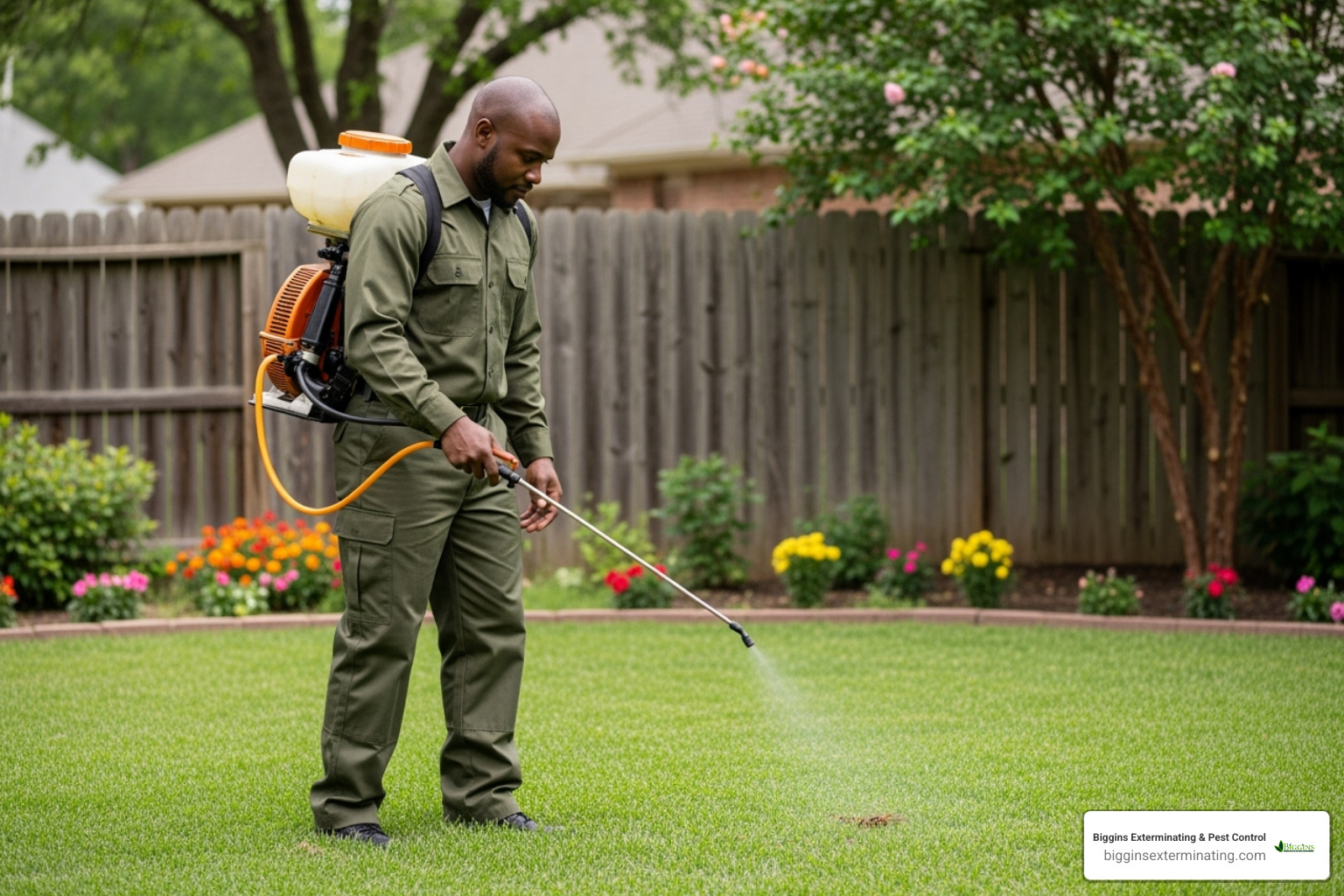
Let’s be honest – sometimes the DIY approach just isn’t enough. While I always encourage homeowners to try natural methods first, there are situations where professional cicada killer wasp killer treatment becomes the smart choice.
When you’re dealing with large aggregations of 50 or more active burrows, you’re facing more than a simple nuisance. These extensive colonies can cause significant lawn damage and create genuine safety concerns. The sheer volume of soil displacement and the intimidating presence of dozens of large wasps hovering around your property calls for professional intervention.
High-risk locations present another clear indicator for professional help. If cicada killers have established burrows near your front door, children’s play areas, or pool deck, the daily stress of navigating around these insects isn’t worth the savings of DIY treatment. Even though they’re gentle, the psychological impact of walking past aggressive-looking wasps every day affects your family’s quality of life.
Structural concerns should never be ignored. When cicada killers undermine brick patios, create holes near foundation plantings, or destabilize walkways, you’re looking at potential repair costs that far exceed professional treatment expenses. We’ve seen homeowners spend thousands repairing patio damage that could have been prevented with timely professional intervention.
If anyone in your household has allergic reactions to wasp stings, this isn’t the time to take chances. While cicada killer stings are rare and mild, allergic individuals can’t afford even that small risk. Professional treatment eliminates the population quickly and safely, removing the threat entirely.
Repeated DIY failures tell you everything you need to know. If you’ve tried multiple home remedies without success, continuing down the same path wastes time and money while the population potentially grows. Professional-grade products and application techniques succeed where consumer options fail.
At Biggins Exterminating, we bring over four decades of Massachusetts pest control experience to every cicada killer situation. Our family-owned approach means we understand that your home is your sanctuary, not just another service call. We provide guaranteed results backed by proper training, professional-grade equipment, and comprehensive treatment plans that address both immediate problems and long-term prevention.
The peace of mind that comes with warranty protection and follow-up service makes professional treatment a smart investment. When we treat your property, you’re not just getting a one-time application – you’re getting ongoing support and the assurance that if problems persist, we’ll return to make it right.
Learn more about professional wasp removal and find why so many Massachusetts homeowners trust our comprehensive approach to cicada killer management.
Frequently Asked Questions About Cicada Killer Wasps
When dealing with these impressive wasps, homeowners often have similar concerns. Let me address the most common questions I’ve encountered in my four decades of pest control experience.
How painful is a cicada killer wasp sting?
Here’s some reassuring news: cicada killer stings are remarkably mild. One researcher who deliberately allowed himself to be stung described the experience as “not much more than a pinprick.” That’s dramatically less painful than what you’d experience from yellow jackets or hornets.
The key thing to remember is that only female cicada killers can sting, and they’re incredibly reluctant to do so. Their stingers are designed for paralyzing cicadas, not defending against humans. Males may hover aggressively around you, but they’re all bluff – they literally cannot sting.
I’ve worked with countless homeowners who were terrified of these wasps, only to learn that their non-aggressive nature makes stings extremely rare. Even when working directly around their nests, encounters that result in stings are unusual.
Will cicada killers go away on their own?
Unfortunately, this is where many homeowners get disappointed. While adult cicada killers die by mid-September, the problem doesn’t end there. The larvae spend the winter safely underground, emerging as adults the following summer.
What makes this particularly challenging is that an estimated 40% of developing larvae successfully emerge as adults the following year. This means populations can actually grow over time if conditions remain favorable.
The real issue is that even with aggressive control, the site will remain attractive to new settlers in ensuing years unless you make habitat changes. Cicada killers have excellent “real estate sense” – they know a good nesting site when they see one. Your well-drained, sunny lawn will continue to attract new females each summer.
What is the best cicada killer wasp control method for my lawn?
The honest answer is that the best cicada killer wasp killer approach depends entirely on your specific situation. Let me break this down based on what I’ve seen work best over the years.
For small infestations with just a few burrows, simple DIY methods often work well. Pouring boiling water directly into burrows or blocking entrances with sticks can be effective. Keep your soil moist during peak nesting season in July and August – cicada killers hate wet conditions.
For moderate infestations with 6-25 burrows, professional dust treatment becomes more practical. We apply insecticidal dust directly into each burrow, typically in the evening when the wasps are inside. This targeted approach is both effective and environmentally responsible.
For large infestations with 25 or more burrows, comprehensive professional treatment with a prevention plan provides the most reliable results. At this level, you’re dealing with an established population that requires systematic management.
The most effective long-term strategy focuses on prevention through habitat modification. Maintain thick, healthy turf through proper fertilization and watering. Apply mulch to reduce bare soil areas. A well-maintained lawn is your best defense against future cicada killer problems.
Learn more about professional wasp removal options custom to your specific needs and property conditions.
Secure Your Yard from Cicada Killers
After learning about these fascinating “gentle giants,” you might feel a bit more at ease knowing that cicada killers are more bark than bite. Still, nobody wants their beautiful lawn looking like a construction zone, and that’s completely understandable.
The reality is that cicada killers are beneficial insects that help control pest populations while posing virtually no threat to your family or pets. Male cicada killers put on quite the intimidating show, buzzing aggressively around their territory, but they’re all bluff – they literally cannot sting you. Female cicada killers can sting but rarely do, reserving their venom for the cicadas they hunt.
When it comes to effective cicada killer wasp killer strategies, the best approach isn’t always elimination – it’s smart management. Think of it like dealing with any beneficial but sometimes inconvenient neighbor. Sometimes you need boundaries, but you don’t necessarily need to call in the cavalry.
Prevention remains your most powerful tool. A thick, healthy lawn maintained through proper fertilization and watering creates an environment these wasps simply don’t prefer. They’re looking for sparse, well-drained soil in sunny spots – the opposite of a lush, dense turf.
For small numbers of cicada killers, simple DIY methods like keeping soil moist or blocking burrows can be surprisingly effective. But when you’re dealing with dozens of burrows, or when nests appear near your front door or children’s play areas, professional treatment becomes the smart choice.
At Biggins Exterminating & Pest Control, we’ve been helping Massachusetts families steer these exact situations for over four decades. Our family-owned business understands that every situation is unique – what works for a small Burlington backyard might not be right for a large Andover property.
We serve communities throughout the greater Boston area, including Wilmington, Bedford, Billerica, Lexington, North Reading, Tewksbury, and Woburn. Our approach emphasizes understanding these insects’ behavior, using targeted treatments only when necessary, and developing long-term prevention strategies that actually work.
The goal isn’t to wage war against beneficial insects – it’s to find the right balance for your specific property and peace of mind. Whether you’re dealing with a few concerning burrows or a full-scale cicada killer convention in your yard, we can help you develop a strategy that works.
Learn more about cicada killer wasp control and find how we can help you reclaim your outdoor space while respecting these remarkable insects’ important role in our ecosystem.