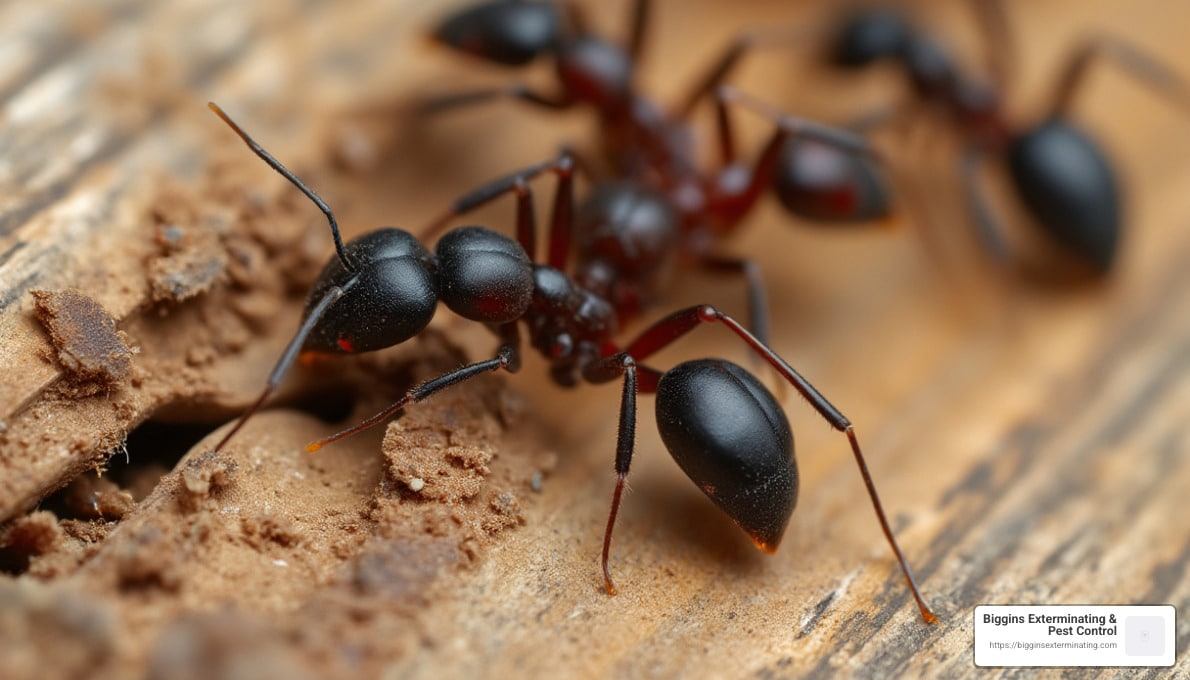
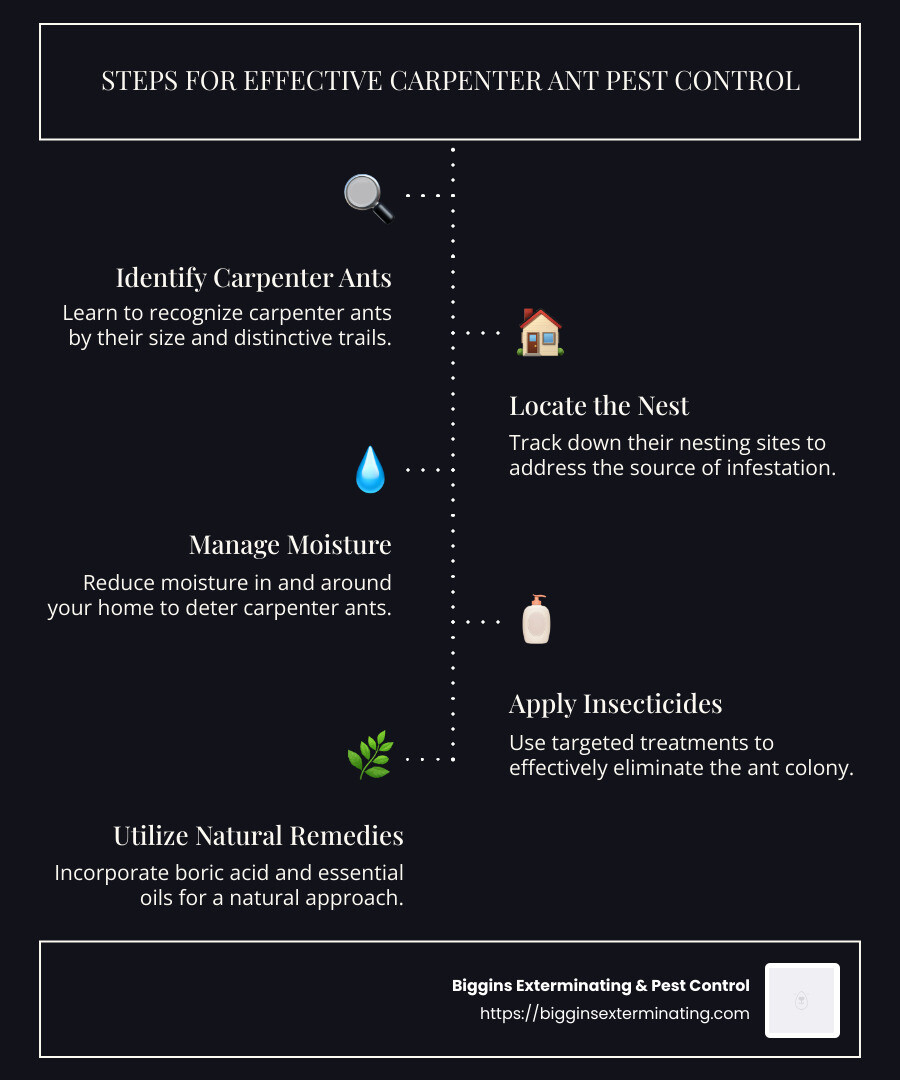
Carpenter Ant Pest Control is essential for Helen and many homeowners battling these destructive invaders. Carpenter ants don’t eat wood like termites do, but they carve out intricate tunnels that can weaken your home’s structure over time. Key steps for effective Carpenter Ant Pest Control include:
- Identifying the ants through their appearance and trails.
- Finding and removing nests to prevent further damage.
- Managing moisture issues that attract ants to your home.
- Using targeted insecticides and natural remedies to eliminate the colony.
Taking these actions can protect your home and maintain its integrity.
Welcome! I’m Stephen Biggins, and I’ve been dedicated to providing trusted Carpenter Ant Pest Control solutions since 1982 through Biggins Exterminating Co. Our family-run business thrives on integrity and customer care, ensuring your property remains safe and pest-free. Now, let’s dive into how you can tackle this issue head-on.
Carpenter Ant Pest Control terms to learn:
– carpenter ant infestation in house
– pest control for carpenter ants
Identifying Carpenter Ants
Recognizing carpenter ants is the first step in effective Carpenter Ant Pest Control. These ants are among the largest in the United States, typically measuring between 3.4 to 13 mm in length. Their color varies, with the most common being black, but some species can appear reddish, yellowish, or even a combination of red and black. Carpenter ants have large mandibles, which they use to excavate wood for nesting, not for eating.

Behavior
Carpenter ants are nocturnal creatures, often seen foraging for food at night. They prefer sweets and meats, but will also feed on other insects. Unlike termites, carpenter ants do not consume wood. Instead, they remove wood to create smooth tunnels and galleries for their nests, leaving behind a telltale sign known as frass—a sawdust-like material that includes wood shavings and bits of dead ants.
Nesting Habits
Carpenter ants establish two types of colonies: parent and satellite. The parent colony houses the queen, her brood, and workers, while satellite colonies consist of workers, older larvae, and pupae. These ants favor moist, decaying, or hollow wood, both indoors and outdoors, making damp areas in your home prime targets for infestation.
To locate a nest, look for frass piles near wooden structures, and listen for rustling sounds within walls. Carpenter ants often nest in hollow doors, walls, or beams, and can be found in stumps or rotting logs outside.

Understanding these aspects of carpenter ants’ appearance, behavior, and nesting habits is crucial for effective Carpenter Ant Pest Control. Identifying these pests early can help prevent significant structural damage to your home.
Effective Carpenter Ant Pest Control Methods
When dealing with carpenter ants, the goal is to eliminate the infestation and prevent future occurrences. Here’s how you can tackle this problem effectively.
DIY Carpenter Ant Control
- Find the Nest
Identifying the location of the nest is crucial. Look for signs like frass (sawdust-like material) near wooden structures or listen for rustling sounds in walls. Nests are often in moist, decaying wood, so check areas prone to dampness.
- Remove the Nest
Once located, you can physically remove the nest if accessible. This is often the most direct way to stop the infestation.
- Moisture Control
Carpenter ants thrive in moist environments. Fix any leaks, ensure proper ventilation, and consider using dehumidifiers in damp areas. This makes your home less inviting to these pests.
- Boric Acid
Boric acid is a tried-and-true method for killing ants. It penetrates their bodies, dissolving from the inside. Apply boric acid dust in areas where you suspect ant activity. Be cautious and keep it away from pets and children.
- Diatomaceous Earth
This natural powder dehydrates ants by breaking down their exoskeletons. Sprinkle it in dry areas where ants travel. It’s safe for pets and children but avoid inhaling the dust.
- Essential Oils
Disrupt scent trails with a solution of essential oils like tea tree, cedarwood, or citrus. Alternatively, a mix of dish soap and water or water and vinegar can be sprayed on trails to confuse the ants.
Professional Carpenter Ant Control
For larger infestations or when DIY methods aren’t enough, professional help is recommended.
- Biggins Exterminating & Pest Control
Biggins offers expert services in Carpenter Ant Pest Control across several Massachusetts locations. Their licensed applicators can find and treat nests effectively. They use specialized insecticides and techniques that are not available to the general public.
- Insecticides
Professional-grade insecticides, such as those containing fipronil, are highly effective. These are typically used in perimeter sprays and require a licensed applicator. They work by allowing ants to carry the toxicant back to the nest, ensuring the whole colony is affected.
- Licensed Applicators
Hiring professionals ensures that the insecticides are applied safely and effectively. They are trained to assess the situation and choose the most appropriate treatment method for your home.
By combining DIY methods with professional services, you can effectively manage and control carpenter ant infestations. This dual approach ensures both immediate relief and long-term prevention.
Preventing Carpenter Ant Infestations
Preventing carpenter ants from invading your home is all about making your space less inviting to them. Here are some simple and effective strategies:
Moisture Elimination
Carpenter ants love damp wood. To keep them away, eliminate any sources of moisture. Fix leaky pipes, roofs, and faucets promptly. Ensure your home is well-sealed to prevent water from getting in during storms. Use dehumidifiers in damp areas like basements to keep the air dry.
Proper Ventilation
Good airflow helps keep moisture levels down. Ventilate all damp areas properly. Clean your gutters regularly to prevent water from pooling and seal any gaps in your home’s foundation. This will help keep moisture out and make your home less attractive to ants.
Firewood Storage
Firewood can be a perfect home for carpenter ants. Store firewood off the ground and as far from your house as possible. Use a metal rack to lift the wood and keep it dry. This way, ants are less likely to make a nest in it and then move into your home.
Tree Pruning
Trees and shrubs can act as bridges for ants to reach your home. Prune back any branches that touch your house. This simple step can stop ants from crawling from trees directly onto your roof or walls. Regular trimming also keeps your yard neat and helps prevent other pests.
By following these steps, you can make your home a less appealing target for carpenter ants, reducing the risk of infestations.
Average Costs of Carpenter Ant Pest Control
When dealing with a carpenter ant infestation, understanding the potential costs is crucial. Carpenter Ant Pest Control can vary widely in price depending on several factors, including the severity of the infestation and the methods used for treatment.
Treatment Costs
On average, the cost of Carpenter Ant Pest Control treatments can range from as low as $100 to as high as $1,000 or more. This wide range reflects different factors such as the size of the home, the extent of the infestation, and the specific pest control methods employed.
- DIY Methods: Using boric acid or diatomaceous earth can be a cost-effective option. These materials are available at most hardware stores and typically cost between $10 and $50. However, DIY methods may not be as effective for severe infestations.
- Professional Services: Hiring professionals, like Biggins Exterminating & Pest Control, generally costs more but offers a comprehensive solution. A single treatment session can range from $300 to $500. For extensive infestations requiring multiple visits, costs can exceed $1,000.
Average Pricing Based on Internet Data
Internet data suggests that the average homeowner spends about $150 to $500 for initial treatments. Follow-up treatments, if necessary, can add another $75 to $150 per visit. These are average costs and not specific to Biggins Exterminating services.
What Influences the Cost?
- Severity of Infestation: Larger infestations require more resources and time to treat, increasing the cost.
- Type of Treatment: Chemical treatments, especially those involving licensed applicators, tend to be more expensive than natural or DIY remedies.
- Location: Prices can vary by region. Urban areas might see higher costs due to increased demand and higher operational expenses.
- Frequency of Treatment: Some infestations may need multiple treatments, driving up the total cost.
Understanding these costs can help you budget effectively for Carpenter Ant Pest Control and ensure you choose the right method for your needs.
Frequently Asked Questions about Carpenter Ant Pest Control
How to get rid of carpenter ants naturally?
If you’re looking for natural solutions to tackle a carpenter ant infestation, boric acid and diatomaceous earth are your best bets.
- Boric Acid: This powerful natural remedy can be mixed with sugar to attract ants. Once consumed, it disrupts their digestive systems. Place this mixture in small containers or bottle caps near ant trails.
- Diatomaceous Earth: This is a safe, natural powder that damages the ants’ exoskeletons, leading to dehydration. Sprinkle it around entry points and along ant trails for effective results.
Both methods are cost-effective, typically ranging from $10 to $50 for supplies, and are available at most hardware stores.
What is the best insecticide for carpenter ants?
When natural methods aren’t enough, chemical insecticides can be more effective. Two common options are Fipronil and pyrethroids.
- Fipronil: Known for its effectiveness, Fipronil is often used in perimeter sprays. It is slow-acting, allowing ants to carry it back to the nest, affecting the entire colony.
- Pyrethroids: These synthetic chemicals are fast-acting and widely used in pest control. They target the nervous system of ants, providing quick results. However, they may require professional application for optimal safety and effectiveness.
Both options are best handled by licensed applicators to ensure safe and proper use.
How do I find a carpenter ant nest?
Locating a carpenter ant nest can be tricky, but there are signs to look for:
- Sawdust: Also known as frass, this is a clear indicator of carpenter ants. It resembles fine wood shavings and is often found near nest sites.
- Rustling Sounds: Listen for faint rustling noises within walls or wood structures. This sound is the ants moving around and expanding their nest.
Once you’ve identified these signs, follow ant trails or place bait to trace them back to their colony. If the nest is hidden or inaccessible, consider using slow-acting toxic baits that ants will carry back to the nest, effectively eliminating the colony over time.
Conclusion
At Biggins Exterminating & Pest Control, we understand how frustrating and damaging a carpenter ant infestation can be. With over 40 years of experience, we are committed to providing effective carpenter ant pest control solutions custom to your needs. Our family-owned business in Wilmington, MA, prides itself on delivering reliable pest and rodent control services without the hassle of contracts.
Customer Satisfaction is our top priority. We treat our customers like family, ensuring that you receive personalized attention and effective solutions. Our experienced team is dedicated to exceeding your expectations, from the initial inspection to the final treatment. We keep you informed every step of the way, explaining our methods and answering any questions you may have.
We stand behind our work with comprehensive warranties. If pests return after our treatment, we’ll be back promptly to address the issue at no additional cost to you. This commitment to accountability ensures your complete satisfaction and a pest-free environment for your home.
When you choose Biggins Exterminating & Pest Control, you’re choosing a company that genuinely cares about your well-being. Let us help you take back control of your home from carpenter ants and enjoy peace of mind knowing that your property is in good hands.
For more information or to schedule a consultation, contact us today. Together, we can keep your home safe and pest-free.