Pest control for carpenter ants is crucial, especially because these tiny invaders can turn your dream home into a nightmare. In short, these pests don’t just forage for food—they damage the wood structures they infest, threatening the integrity of your home.
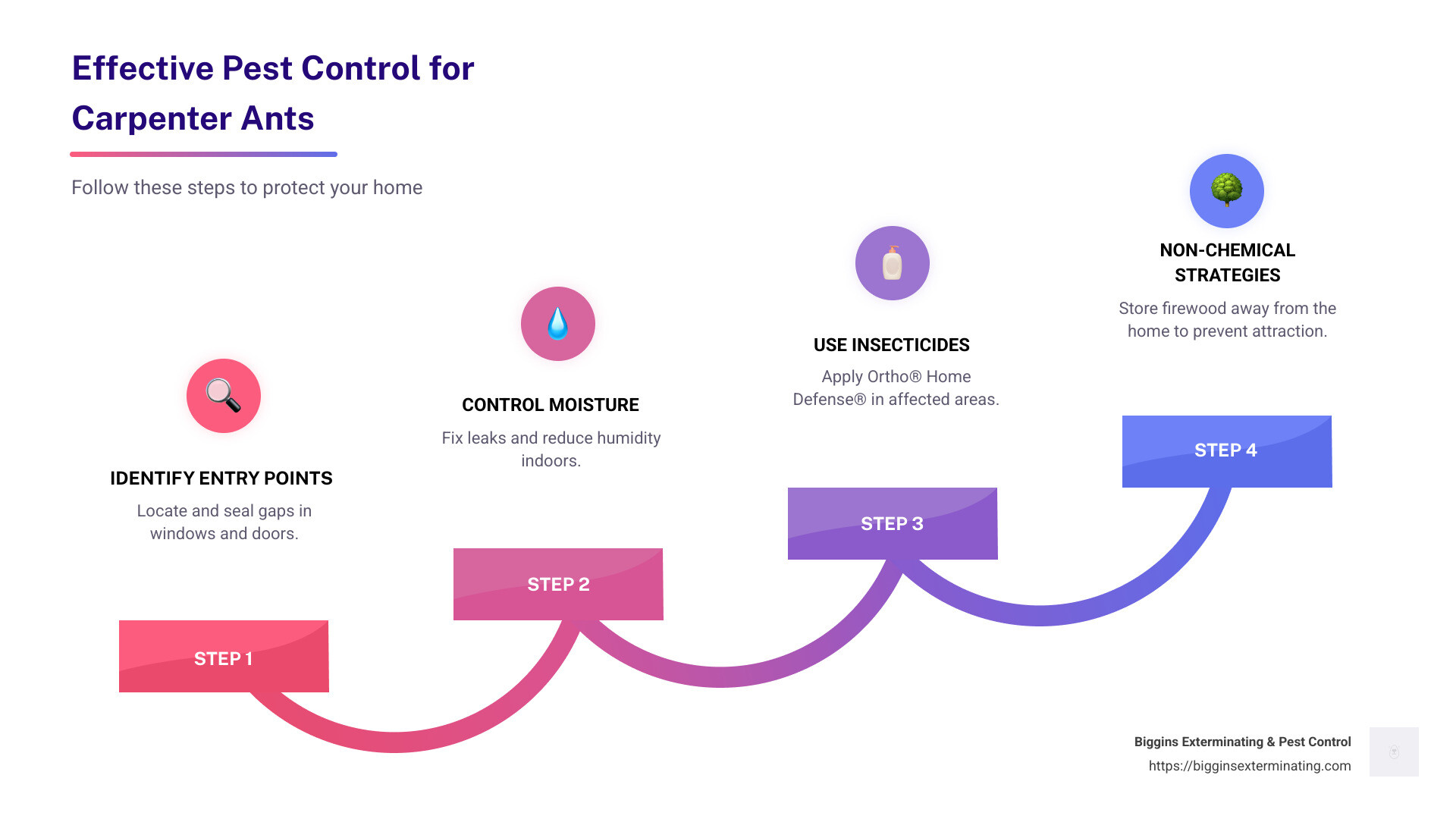
Here’s a quick rundown on steps for effective pest control for carpenter ants:
- Identify and seal entry points.
- Remove sources of excess moisture.
- Use recommended insecticides, like Ortho® Home Defense®.
- Use non-chemical strategies, such as storing firewood away from your home.
At Biggins Exterminating Co., we specialize in dealing with these pests effectively. I’m Stephen Biggins, and with decades of experience in pest control for carpenter ants, my team and I are committed to helping families in Massachusetts maintain safe and comfortable homes.
Understanding Carpenter Ants
Carpenter ants are not your average ants. They’re like the lumberjacks of the insect world, using their strong jaws to carve out nests in wood. Unlike termites, carpenter ants don’t eat the wood—they just make cozy homes inside it. This can lead to significant damage if left unchecked.
Identification
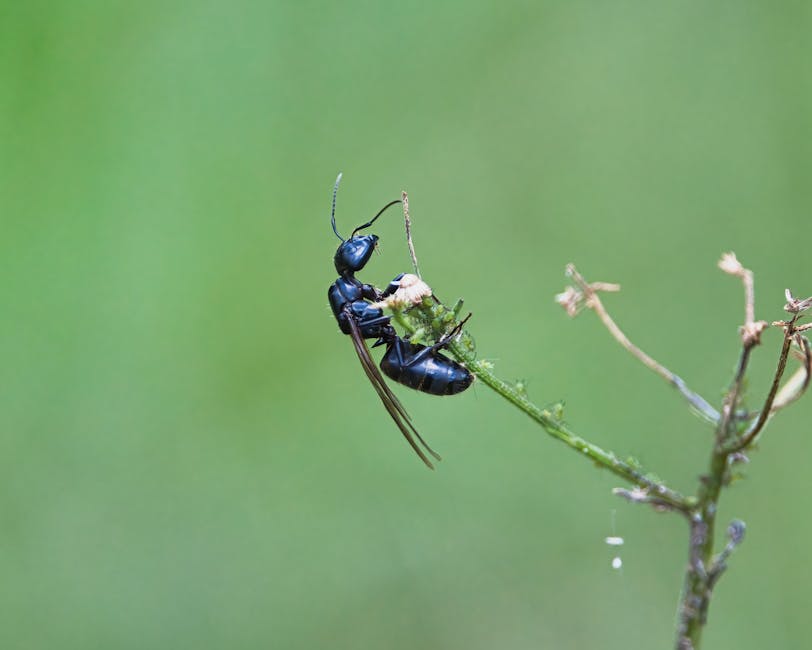
Carpenter ants are among the largest ants you’ll find in Massachusetts. The two main species in the area are the black carpenter ant (Camponotus pennsylvanicus) and the Florida carpenter ant (Camponotus floridanus). The black carpenter ant is, as the name suggests, black with yellowish hairs on its abdomen. The Florida carpenter ant sports a reddish head and thorax with a shiny black abdomen.
Sizes vary, but these ants typically range from ¼ to ½ inch long. To confirm their identity, you can collect a few ants and send them to a local Cooperative Extension Service for verification.
Biology
In Massachusetts, carpenter ants become active in the spring and stay busy through early fall. They hibernate in their nests during the colder months to survive the winter.
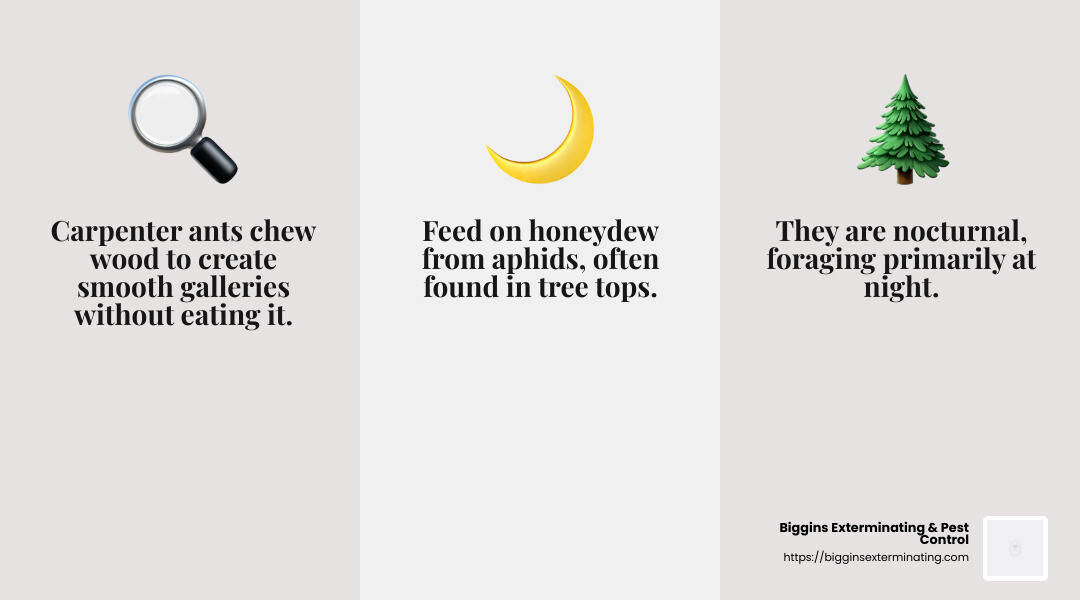
These ants are nocturnal, which means they do most of their foraging at night. They feed primarily on honeydew, a sugary substance produced by aphids and scale insects. This sweet treat is found in abundance in the tops of trees, making these areas prime feeding grounds.
Nest Habits
Carpenter ants are known for their nest-building skills. They chew through wood to create smooth, clean galleries where they live, unlike termites, which line their tunnels with mud.
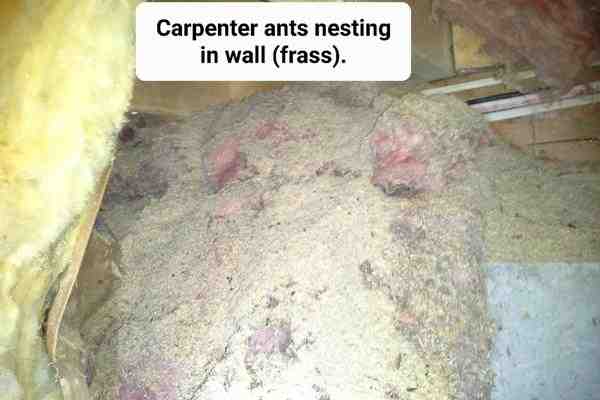
They often build their nests in damp or decaying wood, so look for them in hollow doors, walls, and other wooden structures. You might also find them in rotting trees outside your home. One telltale sign of a nest is frass, which looks like sawdust and is left behind as they excavate their galleries.
These ants are strategic in their movements, creating semi-permanent trails from their nests to food sources. They use natural and man-made guides, like wall edges, to steer. If you see trails of ants marching in and out of your home, you might have a carpenter ant problem.
Understanding the habits and biology of carpenter ants is the first step in effective pest control. Armed with this knowledge, you can better protect your home from these wood-damaging pests.
Next, we’ll dive into pest control for carpenter ants, focusing on prevention, insecticides, and nonchemical measures to keep these invaders at bay.
Pest Control for Carpenter Ants
When it comes to pest control for carpenter ants, the goal is simple: protect your home from damage while keeping these ants at bay. Let’s explore some effective strategies, both chemical and nonchemical, to tackle these pesky invaders.
Effective Insecticides
- Boric Acid: This is a tried-and-true method for dealing with carpenter ants. Boric acid is a slow-acting poison that ants carry back to their nests. Once ingested, it disrupts their digestive system, effectively eliminating the colony over time.
- Diatomaceous Earth: This natural substance works by dehydrating ants. When ants come into contact with diatomaceous earth, it breaks down their exoskeleton, leading to dehydration and death. It’s safe for use around pets and children, but be cautious to avoid inhaling the fine dust.
- Pyrethroids: These synthetic insecticides mimic natural compounds found in chrysanthemum flowers. They are effective in killing ants on contact and can be used around the perimeter of your home to prevent ants from entering. However, it’s crucial to follow the label instructions and use them judiciously to minimize environmental impact.
Nonchemical Prevention Strategies
- Moisture Control: Carpenter ants are drawn to moist environments. Fixing leaks, improving drainage, and using dehumidifiers in damp areas can make your home less inviting to these ants.
- Tree Pruning: Trimming tree branches that touch your home can prevent ants from using them as bridges to enter your house. This simple step can significantly reduce the risk of an infestation.
- Firewood Storage: Store firewood at least 20 feet away from your home and off the ground. Carpenter ants often nest in woodpiles, and this distance can help keep them from migrating indoors.
By combining these pest control for carpenter ants methods, you can effectively protect your home from these wood-damaging pests. Next, we’ll explore how to identify and treat carpenter ant nests, both indoors and outdoors.
Identifying and Treating Nests
Once you’ve identified a carpenter ant problem, the next step is to find and treat their nests. Carpenter ants can nest indoors, outdoors, or both, so it’s crucial to tackle both areas to effectively control the infestation.
Indoor Treatment Techniques
Finding the Nest Indoors
Carpenter ants often nest in moist, decaying wood within your home. Common places include hollow doors, window sills, and behind baseboards. Look for sawdust-like wood shavings mixed with dead ants, as these are telltale signs of a nest.
Insecticidal Dusts
Once a nest is located, use insecticidal dusts to treat it. Apply a thin film of dust inside voids where ants are nesting or suspected to be nesting. Dusts like D Fense Dust are effective because they remain in place and provide a long-term residual effect. Always wear a protective mask to avoid inhaling dust particles.
Aerosols and Foams
For visible nests, aerosols can be sprayed directly to kill ants on contact. Products like Spectre PS Aerosol and Alpine PT Aerosol are designed for crack and crevice treatments. Foaming aerosols, such as Alpine Ant Termite Foam, expand to reach hidden areas, making them ideal for void treatments.
Void Treatment
If you suspect a nest inside a wall, drill small holes (1/8 inch) and apply dust or foam into the void. Treat at least 2-6 feet on either side of the entry point to maximize the chance of reaching the queen and effectively eliminating the colony.
Outdoor Treatment Techniques
Finding the Nest Outdoors
Outdoors, carpenter ants often nest in tree stumps, rotting logs, or even in the ground. Look for trails of ants leading to these areas, as they can guide you to the nest.
Liquid Insecticides
For outdoor nests, especially those in trees, liquid insecticides are effective. Pour a water-based insecticide directly into the nest to saturate it completely. This may require a gallon or more to ensure the entire nest is treated.
Tree Nests
If a tree nest is difficult to reach, drill a small hole above the nest and pour the insecticide in to let it flow down. This ensures that the insecticide reaches all parts of the nest.
Perimeter Sprays
To keep ants from entering your home, apply perimeter treatments. Spray a water-based insecticide around the house, covering the ground and walls up to three feet high. Also, treat the trunks of trees where ants have been seen. Reapply every four to six weeks or after heavy rain for continued protection.
By addressing both indoor and outdoor nests with these targeted treatments, you can effectively manage a carpenter ant infestation. Now, let’s dig into the costs associated with treating these persistent pests.
Average Costs for Carpenter Ant Treatment
Dealing with carpenter ants can be both a hassle and an expense. But understanding the costs involved can help you plan better.
Average Pricing
The cost of treating carpenter ants varies widely. On average, homeowners might spend anywhere from $150 to $500, with some treatments going as high as $1,500 depending on the severity of the infestation and the size of the area needing treatment. These figures are based on a range of internet data and not specific to Biggins Exterminating services.
Factors Affecting Cost
Several factors can influence the cost of treatment:
- Size of Infestation: Larger infestations require more resources and time, increasing costs.
- Location: Hard-to-reach nests, such as those in walls or high-up tree branches, may require specialized equipment and techniques.
- Type of Treatment: Chemical treatments, like insecticidal dusts and perimeter sprays, might be more expensive than nonchemical measures, such as moisture control and tree pruning.
Cost Breakdown
Here’s a simple breakdown of potential costs:
- Inspection Fees: $50 – $200
- Chemical Treatments: $100 – $300 per application
- Nonchemical Measures: $50 – $150
Additional Considerations
That some pest control companies offer packages that include follow-up visits and guarantees. These can provide peace of mind but may add to the initial cost. Always ask for detailed quotes and understand what’s included in the service to avoid unexpected expenses.
Understanding these costs can help you make informed decisions about managing carpenter ants in your home. Next, let’s answer some frequently asked questions about these pesky invaders.
Frequently Asked Questions about Carpenter Ants
How to identify carpenter ants?
Carpenter ants are among the largest ants you might encounter. They range from 3.4 to 13 millimeters in length. Typically, these ants are black, but some species display reddish or yellowish hues. Look for their large mandibles, which they use to excavate wood for nesting. If you spot ants with these characteristics, it’s likely you’ve found carpenter ants.
What attracts carpenter ants to homes?
Carpenter ants are drawn to moist and decaying wood. They don’t eat wood, but they carve through it to create their nests. If your home has areas with high moisture levels, such as leaky roofs or damp basements, it might attract these ants. They also feed on sweets and proteins, so food crumbs and spills can lure them inside.
Are carpenter ant bites dangerous?
While carpenter ants can bite, they don’t pose a significant threat to humans. Their bites can be painful because they use their strong mandibles, and they might spray formic acid into the wound, causing a mild burning sensation. However, unlike some other insects, carpenter ants don’t transmit diseases or cause serious harm to people.
Conclusion
At Biggins Exterminating & Pest Control, we understand that dealing with carpenter ants can be a daunting task. These pests can cause significant damage to your home, but with effective pest management, you can protect your property and peace of mind.
Our family-owned business in Wilmington, MA, has been serving the community for over 40 years. We pride ourselves on delivering reliable and efficient pest control solutions without the need for long-term contracts. Our commitment is to ensure customer satisfaction by providing personalized services custom to your specific needs.
When it comes to pest control for carpenter ants, we focus on both prevention and treatment. Our team uses a combination of proven techniques and modern insecticides to tackle infestations effectively. Whether it’s applying insecticidal dusts indoors or using perimeter sprays outdoors, we aim to eliminate ants at their source.
Customer satisfaction is our top priority. We believe in transparency and keeping our clients informed every step of the way. If pests return after our treatment, we stand by our work with a warranty to address the issue promptly.
For residents in Andover, Bedford, Billerica, Burlington, Lexington, North Reading, Tewksbury, Wilmington, and Woburn, MA, our team is ready to help you achieve a pest-free environment. If you’re facing issues with carpenter ants, don’t hesitate to contact us for expert advice and service.
Learn more about our services and how we can help you with your carpenter ant problems by visiting our Carpenter Ant Pest Control page. Let us assist you in making your home a safe and comfortable place again.